
What’s in This Article
- What the Pulsation Pattern Can Tell You
- What Causes Brake Pedal Pulsation in Toyota Camry?
- Symptoms of Brake Pulsation to Watch For
- Normal ABS Pulsing vs. a Brake Problem
- Does the Camry Model Year Change the Diagnosis?
- How to Diagnose Brake Pulsation Safely
- Should You Resurface or Replace the Rotors?
- How Can You Prevent Brake Pulsation?
- When to Seek Professional Help
- Frequently Asked Questions
Last updated: July 31, 2026
Toyota Camry brake pedal pulsation during routine dry-road stops most often points to disc thickness variation, mounted rotor runout, uneven pad contact, or a related hub or caliper problem. A rapid pedal pulse only during hard braking or on a slippery surface can be normal ABS operation. Repeated pulsing during gentle stops, especially with shaking, pulling, grinding, warning lights, or longer stopping distance, needs prompt inspection.
Editorial note: This is a research-based troubleshooting guide built from Toyota owner information and brake-industry technical sources. It does not claim hands-on testing and does not replace a vehicle inspection.
Quick Answer
Brake pedal pulsation in a Toyota Camry usually comes from disc thickness variation, mounted rotor runout, uneven pad deposits, sticking brake hardware, or a rotor that does not sit flat against the hub. Normal ABS activation can also pulse the pedal during hard or low-traction stops. Pulsation that repeats during ordinary dry-road braking should be measured and diagnosed rather than treated as normal.
Key Takeaways
- Routine-stop pulsation most often directs the inspection toward rotor thickness variation, mounted runout, the hub, or uneven pad contact.
- A rapid pulse during hard braking or on a slippery surface can be normal ABS operation.
- Use model-year or VIN-specific specifications for rotor runout, thickness, pad wear, and wheel torque.
- Do not judge driving safety only by how strong the pulsation feels.
- Stop driving for weak braking, a sinking pedal, fluid leakage, pulling, grinding, or a red brake warning light.
What the Pulsation Pattern Can Tell You
The pattern helps you choose the right inspection path, but it does not prove which part has failed. Use the table as a triage tool, then confirm the cause with measurements, a physical inspection, or ABS data.
| When It Happens | What You May Feel | Possible Inspection Area | Safest Next Step |
|---|---|---|---|
| Only during a hard stop or on a slippery surface | Fast pedal kickback with buzzing or mechanical noise | Normal ABS activation may be occurring | Keep firm, steady pedal pressure. Inspect the system if a warning light remains on or activation occurs during routine stops. |
| During ordinary dry-road braking | Rhythmic pulse that changes with road speed | Disc thickness variation, mounted rotor runout, hub contamination, or uneven pad contact | Measure mounted runout, rotor thickness at several points, and pad wear before replacing parts. |
| Started after pad, rotor, hub, tire, or wheel service | A new pulse or shake that was not present before the work | Rotor seating, hub rust or debris, mounted runout, caliper hardware, wheel centering, or uneven wheel-fastener torque | Return for installation verification and measured runout. Do not approve another parts swap without the recorded findings. |
| Mostly while braking from higher speeds | Steering-wheel shake or front-end vibration | Front brakes, hub, steering, wheel, tire, or suspension | Inspect the complete front rotating and suspension assembly instead of assuming the rotors are the only cause. |
| During gentle braking at very low speed | ABS-like chatter just before the car stops | Wheel-speed sensor, tone ring, sensor wiring, hub or bearing-related signal problem, or rotor variation | Use a scan tool that supports Toyota ABS live data and inspect the sensor and hub area. |
| Vibration occurs while braking and sometimes while coasting | Body, seat, floor, or steering vibration | Rear brakes, wheel bearing, wheel, tire, steering, or suspension | Inspect brake and non-brake rotating parts before approving a rotor replacement. |
| Any time the pedal is soft, sinking, or paired with fluid loss | Excess travel, weak pressure, or reduced stopping response | Hydraulic leak, air, fluid problem, master cylinder, hose, or caliper | Stop driving and arrange professional inspection or towing. |
Brake-only vs. coasting clue: If the vibration stops when you release the brake pedal, keep the inspection centered on the brakes, hubs, and related suspension parts. If the same shake continues while coasting at the same speed, use the separate Toyota Camry highway-speed vibration guide to check tires, wheels, road-force variation, axles, and other rotating components.
What Causes Brake Pedal Pulsation in Toyota Camry?
Brake pedal pulsation in your Toyota Camry often comes from disc thickness variation or excessive mounted rotor runout. Many drivers call this a warped rotor, but the pedal often pulses because the rotor and pads do not maintain even contact through each rotation.
Wagner Brake explains that lateral runout can lead to disc thickness variation. As the uneven section passes through the caliper, the pads and pistons move. That movement changes hydraulic pressure and creates the pulse you feel through the pedal.
Uneven brake-pad wear, stuck caliper slide pins, damaged clips, corrosion, or loose hardware can make the problem worse. These faults can prevent both pads from applying and releasing evenly. Review the separate Camry brake-noise guide when squealing or hardware vibration is the main symptom.
Old or contaminated brake fluid usually causes a soft, spongy, inconsistent, or weak pedal rather than classic speed-related rotor pulsation. If the pedal feels soft or sinks, use the dedicated Toyota Camry soft brake pedal guide and treat it as a possible hydraulic problem.
Improper installation can also create pulsation. A rotor needs a clean hub surface, even wheel-fastener torque, and full contact against the hub. Rust, scale, debris, hub runout, or bearing play can create excessive mounted runout even when the rotor itself is new.
If the pulsation began immediately after brake or wheel service, ask the shop to verify rotor seating, hub cleanliness, mounted runout, caliper movement, wheel centering, and the model-specific wheel-fastener procedure. Replacing the rotors again without those checks can leave the original cause in place.
Symptoms of Brake Pulsation to Watch For
You may feel the brake pedal rise and fall rhythmically while the Camry slows. The frequency often changes with wheel speed, and the pulse may become more noticeable during moderate braking from higher speeds.
Where you feel the vibration can help narrow the inspection area, but it does not confirm the failed part. ADVICS notes that front rotor problems can produce pedal pulsation or steering-wheel shake, while rear rotor problems may be felt through the seat. Steering, suspension, wheel, tire, hub, and bearing faults can create overlapping symptoms.
A clicking, humming, buzzing, or groaning sound can mean different things. ABS can produce pedal pulsation and mechanical noise during normal activation. Repeated noise during gentle low-speed stops may instead point to an ABS sensor signal, hub, bearing, rotor, or pad-contact problem.
Watch for signs that require prompt attention:
- The brake pedal pulses during normal, gentle stops on dry pavement.
- The steering wheel or vehicle body shakes when you brake.
- The car pulls or takes longer to stop than usual.
- You hear grinding, scraping, or metal-on-metal noise.
- The ABS or Toyota Camry brake warning light stays on.
- The pedal feels soft, sinks, or changes travel between stops.
Do not assume every vibration comes from the rotors. A Camry wheel-bearing problem, damaged wheel, irregular tire, or worn Camry suspension component can imitate or worsen brake shudder.
Normal ABS Pulsing vs. a Brake Problem
The Anti-Lock Brake System can rapidly change brake pressure when a wheel begins to lock. Toyota’s 2025 Camry Quick Reference Guide describes ABS as pulsing each wheel’s brakes independently to limit wheel lock and help the driver maintain directional control.
Normal ABS pulsing usually occurs during a panic stop or when traction is reduced by rain, snow, gravel, ice, or an uneven surface. Keep firm, steady pressure on the brake pedal. Do not pump an ABS-equipped brake pedal during activation.
Note: Normal ABS activation should not make the pedal pulse during every gentle stop on dry pavement. If the ABS light stays on, the anti-lock function may not operate correctly even if basic hydraulic braking remains available.
Low-speed pulsing during gentle braking may occur when one wheel-speed signal drops out or disagrees with the others. A mechanic can inspect the sensor, tone ring, wiring, hub, and bearing while viewing wheel-speed data. The scan tool must support Toyota ABS information, not only generic engine codes. See the Camry scan-tool and diagnostic-code guide for scanner limitations and basic code-handling precautions.
Does the Camry Model Year Change the Diagnosis?
Yes. Rotor dimensions, service limits, caliper hardware, wheel torque, ABS components, sensor arrangements, and repair procedures can vary by Camry year, trim, drivetrain, and market. Use the VIN and applicable Toyota service information before applying any measurement or ordering parts.
What should 2007–2010 Camry owners know?
Toyota bulletin T-SB-0169-09 documented a brake vibration or pulsation concern on some 2007–2010 U.S.-market Camry vehicles. The bulletin’s repair path included machining the front rotors with an on-car lathe when serviceable, confirming runout after machining, replacing the front pads with the specified updated kit, inspecting the shims, and checking the rear pad material code.
Historical bulletin note: Do not treat this 2009 bulletin as a current warranty promise or a universal repair for every 2007–2010 Camry. Confirm the VIN, present symptom, installed parts, rotor condition, and current Toyota service information before choosing a repair.
How do 2025–2026 hybrid Camrys change the diagnosis?
Toyota moved the U.S. Camry to an exclusively hybrid lineup for the 2025 model year and continued the exclusively hybrid lineup for 2026. The hybrid system uses regenerative braking to recover energy while the car slows, and the electronically controlled braking system blends regenerative and friction braking.
Do not dismiss repeated rhythmic pulsation during ordinary dry-road braking as normal regeneration. Normal hybrid braking should remain controlled and predictable. A repeating pulse, warning message, pulling, weak braking, or unexpected low-speed ABS activation still needs model-specific diagnosis.
How to Diagnose Brake Pulsation Safely
A driver can note warning lights, fluid loss, noise, road speed, pedal feel, and whether the symptom occurs only during braking. Rotor measurement, lifted-component inspection, and ABS live-data diagnosis should be handled by someone with the correct equipment and training.
SAE J3111_202412 provides a current recommended practice for common brake-rotor thickness-variation and lateral-runout measurement methods. The measurement method can be standardized, but the pass/fail limits must still come from the applicable Camry service information.
Park on level ground, let the brakes cool, use wheel chocks, and support the car with properly rated jack stands if it must be lifted. Never rely on a jack alone.
Warning: Stop driving and arrange towing if the pedal is soft or sinking, braking distance increases, the car pulls strongly, fluid leaks, grinding starts, or a red brake warning remains on.
- Check the brake and ABS warning indicators before beginning a road test or lifted inspection.
- Measure mounted rotor runout with a dial indicator while the rotor is held against the hub as required by the applicable service procedure.
- Measure rotor thickness at several points with a micrometer and compare the results with model-specific service and discard limits.
- Check brake pad wear on the inner and outer pads, looking for uneven thickness, taper, glazing, or damaged friction material.
- Inspect caliper pistons, slide pins, clips, shims, hoses, and mounting hardware for sticking, corrosion, damage, or uneven movement.
- Inspect the rotor-to-hub mating surface for rust, dirt, scale, damage, or incomplete seating.
- Inspect the hub, wheel bearing, steering, and suspension for play or damage when vibration also occurs while coasting or when mounted runout remains excessive.
- Scan the ABS and compare individual wheel-speed signals if pulsing occurs during gentle low-speed stops or an ABS warning remains on.
Ask the Shop to Record These Results
- Mounted rotor runout for each inspected rotor and the Camry-specific limit used.
- Rotor thickness measurements from several points and the service or discard limit used.
- Inner and outer pad thickness, taper, glazing, contamination, and hardware condition.
- Hub-face condition, hub runout when indicated, and any confirmed wheel-bearing play.
- Individual ABS wheel-speed behavior when low-speed false activation is suspected.
A road test should only be attempted when the pedal remains firm, no fluid leak or urgent warning is present, and the vehicle still stops predictably. Use a low-traffic area and avoid deliberately creating a panic stop. Record the speed, pedal pressure, road surface, vibration location, and warning-light behavior so the technician can reproduce the symptom safely.
[Products Worth Considering]
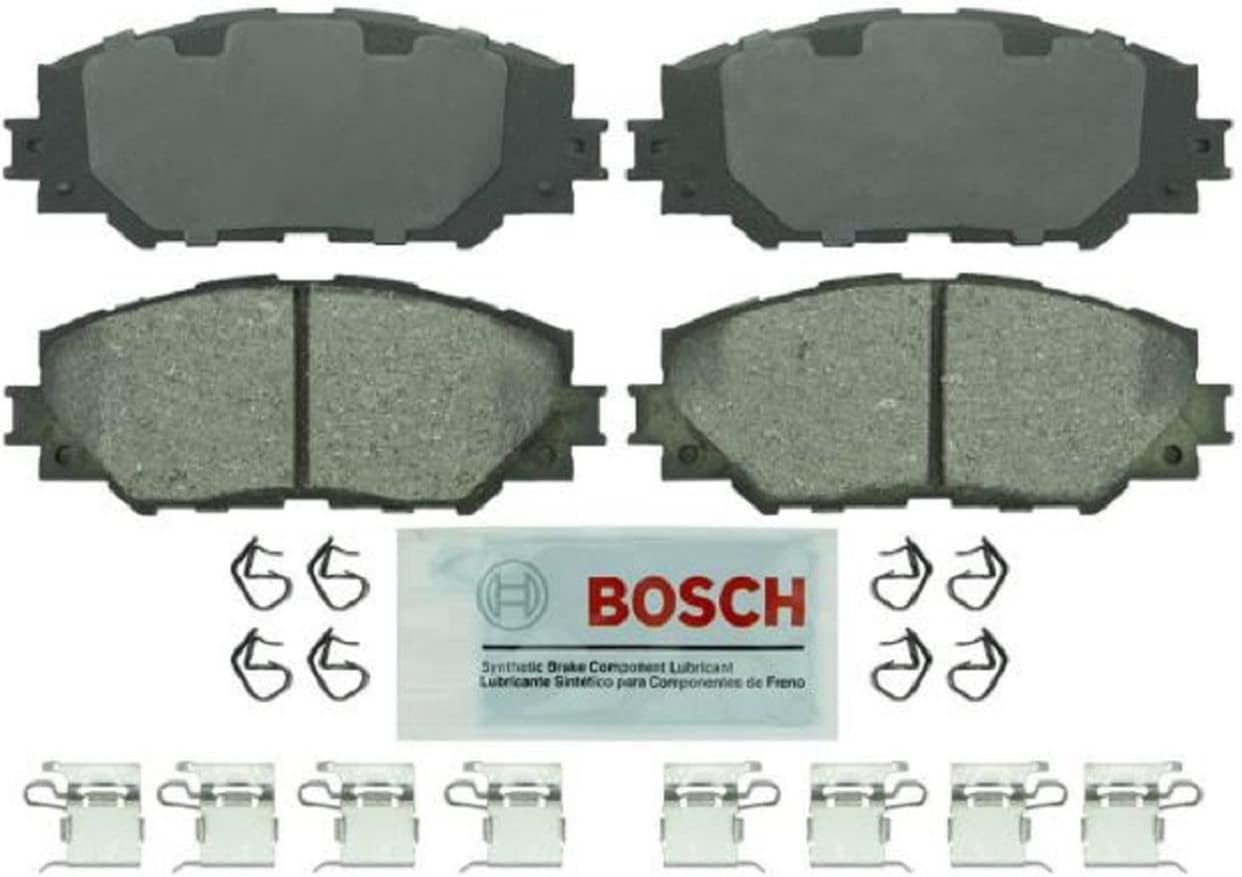
Bosch Blue ceramic front brake pads deliver dependable stopping power with platform-specific friction material designed for select Lexus, Pontiac, Scion, and Toyota vehicles. OE-style shims, slots, and chamfers help promote quiet braking, while the rust-inhibitive coating supports long-lasting performance and cleaner operation. The set includes hardware and synthetic lubricant for easier installation on one axle.

Bendix Premium Ceramic Front Brake Pads are engineered to match original equipment fit, form, and function for a straightforward replacement. Built with durable materials to help resist wear and corrosion, they support consistent braking performance and reduced brake fade for everyday driving. These pads are a dependable choice for compatible Pontiac, Scion, Toyota, and related vehicles.
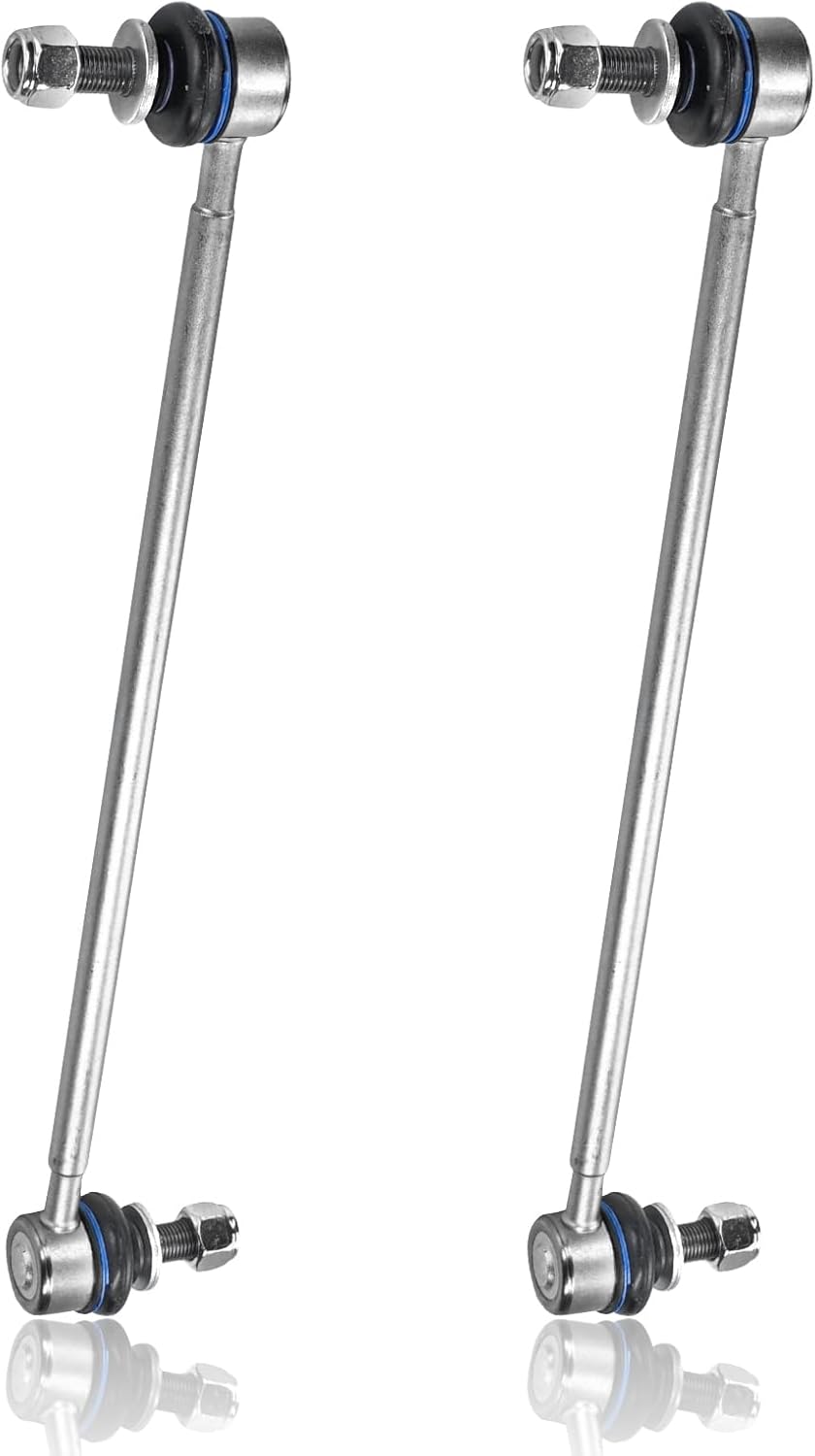
These front stabilizer sway bar end links are designed to restore smooth, stable handling and reduce noise and vibration during turns and over bumps. Compatible with select Toyota, Prius, and Scion models, they offer a reliable replacement built to meet manufacturing standards with corrosion-resistant coating and a strong, durable body.
Should You Resurface or Replace the Rotors?
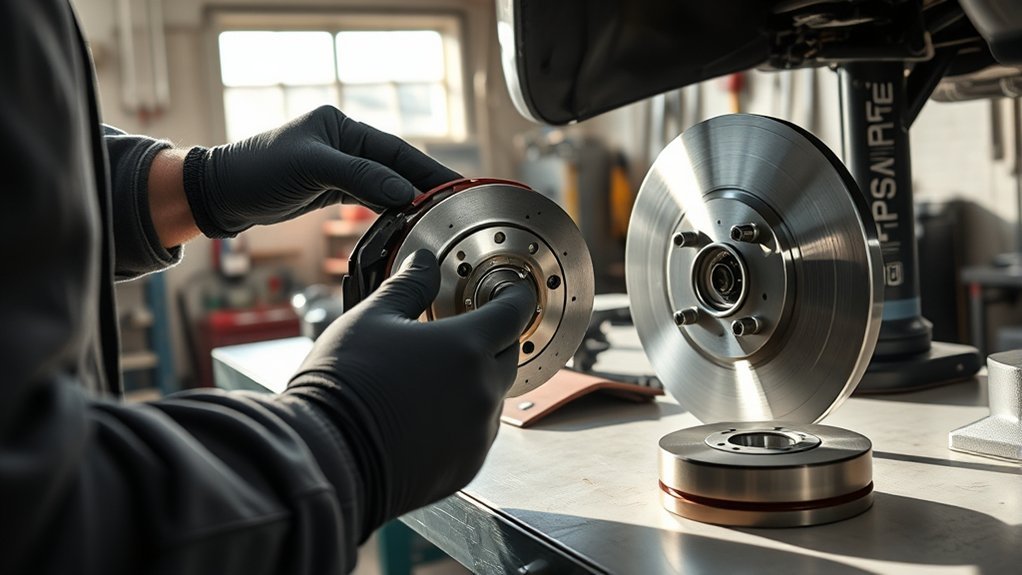
Fixing brake pedal pulsation depends on the measured rotor condition and the cause of the uneven contact. A rotor may be eligible for resurfacing only when the applicable procedure allows machining and the finished rotor will remain above its required service or discard thickness.
Replace a rotor when it is below its limit or has cracks, severe scoring, heavy structural corrosion, major heat damage, or another condition that machining cannot safely correct. Inspect the pads at the same time. Replace pads when they are worn, tapered, contaminated, damaged, or unsuitable for reuse under the applicable repair procedure.
Resurfacing or replacing a rotor will not correct hub contamination, hub runout, bearing play, a sticking caliper, or improper installation. If a new or resurfaced rotor still exceeds the applicable mounted-runout specification, stop replacing rotors and inspect rotor indexing, the hub face, hub runout, bearing play, and wheel-fastener installation.
Clean the hub face, seat the rotor fully, follow the correct fastener sequence and torque, and complete the pad or rotor manufacturer’s bedding procedure when required. These steps address the conditions that often allow pulsation to return after a parts-only repair.
[Products Worth Considering]

This oxygen O2 sensor set is designed for select Toyota Camry and RAV4 models with 2.4L engines, providing upstream and downstream replacement coverage in one package. Built to OEM specifications for plug-and-play installation, it helps improve fuel efficiency, support accurate air-fuel monitoring, and restore reliable engine performance. The stainless steel and heat-resistant construction is made for long-lasting durability and stable operation.

This two-piece front door lock actuator motor set is designed to restore reliable power door lock operation for a wide range of Toyota, Lexus, and Scion vehicles. It includes left driver and right passenger side actuators and is made as a direct replacement for common factory part numbers. With broad vehicle compatibility and a one-year warranty, it offers a practical solution for fixing faulty door locking issues.
How Can You Prevent Brake Pulsation?
Preventive work should focus on even rotor mounting, free caliper movement, correct wheel installation, and timely inspection of connected parts.
Measure before replacing: a new rotor can pulsate again if hub rust, mounted runout, bearing play, or uneven wheel-fastener torque remains.
- Inspect the complete system: Check pads, rotors, calipers, hoses, hardware, hubs, bearings, and visible suspension parts when vibration develops.
- Clean mating surfaces: Remove corrosion and debris so the rotor sits flat against the hub.
- Use the correct wheel procedure: Tighten wheel fasteners evenly in the specified sequence and to the applicable Camry torque.
- Check mounted runout: Confirm that an installed rotor remains within the model-specific limit before returning the car to service.
- Follow bedding instructions: Use the pad or rotor manufacturer’s approved process rather than improvising repeated hard stops.
- Follow a verified inspection schedule: Use the applicable Toyota maintenance guide and the site’s Toyota Camry brake inspection guide.
Brake fluid also deserves attention, but fluid problems usually create a different pedal pattern. Bosch associates contaminated or expired fluid with soft or spongy feel, inconsistent braking, or delayed response. Federal Motor Vehicle Safety Standard No. 116 sets requirements covering boiling point, viscosity, corrosion, water tolerance, stability, and compatibility. Use only the fluid grade specified for your Camry and follow the applicable service guidance.
[Products Worth Considering]

Reset Piston: With our rear brake tool, you can easily drive the piston to rotate back into place, so that it can be smoothly and evenly returned to the inside of the caliper, avoiding the problem of damage due to forceful pressing, 6 faces design is compatible with more types of caliper pistons

Complete Tool Set: Orion Motor Tech's 24-piece brake caliper compression tool set includes 2 retaining plates, 2 thrust bolt assemblies, 2 brake caliper hangers, and 18 adapters, easily servicing your brakes without damage

Works on rear disc brake applications that utilize drum style parking brakes.
When to Seek Professional Help
Arrange prompt inspection whenever pulsation repeats during ordinary braking on dry pavement. A qualified shop can measure mounted runout and thickness variation, inspect pads and calipers, check hub or bearing movement, and view ABS wheel-speed data.
Stop driving and arrange towing when any of these symptoms appears:
- The brake pedal feels soft, sinks, or travels much farther than normal.
- The car pulls strongly or no longer stops predictably.
- You see an active brake-fluid leak.
- Grinding, smoke, severe heat, or a burning smell develops.
- A red brake warning remains on.
- Stopping distance increases or braking power becomes inconsistent.
Professional diagnosis is also important when pulsation returns after new pads or rotors. The unresolved cause may involve the hub, bearing, caliper, hose, ABS sensor, tone ring, suspension, wheel installation, or incorrect service procedure rather than another defective rotor.
Frequently Asked Questions
How do you fix brake pulsation in a Toyota Camry brake pedal?
Measure mounted rotor runout, rotor thickness at several points, and inner and outer pad wear before replacing parts. Inspect the hub face, bearing, caliper movement, and wheel installation. Resurface or replace a rotor only when its condition and the model-specific service limits support that repair.
What is the most likely cause of a pulsating brake pedal?
During ordinary dry-road braking, the most likely inspection areas are disc thickness variation, mounted rotor runout, uneven pad contact, the hub surface, and caliper hardware. Normal ABS operation is more likely when the rapid pulse occurs only during hard or low-traction braking.
What should you remember if the brake pedal pulses during hard ABS braking?
Keep firm, steady pressure on the brake pedal and steer toward a safe path. Do not pump the pedal. ABS may produce rapid pedal movement and mechanical noise while it limits wheel lock.
Can bad brake fluid cause brake pedal pulsation?
Old or contaminated brake fluid more often causes a soft, spongy, inconsistent, or weak pedal than a rhythmic speed-related pulse. Fluid loss, a sinking pedal, or reduced braking power is a hydraulic safety concern and requires immediate inspection.
Why does my Camry brake pedal pulse at low speed?
ABS-like pulsing just before the car stops may come from an incorrect wheel-speed signal, damaged tone ring, sensor wiring problem, hub or bearing issue, rotor variation, or uneven pad contact. A technician should compare Toyota ABS wheel-speed data and inspect the sensor and hub area.
Can a wheel bearing or suspension problem feel like brake pulsation?
Yes. Hub or bearing movement can affect rotor runout or wheel-speed sensor readings, while worn steering or suspension parts can create vibration during braking. Vibration that also occurs while coasting or turning deserves a complete wheel, hub, steering, and suspension inspection.
Why does brake pulsation return after new rotors?
Pulsation can return when hub rust or runout, wheel-bearing play, a sticking caliper, uneven wheel-fastener torque, poor rotor seating, or unsuitable pad reuse remains unresolved. Measure the rotor after installation and inspect the connected parts instead of assuming the replacement rotor is defective.
Can uneven wheel-fastener torque cause Camry brake pulsation?
Uneven or incorrect wheel-fastener installation can contribute to rotor seating problems or mounted runout. Use the Camry-specific tightening sequence and torque, then measure mounted runout when pulsation appears after wheel or brake service.
Is it safe to drive with brake pedal pulsation?
Do not judge safety only by how strong the pulsation feels. Repeated pulsing during ordinary dry-road stops needs prompt inspection. Stop driving and arrange towing if the pedal is soft or sinking, the car pulls, braking distance increases, fluid leaks, grinding starts, or a red brake warning light remains on.
Safety Disclaimer: This article is for informational purposes only and does not replace professional vehicle diagnosis or repair. Brake work affects stopping control, so use model-specific Toyota information and consult a qualified mechanic before relying on a repair decision.
Conclusion
Repeated Toyota Camry brake pedal pulsation on dry pavement calls for measurement, not another guessed parts replacement. Confirm mounted rotor runout, thickness variation, pad wear, hub condition, caliper movement, bearing play, and ABS behavior before choosing a repair.
Arrange prompt inspection for routine-stop pulsation. Stop driving and tow the Camry when braking weakens, the pedal sinks, fluid leaks, grinding starts, the car pulls, stopping distance increases, or a red brake warning remains on.
References
- Brake Pedal Pulsation and Disc Thickness Variation — Wagner Brake, technical guide
- Identifying and Preventing Warped Brake Rotors — ADVICS Aftermarket, technical resource
- 2025 Toyota Camry Quick Reference Guide — Toyota, ABS and regenerative-braking owner information
- Toyota Camry Goes Exclusively Hybrid — Toyota USA Newsroom
- Toyota Camry Brings Bold New Nightshade Edition to Lineup in 2026 — Toyota USA Newsroom
- T-SB-0169-09 Rev1, Brake Vibration — Toyota technical service bulletin for some 2007–2010 U.S.-market Camry vehicles, hosted by Pro-Cut
- SAE J3111_202412, Brake Rotor Thickness Variation and Lateral Run-Out Measurements — SAE International recommended practice
- Disc Thickness Variations: Causes, Measurement, and Prevention — PowerStop technical resource
- Brake System Checklist and Brake Fluid Symptoms — Bosch Aftermarket
- 49 CFR 571.116, Standard No. 116, Motor Vehicle Brake Fluids — Electronic Code of Federal Regulations




[…] Use the separate Camry brake pedal pulsation guide […]
[…] uneven deposits, wheel installation, or other faults may need attention. See the guide to Toyota Camry brake pedal pulsation for a separate diagnosis […]