
Last updated: July 31, 2026. Reviewed against Toyota owner-manual guidance and current U.S. recall information.
What’s in This Article
- What Does the Brake Warning Light Mean in a Toyota Camry?
- Why Does the Camry Brake Warning Light Come On?
- What Should You Do When the Brake Warning Light Comes On?
- How to Check the Brake Fluid Safely
- Can Worn Brake Pads Turn On the Warning Light?
- Should You Check It Yourself or Call a Professional?
- Why Does the Brake Warning Light Stay On?
- How to Reduce Future Brake-System Warnings
- Frequently Asked Questions
- Conclusion
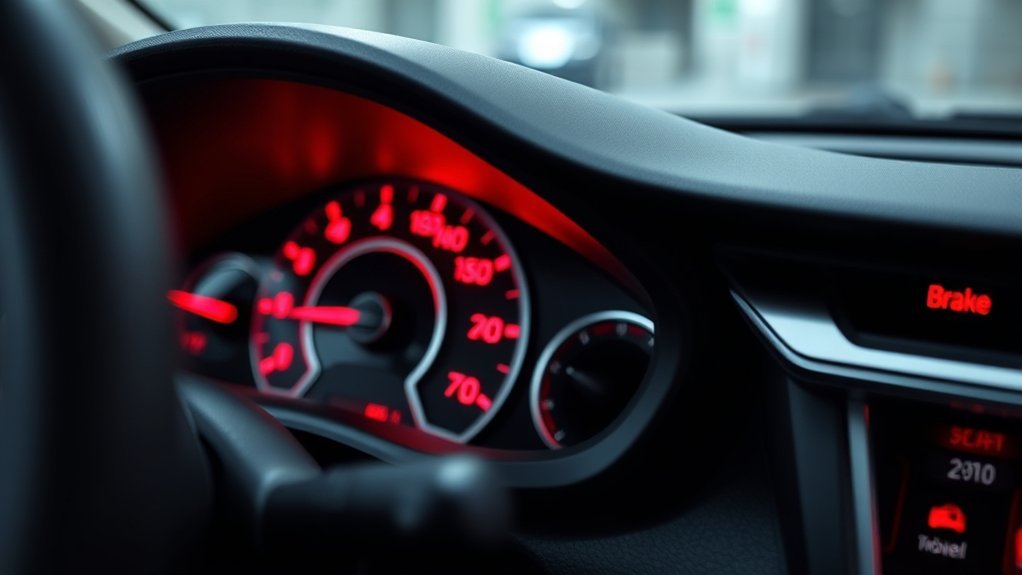
If the red brake-system warning light in your Toyota Camry stays on after the parking brake is fully released, stop in a safe place and do not continue driving. Toyota lists low brake fluid and a brake-system malfunction among the possible causes and warns that continued driving may be dangerous. Newer Camrys may also display a yellow brake warning, an electronic-parking-brake warning, or a message in the multi-information display. Identify the exact warning, make only the safe visual checks described below, and arrange professional inspection or towing when the red warning remains on.
Important distinction: This guide covers the dashboard brake-system warning, not the rear stop lamps. If the exterior brake lights do not illuminate, stay on, or flicker, use the Camry brake-lights troubleshooting guide.
Quick Answer
A Toyota Camry brake warning may appear because the parking brake is engaged, the brake fluid is low, or the brake or electronic parking-brake system has a fault. If a red brake warning stays on after you fully release the parking brake, pull over safely and do not continue driving. Arrange service or towing, especially if the ABS light is also on, the pedal feels soft, braking changes, or you see a fluid leak.
Key Takeaways
- Continue only when the warning was caused solely by the parking brake and it goes out completely after release.
- Stop and arrange towing when a red brake-system warning remains on or appears with the ABS warning.
- Check the reservoir level from outside the container before removing its cap.
- Do not assume a firm pedal or clean-looking fluid proves the brake system is safe.
- Do not reset, erase, or hide a brake warning before its cause has been diagnosed.
What Does the Brake Warning Light Mean in a Toyota Camry?
A Toyota Camry may display more than one brake-related warning. The exact symbols and messages vary by model year, trim, and powertrain, so compare the indicator with the diagram in your Toyota owner’s manual.
Which parking-brake hardware your Camry has changes what “fully release the parking brake” actually means. Later-generation Camrys use an electronic parking-brake switch on the center console — engaged by a button, not a lever. Earlier generations use a foot-operated parking-brake pedal or a hand lever instead. “ If you’re not sure which your Camry has, the owner’s manual diagram for your model year will show it.
The red brake-system warning deserves the fastest response. If it remains on after the electronic parking-brake switch, pedal, or lever is fully released, stop safely and arrange professional inspection. Do not treat normal pedal feel as permission to continue.
| Warning or Condition | What It May Mean | Safest Action |
|---|---|---|
| Parking-brake indicator goes out after release | The parking brake was engaged | You may continue if the warning goes out completely and braking feels normal |
| Red brake-system warning stays on | Low brake fluid or a brake-system malfunction | Stop in a safe place and arrange service or towing |
| Red brake warning and ABS warning together | A potentially serious brake-control fault | Do not continue driving; arrange towing |
| Yellow brake-system warning or display message | Depending on model year, a regenerative-braking, electronically controlled brake, or parking-brake fault | Read the message and manual, then obtain prompt service; stop immediately if braking is reduced or a red warning appears |
| Electronic parking-brake warning or flashing indicator | The parking brake may not have applied or released correctly | Do not force or repeatedly cycle the system; follow the display message and arrange service |
Do not confuse the red brake-system warning with the ABS warning. An ABS fault can disable anti-lock operation while leaving conventional braking available, but a simultaneous red brake and ABS warning requires an immediate stop.
For explanations of other symbols, see the Toyota Camry dashboard warning lights guide.
Why Does the Camry Brake Warning Light Come On?
A brake warning can have a simple cause, such as an engaged parking brake, or a serious cause involving fluid loss or the brake-control system. The light itself does not identify which part has failed.
- Parking brake not fully released: The electronic switch, pedal, or lever may still be applying the parking brake or keeping its indicator on.
- Low brake fluid: A level below the MIN mark may result from pad wear, a leak, or another brake-system problem.
- Brake-fluid leak: Fluid may escape from a brake line, hose, caliper, wheel cylinder on applicable models, or master-cylinder area.
- Hydraulic or brake-control malfunction: A fault may prevent the system from building or controlling braking pressure correctly.
- Electronic parking-brake fault: The parking brake may fail to apply, release, or report its position correctly.
- Switch, sensor, connector, or wiring fault: A technician may inspect these items after first ruling out fluid loss and mechanical brake problems.
- Recent brake work: Incorrect fluid level, incomplete bleeding, disturbed wiring, or an unresolved diagnostic code may cause a warning or abnormal pedal feel.
Worn pads can lower the reservoir level as the caliper pistons extend, but that does not make a low-fluid warning harmless. A sudden drop, repeated need for fluid, or any visible wetness needs immediate inspection.
What Should You Do When the Brake Warning Light Comes On?
If a red brake warning appears while you are driving, reduce speed smoothly, leave extra stopping room, and move away from traffic. Avoid sudden steering or braking unless needed to prevent a collision.
- Pull over safely: Stop on stable, level ground when possible and switch on the hazard lights if needed.
- Read the exact warning: Note its color, symbol, accompanying message, buzzer, and whether the ABS warning is also on.
- Check the parking brake: Fully release the electronic switch, pedal, or lever used by your Camry.
- Look at the reservoir: Check the level through the translucent container without opening the cap unless the manual or a technician instructs you to do so.
- Look for obvious leakage: Check beneath the vehicle and around the wheels without crawling under an unsupported car.
- Leave the vehicle parked when required: Arrange towing if the red warning remains, the ABS warning is also on, fluid is below MIN, a leak is visible, or braking feels different.
Warning: Do not continue driving with a persistent red brake-system warning, a soft or sinking pedal, a visible fluid leak, reduced braking, or simultaneous brake and ABS warnings. Normal pedal feel does not clear an active warning.
If the warning disappears completely after the parking brake is released and no other warning or braking symptom remains, the parking brake was the likely cause. Continue to watch the dashboard during the next drive.
[Products Worth Considering]
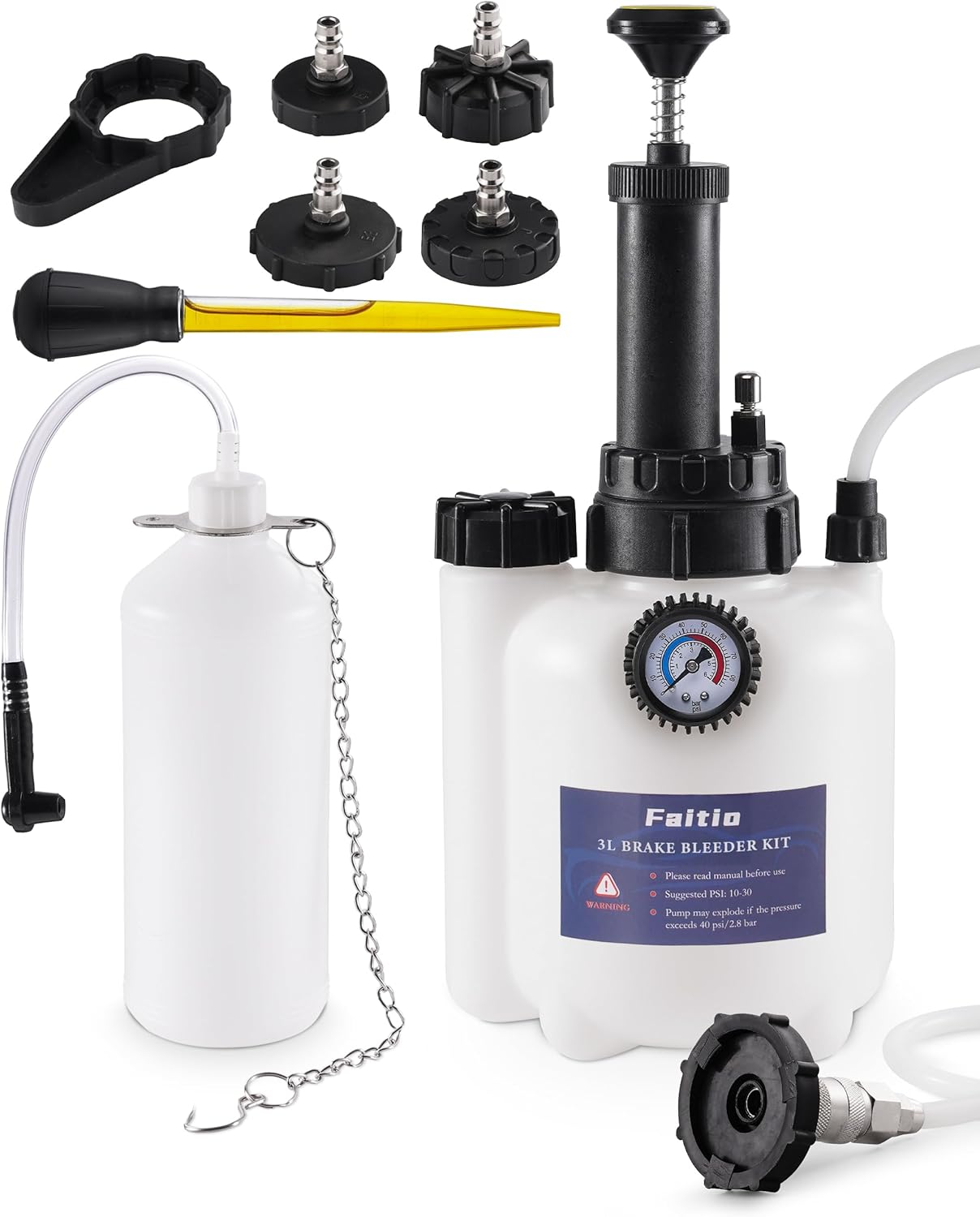
This one-man brake bleeding kit helps flush old brake fluid and remove trapped air for firmer, more responsive braking without the hassle of a second person. Its improved sealing and translucent catch bottle help prevent leaks while making fluid level checks easy during use. With multiple adapter sizes for many vehicle makes, it is a practical tool for clean, efficient brake system maintenance.

This universal brake bleeder kit makes one-person brake and clutch line bleeding simple by using compressed air to create stable vacuum-assisted fluid flow. Its extra-large 3L tank helps complete full-system flushes with fewer interruptions, while the included refill bottle, flexible hose, and universal adapter support clean, efficient use on standard and ABS brake systems.

The Mityvac MV8500 Silverline Elite is a versatile automotive service kit for brake and clutch bleeding, diesel fuel priming, and vacuum or pressure testing. Its dual-capability pump streamlines diagnostics and maintenance across motorcycles, cars, trucks, and SUVs, while the ergonomic design supports comfortable use during longer jobs. Built with a durable zinc-aluminum die-cast body and a 4.5oz fluid reservoir, it delivers reliable performance for professional and DIY repair work.
How to Check the Brake Fluid Safely

Park on level ground, turn the Camry off, and secure the vehicle before opening the hood. Use the owner’s manual diagram to identify the brake-fluid reservoir because its position and surrounding components can vary by model year and powertrain.
Inspect the level through the side of the reservoir. It should normally sit between the MAX and MIN marks. Do not remove the cap merely to see the level because brake fluid absorbs moisture from the air.
Most Camry model years specify DOT 3 brake fluid — confirm the exact spec on the reservoir cap or in the owner’s manual for your year, and never substitute DOT 5 silicone fluid, which is incompatible with this hydraulic system. “
| What You Observe | What It May Mean | Safe Next Step |
|---|---|---|
| Level between MAX and MIN | The reservoir level is within its marked range | Do not use the level alone to dismiss a persistent warning; arrange diagnosis if the light remains on |
| Level below MIN or a sudden drop | Pad wear, fluid leakage, or another brake-system problem | Do not continue driving; have the system inspected before adding fluid |
| Cloudiness, particles, or suspected wrong fluid | Possible contamination or incompatible fluid | Do not mix fluids or perform a blind top-off; obtain professional service |
| Fluid repeatedly needs topping up | Ongoing leakage or abnormal fluid loss | Arrange immediate diagnosis rather than treating refilling as a repair |
Fluid appearance alone cannot confirm that the brake system is healthy. Even clear-looking fluid may have absorbed moisture, and an active dashboard warning still needs diagnosis.
Pro tip: Use only the brake-fluid specification shown on the reservoir cap or in the owner’s manual. If fluid must be added as part of an approved repair, use fluid from a newly opened container and avoid spilling it on painted surfaces.
For a focused reservoir walkthrough, see how to check Toyota Camry brake fluid. For service timing, use the Camry brake-fluid change interval guide together with the maintenance schedule for your exact model year.
[Products Worth Considering]

This brake bleeder bottle helps simplify brake fluid replacement by draining old fluid while reducing air in the line. Its rubber connector fits most bleed screws, and the included hose and chain help keep the bottle securely in place during use. Built from durable, corrosion-resistant plastic, it is suitable for a wide range of vehicles including cars, motorcycles, ATVs, dirt bikes, and scooters.

This brake bleeder hose kit helps remove old brake fluid and air from motorcycle brake and clutch systems quickly and efficiently. Its one-way check valve prevents air from being drawn back into the system, while the easy-to-connect clips make bleeding simple for routine maintenance. Built for reliable use, it is a practical tool for keeping motorcycle braking performance responsive.

The exact Original Equipment Manufacturer fluid that your vehicle came with; developed for brake and hydraulic clutch systems to reduce vapor lock by providing a higher boiling point
Can Worn Brake Pads Turn On the Brake Warning Light?
Worn brake pads can indirectly contribute to a low-fluid warning. As pad material wears, the caliper pistons remain farther outward and more fluid stays in the calipers, which can lower the reservoir level. However, a low level must still be checked for leakage.
The familiar high-pitched pad-wear noise usually comes from a small metal indicator contacting the rotor. It is not the same as the red brake-system warning, and the warning light should not be treated as a routine pad-replacement reminder.
[Products Worth Considering]
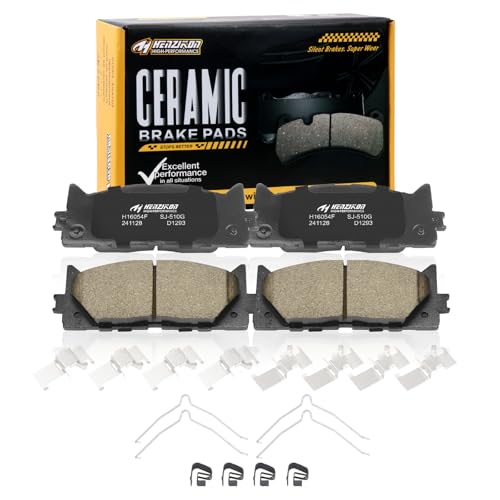
- AUTOMOTIVE REPLACEMENT BRAKE PADS FRONT : Ceramic Front Brake Pads Set Compatible with 2008-2018 Toyota Avalon,2007-2017 Toyota Camry,Compatible with 2007-2018 Lexus ES350,2013-2018 Lexus ES300h.Before purchasing, please confirm whether the product is compatible with your vehicle by using the "amazon confirmed fit" tool to confirm the compatibility of the specific model

COMPATIBLE VEHICLES - ATD1222C,D1222-8331 308.12120,EHT1212H,D1212-8332 Ceramic disc brake pad kit for 2013 2014 2015 2016 2017 2018 for Lexus ES300h, 2007-2018 for Lexus ES350, 2008-2018 for Toyota Avalon, 2007-2017 for Toyota Camry

Application:The brake rubber stopper can be replaced by the part number 90541-06036, 9054106036, which is suitable for Toyota Avalon 1995-2002, for Camry 1987-2011, for MR2 1990-1995, for Lexus ES330 2004-2006, for LS500 2018-2022, for RX400h 2006-2000, for Scion iM 2016, for TC 2005-2016 and other models. Please check your OEM number and car model before purchasing to ensure proper use
What Are the Signs of Brake-Pad or Rotor Wear?
Brake wear can develop gradually. Arrange an inspection when you notice any of these changes:
- High-pitched squealing: A mechanical wear indicator may be contacting the rotor.
- Grinding or scraping: Pad material may be severely worn, risking rotor damage.
- Reduced response: The vehicle may need more distance or pedal effort to slow.
- Vibration or pulsation: Rotor, pad, hub, or suspension conditions may be involved.
- Visible pad wear: Pads near the service limit for the specific Camry need replacement.
See the guides to Camry brake squeal causes and Camry brake pedal pulsation for symptom-specific checks. Toyota also outlines common signs that brake pads need attention.
Why Worn Pads Do Not Prove the Warning Is Harmless
A low reservoir level may accompany worn pads, but an owner cannot safely assume wear is the only cause. A technician may need to inspect every brake, look for leakage, measure pad thickness, check the master-cylinder area, and scan the ABS or brake-control system.
Switches, connectors, fluid-level sensing, and electronic parking-brake components can also be involved. These should be considered only after physical fluid loss and braking faults have been ruled out.
When Should the Brake Pads Be Replaced?
Replace the pads when they reach the service limit specified for the vehicle or when inspection identifies damage, contamination, uneven wear, or unsafe braking performance. Driving style, traffic, terrain, road salt, vehicle load, and caliper condition can all change pad life.
- Have the pads and rotors inspected during scheduled maintenance and tire service.
- Arrange earlier service for grinding, reduced braking, severe vibration, pulling, or fluid loss.
- Do not wait for metal-to-metal contact, which can damage the rotors and reduce stopping performance.
Should You Check It Yourself or Call a Professional?
An owner can safely identify the warning, release the parking brake, inspect the reservoir from outside, and look for an obvious puddle. These checks do not prove that the hydraulic or electronically controlled brake system is safe.
Leave diagnosis and repair to a qualified technician when the warning remains on. Professional testing may include pad and rotor inspection, leak detection, fluid-level verification, hydraulic checks, electronic-parking-brake testing, and scanning the ABS or brake-control module for diagnostic codes.
Do not attempt brake bleeding, hose replacement, caliper work, master-cylinder work, electronic parking-brake service, or wiring repair unless you have the correct service information, tools, and experience. Incorrect bleeding, loose hardware, contaminated fluid, or damaged wiring can reduce braking performance.
Arrange towing rather than driving to a shop when the red warning persists, the ABS warning appears with it, the pedal is soft or sinks, fluid is below MIN, a leak is visible, braking power has changed, or the parking brake will not release.
Why Does the Brake Warning Light Stay On After You Release the Parking Brake?
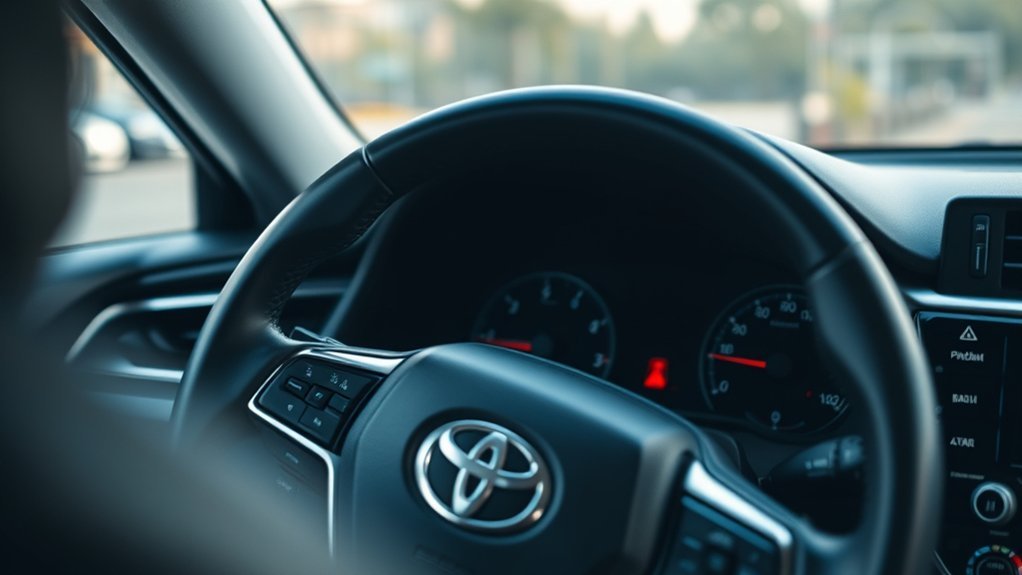
If the warning remains after the parking brake is fully released, do not assume the switch merely needs a reset. A persistent red warning may indicate low fluid or a brake-system malfunction.
- Confirm the normal release method: Use the electronic switch, pedal, or lever described in the manual for your model year.
- Read every dashboard message: Record the warning color, wording, buzzer, ABS indicator, and electronic-parking-brake indicator.
- Inspect without disassembly: View the reservoir level and check for fluid beneath the vehicle or near the wheels.
- Consider recent service: Tell the technician about recent pad, rotor, caliper, brake-fluid, wheel, battery, or electrical work.
- Request system diagnosis: The shop may need to inspect the hydraulic system and read brake-control or ABS diagnostic codes. A basic consumer OBD-II reader often cannot access the ABS or brake-control module on a Camry — this typically requires a dealer scan tool or a shop-grade bidirectional scanner.
Should You Reset the Brake Warning Light?
Do not disconnect the battery, erase brake-control codes, bridge diagnostic connector pins, or repeatedly cycle the parking brake to hide the warning. A warning that disappears after a reset can return without warning if the underlying fault remains.
The correct repair is to identify the cause, complete the required mechanical or electrical work, clear codes only when appropriate, and confirm that the warning remains off during the manufacturer’s verification procedure.
What If the Warning Appeared After Brake Service?
Stop using the vehicle and contact the shop that performed the work. Incorrect fluid level, incomplete bleeding, disturbed wiring, a loose connector, an installation problem, or an unresolved diagnostic code may need attention. Do not clear the warning before the shop records the symptoms and scans the system.
What If the Instrument Display Is Blank?
A blank display is not proof of a brake-system fault, but it can prevent warning indicators and messages from appearing. On September 11, 2025, Toyota announced a U.S. recall covering about 591,000 Toyota and Lexus vehicles because certain 12.3-inch instrument-panel displays could remain blank at startup. Certain Camry vehicles were included.
Review the Toyota instrument-display recall announcement and enter the vehicle identification number in Toyota’s VIN recall lookup. Recall eligibility depends on the individual vehicle, not merely the model name.
How Can You Reduce Future Brake-System Warnings?
Routine inspection helps find worn pads, leakage, damaged hardware, and fluid problems before they affect braking. Follow the maintenance guide for your exact Camry model year rather than relying on one universal mileage or monthly interval.
- Follow scheduled maintenance: Have fluid levels, pads, rotors, lines, hoses, and related components inspected at the intervals specified for the vehicle.
- Act on new sounds: Squealing, grinding, scraping, or clunking deserves inspection.
- Watch for pedal changes: A soft, sinking, unusually hard, or pulsating pedal needs prompt attention.
- Look for leakage: Investigate wetness near a wheel, beneath the engine bay, or along visible brake lines.
- Use the specified fluid: Do not mix fluid types or use an opened container that may have absorbed moisture.
- Verify repairs: After brake service, confirm that the warning lights are off and the vehicle passes the shop’s braking checks.
- Check recalls by VIN: Model-wide assumptions cannot confirm whether an individual Camry has an open campaign.
Do not wait for the red warning light before scheduling service. Noise, fluid loss, abnormal pedal feel, pulling, vibration, and increased stopping distance can appear first. Use the Toyota Camry warranty and maintenance guide to find the correct schedule for your model year.
Frequently Asked Questions
Can I Drive My Camry With the Brake Warning Light On?
Continue only if the light was caused solely by the parking brake and it goes out completely after the brake is released. If a red brake-system warning remains on, stop in a safe place and arrange professional inspection or towing.
What Should I Do If the ABS and Red Brake Warning Lights Are Both On?
Stop safely and do not continue driving. The combination can indicate a serious brake-control problem even when the pedal still feels normal. Arrange towing and professional diagnosis.
Why Does the Brake Light Turn On After I Start the Car?
A brief illumination during the startup system check may be normal if the warning turns off as described in the owner’s manual. If it remains on after the parking brake is released, the vehicle may have low fluid or a brake-system fault and should not be driven.
What Does the Yellow Brake Warning Light Mean in a Camry?
Depending on model year and equipment, a yellow brake-system warning may indicate a fault in the regenerative-braking, electronically controlled brake, or parking-brake system. Read the display message, follow the owner’s manual, and arrange prompt service. Stop immediately if braking changes or a red brake warning also appears.
Does Low Brake Fluid Always Mean I Have a Leak?
No. Normal brake-pad wear can gradually lower the reservoir level as the caliper pistons extend. However, a sudden drop, fluid below the MIN mark, repeated need for fluid, or visible wetness requires an immediate leak inspection.
Can I Reset the Toyota Camry Brake Warning Light?
Do not reset or erase the warning before diagnosing its cause. Disconnecting the battery or clearing brake-control codes may temporarily hide the warning without correcting low fluid, leakage, a parking-brake fault, or another brake-system problem.
What Does a Soft Brake Pedal Mean With a Warning Light?
A soft, spongy, or sinking pedal may indicate air, fluid loss, internal hydraulic leakage, or another brake-system fault. Stop driving and arrange towing or professional inspection.
What Brake Fluid Does a Toyota Camry Use?
Most Camry model years specify DOT 3 brake fluid. Confirm the exact type on the reservoir cap or in the owner’s manual for your model year, and never mix in DOT 5 silicone fluid, which is not compatible with this hydraulic system.
Safety Disclaimer: This article is for informational purposes only and does not replace the Toyota owner’s manual, professional vehicle diagnosis, or repair. Do not drive a vehicle with a persistent red brake warning, reduced braking, abnormal pedal feel, or visible brake-fluid leakage.
Conclusion
A Toyota Camry brake warning requires a decision based on the exact indicator and what happens after the parking brake is released. Continue only when the warning was caused solely by the parking brake, it goes out completely, no other warning appears, and braking remains normal.
If the red warning stays on, the ABS warning appears with it, the pedal feels different, fluid is below MIN, or you see leakage, leave the Camry parked and arrange towing. Do not reset the light or top off fluid as a substitute for diagnosis.


[…] However, worn pads can lower the reservoir level as the caliper pistons extend. Review the Toyota Camry brake warning light guide if the red BRAKE warning or low fluid is also […]
[…] a hydraulic or control-system problem rather than ordinary squeal. See the separate guides to Toyota Camry brake warning lights, a soft Camry brake pedal, and Camry brake pedal pulsation for those […]