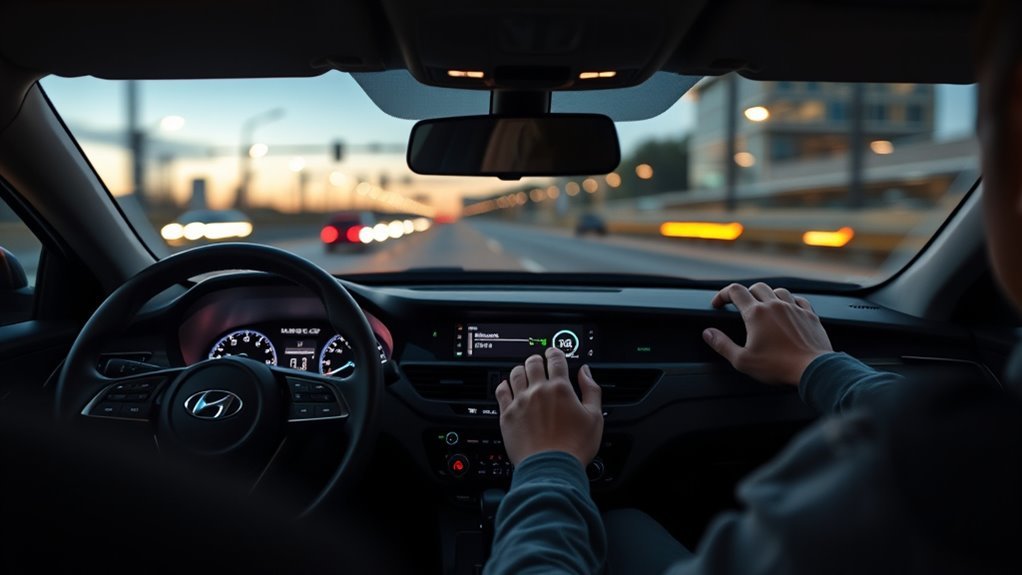
You’ll recover kinetic energy during deceleration as the Sonata’s motor becomes a generator, storing electricity in the battery and reducing fuel use; regen blends with hydraulic brakes for consistent stops. You can pick three regen levels via left/right paddles—hold left to maximize and nearly one‑pedal stop, hold right to coast—and the cluster shows current setting. Typical urban recovery is ~15–20%, boosting range ~10–15%; scroll on to get practical tips, safety notes, and troubleshooting.
What Regenerative Braking Is in the Hyundai Sonata
Because the Sonata captures kinetic energy during deceleration, its regenerative braking system converts that energy into electricity and stores it in the vehicle battery whenever you lift off the accelerator or apply the brakes. You’ll regain momentum control while harvesting power; the system supplements conventional friction brakes and reduces fuel draw. You can select varying regenerative levels to match your intent—higher settings yield stronger deceleration and greater recovered watts, lower settings prioritize coasting. In urban stop-and-go or descending grades you’ll maximize regenerative benefits, translating recovered energy into extended range and reduced consumption. Dashboard indicators give immediate feedback so you can refine inputs for best energy conservation. This lets you drive with agency, trimming dependence on fuel through measurable efficiency.
How Sonata’s Regen System Works (Simple Explanation)
Now that you know what regenerative braking does, here’s how the Sonata’s system accomplishes it in practice. You’ll feel the electric motor switch roles: when you lift off the accelerator or brake, regenerative mechanisms convert wheel kinetic energy into electrical energy, feeding the battery. The motor acts as a generator, engaging power electronics and the inverter to control torque reversal and manage energy conversion rates. At higher speeds and on descents, recovery efficiency rises, so you reclaim more charge. Paddle shifters let you set regeneration intensity, tailoring deceleration force and maximized recapture to your liberation-driven driving style. Hydraulic friction brakes remain integrated, blending seamlessly with regen to guarantee consistent stopping performance while optimizing overall efficiency.
Sonata Regen Modes and What Each Level Does
When you choose a regen level in the Sonata, the car adjusts how aggressively the electric motor converts kinetic energy to electrical energy during deceleration. You’ll find Levels 1–3: Level 1 gives minimal regenerative braking for smooth highway cruising and reduced intervention; Level 2 is balanced for mixed conditions; Level 3 provides maximum deceleration when you lift the accelerator, boosting energy capture and regenerative braking benefits for stop-and-go traffic. Level 3 slows the vehicle noticeably but usually won’t hold it to a full stop without friction brakes. You can change intensity manually via paddle shifters, tailoring resistance to your control needs. These modes improve driving efficiency and let you reclaim energy while asserting autonomy over vehicle behavior.
Using Paddle Controls and One‑Pedal Driving

If you want tight control over deceleration and energy recovery, use the Sonata’s paddle controls to adjust regen intensity on the fly. You’ll use paddle functionality actively: left paddle increases regen, right paddle decreases it. Hold the left paddle >1 second to ramp regen continuously—this can bring the vehicle to a complete stop—while holding the right paddle >1 second disables smart regeneration to match specific driving preferences.
The instrument cluster displays the selected regen level, so you can monitor response and refine settings without guesswork. In urban one‑pedal driving, rely on elevated regen to decelerate smoothly and minimize brake use; lower regen or disable smart regen when you want freer coasting. This approach gives you liberated command over energy recovery.
Brake Lights During Regen (Sonata): Rules & Behavior
Although U.S. rules don’t mandate brake‑light activation for regenerative deceleration, the Sonata will illuminate its brake lights under stronger regen to warn following drivers, particularly at speed. You should know that U.S. law lacks a specific threshold, while Europe requires illumination above 1.3 m/s²; Hyundai consequently programs conservative brake light activation to preserve safety and driver awareness. Regen is most effective above 9 mph, so slight throttle lift at low speeds may not trigger lights. The system shifts smoothly between regenerative and friction braking; when deceleration demands exceed regen capability, friction braking and brake light activation occur. Your experience may vary by driving style and decel intensity, so monitor vehicle response and rely on brake light activation as an additional safety cue.
Real‑World Recovery and Range Impact for the Sonata
You’ll see real-world energy recovery typically recover about 15–20% of consumed energy in stop‑start urban driving, with greater capture on long descents. That recovery can translate to roughly a 10–15% range improvement under ideal conditions versus conventional braking, though actual gains depend on route profile and traffic. By anticipating stops and increasing regen with the paddle shifter you’ll maximize recapture and consistently improve efficiency.
Real-World Energy Recovery
When you rely on the Sonata’s regenerative braking, it typically recovers about 10–20% of the energy wasted during typical driving, boosting efficiency and, in electric-only operation, delivering up to a 15% practical range increase when used effectively; city driving and downhill runs yield the best results—frequent stops concentrate recovery and steep descents can push regeneration toward roughly 25% in specific scenarios. You’ll tune regen intensity to match your habits, extracting regenerative benefits and practicing energy conservation without sacrificing control. Use aggressive regen in urban commutes and moderate settings on mixed routes. The system’s real-world performance depends on traffic, terrain, and driver input; you can free yourself from range anxiety by mastering braking inputs and mode selection.
| Scenario | Typical Recovery | Best Practice |
|---|---|---|
| City stop-and-go | 10–20% | High regen |
| Downhill | up to 25% | Hold brake |
| Highway | <10% | Coasting |
Range Gain Estimates
Building on how driving style and terrain affect regen yield, estimate how much range you can realistically add with the Sonata’s system. You’ll typically recover 5–9% of braking energy, which translates into measurable range efficiency gains. In mixed urban/highway use, expect modest improvements; in ideal conditions—sustained downhill deceleration and higher speeds—you could reclaim enough energy to add up to 40 miles. The system’s seamless handoff to friction brakes preserves drive quality while promoting energy conservation. To liberate your mobility, focus on anticipating deceleration and selecting stronger regen settings when available; those choices compound efficiency without sacrificing comfort. These figures reflect real‑world recovery limits, not theoretical maxima, so plan conservatively.
Driving Behavior Effects
Although regen hardware and road grade set the ceiling, your braking technique determines how close you get to that 22% recovery potential; adopt controlled, anticipatory deceleration to translate potential into usable charge. You’ll exploit downhill pulls by modulating pedal force and regen level, letting the motor harvest kinetic energy instead of wasting it as heat. Use higher regen settings where traffic and comfort allow and shift smoothly to friction brakes only when necessary. These braking techniques reduce abrupt stops, increasing energy efficiency and extending urban range materially. Real-world data show drivers who combine predictive driving with appropriate regen levels see measurable range gains, freeing you from frequent charging and empowering more autonomous, efficient mobility.
Driving Tips to Maximize Regen Efficiency
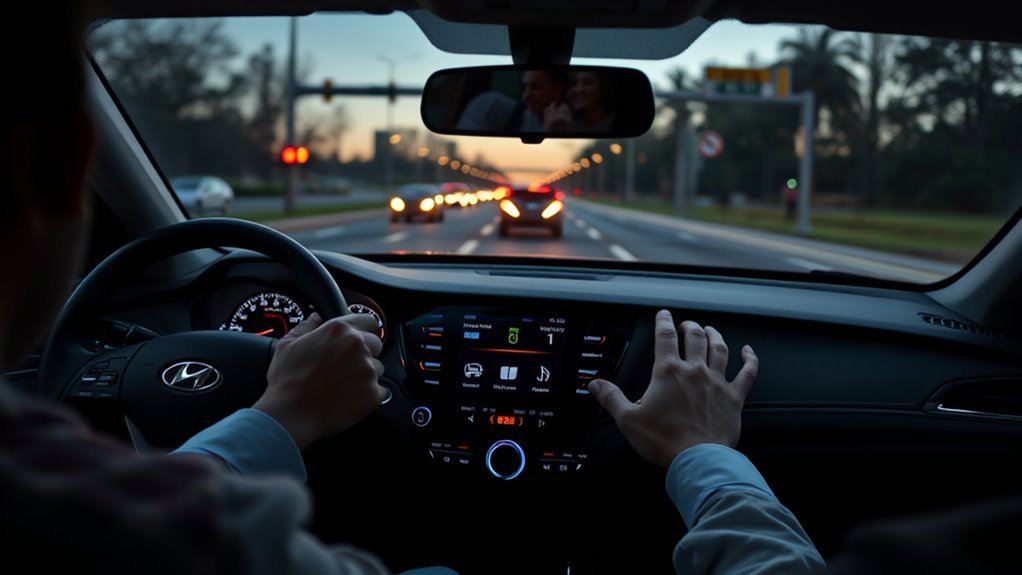
Anticipate traffic flow and lift off the accelerator early to engage regen sooner and capture more energy during deceleration. Use one‑pedal driving and the paddle shifters to set higher regen levels for extended coast‑to‑stop control, then apply light brake pressure for smooth changes that avoid friction braking. Monitor dashboard feedback to verify regeneration and fine‑tune your approach for varying traffic conditions.
Anticipate Traffic Flow
When you read traffic patterns and lift off the accelerator earlier, the Sonata captures more kinetic energy through regenerative braking, reducing mechanical brake use and extending range. Anticipate traffic signal timing and integrate energy recovery strategies: scan intersections, predict light changes, and modulate speed to avoid full stops. Maintain a safe following distance so you can coast and decelerate gradually, maximizing regen capture while minimizing friction-brake events. Use downhill sections to increase recuperation; allow regenerative systems to absorb gravitational energy before applying service brakes. Know your vehicle’s regen levels and select the mode that matches traffic density so you can calibrate lift-off thresholds and throttle modulation. These disciplined inputs free you from stop-start waste and systematically extend electric range.
Use One-Pedal Driving
If you lift off the accelerator and let the Sonata’s regenerative system decelerate the car, you can recover substantial kinetic energy without touching the brake pedal. Use One-Pedal Driving to combine precise throttle modulation with selectable regen strength via the paddle shifters; that lets you tailor braking techniques to road speed and load. At moderate to high speeds, regenerated energy and resultant range gains are greatest, so prioritize lift-off decelerations and anticipate stops to maximize capture. Practice gentle acceleration and measured lift-offs so the system operates in its ideal window. You’ll reduce brake wear, simplify controls, and reclaim propulsion energy—yielding tangible energy efficiency and a freer, more controlled driving experience aligned with minimalist, liberated mobility goals.
Smooth Brake Transitions
Because smooth brake shifts let the regenerative system work in its ideal torque window, you should lift off the accelerator gradually and use the paddle shifters to fine-tune regen intensity for a consistent deceleration profile. You’ll anticipate stops, coast when practical, and avoid abrupt pedal inputs so the system captures maximum kinetic energy while preserving predictable brake feel. Manually increasing regeneration on descents boosts recovery—up to roughly 22% in comparable EV scenarios—and reduces hydraulic brake intervention. Monitor the dashboard’s energy-flow and regen-status indicators to quantify gains and adapt behavior. This disciplined approach liberates you from wasteful braking habits, improves comfort, and enforces measurable energy conservation without sacrificing control. Practice yields repeatable deceleration and optimized battery recharge.
When Regen Falls Short: Safety & Using Friction Brakes
Although regen captures energy during deceleration, you shouldn’t depend on it for emergency stops or low-speed control; the Hyundai Sonata’s system hands off to friction brakes when higher braking force is required, but that switch can be abrupt and demands your attention. You must prioritize emergency braking and continuous vehicle control; don’t assume regen will deliver the bite you need at high speeds, on hills, or below about 9 mph.
- Expect: regen fades at low speed and may not trigger brake lights during gentle deceleration — be proactive to maintain predictable stops.
- Monitor: the handoff can feel sudden; apply steady pedal force to allow smooth blending with friction brakes.
- Act: in hilly or high-demand scenarios, rely on friction brakes for definitive stopping power and safety.
Troubleshooting Regen Settings and Resets
Having covered when regen hands off to friction brakes, you’ll also want to know how to check and adjust the Sonata’s regen settings when behavior feels inconsistent. You’ll read the instrument cluster to confirm the regeneration level (it defaults to Level 1 at power cycle). If behavior varies, verify Smart Regeneration is enabled; it adapts intensity to traffic. To disable or reset Smart Regeneration, hold the right paddle shifter >1s. If brake lights don’t activate during regenerative braking, confirm the vehicle software is current. Learn the regen levels to optimize energy recovery and comfort.
| Action | Check | Result |
|---|---|---|
| Instrument cluster | Regen level | Defaults Level 1 on restart |
| Smart Regeneration | Enabled? | Auto-adjusts intensity |
| Paddle hold | >1s right paddle | Reset/disable feature |
Frequently Asked Questions
Can a Hyundai Sonata Hybrid Run Without Gas?
Yes — you can drive your Sonata Hybrid briefly on battery power alone; it supports electric driving for about 1–2 miles. You’ll preserve fuel efficiency for short trips, but gasoline’s needed for longer or higher-power demands.
How to Explain Regenerative Braking in Simple Terms?
Smoothly seizing surplus speed, you convert kinetic motion into stored power: regenerative braking boosts energy recovery and braking efficiency, letting you reclaim wasted momentum, reduce fuel use, and liberate yourself from needless energy loss.
Conclusion
You’ll notice regenerative braking can recover up to about 30% of urban driving energy on some hybrids — that’s roughly the difference between one extra tank of range per month for many drivers, so it matters. Use higher regen levels and one‑pedal driving to maximize recovery, but stay ready to use the friction brakes for emergencies. Know paddle overrides and check settings if regen feels weak; reset procedures are straightforward and listed in the manual.