A 2006 Hyundai Sonata P0011 code means the engine computer has detected a problem with Bank 1 camshaft timing or the CVVT system that controls it. On both the 2.4L four-cylinder and 3.3L V6, start with engine oil and the oil control valve before assuming the timing chain has stretched. Rough idle, weak acceleration, stalling, or startup rattle make prompt diagnosis more important.
Quick Answer
On a 2006 Hyundai Sonata, P0011 means the Bank 1 “A” camshaft timing is too advanced or the CVVT system is not responding as expected. Check oil level and condition first, then test the intake oil control valve and CVVT operation. Inspect timing-chain components only if oil and OCV checks do not explain the fault.
Last checked: October 5, 2026. Dates and figures were verified against official sources.
P0011 Explained: What It Means for Your Sonata
P0011 is defined as “A” camshaft position timing over-advanced or system performance, Bank 1. In practical terms, the powertrain control module sees the camshaft responding differently from the position it expects.
The 2006 Sonata was sold in the U.S. with a 2.4L inline-four and a 3.3L V6. Hyundai’s reproduced 2.4L P0011 diagnostic procedure describes an oil-pressure-operated CVVT system controlled by an oil control valve. The 3.3L P0011 procedure likewise directs diagnosis toward oil condition, CVVT operation, and the OCV.
The code therefore does not automatically mean the camshaft sensor or timing chain is bad. A restricted oil passage, sticking OCV, failed CVVT phaser, wiring problem, or mechanical timing fault can all create the timing response that triggers P0011.
Symptoms, When to Stop Driving, and Severity
P0011 can range from a check-engine light with few obvious symptoms to poor running that makes continued driving risky. How the engine sounds and behaves matters more than the code alone when deciding whether to drive it.
Recognizable Driving Symptoms
Common symptoms come from the intake camshaft no longer following the timing the engine computer commands. Some Sonatas may show only the malfunction indicator light, while others run noticeably worse.
- Check-engine light with P0011 stored.
- Rough or unstable idle.
- Hesitation, weak acceleration, or reduced power.
- Intermittent stalling or hard starting.
- Reduced fuel economy.
- Rattling or chain-type noise, especially around startup.
A rattle does not prove that the chain is stretched. Oil pressure, a tensioner, a CVVT component, and other timing hardware must still be checked before parts are replaced.
When To Immediately Stop
Stop driving if P0011 appears with heavy knocking or persistent chain rattle, an oil-pressure warning, repeated stalling, overheating, or a major loss of power. Those symptoms suggest more than a minor control fault and continued operation could worsen engine damage.
Warning: If the oil-pressure warning light stays on with the engine running, shut the engine off as soon as it is safe. Do not keep driving merely to see whether P0011 clears.
If the engine sounds normal, the oil-pressure warning is off, and drivability is acceptable, move directly to diagnosis rather than continuing normal driving for days or weeks.
Severity And Repair Urgency
Treat P0011 as a fault that deserves prompt diagnosis, but do not assume the engine needs major internal work. The correct approach is to save the codes and freeze-frame information, check oil and CVVT operation, and then escalate to mechanical timing tests only when the evidence points there.
P0011 may also matter during emissions inspection. In U.S. OBD-based programs, an illuminated malfunction indicator light can cause a vehicle to fail the OBD portion of the test; the EPA’s OBD inspection guidance explains how MIL status and diagnostic trouble codes are used.
Common Causes: Timing Chain, CVVT, Sensors, Oil
The best diagnostic order is oil first, CVVT/OCV second, electrical checks next, and mechanical timing after that. Replacing the chain or cam sensor first can waste money when the problem is restricted oil flow or a sticking control valve.
| Possible Cause | What Points to It | Best First Check |
|---|---|---|
| Low, dirty, or unsuitable oil | Low dipstick reading, overdue service, contamination or sludge | Verify level, condition, viscosity, and oil pressure if needed |
| Sticking or restricted OCV | Poor CVVT response with otherwise normal mechanical timing | Inspect valve, filter, connector, and actuation |
| CVVT phaser problem | OCV command changes but actual cam timing does not respond correctly | Compare desired and actual cam response |
| Wiring, connector, or sensor fault | Erratic data or related circuit/correlation codes | Inspect connectors and scan live data |
| Chain, guide, or tensioner problem | Mechanical timing error, persistent startup rattle, or correlation evidence | Verify timing marks and inspect chain hardware |
[Products Worth Considering]

The ANCEL AD310 is a compact, easy-to-use OBD II code reader designed to help drivers quickly identify check engine light causes, read and clear fault codes, and review key vehicle data. It supports major OBD2 protocols and works with many 1996-and-newer cars, light trucks, SUVs, and other OBD2 vehicles. Built for fast diagnostics at home or on the go, it runs directly from the vehicle and provides clear results on a large screen.

This 2-piece oil control variable valve timing solenoid set is designed to help restore proper VVT operation and engine performance across a wide range of Toyota, Lexus, Scion, and Pontiac applications. Built to meet or exceed OE performance, it uses quality seals for reliable oil control and helps reduce issues caused by improper oil flow. It is a practical replacement choice for maintaining smooth engine timing and dependable drivability.

The BLCKTEC 440 Bluetooth OBD2 scanner helps drivers and DIY mechanics quickly read and clear trouble codes, monitor live data, and check emissions readiness with confidence. Its color display, graphing capabilities, and battery and charging system testing make it a versatile diagnostic tool for OBD-compliant vehicles. Designed for plug-and-play convenience, it runs directly from your vehicle and includes support for report sharing and ongoing updates.
Timing Chain Stretch
Both 2006 Sonata engine choices use timing chains, but chain wear should not be assumed from P0011 alone. Check mechanical timing when the oil and OCV/CVVT system pass their tests, or when noise and scan data point toward a mechanical fault.
Inspect the chain, guides, sprockets, and tensioner for wear or abnormal slack. Also verify that the cam and crank timing marks align as specified by the service information.
The 3.3L V6 deserves special attention if it has a brief chain-type noise at startup. Hyundai TSB 10-EM-006 applies to 2006–2010 Sonata 3.3L timing-chain tensioners and gives a revised service procedure for tensioner diagnosis and replacement.
Oil Control Valve
The oil control valve, or OCV, meters engine oil to the CVVT mechanism. A sticking spool, debris, blocked filter, electrical fault, or poor oil supply can stop the camshaft from following the position requested by the PCM.
Hyundai’s CVVT oil control valve inspection bulletin specifically tells technicians to inspect OCV operation instead of replacing the valve automatically. It calls for electrical and mechanical testing and checking for foreign material that can jam the valve.
For the 2006 2.4L, the P0011 service procedure specifies approximately 6.8–8.0 ohms at 68°F (20°C) across the intake OCV terminals. A resistance test alone is not enough; the valve can have an electrically sound coil while its spool or oil passage is restricted.
| Step | Action |
|---|---|
| 1 | Check oil level, condition, and CVVT oil supply |
| 2 | Inspect the OCV, filter, connector, and valve movement |
| 3 | Verify commanded versus actual CVVT response |
How to Diagnose P0011: Quick Tests First
Diagnose P0011 from the easiest, least invasive checks to the deeper mechanical ones. Save freeze-frame data before clearing the code because the RPM, temperature, and load at which it set can help reproduce the fault.
- Scan all stored and pending codes. Note P0010, P0016, P0021, cam-sensor codes, oil-pressure warnings, or misfire codes that may change the diagnostic direction.
- Check engine oil level. Park on level ground and follow the owner’s manual procedure. Correct an underfilled or overfilled condition before further CVVT testing.
- Inspect oil condition and service history. Dirty, sludged, contaminated, or incorrect-viscosity oil can interfere with the hydraulic CVVT system.
- Inspect the intake OCV and connector. Look for damaged wiring, corrosion, oil contamination, debris, or a sticking valve.
- Run an OCV actuation test if your scan tool supports it. Confirm that the valve responds rather than replacing it merely because P0011 is present.
- Compare desired and actual cam timing. A commanded change with little or abnormal actual movement points toward oil supply, OCV, phaser, or mechanical timing problems.
- Inspect mechanical timing last. If hydraulic and electrical tests pass, verify the timing chain, tensioner, guides, sprockets, and cam-to-crank alignment.
After the repair, clear the DTC and operate the vehicle under conditions similar to the saved freeze-frame data. Recheck for returning codes and confirm that actual cam response follows the commanded value.
Inspecting the Timing Chain & Tensioner
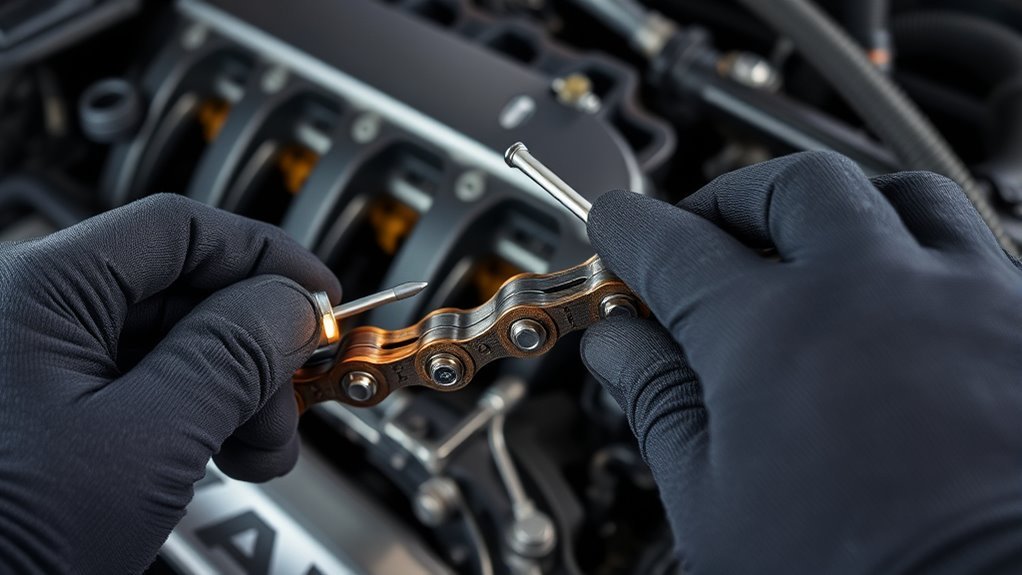
Timing-chain inspection is the next step when simpler oil and CVVT checks do not identify the fault. This is a more involved mechanical diagnosis because accurate cam-to-crank alignment matters and improper reassembly can create a new timing problem.
Look for damaged guides, abnormal chain slack, worn sprockets, a tensioner that does not maintain control, or timing marks that do not align. A persistent correlation problem after successful OCV testing is stronger evidence for mechanical inspection than P0011 by itself.
Do not apply a generic chain-deflection specification or assume the chain needs scheduled replacement at a particular mileage. The 2006 Sonata maintenance schedule does not list a routine 60,000-mile timing-chain replacement interval.
Check CVVT, Oil Control Valve (OCV), and Cam Sensor
The CVVT assembly, OCV, camshaft position sensor, and crankshaft position sensor work together, but they perform different jobs. The OCV and phaser change cam timing; the sensors report engine position so the PCM can judge whether the commanded timing change actually happened.
Test CVVT response and the OCV before buying a camshaft position sensor solely because P0011 is stored.
- CVVT inspection: Verify that actual cam timing responds correctly when the PCM commands a change.
- OCV inspection: Check the valve, its filter or oil passage, connector, and mechanical movement.
- Sensor testing: Inspect cam and crank signals if live data is erratic or related sensor/correlation codes are present.
- Oil supply: Verify adequate oil condition and pressure when the actuator does not respond normally.
If the OCV works electrically but the cam timing still fails to follow commands, do not keep replacing sensors. Confirm oil supply, CVVT phaser operation, and mechanical timing.
DIY Fixes, Parts, and Tools for P0011
Basic P0011 checks are reasonable DIY work if you are comfortable using a scan tool and multimeter. Internal timing work is much less forgiving and should be treated as an advanced repair.
Useful tools include an OBD-II scanner that can display live data, a digital multimeter, basic hand tools, and the correct engine-specific service information. A capable bidirectional scanner is especially useful because it can command the OCV while you watch cam response.
Note: P0011 is a system-performance code, not an instruction to replace one particular part. Confirm the failed component before ordering an OCV, cam sensor, CVVT phaser, or timing kit.
If oil is low, correct the level and investigate why. If service is overdue or the oil condition is poor, replace the oil and filter with the correct specification. If the OCV is contaminated, inspect and clean it as the service procedure allows; replace it when testing confirms failure or damage.
Timing-chain, tensioner, or phaser replacement requires correct timing alignment and torque procedures. If you cannot positively verify those procedures for your exact 2.4L or 3.3L engine, this is the point to use a qualified repair shop.
[Products Worth Considering]

The FOXWELL NT301 is a plug-and-play OBD2 code reader designed to help drivers and home mechanics diagnose check engine light issues with ease. It reads fault codes, clears emissions-related warnings, displays live sensor data in graph form, and shows I/M readiness so you can quickly check vehicle status before an emissions test. With broad compatibility across many OBD2 vehicles and a clear color screen, it offers a practical, user-friendly way to monitor and troubleshoot engine performance.

The Autel MaxiCOM MK900BT is a professional bidirectional diagnostic scan tool built for modern vehicles with advanced system coverage and fast, accurate troubleshooting. It supports 3000+ active tests, 40+ service functions, all-system diagnostics, Auto VIN, pre/post scan reports, and newer vehicle protocols for broad compatibility. Designed for technicians and serious DIY users, it delivers efficient maintenance, smarter diagnostics, and expanded service capabilities across a wide range of makes and models.

The TOPDON VeriDiag X800 BT is a wireless bidirectional automotive diagnostic scanner designed for full-system troubleshooting, active testing, and advanced service resets. It supports broad vehicle coverage, live data viewing, AutoVIN identification, and lifetime free updates to help DIYers and professionals diagnose issues faster and with greater confidence.
Warranty, Dealer Options, and Expected Costs
Repair cost depends heavily on whether P0011 comes from oil service, an OCV, a phaser, or the timing system. Diagnose the cause before comparing quotes because a timing-chain estimate and an OCV repair are completely different jobs.
A 2006 Sonata is now beyond Hyundai’s original powertrain warranty time limit. Hyundai’s current warranty information describes a 10-year/100,000-mile powertrain limited warranty for qualifying original owners, so the time portion has expired for a 2006 model by 2026. Separate service contracts, special coverage, or other third-party warranties may have different rules.
For a current price reference, Kelley Blue Book’s 2006 Sonata timing-chain estimate showed a dealer range of $1,748–$1,932 near Atlanta when checked on October 5, 2026. That figure is location-specific and should not be treated as a nationwide quote.
Ask any shop to itemize diagnosis, parts, labor, and related timing components. If a shop recommends a chain, phaser, or engine repair immediately, ask what oil-pressure, OCV, live-data, or mechanical-timing evidence led to that conclusion.
[Products Worth Considering]

FOXWELL NT201 is an easy-to-use OBD2 scanner designed to help drivers quickly read and clear check engine codes, view live engine data, and check emissions readiness. Its color screen, one-key I/M readiness test, and broad compatibility with most gasoline vehicles since 1996 make it a practical tool for everyday diagnostics and maintenance. With plug-and-play operation and lifetime free updates, it offers a simple way to understand vehicle issues without expensive shop visits.

This 6-pack engine oil filter set is designed for Toyota applications and compatible cross-reference part numbers, helping support clean oil flow and dependable engine protection. Built from quality materials and featuring 99% multi-pass efficiency, it is made to help extend engine life and maintain performance between service intervals. The included six filters make it a practical choice for routine maintenance and multiple oil changes.

This upgraded engine oil funnel kit makes oil changes cleaner and easier with a spill-proof design, flow control valve, and transparent body for precise filling. Built from durable polycarbonate and equipped with 12 adapters, two 45-degree elbows, and a debris filter, it fits a wide range of vehicles and works well in tight engine spaces. The secure, hands-free setup helps reduce mess while improving control during oil filling and fluid transfers.
Preventing P0011: Maintenance and Oil Care
Clean oil of the correct viscosity gives the CVVT system the hydraulic control it needs. Following the maintenance schedule is therefore one of the most useful ways to reduce oil-related OCV and phaser problems.
The U.S. 2006 Sonata owner’s manual lists engine oil and filter replacement every 7,500 miles or 6 months under the normal schedule. Under listed severe-use conditions, the interval is 3,000 miles or 3 months.
The manual recommends API SJ, SL or above and ILSAC GF-3 or above, with SAE 5W-20 or 5W-30 suitable across the listed temperature range. Modern replacement oils may carry newer backward-compatible API/ILSAC ratings, but the viscosity still needs to suit the engine and operating conditions.
- Check the dipstick regularly and investigate unexplained oil loss.
- Do not extend oil changes beyond the schedule simply because the engine uses a timing chain.
- Use a correct-quality filter and the specified oil viscosity.
- Address startup chain noise instead of waiting for a timing code.
- Keep service records so oil history is clear during diagnosis.
Key Takeaways
- P0011 is a CVVT performance fault; it does not identify one failed part by itself.
- Check oil level, condition, and OCV operation before opening the timing system.
- The 2.4L and 3.3L use different diagnostic details, so match tests to the engine installed.
- A 2006–2010 3.3L Sonata with startup chain noise is covered by a Hyundai tensioner service bulletin.
- Heavy rattling, an oil-pressure warning, stalling, or major power loss is a reason to stop driving and investigate immediately.
Frequently Asked Questions
Can P0011 Cause Failed Emissions Tests?
Yes. In an OBD-based emissions program, a malfunction indicator light that is commanded on can cause the vehicle to fail the OBD portion of the inspection. Exact inspection rules vary by state and program, so repairing P0011 and completing the required readiness monitors before testing is the safest approach.
Will P0011 Reset Permanently After Disconnecting the Battery?
No. Disconnecting the battery or clearing the code can turn the warning light off temporarily, but it does not repair the cause. If the PCM detects the same cam-timing problem again, P0011 can return.
Does P0011 Affect Fuel Economy Noticeably?
It can. Incorrect cam timing may reduce combustion efficiency and engine response, so some drivers notice worse fuel economy along with rough idle or weak acceleration. The amount varies with the underlying fault and how far actual cam timing differs from the commanded position.
Can Aftermarket Performance Parts Trigger P0011?
They can if a modification changes cam timing, engine management, wiring, oil control, or related components. If P0011 appeared immediately after engine or tuning work, confirm the installation and return altered settings or hardware to a known-good configuration before replacing unrelated parts.
Is P0011 Specific to Certain Sonata Model Years?
No. P0011 is a standardized powertrain trouble code used on many vehicles with variable cam timing. The correct tests still depend on the Sonata model year and engine, so procedures and component locations should be matched to the exact vehicle.
Can an Oil Change Fix P0011 on a 2006 Sonata?
Yes, but only when oil level, condition, viscosity, or contamination is the root cause. An oil change will not repair a failed OCV, stuck CVVT phaser, wiring fault, or mechanical timing problem, so the code should be rechecked after service rather than assuming the repair is complete.
Does P0011 Mean the Camshaft Position Sensor Is Bad?
No. The camshaft position sensor helps the PCM measure cam position, but P0011 is primarily a cam-timing performance code. Test the sensor and wiring when scan data or related codes point there instead of replacing the sensor solely because P0011 is stored.
Conclusion
A 2006 Hyundai Sonata P0011 code deserves a structured diagnosis, not automatic parts replacement. Check oil level and condition first, verify OCV and CVVT operation next, and move to sensor or timing-chain diagnosis only when the test results justify it. If the engine has an oil-pressure warning, heavy rattle, stalling, or major power loss, stop driving and have the cause identified before further use.
Sources
- 2006 Hyundai Sonata 2.4L P0011 service procedure: P0011 definition, CVVT operation, OCV/filter diagnosis, and OCV resistance specification.
- 2006 Hyundai Sonata 3.3L P0011 service procedure: Bank 1 CVVT diagnosis, oil inspection, OCV actuation, and verification procedure.
- Hyundai CVVT Oil Control Valve Inspection TSB 09-EM-002: OCV inspection and contamination testing.
- Hyundai TSB 10-EM-006: Revised timing-chain tensioner procedure for 2006–2010 3.3L Sonata models.
- 2006 Hyundai Sonata Owner’s Manual: oil specifications and normal/severe maintenance intervals.
- Hyundai USA warranty information: powertrain warranty time and mileage limits.
- Kelley Blue Book 2006 Sonata timing-chain estimate: current location-dependent repair-cost reference.
- U.S. EPA OBD inspection guidance: MIL, readiness, and emissions-inspection procedures.