You should wash your 4Runner’s undercarriage every 2–4 weeks during winter and immediately after heavy snow or salt exposure to prevent corrosion of the frame, exhaust, and suspension. Use a pressure washer with an underbody spray, high-pressure nozzle, and foam pre-wash; target wheel wells, seams, and drainage holes; agitate deposits and rinse thoroughly. Dry and apply a rust inhibitor, keep inspection records, and increase frequency after salty roads — continue for a full routine and maintenance plan.
Why Wash Your 4Runner Undercarriage?
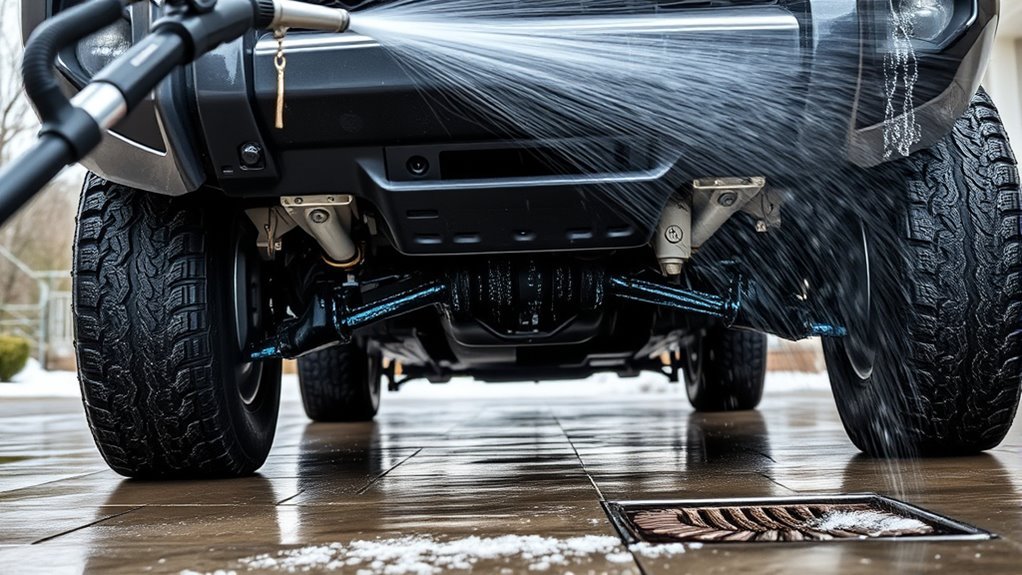
Even if you don’t see visible damage, you should wash your 4Runner’s undercarriage regularly: road salt attracts moisture and accelerates corrosion on the frame, exhaust, and suspension, and trapped salt can clog drainage holes so water sits against metal and protective coatings fail. You want control: regular undercarriage cleaning is targeted corrosion prevention. By removing salt deposits you reduce electrochemical activity that degrades steel and welded joints, preserving structural integrity and component tolerances.
Adopt a routine focused on moisture management—flush cavities and drainage paths so water doesn’t pool and compromise coatings. Doing this after storms and salty road exposure minimizes cumulative damage and keeps suspension, exhaust, and frame clear for inspections and repairs. That disciplined maintenance extends service life, safeguards resale value, and frees you from reactive, costly fixes. In short, intentional undercarriage washing is a practical act of vehicle liberation: it prevents salt-driven decay and keeps your 4Runner performing reliably.
Quick 4Runner Undercarriage Wash Checklist
When you need a fast, effective undercarriage wash for your 4Runner, follow a concise checklist that prioritizes salt removal, thorough rinsing, and targeted protection. You want a streamlined routine that frees you from corrosion risk and keeps service intervals predictable. Begin with a pressure washer fitted with an underbody spray attachment to blast away loose salt and grime. Apply a high-alkaline soap via foam cannon to break down residues; cover the entire undercarriage before rinsing. Use an acidic, vehicle-safe solution on calcium/magnesium deposits, agitating stubborn areas with a brush, then rinse thoroughly.
- Visualize powerful spray stripping salt from control arms, frame rails, and floor pans.
- Picture foam encapsulating contaminants, lifting them for removal.
- See targeted solvent action dissolving mineral deposits in wheel wells.
Finish with a full rinse and optional undercarriage coating for corrosion protection. These maintenance tips and approved cleaning products will liberate your 4Runner from winter’s hold and extend longevity.
When Should You Wash After Snow or Salt?
After blasting and rinsing the undercarriage, plan your next wash based on exposure and weather: wash immediately after a snowstorm if roads have cleared, or within a week of salt exposure to prevent corrosion. You’ll use timing considerations to prioritize washes: immediate action after cleared storms prevents salt bonding; a one-week window is the maximum safe interval after known salt exposure. Monitor weather impacts — if heavy rain is incoming, let it dilute and remove surface salt, then schedule a targeted undercarriage rinse once roads dry enough to avoid refreezing. Inspect side streets and parking locations for persistent salt; those microclimates often demand earlier intervention. During winter, institutionalize a two‑week wash cadence regardless of visible salt to disrupt cumulative corrosion. This routine gives you control, reduces metal fatigue, and extends component life. Stay alert, document exposure events, and adjust wash timing based on actual road conditions rather than calendar alone.
Tools You’ll Need for an Undercarriage Wash
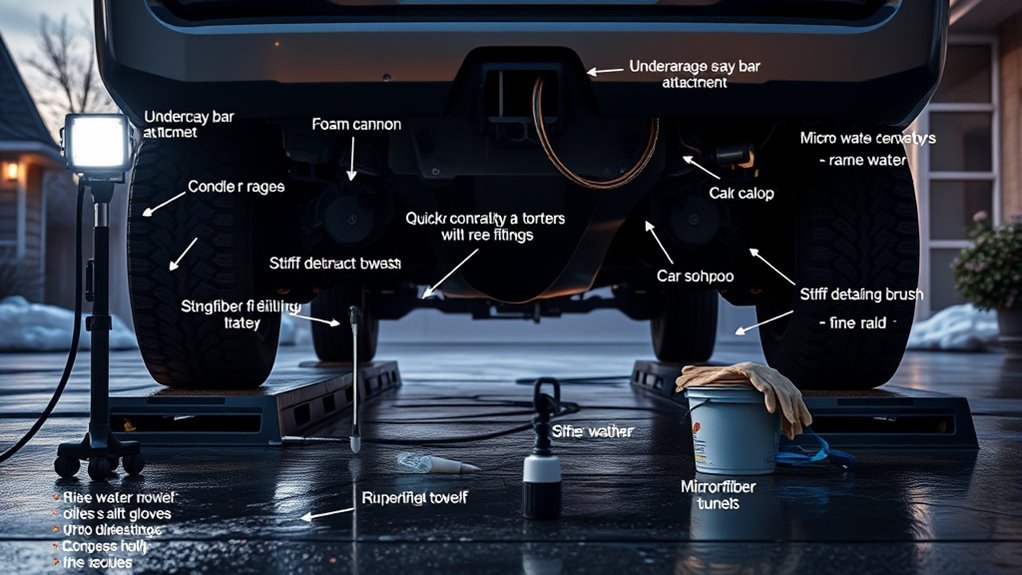
For a proper undercarriage wash you’ll want a pressure washer fitted with an underbody spray attachment to reach suspension components and blast away salt. Wear chemical-resistant gloves and impact-rated eyewear to protect against high-pressure spray and alkaline cleaners. These tools let you work efficiently and safely while minimizing contact with corrosive residues.
Pressure Washer With Attachment
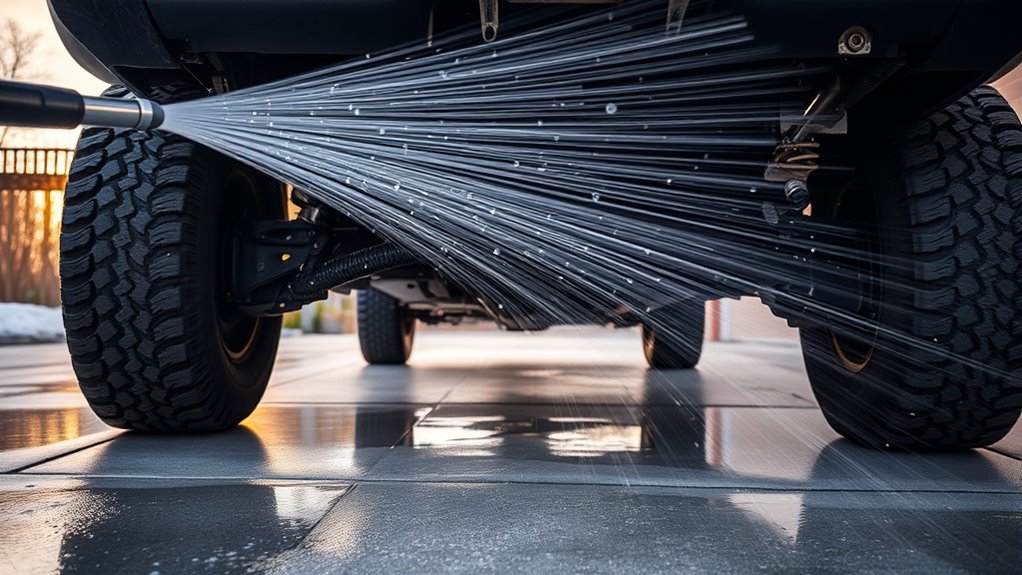
A pressure washer equipped with an underbody spray attachment is the single most effective tool for flushing road salt and lodged debris from your 4Runner’s undercarriage. You’ll choose between pressure washer types—electric for portability, gas for sustained power—but you want at least 1500 PSI to dislodge compacted salt. Underbody attachments use angled nozzles to reach frame rails, control arms, and hard-to-access seams, minimizing manual scraping and paint risk.
- imagine high-pressure jets blasting salt from frame rails
- visualize angled nozzles sweeping suspension components
- picture clean seams and drain holes free of crystalline buildup
Inspect hoses, fittings, and the pump before winter. Maintain the unit so it performs when you need liberation from corrosive road salt.
Protective Gloves And Eyewear
When you’re rinsing the 4Runner’s undercarriage, wear durable gloves and sealed safety eyewear to prevent chemical burns, salt irritation, and flying debris from contacting your skin or eyes. You’ll choose nitrile or heavy-duty rubber for reliable glove selection: they resist solvents, give grip, and protect against cuts. Pick eyewear types with a snug fit and side shields to block splashes and particulates. Kneepads add ergonomic freedom while you work.
| Emotion | Gear |
|---|---|
| Confidence | Nitrile gloves — chemical resistant |
| Resolve | Rubber gloves — abrasion resistant |
| Clarity | Safety glasses — sealed with side shields |
| Liberation | Knee pads — enable sustained positioning |
Use these items to control risk, maintain vision, and reclaim autonomy over corrosive road salt.
4Runner Undercarriage: Step-by-Step Wash Routine
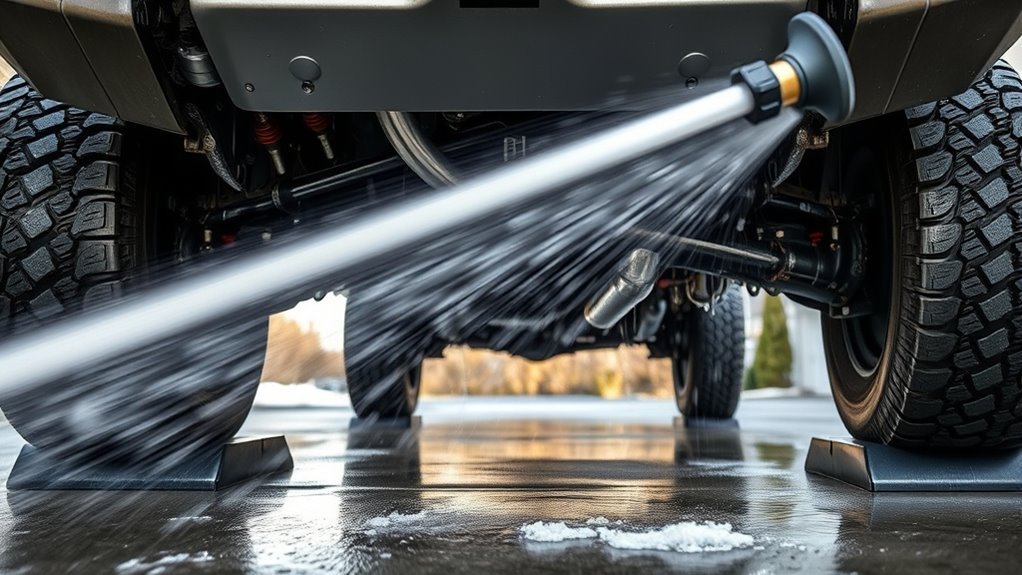
Start by pre-washing the undercarriage with a foam cannon loaded with high-alkaline soap to dissolve road salt and grime, then rinse thoroughly with a pressure washer so loosened contaminants are expelled before further treatment. You’ll follow a strict sequence that prioritizes rust prevention and proven cleaning techniques.
Begin with a high-alkaline foam cannon pre-wash, then pressure-rinse to remove dissolved salt and grime.
- Pendulum sprinkler attachment sweeping suspension bays, wheel wells, and frame rails to dislodge trapped salt.
- Acidic pre-wash targeting residual salt and calcium deposits; dwell briefly, then rinse to prevent micro-marring.
- Manual brush agitation at drainage holes, control arms, and seams to remove stubborn deposits.
Work methodically from front to rear, top to bottom. Use steady, overlapping pressure-washer passes and keep the acidic step isolated from painted surfaces. Inspect drainage holes after brushing; clear blockages to restore water egress. Finish with a full rinse to flush residues. You’ll exit the routine with a liberated undercarriage—clean, inspected, and ready for the protection phase without delay.
Aftercare: Protection and Maintenance Schedule
Commit to a regular aftercare plan: immediately apply a corrosion-resistant undercoating on exposed frame rails, suspension components, and wheel wells after the final rinse, then schedule undercarriage washes every two to four weeks during winter and inspect every few weeks for salt buildup or surface corrosion so you can address problem areas quickly and document each service for consistent, traceable maintenance. After the initial coating, consider a high-quality paint sealant or ceramic coating on metal and painted surfaces to add chemical resistance. During winter, set calendar reminders for washes every two to four weeks and log each service with date, mileage, and treatments applied. Perform focused undercarriage inspection every two to three weeks: check welds, fasteners, and seams for salt accumulation or blistering corrosion. If you find damage, remove salt, treat rust with converter, and reapply protective coating immediately. These maintenance tips keep your 4Runner structurally sound and free you to use it without restraint, preserving value and minimizing long-term repair obligations.
Frequently Asked Questions
Does Undercarriage Wash Get Salt Off?
Yes — you’ll remove most salt with proper washing; consistent undercarriage washes improve wash effectiveness, reducing salt corrosion risk. You’ll need pressure, thorough coverage, and regular timing to liberate components from corrosive residue and preserve integrity.
How Often Should I Wash My Car When the Roads Are Salted?
Like changing your boots after a storm, wash every two weeks in salted conditions; if heavily coated or post-storm, wash immediately. You’ll protect car maintenance, preserve winter driving freedom, and avoid corrosive damage.
How to Protect Car Undercarriage From Salt?
You’ll prevent salt damage by prioritizing undercarriage maintenance: wash every two to four weeks in winter, clear drainage holes, apply protective undercoat, use acidic foam or pressure washer to remove salt, and inspect regularly so corrosion can’t bind you.
What Is the Best Time to Get an Undercarriage Wash?
Right after a winter storm when roads clear, you should get an undercarriage wash; seasonal considerations favor biweekly washes, use targeted wash techniques to remove salt and moisture, and you’ll preserve your vehicle’s structural freedom.
Conclusion
Keep cleaning to curb corrosion: consistently clear crud and caked-on chemicals from chassis, control arms, and crevices. Regular rinsing removes road salt, reducing rust rates and restoring resilient seals, sensors, and suspension. Schedule systematic sprays, scrub stubborn spots, and speed-dry damp areas to stop spread. Protect painted parts, protect fasteners, protect functionality — practical, preventative practices preserve performance. Stay steady, stay smart, stay salt-safe, sustaining strength and service life.