
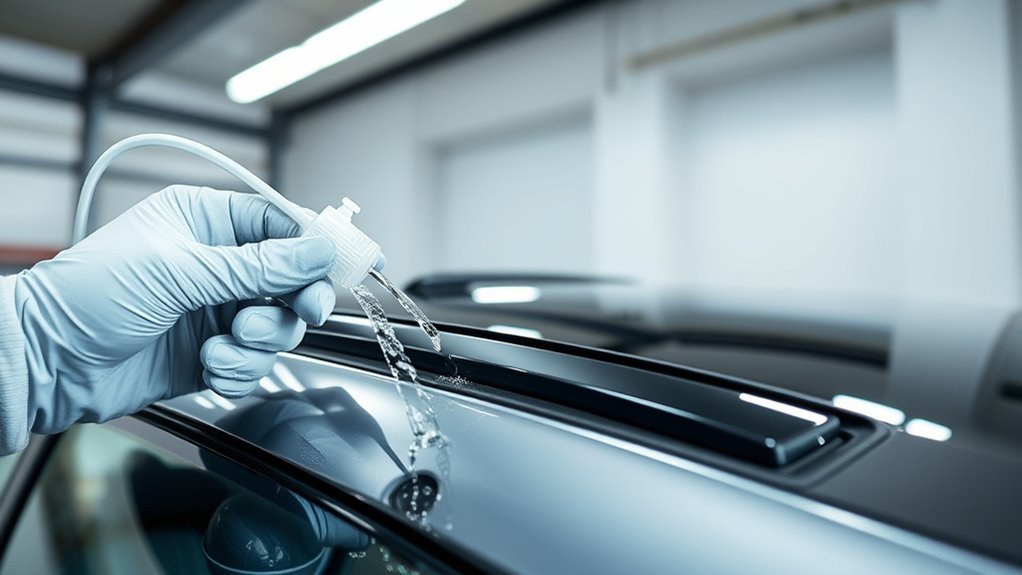
Most sunroof leaks are not a failed seal. They are a clogged drain. A sunroof is not fully watertight; the glass seal sheds most of the water and the rest is channeled into a tray around the opening, then down drain tubes (usually one at each corner, or at least at the front) that exit near the wheel wells or behind the doors. When a tube clogs with leaves, pollen and grit, the tray overflows and water shows up at the headliner, the A-pillars or the footwell.
Signs a Sunroof Drain Is Clogged
- Water stains on the headliner near the sunroof or the A-pillars.
- Damp carpet or a musty smell, especially after rain or a car wash.
- Water pooling in the sunroof tray after you pour some in, instead of draining away within a few seconds.
- Gurgling or sloshing sounds when you brake or take a corner.
Step 1: Find and Clean the Tray
Open the sunroof fully and wipe out the tray and the area around each drain opening with a damp cloth or soft brush. Pick out leaves, pine needles and grit by hand. Many clogs are at the drain opening itself and clear with this step alone.
Step 2: Test the Flow
Pour a small amount of water (about a cup) slowly into each corner of the tray. It should disappear quickly and you should see it drip out below the car, usually behind the front wheel or ahead of the rear wheel. If it pools, that corner is blocked. Note which corner it is.
Step 3: Clear the Blockage Gently
- Compressed air: A short, low-pressure burst from a blower can push debris out through the tube. Keep the pressure low and aim from the tray downward, because strong pressure can pop a tube off its fitting behind the headliner and send water into the cabin.
- Flexible probe: Feed a soft, flexible line (a length of thick trimmer line or a purpose-made drain cleaning cable) gently from the tray opening downward. Never force it. A stiff or sharp tool can puncture the tube or push it off its connector. Avoid steel cables with a sharp end.
- Vacuum: A wet/dry vacuum at the outlet under the car can pull out loose debris.
Skip harsh drain openers and strong chemicals. They can damage rubber tubes and trim, and they are unnecessary for ordinary clogs. If you want to treat the tubes, plain warm water with a little mild dish soap is enough.
Step 4: Retest
Repeat the water test at each corner until the water drains quickly and drips out below the car every time. Then check the headliner area and footwell over the next rainy day.
If the Leak Continues
If every corner drains fine and the car still leaks, the tube may be disconnected or kinked behind the headliner, or the problem may be a worn seal, a cracked drain fitting or a leaking roof-rail joint. Removing the headliner involves airbags, wiring and trim clips, so leave that to a qualified shop. Wet carpet should be dried promptly to prevent mold.
How Often to Clean
Check the tray and test the drains once or twice a year, and more often if you park under trees. Fall, after leaves drop, is a good time. Your owner’s manual may also list the drain locations and any model-specific advice.
Frequently Asked Questions
What can I put on my sunroof to keep it from leaking?
Nothing needs to be added to the glass. Keep the drains clear and the rubber seal clean, and condition the seal with a rubber-safe protectant. Do not use sealant to block gaps around the glass, because the drainage system relies on those channels. A persistent leak is a repair for a shop.
Is sunroof drain cleaning necessary?
Yes. It is cheap preventive care that avoids water damage to the headliner, carpet and electronics under the roof.
Conclusion
Clear the tray, test each corner with a little water, and clear any blockage gently from the top down. Keep air pressure low, avoid stiff tools and strong chemicals, and leave headliner work to a professional. A quick check each fall keeps the rain where it belongs: outside the car.