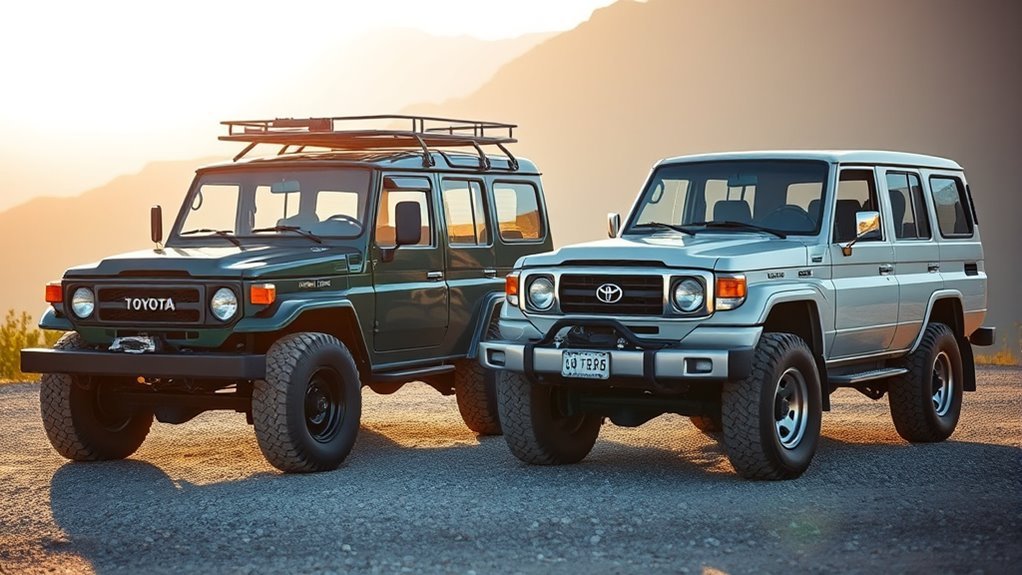
No. Toyota says the U.S.-market Land Cruiser models checked in its owner documentation are not designed for recreational flat towing or dinghy towing with all four wheels on the ground. That includes the 2006 100-Series Land Cruiser. Although the 2006 transfer case has a physical Neutral (N) position, Toyota still warns not to tow the vehicle four-wheels-down behind a motorhome. For normal vehicle transport, use the towing method specified for your exact model year—typically a flatbed or a wheel-lift arrangement that keeps the remaining wheels off the ground. Toyota’s separate emergency-towing instructions should not be confused with recreational flat towing.
Last updated: August 8, 2026. Author: [VERIFY: add the real author/byline and credentials from the CMS.] Originally published: [VERIFY: confirm the original publication date in the CMS.]
Can You Flat-Tow a Toyota Land Cruiser in Neutral? (Quick Verdict)
Transfer-case Neutral does not make a Toyota Land Cruiser factory-approved for flat towing. This distinction is especially important on the 2006 Land Cruiser. Its transfer-case lever includes an N position, and Toyota states that no power is delivered to the wheels in that position. However, the same owner’s manual has a separate “Dinghy towing” section stating that the vehicle is not designed to be towed behind a motorhome with four wheels on the ground.
In other words, a drivetrain component can have a Neutral setting without the complete vehicle being designed for continuous four-wheels-down towing. Lubrication, transmission design, transfer-case design and other rotating components still matter.
You can review the 2006 Toyota Land Cruiser Owner’s Manual (OM60B63U) for Toyota’s model-specific instructions.
| Towing situation | 2006 Land Cruiser guidance |
|---|---|
| Four wheels down behind a motorhome | No. Toyota says the vehicle is not designed for dinghy towing. |
| Flatbed transport | Yes. This is one of Toyota’s specified commercial towing methods. |
| Wheel-lift towing | Use a towing dolly under the wheels that are not lifted, following Toyota’s instructions. |
| Typical two-wheel recreational tow dolly | Do not assume it is acceptable for the full-time 4WD drivetrain. Follow the exact owner’s manual. |
| Emergency cable/chain towing | Only as a temporary emergency procedure when normal towing service is unavailable, and only under Toyota’s stated restrictions. |
| Transfer case in Neutral | Neutral exists, but it does not override Toyota’s prohibition on recreational four-wheels-down towing. |
Which Land Cruiser Models and Years Are Approved for Flat Towing?
Do not assume that an older Toyota Land Cruiser is flat-towable simply because it has a mechanical transfer case. U.S. owner documentation checked for the 2002, 2003 and 2006 100-Series Land Cruiser says the vehicle is not designed to be dinghy towed with four wheels on the ground. Toyota manuals for later 200-Series examples, including 2018 and 2021, contain the same prohibition. The U.S. 2025 Land Cruiser manual also says not to tow the vehicle with all four wheels on the ground.
Because Land Cruiser powertrains and instructions vary by model year and market, use the owner’s manual for the exact VIN/model before arranging transport. Do not use an owner’s forum report, transfer-case lever design or mechanical similarity to another Toyota or Lexus as a substitute for manufacturer guidance.
Does a Manual Transfer-Case Neutral Make a Land Cruiser Flat-Towable?
No. The 2006 Land Cruiser is a useful example of why these are separate questions. Toyota describes an N position on the transfer-case lever where no power is delivered to the wheels. Yet Toyota separately states that the complete vehicle is not designed to be dinghy towed.
- Transfer-case Neutral describes a transfer-case operating position.
- Dinghy-tow approval describes whether the complete vehicle can safely be pulled for extended distances with all four wheels rotating.
- A Neutral position does not automatically guarantee adequate lubrication throughout every rotating drivetrain component.
- Manufacturer towing instructions take priority over assumptions based on the lever positions available.
What About 200-Series and Electronic 4WD Land Cruisers?
Do not flat-tow a 200-Series Land Cruiser merely because its 4WD system can be placed into a particular operating mode. Toyota’s U.S. manuals for 2018 and 2021 state that these vehicles are not designed to be dinghy towed with four wheels on the ground.
The same principle applies to electronic transfer-case controls: the presence of a 4WD setting, center-differential function or transmission Neutral position does not itself establish recreational-towing compatibility.
Are There Exceptions or Aftermarket Modifications?
Aftermarket driveline modifications may exist for some vehicles, but that is different from Toyota approving the original vehicle for four-wheels-down towing. Do not treat a driveshaft disconnect, lubrication modification, tow-bar kit or owner-reported setup as factory authorization.
If a specialist proposes a modification, get written confirmation covering your exact model, transmission, transfer case and intended towing method. Also determine how the modification affects component warranties, service procedures and towing-equipment requirements.
Before Transporting a Land Cruiser: Transmission, Transfer Case, Driveshafts, and Ignition
The first question is not which gear to select. It is which towing method Toyota permits for your exact model year.
- Read the owner’s-manual section for dinghy towing and disabled-vehicle towing.
- Do not substitute transfer-case Neutral for manufacturer approval.
- For a 2006 Land Cruiser, Toyota specifies commercial towing by wheel-lift with dollies under the wheels not lifted, or by flatbed.
- Tell the tow operator that the vehicle uses a full-time 4WD drivetrain.
- Do not improvise transmission, transfer-case or ignition positions from instructions written for another vehicle.
- If the vehicle is damaged, has a seized wheel or has drivetrain problems, tell the tow operator before loading it.
A conventional tow dolly that raises only one axle should not automatically be treated as equivalent to Toyota’s wheel-lift-plus-dollies instruction. The purpose of the additional dollies is to keep the other wheels from rotating on the road.
[Products Worth Considering]
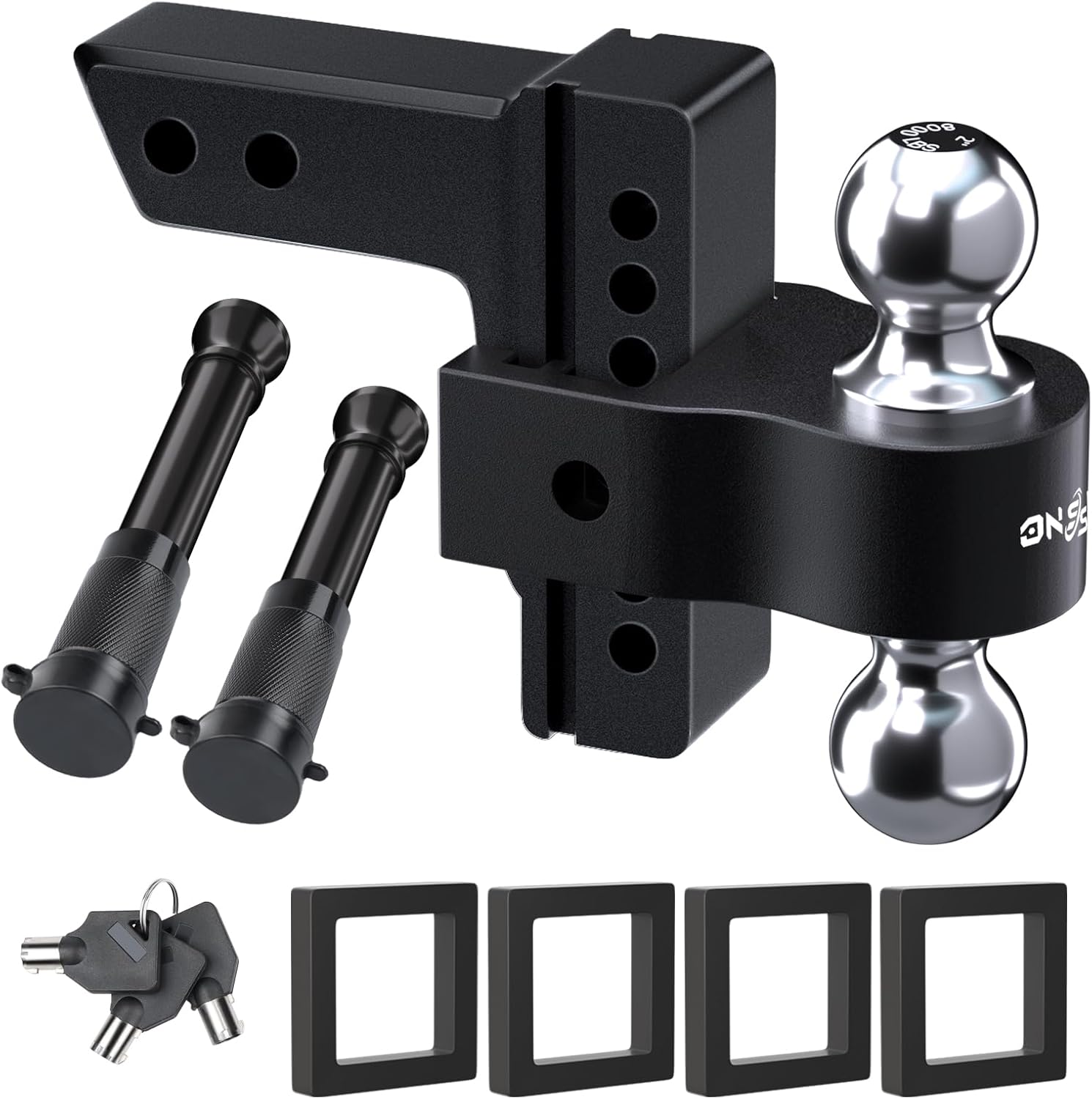
This adjustable trailer hitch is designed for 2-inch receivers and offers flexible towing with a 6-inch drop and rise range. Dual ball sizes help support different trailer setups, while the high-strength aluminum construction is built for dependable performance on tough jobs. Included hitch locks and silencers add security and help reduce noise for a smoother towing experience.

These custom floor mats are designed to fit the Toyota Land Cruiser GX550 with a 5-seat layout for a precise, secure install. Made from durable TPE, they help shield your interior from spills, mud, snow, dirt, sand, pet hair, and everyday debris while making cleanup quick and easy.

Custom-fit floor mats and cargo liner designed to provide edge-to-edge protection for the Toyota Land Cruiser Prado. Made from durable TPE material, they offer all-weather defense against rain, slush, snow, mud, and everyday dirt while remaining easy to install, clean, and maintain. The odorless, non-slip design helps keep your interior safer, cleaner, and more comfortable in every season.
Do Not Use Transfer-Case Neutral as a Dinghy-Towing Procedure
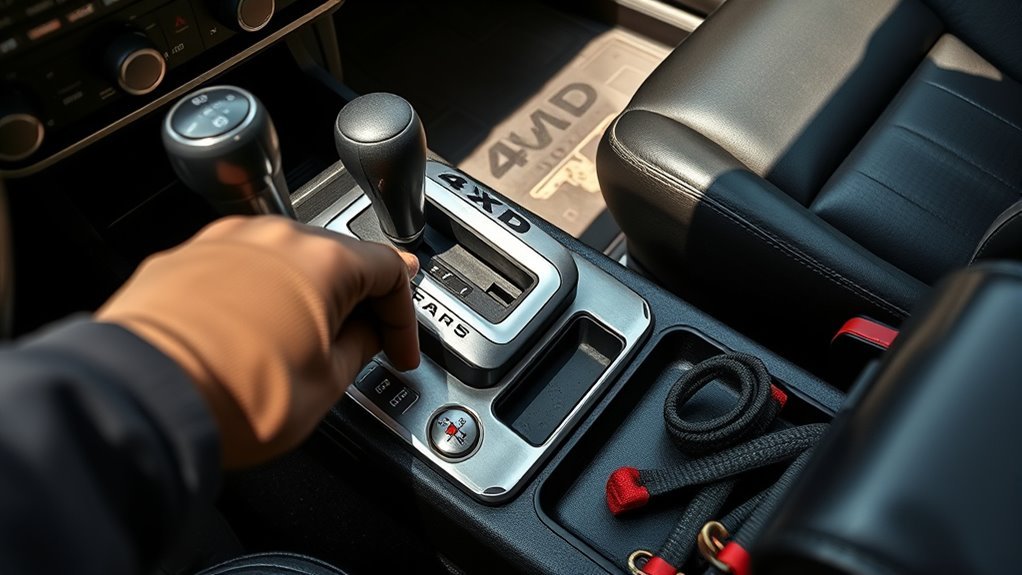
The 2006 Land Cruiser’s transfer case has an N position, but Toyota does not provide a recreational flat-towing procedure based on putting the transmission in Park and the transfer case in Neutral. The owner’s manual instead says not to dinghy tow the vehicle with four wheels on the ground.
Transfer-case Neutral and factory dinghy-tow approval are not the same thing.
This also explains why testing whether the Land Cruiser “rolls freely” is not a valid flat-tow compatibility test. Free rolling only shows that a particular drivetrain connection has been disengaged. It does not prove that bearings, shafts, gears, seals and lubrication systems are designed for continuous road-speed rotation during a long motorhome trip.
Safe Towing Options for Automatics and 200-Series Land Cruisers
For a Land Cruiser that Toyota does not approve for four-wheels-down towing, the safer solution is to transport it without allowing the drivetrain to rotate on the road.
- Flatbed truck: The complete vehicle rides with all four tires off the road.
- Wheel-lift plus dollies: On the 2006 model, Toyota specifies dollies under the wheels not lifted by the tow truck.
- Vehicle trailer: A properly rated trailer can also keep all four Land Cruiser wheels off the roadway, provided the towing vehicle, trailer, hitch and load ratings are adequate.
Do not assume that a supplemental braking system, tow bar or base plate makes an otherwise prohibited vehicle flat-towable. Those components address towing connection or braking; they do not change the Land Cruiser’s transmission and transfer-case lubrication requirements.
[Products Worth Considering]
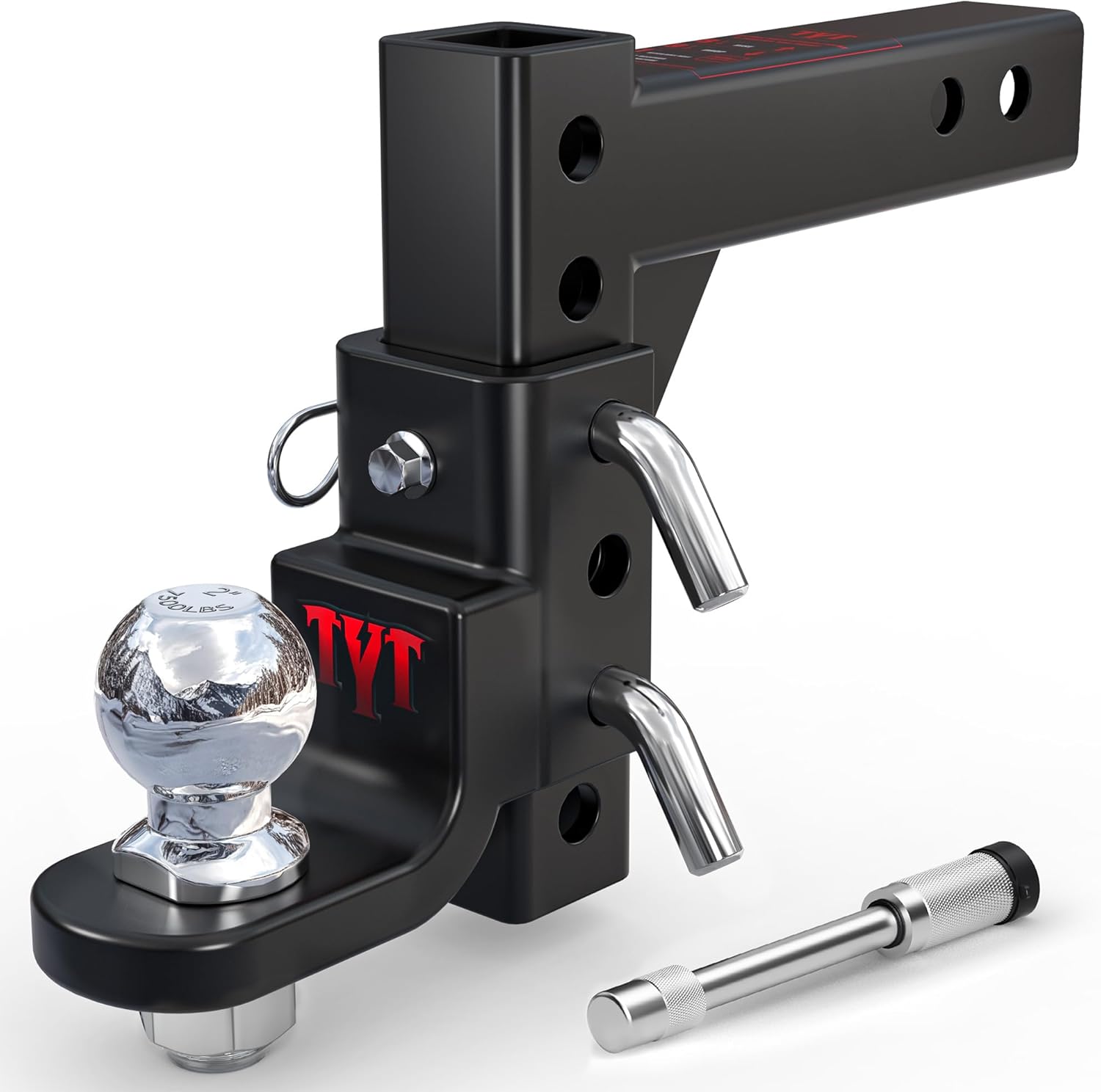
This adjustable trailer hitch ball mount is built for dependable towing with a standard 2-inch receiver and a high-capacity design suited for trucks, campers, boats, and utility trailers. Its adjustable rise and drop settings help you achieve a level tow, while the anti-rattle design supports a smoother, quieter ride. Complete with pins, clips, and a premium pin lock, it offers an easy installation and secure connection for everyday hauling needs.

This proportional trailer brake controller provides smooth, responsive braking by automatically matching your tow vehicle’s stopping force for safer trailer control. The bright LED digital display makes it easy to monitor voltage output in real time, while adjustable braking and sync settings help tailor performance to different trailers and road conditions. Designed for quick installation and broad compatibility, it supports 1 to 4 axle trailers for dependable towing confidence.

This adjustable tri-ball trailer hitch gives you flexible towing support with three hitch ball sizes and a 4.5-inch rise and drop for level hauling across different vehicles and trailers. Built for durability and convenience, it includes a tow hook, D-ring shackle, and a secure locking system for dependable towing, recovery, and off-road versatility.
Short Emergency Towing vs Long-Haul RV Towing
Toyota draws an important line between temporary emergency towing and recreational dinghy towing. For the 2006 Land Cruiser, normal four-wheels-down towing behind a motorhome is prohibited. Separately, Toyota describes a temporary emergency procedure that may be used when a Toyota dealer or commercial tow service is unavailable.
That emergency procedure is limited to a hard-surfaced road, a short distance and low speed. A driver must remain in the Land Cruiser to steer and operate the brakes. This is recovery guidance, not permission for highway-distance RV towing.
Why Road Speed Still Matters When the Engine Is Not Driving the Vehicle
When a vehicle is being pulled, its tires and connected drivetrain components can rotate even though the engine is not supplying power. That is why simply selecting Neutral does not prove that unlimited towing distance or highway speed is safe.
Toyota avoids that uncertainty by explicitly prohibiting recreational four-wheels-down towing on the documented Land Cruiser models discussed here. Follow the prescribed transport method instead of trying to calculate a safe highway RPM or towing speed that Toyota has not specified.
Does Transfer-Case Neutral Solve the Lubrication Problem?
Not necessarily. Transfer-case Neutral disconnects power flow, but it does not automatically certify the lubrication behavior of the transmission, transfer case, shafts and other drivetrain components while the tires are turning for many miles.
Do not overfill the transfer case, change fluid type or run the engine as an improvised workaround for recreational flat towing. Maintain all fluids at the specifications stated by Toyota and use a towing method that matches the owner’s manual.
Can You Flat-Tow It Only a Short Distance?
A short distance does not turn recreational dinghy towing into an approved procedure. Toyota’s 2006 manual permits a narrowly defined temporary emergency tow only when normal towing service is unavailable. The vehicle must be on a hard-surfaced road, travel only a short distance at low speed, and have a driver inside to steer and brake.
If you are planning a motorhome trip, this emergency exception does not apply. Use a flatbed, suitable vehicle trailer or Toyota-approved commercial towing arrangement instead.
Safety Checklist: Battery, Brakes, Gear Selection, and Towing Method
Use this checklist before a Land Cruiser is transported:
- Confirm the exact model year and market. Towing instructions can differ.
- Read the dinghy-towing section. Do not infer approval from Neutral positions.
- Tell the towing operator it is full-time 4WD.
- Prefer a flatbed when practical. This prevents all four road wheels from rotating during transport.
- If a wheel-lift is used on a 2006 model, Toyota specifies dollies under the wheels that are not lifted.
- Do not leave the ignition ON merely to “charge” the battery. An ignition switch by itself does not charge a battery when the engine is not running.
- Do not use transmission Park + transfer-case Neutral as an invented recreational-tow procedure.
- Inspect straps, chains and loading points before transport and again after the vehicle has been secured.
[Products Worth Considering]

This Yuirote universal car motor diagnostic tool helps drivers quickly detect engine fault codes and identify system issues for routine inspections and maintenance. It also supports electronic parking brake reset and emergency release functions, making it useful for handling EPB-related problems without a repair shop visit. Its compact, ergonomic design and broad vehicle compatibility make it a practical choice for car owners and DIY repair enthusiasts.

This recovery tow strap kit is built for dependable vehicle recovery and towing in demanding conditions. The heavy-duty strap features fortified reinforced loops and high break strength for secure pulls, while the included D-ring shackles add versatility and reliable connection options. Designed for trucks, SUVs, ATVs, UTVs, and boats, it also includes protective isolators and a storage bag for safer, quieter transport and easy organization.

This dash cam power adapter is designed for Toyota and Lexus vehicles with the Lane Trace System gray 12-pin connector, making it a simple plug-and-play solution for compatible models. It provides power for dash cams and similar devices through included Mini USB, Type-C, and Micro USB output cables, with automatic on/off operation tied to vehicle ignition. Built for convenience and compatibility, it helps users avoid hardwiring while ensuring proper power delivery for supported dash cams.
Troubleshooting After Incorrect Flat Towing: Noises, Leaks, or Binding
If a Land Cruiser has already been flat-towed against the owner’s-manual guidance, stop using the same towing setup until the drivetrain has been assessed. Warning signs can include new grinding, whining, vibration, fluid leakage, unusual heat, difficulty shifting or drivetrain binding.
- Do not continue towing merely because the vehicle still rolls.
- Check underneath for fresh transmission or transfer-case fluid leakage.
- If there is grinding, binding or a significant new vibration, avoid driving the vehicle until it is inspected.
- Tell the technician how far and approximately how fast the vehicle was towed and whether all four wheels were on the ground.
- Use a flatbed for further transport if drivetrain damage is suspected.
A professional inspection is more useful than attempting to correct a suspected lubrication problem by adding extra fluid or changing towing positions.
Frequently Asked Questions
Can a Toyota Land Cruiser Be Flat Towed?
For the U.S.-market Land Cruisers verified here, Toyota says no. Owner documentation for 2002, 2003, 2006, 2018, 2021 and 2025 models says the vehicle is not designed for dinghy towing with four wheels on the ground. Always verify the manual for your exact year and market.
Should a 2006 Land Cruiser Be in Park or Neutral When Towed?
There is no Toyota-approved Park-plus-transfer-case-Neutral procedure for recreational four-wheels-down towing. For the 2006 model’s temporary emergency-towing procedure, Toyota says to release the parking brake, place the automatic transmission in N, unlock the center differential and put the key in ACC or ON. That emergency procedure is limited to a short distance at low speed and is not the procedure for towing behind a motorhome.
Does Transfer-Case Neutral Mean a Land Cruiser Is Flat-Towable?
No. The 2006 transfer case has a Neutral position, but Toyota still says the vehicle is not designed for four-wheels-down dinghy towing. Transfer-case capability and complete-vehicle recreational-towing approval are separate specifications.
What Is the Safest Way to Transport a 2006 Land Cruiser?
Toyota’s 2006 towing guidance specifies a flatbed or a wheel-lift truck with a towing dolly under the wheels that are not lifted. Both approaches prevent the normal four-wheels-down recreational-towing situation prohibited elsewhere in the manual.
Can I Emergency-Tow a 2006 Land Cruiser With All Four Wheels Down?
Only under Toyota’s limited emergency procedure when normal commercial towing is unavailable. Toyota restricts that method to a short distance, low speed and hard-surfaced road, with a driver inside to steer and brake. It should not be used as a substitute for recreational motorhome towing.
Can a 200-Series Land Cruiser Be Flat Towed Behind an RV?
Toyota’s U.S. owner manuals for the 2018 and 2021 Land Cruiser state that the vehicle is not designed to be dinghy towed with four wheels on the ground. Use the manual for your exact model year before selecting any transport method.
Conclusion
Do not recreationally flat-tow a Toyota Land Cruiser simply because its transmission or transfer case can be placed in Neutral. For the 2006 U.S.-market Land Cruiser, Toyota explicitly says the vehicle is not designed for dinghy towing with four wheels on the ground. The same prohibition appears in multiple earlier and later U.S. Land Cruiser manuals.
For a 2006 Land Cruiser, use a flatbed or Toyota’s specified wheel-lift plus dollies arrangement for normal transport. Treat the manual’s cable/chain procedure as emergency recovery only: short distance, low speed, hard-surfaced road, transmission in N, center differential unlocked and a driver in the vehicle.
Before towing any other Land Cruiser year or market version, check its exact owner’s manual rather than relying on transfer-case design or another owner’s towing setup. Toyota’s current U.S. Land Cruiser manuals can be accessed through Toyota Owners.