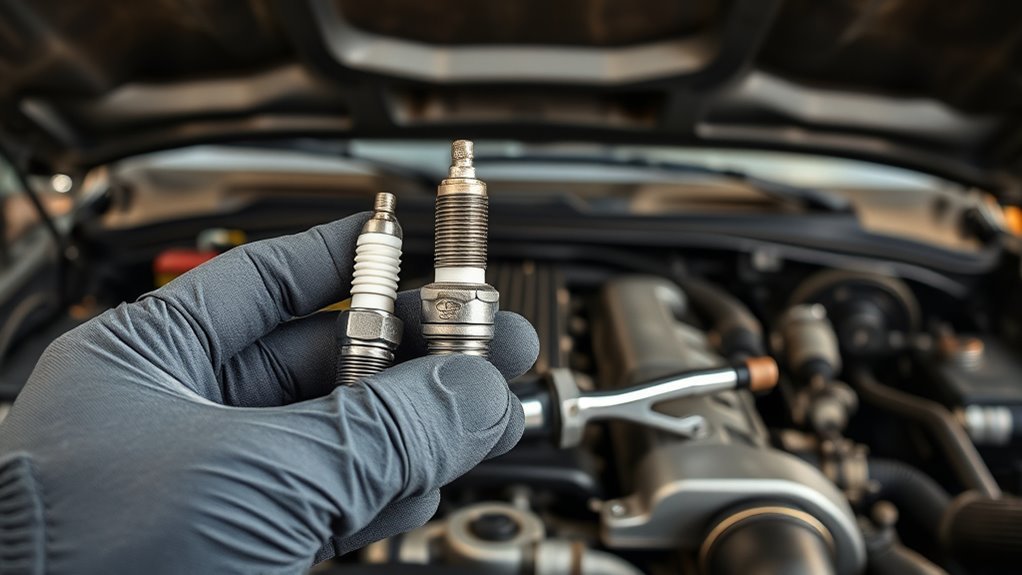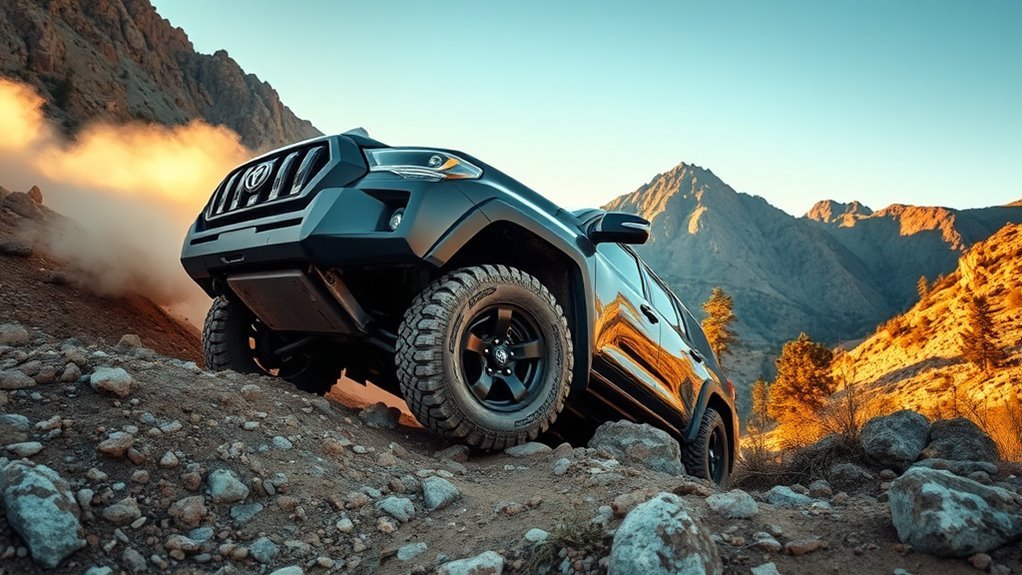
Full-time 4WD on a Toyota Land Cruiser means the vehicle is designed to drive all four wheels during normal road use, not just when you press a button for bad weather or trails. The exact hardware varies by generation, but the goal is the same: steady traction, predictable handling, and the option to lock the drivetrain when the surface gets loose or uneven.
Quick Answer
Land Cruiser full-time 4WD continuously sends power to the front and rear axles through a center differential, so it can be used on normal roads. In rough terrain, locking the center differential forces a more direct front/rear split for traction, while low range adds controlled torque for steep climbs, mud, sand, and rocks.
Key Takeaways
- Full-time 4WD is safe for normal driving because the center differential allows the front and rear axles to turn at different speeds.
- Use the unlocked/high-range mode for pavement, rain, snow, gravel roads, and mixed traction.
- Lock the center differential only when the surface is loose or slippery enough to let the tires slip.
- Use low range for slow, high-load driving such as steep climbs, descents, deep sand, rocks, or mud.
- Good tires matter as much as the drivetrain; 4WD helps you move and steer, but it does not make braking distances disappear.
What Full-Time 4WD Means for Land Cruiser Owners
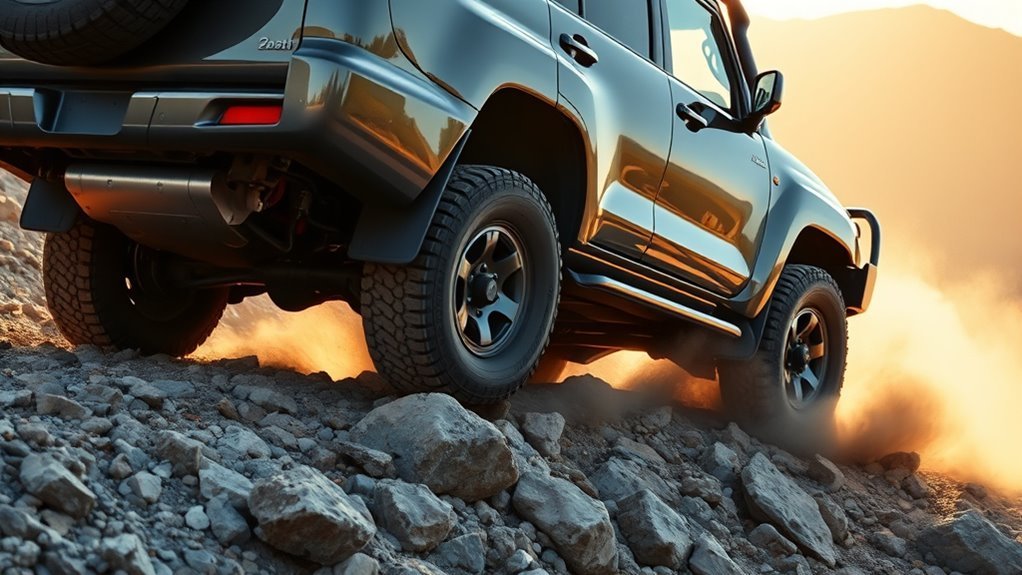
Think of full-time 4WD as a continuously active drivetrain. Instead of waiting for you to engage four-wheel drive, the Land Cruiser normally drives both axles all the time through a center differential. That center differential is the reason the vehicle can use 4WD on dry pavement without the tire scrub and driveline stress common in part-time 4WD systems.
On a Land Cruiser 200 Series, Toyota documentation describes a Torsen limited-slip center differential with a front-to-rear torque distribution structure of about 41:59 under normal acceleration. Many owners round that to about 40/60. Newer U.S.-market 2024+ Land Cruiser models also use full-time four-wheel drive and add standard center and rear locking differentials, according to Toyota’s U.S. newsroom.
The practical result is confidence. You do not need to decide whether the road is “bad enough” for 4WD when rain turns to slush or pavement turns to gravel. The system is already working. Your job is to choose the right mode when the surface becomes loose, steep, or uneven enough to need more mechanical lockup.
Note: Land Cruiser drivetrains vary by generation, market, and trim. A 100 Series, 200 Series, 300 Series, and 2024+ 250 Series do not all use identical hardware. Always confirm the exact switches and warnings in your owner’s manual.
How the Land Cruiser Splits Torque Between Front, Center, and Rear
The Land Cruiser’s full-time system starts with the center differential. In normal high-range driving, the center differential lets the front and rear axles rotate at slightly different speeds. That matters every time you turn, because the front and rear tires do not travel exactly the same distance through a corner.
When the center differential is unlocked, the vehicle is best suited to normal roads, rain, light snow, gravel, and mixed surfaces. When you press the center differential lock switch, the front and rear axles are tied together more directly, giving a predictable front/rear drive connection for low-traction terrain.
| Land Cruiser generation | Typical full-time 4WD hardware | What it means for the driver |
|---|---|---|
| 100 Series | Full-time 4WD with a lockable center differential; some trims and markets also had rear differential lock or traction-control changes by year. | Use unlocked for normal driving and lock the center when traction is loose enough to prevent binding. |
| 200 Series | Full-time 4WD with a Torsen limited-slip center differential and a lockable center differential; Crawl Control and Multi-Terrain Select appear on many trims. | The system can bias torque automatically when unlocked, then give stronger mechanical consistency when locked off-road. |
| 2024+ U.S. Land Cruiser | Full-time 4WD with a two-speed transfer case plus center and rear locking differentials as standard. | Use H4 for normal driving, center lock for loose terrain, rear lock only when extra rear-axle traction is needed at low speed. |
That is why a Land Cruiser feels different from a basic part-time 4WD truck. In an unlocked full-time system, the vehicle can stay composed on mixed surfaces. In locked mode, it becomes more deliberate and trail-focused.
Land Cruiser Benefits: Winter Driving, Stability, and Off-Road Control
Full-time 4WD is most useful when grip changes constantly. A winter commute may include dry asphalt, wet intersections, compacted snow, and icy patches within the same mile. A trail may switch from hardpack to loose gravel to ruts. Because the Land Cruiser is already driving all four wheels, it responds without the delay or guesswork of engaging a separate 4WD mode.
| Feature | Benefit | Best use |
|---|---|---|
| Full-time 4WD | Continuous front and rear drive | Rain, snow, gravel, daily driving |
| Center differential | Allows normal cornering on pavement | Unlocked H4/high range |
| Center differential lock | More direct front/rear drive | Mud, sand, deep snow, loose climbs |
| Low range | More control at low speed | Rocks, steep grades, technical trails |
| Traction control/Crawl Control | Manages wheelspin with brake and throttle input | Slow technical terrain |
Warning: Full-time 4WD helps the Land Cruiser accelerate and maintain stability, but it does not cancel physics. On ice, braking and cornering still depend heavily on tire grip, speed, weight transfer, and following distance.
When Full-Time 4WD Beats Part-Time 4WD and AWD
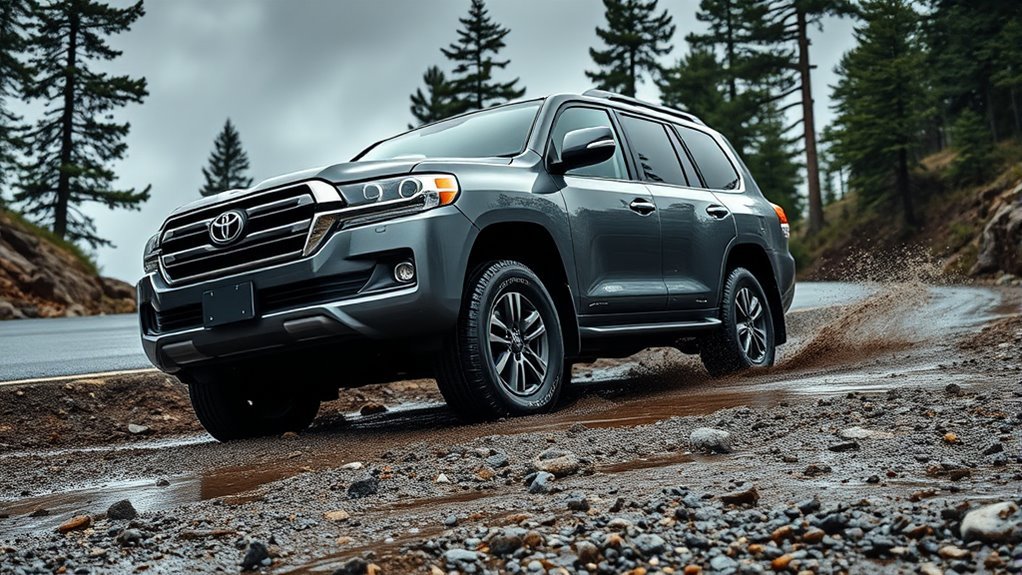
Full-time 4WD sits between two common systems: part-time 4WD and road-focused AWD. A part-time 4WD truck is strong off-road, but it usually should not be driven locked in 4WD on dry pavement. Many AWD crossovers are excellent in bad weather, but they often lack low range, a lockable center differential, or the cooling and durability expected for repeated trail work.
The Land Cruiser’s advantage is that it combines daily-road usability with genuine off-road hardware. It can cruise in high range on pavement, then use locked modes and low range when the road turns into a climb, washout, snow drift, or sandy track.
Winter and Icy Roads
In winter, leave the Land Cruiser in its normal unlocked high-range mode unless the owner’s manual or conditions call for something else. This keeps the center differential free, which helps the vehicle turn smoothly on surfaces where grip changes from corner to corner.
For deep snow, unplowed roads, or slick climbs where the tires are already slipping, locking the center differential can help the vehicle maintain momentum. Once you return to plowed pavement or a high-grip surface, unlock it again.
High-Traction Off-Roading
On firm dirt, hardpack, or rocky terrain with uneven grip, the unlocked full-time system gives you stable steering and predictable throttle response. If wheelspin increases or one axle starts losing drive, the center lock gives more consistent front/rear drive.
For slow obstacles, low range is the bigger advantage. Low range multiplies torque and improves throttle control, so you can climb, descend, or crawl without rushing the vehicle.
Transfer-Case Modes Explained: H4, Locked, and L4
At a Glance
| Time Required | A few seconds for center lock; more time for H4-to-L4 shifts because many models require stopping and selecting Neutral |
| Difficulty | Easy, once you know your model’s switches and indicator lights |
| Tools Needed | None |
| Cost | $0 when used correctly; incorrect use on high-grip pavement can increase wear |
[Products Worth Considering]

This digital tire tread depth gauge helps you check tire wear quickly and accurately with fractional inch, decimal inch, and millimeter readouts. Its large LCD screen, zero reset function, and automatic shutoff make it easy to use for cars, motorcycles, SUVs, trucks, and pickups. Designed for clear readings and dependable measurement, it is a practical tool for routine tire safety checks.

Custom-fit floor mats and cargo liner designed to provide edge-to-edge protection for the Toyota Land Cruiser Prado. Made from durable TPE material, they offer all-weather defense against rain, slush, snow, mud, and everyday dirt while remaining easy to install, clean, and maintain. The odorless, non-slip design helps keep your interior safer, cleaner, and more comfortable in every season.

These custom floor mats are designed to fit the Toyota Land Cruiser GX550 with a 5-seat layout for a precise, secure install. Made from durable TPE, they help shield your interior from spills, mud, snow, dirt, sand, pet hair, and everyday debris while making cleanup quick and easy.
H4 Unlocked: Normal Driving
For most Land Cruiser owners, H4 unlocked is the default mode. Toyota’s current owner guidance describes H4 as the high-speed position for normal driving on all types of roads. In this mode, the Land Cruiser can use full-time 4WD without binding because the center differential remains open or unlocked.
Use H4 unlocked for:
- Dry pavement
- Wet roads
- Light snow or slush
- Gravel roads
- Mixed traction where the surface changes often
- Highway driving in bad weather
Center Differential Locked: Loose or Slippery Terrain
Locking the center differential gives the front and rear axles a more fixed relationship. This is helpful when the ground can slip under the tires, such as mud, sand, deep snow, loose gravel, or uneven trail climbs.
Use center lock when you need more mechanical traction than the unlocked full-time system can provide. Do not treat it as a “more stable highway mode.” It is for surfaces loose enough to release drivetrain stress through tire slip.
Warning: Avoid using the center differential lock on dry pavement or other high-traction surfaces. The tires may not slip enough to release driveline windup, which can cause hopping, heavy steering, binding, and unnecessary wear.
L4 Low Range: Slow Control and Maximum Torque
Low range is for slow, demanding driving where control matters more than speed. Toyota’s current Land Cruiser manual describes L4 as the low-speed position for driving that requires maximum power and traction, such as climbing or descending steep hills, off-road driving, and hard pulling in sand or mud.
Use low range for:
- Steep climbs or descents
- Rocky trails
- Deep mud or sand
- Recovering from a stuck situation
- Boat ramps or heavy pulling on slippery surfaces
- Technical obstacles where slow throttle control is critical
Pro Tip: Practice shifting between H4, center lock, and L4 before you need them on a trail. Learn what each indicator light looks like so you are not troubleshooting switches while stuck in mud or snow.
How to Choose the Right Mode in Real Conditions
The easiest rule is to start with the least locked mode that works. More lockup is not always better. Lockers improve traction in loose terrain, but they can reduce turning smoothness and add drivetrain stress when the ground has too much grip.
Use H4 Unlocked When
- You are driving on normal pavement.
- The road is wet, snowy, or icy but still mostly maintained.
- You are on gravel or dirt at moderate speed.
- You need stable handling more than maximum crawl traction.
- You are unsure whether the surface is loose enough for lockup.
Lock the Center Differential When
- The tires are spinning on loose surfaces.
- You are crossing deep snow, soft sand, mud, or loose gravel.
- You are climbing a slippery trail where momentum matters.
- The vehicle feels like one axle is doing too much of the work.
- You are moving slowly enough to avoid harsh driveline loads.
Use Low Range When
- You need slow, precise throttle control.
- You are climbing or descending steep grades.
- You are crawling over rocks or ruts.
- You need engine braking on a descent.
- You are towing, pulling, or recovering on a loose surface.
Unlock Again When Traction Returns
Once the road becomes firm, dry, or high-grip again, unlock the center differential. You should feel lighter steering and smoother turning. If the vehicle bucks, hops, or resists tight turns, that is a sign you may still be locked on a surface with too much traction.
Common Mistakes and Troubleshooting
Most Land Cruiser 4WD problems come from using the wrong mode for the surface, shifting too quickly, ignoring tire condition, or forgetting that each generation has slightly different controls.
| Symptom | Likely cause | What to do |
|---|---|---|
| Heavy steering or tire hopping in a parking lot | Center differential may be locked on high-traction pavement. | Stop using the locked mode, unlock the center differential, and drive straight briefly to let the drivetrain relax. |
| L4 will not engage | Many models require the vehicle to be stopped with the transmission in Neutral. | Follow the exact shift procedure in your owner’s manual and wait for the indicator light to confirm engagement. |
| Vehicle still struggles in snow | Tires may be worn, mismatched, overinflated, or not suitable for winter. | Check tread depth, pressure, tire age, and winter rating before blaming the 4WD system. |
| Warning lights after off-road use | Mud, water, wheel-speed sensor issues, overheating, or incomplete mode engagement can trigger alerts. | Stop safely, check the manual, inspect for obvious damage, and schedule service if lights remain on. |
Limitations, Maintenance Needs, and Upgrade Options for Land Cruiser 4WD
The Land Cruiser’s full-time 4WD system is strong, but it is not maintenance-free. The transfer case, differentials, driveshafts, boots, seals, and tires all affect how well the system works. Water crossings, towing, heavy loads, sand, mud, and repeated low-speed crawling can shorten service intervals or reveal leaks faster than normal commuting.
Follow the maintenance schedule for your exact model and market. Toyota’s owner guidance says scheduled maintenance should be performed at the specified intervals in the maintenance guide or owner’s manual supplement. If the vehicle has been used in deep water, mud, or sand, inspect drivetrain fluids sooner rather than waiting for the next routine service.
Upgrades can help, but they should match your actual use. Common Land Cruiser traction upgrades include all-terrain or winter tires, recovery points, skid plates, suspension changes, and differential lockers where the vehicle does not already have them. For most owners, tires and driver technique deliver more real-world improvement than adding hardware first.
The best 4WD system cannot outperform poor tire contact. A Land Cruiser with the right tires, correct pressure, and smooth inputs will usually beat a more modified truck on worn or mismatched tires.
[Products Worth Considering]

This 50-pack of tire tread depth gauges offers a simple way to check tire wear quickly and accurately. Color-coded reading zones make it easy to see tread condition at a glance, while the compact design and pocket clip support convenient everyday carry. Built for repeated use, these gauges help drivers monitor tire safety with confidence.

This dial type tire tread depth gauge helps you quickly check tread wear on motorcycles, cars, trucks, and buses with easy-to-read 1/32-inch increments. Its colorful zone markings make it simple to assess tire condition for safer driving in different weather, while the durable zinc cast body and legible dial provide dependable everyday use.

These off-road traction boards are designed to help vehicles recover from mud, sand, and snow with reliable grip and easier ramp-up. Their double-sided diamond construction, cross-shaped teeth, and contoured ramps improve traction while the durable polypropylene build stays flexible in harsh conditions. Convenient mounting points, ergonomic handles, and a visible leash make them practical to carry, store, and retrieve when recovery is needed.
Best Tires and Driving Habits to Maximize Land Cruiser 4WD Performance
Full-time 4WD only works through the tires, so tire choice is not a small detail. For regular winter driving, look for a true winter tire or an all-weather/all-terrain tire with the three-peak mountain snowflake symbol when appropriate for your climate. The 3PMSF mark indicates the tire meets a severe-snow traction standard, but it does not guarantee ice braking or cornering performance by itself.
For mixed daily driving and trails, a quality all-terrain tire with the correct load rating is often the best balance. For heavy snow and ice, dedicated winter tires are usually safer than aggressive mud-terrain tires, even on a Land Cruiser.
Use these habits to get the most from the drivetrain:
- Check tire pressure before long trips, towing, and cold-weather driving.
- Rotate tires regularly and keep all four tires the same size and similar tread depth.
- Use smooth throttle, steering, and braking inputs on slick surfaces.
- Shift into low range before the obstacle, not after momentum is already gone.
- Unlock the center differential when you return to high-grip pavement.
- After mud, sand, or water crossings, inspect brakes, underbody parts, and fluids.
The NHTSA TireWise tire-safety guide emphasizes proper tire inflation, rotation, and inspection because poor tire maintenance can affect safety, tread life, and fuel use. That advice matters even more on a heavy 4WD vehicle.
[Products Worth Considering]

This LUMITECO tire tread depth gauge set makes it easy to monitor tire wear and maintain safer driving performance. The color-coded scale provides quick, easy-to-read measurements, while the compact pocket-size design and included clip make it convenient to keep in your vehicle or toolbox. Suitable for cars, trucks, motorcycles, and more, it offers a simple reusable way to check tread depth whenever needed.

These X-BULL recovery traction tracks help drivers get unstuck from sand, snow, mud, or ice with a stable U-shaped elastic design and a wavy ramp that makes tire entry easier. Built from reinforced nylon, they are flexible, impact-resistant, and designed to perform in extreme temperatures while providing reliable emergency traction for a wide range of vehicles.

The JACO ElitePro Digital Tire Pressure Gauge delivers shop-grade accuracy with a clear digital readout, making it easy to maintain proper tire pressure for safer driving and better performance. Built with rugged brass and steel components, a protective guard, and a flexible air hose, it is designed for reliable use across cars, trucks, motorcycles, bikes, RVs, and trailers. The lock-on display, built-in bleeder valve, and bright backlit screen add convenience in any lighting condition.
Frequently Asked Questions
Is it okay to drive a Land Cruiser in 4WD all the time?
Yes, when the vehicle is in its normal unlocked full-time 4WD mode. That is how the system is designed to be used. What you should not do is drive with the center differential locked on dry pavement or other high-traction surfaces unless your owner’s manual specifically allows it for a special situation.
When should I lock the center differential?
Lock the center differential when the surface is loose or slippery enough for the tires to slip, such as deep snow, mud, sand, loose gravel, or technical trails. Unlock it again when you return to firm pavement or high-grip ground.
Does full-time 4WD mean the Land Cruiser is the same as AWD?
No. The systems overlap because both can drive all four wheels, but a Land Cruiser usually adds truck-grade off-road hardware such as a two-speed transfer case, lockable center differential, and in some models a rear locker. Many AWD systems are designed mainly for road traction and do not have low range.
Should I use low range in snow?
Use low range in snow only when you need slow control or extra torque, such as deep snow, a steep driveway, a trail, or a recovery situation. For normal snowy roads at traffic speed, high range with the center differential unlocked is usually the better choice.
Can full-time 4WD make up for bad tires?
No. Full-time 4WD can help the Land Cruiser move forward and maintain stability, but braking, cornering, and steering still depend on tire grip. Worn, mismatched, or wrong-season tires can make even a capable Land Cruiser feel unsafe.
Conclusion
The Toyota Land Cruiser’s full-time 4WD system is built for steady, everyday traction and serious off-road control. Use the normal unlocked high-range mode for daily driving, rain, snow, and mixed roads. Lock the center differential when the surface is loose enough to slip, and select low range when you need slow power and precision. Maintain the fluids, inspect the drivetrain, choose the right tires, and the system will give you the predictable control Land Cruisers are known for.
Sources
- Toyota USA Newsroom: The Evolution of a Legend — The All-New 2024 Land Cruiser — backs up current U.S. Land Cruiser full-time 4WD, center and rear locking differentials, and 2024+ drivetrain information.
- Toyota Owners: 2025 Land Cruiser Four-Wheel Drive System — backs up H4 and L4 mode descriptions and owner operation guidance.
- Toyota Australia: LandCruiser 200 — backs up the LandCruiser 200 full-time 4WD reference.
- Toyota Australia PressRoom: LandCruiser 200 Series Wagon — backs up the 200 Series Torsen limited-slip center differential and lockable transfer-case information.
- NHTSA TireWise Tire Safety Guide — backs up tire inflation, rotation, inspection, and tire-safety maintenance guidance.
- U.S. Tire Manufacturers Association Tire Information Service Bulletin — backs up severe-snow tire marking context, including the three-peak mountain snowflake reference.