
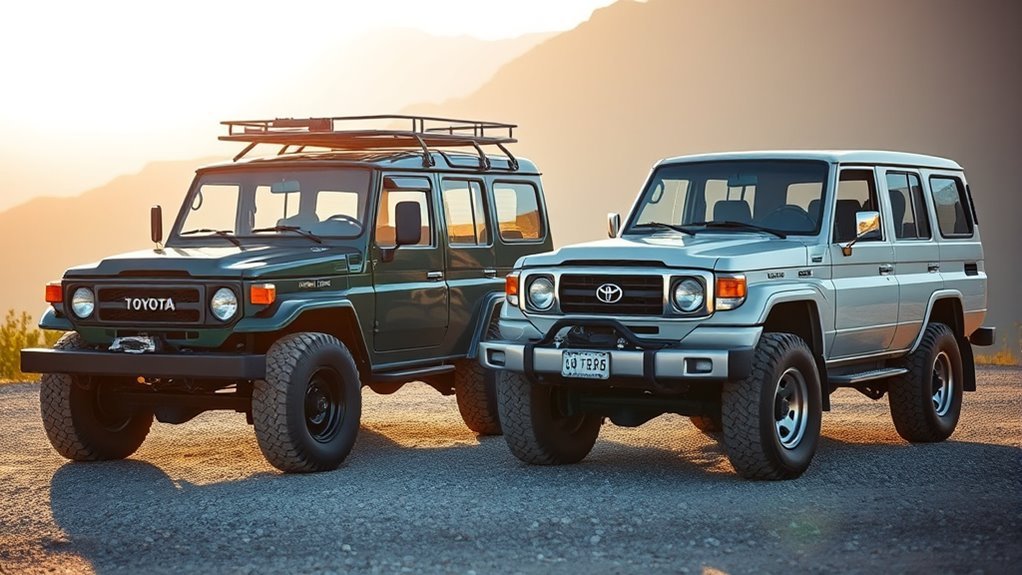
80 Series vs 100 Series Land Cruiser: Key Differences
You can build either Land Cruiser into a tough overland rig, but the wrong choice can cost you comfort, money, or trail capability. The 80 Series favors axle strength and simple off-road upgrades, while the 100 Series gives you a smoother ride, more power, and better long-distance manners. This guide shows how the model codes, axles, engines, lockers, weak points, and buyer checks shape the right choice for your use.
Quick Answer
Choose the 80 Series if you want the strongest factory trail platform, a solid front axle, and simpler heavy-duty modifications. Choose the 100 Series if you want more road comfort, stronger highway power, better towing manners, and a more refined cabin. Both need careful rust, differential, suspension, and service-history checks before you buy.
Key Takeaways
- The 80 Series suits serious off-road use because its solid front axle offers strength and articulation.
- The 100 Series suits daily driving and touring because its independent front suspension improves comfort and steering.
- The FZJ80 uses a 4.5L inline-six, while the UZJ100 uses Toyota’s 4.7L 2UZ-FE V8.
- Factory lockers, axle design, rust, and service records matter more than mileage alone.
- Early 100 Series front differentials need extra inspection if the vehicle has seen hard off-road use.
What’s in This Article
- Quick Verdict: Pick 80 or 100 Series Land Cruiser
- Model Years and Chassis Codes (FZJ80, HDJ80, UZJ100, HDJ100)
- Quick Visual ID: 80 vs 100 Series
- 80 vs 100 Drivetrain Differences (Engines and Transmissions)
- Front Axle: SFA (80) vs IFS (100)
- Factory Diffs and Lockers: What Came Stock or Optional
- Side-by-Side Comparison: 80 Series vs 100 Series
- Exterior and Interior Cues That Confirm the Series and Trim
- Off-Road Strengths, Common Weaknesses, and Failure Points
- Common Upgrades, Weak Parts, and Cross-Compatibility Swaps
- Buyer’s Checklist: Which Series Fits Your Use Case
- Frequently Asked Questions
Quick Verdict: Pick 80 or 100 Series Land Cruiser
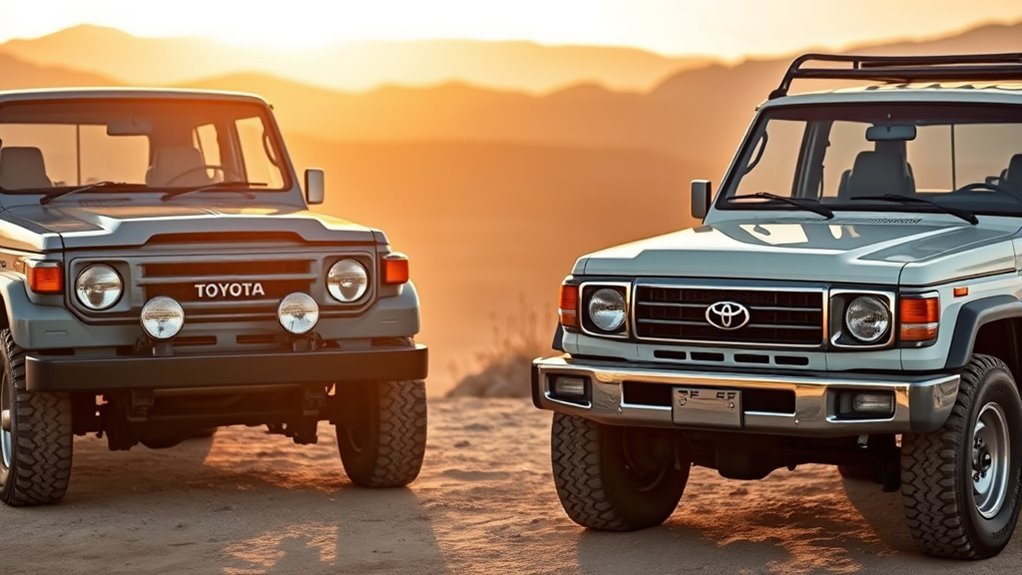
If you want pure off-road capability, pick the 80 Series. If you want smoother on-road manners, more power, and a quieter cabin, pick the 100 Series.
The 80 Series gives you solid front axle strength, simple suspension parts, and strong aftermarket support. It’s the better choice for hard trails, slow rock work, and builds that use front and rear lockers.
The 100 Series shifts the focus toward comfort. Its independent front suspension, 4.7L V8 option, stronger highway performance, and refined interior make it better for towing, family travel, and long road trips.
Pro tip: Buy based on your real use, not the most extreme build you might do someday.
[Products Worth Considering]

This all-in-one front end service kit is designed to help remove stubborn ball joints, tie rod ends, and pitman arms on a wide range of vehicles. Built from hardened alloy and organized in a portable ABS case, it offers reliable performance for both professional mechanics and DIY repairs.

These custom floor mats are designed to fit the Toyota Land Cruiser GX550 with a 5-seat layout for a precise, secure install. Made from durable TPE, they help shield your interior from spills, mud, snow, dirt, sand, pet hair, and everyday debris while making cleanup quick and easy.

Custom-fit floor mats and cargo liner designed to provide edge-to-edge protection for the Toyota Land Cruiser Prado. Made from durable TPE material, they offer all-weather defense against rain, slush, snow, mud, and everyday dirt while remaining easy to install, clean, and maintain. The odorless, non-slip design helps keep your interior safer, cleaner, and more comfortable in every season.
Model Years and Chassis Codes (FZJ80, HDJ80, UZJ100, HDJ100)
Land Cruiser codes tell you a lot about the engine, market, and model family. The 80 Series ran through the 1990s, while the 100 Series replaced it in many markets for the 1998 model year.
Choosing between 80 and 100 Series? Start with the chassis code. It tells you whether you’re looking at a rugged solid-axle truck or a more refined touring platform.
- FJ80: Early petrol 80 Series models, often linked with the 3F-E engine in some markets.
- FZJ80: Petrol 80 Series models with the 4.5L 1FZ-FE inline-six.
- HDJ80: Turbo-diesel 80 Series models with 4.2L 1HD-series diesel engines.
- UZJ100: Petrol 100 Series models with the 4.7L 2UZ-FE V8.
- HDJ100: Diesel 100 Series models with 4.2L 1HD-series turbo-diesel engines.
Market rules, trim names, and engines vary by country. Always confirm the VIN plate, engine code, axle tags, and option equipment on the exact vehicle.
Quick Visual ID: 80 vs 100 Series
You can usually spot an 80 Series by its taller, boxier shape, square lamps, and upright stance. You can also see its solid front axle under the front end when you look below the bumper.
The 100 Series looks smoother, wider, and more modern. It has rounder lighting, a broader grille, more integrated bumpers, and independent front suspension parts instead of a live front axle.
Use the exterior clues with the interior layout. The 80 Series feels more utilitarian, while the 100 Series usually feels quieter, softer, and more polished.
80 vs 100 Drivetrain Differences (Engines and Transmissions)
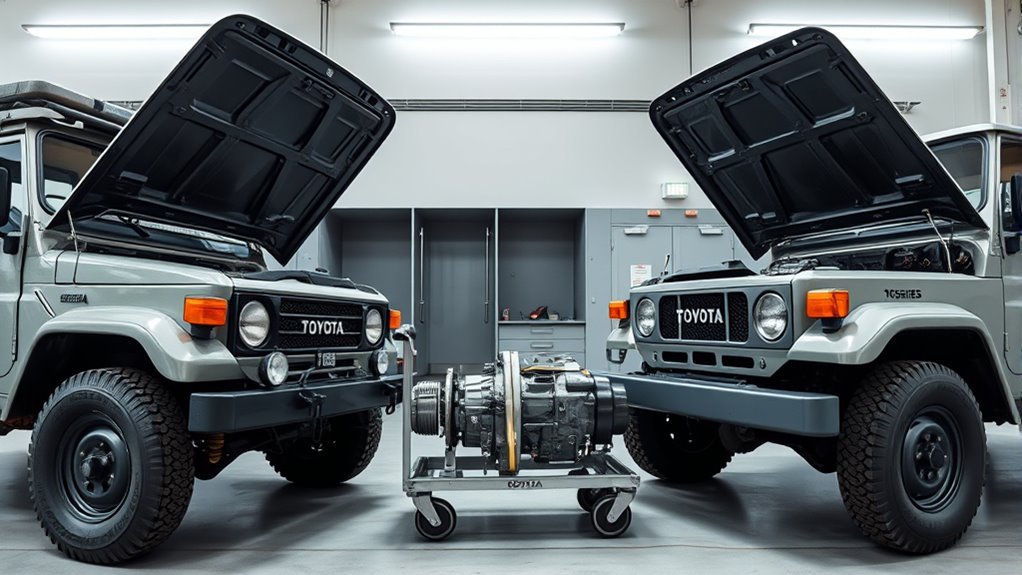
The 80 Series commonly uses the 4.5L 1FZ-FE inline-six in FZJ80 models. The 100 Series UZJ100 uses the 4.7L 2UZ-FE V8, which gives stronger highway pull and better towing manners.
That change reshaped the whole driving feel. The 80 feels simple, sturdy, and mechanical, while the 100 feels smoother and more relaxed at speed.
Engine Layout Differences
The 80 Series inline-six favors simplicity, space, and long-term serviceability. It can feel slow by modern standards, but it has a strong reputation when owners keep cooling, oiling, and ignition systems in good shape.
The 100 Series 4.7L V8 gives better power delivery for highway driving, towing, and loaded touring. It adds complexity, but it also makes the truck feel less strained on long trips.
- Inline-six: Simple layout, strong access, and a proven heavy-duty feel.
- V8: Better power, smoother running, and stronger road manners.
- Diesel options: HDJ80 and HDJ100 models vary by market and command high demand.
- Real-world choice: Condition, maintenance, and parts access often matter more than engine preference.
Transmission and Gearing
The 80 Series often uses four-speed automatic transmissions such as the A440F or A442F, depending on model and market. These units suit low-speed work and old-school durability.
The 100 Series commonly uses the A343F four-speed automatic in earlier models, with later markets receiving five-speed automatics. The V8’s extra torque helps the 100 carry speed, load, and larger tires more easily.
Gearing changes can help either platform after larger tire installs. Check axle ratios, transmission behavior, transfer-case function, and service records before you commit to a build.
Front Axle Design
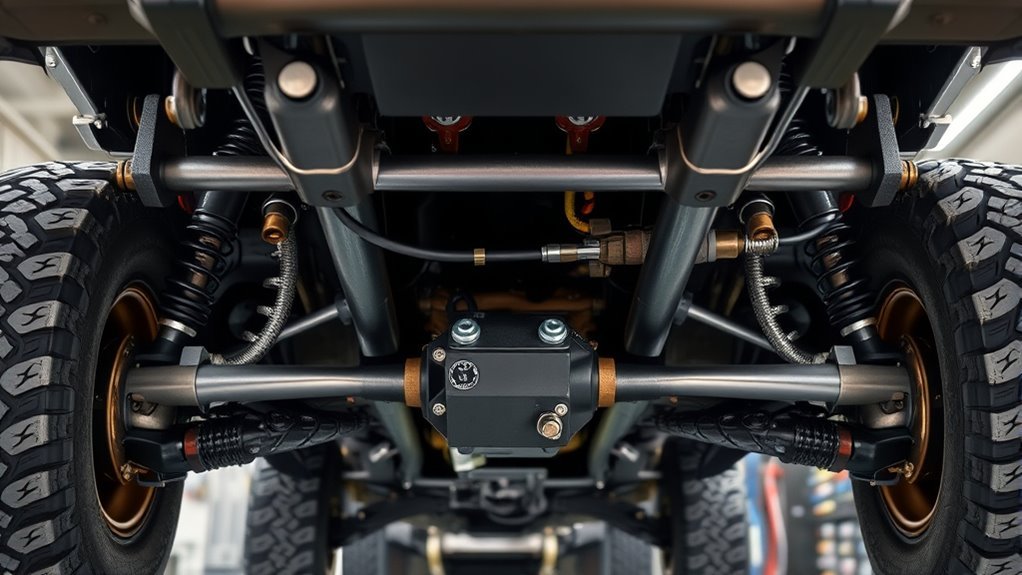
The biggest mechanical difference sits under the front end. The 80 Series uses a solid front axle (SFA), while the 100 Series uses independent front suspension (IFS) in most markets.
The SFA gives the 80 more front-end articulation and simpler trail repairs. The IFS gives the 100 better steering feel, road comfort, and stability at highway speeds.
The 105 Series adds an important twist in some non-U.S. markets. It uses a 100-style body with a solid front axle and more utilitarian hardware.
Front Axle: SFA (80) vs IFS (100)
The 80’s solid front axle gives it a strong trail advantage in rough terrain. It keeps both front wheels linked, which helps articulation and durability over rocks, ruts, and washouts.
The 100’s independent front suspension trades some extreme articulation for a smoother ride. It steers better on pavement and feels more stable during long highway travel.
Solid Front Axle Benefits
The 80 Series solid front axle gives you strength, predictable movement, and easier repairs in remote areas. It also works well with larger tires, lifts, and lockers when you build it correctly.
- Durability: The beam axle handles impacts better than many independent setups.
- Articulation: Long axle movement helps the tires stay planted on uneven ground.
- Serviceability: Fewer suspension joints can make trail repairs easier.
- Traction options: Front and rear lockers can make the 80 very capable off-road.
Independent Front Suspension Tradeoffs
The 100 Series IFS gives you better comfort, steering, and road control. That makes it a strong choice if you drive long distances before reaching the trail.
The tradeoff appears in hard off-road use. IFS has less front articulation, more geometry limits, and more stress on control arms, CV joints, and the front differential when pushed hard.
Off-Road Modifications Impact
Modifications change the balance, but they don’t erase the base design. The 80 gains capability quickly with suspension tuning, lockers, armor, and tires.
The 100 can also become a strong overland rig. You just need to manage IFS angles, front differential load, tire size, and lift height with more care.
- Lockers: Add traction to either platform, especially with careful tire choice.
- Suspension tuning: Match springs and shocks to the vehicle’s weight and use.
- Axle strength: Reinforce weak points before hard trips, not after a trail failure.
- Build cost: Expect IFS upgrades to cost more when you chase serious trail performance.
Warning: Large tires and tall lifts can shorten CV joint, steering, and differential life on an IFS 100 Series.
Factory Diffs and Lockers: What Came Stock or Optional
Toyota offered different locker setups by year, trim, and market. Some 80 Series trucks came with factory front and rear locking differentials, which makes them highly desirable for off-road buyers.
Many 100 Series models focused more on comfort and touring, though some markets and trims offered a rear locker. Early 100 Series front differentials can suffer under hard use, especially with heavy tires, aggressive driving, or poor maintenance.
Don’t assume any Land Cruiser has lockers because of its badge. Test the locker switches, inspect the axle housings, and confirm the option equipment before you pay a premium.
Side-by-Side Comparison: 80 Series vs 100 Series
| Category | 80 Series Land Cruiser | 100 Series Land Cruiser |
|---|---|---|
| Best use | Hard off-road work and simple overland builds | Daily driving, towing, touring, and family travel |
| Front suspension | Solid front axle | Independent front suspension |
| Common petrol engine | 4.5L 1FZ-FE inline-six in FZJ80 models | 4.7L 2UZ-FE V8 in UZJ100 models |
| Ride comfort | Firm, truck-like, and simple | Smoother, quieter, and more refined |
| Off-road strength | Excellent articulation and axle durability | Good capability with more front-end limits |
| Buyer risk areas | Rust, steering wear, birfields, lockers, cooling system | Rust, timing belt service, IFS wear, front differential stress |
[Products Worth Considering]

This 2-piece suspension tool set combines a compact strut spreader with a high-leverage lower control arm prying tool to help speed up safe suspension service. Designed for many FWD, import, and domestic vehicles, it supports strut, hub, ball joint, and control arm work while helping reduce the risk of damage to surrounding components. Heavy-duty steel construction makes it a dependable choice for mechanics and serious DIY suspension repair.

This master ball joint removal kit gives you the tools needed to remove and install ball joints, tie rod ends, Pitman arms, and other front-end components. It is designed for broad compatibility with many GM, Chevrolet, Ford, and Dodge vehicles, including a range of light trucks, vans, and SUVs. Built from forged steel and stored in a molded ABS case, it offers durable performance and organized portability for garage or shop use.
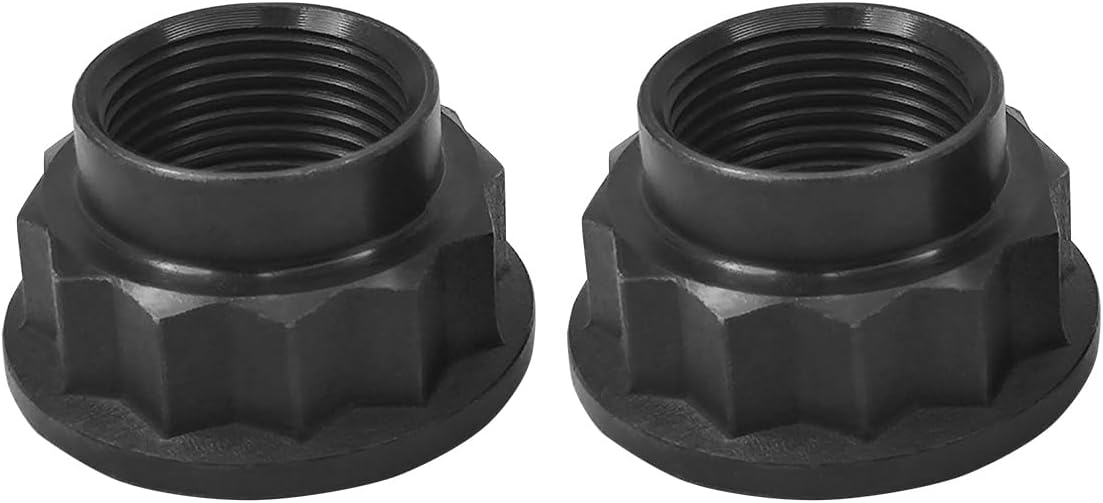
This pair of front axle shaft nuts is designed to secure CV joints and wheel bearings on compatible Toyota and Lexus front drive axles. Built from heat-treated carbon steel for durability and corrosion resistance, it helps maintain proper torque and reliable power transfer. It is a direct replacement for several factory part numbers and is recommended for paired replacement.
Choose the 80 Series If You Want Trail Strength
Choose the 80 Series if you want a stronger factory base for technical trails. Its solid front axle, simple layout, and locker options make it a favorite for off-road builds.
You should also choose it if you value mechanical feel over comfort. It rewards careful maintenance and smart upgrades, but it won’t feel as quiet or powerful as a 100 Series.
Choose the 100 Series If You Want Comfort and Touring Range
Choose the 100 Series if you spend more time on highways, forest roads, and long trips. Its V8 power, smoother suspension, and nicer cabin make it easier to live with every day.
You should also choose it if you tow, carry family, or want a more modern feel. Keep the IFS, front differential, timing belt history, and suspension parts high on your inspection list.
Exterior and Interior Cues That Confirm the Series and Trim

Visual cues help you tell an 80 from a 100 Series before you crawl underneath. The 80 has a boxier front end, square headlights, simpler bumpers, and a more upright body.
The 100 has smoother bodylines, rounder lamps, wider trim, and a more modern grille. Inside, it usually adds more leather, insulation, electronics, and comfort features.
Trim badges, locker switches, axle tags, and interior equipment can help confirm the exact model. Still, the VIN plate and drivetrain inspection give you the most reliable proof.
- Check the headlights, grille, and bumper shape.
- Compare the dashboard layout and switchgear.
- Inspect seat materials, trim badges, and option equipment.
- Look under the front end to confirm SFA or IFS.
Off-Road Strengths, Common Weaknesses, and Failure Points
The 80 Series gives you the stronger front-end layout for hard off-road use. Still, it can suffer from rust, worn steering parts, leaking axle seals, tired suspension, and neglected cooling systems.
The 100 Series gives you more comfort, but its IFS needs careful inspection. Check CV joints, lower control arms, ball joints, front differential condition, and any signs of abuse from large tires.
Both trucks can drink fuel quickly, especially with roof racks, armor, larger tires, and heavy camping gear. Plan fuel range before long remote trips.
Solid Axle Advantages
The 80 Series solid front axle helps it stay composed on rough ground. It spreads loads across a simple beam axle and keeps the front tires working through uneven terrain.
- Durability: The axle design handles trail impacts well.
- Articulation: The suspension keeps tires in contact with uneven ground.
- Serviceability: The layout supports easier field diagnosis and repair.
- Traction: Factory or aftermarket lockers improve grip in low-traction terrain.
Common Failure Points
You should inspect both models with a lift, bright light, and patient test drive. Rust can affect frames, body mounts, tailgates, sills, and suspension mounting points.
On the 80 Series, check axle seals, steering knuckles, birfield joints, locker function, cooling parts, and head gasket history. On the 100 Series, check timing belt records, IFS wear, front differential noise, hydraulic suspension if equipped, and V8 exhaust leaks.
| Component | 80 Series | 100 Series |
|---|---|---|
| Front end | Axle seals, birfields, steering wear | CV joints, ball joints, front differential stress |
| Rust | Frame, body mounts, tailgate | Frame, lower body, rear hatch |
| Drivetrain | Locker function and cooling history | Timing belt records and IFS condition |
Common Upgrades, Weak Parts, and Cross-Compatibility Swaps
The best upgrades depend on your platform and goal. An 80 Series build often starts with suspension refresh parts, tires, lockers, steering work, armor, and cooling maintenance.
A 100 Series build often starts with baseline service, timing belt records, IFS inspection, mild lift parts, quality shocks, tires, and front-end reinforcement. Avoid tall lifts unless you understand the effect on CV angles and alignment.
Some parts and ideas carry across the Land Cruiser family, but major suspension and drivetrain swaps rarely bolt in without planning. Confirm part numbers, market differences, and fabrication needs before you buy used swap parts.
- Suspension refresh: Replace tired springs, shocks, bushings, and steering parts before adding lift height.
- Differential upgrades: Add lockers only after you confirm axle health and gearing needs.
- Protection: Use skid plates, sliders, and recovery points that suit your real terrain.
- Cross-compatibility: Verify fitment by chassis code, market, year, and drivetrain before ordering parts.
Buyer’s Checklist: Which Series Fits Your Use Case
Your best Land Cruiser is the one that matches your miles. Pick the 80 Series if you value axle strength, trail repair, and hard off-road confidence.
Pick the 100 Series if you value highway comfort, family use, towing, and a quieter cabin. A clean, well-serviced 100 often beats a neglected 80, even if the 80 has the more rugged layout.
- Check frame, body, tailgate, and suspension mounting points for rust.
- Confirm engine code, transmission type, axle ratio, and locker equipment.
- Review cooling system, timing belt, axle, and differential service history.
- Test four-wheel drive, low range, lockers, and all warning lights.
- Inspect tire size, lift quality, alignment, and signs of off-road abuse.
- Budget for baseline fluids, belts, hoses, brakes, and suspension parts after purchase.
Note: Regional specs vary, so confirm details on the exact vehicle instead of relying on broad model summaries.
[Products Worth Considering]

This reusable stretch belt installation and removal tool helps guide stretch-fit belts on and off pulleys with greater control during service. It is designed to improve alignment, reduce belt damage, and make installation easier on compatible vehicles. Built for repeated use, it offers a practical solution for mechanics and DIY repairs working with stretch belt systems.

This adjustable tri-ball trailer hitch gives you flexible towing support with three hitch ball sizes and a 4.5-inch rise and drop for level hauling across different vehicles and trailers. Built for durability and convenience, it includes a tow hook, D-ring shackle, and a secure locking system for dependable towing, recovery, and off-road versatility.

This replacement engine thermostat is designed for a wide range of Toyota, Lexus, and Scion vehicles, offering direct-fit compatibility and dependable cooling-system performance. It is rigorously tested before shipping and built from durable materials to support long-lasting reliability. Verify your part number and vehicle fitment before purchase for the best installation experience.
Frequently Asked Questions
What are the variants of the Land Cruiser 100 Series?
Common 100 Series codes include UZJ100 for the 4.7L petrol V8 and HDJ100 for 4.2L turbo-diesel models. Some markets also sold related 105 Series models with a solid front axle and more basic hardware.
What are the different versions of the Land Cruiser 80 Series?
Common 80 Series versions include FJ80, FZJ80, and HDJ80, with engine and trim differences by market. The FZJ80 uses the 4.5L 1FZ-FE petrol inline-six, while HDJ80 models use 4.2L turbo-diesel engines.
What are the trim levels for the Land Cruiser 100 Series?
Trim names vary by market, but common examples include base, VX, Sahara, and Limited-style luxury trims. Higher trims usually add leather, more electronics, comfort features, and sometimes traction aids.
How do you read a Toyota Land Cruiser model number?
Start with the letters before the series number. They usually point to the engine family and model type, while the number shows the chassis generation, such as 80 or 100.
Is the 80 Series more reliable than the 100 Series?
The 80 Series has simpler front suspension and strong mechanical parts, but age and rust can make a bad one expensive. The 100 Series adds more comfort systems, yet a well-maintained example can be very dependable.
Which Land Cruiser is better for overlanding?
The 80 Series works better for rough, slow, technical routes where front axle strength matters. The 100 Series works better for long mixed trips with highway miles, passengers, towing, and moderate trails.
Conclusion
The 80 Series is the better choice for hard off-road strength, while the 100 Series is the better choice for comfort, power, and touring. Before you buy either one, inspect rust, drivetrain condition, locker function, suspension wear, and service records. Choose the cleanest truck that fits your real use, then build it slowly and correctly. A well-chosen Land Cruiser will take you farther than a rushed project with the wrong starting point.



[…] the model year, market, and model code using the vehicle label and owner’s manual. This Land Cruiser model-code guide can help distinguish major […]