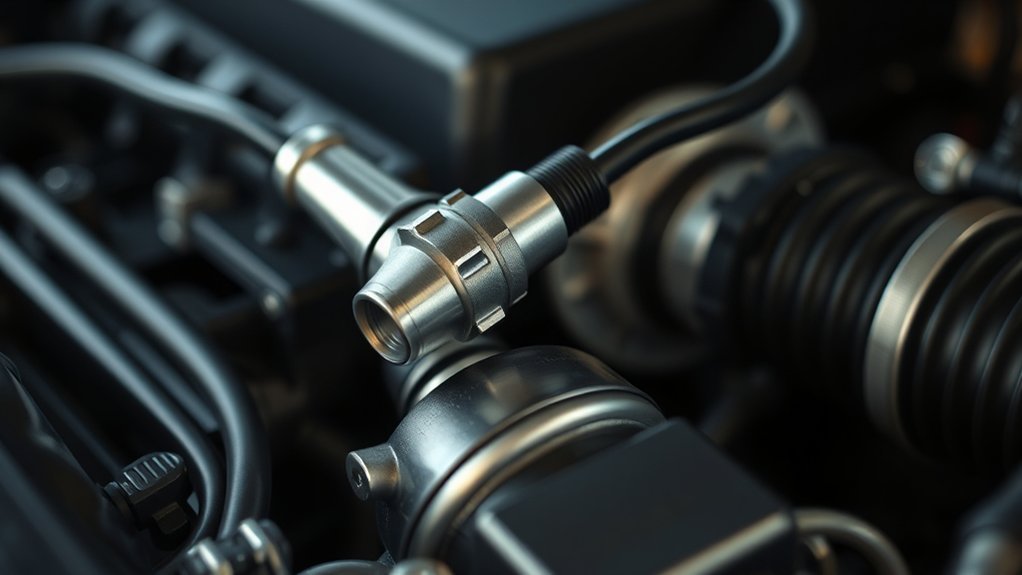
In your Hyundai Sonata, the oxygen sensor is a small exhaust-mounted sensor with a big job: it helps the engine computer fine-tune the air-fuel mixture and monitor emissions performance. When it starts sending slow, biased, or failed readings, you may notice a check engine light, rough idle, poor fuel economy, failed emissions readiness, or sluggish performance.
Quick Answer
A Hyundai Sonata oxygen sensor measures oxygen in the exhaust so the ECU can control fuel delivery and verify catalytic converter performance. Most failures trigger a check engine light with codes such as P0130–P0167, but poor mileage, rough idle, failed emissions tests, and slow acceleration can also point to a bad sensor.
Key Takeaways
- Most gasoline Sonata models use an upstream sensor before the catalytic converter and a downstream sensor after it.
- A check engine light does not automatically mean the oxygen sensor is bad; exhaust leaks, wiring issues, misfires, and fuel-trim problems can set similar codes.
- Traditional narrowband O2 sensors may switch around 0.1–0.9 volts, but many newer upstream air/fuel ratio sensors do not test the same way.
- Replace an oxygen sensor after proper diagnosis, not just because the car reached a certain mileage.
At a Glance
| Time Required | 10–20 minutes for a basic scan; 30–90 minutes for replacement, depending on access |
| Difficulty | Beginner for code reading; intermediate for sensor replacement |
| Tools Needed | OBD-II scanner, flashlight, gloves, basic hand tools, and an oxygen sensor socket if replacing |
| Typical Cost | About $50–$250+ for the part, plus labor if a shop installs it |
What Is an Oxygen Sensor and Its Role in Your Sonata?
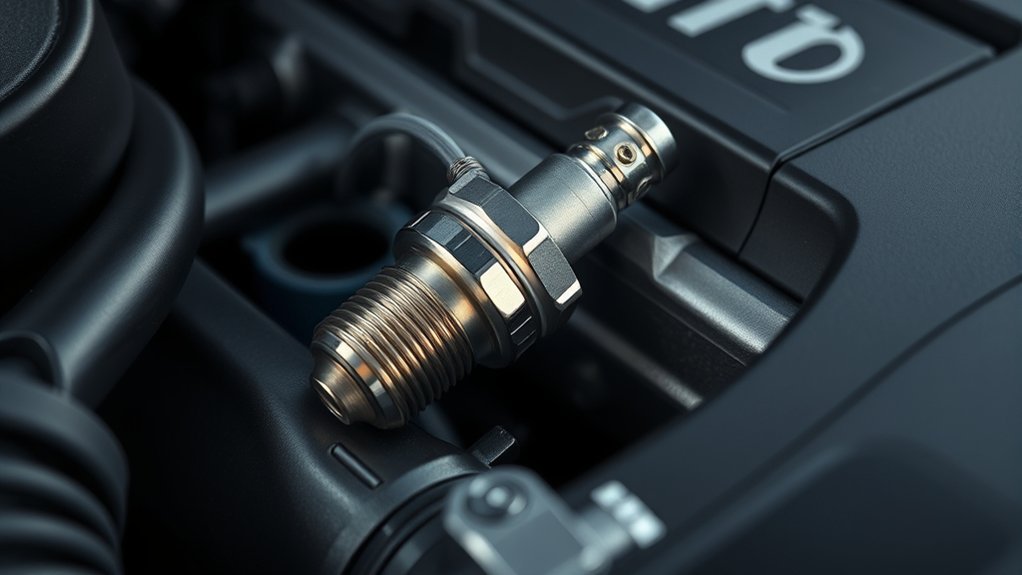
An oxygen sensor, often called an O2 sensor, sits in the exhaust stream and reports oxygen content to the engine control unit. The ECU uses that information to adjust fuel delivery, protect the catalytic converter, reduce emissions, and keep the engine running smoothly.
Most Hyundai Sonata gasoline engines have at least two oxygen-related sensors:
- Upstream sensor: Located before the catalytic converter. It helps the ECU adjust the air-fuel mixture. On many newer vehicles, this may be called an air/fuel ratio sensor or wideband sensor rather than a simple oxygen sensor.
- Downstream sensor: Located after the catalytic converter. It mainly helps monitor catalytic converter efficiency and emissions performance.
Because Sonata engines, model years, trims, and hybrid systems vary, always confirm the exact sensor location and part number using the Hyundai owner’s manual portal, a factory service manual, or a VIN-matched parts catalog before replacing anything.
Note: “Bank 1 Sensor 1” usually refers to the upstream sensor on an inline four-cylinder Sonata. “Bank 1 Sensor 2” usually refers to the downstream sensor. Older or different engine layouts may use different naming, so verify before ordering parts.
Signs That Your Oxygen Sensor Might Be Failing
A failing oxygen sensor can affect drivability, fuel economy, and emissions. However, the same symptoms can also come from spark plugs, ignition coils, vacuum leaks, exhaust leaks, dirty fuel injectors, or a failing catalytic converter. Treat these signs as clues, not final proof.
Check Engine Light
The most common warning sign is a check engine light, also called the malfunction indicator lamp. A scan may show oxygen-sensor-related codes such as P0130, P0131, P0132, P0133, P0134, P0135, P0136, P0137, P0138, P0140, P0141, or related fuel-trim and catalyst-efficiency codes.
According to FuelEconomy.gov, a check engine light can point to a repair that may reduce fuel economy, increase emissions, or become more expensive if ignored.
Unstable Idle Speed
If your Sonata idles roughly, surges, shakes, or occasionally stalls, the air-fuel mixture may be off. A bad upstream sensor can send incorrect feedback to the ECU, but idle problems can also come from misfires, intake leaks, throttle body issues, or dirty injectors.
For older narrowband sensors, a healthy signal often switches between about 0.1 and 0.9 volts after the engine warms up. Newer upstream air/fuel ratio sensors do not always use that same simple voltage pattern, so do not judge every Sonata sensor with the same test.
Increased Fuel Consumption
A slow or biased sensor can make the ECU add too much fuel or run the mixture less efficiently. That can lower miles per gallon and increase tailpipe emissions. Before replacing the sensor, also check tire pressure, air filter condition, fuel quality, driving habits, and stored diagnostic trouble codes.
Failed Emissions Test or Not-Ready Monitors
Oxygen sensor and oxygen sensor heater monitors are part of the OBD system. The EPA’s OBD guidance explains that OBD systems monitor oxygen sensors, catalyst performance, misfires, fuel metering, and other emissions-related components. If a sensor or heater circuit fails, your Sonata may fail an emissions inspection or show incomplete readiness monitors.
What Happens When Your Oxygen Sensor Fails?
When an oxygen sensor fails, the ECU may lose accurate feedback about exhaust oxygen content. Depending on which sensor fails, the result may include poor fuel control, reduced fuel economy, higher emissions, catalyst-efficiency codes, or a stored fault code that turns on the check engine light.
A bad upstream sensor can affect fuel trim more directly because it helps the ECU adjust the air-fuel mixture. A bad downstream sensor usually affects catalyst monitoring more than fuel control, although it can still trigger warning lights and emissions-test issues.
Warning: Do not ignore a flashing check engine light. A flashing light often points to a misfire that can damage the catalytic converter. Reduce driving and have the vehicle inspected as soon as possible.
How Proper Oxygen Sensor Function Boosts Fuel Efficiency
Proper oxygen sensor feedback helps the ECU keep combustion efficient. In many gasoline engines, the target mixture during normal closed-loop operation is near the stoichiometric gasoline ratio of about 14.7 parts air to 1 part fuel by mass. That balance helps the catalytic converter reduce harmful emissions.
When sensor feedback is slow, stuck rich, stuck lean, or missing, the ECU may rely on backup strategies or incorrect corrections. That can waste fuel, increase emissions, and make the engine feel less responsive. Bosch notes that modern oxygen sensors support accurate mixture control, fuel efficiency, engine performance, and reduced emissions in engine-management systems: Bosch oxygen sensor information.
A healthy oxygen sensor does not add horsepower by itself, but it helps the ECU make the right fuel-control decisions so the engine can run cleaner, smoother, and more efficiently.
How to Check Your Oxygen Sensor
You can do a basic oxygen sensor check at home, but accurate diagnosis often requires live data, a wiring diagram, and knowledge of the exact sensor type. Follow these steps before buying parts.
- Scan for trouble codes. Connect an OBD-II scanner and write down all stored, pending, and permanent codes. Do not clear them yet.
- Check freeze-frame data. Look at engine temperature, RPM, speed, and fuel-trim values when the code was set. This helps identify whether the problem happened at idle, cruise, warm-up, or acceleration.
- Inspect wiring and connectors. Look for melted insulation, loose plugs, corrosion, oil contamination, or harness damage near the hot exhaust.
- Check for exhaust leaks. A leak before the sensor can pull in outside air and make the sensor read lean even when the sensor itself is not bad.
- Review live data. On a warmed-up engine, compare upstream and downstream sensor behavior. The upstream sensor should respond to fuel-control changes; the downstream sensor should usually be steadier if the catalytic converter is working properly.
- Confirm the sensor type. A narrowband O2 sensor, wideband air/fuel ratio sensor, and heater circuit all require different test methods.
- Diagnose before replacing. If the code points to a heater circuit, test power, ground, and resistance according to the service manual. If it points to slow response, check for contamination, exhaust leaks, and fuel-control issues.
Pro Tip: If you clear codes before recording them, you may erase the freeze-frame clues that help identify the real cause. Save the code list first, then continue testing.
[Products Worth Considering]

This oxygen O2 sensor set is designed for select Toyota Camry and RAV4 models with 2.4L engines, providing upstream and downstream replacement coverage in one package. Built to OEM specifications for plug-and-play installation, it helps improve fuel efficiency, support accurate air-fuel monitoring, and restore reliable engine performance. The stainless steel and heat-resistant construction is made for long-lasting durability and stable operation.

The FOXWELL NT301 is a plug-and-play OBD2 code reader designed to help drivers and home mechanics diagnose check engine light issues with ease. It reads fault codes, clears emissions-related warnings, displays live sensor data in graph form, and shows I/M readiness so you can quickly check vehicle status before an emissions test. With broad compatibility across many OBD2 vehicles and a clear color screen, it offers a practical, user-friendly way to monitor and troubleshoot engine performance.

The BLCKTEC 440 Bluetooth OBD2 scanner helps drivers and DIY mechanics quickly read and clear trouble codes, monitor live data, and check emissions readiness with confidence. Its color display, graphing capabilities, and battery and charging system testing make it a versatile diagnostic tool for OBD-compliant vehicles. Designed for plug-and-play convenience, it runs directly from your vehicle and includes support for report sharing and ongoing updates.
Common Causes of Oxygen Sensor Failure
Oxygen sensors work in a harsh environment. Heat, exhaust gases, vibration, and contamination can all shorten sensor life. Common causes include:
- Normal aging: Sensor response can slow over time, especially after years of heat cycling.
- Oil or coolant contamination: Internal engine leaks can coat the sensor and damage its readings.
- Silicone or chemical contamination: Some sealants, fuel additives, or improper chemicals can poison the sensor element.
- Exhaust leaks: Leaks near the sensor can create false lean readings.
- Wiring damage: Melted wires, loose connectors, corrosion, or poor grounds can interrupt the sensor or heater circuit.
- Misfires or rich running: Unburned fuel can overheat the catalytic converter and affect sensor readings.
- Physical damage: Road debris, improper removal, or cross-threading during installation can damage the sensor body or bung.
Bosch states that oxygen sensor service life varies by design, with older one- or two-wire sensors often lasting less than modern heated three- to five-wire sensors, which may last up to about 100,000 miles under typical expectations: Bosch oxygen sensor brochure.
[Products Worth Considering]
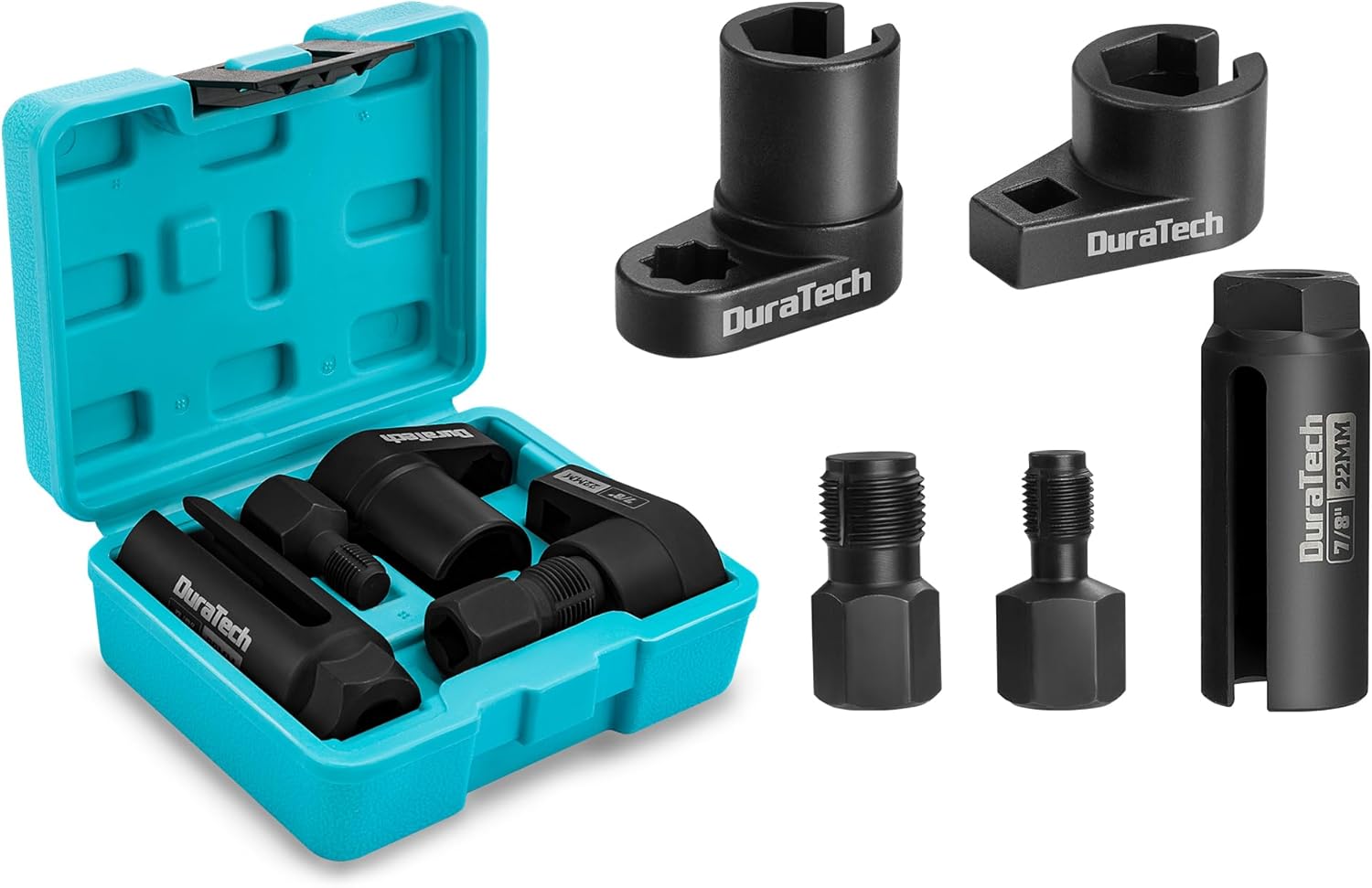
This DURATECH O2 sensor socket set is designed to help remove, inspect, replace, and install oxygen sensors and vacuum switches on many computer-controlled vehicles. It includes offset and long sockets plus two thread chasers for cleaning and repairing damaged threads, making sensor service easier and more reliable. Built from alloy steel with a secure slotted design, it offers practical performance and durability for automotive repair work.

This filter combo is designed for Hyundai Sonata gas models from 2015 to 2019, including non-hybrid 2.4L vehicles, and replaces both the engine and cabin air filters in one convenient set. It helps improve engine airflow while also refreshing the cabin environment with activated carbon odor control and high-efficiency particle filtration for cleaner, quieter driving.

FOXWELL NT201 is an easy-to-use OBD2 scanner designed to help drivers quickly read and clear check engine codes, view live engine data, and check emissions readiness. Its color screen, one-key I/M readiness test, and broad compatibility with most gasoline vehicles since 1996 make it a practical tool for everyday diagnostics and maintenance. With plug-and-play operation and lifetime free updates, it offers a simple way to understand vehicle issues without expensive shop visits.
When to Replace Your Oxygen Sensor for Optimal Performance
Replace your Sonata’s oxygen sensor when testing shows that the sensor, heater circuit, wiring, or response pattern has failed. Do not replace it only because fuel economy dropped or because the check engine light came on. A loose gas cap, misfire, exhaust leak, vacuum leak, or catalytic converter problem can cause similar symptoms.
Consider replacement when you have one or more of these confirmed findings:
- An oxygen sensor or air/fuel ratio sensor code returns after proper diagnosis and repair attempts.
- The heater circuit fails electrical testing.
- The sensor signal is stuck, biased, or slow compared with expected service-manual values.
- The connector or sensor body is damaged.
- The sensor is contaminated by oil, coolant, or chemicals and no longer responds correctly.
- The sensor cannot complete readiness testing even after the required drive cycle and related repairs.
For many Sonatas, replacement cost depends on year, engine, sensor position, and whether you use OEM or aftermarket parts. Upstream sensors often cost more than downstream sensors because many are air/fuel ratio sensors. Labor also varies because some sensors are easy to reach while others may be tight or seized from heat and corrosion.
Warning: Oxygen sensors thread into the exhaust and can be extremely hot. Let the exhaust cool fully before touching the sensor. If you lift the vehicle, use proper jack stands on a solid surface; never rely on a jack alone.
[Products Worth Considering]

This enhanced OBD2 scanner helps drivers quickly diagnose check engine light issues, read and clear trouble codes, and check emissions readiness before a smog test. It also adds EVAP and O2 sensor testing, live data, freeze frame capture, and a one-click battery health check in a simple plug-and-play tool with a bright color screen.

This cabin and engine air filter kit is designed for compatible Hyundai Sonata gas models from 2015 to 2019 with a 2.4L engine. It helps improve airflow, capture dust and impurities, and support cleaner cabin air and efficient engine performance. The kit is engineered for long service life and simple installation, making routine maintenance easier.

The ANCEL AD410 PRO combines engine diagnostics and 12V battery testing in one easy-to-use tool, helping you read and clear check engine codes while checking battery health, cranking, and charging performance. It also provides live data, freeze frame details, and I/M readiness checks to help you diagnose issues faster and prepare for emissions testing. With plug-and-play operation, a clear screen, and broad vehicle compatibility, it is a practical solution for home mechanics and everyday drivers.
Maintaining Your Oxygen Sensor for Longevity
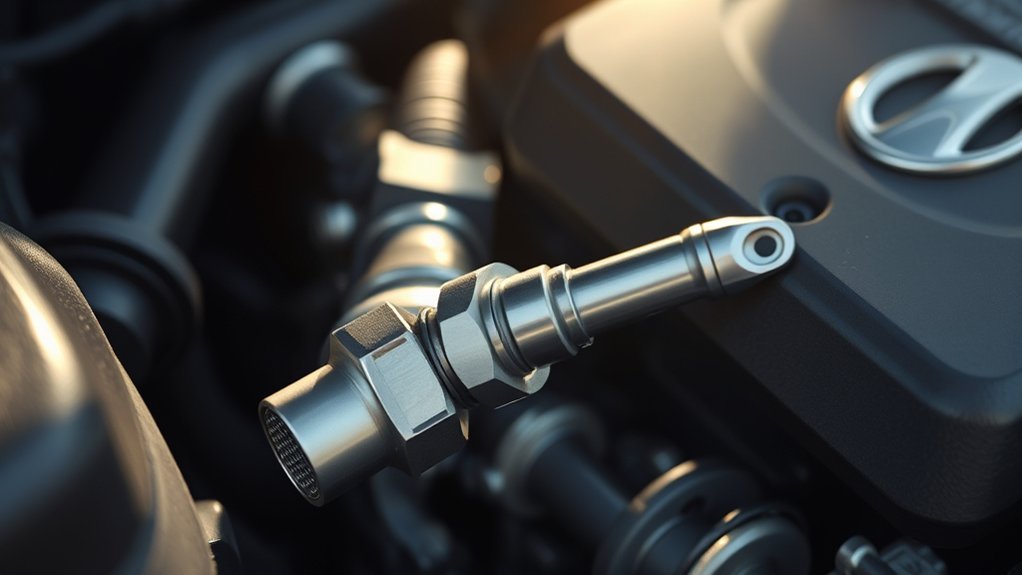
Oxygen sensors usually are not cleaned as routine maintenance. In many cases, attempting to clean a sensor can damage it or leave residue that affects readings. The better approach is to keep the engine healthy, fix leaks early, and avoid conditions that contaminate or overheat the sensor.
Regular Inspection Practices
During routine service, inspect the oxygen sensor area without removing the sensor. Look for:
- Damaged or melted wiring near the exhaust
- Loose or corroded connectors
- Oil or coolant leaks that may reach the exhaust
- Exhaust leaks, ticking sounds, or soot marks near the manifold or sensor bung
- Stored or pending OBD-II codes
Monitor Mileage Milestones
Oxygen sensors can last a long time, but they do wear out. Instead of replacing them on a fixed schedule, use mileage as a reminder to inspect performance and scan for codes.
| Mileage Range | What to Check | Why It Matters |
|---|---|---|
| Every oil change | Look for check engine light, fuel-economy changes, or exhaust leaks | Catches problems early |
| 60,000 miles and up | Scan for pending codes if mileage drops or idle changes | Finds slow-developing sensor or fuel-trim issues |
| 90,000–100,000 miles and up | Review live data if symptoms appear | Helps confirm whether the sensor is aging or another issue is present |
| Any mileage | Diagnose immediately if an O2 sensor code returns | Prevents wasted fuel and possible emissions-test failure |
Early Signs of Issues
Watch for small changes before they turn into expensive repairs. Early oxygen sensor or fuel-control problems may show up as:
- Check engine light or pending OBD-II codes
- Lower miles per gallon than normal
- Rough idle or hesitation
- Strong fuel smell from the exhaust
- Failed emissions test
- Readiness monitors that will not set
If these signs appear, scan the car and inspect related systems before replacing the sensor. A correct diagnosis saves money and prevents replacing a good sensor while the real problem remains.
Frequently Asked Questions
How much is an oxygen sensor for a Hyundai Sonata?
A Hyundai Sonata oxygen sensor often costs about $50–$250+ for the part, depending on the model year, engine, sensor position, and brand. Labor can add more if the sensor is hard to reach, rusted in place, or requires extra diagnostic time.
Can I drive my Sonata with a bad oxygen sensor?
You may be able to drive short distances if the car runs normally, but you should diagnose it soon. A failed sensor can waste fuel, increase emissions, and hide other problems. If the check engine light flashes, reduce driving and get the vehicle inspected immediately.
Should I replace upstream and downstream sensors at the same time?
Not always. Replace the sensor that fails testing. The upstream sensor controls fuel mixture more directly, while the downstream sensor mainly monitors catalytic converter performance. Replacing both may make sense on a high-mileage vehicle, but diagnosis should guide the decision.
Can I clean a Hyundai Sonata oxygen sensor?
Cleaning is usually not recommended as a reliable repair. Oxygen sensors can be damaged by residue, chemicals, or contamination. If testing confirms the sensor is slow, stuck, contaminated, or has a failed heater circuit, replacement is normally the better fix.
What code means my Sonata oxygen sensor is bad?
Codes in the P0130–P0167 range often relate to oxygen sensors or air/fuel ratio sensors, but a code does not prove the sensor itself is bad. Wiring faults, exhaust leaks, fuel-trim problems, misfires, and catalytic converter issues can trigger related codes.
Conclusion
Your Hyundai Sonata’s oxygen sensor helps the ECU manage fuel delivery, monitor emissions, and protect the catalytic converter. When it fails, you may see a check engine light, lower fuel economy, rough idle, or emissions-test problems. The smartest fix is not guessing—it is scanning codes, checking wiring and exhaust leaks, reviewing live data, and replacing the sensor only after the diagnosis points there. With careful troubleshooting and timely repair, your Sonata can keep running smoothly, efficiently, and cleanly.
Sources
- Hyundai Owner’s Manual Portal — vehicle-specific owner information and maintenance reference.
- FuelEconomy.gov: Keeping Your Vehicle in Shape — check engine light, maintenance, fuel economy, and emissions guidance.
- U.S. EPA OBD Questions and Answers — OBD system monitoring of oxygen sensors, catalyst, misfire, and fuel metering.
- Bosch Oxygen Sensors — oxygen sensor role in air-fuel mixture control, performance, efficiency, and emissions.
- Bosch Oxygen Sensors Trade Brochure — oxygen sensor service-life ranges and maintenance context.
- California Bureau of Automotive Repair OBD Test Reference — OBD readiness, malfunction indicator, and inspection context.