

Recent Hyundai Sonata owner manuals reviewed for this guide describe a direct Tire Pressure Monitoring System (TPMS) with pressure sensors at the wheels. That matters because a direct system is handled differently from Hyundai’s reset-based TPMS designs used on some other vehicles. Do not use a generic Hyundai TPMS reset procedure on a Sonata unless the owner’s manual for your exact model year and market specifically tells you to do so.
If you are already checking the tires, you can also review how to measure tire tread depth on a Hyundai Sonata. For TPMS, start with the driver’s door placard, the cluster display, and the exact Sonata owner’s manual.
Last updated: September 16, 2026 — Sonata-specific TPMS type and reset guidance rechecked against Hyundai and federal sources.
Quick Answer
The Hyundai Sonata manuals reviewed for this article use direct TPMS: wheel-mounted pressure sensors monitor the road tires, and recent models can show tire-pressure information in the cluster. The 2025 U.S. Sonata manual does not list the separate driver TPMS-reset procedure found in some other Hyundai manuals. After correcting a low tire, the Sonata may need a few minutes of driving to refresh the display. A replacement sensor may require model-specific programming or relearn, which is different from resetting an indirect TPMS baseline.
Key Takeaways
- Recent Sonata documentation reviewed here describes wheel-mounted pressure sensors, which means direct TPMS.
- Do not assume a generic Hyundai TPMS reset procedure applies to your Sonata; check the manual for your exact year and market.
- A solid low-pressure light normally means one or more tires need attention. A light that flashes for about a minute and then stays on indicates a TPMS malfunction.
- Use the cold tire pressure on the driver’s door placard, not the maximum PSI molded into the tire sidewall.
- TPMS is a warning system, not a substitute for checking tire pressure monthly with an accurate gauge.
At a Glance
| Sonata TPMS Type | Direct TPMS in the Sonata manuals reviewed for this article |
| Time Required | 5–15 minutes to check and correct pressure; longer for sensor diagnosis or replacement |
| Difficulty | Easy for pressure checks; professional tools may be needed for sensor service |
| Tools Needed | Accurate tire-pressure gauge, air source, owner’s manual; TPMS scan tool if a sensor fault is suspected |
| First Step | Check all road tires cold and set them to the door-placard pressure |
Does the Hyundai Sonata Use Direct or Indirect TPMS?
The Sonata documentation reviewed for this guide describes direct TPMS. Direct TPMS uses a pressure sensor mounted inside each road wheel, typically behind the valve stem. The sensor transmits tire-pressure information to the vehicle so the cluster can warn when a tire is significantly underinflated and, on equipped models, show tire position and pressure readings.
Hyundai’s 2025 Sonata documentation shows tire-pressure information appearing in the cluster after a few minutes of driving. Sonata manuals from other reviewed model years also state that each road wheel is equipped with a tire-pressure sensor. Because equipment can vary by year and market, the owner’s manual for the exact vehicle remains the final authority.
Important: A Sonata that does not show four live PSI numbers on its cluster should not automatically be classified as indirect TPMS. Display capability and TPMS hardware are separate questions. Confirm the system from the exact owner’s manual, a VIN-specific parts lookup, or a TPMS scan of the wheels.
Direct TPMS Benefits
- Measures actual pressure: A sensor at the wheel monitors tire pressure rather than estimating pressure loss from wheel speed alone.
- Can identify the affected tire: Equipped Sonata clusters can show the location of a low tire and may display individual pressure values.
- Useful for diagnosis: A TPMS-capable scan tool can check whether an individual wheel sensor is transmitting and help identify sensor or registration problems.
Direct TPMS Limitations
- Sensors can eventually fail: The electronics and sealed battery are part of the wheel sensor, so a failed unit normally requires sensor replacement.
- Tire service requires care: The sensor sits inside the wheel and can be damaged during tire mounting or dismounting.
- Replacement is not always plug-and-play: Depending on model year, sensor type, and replacement method, a new sensor may require programming, ID registration, or a relearn procedure.
How Does Indirect TPMS Work, and Is It Relevant to a Sonata?
Indirect TPMS is a different technology that generally uses ABS wheel-speed information and related vehicle data to detect changes associated with an underinflated tire. It does not directly measure the air pressure inside the tire. Because a low tire can have a slightly different effective rolling radius, its rotational behavior can differ from the correctly inflated tires.
Indirect TPMS is useful background for understanding why reset procedures differ among vehicles, but the Sonata manuals reviewed for this article describe wheel-mounted pressure sensors. Hyundai also publishes reset instructions for other reset-equipped vehicles; those instructions should not be treated as Sonata instructions unless the exact Sonata manual for your year and market contains them.
How an Indirect System Operates
A typical indirect TPMS needs a correct reference point. The driver first sets all tires to the recommended cold pressure, stores or initializes that condition according to the vehicle manufacturer’s procedure, and then drives so the system can compare future tire behavior against that baseline.
- Set the correct cold pressure: Inflate all tires to the vehicle placard pressure.
- Initialize only when instructed: Use the vehicle-specific TPMS initialization procedure if the owner’s manual provides one.
- Drive so the system can learn: The vehicle compares tire behavior after initialization and warns when it detects a significant change.
Key Advantages of Indirect TPMS
- No wheel-mounted pressure transmitters: A pure indirect system avoids pressure-sensor batteries inside the road wheels.
- Uses existing vehicle data: Wheel-speed and chassis sensors provide the information used to infer pressure loss.
- Lower wheel-sensor complexity: There is no separate pressure transmitter to damage during normal tire service.
Limitations of Indirect TPMS
Indirect TPMS normally cannot report actual PSI because it is not directly measuring air pressure. It can also depend more heavily on correct initialization and suitable driving conditions. That is why copying an indirect-system reset procedure onto a direct-TPMS Sonata is the wrong troubleshooting approach.
Warning: Never perform any TPMS reset or initialization at an intentionally incorrect tire pressure. If your exact vehicle does provide an initialization procedure, first set the tires to the manufacturer’s recommended cold pressure.
Direct vs. Indirect TPMS: Key Differences
Both designs are intended to warn about significant underinflation, but the hardware and service procedures differ. Under FMVSS No. 138, a compliant U.S. TPMS must warn when one or more tires reach the applicable threshold: 25% below the manufacturer’s recommended cold pressure or the standard’s minimum activation pressure, whichever is higher.
| Feature | Direct TPMS | Indirect TPMS |
|---|---|---|
| How it detects a problem | Measures tire pressure with sensors mounted at the wheels | Infers pressure loss from wheel-speed or related vehicle data |
| Individual PSI display | Possible when the vehicle provides a pressure display | Normally unavailable because pressure is not directly measured |
| After pressure correction | May update automatically after driving once the sensor reports the corrected pressure | Often requires initialization or reset according to the vehicle manual |
| After sensor replacement | May require programming, ID registration, cloning, or relearn depending on the vehicle | No individual pressure-sensor ID exists to register |
| Sonata evidence reviewed here | Supported by reviewed Sonata owner documentation | Not established for the Sonata by the manuals reviewed for this article |
Sensor Technology Differences
Direct TPMS has a pressure transmitter associated with the wheel. Indirect TPMS instead relies on data already available from systems such as ABS. NHTSA has long described these as the two basic TPMS approaches: direct systems measure with tire-pressure sensors, while indirect systems derive inflation information from wheel behavior.
Monitoring and Accuracy
A direct system can provide more specific pressure information because it actually measures pressure at the tire. An indirect system is primarily a comparison system. For a Sonata owner, the practical distinction is important because adding air and allowing direct sensors to update is different from initializing an indirect baseline.
TPMS is a backup warning system, not a substitute for routine tire maintenance. Check each tire monthly when cold and use the pressure specified on the vehicle placard.
How to Confirm the TPMS Type in Your Hyundai Sonata
If you want to verify your exact Sonata rather than rely on a general model-year statement, use the checks below in this order.
- Read the exact Sonata owner’s manual. Match the year and market. The 2025 U.S. Sonata manual, for example, includes tire-pressure display, low-pressure position, malfunction, and tire-with-TPMS sections rather than the separate reset section seen in some other Hyundai manuals.
- Check the cluster. Individual tire-pressure readings are strong evidence of direct pressure sensing. However, not seeing four live PSI readings does not by itself prove the vehicle has indirect TPMS.
- Scan the wheels. A TPMS activation/scan tool can determine whether wheel-mounted sensors are transmitting.
- Check the vehicle by VIN. A Hyundai parts catalog or dealer lookup can confirm the correct sensor specification for the exact build.
- Do not identify the system from a generic reset tutorial. A procedure written for another Hyundai model is not proof that the same procedure applies to a Sonata.
Pro Tip: If the warning started immediately after new tires, wheel replacement, or TPMS sensor service, check the service work first: pressure, sensor compatibility, sensor damage, programming, stored IDs, and model-specific relearn requirements.
What Does the TPMS Light Mean on a Hyundai Sonata?
The warning pattern helps separate ordinary low pressure from a system malfunction.
| Light Behavior | Most Likely Meaning | What to Do |
|---|---|---|
| Solid low tire pressure light | One or more tires are significantly underinflated | Stop when safe, check all tires cold, inflate to placard pressure, and inspect for a leak or damage |
| Flashes for about one minute, then stays on | TPMS malfunction | Verify tire pressure, then scan the TPMS if the malfunction indication remains |
| Comes on after a cold-weather change | Cold air lowered the tire pressure enough to trigger the warning | Set the tires to placard pressure while cold rather than waiting for warmer weather |
| Appears after spare tire installation | The installed spare may not have the road wheel’s TPMS sensor | Repair the original road tire and reinstall the correctly equipped wheel as soon as practical |
For a combined TPMS malfunction telltale, the federal standard specifies a flashing period of at least 60 seconds and no more than 90 seconds before the light stays continuously illuminated while the malfunction exists.
How to Check and Correct Hyundai Sonata Tire Pressure
Correct tire pressure comes before any TPMS diagnosis. A warning light should never be cleared by guessing at a reset procedure before the tires themselves are checked.
- Let the tires become cold. Hyundai describes a cold tire as one that has been sitting for about 3 hours and has been driven less than 1 mile (1.6 km) during that period.
- Find the recommended pressure. Use the tire and loading label on the driver’s door area, not the maximum pressure printed on the tire sidewall.
- Measure all four road tires. Use an accurate gauge rather than judging pressure by appearance.
- Add or release air as needed. Set each tire to the specified cold pressure.
- Inspect for pressure loss. Look for punctures, valve leaks, sidewall damage, abnormal tread wear, or other visible problems.
- Drive for several minutes. Recent Sonata documentation states that tire-pressure information appears after a few minutes of driving.
- Recheck if the warning remains. If pressure is correct but the warning flashes and then stays on, diagnose the TPMS rather than repeatedly adding air.
Temperature Note: AAA says tire pressure commonly changes by about 1 PSI for every 10°F change in air temperature. A cold morning can therefore trigger a warning even when the tire had been correctly inflated during warmer weather.
[Products Worth Considering]
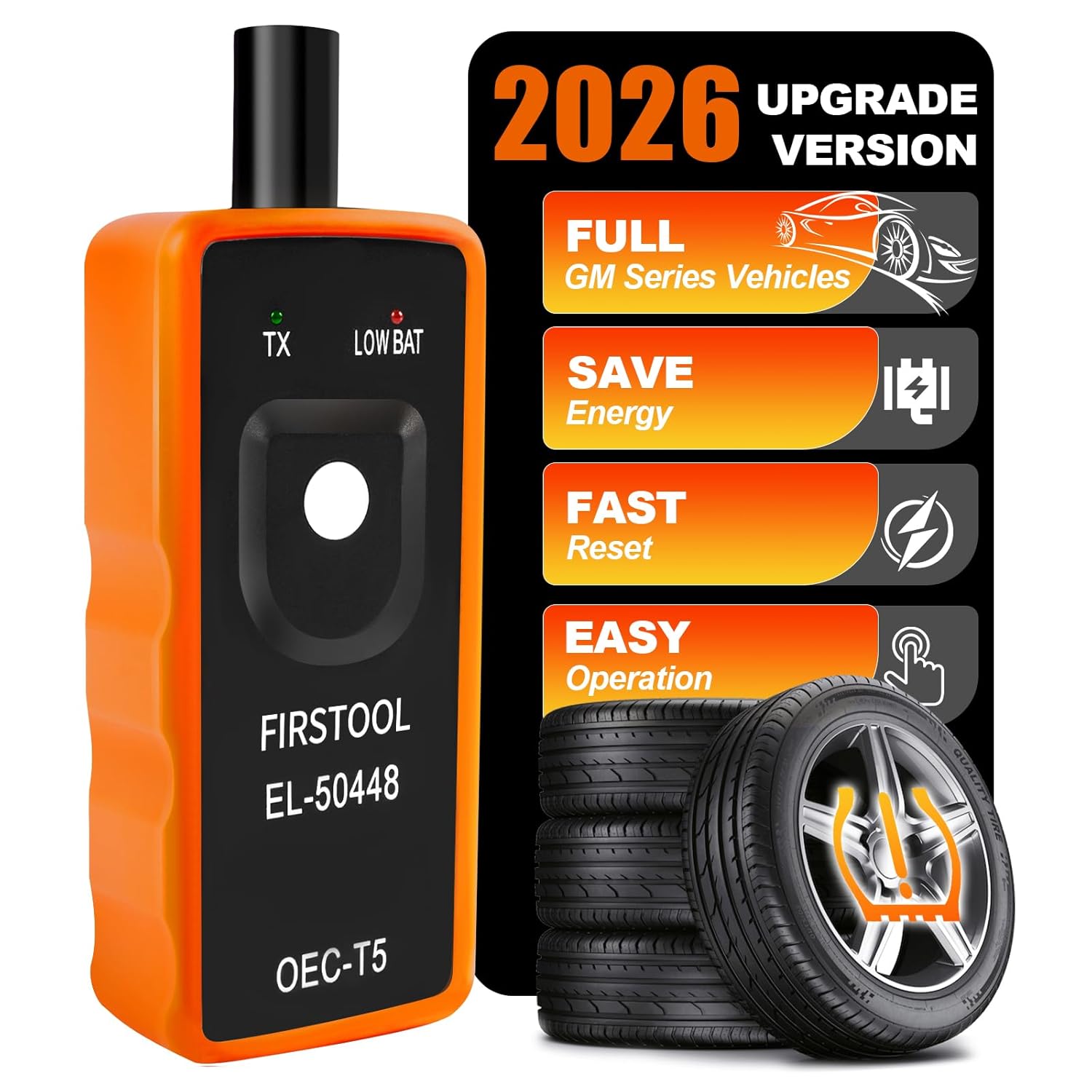
This EL-50448 TPMS relearn tool helps quickly activate and reset tire pressure sensors so your vehicle’s monitoring system stays accurate after tire rotations, sensor replacement, or seasonal tire changes. Designed for many GM-related vehicles and compatible with common 315 and 433 MHz TPMS systems, it offers simple one-button operation and reliable performance for clearing warning lights and relearning sensor positions.

The AICEL TPMS Relearn Tool helps quickly reset and relearn tire pressure sensors on compatible GM vehicles after tire rotation, sensor replacement, or warning light issues. Designed for easy handheld use, it works with most cars, SUVs, and pickup trucks and can save time by eliminating unnecessary trips to the auto store. Its durable ABS housing and simple activation process make it a practical tool for keeping the tire pressure monitoring system operating properly.

This smart color coded tire tread depth gauge makes it easy to check tread wear at a glance with clear red, yellow, and green ranges. Calibrated from 0 to 1 inch in 1/32 inch increments, it helps you quickly assess tire condition for safer driving and timely replacements. The pocket clip design makes it convenient to carry and use on trucks, motorcycles, cars, and other passenger vehicles.
Does a Hyundai Sonata Have a TPMS Reset Button?
Do not assume your Sonata needs a manual TPMS reset. The 2025 U.S. Sonata owner’s-manual index reviewed for this article does not list the driver reset procedure found in some other Hyundai manuals. Instead, the Sonata documentation includes tire-pressure display, low-pressure warning, malfunction, and changing-a-tire-with-TPMS information.
For a direct-TPMS Sonata, “reset,” “pressure update,” and “sensor relearn” should not be treated as the same thing:
- After ordinary low pressure: Correct all tires to the placard pressure while cold, then drive so the sensors can report updated values.
- If the solid warning remains: Recheck every tire with a gauge and inspect for a slow leak.
- If the light flashes and then stays on: Treat it as a TPMS malfunction and scan the system.
- After replacing a sensor: Verify the replacement sensor is correct for the exact Sonata. Depending on the system and sensor used, programming, ID registration, cloning, or relearn may be required.
- If a service procedure is needed: Follow the exact model-year service information rather than a generic Hyundai reset sequence.
For a deeper explanation of the terminology, see TPMS reset vs. relearn. If diagnostic access is required, this guide also shows where the OBD2 port is on a Hyundai Sonata.
[Products Worth Considering]

The JACO ElitePro Digital Tire Pressure Gauge delivers shop-grade accuracy with a clear digital readout, making it easy to maintain proper tire pressure for safer driving and better performance. Built with rugged brass and steel components, a protective guard, and a flexible air hose, it is designed for reliable use across cars, trucks, motorcycles, bikes, RVs, and trailers. The lock-on display, built-in bleeder valve, and bright backlit screen add convenience in any lighting condition.
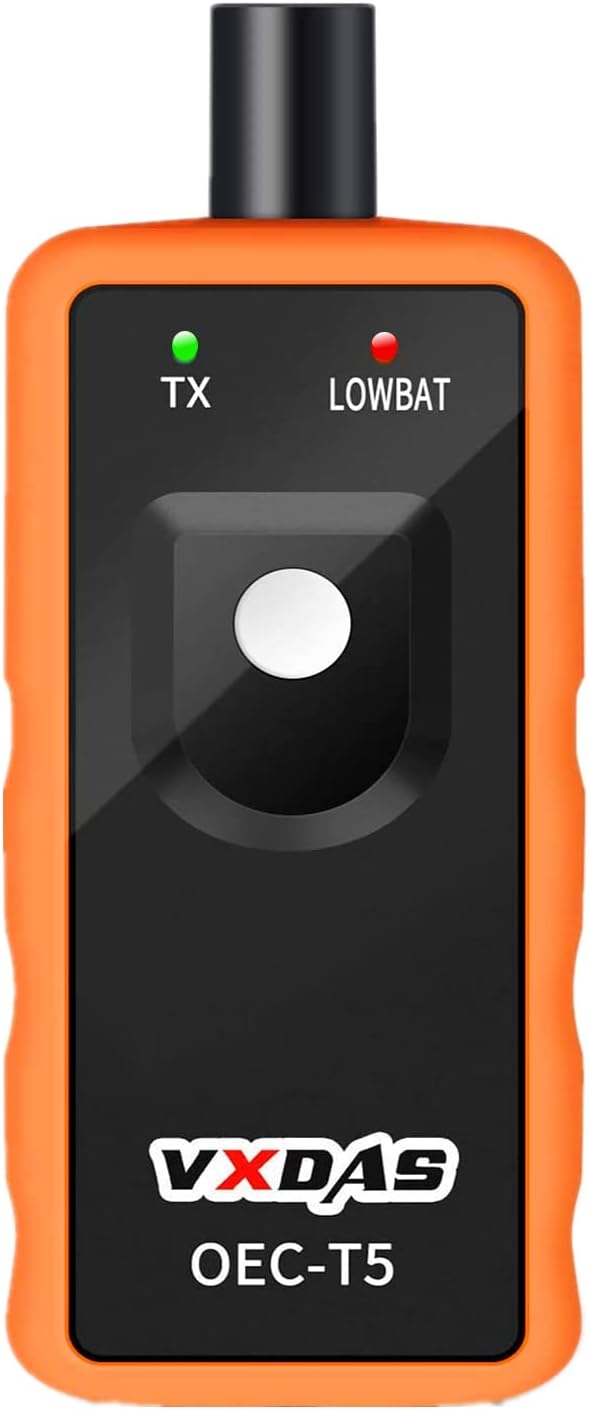
This TPMS relearn tool is designed for many GM vehicles with 315/433 MHz original sensors, helping you reset tire pressure monitoring systems quickly after sensor replacement or tire changes. It offers a simple one-button activation process that can save time and reduce trips to the dealer or tire shop. Built for easy handheld use, it supports safe, accurate TPMS relearn procedures for compatible Chevy, Buick, GMC, Opel, and Cadillac models.

[VEHICLE FITMENT]: Compatible with Hyundai Creta 2021-2024, For Elantra N 2022-2024, Nexo 2019-2024, Palisade 2020-2024, Santa Fe 2019-2024, Santa Fe Sport 2018-2022, Sonata 2015-2019, Tucson 2016-2021; Compatible with Kia EV6 2022-2024, EV9 2023-2024, K900 2019-2023, Niro 2023-2024, Sedona 2019-2021, Telluride 2019-2024; Compatible with Genesis GV60 2022-2024
Common Hyundai Sonata TPMS Problems and Solutions
Start with the warning pattern and actual tire pressures. The same dashboard symbol can lead to very different repairs depending on whether the system is reporting low pressure or a malfunction.
[Products Worth Considering]

✿IMPORTANT NOTE: ❶ GM VEHICLES ONLY: ONLY for Chevrolet, GMC, Cadillac and Buick, Check Compability List before buying. NOT support Ford, Toyota, Nissan, Honda and other non-GM brands; ❷ SENSOR REQUIREMENTS: Optimized for OE/OEM sensors. Most aftermarket sensors can work BUT some may fail if their frequency or parameters do not match the OEM original. NOT for UNIVERSAL TPMS sensors.❸ Requires a 9V battery for operation BUT NOT included.❹NOTE: If one or some sensors can't be activated after multiple attempts (because they were dead, low power or damaged, not our tool's not work), please replace them with new sensors then try again.

【CUSTOMIZED for FORD】This TPMS Sensor Training Tool is customized for all Ford Lincoln Mercury vehicles that has a Tire Pressure Sensor. Train the TPMS sensors and activate Tire Pressure Programming on new vehicles or after a tire rotation(Tip: You can refer to the second vehicle compatibility diagram and the A+ content to check if your vehicle is compatible with this reset tool.)

🌟KEEP YOUR TIRES IN TOP SHAPE: VXDAS GM TPMS Relearn Tool Plus is a 2 in 1 tool that resets your sensor and maintains tire pressure. Works for GM vehicles (Chevy / Buick / GMC / Opel /Cadillac etc)equipped with 315/433 MHz.
Low Pressure After a Weather Change
A temperature drop lowers tire pressure and can trigger the warning. Check the tires cold and restore them to the door-placard pressure. Do not bleed air from a hot tire simply because its displayed pressure rises after driving.
Light Stays On After Adding Air
Check all four road tires with a gauge rather than assuming the displayed low tire is the only problem. Once pressure is correct, drive for several minutes so the vehicle can receive updated sensor data. If the light remains solid, look for continued pressure loss. If it flashes before staying on, diagnose the TPMS itself.
TPMS Light Flashes, Then Stays On
A flashing-then-solid warning indicates a TPMS malfunction rather than a normal low-pressure warning. Possible causes include a failed or damaged wheel sensor, an incompatible replacement sensor, a sensor that is not being recognized, or another communication/system fault. A TPMS-capable scan tool is the appropriate next diagnostic step.
Warning After New Tires or Wheel Service
Verify that the original compatible sensors were retained or that the replacements match the correct application. A sensor can be damaged during tire service, and a new sensor may need programming or vehicle-specific relearn. Do not repeatedly search for a dashboard “reset button” if the actual problem is an unrecognized direct TPMS sensor.
Warning After Installing a Spare
Hyundai Sonata documentation reviewed for this article states that the spare tire, when equipped, does not carry the road wheel’s TPMS sensor. The low-pressure warning can therefore remain on, and the system may later indicate a malfunction while the spare is installed. Repair and reinstall the correctly equipped road wheel as soon as practical.
Warning: Hyundai advises against using puncture-repairing agents that are not approved or specified for the vehicle because unsuitable sealant can damage a tire-pressure sensor.
Why Correct Tire Pressure Still Matters With TPMS
TPMS is designed to warn about significant underinflation, not to replace routine pressure checks. Under FMVSS No. 138, the federal detection requirement is tied to significant pressure loss rather than the first small deviation from the placard value.
Underinflation can increase tire heat, shorten tread life, reduce fuel efficiency, and affect handling and stopping ability. Check all tires at least monthly when cold and before long trips or major seasonal temperature changes. Waiting for the warning lamp is not the same as maintaining the recommended pressure.
Maintenance Tips for Your Hyundai Sonata’s TPMS
- Use the door-placard pressure. Do not substitute the maximum pressure molded into the tire sidewall.
- Check pressure cold every month. TPMS may not warn until pressure has fallen significantly.
- Tell the tire shop the wheels contain TPMS sensors. Proper tire-machine technique reduces the risk of sensor damage.
- Service valve hardware correctly. TPMS valve stems and associated service components should be handled according to the sensor design.
- Use the correct replacement sensor. Compatibility must match the exact Sonata application and market.
- Do not ignore a flashing warning. A malfunction can prevent the system from warning about low pressure as intended.
- Separate pressure correction from sensor relearn. Adding air, updating displayed pressure, and registering a replacement sensor are different operations.
Frequently Asked Questions
Does the Hyundai Sonata use direct or indirect TPMS?
The Sonata manuals reviewed for this guide describe direct TPMS with pressure sensors at the wheels. Recent Sonata documentation can also show tire-pressure information in the cluster. Because equipment can vary by year and market, confirm your exact vehicle with its owner’s manual or a TPMS scan rather than using a generic Hyundai reset procedure.
Does a Hyundai Sonata have a TPMS reset button?
Do not assume it does. The 2025 U.S. Sonata owner’s-manual index reviewed for this article does not list the separate TPMS-reset procedure found in some other Hyundai manuals. After correcting tire pressure, recent Sonata systems can update pressure information after a few minutes of driving. Follow the exact owner’s manual for other years or markets.
Why is my Sonata TPMS light still on after I filled the tires?
One tire may still be low, a tire may be leaking, or the sensors may need several minutes of driving to report updated pressure. Check every tire cold with a gauge. If the warning flashes for about a minute before staying on, the system is indicating a TPMS malfunction rather than ordinary low pressure.
How long does a Hyundai Sonata take to update tire pressure?
Recent Sonata owner information says tire-pressure readings appear after a few minutes of driving. If correct pressure does not appear or a warning remains after normal driving, recheck the tires with a gauge and diagnose the TPMS if the warning indicates a malfunction.
Does a replacement Hyundai Sonata TPMS sensor need relearning?
It may. The required procedure depends on the model year, replacement sensor, and whether the sensor ID is new, programmed, or cloned. Use a compatible TPMS tool and vehicle-specific service procedure rather than assuming that adding air or pressing a reset control will register a new sensor.
Does the Hyundai Sonata spare tire have a TPMS sensor?
In the Sonata documentation reviewed for this article, the spare tire, when equipped, does not have the road wheel’s tire-pressure sensor. A TPMS warning may therefore remain on or change to a malfunction indication while the spare is installed.
Conclusion
The Sonata evidence reviewed for this guide points to direct TPMS with wheel-mounted pressure sensors. That means the correct response to a normal low-pressure warning is to check every tire cold, inflate to the driver’s door-placard pressure, and allow the system time to receive updated sensor data. Do not apply a reset-based procedure from another Hyundai model unless your exact Sonata manual calls for it. If the warning flashes for about a minute before remaining on, diagnose the TPMS for a sensor or system fault.
Sources
- 2025 Hyundai Sonata U.S. Owner’s Manual — supports the Sonata-specific TPMS section structure, including pressure checking, warning position, malfunction, and tire-with-TPMS guidance.
- 2025 Hyundai Sonata: Check Tyre Pressure — supports individual pressure display and the statement that pressure appears after a few minutes of driving.
- 2025 Hyundai Sonata: Changing a Tyre With TPMS — supports wheel-mounted pressure sensors, cold-tire guidance, spare-tire behavior, and sensor/sealant cautions.
- 49 CFR § 571.138: Tire Pressure Monitoring Systems — supports the federal underinflation detection threshold, malfunction-warning timing, and required owner information.
- NHTSA FMVSS No. 138 TPMS Assessment — supports the distinction between direct pressure-sensor systems and indirect wheel-speed-based systems.
- AAA: How Temperature Changes Affect Tire Pressure — supports the approximately 1 PSI per 10°F temperature-change rule of thumb and monthly pressure checks.



[…] For a model-specific example of the distinction, see the Hyundai Sonata direct vs indirect TPMS guide. […]
[…] Behavior can vary by model year and market. Use a pressure gauge for the spare and see the Hyundai Sonata TPMS guide for more system-specific […]
[…] see the site’s door-jamb tire pressure sticker guide. For warning-light diagnosis, use the Hyundai Sonata TPMS guide. TPMS is a warning system and does not replace regular checks with a pressure […]