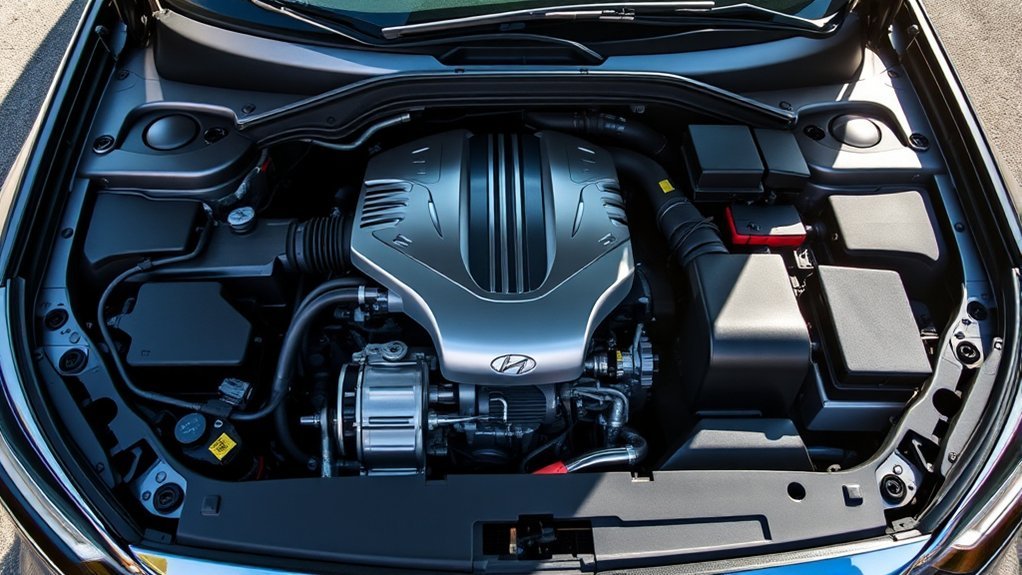
Leaving your Hyundai Sonata parked for several weeks or months can allow its 12-volt battery to discharge until the engine will not start. The best prevention method depends on the battery type, storage length, temperature, model year, and access to an electrical outlet. Preparing the battery before parking is easier and safer than trying to revive it after a deep discharge.
Quick Answer
To prevent Hyundai Sonata battery drain during storage, fully charge and test the battery, unplug unnecessary accessories, and use a compatible automatic battery maintainer. If electricity is unavailable, check your model-year manual before disconnecting the negative cable. Inspect the battery and charging setup regularly rather than relying on one fixed recharge schedule.
Key Takeaways
- Begin storage with a healthy, fully charged, clean, and securely mounted battery.
- Use an automatic maintainer that supports the battery’s voltage and chemistry.
- Do not depend on brief idling or short trips to recharge a weakened battery.
- Disconnect the negative cable only after checking the correct Hyundai manual and understanding which settings may reset.
- Use model-specific instructions for Sonata Hybrid and plug-in hybrid vehicles.
At a Glance
| Time Required | About 20–40 minutes for preparation, followed by brief periodic inspections |
| Difficulty | Easy with a maintainer; moderate when disconnecting or removing the battery |
| Tools Needed | Compatible smart maintainer, safety glasses, gloves, correct-size wrench or socket, and optional digital multimeter |
| Cost | No added cost if you own the tools; otherwise the cost of a compatible maintainer or professional battery test |
How to Prevent Your Car Battery From Dying During Storage
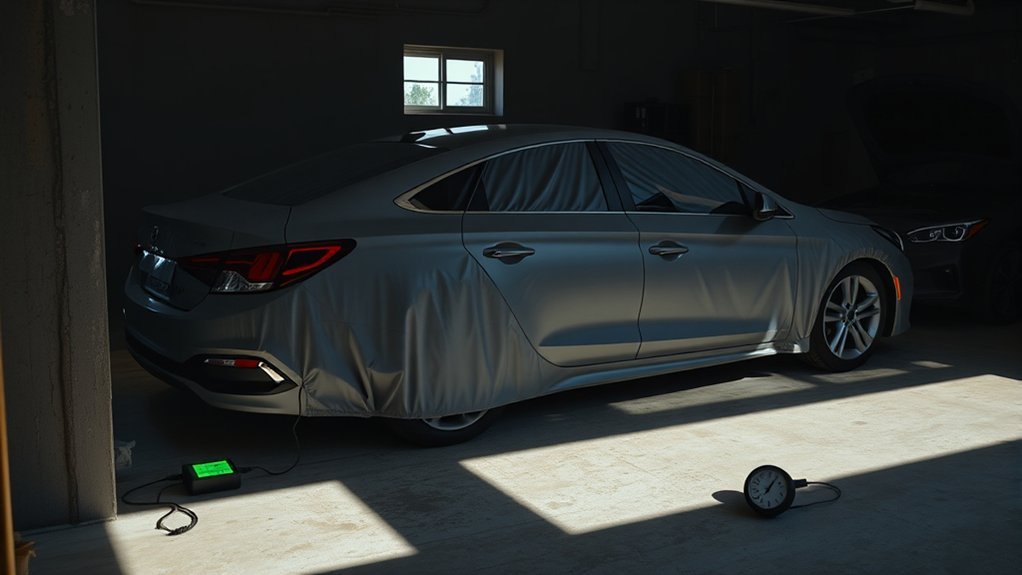
Prepare your Sonata before the storage period begins. A battery that is already weak, partly discharged, or damaged may fail even if you follow the rest of the storage steps correctly.
- Check the correct Hyundai manual. Battery location, connection points, reset procedures, and hybrid instructions can vary by model year and trim. Use Hyundai’s official Manuals & Warranties resource.
- Inspect the battery. Look for cracks, swelling, leakage, loose clamps, damaged cables, severe corrosion, or an unsecured hold-down.
- Test its condition. Have an aging, slow-cranking, or previously discharged battery load-tested or conductance-tested before storage.
- Charge it fully. Use a charger that matches the installed battery’s voltage and chemistry.
- Remove avoidable electrical loads. Unplug USB adapters, radar detectors, OBD devices, aftermarket trackers, and dash cameras unless they are configured for long-term parking.
- Check hidden lights. Confirm that the cabin, trunk, glove-box, vanity, and exterior lights switch off.
- Choose a storage method. Use a smart maintainer when power is available. Consider negative-cable disconnection only when the manual permits it and a maintainer is unavailable.
- Inspect the setup periodically. Check for charger fault lights, damaged cables, corrosion, moisture, pests, or changes in the battery case.
Warning: Do not charge or handle a battery that is cracked, leaking, swollen, unusually hot, or frozen. Sonata Hybrid and plug-in hybrid models may use different 12-volt arrangements and procedures. Never touch orange high-voltage cables or connectors.
Why Car Batteries Lose Charge in Storage
Your Sonata continues to use a small amount of electricity after you switch it off. Clocks, alarms, keyless-entry receivers, telematics, control modules, and other systems may remain active or wake at intervals. This normal key-off consumption is known as parasitic draw.
The battery also self-discharges through internal chemical reactions. A partly discharged lead-acid battery is more vulnerable to sulfation, which forms an insulating layer on the battery plates and can reduce charging and starting performance. Battery University recommends charging lead-acid batteries before storage and monitoring their voltage or state of charge.
Storage time alone does not determine whether the battery will survive. Battery condition, temperature, electrical draw, and starting state of charge all affect how quickly it becomes too weak to start the car.
Heat speeds up battery aging and self-discharge. Cold weather reduces available starting power, making an already weak or partly discharged battery more likely to fail. Keeping the battery charged and avoiding temperature extremes provides better protection than following one fixed calendar schedule.
How to Prevent Parasitic Drain on Your Battery
Start with electrical loads you can control. Remove plug-in devices, disable unnecessary parking-mode accessories, and confirm that no hidden light remains on. Keep the smart key away from the stored car when practical so proximity systems are less likely to wake repeatedly.
Common sources of excessive key-off draw include:
- Aftermarket dash cameras operating in parking mode
- OBD monitoring devices
- GPS trackers and alarm systems
- USB adapters with illuminated displays
- Trunk, glove-box, or vanity lights that remain on
- A relay that remains energized
- A control module that does not enter sleep mode
- Damaged or corroded wiring
- An internally failing battery
If a fully charged and tested battery repeatedly goes flat, the Sonata may need a professional parasitic-draw test. Modern modules can remain awake for several minutes after shutdown, so measuring current correctly requires allowing the vehicle to enter sleep mode without interrupting the circuit.
Pro Tip: Photograph the battery terminals, cable positions, and hold-down before disconnecting anything. The photos provide a clear reference when you return the vehicle to service.
[Products Worth Considering]
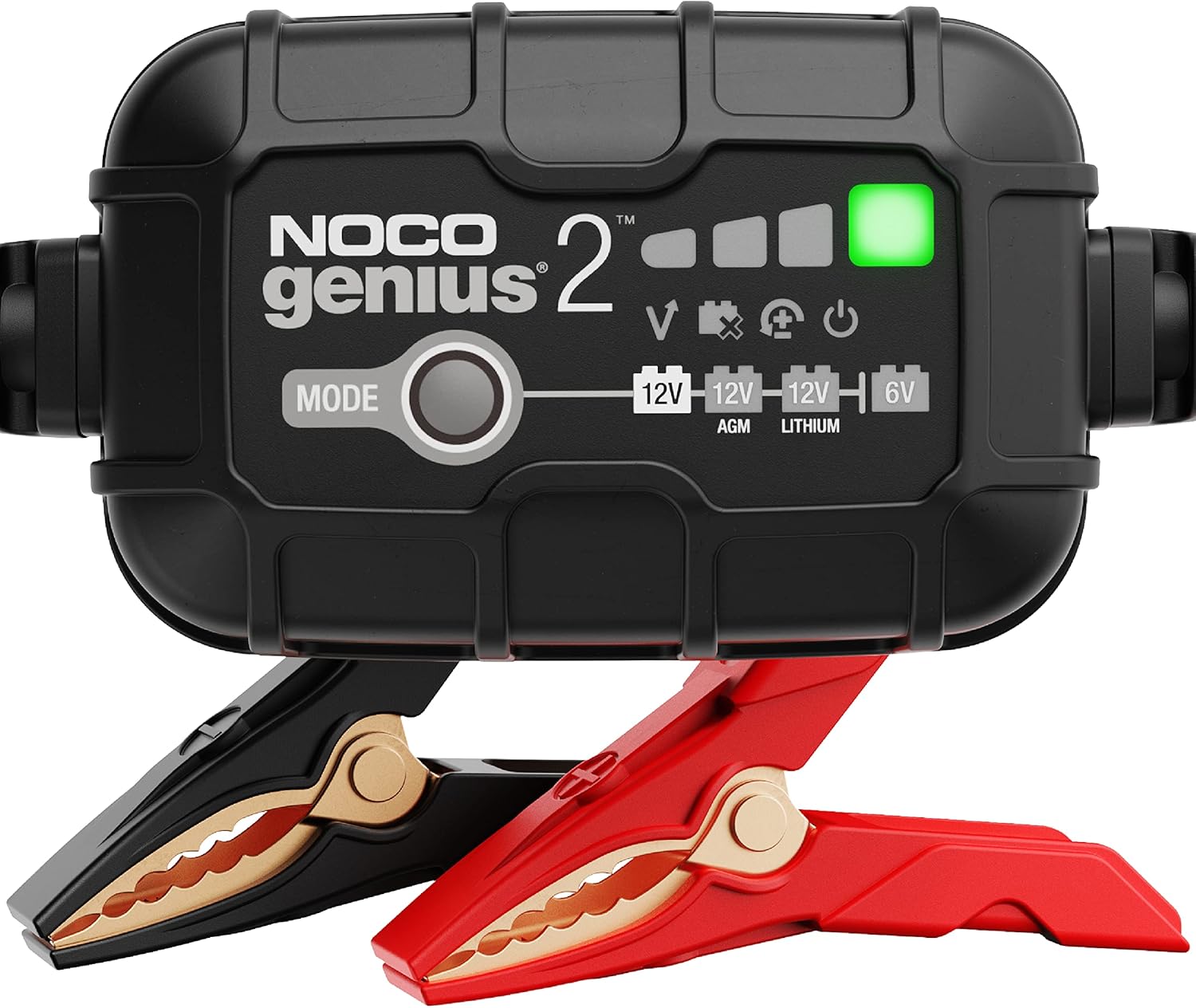
The NOCO GENIUS2 is a compact, all-in-one smart charger that automatically charges, maintains, and restores 6V and 12V lead-acid and lithium batteries. It features temperature compensation, overcharge protection, pulse desulfation, and Force Mode for reviving deeply discharged batteries, making it ideal for long-term battery care across many vehicle types. Designed for safe indefinite connection, it helps extend battery life and keep batteries ready to go.

The NOCO GENIUS5 is an all-in-one battery charging and maintenance solution for 6V and 12V lead-acid and lithium batteries. It features temperature compensation, dead-battery recovery, desulfation, and safe long-term maintenance to help extend battery life and performance. Compact and versatile, it works with a wide range of vehicles and comes with mounting accessories and a warranty.

The NOCO GENIUS10 is an all-in-one smart charger, maintainer, trickle charger, and desulfator designed to keep 6V and 12V batteries performing at their best. It supports lead-acid and lithium batteries, charges deeply discharged batteries, and uses temperature compensation for safer, more accurate charging in changing conditions. Compact and versatile, it is ideal for a wide range of vehicles and long-term battery maintenance.
Why a Battery Maintainer Helps During Long-Term Storage
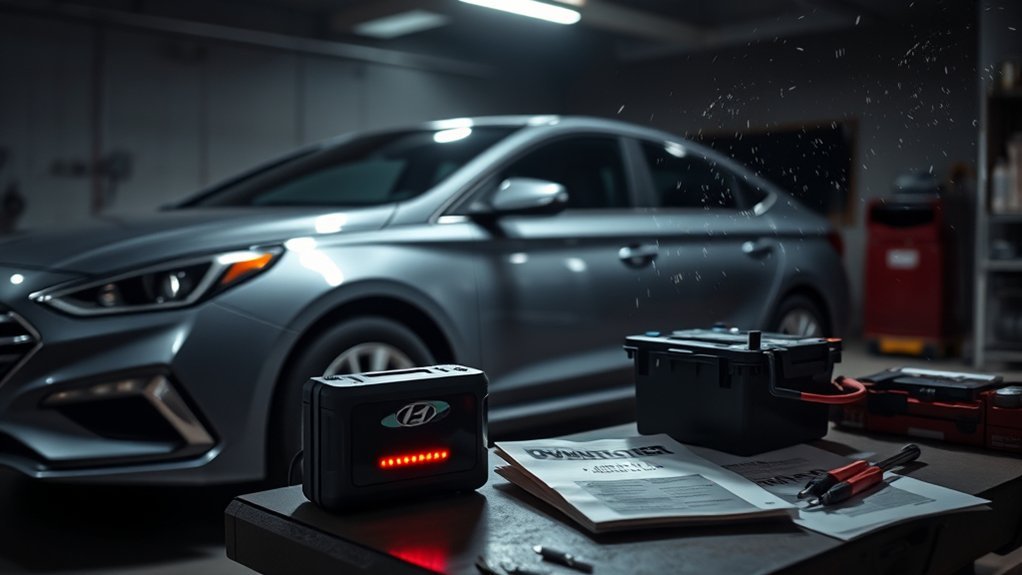
A compatible smart battery maintainer is usually the simplest option for long-term storage. It monitors the battery and changes charging stages automatically instead of applying the same current continuously.
This differs from an unspecified basic trickle charger, which may not be designed for unattended long-term connection. Current smart chargers can support several battery types, but you must select the correct voltage and mode. The NOCO GENIUS5 technical page, for example, separates flooded, gel, AGM, maintenance-free, and lithium charging applications.
[Products Worth Considering]

This bike torque wrench kit delivers precise, reliable tightening for bicycle maintenance and assembly, helping prevent damage from over-tightening. It includes a dual-direction click wrench, multiple hex and Torx bit sockets, an extension bar, and an adapter for versatile use. With a clear dual-range scale, durable construction, and pre-calibrated accuracy, it is designed for dependable workshop performance.

The TOPDON BT100 helps you quickly check the health and charge status of 12V lead-acid batteries with clear analytical results, including state of health, state of charge, voltage, and cranking performance. It supports a wide range of battery types and vehicles, making it a practical tool for diagnosing starting and charging issues at home or in the shop. Compact and easy to use, it provides fast, reliable testing without needing to charge the device first.

Stay Charged: Battery Tender battery chargers and maintainers provide a full charge to your powersport vehicle’s battery before switching to float mode to maintain proper voltage levels for safe, long-term storage
Choose the Correct Charger Mode
Check the battery label and vehicle manual before selecting a mode. Depending on the Sonata’s model year and equipment, the 12-volt system may use a conventional flooded battery, enhanced flooded battery, AGM battery, or another model-specific design.
Do not use lithium mode on a lead-acid battery or a lead-acid mode on a lithium battery. Do not assume that a charger labeled “12 volt” supports every 12-volt battery chemistry.
How to Connect a Battery Maintainer
- Park in a dry, ventilated location and switch off the ignition and all accessories.
- Remove metal jewelry and wear safety glasses and gloves.
- Inspect the battery, terminals, charger, clamps, and cables for damage.
- Keep the charger unplugged or switched off while attaching its leads.
- Connect the positive lead to the approved positive terminal.
- Connect the negative lead to the terminal or grounding point specified by the vehicle and charger instructions.
- Select the correct voltage and battery-chemistry mode.
- Connect the charger to power and confirm that it shows a normal charging or maintenance status.
- Route the cord where the hood, doors, tires, or garage equipment cannot pinch or cut it.
- Inspect the charger and battery periodically during storage.
When removing the maintainer, disconnect its AC power first. Then remove the negative connection followed by the positive connection, unless the charger or Hyundai manual specifies a different procedure.
Note: A maintainer can preserve a serviceable battery, but it cannot reliably repair cracked plates, an internal short, severe capacity loss, or other physical failure.
When Should You Disconnect Your Car Battery?
Disconnecting the negative cable can stop most vehicle-side electrical draw, but it may also reset saved settings. Consider this method when a compatible maintainer is unavailable and the Sonata will remain unused long enough for normal draw to become a concern.
Check the correct Hyundai manual before disconnecting the battery. Depending on the model year, you may need to restore the clock, window functions, audio preferences, emissions-monitor readiness, or other learned settings after reconnection.
[Products Worth Considering]

【Reliable Quality】: This 180 amp single pole fuse is made of the same materials as the original. The fuse part uses rated current alloy wire to ensure that it can quickly fuse and protect the circuit when the current is too large. The terminal part is made of brass and coated with Dacromet anti-oxidation layer to reduce resistance and loss. In addition, the screws are made of 304 stainless steel to ensure a firm connection.

Applicable for Hyundai Sonata 2011-2014

SAE to O-Ring Terminal Extension Cable: Package includes 2PCS SAE extension cables(16AWG, 1.98ft each) , designed to extend battery charging connections, keeping your vehicle battery trickle-charged during storage, seasonal use or long-term parking; Prevent costly battery drain and extend its lifespan
Ideal Storage Duration
The following table provides general planning guidance. Battery age, temperature, condition, and aftermarket equipment may require a more protective approach.
| Storage Period | Suggested Approach | What to Check |
|---|---|---|
| Up to about two weeks | A healthy, fully charged battery can usually remain connected | Remove unnecessary accessories and verify that all lights turn off |
| Two to four weeks | Use an automatic maintainer when practical | Test older or questionable batteries before parking |
| One to three months | Use a maintainer or consider negative-cable disconnection if the manual permits | Plan for possible setting and monitor resets |
| Several months | Use automatic maintenance charging with periodic inspection, or remove and store the battery correctly | Also prepare the tires, fuel, fluids, brakes, and storage area |
Frequency of Use
Do not start the engine for only a few minutes and then switch it off. Starting uses battery energy, and a brief idle period may not replace what the starter consumed. Short operation can also leave moisture in the exhaust and engine because the vehicle never reaches normal operating temperature.
If you use driving instead of a maintainer, drive the Sonata normally for a meaningful trip under safe conditions. The required time will vary with battery condition, temperature, traffic, electrical demand, and charging-system performance. Charge and test a deeply discharged battery instead of depending on one drive to restore it.
Safety Precautions Required
Before disconnecting the battery, switch off the ignition, remove the smart key from the immediate area, unplug any charger, and allow vehicle systems to shut down.
If you remove both cables, disconnect the negative cable first and the positive cable second. During installation, connect the positive cable first and the negative cable last. This order reduces the chance of creating a short if a tool touches the vehicle body.
- Work in a ventilated area away from smoking, flames, sparks, and hot equipment.
- Wear safety glasses and chemical-resistant gloves.
- Remove rings, watches, bracelets, and other metal jewelry.
- Never place tools or other metal objects on the battery.
- Do not force, twist, or hammer a terminal clamp.
- Keep the battery upright and reinstall its hold-down securely.
- Stop if you see leakage, swelling, cracks, smoke, sparks, or unusual heat.
Best Ways to Store Your Battery Indoors
If you remove the battery from the Sonata, charge it according to the battery manufacturer’s instructions before storage. Clean the case and terminals, keep the battery upright in an acid-resistant tray, and place it in a cool, dry, ventilated utility area.
Keep the battery away from children, pets, living spaces, direct sunlight, heaters, furnaces, welding equipment, open flames, and objects that could bridge the terminals. Protect exposed terminals with suitable insulating covers, but do not seal a vented battery in an airtight container.
Battery University’s storage guidance recommends monitoring the voltage or specific gravity of stored lead-acid batteries. It uses approximately 12.42 volts as a broad 70% state-of-charge reference for a rested 12-volt lead-acid pack while warning that manufacturer readings can differ.
Do not use one voltage number as the only test of battery health. Temperature, recent charging, battery chemistry, surface charge, and age can affect the reading. A battery can show acceptable open-circuit voltage and still fail under starter load.
How to Maintain Your Battery During Winter
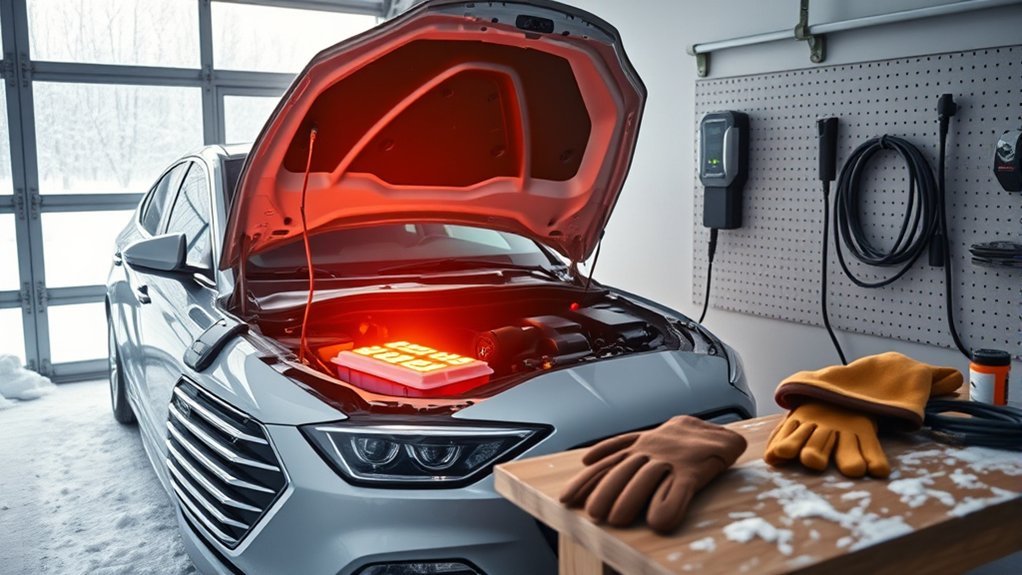
A fully charged battery handles cold storage better than a partly discharged one. Cold weather reduces the battery’s available starting performance, while a low state of charge increases the risk of freezing and permanent internal damage.
- Test before winter storage. Replace or service a battery that fails a proper load or conductance test.
- Charge it fully. Do not expect a maintainer to repair a battery that already has major internal damage.
- Select the correct mode. Flooded, AGM, EFB, and lithium-based systems can require different charging profiles.
- Clean and tighten connections. Corrosion and loose clamps add resistance when maximum starting current is needed.
- Inspect the setup regularly. Check the charger status, cords, battery case, terminals, and storage area.
- Never charge a frozen battery. Keep away from it and obtain professional guidance.
Do not replace a battery based only on age. Testing provides a better picture of its starting capacity, internal condition, and ability to hold a charge.
How to Check Your Battery During Storage
A digital multimeter can provide a basic resting-voltage check, but voltage alone does not confirm that the battery can deliver enough current to start the engine. For a useful measurement, switch off the charger and vehicle and allow the battery to rest according to the battery or test-equipment instructions.
- Inspect the case: It should remain dry, flat, and free of cracks or swelling.
- Inspect the terminals: Clamps should remain secure and free of severe corrosion.
- Check the maintainer: It should show a normal charging or maintenance status rather than a repeated fault.
- Compare resting voltage: Use the battery manufacturer’s state-of-charge chart when available.
- Test starting capacity: Use a load or conductance test if the battery is old, has gone flat, or cranks slowly.
Repeated discharge after a full charge can point to a weak battery, excessive parasitic draw, a charging-system problem, or a combination of these issues.
What to Do If Your Sonata Will Not Start After Storage
- Stop repeated cranking if the starter slows, clicks, or the lights dim sharply.
- Check whether a disconnected cable was reattached and tightened correctly.
- Inspect the terminals for corrosion, damage, or looseness.
- Check whether the maintainer lost AC power or displays a fault.
- Measure resting voltage if you can do so safely.
- Follow the exact Hyundai manual for approved jump-start points and procedures.
- Charge and test the battery after restoring power.
- Request a parasitic-draw test if the battery becomes discharged again.
A battery that has suffered several deep discharges may accept a charge but no longer provide dependable starting capacity. Replacement may be safer and more reliable than repeatedly reviving it.
Returning Your Sonata to Service
Complete these checks before driving after a long storage period:
- Switch off and unplug the maintainer before removing its leads.
- Reconnect the battery in the correct order if it was disconnected.
- Secure the terminal clamps and battery hold-down.
- Check for leakage, swelling, corrosion, rodent damage, or damaged wiring.
- Restore any clock, window, audio, or other settings that were reset.
- Start the vehicle and check for warning lights.
- Test the battery and charging system if cranking is slow.
- Inspect tire pressure, fluids, brakes, and the area beneath the vehicle.
Frequently Asked Questions
How do you keep a Hyundai Sonata battery from dying in storage?
Fully charge and test the battery, unplug unnecessary electrical accessories, confirm that all lights turn off, and use a compatible automatic maintainer. If electricity is unavailable, check the model-year manual before disconnecting the negative cable.
What do you put on a car battery to keep it charged while sitting?
Use an automatic smart battery maintainer approved for long-term connection and compatible with the battery’s voltage and chemistry. Do not assume that an old or unregulated trickle charger is safe to leave connected indefinitely.
Should you disconnect the positive or negative cable when storing a car?
When disconnecting one cable to reduce vehicle-side draw, disconnect the negative cable. If removing both cables, disconnect negative first and positive second. During installation, connect positive first and negative last.
Is starting the Sonata and letting it idle enough to charge the battery?
Brief idling is not a dependable storage method. Starting consumes battery energy, and a short idle may not replace it. Use a maintainer or drive normally for a meaningful trip when conditions permit.
How often should you inspect a stored car battery?
Inspect the battery, charger, cords, and storage area about monthly at first. Recharge needs depend on battery chemistry, condition, temperature, storage method, and manufacturer instructions.
Does a Sonata Hybrid use the same battery-storage procedure?
Not always. The 12-volt battery arrangement, location, reset features, and service procedures can vary by hybrid model year. Follow the exact Hyundai manual and never handle orange high-voltage components.
Conclusion
The best way to prevent Hyundai Sonata battery drain during storage is to begin with a healthy, fully charged battery and control the electrical load while the vehicle is parked. A compatible automatic maintainer is usually the easiest long-term option. When power is unavailable, model-approved negative-cable disconnection and periodic condition checks can reduce the chance of a no-start.
Avoid relying on brief idling, an arbitrary recharge calendar, or a charger that does not support the installed battery. Follow the correct Hyundai manual, use safe connection procedures, and test any battery that cranks slowly or repeatedly loses charge.
Sources
- Hyundai Manuals & Warranties — model-year, model, and trim-specific owner information.
- Battery University: How to Store Batteries — storage temperature, self-discharge, state-of-charge monitoring, and sulfation guidance.
- Battery University: How to Prolong Lead-Acid Batteries — charging, deep-discharge, temperature, and lead-acid battery care.
- NOCO GENIUS5 Technical Information — automatic maintenance charging and battery-chemistry compatibility examples.
- OSHA 1910.178(g) — ventilation, spark prevention, metal-tool, and battery-charging safety principles.