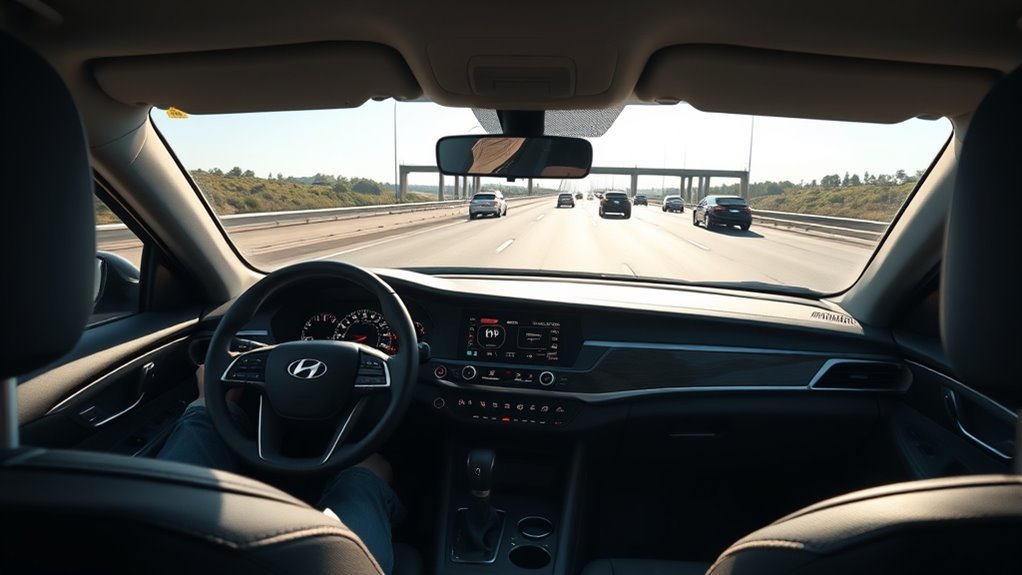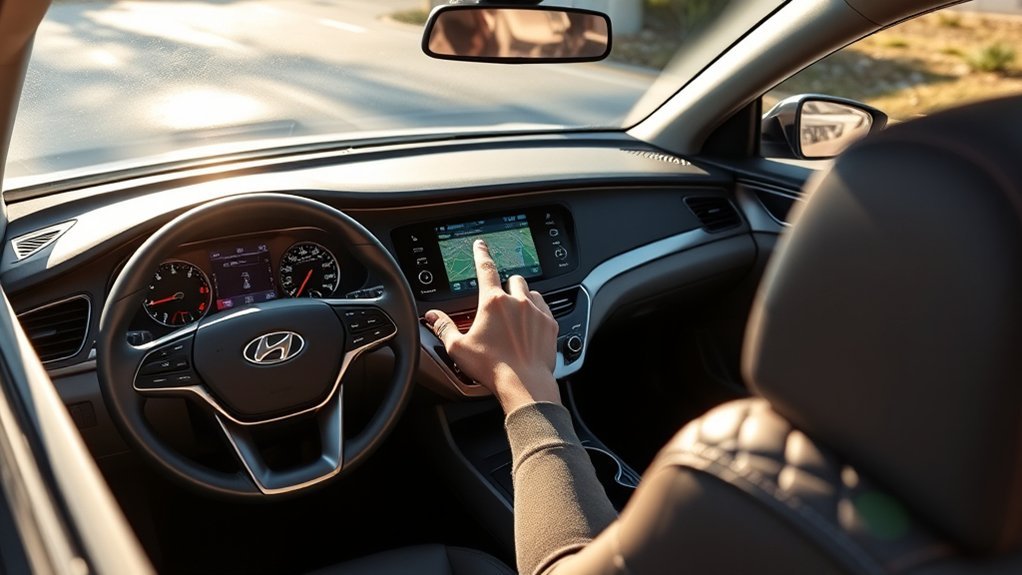
The U.S.-market Hyundai Sonata Hybrid solar roof was offered on 2020–2022 Limited models, not on 2023–2026 cars. Its photovoltaic panel sent supplemental electricity to both the 12-volt system and the hybrid drive battery. Hyundai rated the system at about 204–205 W and said it could reduce battery drain while adding roughly 2 miles of range after about six hours of strong sunlight.
Quick Answer
Hyundai’s Sonata Hybrid solar roof used 22.8%-efficient cells to charge the vehicle’s 12-volt and hybrid batteries. Hyundai’s global technical article lists 204 W of output and up to 1,300 km, or about 810 miles, of annual range under Korean sunlight assumptions; U.S. launch material rounded output to 205 W and advertised up to 700 miles per year. Hyundai replaced the solar roof with a panoramic sunroof for the 2023 U.S. Sonata Hybrid Limited.
Key Takeaways
- The Sonata Hybrid solar roof was a supplemental charging system, not a plug-in charging replacement.
- Hyundai reported 22.8% solar-cell efficiency and about 204–205 W of output, depending on whether the global or U.S. specification is used.
- The feature supported both the 12-volt battery and the hybrid drive battery, reducing charging-system demand and battery-discharge risk.
- For the U.S. market, the solar roof was offered on 2020–2022 Sonata Hybrid Limited models and replaced by a panoramic sunroof for 2023.
- The 2026 Toyota Prius Plug-in Hybrid offers a 185 W solar-roof option in limited quantities, but it is a plug-in hybrid rather than a direct Sonata Hybrid equivalent.
Market note: The model-year availability in this guide refers to U.S.-market Sonata Hybrid models. Equipment differed by country, so imported cars should be checked by VIN and original build information.
Output note: Solar production depends on sunlight, parking location, season, shade, and roof coverage. Hyundai’s own testing reported a 3%–10% output loss with leaves, dirt, or rain, but a heavily covered roof can produce far less.
| U.S. model year | Solar-roof status | What shoppers should know |
|---|---|---|
| 2020–2022 Sonata Hybrid Limited | Offered | Verify the exact car by VIN, window sticker, roof appearance, and hybrid-energy display. |
| 2023 Sonata Hybrid Limited | Replaced by panoramic sunroof | Hyundai’s official 2023 model-year change guide documents the switch. |
| 2024–2026 Sonata Hybrid | Not offered | Current glass-roof equipment does not generate electricity. |
What Made the Sonata Hybrid’s Solar Roof Unique?
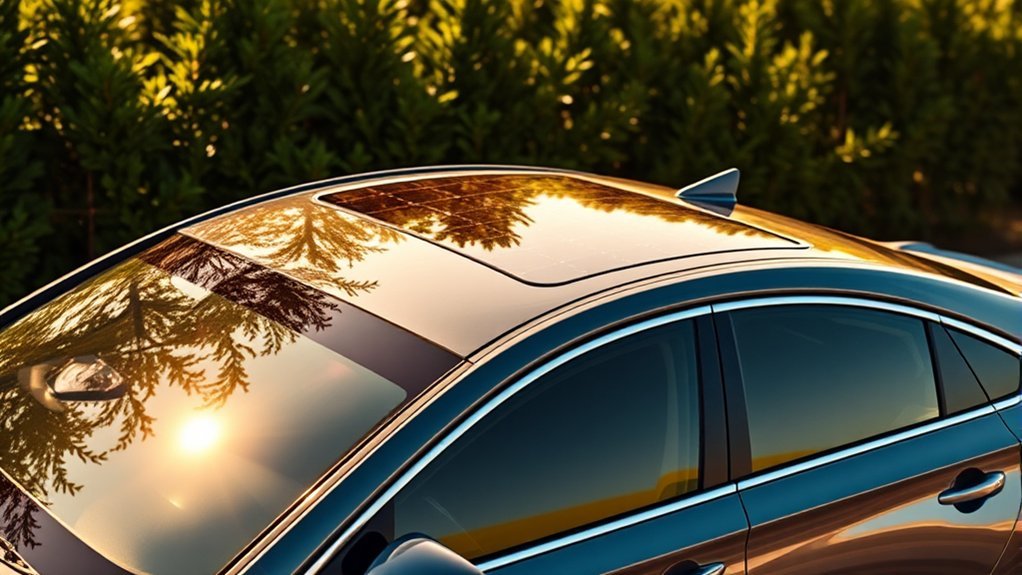
The Sonata Hybrid’s solar roof stood out because Hyundai integrated it into a mass-market, non-plug-in hybrid sedan. According to Hyundai Motor Group, the cells were rated at 22.8% efficiency and the panel produced about 204 W. Hyundai Motor America described the U.S. system as 205 W, a one-watt rounding difference rather than a separate design.
The roof did not make the Sonata a solar-powered car. It supplied extra electricity to the 12-volt system and hybrid drive battery, reducing the amount of energy the vehicle later needed to restore through normal hybrid operation. The feature was most useful for owners who parked outdoors in direct sunlight for several hours most days.
Hyundai published two annual-range figures. Its Korean calculation used 5.8 hours of average daily sunshine and produced an estimate of 1,300 km, or about 810 miles, per year. U.S. launch material advertised up to 700 miles per year. Those estimates use different market assumptions, so neither should be treated as a guaranteed owner result.
Is the Sonata Hybrid Solar Roof Still Available?
No. Hyundai’s official U.S. 2023 model-year change guide shows the Sonata Hybrid Limited moving from an available solar roof for 2022 to a panoramic sunroof for 2023. The solar roof therefore ended one model year earlier than some secondary 2024 model summaries suggest.
For a U.S.-market car, focus on 2020–2022 Sonata Hybrid Limited models. Confirm the exact equipment from the original window sticker, a VIN-based build sheet, clear roof photos, and the vehicle’s hybrid-energy display. A panoramic glass roof is not a solar charging roof.
Pro Tip: Ask for clear roof photos in direct light and a photo of the solar-energy display. Look for cracks, delamination, cloudy areas, water leaks, warning messages, and service history involving the roof, solar controller, 12-volt system, or hybrid battery.
[Products Worth Considering]

This anti-glare matte tempered glass screen protector is designed for compatible 2026 Toyota RAV4 and RAV4 Hybrid models with a 12.9-inch touchscreen. It helps reduce glare, resists scratches and fingerprints, and maintains responsive touch performance for a clearer, cleaner driving experience.

HAFIDI floor mats are custom-fit for select Kia Optima and Hyundai Sonata Hybrid models, using 3D laser scanning for precise coverage of the front and rear rows. Built from durable TPE with raised edges and anti-slip backing, they help contain dirt, water, snow, and spills while staying secure and easy to clean.
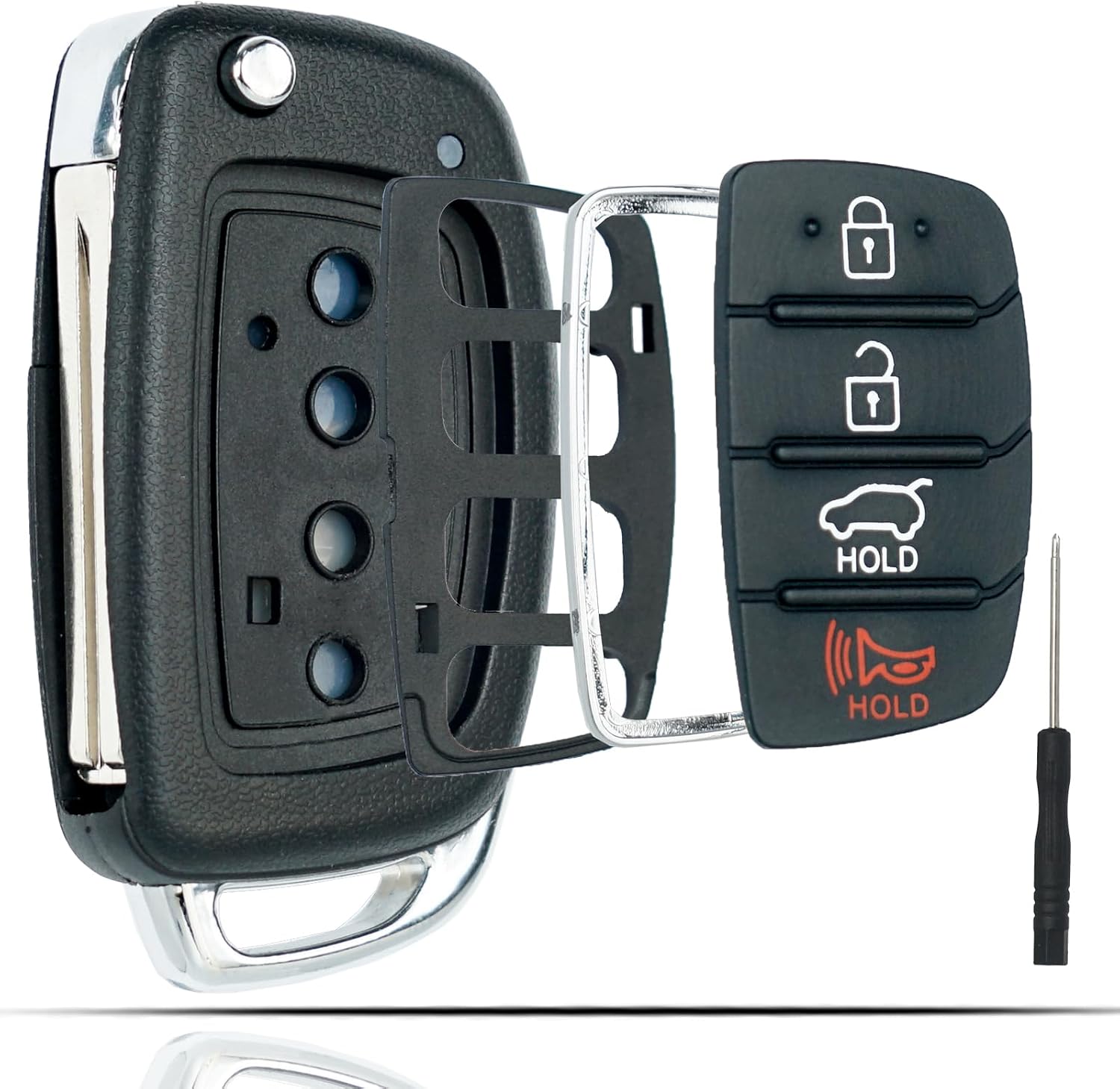
This flip key fob shell is a replacement case designed for compatible Hyundai Sonata and Santa Fe models, helping restore a worn or broken remote housing without replacing the electronics. It includes a 4-button layout and is made for easy transfer of your original internal components, with no reprogramming required. The durable metal and plastic construction makes it a practical fix for damaged key fobs, and the replacement blade must be cut by a locksmith or hardware store.
How Does the Solar Roof System Work?
The Sonata Hybrid solar roof converts sunlight into electricity through photovoltaic cells built into the roof panel. That electricity passes through a controller, which regulates the voltage before sending power into the vehicle’s battery system.
The important detail is that Hyundai designed the Sonata system to support both the 12-volt starter/accessory battery and the hybrid drive battery. The 12-volt battery powers electronics and standby loads, while the hybrid battery assists the electric motor. By feeding both systems, the solar roof could reduce how much work the engine-driven charging system had to do.
Hyundai contrasted this direct arrangement with the earlier Prius Prime system, which first stored solar energy in a separate intermediate battery before transferring it to the drive battery. That comparison explains Hyundai’s 2020 engineering approach; it should not be applied automatically to the current 2026 Prius Plug-in Hybrid system.
How Does the Solar Roof Impact Driving Distance?
Hyundai’s global technical explanation estimated about 3.6 km, or 2.2 miles, of added driving distance from one day’s solar charging. Using 5.8 hours of average daily sunshine in Korea, Hyundai calculated about 1,300 km, or 810 miles, per year. U.S. launch material used the more conservative headline of up to 700 miles annually and about 2 miles after six hours of charging.
Actual production varies with solar intensity, season, latitude, shade, panel temperature, and how long the car remains outdoors. Hyundai reported only a 3%–10% loss in tests involving leaves, dirt, or rain, but snow, a roof accessory, or full shade can block most useful sunlight.
- Best case: outdoor parking, direct sun, long daytime exposure, clean glass, and mild weather.
- Weak case: garage parking, tree shade, snow cover, short winter days, or heavy cloud cover.
- Realistic expectation: about 2 miles after a long sunny day under Hyundai’s test assumptions, not a dramatic range increase.
How Efficient Is the Sonata Hybrid’s Solar Roof in Charging?
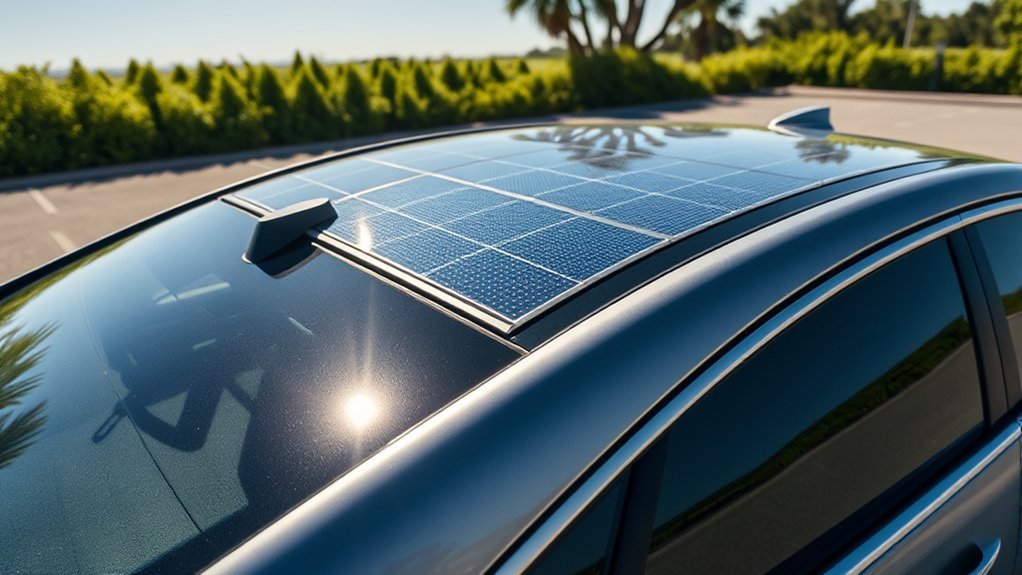
Hyundai reported 22.8% cell efficiency. Its global technical article lists 204 W of panel capacity, while Hyundai Motor America rounded the U.S. figure to 205 W. The same global article reported 81,200 mAh of daily charge under its assumptions.
The 81,200 mAh number is charge quantity, not a complete energy figure. It cannot be compared directly with battery capacity in watt-hours without the relevant voltage and operating conditions. The practical takeaway is that the roof was designed to support standby loads and add a small amount of energy to the drive battery, not to recharge the whole vehicle.
| Feature | Hyundai Sonata Hybrid Solar Roof | Important Context |
|---|---|---|
| Solar-cell efficiency | 22.8% | Hyundai-reported figure for the solar-roof cells |
| Panel output | 204 W global / 205 W U.S. | The difference reflects source rounding |
| Estimated daily range gain | About 2–2.2 miles | After roughly 5.8–6 hours under Hyundai’s assumptions |
| Estimated yearly range gain | Up to 700 miles U.S. / about 810 miles Korean calculation | Different Hyundai market assumptions |
| Current new-model availability | Offered on 2020–2022 U.S. Limited; removed for 2023 | Verify exact used-car equipment by VIN and window sticker |
How Did the Solar Roof Reduce Charging Load?
The solar roof reduced the amount of gasoline-derived energy the car later needed to restore to its batteries. Electrical power in a conventional hybrid normally comes from the engine-driven charging system or regenerative braking. Sunlight added a small third source whenever the roof was exposed.
Solar Power Utilization
When sunlight hits the roof panel, the photovoltaic cells generate electricity. The controller then manages that power and sends it to the vehicle’s batteries. This works quietly in the background while the car is parked outside or exposed to sunlight during driving.
Reduced Charging-System Demand
Because the roof could maintain the 12-volt system and send energy to the drive battery, the hybrid system had slightly less charge to restore later. Hyundai linked this reduced charging demand to a small fuel-efficiency benefit over repeated sunny outdoor parking.
Enhanced Battery Support
The most practical benefit may be battery support. Hyundai highlighted the system’s ability to reduce discharge risk from standby electrical loads, including accessories such as dashboard cameras in markets where those are common. This does not guarantee that the battery will never discharge, but it can reduce the odds when the car receives regular sunlight.
Warning: Do not rely on the solar roof to maintain a weak or failing 12-volt battery. If the car struggles to start, shows battery warnings, or sits unused for long periods, have the battery and charging system tested.
What Were the Environmental Benefits?
The roof captured sunlight that would otherwise be unused and converted it into vehicle electricity. Hyundai said this reduced charging demand, improved operational fuel efficiency, and lowered fuel-related CO2 emissions. These claims concern vehicle operation; the cited Hyundai materials do not provide a full lifecycle analysis of manufacturing and replacing the solar roof.
Reduced Carbon Emissions
Hyundai stated that the solar roof supported the vehicle’s electric power source, improved fuel efficiency, and reduced CO2 emissions. The benefit is modest, but it is still useful because the roof produces electricity passively whenever conditions are favorable.
Enhanced Fuel Efficiency
Hyundai’s Korean technical article estimated an average fuel-efficiency improvement of about 7% under its sunlight assumptions. The company also said the solar contribution was not included in official fuel-economy testing because weather and exposure vary. Treat 7% as a manufacturer scenario, not an EPA rating or a guaranteed owner result.
Sustainable Energy Utilization
The best way to view the solar roof is as an efficiency layer. It will not turn the Sonata Hybrid into an electric vehicle, but it can capture otherwise unused sunlight and turn it into a small daily energy gain.
How Does the Sonata Hybrid Compare to the Toyota Prius?
The Sonata-versus-Prius comparison needs model-year context. Hyundai’s 2020 technical article compared the Sonata’s direct charging path with the Prius Prime system then sold in Japan and Europe, which used an intermediate solar battery before transferring energy to the drive battery. That historical comparison should not be presented as a verdict on Toyota’s current hardware.
The 2026 Toyota Prius Plug-in Hybrid offers a 185 W solar roof on the XSE Premium in limited quantities. Toyota says it charges the drive battery while parked and powers auxiliary functions while driving. Because the Prius is a plug-in hybrid and the Sonata was a non-plug-in hybrid, their batteries, charging options, and owner use cases are different.
| Question | Sonata Hybrid Solar Roof | Prius Plug-in Hybrid Solar Roof |
|---|---|---|
| Vehicle type | Conventional hybrid | Plug-in hybrid |
| Current availability | Not offered on U.S. 2023–2026 Sonata Hybrid models | 185 W option on 2026 XSE Premium, limited quantities |
| Best use case | About 204–205 W; battery support and small range gain | 185 W; parked drive-battery charging and auxiliary support |
| Shopping advice | Look at 2020–2022 U.S. Limited models and verify equipment | Confirm XSE Premium availability and the solar-roof option |
[Products Worth Considering]

This center console armrest cover is designed to fit the 2026 Toyota RAV4 for added comfort and a cleaner interior look. Made with breathable vegan leather and a thick cushioned feel, it helps reduce arm fatigue on long drives while protecting the console from pet paws, dirt, and sticky fingerprints. The band-secured design installs easily with no tools required and blends with the OEM-style interior.

The GEARWRENCH Professional Bi-Directional Diagnostic Scan Tool brings OE-level diagnostics to your smart device for efficient troubleshooting and repair. It offers full bi-directional control, live actuation testing, live data mapping, freeze frame capture, and support for 23 reset and relearn functions to help technicians complete complex jobs with confidence. With software updates included, broad vehicle coverage, and a two-year warranty, it delivers powerful shop-ready capability without ongoing fees.

This activated carbon cabin air filter is designed as a replacement for select Hyundai Sonata gas models and Kia Cadenza vehicles, helping improve in-cabin air quality. It is engineered to capture odors, VOCs, and common pollutants for a fresher driving environment, while matching multiple OE and reference numbers for convenient fitment confirmation.
Why Choose the Sonata Hybrid for Eco-Friendly Driving?
The Sonata Hybrid is still a strong eco-friendly sedan choice, even without the current solar roof. For 2026, FuelEconomy.gov lists the regular 2026 Sonata Hybrid at 47 mpg combined, while the 2026 Sonata Hybrid Blue is rated at 51 mpg combined.
If you specifically want the solar roof, a verified 2020–2022 U.S. Sonata Hybrid Limited combines strong hybrid fuel economy with passive solar battery support. If you are shopping new, the 2026 Sonata Hybrid’s case rests on fuel economy, a roomy sedan layout, conventional hybrid convenience, and EPA-estimated total range of 620 miles for the regular Hybrid or 673 miles for the Blue.
- Choose a verified 2020–2022 solar-roof Sonata Hybrid Limited if you park outdoors often and value the novelty and small efficiency benefit.
- Choose a current Sonata Hybrid if your priority is fuel economy, comfort, warranty coverage, and newer technology.
- Choose a Prius Plug-in Hybrid if you want plug-in driving with an available solar-roof option on current models.
Used-Buyer Checklist for Sonata Hybrid Solar Roof Models
Before buying a 2020–2022 Sonata Hybrid Limited with the solar roof, confirm the equipment and inspect the system carefully. A low purchase price can be offset by roof-glass, water-intrusion, controller, or hybrid-system repairs.
- Confirm the year and trim: start with a U.S. 2020–2022 Sonata Hybrid Limited, then verify the exact build by VIN and original window sticker.
- Inspect the roof glass: look for cracks, chips, clouding, seal problems, or signs of water intrusion.
- Check charging behavior: view the solar-energy screen in direct sunlight and check for warning messages. A display reading alone does not replace a professional diagnostic scan.
- Review service records: look for 12-volt battery replacements, hybrid battery warnings, roof repairs, or electrical issues.
- Get a pre-purchase inspection: use a Hyundai dealer or independent shop with hybrid-system diagnostic capability, not only a general body inspection.
- Match expectations to parking habits: the solar roof is far less useful if the car usually sits in a garage.
[Products Worth Considering]
This center console organizer adds a convenient secondary storage layer to compatible Toyota RAV4 hybrid models, helping keep sunglasses, keys, coins, phones, and other small items neatly arranged. Built from durable ABS plastic with a matte finish, it fits directly into the armrest area for quick, tool-free installation and easy removal. Non-slip rubber mats help reduce sliding and noise while maximizing usable storage space inside the console.

This key fob case is a practical replacement for damaged or worn Hyundai flip key shells, helping restore your remote’s appearance and usability. It fits select Hyundai Sonata and Santa Fe models and includes an uncut blade, replacement button pad, and basic tools for easy shell transfer. No electronics are included, so you can reuse your existing internals and have the blade cut to match your vehicle.

The TOPDON BT100 helps you quickly check the health and charge status of 12V lead-acid batteries with clear analytical results, including state of health, state of charge, voltage, and cranking performance. It supports a wide range of battery types and vehicles, making it a practical tool for diagnosing starting and charging issues at home or in the shop. Compact and easy to use, it provides fast, reliable testing without needing to charge the device first.
Frequently Asked Questions
How does the Hyundai Sonata Hybrid work?
The Hyundai Sonata Hybrid combines a gasoline engine, electric motor, hybrid battery, regenerative braking, and a 6-speed automatic transmission. The system can use electric assistance at low speeds, recover energy during braking, and use the gas engine for longer-range driving.
Does the 2026 Hyundai Sonata Hybrid have a solar roof?
No. Hyundai replaced the U.S. Sonata Hybrid Limited’s available solar roof with a panoramic sunroof for the 2023 model year. The 2026 Sonata Hybrid does not offer a roof that generates electricity.
Which Hyundai Sonata Hybrid models had the solar roof?
In the United States, the solar roof was offered on 2020–2022 Sonata Hybrid Limited models. Availability differed in other markets, so verify any used car by VIN, original window sticker, roof appearance, and the solar-energy display.
How much range did the Sonata Hybrid solar roof add?
Hyundai’s global estimate was about 3.6 km, or 2.2 miles, after a day of charging and about 810 miles per year under Korean sunlight assumptions. U.S. launch material advertised about 2 miles after six hours and up to 700 miles per year. Shade, season, weather, and parking habits can reduce the result.
How far can a Hyundai Sonata Hybrid go on a full tank?
It depends on trim, model year, driving style, and weather. For 2026, FuelEconomy.gov lists the Sonata Hybrid at 620 miles of total range and the Sonata Hybrid Blue at 673 miles of total range. Real-world range can be lower with cold weather, high speeds, short trips, or heavy accessory use.
Can the Sonata Hybrid solar roof replace gasoline?
No. The solar roof only adds supplemental electricity. It can support the batteries, reduce discharge risk, and add a small amount of range in sunny conditions, but the Sonata Hybrid still depends on gasoline and its standard hybrid system for normal driving.
Conclusion
The Hyundai Sonata Hybrid solar roof was a useful supplemental system, not a substitute for gasoline or normal hybrid charging. Hyundai reported 22.8% cell efficiency, about 204–205 W of output, and roughly 2 miles of added range after a long sunny day. For U.S. shoppers, the key model-year fact is simple: look at 2020–2022 Sonata Hybrid Limited models, because Hyundai replaced the solar roof with a panoramic sunroof for 2023. Verify the exact used car, inspect the roof and electronics, and get a hybrid-capable pre-purchase inspection before buying.
Sources
- Hyundai Motor Group: Everything About the Sonata Hybrid’s Solar Roof, supports the 22.8% efficiency, 204 W output, Korean 1,300 km/year estimate, 81,200 mAh figure, contamination testing, 7% scenario, and historical Prius comparison.
- Hyundai Motor America: 2020 Sonata Hybrid North American Debut, supports the 205 W U.S. figure, about 2 miles after six hours, up to 700 miles per year, and charging of both battery systems.
- Hyundai Motor America: 2023 Model Year Changes, documents the U.S. Sonata HEV Limited change from an available solar roof in 2022 to a panoramic sunroof in 2023.
- Hyundai News: Solar Roof Charging System Launch, supports the launch context, battery-support role, operational fuel-efficiency benefit, and CO2-reduction claim.
- FuelEconomy.gov: 2026 Hyundai Sonata Hybrid, supports the 47 mpg combined rating and 620-mile total range.
- FuelEconomy.gov: 2026 Hyundai Sonata Hybrid Blue, supports the 51 mpg combined rating and 673-mile total range.
- Toyota: 2026 Prius Plug-in Hybrid, supports current solar-roof availability and function.
- Toyota USA Newsroom: 2026 Prius Plug-in Hybrid, supports the 185 W rating, XSE Premium availability, and limited-quantity note.