Finding your Hyundai Sonata paint code is the safest way to order touch-up paint, repair chips, or ask a body shop for an exact color match. The code is usually on the vehicle information label in the driver-side door area, not hidden in the paint itself or printed as plain color words like “black” or “white.” Use the steps below to locate it, confirm it, and avoid the most common color-match mistakes.
Quick Answer
To find a Hyundai Sonata paint code, open the driver’s door and check the door jamb, door edge, or center pillar label for “PAINT,” “PNT,” “EXT COLOR,” or a short alphanumeric color code. If the label is missing or hard to read, use your VIN when contacting a Hyundai dealer or Hyundai Customer Care.
Key Takeaways
- The most common place to check is the driver-side door jamb, center pillar, or door edge label.
- Hyundai paint codes are usually short letter-and-number codes, not full color names.
- Your VIN helps a dealer identify your vehicle, but it is not the same thing as the paint code.
- Always test touch-up paint in a hidden spot before applying it to a visible panel.
At a Glance
| Time Required | 2–5 minutes |
| Difficulty | Easy |
| Tools Needed | Flashlight, phone camera, microfiber cloth |
| Cost | Free to identify; touch-up paint cost varies by supplier and paint type |
How to Locate Your Hyundai Sonata Paint Code
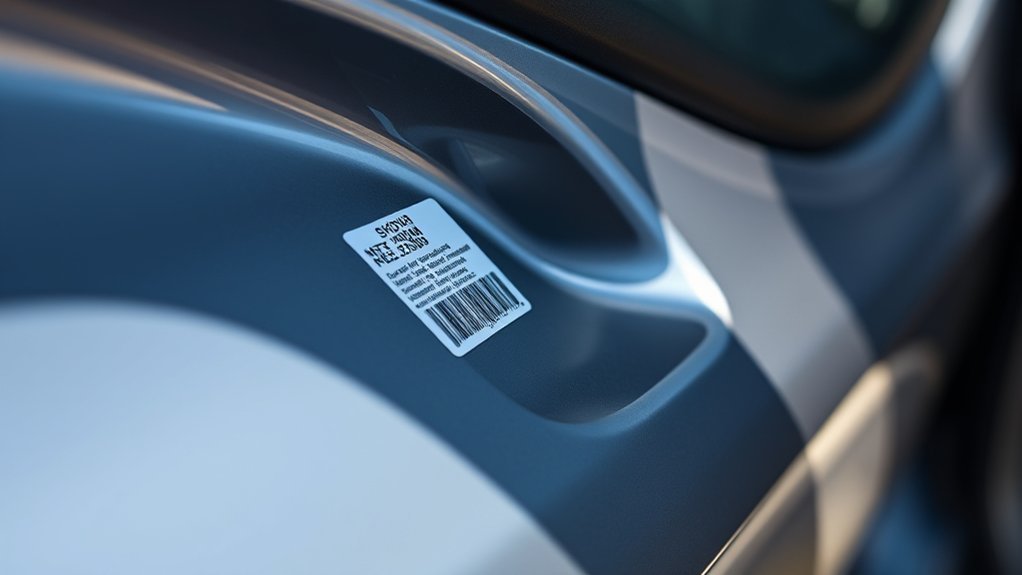
Start with the driver-side door opening. Hyundai owner resources identify the driver-side door jamb and center-pillar area as a key location for vehicle information labels, and this is also the most common area where owners find the paint or exterior color code. Open the driver’s door fully and look at the door jamb, B-pillar, and the edge of the door near the latch.
- Open the driver’s door and inspect the door jamb and center pillar.
- Look for a manufacturer label, VIN label, or vehicle information label.
- Scan the label for wording such as PAINT, PNT, COLOR, or EXT COLOR.
- Write down the short code exactly as printed, including any letters and numbers.
- Take a clear photo of the full label so a dealer, paint supplier, or body shop can verify the code.
Depending on the model year and market, the label layout can vary. Some Hyundai vehicles place important identification information on the driver-side center pillar, while some paint suppliers may ask you to check the door edge, door pillar, or under-hood labels as a secondary step. If you cannot find a clear paint code, do not guess from the visible color alone.
Note: The color name and paint code are not always the same. A name like “white pearl” or “black metallic” may have multiple formulas across model years, trims, or markets.
Understanding Hyundai Paint Code Formats
Hyundai paint codes are usually short alphanumeric codes made from letters, numbers, or both. Many are two or three characters long, though paint databases and regional labels may display longer references. The code is more useful than the marketing color name because it points the paint supplier toward the correct formula for your Sonata’s model year and finish.
A Hyundai label may show several codes close together, including trim, tire, VIN, and manufacturing details. That is why it is important to look specifically for paint-related wording instead of copying the first code you see. If you are unsure, photograph the whole label and ask a Hyundai dealer or paint supplier to identify the exterior color code.
| What You See | What It Means | What To Do |
|---|---|---|
| PAINT, PNT, COLOR, or EXT COLOR | Most likely the exterior paint code field | Copy the code exactly |
| VIN | 17-character vehicle identification number | Use it for dealer lookup, not as the paint code |
| TRIM or interior code | Interior material or color information | Do not use it for exterior paint |
| Color name only | Marketing description, not always a formula | Confirm with the paint code before ordering |
Where to Find Your Hyundai Sonata Paint Code
The driver-side door area should be your first stop, but it is not the only place to check. Use this order so you do not waste time searching random panels:
- Driver-side door jamb: Look along the body opening where the door closes.
- Driver-side center pillar or B-pillar: Check the vertical pillar near the latch and seat-belt area.
- Driver-side door edge: Inspect the edge of the door itself, especially near the latch.
- Under the hood: On some vehicles or older label layouts, a secondary label may be near the radiator support, firewall, or engine bay area.
- Owner resources or dealer lookup: Hyundai’s official manuals and owner resources can help you identify label locations for your model year.
If the label is dusty or faded, wipe it gently with a dry microfiber cloth and use a flashlight. Do not scrape the label with a blade or harsh cleaner because that can remove the printed code.
Pro Tip: Take one close-up photo of the paint-code area and one wider photo of the entire label. The wider photo helps a dealer or body shop confirm that you copied the right field.
Can You Find a Hyundai Sonata Paint Code by VIN?
A VIN is useful, but it is not the paint code itself. The National Highway Traffic Safety Administration explains that a VIN is a 17-character number used to identify a motor vehicle and decode certain manufacturer-reported vehicle information. Paint color is not something you should assume from a free VIN decoder alone.
That said, your VIN can help a Hyundai dealer or collision center look up factory build information. If your Sonata’s label is missing, damaged, or unreadable, write down the VIN from the lower driver-side windshield area, registration, insurance card, or driver-side door label, then contact a Hyundai dealer or Hyundai Customer Care for help.
Warning: Do not order paint based only on a color name, online photo, or VIN-decoder result. Metallic, pearl, matte, and tri-coat finishes can look similar but use different formulas.
Best Practices for Accurate Color Matching
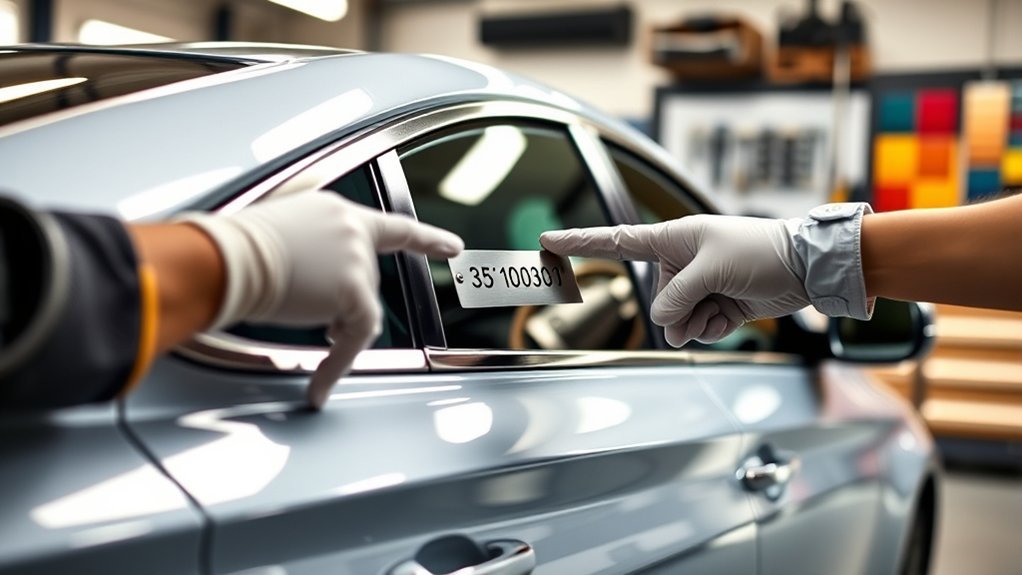
To get the best match for your Hyundai Sonata, start with the paint code and then consider the vehicle’s age, finish type, sun exposure, and repair size. Even the correct formula can look slightly different if the surrounding paint has faded or if the finish uses pearl or metallic flakes.
[Products Worth Considering]

【Perfect Color Match】:for Hyundai touch up paint Hyper White(WC9)Compatible with Sonata, Elantra, Tucson, Santa Fe achieves an exact match with your car's original factory color, ensuring a seamless and professional finish.

OEM color match: Formulated to match the original factory-applied automotive coating on compatible import and domestic vehicles

Excellent Color Match: FIXEZPRO car touch up paint(S3/S3B Phantom Black) is specifically designed for Hyundai vehicles, including Santa Fe/Sonata and more. The Automotive paint undergoes professional testing and calibration to match the original paint color of your vehicle, ensuring a seamless and natural repair result
Paint Code Identification
Before buying touch-up paint, confirm that the code came from the exterior paint field on the label. If you copied the code from a photo, zoom in and check similar-looking characters carefully. The letter “S” and number “5,” or the letter “B” and number “8,” can be easy to mix up on a worn label.
Proper Application Techniques
Clean the damaged area first, remove wax or grime, and apply paint only to a dry surface. Choose the application method based on the size of the repair:
| Application Method | Best Use |
|---|---|
| Touch-up pen or brush | Tiny chips and narrow scratches |
| Aerosol spray | Larger scuffs or small panel areas |
| Multiple thin coats | Smoother color build and better blending |
| Clear coat, when required | Gloss protection on many modern finishes |
Apply several thin layers instead of one heavy coat. Let each layer dry according to the paint maker’s directions before adding another layer or clear coat. For deep scratches, exposed metal, dents, rust, or large panels, a professional repair is usually the better choice.
Environmental Factors Consideration
Temperature, humidity, sunlight, and dust all affect how touch-up paint dries and how the final color appears. Work in a shaded, well-ventilated area when the panel is cool to the touch. Avoid painting in direct sun, high wind, rain, or very humid conditions.
Lighting also matters when checking the match. Compare the repair in natural daylight after the paint has dried, not only under garage lighting. Fluorescent and warm indoor lights can make pearl and metallic colors look different from the surrounding panel.
Special Notes for Pearl, Metallic, and Matte Finishes
Many Sonata colors use metallic or pearl effects. These finishes can be harder to match because the flake orientation, basecoat thickness, and clear coat all affect the final look. A small chip is usually manageable with a pen or brush, but a large spray repair may need blending into the surrounding panel.
Matte paint needs extra caution. Hyundai owner manual guidance for matte finishes warns that a damaged matte area may require repainting the whole part instead of repairing only the damaged spot. If your Sonata has a matte or specialty finish, contact an authorized Hyundai dealer or qualified body shop before attempting a visible repair.
Deep scratches and stone chips should be repaired promptly because exposed metal can rust and turn a small paint problem into a larger body repair.
Finding Your Paint Code: What to Do If It’s Missing
If your Hyundai Sonata paint code is missing, faded, or unreadable, do not rely on guesswork. Follow these steps instead:
- Check all common label locations: driver-side door jamb, center pillar, door edge, and under-hood label areas.
- Take photos of every vehicle information label you find.
- Write down your 17-character VIN exactly as shown on the vehicle or registration.
- Contact a Hyundai dealer parts department and ask them to identify the exterior paint code by VIN.
- If needed, contact Hyundai Customer Care at (800) 633-5151 in the United States.
- For older repainted vehicles, ask a body shop to scan the existing paint because the current color may no longer match the original factory formula.
A paint scanner can be especially helpful if the vehicle has previous bodywork, faded paint, or panels that were repainted before you owned the car. In those cases, the original paint code is still useful, but the best match may require tinting or blending.
[Products Worth Considering]

Multi-Functions - Practical Multi-Functions OBD2 code reader features built-in OBD2 DTC lookup library, which help you to determine the cause of the engine light, read code, erase code, view freeze frame, I/M ready, vehicle information, data flow, real-time curve, get vehicle speed information, calculate load value, engine coolant temperature, get engine speed.

【For Car DIYers And Beginners】This plug-and-play Autel scanner MS300 can pay for itself in the first use. It communicates with vehicles through standard 16-PIN OBD2 cable and it’s powered by vehicle directly (no battery needed). It capable of scanning vehicle Diagnostic Trouble Codes (DTCs) in seconds to pinpoint emission-related issues. The little guy should be a member of your toolbox, always in your car and ready to be taken out and used.

[Diagnose Like a Pro] BlueDriver Pro is a professional OBD2 scanner and diagnostic tool that helps you scan, understand, and clear vehicle trouble codes with confidence. Turn your phone into a powerful car diagnostic scanner—no guesswork, no unnecessary repairs.
What to Expect From Hyundai Touch-Up Paint
Hyundai touch-up paint can work well for small chips and light scratches when you use the correct code and follow the application directions. The best results usually come from careful prep, thin coats, and realistic expectations. Touch-up paint hides damage and protects exposed areas, but it may not make a deep scratch disappear completely.
For small stone chips, a pen or brush kit is usually enough. For larger areas, a spray can or professional refinishing may be needed. If the damaged spot is on a highly visible hood, bumper, or door, ask a body shop whether blending is needed for a smoother finish.
[Products Worth Considering]

【Excellent Color Match】:The car touch-up paint Hyper White is specially designed for Hyundai series and exact match for Accent/Creta/Elantra/TUCSON/SANTA.Meticulously crafted to minimize color differences and effectively conceal scratches

【Perfect Color Match】Our touch up paint is precisely formulated to match the original car paint. It minimizes color difference to the greatest extent possible and seamlessly blends with original finish, creating a professional appearance.Double-check your paint code matches auto touch up paint before use. If the color doesn’t work, contact us—we’ll resolve it.

[Exact Color-Matched for Hyundai] This high-quality car paint for Hyundai is engineered to fix chip or scratch, compatible with a wide range of Hyundai models, including for 2023-2026 Tucson/2023-2024 Tucson Hybrid/2024 Tucson Plug-in Hybrid/2023-2026 Elan-tra/2024-2026 Elan-tra Hybrid/2023-2026 Santa Fe/2023-2026 Santa Fe Hybrid/2023-2026 Sonata/2023-2026 Sonata Hybrid/2022-2025 Ioniq 6/2026 Ioniq 9. Before use, please try it on paper to confirm that the color matches your vehicle's paint.
Common Mistakes to Avoid
- Using the VIN as the paint code: The VIN identifies the vehicle, but the paint code is a separate color reference.
- Ordering by color name only: Similar names can have different formulas by year or market.
- Skipping the test spot: Always test in a hidden area before painting a visible panel.
- Applying one heavy coat: Thick paint can blob, run, or dry unevenly.
- Ignoring rust: Paint applied over rust will not fix the underlying corrosion.
- Spraying without ventilation: Automotive paint products can release harmful vapors and overspray.
Warning: Use spray paint only in a well-ventilated area, away from flames, sparks, and enclosed living spaces. Follow the product label, wear appropriate protection, and leave large spray repairs to a trained refinisher.
Frequently Asked Questions
How do I find the paint code on my Hyundai Sonata?
Open the driver’s door and check the door jamb, door edge, and center pillar label. Look for a short code near words such as “PAINT,” “PNT,” “COLOR,” or “EXT COLOR.” Take a photo of the whole label if you are unsure which code is the paint code.
Can I find my Hyundai paint code from the VIN?
Sometimes a Hyundai dealer can use your VIN to look up factory paint information, but the VIN itself is not the paint code. If the door label is missing or unreadable, give the dealer your VIN and ask for the exterior paint code.
Where is the Hyundai Sonata VIN located?
Common VIN locations include the lower driver-side windshield area, the driver-side door label, your registration, and your insurance card. The VIN is 17 characters long and is useful when contacting a dealer for paint-code help.
Why does my touch-up paint look slightly different?
Even with the correct paint code, color can vary because of sun fading, age, pearl or metallic effects, clear coat condition, and application technique. Testing the paint first and using thin coats improves the chance of a good match.
Should I repair deep scratches myself?
Small chips and shallow scratches are often DIY-friendly. Deep scratches, exposed metal, rust, dents, matte finishes, and large damaged areas should be inspected by a qualified body shop because they may need sanding, primer, corrosion treatment, blending, or full-panel refinishing.
Conclusion
Locating your Hyundai Sonata paint code is usually simple: check the driver-side door jamb, door edge, and center pillar label first, then use your VIN with a Hyundai dealer if the label is missing or unreadable. For the best repair, copy the code exactly, test the paint before using it on a visible area, and treat pearl, metallic, matte, rusted, or large repairs with extra care. A few careful minutes up front can save you from an obvious mismatch later.
Sources
- Hyundai Owner’s Manual portal — official Hyundai owner manual lookup by model year and market.
- Hyundai Manuals & Warranties resources — official U.S. Hyundai owner resources and manuals page.
- Hyundai Customer Care contact page — official Hyundai Customer Care phone number and support information.
- NHTSA VIN Decoder — official explanation of the 17-character VIN and vehicle identification data.
- Hyundai Exterior Care guidance — official guidance on finish damage repair and matte paint cautions.
- OSHA Spray Operations standards — safety context for spray finishing, ventilation, and flammable coating hazards.