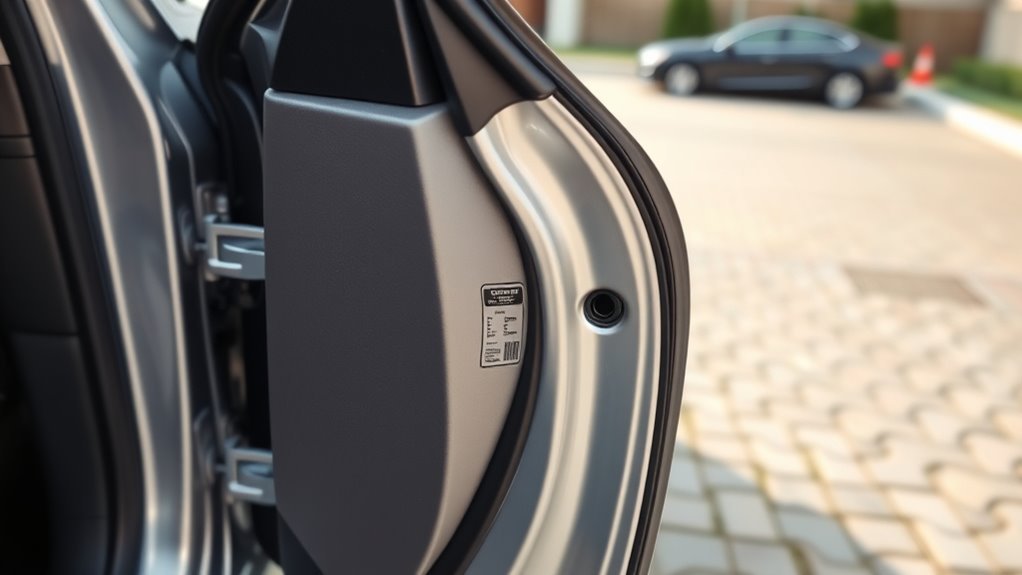
For your Hyundai Sonata, keep tire pressure at the manufacturer-recommended 32–35 PSI and always check cold for accuracy. Find the exact front/rear PSI on the driver-side door jamb (or trunk/fuel door) and never exceed the tire sidewall max. Use a reliable gauge and compressor, inspect for uneven wear, and adjust ~1 PSI per 10°F change; lower to ~30 PSI only for a softer ride. Continue below to get step-by-step checks, seasonal tips, and safety warnings.
Hyundai Sonata Recommended Tire Pressure (32–35 PSI)
For most Hyundai Sonata drivers, keeping tire pressure between 32 and 35 PSI gives the best balance of comfort, handling, fuel efficiency, and tire life; check pressures in the morning when tires are cold and adjust as needed to stay in that range. You’ll use tire pressure monitoring to verify the system reads consistent values and to catch slow leaks early. Aim for 32–35 PSI unless you’ve deliberately chosen ~30 PSI for a softer ride; don’t exceed the tire’s max PSI or you’ll risk blowouts and poor traction. Perform seasonal adjustments as temperature swings alter pressure roughly 1 PSI per 10°F. Check and correct pressures regularly to minimize wear, preserve handling precision, and keep your mobility uncompromised.
Where to Find Your Sonata’s Exact Tire Pressure
When you need the exact tire pressure for your Sonata, check the tire information sticker on the driver’s side door jamb first — it lists the manufacturer-recommended PSI for front and rear tires and is specific to your vehicle. That sticker is one of the primary tire pressure locations; other common tire information stickers appear on the trunk lid or inside the fuel door. Use those placements to confirm the model-specific PSI (for example, many 2006 Sonata V6s list about 30 PSI). Also inspect the tire sidewall to see the maximum PSI rating so you don’t over-inflate. Keep this data handy and measure pressures cold for accuracy. Knowing precise tire pressure locations frees you to maintain safety and performance without guesswork.
How to Check and Adjust Sonata Tire Pressure
Although you’ll want to measure pressures when the tires are cold, start by locating the driver-side door jamb sticker to confirm the exact PSI for your Sonata, then use a reliable gauge to record each tire’s reading. Work methodically: remove valve caps, press the gauge firmly, note PSI, and repeat for all four tires and the spare if present. Compare readings to the sticker; remember 2006 V6 drivers commonly see ~30 PSI as a baseline. Use an air compressor to add air or the gauge’s bleed valve to release it, never exceeding the tire sidewall’s maximum. Inspect tires visually for uneven wear while you’re there. Embrace these tire maintenance tips and integrate pressure monitoring systems to stay free from roadside surprises.
Setting PSI for Cold, Loads, Towing, and Temperature
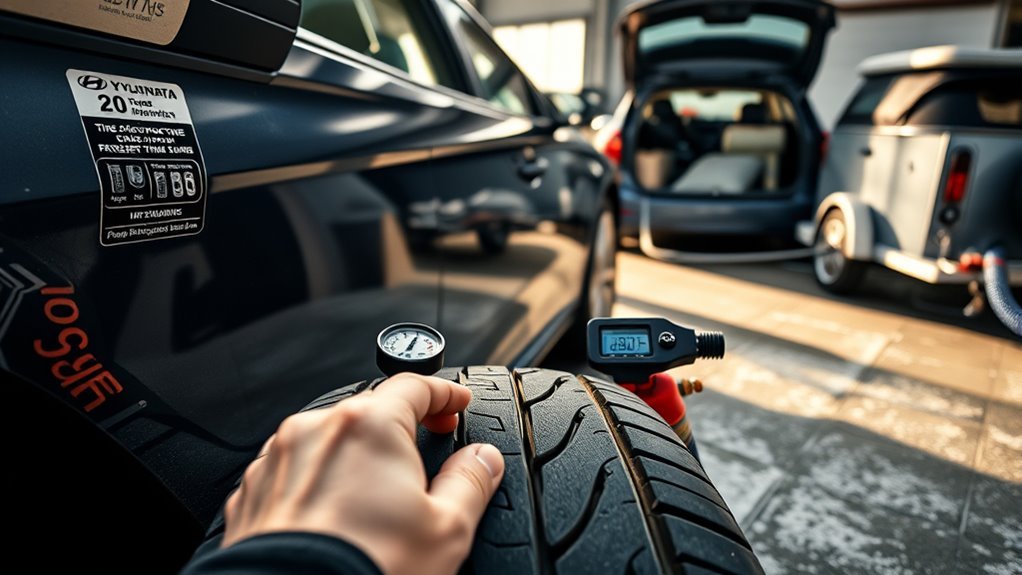
Tire-pressure settings matter because they change with load, towing, and temperature, so you should set cold PSI using the driver-side door sticker as your baseline and then adjust from there. For a 2006 Hyundai Sonata V6 that baseline is typically about 30 PSI checked cold (morning). When you carry heavy loads or tow, increase pressure by 3–5 PSI—these load adjustments prevent excessive flexing and maintain handling. Monitor temperature effects: expect roughly 1 PSI loss for every 10°F drop, so recheck pressures when seasons shift. Use a reliable gauge, record values, and reset to sticker recommendations when unloaded. You’re managing risk and freedom: precise PSI control boosts safety, tire life, and efficiency so you can drive confidently.
Adjusting PSI for Comfort, Handling, and Fuel Economy
If you prefer a firmer feel, raise cold pressure slightly above the 30 PSI baseline—many Sonata V6 owners find about 33 PSI improves comfort without noticeably hurting handling or fuel economy. You’ll balance tire pressure to free yourself from compromise: comfort adjustments and performance tuning are small, repeatable acts that enhance driving autonomy. Check cold pressures, note road feel, and iterate.
Prefer a firmer ride? Try raising cold pressure from 30 to about 33 PSI, then adjust by feel.
- Start at 30 PSI, then increase in 1–2 PSI increments to 33 PSI for marginally firmer ride and preserved fuel efficiency.
- For performance tuning, prefer slightly higher pressures for steady highway cruising, monitoring traction and steering response.
- Track fuel efficiency after each change; under‑inflation raises rolling resistance, hurting MPG.
- Recheck pressures regularly and adapt to conditions to keep comfort, handling, and fuel efficiency aligned.
Risks of Under‑ and Over‑Inflation (Wear, Traction, Blowouts)
If your tires are under-inflated you’ll see accelerated, uneven wear and higher heat buildup that raises blowout risk. If they’re over-inflated you’ll reduce the tread contact patch, cutting traction and braking performance, especially on wet or icy roads. Aim for the Sonata’s recommended pressure (about 30 PSI for the 2006 V6) and avoid pressures above ~40 PSI to keep wear, traction, and failure risk within safe limits.
Increased Tire Wear
Wear accelerates quickly when your tires aren’t kept at the correct pressure: under-inflation makes the sidewalls flex more, generating heat, increasing tread wear and raising blowout risk, while over-inflation concentrates load on the center tread, causing uneven wear and reduced traction—especially on wet roads.
- Check tire maintenance intervals and pressure monthly; proper PSI prevents excessive flexing and heat buildup that shortens tire life.
- Inspect wear indicators visually and with a gauge; center-dominant wear signals over-inflation, edge wear signals under-inflation.
- Keep pressures at the vehicle-recommended PSI; this balances load across the tread, preserves handling, and extends service life.
- Track replacements and costs; consistent pressure control frees you from premature replacements and supports long-term mobility and independence.
Reduced Traction Risk
Because tire pressure directly controls how much rubber contacts the road, incorrect inflation quickly undermines traction and safety: under‑inflation increases rolling resistance and heat, raising blowout risk and causing uneven wear, while over‑inflation reduces contact patch area, worsens grip and lengthens stopping distances. You need to treat pressure as a control parameter: too low and you invite traction loss, excess heat, and premature edge wear; too high and you shrink the contact patch, degrade grip, and compromise braking. For a 2006 Hyundai Sonata V6 target ~30 PSI to balance comfort and control. Check pressures cold and weekly, correct to the placard value, and inspect tread and sidewalls. Maintaining proper inflation preserves handling, reduces understeer, extends tire life, and protects your driving safety.
When to Consult a Pro and Recommended Tire Service Intervals
If you see significant or uneven tread wear, frequent pressure loss, handling problems, or a rough ride, get a technician to inspect the tires immediately. Check tire pressure at least once a month and before long trips, and schedule a professional inspection during routine maintenance every 5,000–7,500 miles to verify inflation and alignment. For emergencies or unusual signs (rapid deflation, bulges, audible leaks), stop driving and have the tire examined or replaced by a pro right away.
When To See A Technician
When you notice persistent uneven tread wear, frequent pressure loss below the recommended 30 PSI, or any bulges, cuts, or other visible tire damage, consult a technician promptly; these signs often indicate leaks, alignment issues, or structural compromise that require professional diagnosis and repair.
- If you detect uneven wear or handling changes, have a pro inspect tire alignment issues and suspension components to restore control and extend tire life.
- When pressure monitoring systems warn or you repeatedly top off tires, get valve, bead, and leak checks to prevent sudden failures.
- Any visible damage—bulges, cuts, sidewall separation—needs immediate removal or repair by a technician to protect your freedom on the road.
- If ride comfort deteriorates or you suspect internal damage, schedule an expert inspection for safe, reliable driving.
Recommended Service Intervals
Set a routine: check your Sonata’s tire pressure at least once a month and before long trips, and inspect tires seasonally—prior to summer and winter driving—to catch leaks, tread loss, or sidewall damage early. You’ll want to follow clear tire maintenance tips: verify pressure (~30 PSI for many 2006 Sonata V6s, confirm sidewall), rotate tires every 6,000–8,000 miles, and book pro service if pressure drifts or abnormal wear appears. Seasonal inspections help you adapt to temperature-driven pressure changes and road conditions. Consult a technician when leaks persist, you detect uneven wear, or rotations reveal alignment issues. Maintain this cadence to preserve performance, safety, and your freedom to drive without unexpected constraints.
| Service | Interval | Action |
|---|---|---|
| Pressure check | Monthly | Inflate to spec |
| Pre-trip | As needed | Inspect visually |
| Rotation | 6k–8k mi | Swap positions |
| Seasonal inspections | Twice yearly | Pro assessment |
Emergency Tire Inspection Criteria
Because tire issues can escalate quickly, you should consult a pro immediately for any sudden pressure loss, visible cuts or bulges, or clearly uneven wear. You’ll also track routine service intervals to prevent emergencies: check pressure monthly and before long trips, and align tire inspection with oil changes every 5,000–7,500 miles. Seasonal temperature drops reduce PSI; test more often in cold months. If you feel vibrations, pulling, or strange noises, stop and get a professional check—these signs often require emergency repairs or alignment.
- Monthly pressure check and visual inspection for cuts, bulges, or tread issues.
- Detailed tire inspection at 5,000–7,500 miles with tread-depth measurement.
- Inspect after sudden PSI loss or impact events; seek emergency repairs.
- Recheck pressure after temperature shifts or before long trips.
Frequently Asked Questions
How Much Air Should I Put in My Hyundai Sonata Tires?
Set your tire pressure to about 30 PSI (some prefer 33 PSI), check cold, and follow maintenance tips: inspect monthly, use a reliable gauge, avoid over-inflating, and rotate tires to maintain safety, efficiency, and driving freedom.
Conclusion
Keep your Sonata’s tires at the manufacturer’s recommended 32–35 PSI, check cold, and adjust for heavy loads or towing—measurements taken cold give the most accurate baseline. Regularly inspect tread and sidewalls, use a calibrated gauge, and rebalance or rotate tires per the maintenance schedule. Don’t ignore slow leaks or uneven wear; “better safe than sorry.” If you’re unsure or detecting vibrations, have a pro inspect tires and alignment to avoid safety and efficiency problems.