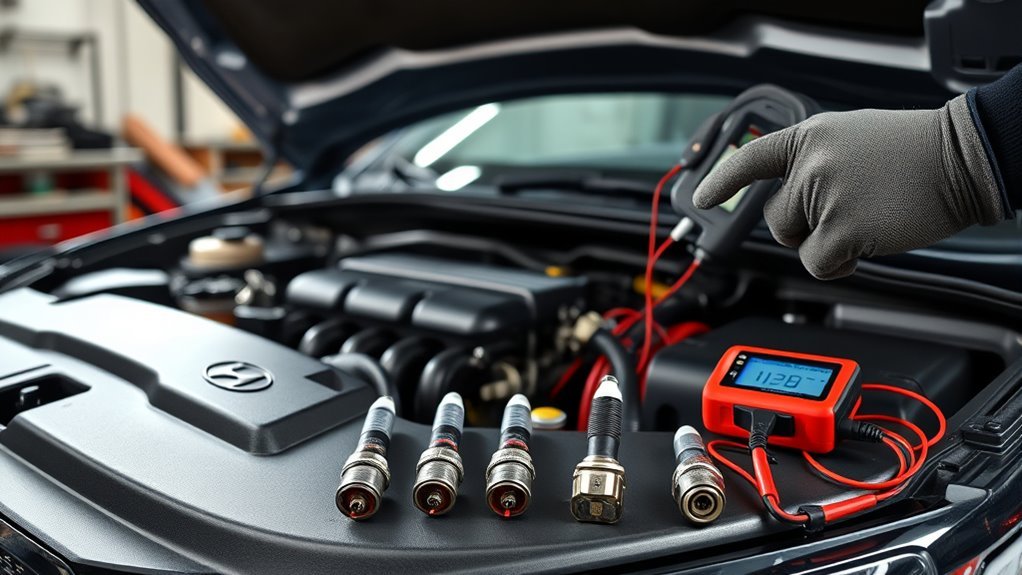
If your 2011 Hyundai Sonata has a P0456 code, the engine computer has detected a very small leak in the evaporative-emissions, or EVAP, system. Start with the fuel cap and visible vapor lines before replacing any valves. If those checks pass, test the purge and vent-side components or use a proper smoke test to locate a leak that is too small to see.
Quick Answer
For a 2011 Hyundai Sonata P0456, first tighten and inspect the gas cap, filler-neck sealing surface, EVAP hoses, and connectors. If the code returns, test the purge valve and vent-side leak-control components. A smoke test is the next practical step when no visible leak is found. Sonata Hybrid models also have model-specific Hyundai EVAP bulletins.
What Does P0456 Mean on a 2011 Hyundai Sonata?
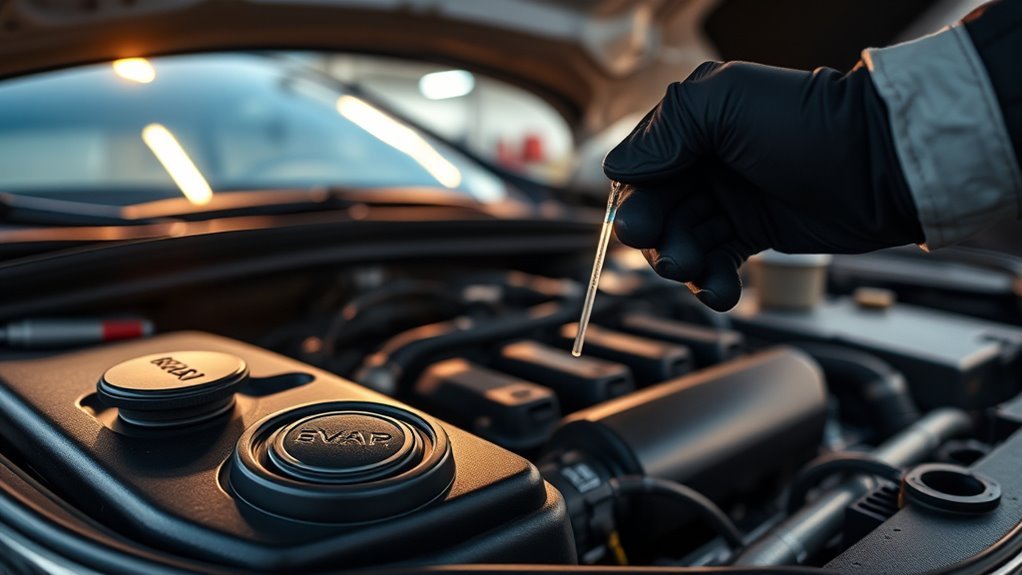
P0456 means the Sonata’s EVAP system failed a leak-integrity test and the computer judged the leak to be very small. The EVAP system captures gasoline vapor instead of allowing it to escape into the air, using parts such as the fuel tank, charcoal canister, vapor lines, purge valve, and leak-control components.
On non-hybrid 2011 Sonatas, the system uses components including a purge control solenoid valve, canister close valve, and fuel tank pressure sensor. The 2011 Sonata Hybrid uses a different leak-detection arrangement that includes a Natural Vacuum Leak Detection, or NVLD, sensor.
P0456 often appears with only the check-engine light and no obvious change in how the engine runs. However, the code does not identify the failed part by itself. A loose cap, damaged sealing surface, split vapor hose, leaking valve, canister problem, or another small EVAP leak can all produce the same code.
Warning: If you smell strong raw gasoline, see liquid fuel, or find a damaged fuel line, do not treat the problem as a routine P0456-only fault. Keep flames and sparks away from the vehicle and have the fuel leak inspected before continued driving.
[Products Worth Considering]

This replacement gas cap is designed for a wide range of Toyota and Lexus models, offering a direct-fit solution for restoring a proper seal at the fuel tank. It helps address check engine light issues related to the fuel cap while providing easy installation and dependable performance. Built from durable materials and rigorously tested before shipping, it is a practical replacement for worn or damaged fuel caps.

AutoLine Pro HyperSmoke is a professional automotive smoke tester designed to quickly find EVAP, vacuum, intake, boost, exhaust, and other leak sources with thick visible smoke. It features adjustable pressure, built-in air compressor motor, instant warmup, and OEM approved smoke fluid for safe, accurate diagnostics across a wide range of vehicles and systems. The kit includes essential accessories and is backed by a full coverage warranty for dependable shop or garage use.

This replacement gas cap is designed to restore a tight fuel-tank seal, helping reduce vapor leaks, prevent check engine light issues, and maintain proper fuel system performance. Built in OE-style form for a wide range of Toyota and Lexus vehicles, it offers a direct DIY fix with durable materials for reliable, long-lasting use.
Start Here: Check the Gas Cap, Filler Neck, and EVAP Hoses
The best first checks require no parts replacement. Verify that the cap seals correctly, inspect the filler neck where the cap contacts it, and then trace the accessible vapor lines for cracks, loose fittings, or damaged seals.
- Remove and reinstall the gas cap. Inspect its sealing gasket for cracks, hardening, distortion, or missing sections. Reinstall the cap clockwise until it clicks securely.
- Inspect the filler-neck sealing surface. Look for corrosion, dirt, dents, cracks, or damage where the cap gasket contacts the neck. A good cap cannot seal against a damaged surface.
- Inspect the EVAP hoses and connectors. Follow the accessible vapor lines in the engine compartment and toward the rear of the car. Look for split rubber, disconnected fittings, damaged quick-connect seals, abrasion, and loose connections near the canister.
If you recently refueled and the cap was loose, correcting it may solve the cause, but the check-engine light may not disappear immediately. The computer must run the EVAP monitor again, or the code can be cleared with a scan tool after the repair.
How to Test the EVAP Parts That Can Cause P0456
If the cap, filler neck, and visible hoses look good, move to component testing rather than replacing parts at random. Factory-style diagnosis checks whether the purge valve holds vacuum when closed, whether the vent-side valve seals when commanded, and whether the pressure-sensing system responds correctly.
| Component | What to Check | What Suggests a Fault |
|---|---|---|
| Purge control solenoid valve | Verify it holds vacuum while closed and releases vacuum when commanded open with the proper scan-tool procedure. | It leaks while closed or fails to operate when commanded. |
| Canister close valve | Check that the vent path changes correctly when the valve is commanded during an EVAP test. | The system cannot seal when the valve should be closed. |
| Fuel tank pressure sensor | Watch its scan data or test output while tank pressure or vacuum changes. | The reading is implausible, fixed, or does not respond as pressure changes. |
| Charcoal canister and vapor lines | Inspect connections and perform a controlled leak test when necessary. | Smoke or pressure escapes from a hose, fitting, seal, or canister. |
Do not assume a purge valve is bad simply because P0456 is stored. The code reports a failed system leak test, so each part should be proven faulty before replacement.
When Should You Get a Smoke Test for P0456?
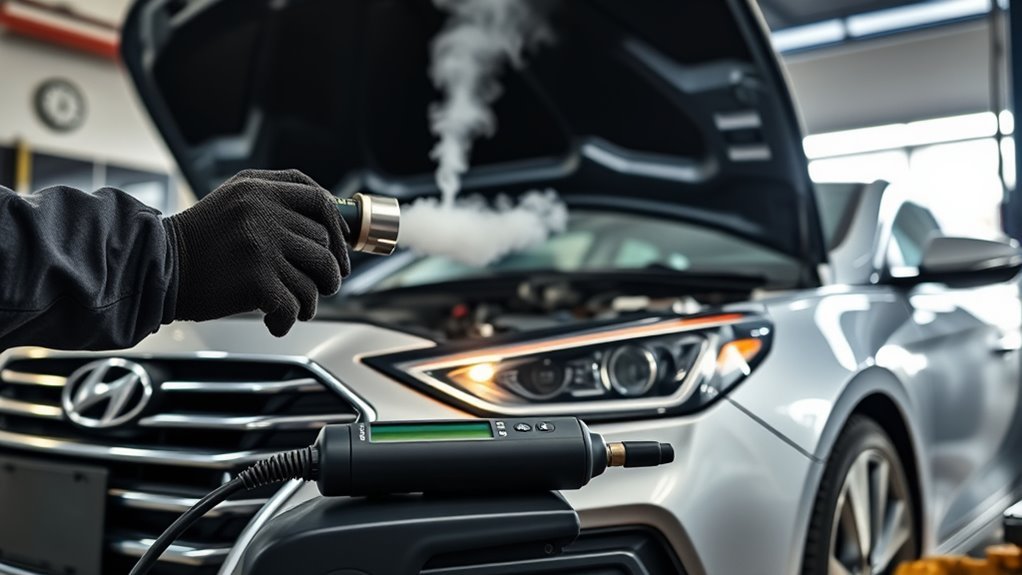
A smoke test makes sense when the cap and visible hoses pass inspection but P0456 returns. Because the leak can be extremely difficult to see, a properly performed EVAP smoke test can expose vapor escaping from a hose connection, canister, seal, filler area, or other hidden point.
A technician can close or control the vent side of the EVAP system, introduce low-pressure diagnostic smoke, and inspect the system for leakage. This is usually more useful than replacing the purge valve, vent valve, and canister one after another without confirming the source.
Use equipment designed for EVAP testing. Do not use an open flame or improvised high-pressure compressed-air test around gasoline vapors.
Does the 2011 Sonata Hybrid Have Known P0456 Issues?
Yes. If your car is a 2011 Sonata Hybrid, Hyundai published specific technical information for EVAP leak codes including P0456. These bulletins should not be applied automatically to a non-hybrid Sonata.
Hyundai TSB 21-FL-002H covers certain 2011-2015 Sonata Hybrid vehicles where salt particulate deposits can affect the NVLD sensor. Hyundai’s repair procedure uses an updated air-filter arrangement and NVLD sensor, followed by a GDS EVAP leakage test.
A separate Hyundai TSB 17-FL-002 documents potential cracking around evaporative-canister insert nuts on certain 2011-2015 Sonata Hybrid vehicles. That problem can also produce P0442, P0455, or P0456.
Campaign and warranty-extension eligibility depends on the specific vehicle. Enter the car’s 17-digit VIN in Hyundai’s official Safety Recalls and Service Campaigns lookup rather than assuming an old bulletin still provides coverage.
[Products Worth Considering]

This OEM replacement fuel tank gas cap is designed for a wide range of Toyota, Lexus, and Scion vehicles, helping restore a proper seal for reliable everyday driving. It helps reduce fuel vapor leakage, may prevent check engine light issues caused by a faulty cap, and offers durable construction for long-lasting performance. Installation is simple with a direct-fit design that twists into place quickly.

This replacement gas cap is designed to fit a wide range of Toyota and Lexus models, helping restore a secure seal for the fuel tank. It is built as a direct replacement for easy installation and reliable everyday use, with compatibility verified by part number to help ensure the right fit. Backed by warranty support and customer service, it is a practical solution for replacing a worn, cracked, or failing fuel cap.

The OEMTOOLS coolant vacuum refill kit helps quickly refill a vehicle’s cooling system while removing trapped air that can lead to overheating and engine damage. It also performs vacuum leak tests to help confirm system integrity and reduce the chance of repeat repairs. With multiple bushings, adapters, and a tapered cone seal, it is designed for flexible use on many radiator and coolant bottle necks.
Common P0456 Fixes, Driving, and Emissions Testing
The correct repair depends on what actually leaks. P0456 is not a parts-replacement instruction, so the lowest-risk approach is to move from the simple sealing checks to component tests and then to smoke testing.
| Finding | Appropriate Fix |
|---|---|
| Loose fuel cap | Reinstall it correctly and make sure it clicks securely. |
| Damaged cap gasket | Replace the cap with the correct specification for the vehicle. |
| Damaged filler-neck sealing surface | Repair the sealing problem rather than repeatedly replacing caps. |
| Split hose or leaking connector | Repair or replace the damaged hose, seal, or fitting. |
| Purge or vent-side valve fails its test | Replace the confirmed faulty valve and retest the EVAP system. |
| Canister or Hybrid NVLD fault confirmed | Follow the vehicle-specific repair procedure instead of replacing unrelated EVAP parts. |
If P0456 is the only fault, the car runs normally, and there is no raw-fuel smell or visible leak, the code usually does not require an immediate roadside shutdown. It should still be diagnosed because the EVAP system is leaking fuel vapor and the illuminated check-engine light can also make it harder to notice a new fault later.
For an OBD-based emissions inspection, do not simply clear the code just before the test. Clearing diagnostic information can leave emissions monitors incomplete until the car runs the required self-tests again. The EPA’s OBD inspection and readiness guidance explains the federal framework, while the exact inspection requirements depend on the state or local program.
Frequently Asked Questions
What is code P0456 on a Hyundai Sonata?
P0456 means the vehicle detected a very small leak in the EVAP system. It does not identify the leaking part, so diagnosis normally starts with the fuel cap, filler-neck seal, hoses, and connectors before moving to valve tests and smoke testing.
Can a bad gas cap cause P0456 on a 2011 Sonata?
Yes. A loose cap, damaged cap gasket, or damaged filler-neck sealing surface can prevent the EVAP system from sealing. Inspect both the cap and the surface it seals against rather than replacing the cap automatically.
Can a purge valve cause P0456?
Yes. A purge valve that leaks when it should be closed can prevent the EVAP system from holding the expected vacuum. Test whether the valve seals and responds correctly to a command before replacing it.
Why did P0456 return after replacing the gas cap?
The leak is probably somewhere else, or the filler-neck sealing surface itself may be damaged. Inspect the vapor lines and connectors, test the purge and vent-side components, and use a smoke test if the leak remains hidden.
Conclusion
For a 2011 Hyundai Sonata P0456, work from the easiest checks to the hardest: verify the gas cap and filler neck, inspect EVAP hoses and fittings, test the purge and vent-side components, and then use a smoke test for a hidden leak. If the car is a Sonata Hybrid, also check the VIN and Hyundai’s Hybrid-specific EVAP bulletins before buying parts.
Sources
- Hyundai TSB 21-FL-002H: Supports the NVLD salt-contamination issue and repair procedure for certain 2011-2015 Sonata Hybrid vehicles.
- Hyundai TSB 17-FL-002: Supports the evaporative-canister insert-nut crack issue associated with P0442, P0455, and P0456 on certain Sonata Hybrid vehicles.
- Hyundai Safety Recalls and Service Campaigns: Supports VIN-specific recall and service-campaign checking.
- U.S. Environmental Protection Agency OBD Inspection and Maintenance Guidance: Supports OBD readiness and emissions-inspection guidance.
[Products Worth Considering]

This all-in-one radiator pressure tester and vacuum refill kit helps diagnose cooling system leaks, measure temperature, and refill coolant efficiently. It includes a wide range of adapters for broad vehicle compatibility, plus a pressure tester, vacuum refiller, thermometer, and storage case for organized use. Designed for DIY mechanics and professionals, it simplifies coolant service while reducing guesswork and unnecessary repairs.

This replacement gas cap is designed for a wide range of Toyota and Lexus vehicles, offering a direct-fit solution for worn, cracked, or failing fuel caps. Built from durable materials and tested for reliability, it helps restore a secure seal and supports dependable everyday driving. It is a practical replacement part for owners looking for an easy installation and broad vehicle compatibility.

This replacement gas cap is designed to fit a wide range of Toyota and Lexus vehicles, offering a simple direct-fit solution for restoring proper fuel tank sealing. Built from durable materials and tested for reliable performance, it helps address issues caused by cracked or failing caps while making installation quick and easy. It is a practical replacement part for maintaining fuel system integrity and everyday driving confidence.