

By • Last Updated: August 2026
A Hyundai Sonata heater that blows cold air is typically caused by low engine coolant, an airlock in the cooling system, a failed air-mix blend door actuator, a stuck-open thermostat, or a restricted heater core. The fastest way to pinpoint the issue is to isolate your exact symptom: no blower airflow, full airflow that stays cold, heat on only one side of the cabin, or heat that vanishes at idle.
Quick Answer: How to Diagnose
- Cold air + normal airflow: Check cold coolant level first; if full, compare heater inlet/outlet hose temperatures with an infrared thermometer.
- Heat only on one side (Driver vs. Passenger): Indicates a failed air-mix blend door actuator, broken door shaft, or a partially restricted heater core.
- Heat at highway speeds, cold at idle: Points to low coolant, an air pocket in the cooling system, or weak coolant circulation.
- No air blowing from vents: Points to a blown blower fuse, failed blower motor, worn resistor/speed controller, or a clogged cabin air filter.
Key Takeaways
- Never open a hot cooling system: Pressurized coolant can cause severe burn injuries. Only inspect the reservoir and radiator cap when the engine is completely cold.
- Differentiate the actuators: The temperature air-mix actuator controls hot/cold blending, while the mode actuator controls vent direction (floor/defrost/dash).
- Hose temperature delta: A healthy heater core exhibits an inlet-to-outlet temperature drop of only 10°F–15°F (5°C–8°C). A drop of 30°F–40°F+ or a cold outlet hose confirms restricted flow or airlock.
- Thermostat vs. Core: If your engine temperature gauge stays abnormally low during highway driving, the thermostat is stuck open. If the engine reaches normal operating temperature (~190°F–210°F) but cabin air stays cold, focus on the core or blend doors.
- Sonata Hybrids: A loss of heat specifically when the gas engine turns off at stoplights points to a failing auxiliary electric water pump.
At a Glance: Diagnostic Overview
| Time Required | 20–45 minutes for visual and thermal diagnosis; 1–3 hours for actuator replacement or core backflush. |
| Difficulty Level | Beginner (fluid checks, fuse inspection, thermal scans); Intermediate (actuator replacement, coolant bleeding); Advanced (heater core replacement). |
| Tools Needed | Infrared thermometer, flashlight, basic socket/screwdriver set, trim removal tools, funnel, protective gloves. |
| Estimated Cost | $0 (DIY inspection/burping); $20–$45 (coolant/cabin filter); $40–$120 (OEM blend door actuator); $1,300–$1,700 (professional heater core replacement). |
Safety Warning: Never remove the radiator cap or coolant reservoir cap when the engine is warm or hot. Cooling systems operate under high pressure, and escaping boiling fluid causes severe steam burns. Always ensure the vehicle is parked on level ground and the engine has cooled completely before inspecting or servicing cooling components.
Quick Checklist: Confirm Your Sonata’s Heater Problem
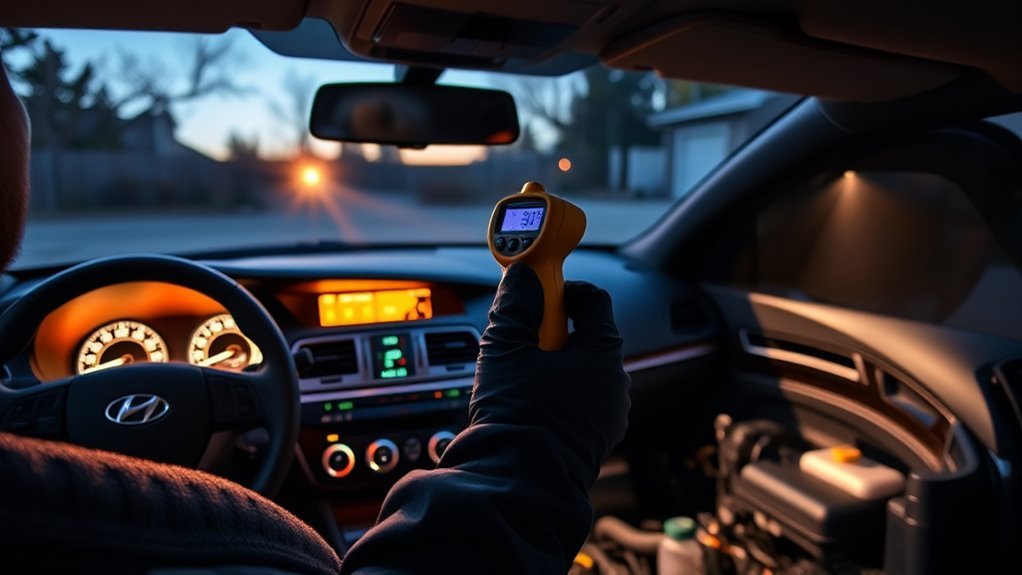
To pinpoint the fault quickly, map your vehicle’s behavior to one of these primary symptoms:
- No air blows from the vents at any fan speed: Check the blower motor fuse, blower relay, blower resistor/power transistor, blower motor connector, and cabin air filter.
- Strong airflow, but the air stays ambient or freezing cold: Inspect engine coolant levels, check for trapped air pockets, measure heater hose inlet/outlet temperatures, and test thermostat opening.
- Air is hot on the driver side, cold on the passenger side (or vice versa): On dual-zone climate models, inspect the specific side’s air-mix blend door actuator, stripped blend door pivot D-shaft, or an unevenly clogged heater core.
- Heat blows warm while driving on the highway, but turns cold at idle/stoplights: Check for low coolant volume, air trapped in the heater core, or a degraded water pump impeller (or failing auxiliary electric water pump on Hybrid models).
- Sweet syrupy odor, greasy fog film on the windshield, or damp passenger carpet: Indicates an internal leak in the heater core or heater hose firewall connections requiring immediate replacement.
- Repetitive rhythmic clicking or ticking noise behind the center dash: Indicates stripped internal plastic gears or a failed position sensor inside the air-mix blend door actuator.
Diagnostic Pro Tip: Map your vent temperatures using an infrared or digital probe thermometer across the far-left, center-left, center-right, and far-right vents. Record the readings with the engine at full operating temperature both at idle (700 RPM) and at 2,000 RPM. This data immediately separates fluid circulation issues from blend door faults.
Likely Causes at a Glance (Blend Door, Heater Core, Coolant)
Modern Hyundai Sonata climate control systems rely on an interconnected balance of cooling chemistry, thermal circulation, and electromechanical airflow routing. Understanding where the breakdown occurs prevents unnecessary component replacement.
1. Blend Door (Air-Mix) Actuator Failure
The air-mix actuator is an electric servomotor that turns a mechanical flap inside the HVAC housing to mix cold evaporator air with hot heater core air. Sonatas equipped with dual-zone automatic climate control feature separate actuators for the driver and passenger sides.
When the internal plastic gears strip or the potentiometer (position sensor) wears out, the actuator can no longer position the door, often sticking on full cold. A distinct ticking or clicking behind the dashboard upon turning the ignition is the most common mechanical warning sign. Make sure to distinguish this from the mode actuator, which only redirects air between the defrost, dash, and floor ducts.
2. Clogged or Restricted Heater Core
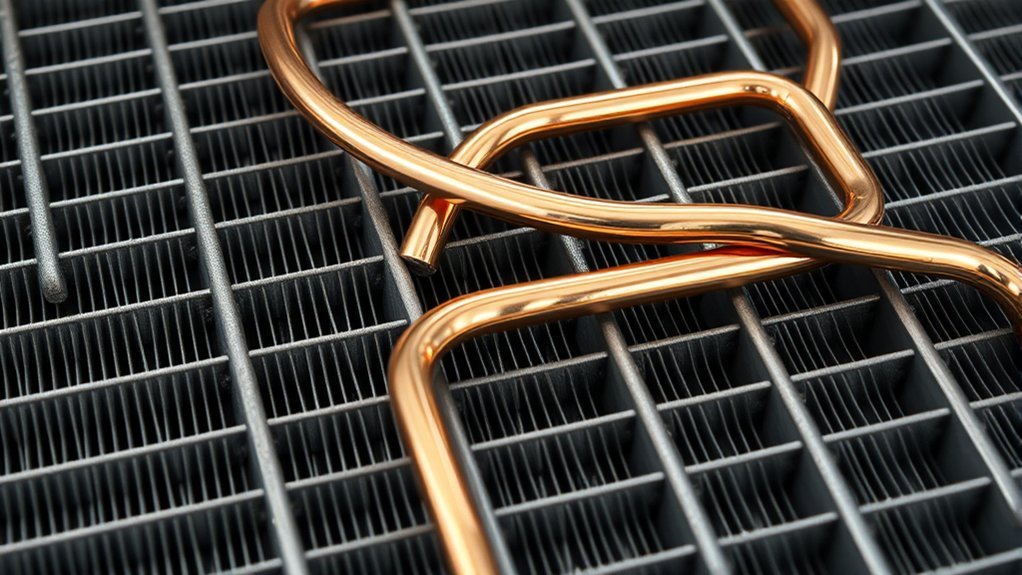
The heater core acts as a miniature radiator mounted behind the center console. Coolant passes through narrow aluminum tubes, giving off heat to the cabin air stream. On 2011–2014 (YF) and select 2015–2019 (LF) Sonatas, casting sand residue, degraded silicate inhibitors, or mixed incompatible coolants can create a gel or sediment plug inside the core tubes.
Because coolant follows the path of least resistance, a partially restricted core often flows just enough hot coolant to heat the driver side while leaving the passenger side blowing lukewarm or freezing air.
3. Low Coolant Level and Trapped Air Pockets
Because the heater core is located at one of the highest physical points in the engine cooling circuit, any loss of coolant volume immediately creates an air pocket at the heater core inlet. This starves the core of hot liquid. If you hear a faint “gurgling” or water-rushing sound from behind the glove box when accelerating, air is trapped inside the heater core.
4. Thermostat Stuck Open or Auxiliary Pump Issues
If the engine thermostat is mechanically stuck open, coolant constantly circulates through the main radiator, preventing the engine from reaching its required operating temperature (~195°F / 90°C), especially in sub-freezing ambient conditions. On Sonata Hybrid (HEV) models, cabin heating during electric-only (EV) driving depends on an electric auxiliary water pump; if this pump fails, cabin heat drops out the moment the internal combustion engine stops spinning.
How Your Sonata’s Heater Works (Blend Doors, Core, Coolant)
The heating system operates across three synchronized sub-systems:
- Thermal Supply Circuit: Hot coolant leaves the cylinder head, passes through the heater core inlet hose, transfers thermal energy across the aluminum core matrix, and exits via the outlet hose back toward the water pump.
- Mechanical Air Distribution: The blower motor draws outside or recirculated air through the cabin air filter, blows it across the A/C evaporator core, and directs it toward the air-mix blend door.
- Electronic Temperature Regulation: The HVAC control module reads cabin temperature sensors, ambient sensors, and user dials, signaling the air-mix actuator to position the blend door to achieve the desired cabin temperature.
Step 1: Check Coolant, Thermostat, and Engine Temperature
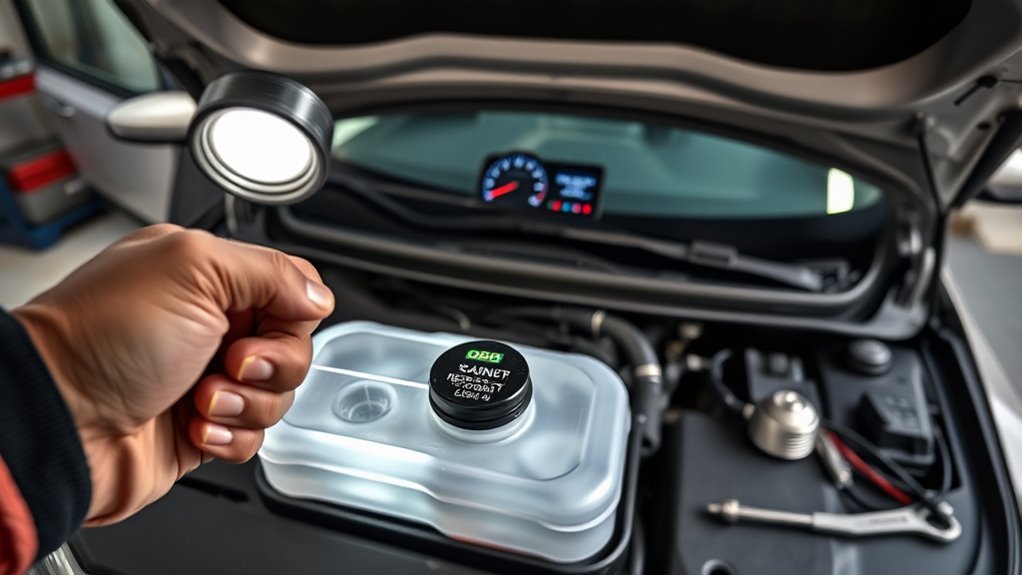
Always verify the thermal condition of the engine before suspecting internal dashboard components. Consult the official Hyundai Sonata Coolant Level Manual for vehicle-specific safety diagrams.
Verify Coolant Level and Fluid Integrity
- Allow the vehicle to sit until the engine block is completely cold to the touch.
- Inspect the translucent recovery tank: fluid must sit cleanly between the MIN (L) and MAX (F) indicators.
- Remove the radiator pressure cap (cold engine only) to confirm coolant is filled to the base of the filler neck.
- Inspect fluid quality: Hyundai specifies Phosphate-enhanced Organic Acid Technology (P-OAT) ethylene glycol coolant (typically dark green, blue, or pink depending on generation). If the fluid is muddy brown or contains rust flecks, a cooling system flush is required.
Coolant Specification Note: Never mix conventional green IAT coolant with Hyundai long-life P-OAT coolant. Incompatible chemistry causes silicate precipitation, leading directly to clogged heater core passages.
Check Thermostat Operation and Warm-Up Behavior
Start the engine from a cold state and observe the instrument cluster temperature gauge while driving for 10–15 minutes:
- Normal Operation: The gauge needle should smoothly rise to just below the midpoint (roughly 190°F–205°F) and remain steady regardless of vehicle speed.
- Stuck-Open Thermostat: The gauge struggles to climb, drops significantly when cruising on the highway, or sets diagnostic trouble code P0128 (Coolant Temperature Below Thermostat Regulating Temperature). Cabin air will remain lukewarm.
- Stuck-Closed Thermostat: The gauge rapidly spikes toward the red “H” zone. Shut down the engine immediately to prevent cylinder head warpage.
Burp Trapped Air From the System
If coolant was recently drained, replaced, or lost through a leak, bleed the airlock using a spill-free funnel:
- Attach a spill-free funnel to the radiator neck and add fresh 50/50 P-OAT coolant until the funnel is 1/3 full.
- Set the cabin climate controls to Full Hot with the blower on low.
- Run the engine at idle until the radiator cooling fan cycles on twice.
- Gently increase engine speed to 2,000 RPM for 15-second intervals to force trapped air pockets out through the funnel.
Step 2: Test Heater Hoses with an Infrared Thermometer
Locate the two 5/8-inch rubber heater hoses running through the engine bay firewall into the passenger cabin. With the engine fully warmed up to operating temperature and the cabin heater set to high:
| Hose Temperature Reading | Operating Status | Required Action |
|---|---|---|
| Inlet: ~190°F–205°F Outlet: ~175°F–195°F |
Normal Thermal Flow (10°F–15°F delta) | Core is healthy. Problem lies in the blend door actuator or HVAC controls. |
| Inlet: ~190°F–205°F Outlet: Cold or <140°F |
Severe Core Restriction / Airlock (>40°F delta) | Perform a chemical backflush on the core or bleed trapped air. |
| Inlet: <140°F Outlet: <140°F |
No Coolant Reaching Firewall | Check for stuck-open thermostat, severe low coolant, or failing water pump. |
Step 3: Diagnose Blend Door and Actuator Faults
If the heater hoses are both hot, the coolant circuit is functioning, and the issue is electromechanical.
[Products Worth Considering]

[Compatible With:] Azera:2012-2017, Elantra:2011-2016, Elantra Coupe:2013-2014, Elantra GT:2013-2017, Sonata:2011-2015, Cadenza:2014-2016, Forte:2014-2018, Forte Koup:2014-2016, Forte5:2014-2017, Optima:2011-2016

Compatible With: This HVAC heater blend door actuator is compatible with Hyundai Azera 2010-2017, Elantra 2011-2016, Elantra Coupe 2013-2014, Elantra GT 2013-2017, Sonata 2011-2015, and Kia Forte, Forte Koup, Forte5 2014-2016, Optima 2011-2015, and Cadenza 2014-2016.

For Hyundai Azera 2012-2017
Run the Onboard HVAC Self-Diagnostic Mode (Automatic Climate Control)
On Sonatas equipped with the digital Dual-Zone Full Automatic Temperature Control (FATC) unit, you can pull diagnostic trouble codes directly on the dash without a scan tool:
- Turn the ignition switch to ON (do not start the engine).
- Press and hold the OFF button on the climate control panel.
- While holding OFF, press the MODE button at least 4 times within 2 seconds.
- The climate LCD display will flash all display segments, followed by a two-digit error code:
- 00: Normal operation (no trouble codes detected).
- 17: Driver-side air-mix potentiometer open/short circuit.
- 18: Passenger-side air-mix potentiometer open/short circuit.
- 19: Driver-side air-mix actuator motor drive fault.
- 20: Passenger-side air-mix actuator motor drive fault.
- Press the OFF button again to exit diagnostic mode.
Physical Inspection of Actuator Movement
Locate the driver-side actuator (above the accelerator pedal under the lower driver hush panel) or passenger-side actuator (behind the glove box compartment). Switch the temperature settings from Low to High while observing the white plastic cam gear. If the gear jerks, clicks continuously, or fails to rotate, the actuator motor or internal gears have failed.
Step 4: Check Blower Circuit if There Is No Airflow
If no air pushes through the dash vents despite hearing the engine warm up, isolate the blower circuit:
- Inspect the Cabin Air Filter: A severely clogged filter choked with leaves and road debris restricts airflow over the heater core. Access the filter tray behind the glove box damping cord.
- Test All Fan Speeds: If the blower works on High (Speed 4) but fails on lower speeds (Speeds 1–3), the blower motor resistor (manual climate) or power MOSFET controller (automatic climate) has burned out.
- Tap the Blower Housing: If the fan stops running but resumes temporarily when you tap the bottom of the motor housing under the passenger dash, the blower motor internal carbon brushes are worn out, requiring motor replacement.
DIY Fixes: Actuator Replacement & Heater Core Backflush
[Products Worth Considering]

HVAC BLEND DOOR ACTUATOR - DRIVER SIDE - This HVAC blend door actuator positions the blend and mode doors to control cabin temperature and airflow direction. Fixes clicking or knocking behind the dash, air from the wrong vents, one-temperature-only airflow, or a stuck temperature setting caused by a failed actuator. A direct-fit, plug-and-play replacement - no modifications required.
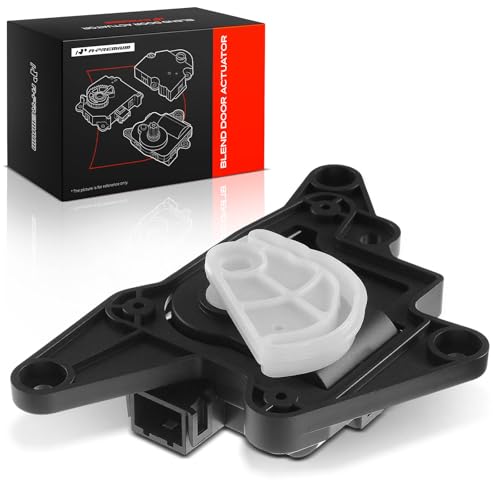
[Vehicle Fitment-1]: Compatible with Hyundai Azera 2006-2011(To 12/10/2010)---Left Main, Temperature Actuator; Sonata 2008-2010(To 1/23/2010)---Main, Temperature Actuator

Compatibility: the heater blend door damper actuators are compatible with Hyundai Azera 2006-2008(Main; Mode Actuator), Azera 2009-2010(Right Main; Temperature Actuator; To 10/24/09), Santa Fe 2006-2012(Main; Mode Actuator; To 07/31/2012), Sonata 2005-2010(Main; Mode Actuator). And it offers a replacement for 604-310, 971603K000
How to Replace an Air-Mix Blend Door Actuator
- Disconnect the negative 12V battery terminal to reset the climate controller memory.
- Remove the lower dashboard hush panel or drop the glove compartment assembly by releasing the side stop pins.
- Unplug the multi-pin electrical harness connector from the failed actuator.
- Remove the three mounting screws (typically 7mm or Phillips head) securing the actuator to the HVAC case.
- Align the new actuator drive shaft with the blend door’s D-shaped pivot slot. Do not force the plastic gear.
- Reinstall the mounting screws, reconnect the harness, reconnect the 12V battery, and cycle the ignition ON for 60 seconds without starting to allow the HVAC module to auto-calibrate travel limits.
How to Safely Backflush a Clogged Heater Core
- Allow the engine to cool completely. Position a wide drain catch pan under the firewall heater hose fittings.
- Loosen the constant-tension spring clamps and carefully disconnect both heater hoses from the firewall aluminum nipples. (Twist gently to break the rubber seal; do not bend the aluminum pipes).
- Attach short lengths of clear 5/8-inch vinyl tubing to both the inlet and outlet firewall ports.
- Connect a garden hose with a trigger nozzle to the outlet tube (flushing backward against normal flow).
- Apply gentle, pulsating water pressure. Do not use high-pressure shop air (exceeding 25 PSI can rupture the internal heater core welds).
- Continue flushing until water emerges completely crystal-clear from the inlet hose, then reverse and flush from the inlet side.
- Reconnect factory hoses, refill with fresh Hyundai-approved P-OAT coolant, and bleed all air pockets using a spill-free funnel.
Parts, Tools, Time, and Cost Estimates
Repair costs for heating faults on the Hyundai Sonata vary significantly depending on whether the issue is a simple electrical actuator or a catastrophic heater core failure requiring complete dashboard removal:
| Component / Service | DIY Time | DIY Parts Cost | Professional Repair Cost |
|---|---|---|---|
| Cabin Air Filter | 10–15 min | $15–$25 | $50–$85 |
| Coolant Bleed / Burp Airlock | 30–45 min | $20–$35 (Coolant/Funnel) | $110–$160 |
| Engine Thermostat Replacement | 1–2 hours | $25–$55 | $220–$340 |
| Air-Mix Blend Door Actuator | 45–90 min | $45–$110 (OEM) | $220–$380 |
| Heater Core Chemical Backflush | 1.5–2 hours | $35–$50 | $200–$350 |
| Heater Core Replacement | 6–10 hours (Advanced) | $120–$240 | $1,320–$1,680 (High Dash Labor) |
[Products Worth Considering]

【High-Quality Materials】: The hose connectors of the heater core bypass kit are made of high-quality aluminum, featuring good corrosion resistance, sturdy, and not easy to rust, break, or deform. The rubber hoses have strong sealing performance, are anti-aging and high-temperature resistant, ensuring a long service life.

【Great Compatibility】: Specifically designed for GM some vehicle models with 3/4" heater lines, such as: for Cadillac Deville / Escalade (1999-2014), for Chevrolet Silverado / Tahoe / Suburban / Avalanche (1999-2014), for GMC Sierra / Yukon (1999-2013), Ford F-150 F-250, Buick Rainier, and more. Please check your vehicle model/year below the description before purchase.

Quick Disconnect: This heater hose release tool is specifically designed to disconnect quick connect fittings on automotive heater hoses. Its precision design ensures smooth operation, allowing quick and effortless disconnection without the need for excessive force
When to Seek Professional Dealership or Shop Service
While basic fluid maintenance, air bleeding, and blend door actuator replacement are manageable DIY tasks, consult a certified technician under the following circumstances:
- Engine Overheating Symptoms: If the temperature gauge approaches the red zone or coolant boils out of the overflow bottle, continuing to drive risks severe head gasket failure or engine seizure.
- Dashboard Removal for Heater Core Replacement: Replacing a leaking heater core on the Sonata requires removing the steering column, center console, instrument carrier, and structural crossmember bar (6–8 hours of book labor).
- Sonata Hybrid High-Voltage Safety: On Hybrid (HEV) models, never touch bright-orange high-voltage wiring conduits or power electronics located adjacent to cooling components. Refer to the Hyundai Hybrid Safety Manual for service isolation requirements.
Preventive Maintenance to Prevent Future Heater Failures
Protect your Hyundai Sonata heating system with routine cooling service:
- Adhere to P-OAT Replacement Intervals: Hyundai’s baseline schedule for modern Sonatas specifies initial engine coolant replacement at 120,000 miles (or 10 years), followed by service every 30,000 miles (or 24 months). Review the official Hyundai Maintenance Schedule for your model year.
- Replace Cabin Filters Annually: Change the cabin air filter every 15,000 miles to prevent debris loading on the blower motor and evaporator core.
- Address Small Coolant Seeps Early: Minor leaks at the thermostat housing, radiator end-tanks, or water pump allow air to enter the heater core long before the engine overheats.
- Responsible Antifreeze Disposal: Antifreeze contains toxic ethylene glycol. Always collect drained fluid in sealed containers for drop-off at municipal automotive hazardous waste recycling facilities, following EPA Vehicle Fluid Disposal Standards.
Frequently Asked Questions
Why is my Hyundai Sonata heater blowing cold air?
A Sonata heater blows cold primarily due to low coolant levels, trapped air pockets in the heater core, a faulty temperature blend door actuator, a thermostat stuck open, or a sediment-restricted heater core. First check whether the blower is blowing air, then verify coolant levels and heater hose temperatures.
Why does my Sonata have heat on the driver side but cold air on the passenger side?
On models with dual-zone climate control, split temperature is usually caused by a failed passenger-side air-mix blend door actuator or stripped blend door pivot. Alternatively, a partially restricted heater core can provide hot coolant only to the driver-side core channels, leaving the passenger side blowing cold.
Why does my heater work while driving on the highway but turn cold at idle or stoplights?
Cold air at idle that turns warm at higher RPM is a classic symptom of low coolant level, an airlock in the heater core, or reduced coolant circulation. At idle, water pump pressure is lowest; increasing engine RPM forces hot coolant through the restricted or air-bound core.
How do I know if my blend door actuator is bad?
Common signs of a bad blend door actuator include a repetitive clicking or rhythmic tapping noise behind the dashboard when changing temperature settings, vent temperatures that do not change when adjusting dials, or diagnostic trouble codes 17–20 stored in the automatic climate control module.
Can a dirty cabin air filter cause the heater to stop producing heat?
A clogged cabin air filter reduces the volume and velocity of airflow through the vents, making cabin heating slow and weak. However, a dirty filter will not make hot air turn completely cold; if airflow is strong but cold, the issue is within the cooling system or blend door controls.
How much does it cost to replace a heater core in a Hyundai Sonata?
Replacing a Hyundai Sonata heater core typically costs between $1,320 and $1,680 at an independent repair shop or dealership. While the replacement core part is relatively inexpensive ($120–$240), the job requires 6 to 8 hours of labor to completely disassemble the dashboard and steering column.
Is it safe to drive with a heater blowing cold air?
You can safely drive only if you have verified that the engine coolant is full and the engine temperature gauge remains stable without overheating. Do not drive if the cold heater is accompanied by a rising temperature gauge, visible steam, coolant leaks, or an inability to defrost and clear the windshield.
Conclusion
A cold heater in a Hyundai Sonata does not automatically mean an expensive heater core replacement. By following a structured diagnostic sequence—verifying cold coolant levels, monitoring thermostat warm-up behavior, testing heater hose temperature deltas, and reading onboard HVAC actuator codes—you can accurately isolate the root cause and avoid buying unnecessary parts. Always stop driving and seek professional assistance if your heater failure is accompanied by an overheating engine gauge or internal cabin coolant leaks.
Sources & Technical References
- Hyundai Sonata: Checking the Coolant Level — Official manufacturer coolant inspection and safety protocols.
- Hyundai Sonata: Engine Coolant Specifications — Factory P-OAT coolant chemistry and mixture requirements.
- Hyundai Sonata: Normal Maintenance Schedule — Model-specific service intervals.
- Hyundai: Hybrid Vehicle Components & Safety — High-voltage isolation guidelines for hybrid powertrains.
- U.S. EPA: Motor Vehicle Waste Disposal — Safe handling, storage, and recycling standards for automotive fluids.
- RepairPal: Hyundai Sonata Heater Core Replacement Cost Estimate — National labor and parts cost benchmark.



[…] blower-circuit problem means the cabin fan does not move air correctly. It is different from a heating or air-conditioning problem in which the fan moves air normally but the air has the wrong […]