If your Toyota Supra’s clutch is slipping, you’ll notice high RPMs without acceleration, struggles to shift gears, and possible vibrations during gear changes. You may also smell burning or feel a spongy clutch pedal. Testing for slippage involves hard acceleration in higher gears and incline tests, revealing engine revs without movement. Ignoring these symptoms can lead to costly damage. Keep an eye out for what you can do next to mitigate these issues.
Is Your Supra’s Clutch Slipping? Common Symptoms to Watch For

Is your Supra struggling to accelerate as it should? You might be facing clutch slippage. Pay attention to those RPM fluctuations; if they spike without a corresponding increase in speed, your clutch isn’t engaging properly. This often happens during acceleration, especially on inclines, making your car feel underpowered. You might also notice vibrations or jerking during gear shifts, indicating incomplete disengagement when you press the pedal. Additionally, a burning smell or a soft, spongy clutch pedal can signal overheating and wear. Grinding noises or difficulty shifting gears? These are critical signs of a slipping clutch that needs immediate attention. Don’t ignore these symptoms; addressing them can prevent further damage and restore your Supra’s performance.
How to Test for Clutch Slippage: Step-by-Step Guide
To accurately determine if your Supra’s clutch is slipping, follow a systematic approach that includes multiple testing methods. Start by accelerating hard in 4th or 5th gear; if RPMs rise considerably without speed increase, you might have slippage. Conduct a power-brake test by engaging first gear, holding the brake, and gradually increasing RPMs; if the engine revs without movement, it indicates slippage. Testing on an incline can clarify results, as a slipping clutch may struggle to maintain power. Finally, repeat tests in reverse gear to confirm findings.
| Test Method | Symptoms of Slippage | Recommended Action |
|---|---|---|
| Hard Acceleration | RPMs rise without speed increase | Inspect clutch engagement |
| Power-Brake Test | Engine revs, no vehicle movement | Examine clutch assembly |
| Incline Test | Vehicle rolls backward | Adjust performance tuning |
Impact of Clutch Slipping on Performance
While driving your Toyota Supra, clutch slipping can greatly impact performance by disrupting the power transfer from the engine to the wheels. You might notice an increase in engine RPMs without a corresponding boost in vehicle speed, resulting in jerky or inconsistent acceleration, especially during gear shifts or uphill climbs. To enhance clutch engagement techniques, guarantee proper alignment and installation, particularly with high-performance clutches that may feel heavier. Prolonged clutch slipping not only affects immediate performance but can also lead to costly repairs due to damage in the flywheel and pressure plate. By adopting mindful driving habits and following performance tuning tips, you can mitigate clutch wear and maintain peak performance in your Supra.
Signs of Overheating and Damage Risks
Clutch slipping not only hampers your Supra’s performance but can also lead to severe overheating and damage risks. Recognizing overheating indicators is vital for preventing costly repairs. Signs include burning smells, often reminiscent of rubber or metal, which suggest excessive friction between the clutch and flywheel during hard acceleration. Prolonged slipping can warp the flywheel and degrade clutch components rapidly.
| Overheating Indicators | Symptoms | Risks |
|---|---|---|
| Burning smells | Odd odors after shifts | Warping of the flywheel |
| Excessive heat | High-stress driving | Decreased clutch life |
| Continuous slipping | Poor performance | Potential transmission issues |
Keep an eye on these signs to guarantee your Supra remains in top shape.
When Should You Get a Pro to Check Your Clutch?
When should you consider getting a professional to check your clutch? If you notice unusually high engine RPMs without a corresponding increase in speed, it’s time for an inspection. A lack of power during acceleration, especially on inclines, can also indicate serious clutch issues. Pay attention to any clutch noise or vibrations during gear shifts; these could signal that your clutch isn’t disengaging fully. Additionally, if your pedal feel becomes spongy or you detect a burning smell, this may suggest overheating or wear. Finally, if shifting gears becomes increasingly difficult, don’t ignore it. Addressing these symptoms promptly can prevent significant damage to your gearbox and engine. Don’t hesitate to seek professional help.
Common Causes of Clutch Slipping in Your Supra
Several factors can lead to clutch slipping in your Toyota Supra, making it vital to understand their origins. Worn-out clutch components often cause slipping, especially if you haven’t made necessary clutch upgrades for high-performance modifications. Improper installation of aftermarket parts can also create issues, leading to inadequate hydraulic pressure from failing components like the clutch pedal switch. Excessive heat from aggressive driving conditions amplifies wear, while driver habits—such as riding the clutch or frequent high-RPM launches—further accelerate the problem. Regular maintenance and timely inspections are essential; neglecting signs of wear can result in costly repairs. To guarantee your Supra performs at its best, invest in performance tuning and be mindful of your driving style.
Essential Clutch Maintenance Tips to Prevent Slipping
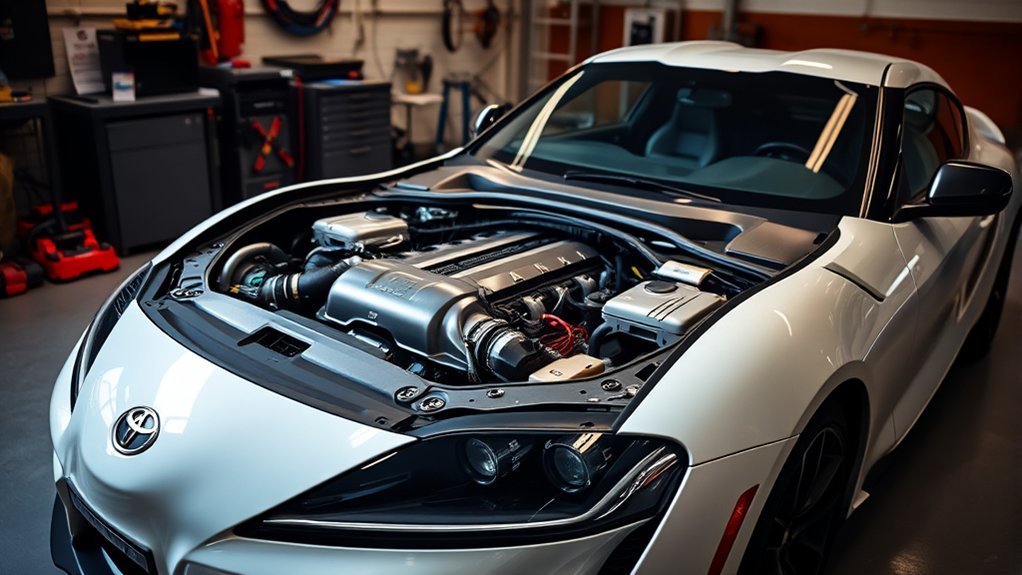
To prevent clutch slipping in your Toyota Supra, maintaining the clutch system is essential. Regularly inspect for wear indicators, like uneven pedal feel or high engagement points, to catch issues early. Confirm your hydraulic fluid levels are adequate and bleed the system periodically to maintain ideal pressure. Avoid aggressive driving habits, such as rapid starts and high-rev shifting, which can accelerate clutch wear and shorten its lifespan. Schedule routine maintenance checks every 30,000 miles to assess the clutch’s condition, making necessary adjustments before slipping occurs. Finally, keep the clutch disc and flywheel surfaces clean and free of debris to guarantee smooth engagement and prevent overheating, which can lead to premature failure.
What to Do After Spotting Clutch Issues
If you spot clutch issues like slipping or unusual noises, schedule an immediate inspection with a professional mechanic. Ignoring these symptoms can lead to further damage and costly repairs. Addressing the problem promptly guarantees your Toyota Supra remains reliable and safe on the road.
Immediate Inspection Needed
Noticing symptoms of clutch issues requires immediate action to prevent further damage. If you experience high RPMs without acceleration, unusual vibrations, or a spongy clutch pedal, schedule an inspection right away. These signs can indicate overheating and significant wear, highlighting the need for swift clutch diagnostics. Conduct tests like hard acceleration in higher gears or a power-brake test to confirm clutch slippage; this information is invaluable for your mechanic. Document any inconsistencies in performance, as these observations can aid in efficient diagnosis. Remember, neglecting these symptoms can lead to major repairs, including potential flywheel damage. Addressing issues early is essential for slipping prevention and can save you from costly fixes down the road.
Consult a Professional Mechanic
Experiencing clutch slip symptoms demands prompt attention, and the next step is consulting a professional mechanic. A qualified technician can provide a professional diagnosis to pinpoint the root cause of your clutch issues. Symptoms like increased RPMs without corresponding acceleration can indicate worn components, misalignment, or hydraulic problems. Mechanics usually recommend a thorough clutch inspection, including checks on the pedal switch and hydraulic lines, to uncover potential malfunctions that might not be visible at first glance. Addressing these issues quickly can save you from expensive repairs, as prolonged slipping can damage the flywheel and transmission. Trusting a professional guarantees your vehicle operates safely and efficiently, allowing you to regain control and confidence on the road.
Share Your Clutch Experience: Help Others in the Community
As you navigate the performance of your Toyota Supra, sharing your clutch experiences can greatly benefit others facing similar challenges. Many owners encounter clutch slip symptoms, like high RPMs without acceleration, particularly around 11,000 miles. Discussing your clutch engagement and any modifications, such as upgraded kits, can shed light on how driving habits influence performance issues. Community insights reveal that aggressive driving accelerates wear, emphasizing the importance of regular maintenance. By sharing your experiences, you help others identify early signs of clutch problems, prompting timely mechanical assistance. Together, we can foster a knowledgeable community, allowing everyone to enjoy the full potential of their Supra without the costly consequences of neglect. Your input could save someone from significant long-term damage.
Frequently Asked Questions
Can Clutch Slip Damage My Toyota Supra’s Transmission Permanently?
Yes, clutch slip can damage your Toyota Supra’s transmission permanently. Inconsistent clutch engagement leads to excessive wear, compromising transmission health. Addressing clutch issues promptly guarantees peak performance and longevity for your vehicle’s drivetrain components.
How Long Can I Drive With a Slipping Clutch?
You can drive with a slipping clutch for about 20-30 miles under ideal conditions, but clutch wear accelerates rapidly. In harsh driving conditions, that distance shrinks considerably, risking permanent transmission damage. Don’t push it!
What Are the Costs Associated With Clutch Replacement?
Clutch replacement costs typically range from $1,000 to $2,500, depending on your vehicle. Labor expenses can account for 50-70% of that total, so it’s wise to shop around for the best service deal.
Are Aftermarket Clutches Better Than OEM Options?
Aftermarket clutches might seem superior, but OEM options offer unmatched reliability. You’ll enjoy aftermarket advantages like improved performance, yet remember: sometimes, sticking with the tried-and-true is the real path to freedom on the road.
Can Driving Style Contribute to Clutch Slippage?
Yes, your driving habits can definitely contribute to clutch slippage. Aggressive starts and improper clutch maintenance wear components faster, reducing performance. Adopting smoother techniques and regular inspections can enhance longevity and prevent premature slippage.
Conclusion
In conclusion, keeping an eye on your Toyota Supra’s clutch performance is essential. Like a finely-tuned engine, a well-maintained clutch guarantees smooth driving. If you notice any symptoms of slippage, addressing them promptly can prevent further damage and costly repairs. Remember, the road ahead is smoother when your clutch is in top shape. Don’t hesitate to consult a professional if needed—maintaining your Supra’s performance is key to enjoying every twist and turn.