

Choosing the correct Toyota Supra spark plug gap starts with identifying the engine. Toyota specifies a 1.1 mm (0.043 in) new-plug gap for the 7M-GE and U.S.-spec 2JZ engines, while the factory 7M-GTE turbo specification is 0.8 mm (0.031 in). Modified turbo engines may need a smaller gap when testing confirms spark blowout, but there is no single tuned-Supra gap that fits every boost level, coil system, fuel, or tune.
Last updated: August 31, 2026 — Toyota service specifications, current Toyota parts listings, NGK guidance, and DENSO installation guidance rechecked.
Quick Answer
For classic Supras, use 1.1 mm / 0.043 in for a new 7M-GE plug, 0.8 mm / 0.031 in for a new 7M-GTE plug, and 1.1 mm / 0.043 in for the factory U.S.-spec 2JZ-GE and 2JZ-GTE references covered below. A modified turbo engine may need a tighter gap, but reduce it only after confirming the ignition system is healthy and the engine is actually suffering spark blowout. Modern 2020+ GR Supra B46/B58 applications use different plugs and service procedures, so do not apply legacy 7M/2JZ torque or gap advice to them automatically.
Key Takeaways
- Start with the Toyota service specification for your exact engine, year, and market before using tuner advice.
- A larger gap needs more voltage; forced induction raises cylinder pressure and can make a previously reliable gap misfire under load.
- Do not treat 0.028, 0.024, or any other tuned gap as a universal Supra specification. Modified-engine gaps are build-specific.
- Do not force a large gap change on fine-wire iridium or platinum plugs; choose a plug that is already close to the target specification.
- A smaller gap can reduce spark blowout, but it will not repair weak coils, damaged wires, poor grounds, boost leaks, fueling faults, or a bad tune.
- Modern GR Supra B46/B58 cars use different ignition hardware from 7M and 2JZ Supras.
At a Glance
| Time Required | About 30–60 minutes for basic 7M/2JZ plug inspection or replacement, depending on access and engine condition |
| Difficulty | Beginner to intermediate for classic 7M/2JZ applications; modern GR Supra service differs |
| Tools Needed | Correct plug socket, extensions, torque wrench, and a calibrated wire-style or plug-maker-approved gap gauge |
| Parts Cost | Varies by engine, plug construction, brand, and supplier; confirm current fitment and pricing before ordering |
What Spark Plug Gap Should a Toyota Supra Use?
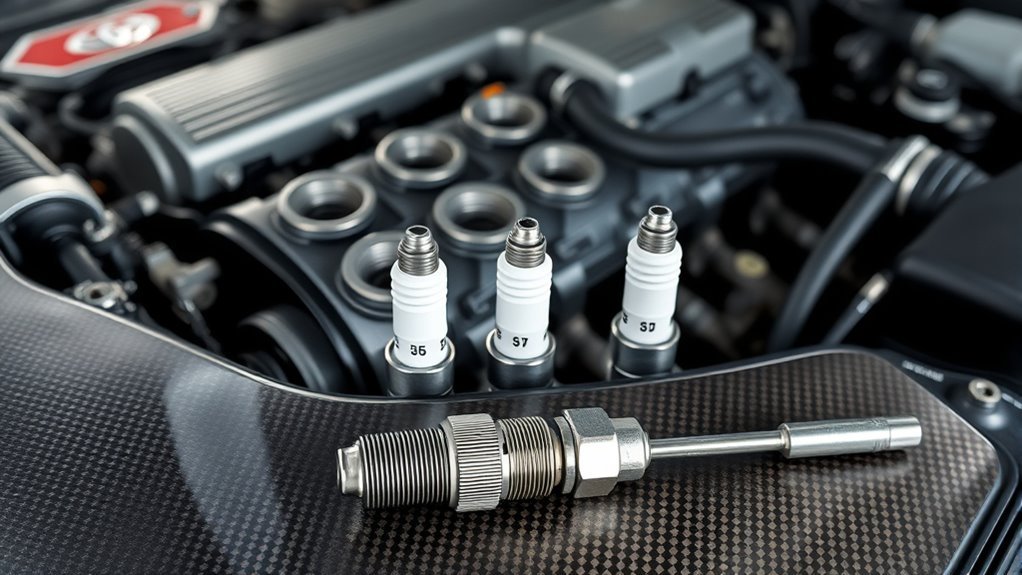
The safest answer is the factory specification for a stock engine and the widest reliably firing gap for a modified engine. Toyota publishes clear new-plug specifications for the 7M and 2JZ engines. Once boost, coils, fuel, compression, or engine management changes, however, the correct gap becomes a tuning decision rather than a fixed Toyota number.
| Engine / Setup | Factory-Style Plug Reference | Gap / Limit | How to Use It |
|---|---|---|---|
| 7M-GE naturally aspirated | NGK BCPR5EP11 or Nippondenso/DENSO PQ16R | New: 1.1 mm / 0.043 in Used limit: 1.3 mm / 0.051 in |
Factory specification for stock 7M-GE service |
| 7M-GTE stock turbo | NGK BCPR6EP-N8 or Nippondenso/DENSO PQ20R-P8 | New: 0.8 mm / 0.031 in Used limit: 1.0 mm / 0.039 in |
Factory specification for stock 7M-GTE service |
| 1997 U.S.-spec 2JZ-GE | NGK BKR5EP11 or DENSO PK16R11 | New: 1.1 mm / 0.043 in | Factory 1997 U.S.-spec reference |
| 1997 U.S.-spec 2JZ-GTE | NGK BKR6EP11 or DENSO PK20R11 | New: 1.1 mm / 0.043 in Used limit: 1.3 mm / 0.051 in |
Factory 2JZ-GTE service reference |
| 1998 U.S.-spec 2JZ-GE | Toyota’s current parts guide lists DENSO PK16TR11 | Confirm the exact model-year service specification before installation | Do not assume every Mk4 2JZ-GE uses the same plug part number |
| Modified 7M / 2JZ turbo setup | Correct heat range and plug design for the specific build | No universal modified-engine gap | Start from the specified baseline and reduce only if testing confirms spark blowout after ignition health is verified |
| 2020+ GR Supra B58/B58H and 2021+ B46H | Toyota parts guide: SILZKGR8E8S / Toyota 90118-WA461 | Current fitment catalogs commonly list about 0.030 in; confirm the exact model-year/market service specification before adjusting | Use modern GR Supra service data; do not reuse legacy 7M/2JZ torque or installation assumptions |
Factory vs. tuner guidance: Toyota’s service data controls the stock specifications above. NGK explains why forced induction can require a smaller gap, but modified-engine gap selection still depends on the actual ignition system and cylinder pressure. Treat a tuned gap as a tested setup value, not a new factory specification.
[Products Worth Considering]

This ignition coil pack and double iridium spark plug set is designed to restore reliable ignition performance for compatible Toyota, Scion, and Lexus 2.5L and 2.7L L4 gas models. It helps improve starting, fuel efficiency, and smooth engine operation while reducing misfires and emissions. Built for direct plug-and-play installation, this kit is a practical replacement for worn ignition components.

This ignition coil and iridium spark plug kit is designed to restore smooth engine performance, reliable starts, and efficient combustion for compatible Toyota models. Built for a precise fit across select Camry, RAV4, Sienna, Highlander, and Venza applications, it helps improve idle stability, fuel economy, and emissions. The kit includes durable replacement parts backed by a one-year unlimited-mileage guarantee for added confidence on the road.

NGK Iridium IX spark plugs are designed to deliver a stable spark, reliable ignition, and long-lasting performance for compatible Toyota Camry 2.5L engines. The fine-wire iridium center electrode helps improve durability and efficient combustion, making these plugs a smart replacement choice for maintaining smooth engine operation. Sold in a convenient four-pack, they are built for consistent performance and dependable fitment.
Stock Plug Types and Gaps for Supra Engines
The 7M and 2JZ engines use different plug specifications, and even Mk4 2JZ fitment can vary by year. Online advice often mixes Toyota service data with tuning habits, which is how a stock specification such as the 2JZ-GTE’s 1.1 mm gap gets replaced by an internet-standard “boost gap.” Keep those two categories separate.
7M-GE Naturally Aspirated
For the 7M-GE, Toyota service material lists Nippondenso PQ16R or NGK BCPR5EP11. The correct new-plug gap is 1.1 mm, or 0.043 in. Toyota lists 1.3 mm / 0.051 in as the maximum electrode gap for a used plug. If you are also evaluating the engine’s wider maintenance needs, see the site’s related 7M engine guide for additional classic-Supra context.
7M-GTE Turbo
For the 7M-GTE, Toyota lists Nippondenso PQ20R-P8 or NGK BCPR6EP-N8. The correct new-plug gap is 0.8 mm, or 0.031 in, with a 1.0 mm / 0.039 in used-plug limit. The tighter factory gap reflects the higher ignition demand created by the turbo engine’s cylinder pressure.
2JZ-GE and 2JZ-GTE
For the 1997 U.S.-spec Mk4 Supra, Toyota lists DENSO PK16R11 or NGK BKR5EP11 for the 2JZ-GE, and DENSO PK20R11 or NGK BKR6EP11 for the 2JZ-GTE. The listed new-plug gap is 1.1 mm, or 0.043 in. Toyota’s current parts guide also shows a year-specific change to DENSO PK16TR11 for the 1998 2JZ-GE, so confirm year and market rather than ordering by “Mk4 Supra” alone.
This is also why a stock 2JZ-GTE should not automatically be gapped to 0.028 or 0.032 in just because it is turbocharged. Toyota’s service specification is 1.1 mm / 0.043 in. A tighter value becomes a modification only when the engine’s boost, ignition system, plug choice, and testing justify it. For broader engine context, see the 2JZ-GTE engine guide.
What About the 2020+ GR Supra?
The modern GR Supra should be treated as a separate ignition application. Toyota’s current spark-plug parts guide lists SILZKGR8E8S, Toyota part number 90118-WA461, for 2020 B58 and later B58H/B46H Supra applications. Current fitment catalogs commonly list the OE-style plug around 0.030 in, but the exact model-year and market service information should control before you alter a new fine-wire plug.
Do not use the classic Supra’s 18 N·m torque value, 5/8 in socket assumption, or legacy 7M/2JZ removal procedure on a modern GR Supra unless the matching GR service information confirms it. The modern engines use different cylinder heads, coils, plugs, and access hardware. See the site’s B58 engine guide for related modern-Supra engine information.
Plug Types Explained: Copper, Platinum, Iridium, and Fine-Wire
Spark plug construction changes service life, electrode size, and how carefully the gap can be adjusted. The best plug is not simply the most expensive one. Match the plug design, heat range, and gap to the engine and tune.
- Copper / nickel plugs: Common on modified engines because they are inexpensive and easy to inspect or replace frequently. Their service life is generally shorter than precious-metal designs.
- Platinum plugs: Used in many factory-style applications because the precious-metal electrode resists wear and supports longer service life.
- Iridium plugs: Use a very fine center electrode. The fine tip is delicate, so a gapping tool should never press or pry against the center electrode or insulator.
- Fine-wire plugs: Fine-wire platinum and iridium designs should be checked with a suitable calibrated gauge and adjusted only at the ground electrode when adjustment is permitted.
Pro Tip: Buy a plug that is already close to the required gap. NGK warns against applying force to a fine-wire center electrode, and DENSO warns against letting the gapping tool contact the iridium center electrode or porcelain.
[Products Worth Considering]

The KZYEE KS40 helps diagnose weak spark plugs, ignition coil problems, and misfires by simulating real engine conditions under load. With adjustable RPM testing and dual-port comparison, it makes it easier to spot hidden ignition faults quickly and accurately. Its enclosed spark-proof design supports safer testing for both professionals and DIY users across a wide range of 12V gasoline engines.

This ignition coil pack and pre-gapped spark plug set is designed for select 3.5L V6 Toyota and Lexus models, helping restore smooth engine performance and reliable starting. Built to meet or exceed OEM specifications, it can help fix common issues like misfires, rough idle, poor fuel economy, and reduced power. The complete 6-piece set offers a convenient replacement solution for compatible vehicles.

This ignition coil and iridium spark plug set is designed to restore smooth engine performance and reliable starts for compatible Toyota, Lexus, Scion, and Pontiac vehicles. It features durable coil construction for dependable electrical connection and long-lasting iridium plugs for extended service life. The set includes four matched coils and plugs, making it a convenient replacement solution backed by a one-year warranty.
How Does the Ignition System Affect Spark Plug Gap?
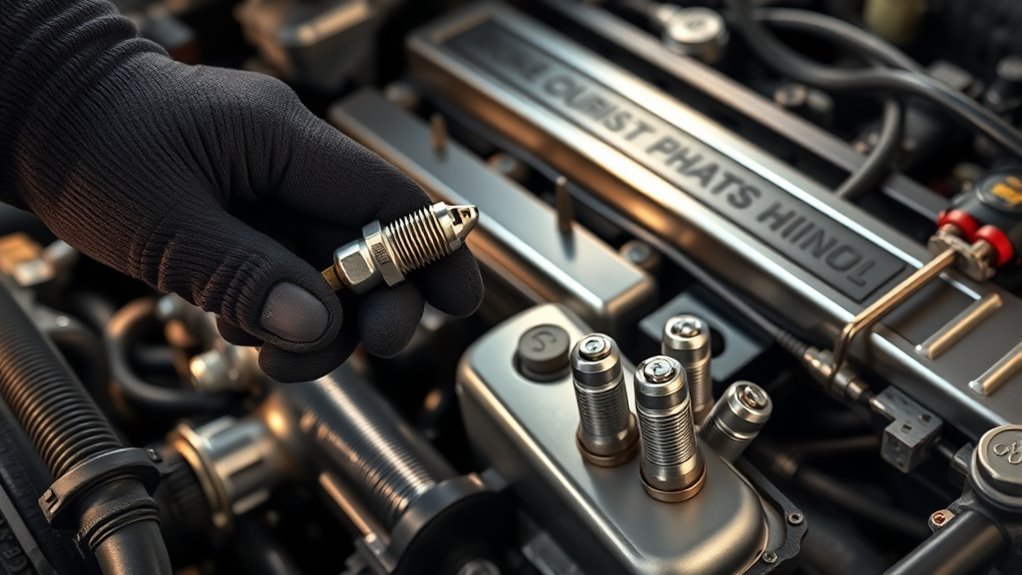
A spark plug gap creates a voltage demand. NGK explains that a wider gap requires more voltage to ionize the mixture and start the spark. Forced induction increases cylinder pressure, which makes that spark harder to initiate. If the required voltage exceeds what the ignition system can deliver under load, the engine can misfire even though it runs smoothly at idle.
Coil Charge Time
High rpm leaves less time between firing events. A plug gap that works during idle or light cruise may therefore expose an ignition weakness only at high rpm and high load. Before tightening the gap, inspect the coils or wires, boots, connectors, grounds, and the plugs themselves.
Spark Energy Needs
A wider reliable gap exposes more spark area to the mixture, but it is useful only when the ignition system can fire it consistently. If the gap is too wide for the available voltage and cylinder pressure, misfire can result. Tightening the gap reduces voltage demand, but tightening it farther than necessary is not a performance upgrade. The practical goal is the widest gap that remains reliable in the engine’s hardest operating condition.
High-Output Ignition Systems
Fresh coils, sound wiring, good grounds, and a correctly configured aftermarket ignition system may support a different gap than a tired stock system. That does not justify opening or closing the gap blindly. Change one variable at a time and compare the engine under the same boost, fuel, temperature, and rpm conditions.
The right modified-engine gap is not the smallest gap that stops a misfire. It is the widest gap the ignition system can fire reliably at the engine’s real peak load.
How Do You Choose the Right Gap for a Modified Supra?
Use a diagnosis-first process rather than choosing a gap from horsepower or boost alone:
- Start with the correct baseline. Use the Toyota specification for a stock 7M or 2JZ, or the correct model-year service information for a modern GR Supra.
- Confirm ignition health. Check plug age and wear, coils or wires, boots, igniter where applicable, connectors, grounds, and contamination in the plug wells.
- Check fueling and air leaks. A rich mixture, lean condition, boost leak, vacuum leak, injector fault, or fuel-pressure problem can imitate an ignition misfire.
- Confirm when the breakup occurs. A clean idle and cruise with repeatable breakup only under high boost or high rpm is more consistent with ignition demand than an all-speed misfire.
- Reduce the gap only when evidence supports it. Make small changes and retest under the same operating conditions.
- Match heat range to the complete tune. Heat range is a separate decision from gap and should follow the engine builder, tuner, or plug manufacturer’s guidance.
- Log the result. Record plug part number, heat range, measured gap, fuel, boost, rpm, and the conditions in which the misfire appears or disappears.
Warning: Do not use a tighter spark plug gap to hide detonation, lean fueling, weak coils, damaged wiring, or poor tuning. A gap change is an ignition adjustment, not a substitute for diagnosing the engine.
[Products Worth Considering]

This ignition coil and spark plug set is designed to restore smooth starting, stronger acceleration, and more reliable engine performance for a wide range of Toyota, Scion, Lexus, and Pontiac models. Built with quality materials and engineered to match OE fitment, it helps address common misfire, shaking, and fuel economy issues when your ignition system is worn. It is an ideal replacement choice for drivers looking to refresh their tune-up with dependable components.

NGK Iridium Spark Plugs are designed to deliver reliable ignition performance across a wider heat range than ordinary plugs. They help resist carbon buildup and pre-ignition while the patented triple gasket sealing process reduces the chance of combustion gas leakage. Sold as a six-pack, they are a strong choice for routine maintenance and improved engine operation.

This ignition coil and spark plug set is designed to restore reliable starting, smooth engine performance, and efficient combustion for compatible Toyota, Lexus, Scion, and Pontiac models. Built with durable materials and engineered to meet or exceed OE design standards, it offers dependable fitment and long-lasting operation. The package includes four ignition coils and four double iridium spark plugs for a complete tune-up solution.
Step-by-Step Gapping, Torque, and Installation for 7M/2JZ Supras
This procedure is for the classic 7M and 2JZ engines discussed above. Work on a cool engine, keep debris out of the plug wells, and start every plug by hand. Toyota service material lists 18 N·m / 13 ft-lb for the 7M and 2JZ spark-plug installation procedures. Modern GR Supra engines use different service information.
Tools Needed
- Correct replacement spark plugs for the exact engine, year, market, and tune
- Calibrated wire-style or plug-maker-approved spark plug gap gauge
- 5/8 in / 16 mm spark plug socket for the classic 7M/2JZ applications covered here
- Ratchet and extensions
- Torque wrench that reads low torque accurately
- Compressed air or a vacuum for cleaning plug wells
- Dielectric grease for plug boots if required
Installation Steps
- Let the engine cool. Spark plug removal and installation should be performed with the cylinder head cool to reduce thread-damage risk.
- Remove covers and coils or wires. Label components that could be mixed up during reassembly.
- Clean the plug wells. Remove loose dirt before the old plug comes out so debris cannot fall into the cylinder.
- Remove and organize the old plugs. Keep them in cylinder order because one abnormal plug can point to a cylinder-specific problem.
- Inspect wear before adjusting anything. Toyota lists a 1.3 mm used-plug limit for 7M-GE, 1.0 mm for 7M-GTE, and 1.3 mm for the referenced 2JZ-GTE procedure. Replace plugs that have exceeded the applicable service limit.
- Check the new-plug gap. Use a suitable calibrated gauge. If adjustment is allowed, move only the ground electrode and never lever against a fine center electrode or insulator.
- Do not re-gap a worn 2JZ plug. Toyota’s 2JZ-GTE service procedure says not to adjust the gap on a used plug; replace it when the gap exceeds the limit.
- Thread each plug by hand. If a plug does not turn smoothly, stop and restart rather than forcing it into the aluminum head.
- Torque the classic 7M/2JZ plug. Toyota service material lists 18 N·m / 13 ft-lb for the classic applications covered here. Follow different factory service data if your exact engine or plug specification states otherwise.
- Reinstall coils, wires, connectors, and covers. Make sure boots seat fully and connectors lock into place.
- Start and test progressively. Confirm clean idle first, then light load, and only perform high-load testing when the engine is otherwise healthy and the conditions are safe.
Anti-seize note: NGK states that anti-seize is not recommended on its spark plugs, and DENSO warns that thread lubricant can cause over-tightening when normal dry-thread torque is used. Follow the plug maker and vehicle service manual rather than adding lubricant by habit.
Can a Smaller Spark Plug Gap Fix a Supra Misfire?
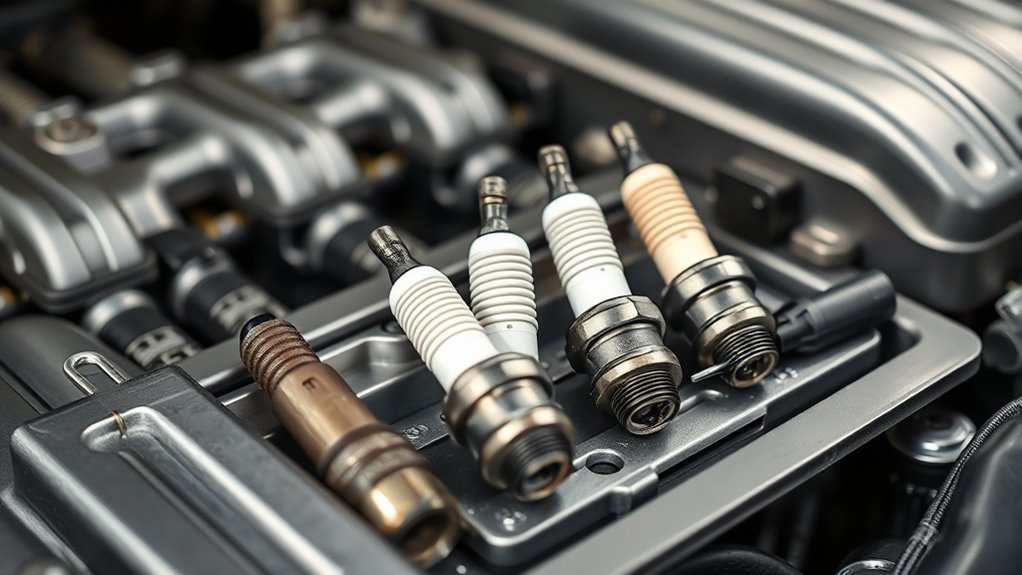
A smaller gap can solve a specific problem: the ignition system cannot consistently jump the existing gap under high cylinder pressure. It cannot solve every misfire. Diagnose the pattern first so a gap change does not hide a coil, wiring, fueling, compression, air-leak, or tuning problem.
| Symptom | What It Suggests | Next Check |
|---|---|---|
| Clean idle and cruise, breakup only at high boost/high rpm | High ignition demand or possible spark blowout | Verify coils, plug condition, gap, fueling, boost control, and tune before reducing gap |
| Misfire at idle, cruise, and load | Broader ignition, fuel, compression, wiring, or air-leak problem | Scan codes and diagnose the affected system before changing gap |
| One plug wet, black, oily, or abnormal | Cylinder-specific injector, ignition, sealing, or oil-control problem | Compare that cylinder with the other plugs and test the related coil/injector/compression |
| Old plugs show enlarged gaps | Normal electrode wear may have raised voltage demand | Compare with the applicable wear limit and replace worn plugs rather than forcing them back to new-plug dimensions |
Misfire Diagnosis Steps
- Read trouble codes first. Stored and pending faults can point toward ignition, airflow, cam/crank signals, fuel control, or a cylinder-specific misfire.
- Record when the misfire happens. Idle-only, cruise-only, high-rpm, and boost-only faults do not have the same likely causes.
- Inspect plugs by cylinder. One abnormal plug suggests a local problem; all plugs showing the same condition suggest a system-wide issue.
- Measure plug gap and wear. Worn electrodes enlarge the effective gap and raise ignition voltage demand.
- Check coils, wires, and boots. Look for cracking, carbon tracking, contamination, damaged terminals, loose connectors, and oil in the plug wells.
- Check for intake and boost leaks. Air leaks can alter fueling and load enough to confuse plug diagnosis.
- Verify fueling and compression if needed. A gap adjustment cannot repair an injector fault or mechanical cylinder problem.
Plug Fouling Causes
Carbon fouling can result from a rich mixture, weak ignition, an excessively cold heat range, prolonged idling, or repeated short-trip operation. Oil fouling can point toward engine or turbo oil-control problems. A fuel-wet plug may result from repeated failed starts, injector leakage, excessive enrichment, or an ignition fault that prevents the mixture from burning.
Idle Stability Checks
Toyota workshop material lists 650 ± 50 rpm as the 2JZ-GTE service idle under the specified test conditions. If the engine idles roughly, do not tighten the plug gap first. Check vacuum leaks, idle-air control, throttle condition, ignition timing, coil connectors, grounds, fuel control, and plug condition. A boost-only ignition adjustment should not become the default repair for an idle problem.
Maintenance, Inspection, and Common Spark Plug Mistakes
Inspection frequency depends on the engine, plug material, tune, and how hard the car is used. A stock street car with long-life precious-metal plugs has different needs from a modified turbo engine that is regularly logged or run under high load.
- Stock classic street car: Follow the model-year maintenance information and inspect plugs when ignition symptoms appear.
- Modified turbo car: Inspect after meaningful changes to boost, fuel, ignition hardware, or tune, and after any repeatable high-load misfire.
- Competition use: Inspect plugs as part of the engine’s tuning and maintenance program rather than relying on a generic street interval.
Common mistakes include ordering by engine family without checking year, confusing factory gap with tuner gap, trusting every plug to be correctly pre-gapped, forcing the electrode on a fine-wire plug, trying to restore a worn plug to its new-plug gap, using the wrong gapping tool, applying anti-seize by habit, and torquing plugs without first cleaning the plug wells.
Quick Reference: Supra Spark Plug Types and Factory Gaps
Use this list as a service-reference starting point. Confirm the vehicle year, market, engine code, and current manufacturer supersessions before ordering parts.
- 7M-GE: NGK BCPR5EP11 or Nippondenso/DENSO PQ16R; new gap 1.1 mm / 0.043 in; used limit 1.3 mm / 0.051 in.
- 7M-GTE: NGK BCPR6EP-N8 or Nippondenso/DENSO PQ20R-P8; new gap 0.8 mm / 0.031 in; used limit 1.0 mm / 0.039 in.
- 1997 U.S. 2JZ-GE: NGK BKR5EP11 or DENSO PK16R11; new gap 1.1 mm / 0.043 in.
- 1997 U.S. 2JZ-GTE: NGK BKR6EP11 or DENSO PK20R11; new gap 1.1 mm / 0.043 in; Toyota’s referenced used-plug limit is 1.3 mm / 0.051 in.
- 1998 2JZ-GE: Toyota’s current parts guide lists DENSO PK16TR11; confirm the exact model-year service specification before installation.
- 2020+ GR Supra: Toyota’s current parts guide lists SILZKGR8E8S / Toyota 90118-WA461 for B58/B58H/B46H applications; use the exact GR Supra model-year service data for gap, torque, and installation.
- Modified turbo setup: There is no universal tuned-Supra gap. Diagnose the ignition system first and adjust only as required by verified testing or the engine/tuner specification.
Frequently Asked Questions
How do I know what spark plug gap I need?
Start with the factory service specification for the exact engine, year, and market. If the engine is modified, reduce the gap only when diagnosis or testing shows that the ignition cannot fire the existing gap reliably under load. Do not choose a gap from horsepower or boost alone.
What is the stock spark plug gap for a Toyota Supra?
For the classic engines covered here, Toyota specifies 1.1 mm / 0.043 in for a new 7M-GE plug, 0.8 mm / 0.031 in for a new 7M-GTE plug, and 1.1 mm / 0.043 in for the referenced U.S.-spec 2JZ-GE and 2JZ-GTE applications. Modern GR Supra engines use different service information.
Does a stock 2JZ-GTE really use a 0.043-inch gap?
Yes. Toyota’s U.S.-spec service information lists a 1.1 mm / 0.043 in correct electrode gap for a new 2JZ-GTE spark plug. Tighter gaps seen on modified 2JZ builds are tuning choices, not replacements for the stock service specification.
Why do boosted Supras sometimes run a tighter spark plug gap?
Higher cylinder pressure raises the voltage needed to start a spark across the gap. If the ignition system cannot provide enough voltage under boost, reducing the gap can restore reliable firing. The correct reduction depends on the engine and ignition system rather than one universal boost-gap chart.
Should I gap iridium or platinum spark plugs?
Check the gap against the required specification, but be careful with fine-wire precious-metal plugs. NGK says not to apply pressure to the fine center electrode or insulator, and DENSO warns against allowing the gapping tool to contact its iridium center electrode or porcelain. Choose a plug close to the required gap whenever possible.
Can a smaller spark plug gap fix a misfire?
It can fix a misfire caused by excessive ignition voltage demand or spark blowout under load. It will not repair weak coils, damaged wires or boots, bad grounds, air leaks, injector problems, poor compression, lean or rich fueling, or an incorrect tune.
What torque should I use for classic Supra spark plugs?
Toyota service material lists 18 N·m / 13 ft-lb for the 7M and 2JZ spark plug procedures referenced in this guide. Do not automatically apply that figure to a modern GR Supra; use the service information for its exact B46/B58 application.
What spark plugs does a modern GR Supra use?
Toyota’s current spark-plug parts guide lists SILZKGR8E8S, Toyota part number 90118-WA461, for modern Supra B58, B58H, and B46H applications. Confirm the exact model year and market before ordering or changing the gap because modern GR Supra service procedures are separate from the classic 7M and 2JZ specifications.
Conclusion
The correct Supra spark plug gap starts with the engine and factory specification. Use 1.1 mm / 0.043 in for a new stock 7M-GE plug, 0.8 mm / 0.031 in for a new stock 7M-GTE plug, and 1.1 mm / 0.043 in for the referenced U.S.-spec 2JZ applications. Treat tighter modified-engine gaps as diagnostic or tuning adjustments, not universal Supra specifications. Measure new plugs carefully, replace worn plugs that exceed their service limits, torque classic 7M/2JZ plugs to the verified specification, and diagnose coils, fueling, air leaks, wiring, and tune quality before blaming the gap.
Sources
- NGK Spark Plugs — Gapping and Indexing — explains the relationship between plug gap, voltage demand, forced induction, and misfire.
- NGK Spark Plugs — Do I Need to Set the Gap? — supports checking the vehicle specification and handling fine-wire plugs carefully.
- NGK Spark Plugs — Spark Plug Installation — supports cool-engine installation, clean plug holes, proper torque, and correct installation practice.
- DENSO Spark Plug Installation — supports correct torque and warns against thread lubricant that can cause over-tightening.
- Toyota Supra Factory Repair Manual — 7M Ignition System — supports the 7M-GE and 7M-GTE plug types, new gaps, used-gap limits, and 18 N·m torque.
- Toyota Mk4 Supra Maintenance Manual — supports 2JZ plug types, 16 mm plug wrench, and 18 N·m installation torque.
- Toyota Parts & Service — Spark Plug Application Guide — supports Mk4 year-specific plug listings and modern GR Supra SILZKGR8E8S / 90118-WA461 applications.
- Toyota GR Supra Warranty and Maintenance Guide — confirms that modern GR Supra spark plugs should be replaced with the same type as originally equipped at the specified service interval.
- Current GR Supra Spark Plug Fitment Catalog — secondary cross-check for the commonly cataloged SILZKGR8E8S / NGK 96206 0.030 in fitment; use Toyota model-year service data before adjustment.



[…] Inspect the spark plug. A worn or damaged plug can raise the voltage required to create a spark and can make a healthy or marginal coil appear weak. For more detail, see the Supra spark plug gap guide. […]