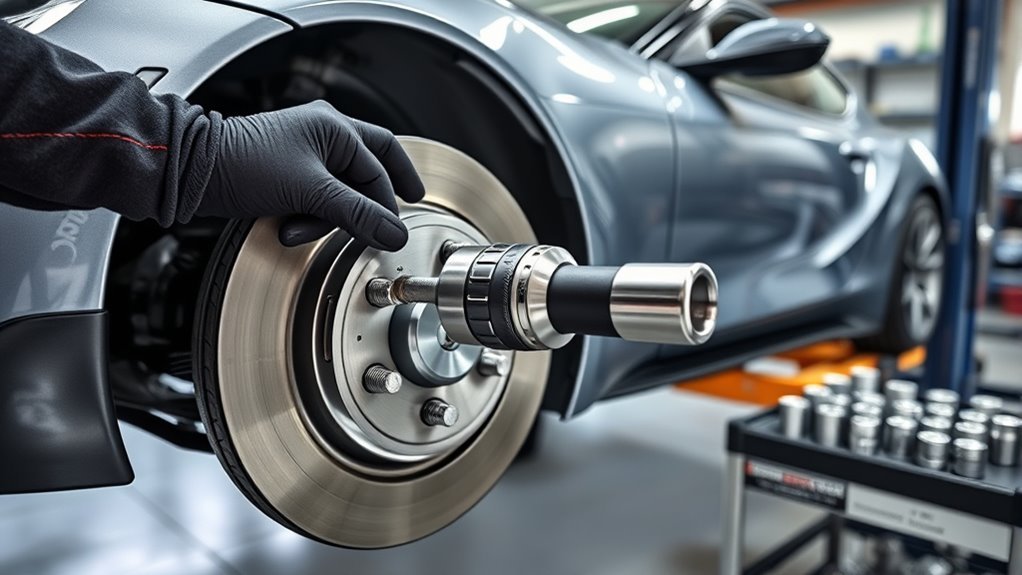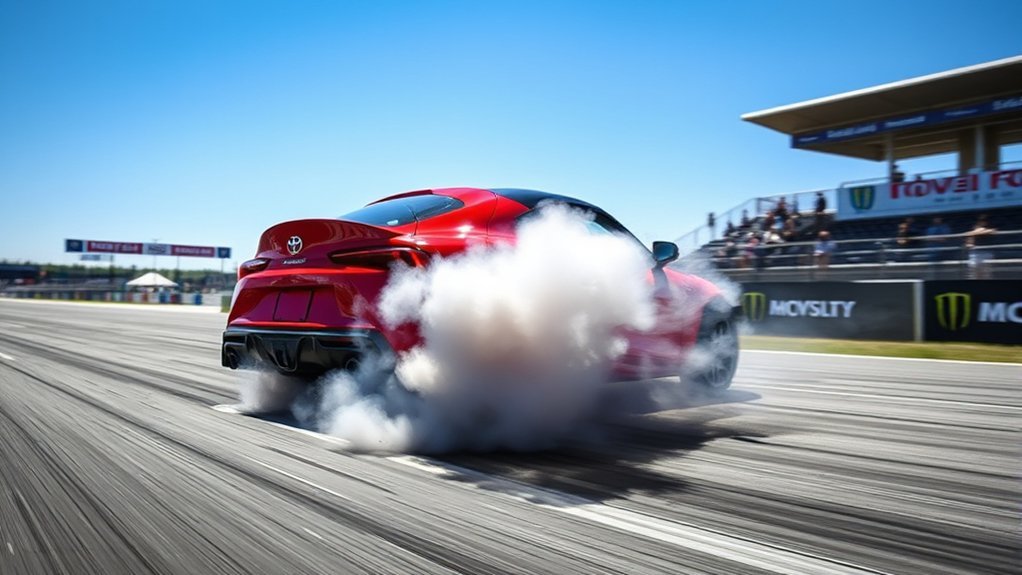
If your A90 GR Supra’s tires feel greasy, vague, or inconsistent after a few hard laps, tire overheating is a likely culprit. On track, heat is created by braking, cornering, acceleration, road surface friction, and tire flex. The goal is not to keep the tires “cold”; it is to keep them in the working range for your specific tire compound, pressure target, alignment, and session length.
Quick Answer
Toyota Supra tire overheating on track usually comes from too much sliding, repeated hard braking, long sessions without cooldown laps, incorrect hot pressures, or using a street tire beyond its heat range. Track tire temps with a probe pyrometer, adjust pressures gradually, add cooldown laps, and choose a tire compound built for your pace.
Key Takeaways
- Overheating feels like falling grip, smeared tread, vague steering, longer braking, or sudden pressure gain.
- Toyota’s cold tire pressures are the safety baseline; your track-day “hot pressure” target depends on the tire model, load, track, and pace.
- A pressure gauge tells you part of the story, but a probe pyrometer shows whether the inside, center, or outside of the tread is overheating.
- Smooth inputs, shorter sessions, cooldown laps, and tire rotation can control heat before you blame the tire.
- Street performance tires can overheat quickly in an A90 Supra; endurance 200-treadwear or dedicated track tires usually tolerate heat better.
At a Glance
| Time Required | 5 minutes before each session, 2 minutes immediately after each session |
| Difficulty | Beginner to intermediate |
| Tools Needed | Accurate tire pressure gauge, probe pyrometer, notebook or tire log, air source, valve caps |
| Cost | $20–$80 for a quality gauge; more for a motorsport pyrometer |
Why Tire Overheating Can Ruin Your Track Day Experience
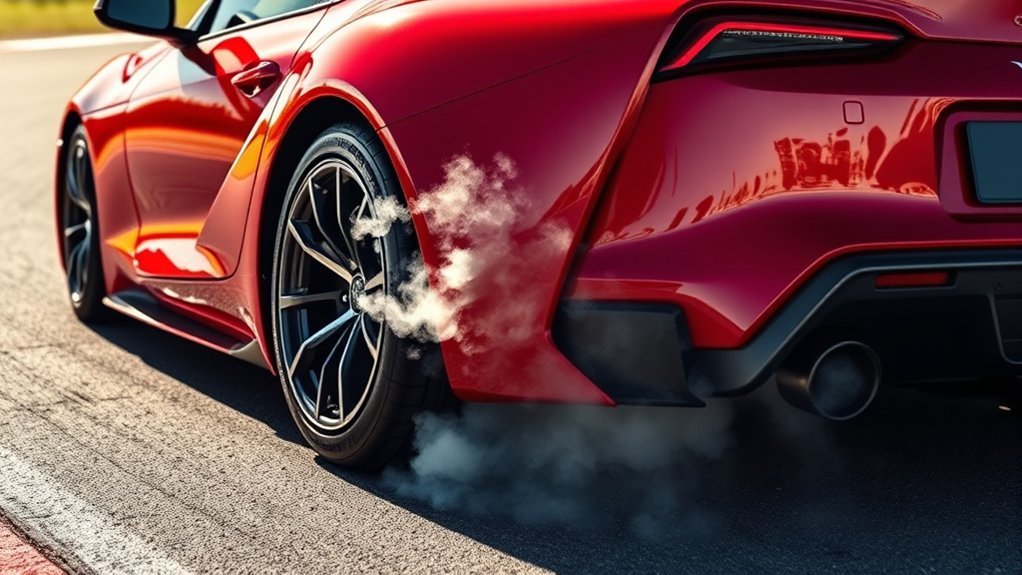
When you hit the track, you want every lap to feel sharp and repeatable. Tire overheating breaks that rhythm. As the rubber gets too hot, the car may start to push wide, feel greasy mid-corner, lose braking confidence, or become harder to place on corner exit.
Heat itself is not bad. Tires need heat to grip. The problem starts when the tread, carcass, or air pressure moves beyond the tire’s useful range. Toyota notes that tires heat up while driving and that tire inflation pressure rises with tire temperature, so pressure checks should be based on cold tires or tires at ambient temperature for normal road use. For track work, you still begin from the manufacturer’s cold-pressure guidance, then manage hot pressures during the day with careful measurements. Toyota’s GR Supra owner information also warns that incorrect pressure at high speeds can damage tires and affect handling.
The fastest setup is not the one that feels great for one lap. It is the one that keeps the Supra predictable from the first flying lap to the end of the session.
What Causes Tires to Overheat in Your A90 GR Supra?
Tires on your A90 GR Supra can overheat from a mix of driving style, tire pressure, alignment, tire compound, ambient temperature, track layout, and session length. The Supra has strong acceleration, heavy braking capability, and a front-engine/rear-drive layout, so it can put serious load into the front tires under braking and the rear tires on corner exit.
Tire Pressure Management
Proper tire pressure management is essential for preventing overheating. Too little pressure lets the tire roll over and flex too much, which builds heat in the shoulder and sidewall. Too much pressure can crown the tire, reduce the contact patch, and overwork the center of the tread.
For normal street use, Toyota says to use the tire information placard or owner’s manual for the recommended cold inflation pressure. The 2026 GR Supra owner information lists common cold pressures such as 32 psi for some 2.0 models and 38 psi for some 3.0 models, depending on tire size and specification. Always confirm your exact tire size, model year, and door-jamb placard before setting pressures.
| What You See | Likely Cause | Track-Side Action |
|---|---|---|
| Center tread much hotter than edges | Pressure may be too high | Bleed down in small steps and recheck |
| Both shoulders hotter than center | Pressure may be too low or tire is overloaded | Add pressure or reduce session intensity |
| Outside shoulder much hotter | Not enough negative camber, too much sliding, or overdriving corner entry | Slow entry, smooth steering, consider alignment changes |
| Inside shoulder much hotter | Too much negative camber for the tire/load | Review alignment and tire wear after the day |
| Pressures climb fast every session | Tire is being overheated or session is too long | Add cooldown laps, shorten sessions, or switch tire compound |
Note: Tire Rack’s track-tire guidance uses the common rule of thumb that tire pressure changes about 1 psi for every 10°F change in temperature. Real track pressure gain also depends on tire construction, load, pace, surface, and how much the tire is sliding.
Driving Style Impact
Your driving habits play a major role in tire wear and overheating. Aggressive acceleration, abrupt steering, and repeated hard braking generate heat through tire-road friction and carcass flex. The Supra’s torque makes rear-tire overheating especially easy if you apply throttle before the car is unwound from the corner.
Overdriving usually feels fast from the seat, but the tire data tells the truth. If lap times slow while tire pressures and tread temperatures keep rising, the tires are past their best range. Smooth brake release, one clean steering input, and patient throttle application usually keep the tire cooler and make the car faster over a full session.
Ambient Temperature Effects
Ambient temperature changes everything. A tire that works well on a 60°F morning may feel greasy in a 95°F afternoon session. Hot pavement, direct sun, long sessions, and limited paddock shade can all raise starting pressure before the car even rolls onto pit lane.
- Hot weather raises the baseline: Starting pressure and tread temperature may already be high before your first flying lap.
- Tire type matters: Summer street tires, 200-treadwear endurance tires, and dedicated race tires all have different heat tolerance.
- Braking style matters: Repeated late braking generates large heat spikes in the front tires and brakes.
How Speed and Cornering Affect Tire Temperature
When you push your Toyota Supra to its limits, speed and cornering load build tire temperature quickly. High speed increases tire deformation and heat generation. Cornering adds lateral load, especially to the outside tires. Braking transfers weight forward, loading the front tires. Acceleration loads the rear tires. Combine all three in a heavy car on a hot day, and a street tire can go past its happy range in only a few laps.
The biggest mistake is adding more steering when the front tires are already sliding. That scrubs the tread across the pavement, adds heat, and reduces grip. Instead, reduce entry speed, release the brake more smoothly, and let the tire regain grip before asking for more rotation.
Pro Tip: If the Supra starts understeering more every lap, do not simply turn the wheel farther. Open the steering slightly, slow the car earlier, and check front tire shoulder temps when you come in.
The Role of Tire Pressure in Managing Heat

Tire pressure is one of your easiest track-side adjustments, but it is not a magic fix. Pressure affects contact patch shape, shoulder rollover, carcass flex, and heat buildup. The right setting is the one that gives your specific tire an even temperature pattern and consistent grip.
Use this simple process:
- Start with a safe cold baseline: Use Toyota’s placard or owner’s manual for normal inflation guidance, then follow your tire maker’s track guidance if available.
- Measure before the session: Record cold pressures in all four tires.
- Measure immediately after the session: Record hot pressures as soon as you stop in the paddock.
- Make small changes: Adjust 1–2 psi at a time, then check whether lap feel, tread temps, and wear improve.
- Never chase one number blindly: A good hot pressure for one tire may be wrong for another tire, even on the same Supra.
Warning: Do not bleed a tire down after a hot session and then drive home without resetting safe cold pressures. Once the tire cools, pressure drops. Underinflation can damage tires and increase failure risk.
[Products Worth Considering]

The AstroAI S8 is a compact 12V lithium jump starter designed to get gas and diesel vehicles back on the road quickly, even from low or fully drained batteries. It combines powerful starting performance with smart boost mode, built-in safety protections, and a versatile 5-in-1 design that also works as a power bank and flashlight for everyday emergencies and travel.

This smart color coded tire tread depth gauge makes it easy to check tread wear at a glance with clear red, yellow, and green ranges. Calibrated from 0 to 1 inch in 1/32 inch increments, it helps you quickly assess tire condition for safer driving and timely replacements. The pocket clip design makes it convenient to carry and use on trucks, motorcycles, cars, and other passenger vehicles.

This mud flap kit is designed for Toyota Camry LE and XLE models from 2018 through 2024, helping shield the lower body from snow, salt, sand, rocks, and road debris. Made from durable ABS material, it offers a direct-fit installation with included hardware for a secure and easy setup. The set includes four mudguards plus reflective stickers to help keep your vehicle cleaner and better protected in harsh driving conditions.
Mastering Heat Cycles for Optimal Tire Performance
A heat cycle is one full warm-up and cool-down of the tire. Every track session adds a heat cycle. Some competition tires need a controlled first heat cycle to stabilize performance, while many street tires simply lose grip as repeated heat cycles harden the compound.
The key is controlled temperature, not maximum temperature. A new tire that is overheated during its first session may never perform as well as it should. If you are running a fresh set, build pace gradually, bring the tires up to temperature evenly, and let them cool completely before pushing hard again.
| Action | Effect on Tire Temp | Best Use |
|---|---|---|
| Progressive warm-up laps | Raises temperature gradually | First session, cold track, new tires |
| Hard braking | Raises front-tire and brake heat quickly | Use only when needed, not as a warm-up trick |
| Cooldown laps | Reduces peak heat before paddock stop | End of each session |
| Pressure logging | Shows heat-related pressure gain | Before and after every session |
| Pyrometer readings | Shows tread temperature balance | Immediately after a hot lap |
Do Tire Warmers Improve Grip and Performance?
Tire warmers can improve grip and consistency when used with tires designed for them, but they are not a normal requirement for most HPDE Supra drivers. Warmers are common in racing environments where teams need immediate grip and consistent starting temperatures. For street tires and many track-day tires, they can add unnecessary heat and may accelerate wear.
[Products Worth Considering]

AUTO-VOX Solar Wireless Backup Camera makes reversing easier with a clear 1080P display, wireless digital signal, and a solar-assisted battery system that reduces maintenance. Designed for fast DIY setup, it mounts cleanly on a license plate and delivers dependable visibility for parking, towing, and blind-spot monitoring in a wide range of vehicles.

This versatile valve core and stem removal kit is designed for maintenance and replacement across cars, trucks, motorcycles, bicycles, ATVs, lawn mowers, and more. It includes a dual-head stainless steel remover and a 3-in-1 valve tool for Presta and Schrader applications, making valve service quick, portable, and convenient.
Benefits of Tire Warmers
When used correctly on suitable competition tires, tire warmers can help:
- Reduce warm-up time: The tire reaches its working range sooner.
- Improve early-lap confidence: Grip is more predictable when leaving the pits.
- Control starting conditions: Every session begins from a more repeatable baseline.
For most track-day drivers, the smarter approach is a clean warm-up lap, progressive braking, and careful pressure logging. Warmers should only be used if your tire manufacturer or racing class supports them.
Optimal Temperature Ranges
There is no universal ideal tire temperature. Michelin’s motorsport guidance, for example, separates tires by racing discipline, surface, and operating window. A 200-treadwear endurance tire, a street summer tire, and a slick can all need different temperatures to perform well.
| Tire Type | Typical Track Behavior | Best Practice |
|---|---|---|
| Max-performance summer street tire | Good road grip, can overheat in long sessions | Short sessions, cooldown laps, watch shoulders |
| 200-treadwear endurance tire | Better heat tolerance and consistency | Log hot pressures and rotate as needed |
| R-compound tire | Higher grip, needs correct heat range | Follow tire-maker pressure and heat-cycle guidance |
| Slick tire | Very high grip, narrow setup window | Use only with proper suspension, safety, and experience |
| Wet tire | Designed for water evacuation and cooler conditions | Avoid overheating on drying pavement |
Impact on Lap Times
Correct tire temperature can make lap times more consistent, but overheating usually makes the car slower after the first few laps. You may notice one strong lap followed by a steady drop in grip. That is a sign to manage pace, pressure, or tire choice rather than pushing harder.
Better lap consistency comes from:
- Repeatable starting pressures: Begin each session with known cold or warm values.
- Controlled warm-up: Avoid sliding the tire before it is ready.
- Clean cooldown: Give the tire a chance to shed heat before parking.
- Accurate notes: Track pressure, temperature, weather, and handling feel together.
Driving Techniques to Combat Tire Overheating
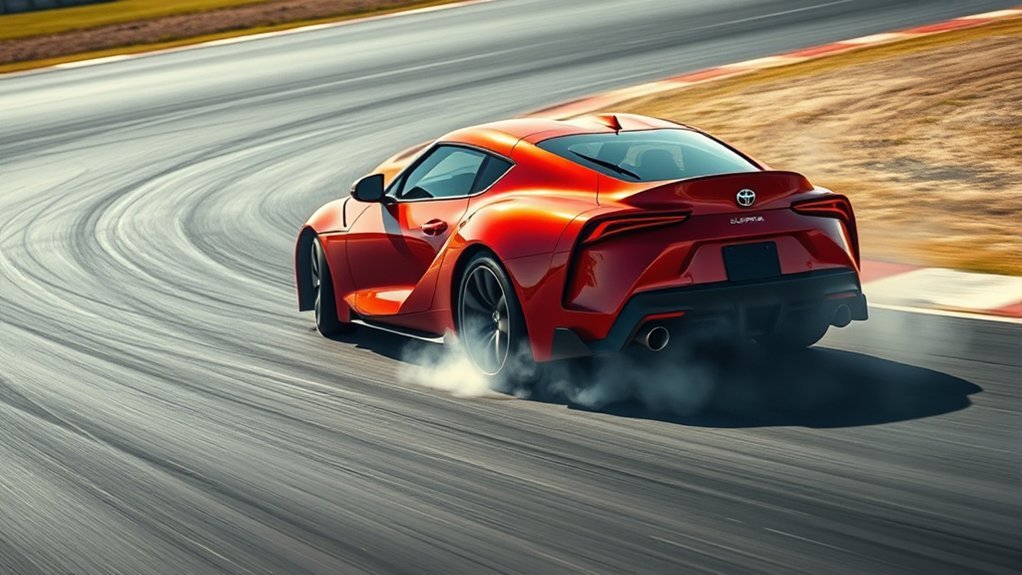
Managing tire temperature starts with driving technique. Smooth inputs reduce scrub, protect the tread, and keep the car balanced. The Supra rewards patience because it has enough power to punish the rear tires if you rush throttle application.
- Brake in a straight line first: Finish most of the braking before asking the front tires to turn.
- Release the brake smoothly: Abrupt release can unload the front tires and create understeer.
- Use one clean steering input: Sawing at the wheel adds scrub and heat.
- Wait on throttle: Add power as you unwind the steering, not while the rear tires are still heavily loaded.
- Build in cooldown laps: Use the last lap to reduce speed, avoid heavy braking, and increase airflow.
- Shorten sessions if needed: A 15-minute clean session is better than 25 minutes of sliding and overheating.
Pro Tip: If your best lap is always lap two or three and the car fades badly after that, the tire may be overheating. Try a shorter session, smoother corner entry, or a tire with better heat tolerance.
Best Practices for Monitoring Tire Temperatures
Effective tire management does not stop at pressure checks. A probe pyrometer gives better tread-temperature data than an infrared gun because it measures beneath the surface instead of only the rapidly cooling outer skin.
Use this three-point method immediately after a hot lap:
- Measure the outside, center, and inside of each tire: Take readings quickly and in the same order every time.
- Record hot pressure at the same stop: Pressure and tread temperature together are more useful than either number alone.
- Compare patterns, not just peaks: Even temperatures across the tread usually mean the tire is being used efficiently.
| Temperature Pattern | What It Suggests | Possible Fix |
|---|---|---|
| Outside hotter than inside | Too much rollover or not enough camber | Add pressure slightly, drive smoother, review alignment |
| Inside hotter than outside | Too much camber or not enough load on outer tread | Review camber and tire wear |
| Center hotter than edges | Pressure may be too high | Reduce hot pressure slightly |
| Edges hotter than center | Pressure may be too low or tire is overloaded | Increase pressure slightly or reduce pace |
| All readings very high and grip fading | Tire is beyond its heat range | Shorten sessions or switch tire compound |
Choosing High-Performance Tires to Prevent Overheating
The right tire depends on how you use the car. A tire that is excellent for street comfort may not survive repeated 20-minute sessions in a high-power Supra. A tire built for time attack may feel amazing for a few laps but wear quickly. A tire built for endurance may be slightly slower for one lap but more consistent through a full session.
Tire Material Composition
High-performance tires use different rubber compounds, belt packages, tread depths, and sidewall designs. Softer compounds often create more grip but can overheat or wear faster. More track-focused compounds may tolerate heat better but need temperature to work properly and may be poor in cold or wet street conditions.
When choosing tires, look at:
- Heat tolerance: Pick a tire known for consistency during full HPDE sessions.
- Tread depth and block stability: Deep tread blocks can squirm and build heat during hard cornering.
- Load capacity: Make sure the tire is appropriate for the Supra’s weight and speed.
- Manufacturer guidance: Follow the tire maker’s pressure, break-in, and rotation instructions.
Optimal Tire Pressure
There is no single “best” track pressure for every Supra. A common mistake is copying another driver’s number without matching tire model, wheel size, alignment, pace, weather, and track layout. Use Toyota’s recommended cold pressure as your safety reference, then tune hot pressure based on your tire manufacturer’s guidance and your own temperature data.
| Step | What to Do | Why It Helps |
|---|---|---|
| 1 | Set cold pressures before the first session | Creates a safe, repeatable baseline |
| 2 | Record hot pressures immediately after driving | Shows actual track pressure gain |
| 3 | Take inside/center/outside tread temps | Shows how evenly the tire is working |
| 4 | Adjust only 1–2 psi at a time | Prevents chasing the setup |
| 5 | Reset safe cold pressures before street driving | Avoids underinflation after the tires cool |
Alignment and Suspension Factors That Affect Tire Heat
If your Supra keeps overheating the outside front shoulders, pressure alone may not fix the problem. Track driving puts more lateral load into the tires than street driving, and the factory alignment may not provide enough negative camber for repeated high-speed cornering.
Common setup-related heat issues include:
- Not enough front negative camber: The outside shoulder overheats and wears quickly.
- Too much toe: The tire scrubs down the straight and builds heat before the corner.
- Worn bushings or weak dampers: The tire moves around instead of staying planted.
- Incorrect wheel width: A pinched or stretched tire can make temperature patterns harder to control.
For serious track use, have a performance alignment shop inspect your tire wear and pyrometer notes. Do not make large alignment changes blindly; match the setup to your tire, experience level, and street-driving needs.
Track-Day Checklist for Keeping Supra Tires Cool
Use this simple routine to keep tire heat under control during an HPDE or open-lapping day.
Before the First Session
- Check all four cold tire pressures with a quality gauge.
- Inspect tread depth, sidewalls, valve stems, and wheel torque.
- Confirm the tires are not older, cracked, corded, or heat-damaged.
- Write down ambient temperature, track condition, and starting pressures.
- Plan a warm-up lap and a cooldown lap before you leave pit lane.
Between Sessions
- Measure hot pressures as soon as you stop.
- Use a probe pyrometer on inside, center, and outside tread zones.
- Look for shoulder rollover, chunking, blistering, graining, or smeared rubber.
- Shade the tires if possible and avoid parking with one side baking in direct sun.
- Make small pressure changes and record every change.
After the Final Session
- Let the tires cool before judging final pressure.
- Reset safe cold pressures before street driving.
- Inspect wear patterns and note which tire position ran hottest.
- Rotate tires if the tire maker allows it and wear patterns support it.
- Use your notes to set a better starting point next time.
What the Community Says: Tips for Successful Track Days
Experienced track drivers tend to agree on one thing: consistency beats guessing. Do not wait until the tires feel terrible to start measuring. Build a log from the first session, even if you are new.
- Monitor temperatures: Use a probe pyrometer when possible, and take readings immediately after a hot lap.
- Track hot pressures: Cold pressure matters, but hot pressure shows what happened on track.
- Warm up gradually: Avoid attacking curbs, trail braking deeply, or sliding the car on cold tires.
- Use cooldown laps: Bring brake and tire temps down before stopping in the paddock.
- Choose the right tire: If you are outdriving a street tire, move to a track-capable compound instead of forcing the tire to cope.
Common Symptoms of Overheated Supra Tires
Overheated tires are easy to misdiagnose as suspension, brake, or driver issues. Watch for these signs:
- Greasy grip: The car slides even though you are not increasing pace.
- Rising understeer: The front end pushes wider with each lap.
- Rear traction fade: The car spins the rear tires earlier on corner exit.
- Pressure spikes: Hot pressures rise more than usual for the same session length.
- Tread damage: Rubber smears, chunks, blisters, or feathers across the shoulder.
- Lap-time drop-off: The car is fast for a lap or two, then falls away.
When to Stop Driving on Overheated Tires
Sometimes the right fix is to come in. Keep driving only makes the tire worse if the rubber is already beyond its safe range.
Warning: End the session if you see cords, sidewall bulges, deep cuts, tread separation, blistering, or sudden pressure loss. Tire failure at track speed can cause a crash.
Also slow down if the car suddenly changes balance. A tire that goes from predictable to vague in one lap is telling you something. Take a cooldown lap, return to the paddock, and inspect the tire before going back out.
Frequently Asked Questions
What are the common track-related tire problems with Supras?
Common Supra track tire problems include outside shoulder wear, heat-related grip fade, rear-tire overheating on corner exit, pressure spikes, and uneven tread temperatures. These usually come from aggressive inputs, long sessions, alignment limits, or a tire compound that is not built for repeated track heat.
What causes a Toyota Supra tire to overheat on track?
A Supra tire overheats when braking, cornering, throttle, pressure, alignment, ambient heat, and session length push the tire beyond its operating range. Sliding the tire is the fastest way to add heat, especially during late braking, understeer, or early throttle on corner exit.
Should I lower tire pressure if my Supra tires are overheating?
Not automatically. Lowering pressure can help if the center tread is too hot, but it can make overheating worse if the tire is already rolling onto its shoulders. Check inside, center, and outside tread temperatures first, then adjust pressure in small steps.
Is a probe pyrometer better than an infrared temperature gun?
For track setup, a probe pyrometer is usually better because it measures temperature below the tread surface. Infrared guns are quick, but the tire surface cools fast after you leave the track, so readings can be less useful for pressure and alignment decisions.
Do tire warmers make sense for an A90 GR Supra track day?
Usually not for normal HPDE use. Tire warmers can help racing tires designed for them, but most Supra track-day drivers are better served by a proper warm-up lap, pressure logging, and a tire that matches their pace and session length.
Is a Supra faster than a Mustang on track?
It depends on the model, tire, driver, alignment, power level, and track layout. A GR Supra can be very quick because of its balance and power-to-weight ratio, but a Mustang with the right package and tires can also be extremely fast. Tire heat management matters more than the badge.
Why aren’t there any Toyotas in NFS Heat?
Toyota models were absent from NFS Heat because of game licensing decisions, not because the Supra lacks performance credibility. That topic is separate from real-world tire overheating, but it often comes up in Supra enthusiast discussions.
Conclusion
In the high-stakes dance of track days, keeping your Supra’s tires in their working range is like keeping a rhythm section locked in. Too cold and the tire lacks bite. Too hot and the car loses balance, grip, and confidence. Start with safe cold pressures, record hot pressures, use a probe pyrometer, drive smoothly, and choose a tire that matches your pace. Do that, and your A90 GR Supra will feel sharper, safer, and more consistent from the first session to the last.
Sources
- Toyota Owners: 2026 GR Supra Wheels and Tires — cold inflation guidance, high-speed pressure warnings, and tire-pressure tables
- Toyota Support: Recommended Tire Pressure — confirms drivers should use the owner’s manual or tire information placard
- NHTSA TireWise — tire pressure safety, cold-pressure checks, and underinflation risk
- Tire Rack: Temperature and Tire Air Pressure — explains how temperature changes affect tire pressure
- Tire Rack: Getting the Most Out of Competition Tires — competition tire pressure, temperature, and pyrometer guidance
- Longacre Racing: Pyrometer Tips — practical tire temperature measurement and interpretation guidance