
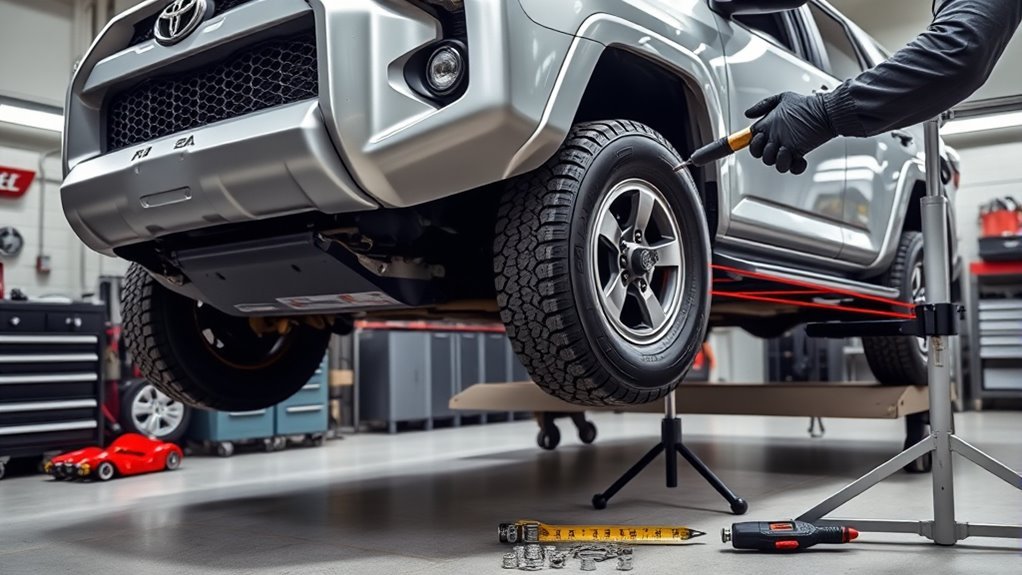
A good 4Runner alignment starts with the basics: set tire pressure cold, load the vehicle the way you normally drive it, confirm ride height, center the steering wheel, and inspect the steering and suspension before measuring anything. You can use strings or toe plates for a careful DIY toe check, but caster, camber, thrust angle, and post-lift geometry are best confirmed on a calibrated alignment rack.
Quick Answer
For a repeatable 4Runner alignment, prep the truck first, measure front toe with a square string box or toe plates, then adjust the front tie rods in small equal changes. Front caster and camber are adjusted at the lower-control-arm cams on many 4Runners. Rear readings should be checked for thrust angle and axle position, not treated like a normal rear eccentric-bolt adjustment.
Key Takeaways
- Use your exact model year, trim, tire size, load, and suspension setup when choosing alignment targets.
- DIY tools can measure toe well, but caster and camber need accurate gauges or a shop rack.
- On common 2010–2024 4Runners, the rear solid axle is checked for thrust angle and axle position; rear toe/camber are not adjusted like an independent rear suspension.
- Lifted 4Runners often need more caster, careful toe settings, and sometimes aftermarket UCAs to restore steering feel and tire clearance.
- Always request a before-and-after alignment printout so you can track caster, camber, toe, and thrust angle over time.
At a Glance
| Time Required | 60–120 minutes for careful DIY toe measuring; 30–90 minutes at a shop, longer for lifted or rusty trucks |
| Difficulty | Moderate for front toe checks; advanced for caster/camber diagnosis and lifted-suspension tuning |
| Tools Needed | Tire pressure gauge, tape measure, string box or toe plates, steering wheel holder, wrenches, torque wrench, camber/caster gauge or professional alignment rack |
| Cost | DIY toe check is low cost if you own basic tools; professional alignment cost varies by region, rust, lift height, and custom specs |
Warning: Steering and suspension fasteners are safety-critical. If you loosen tie rods, lower-control-arm cams, UCA hardware, or body-mount components, use the correct Toyota service procedure and torque specifications for your exact year. Do not test drive at speed until every jam nut, cam bolt, and wheel lug is tightened correctly.
Quick Alignment Checklist for 4Runner Owners
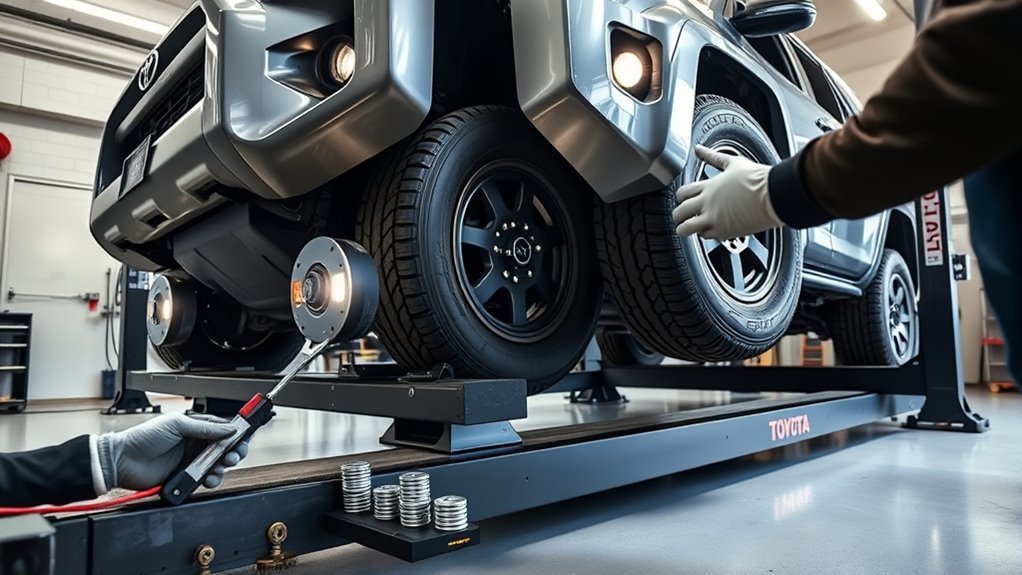
Start by parking the 4Runner on a flat, level surface with the steering wheel centered. This baseline prevents measurement errors and helps you spot obvious problems before turning any adjustment hardware.
- Set tire pressure cold. Use the Tire and Loading Information Label or owner’s manual, not the maximum PSI printed on the tire sidewall. The NHTSA tire-safety guide recommends checking tire pressure cold and checking all tires, including the spare.
- Set normal load. Align the truck with the fuel level, cargo, roof rack weight, armor, tools, and passenger load that match real driving conditions.
- Confirm ride height. Sagging springs, new coils, spacers, bumper weight, or a leveling kit can change caster and camber.
- Inspect before adjusting. Check tie rods, ball joints, wheel bearings, control-arm bushings, steering rack mounts, shocks, and lower-control-arm cam tabs.
- Choose the right measurement method. A string box or toe plates can help you check toe. A camber/caster gauge or professional alignment rack is needed for accurate caster and camber.
- Record before and after numbers. Write down left/right caster, camber, front toe, total toe, steering wheel position, and thrust angle.
If front toe is off, loosen the tie-rod jam nuts and make small, equal changes at the rack ends or tie rods, then remeasure. If caster or camber is off, adjust the front lower-control-arm cams on applicable 4Runners or use a professional rack. For the rear, check thrust angle and axle centering instead of assuming rear toe/camber can be adjusted with eccentric bolts.
Note: Exact alignment specifications vary by year, trim, drivetrain, KDSS, tire size, lift height, and market. Use Toyota Technical Information System, the current alignment-rack database, or a Toyota dealer for the correct factory data.
Which Angles Matter: Camber, Caster, Toe, and Thrust Angle
The main alignment angles are camber, caster, toe, and thrust angle. They control how the tires contact the road, how the steering returns to center, and whether the truck tracks straight. Tire Rack’s alignment guide explains that alignment settings affect handling and tire wear, especially toe, which is one of the most tire-wear-sensitive settings.
| Angle | What it means | Why it matters on a 4Runner |
|---|---|---|
| Camber | Inward or outward tire tilt when viewed from the front. | Too much positive or negative camber can wear one tire shoulder faster. |
| Caster | Forward or rearward tilt of the steering axis when viewed from the side. | More positive caster usually improves straight-line stability and return-to-center, but too much can create clearance or joint-angle problems. |
| Toe | Whether tires point inward or outward when viewed from above. | Small toe errors can quickly cause feathering, wandering, and rapid tread wear. |
| Thrust angle | Direction the rear axle points compared with the vehicle centerline. | A bad thrust angle can make the truck dog-track, pull, or sit with the steering wheel off-center even when front toe looks correct. |
Alignment importance is simple: correct angles improve safety, preserve tire life, and reduce constant steering correction. The goal is not to chase the biggest number; it is to keep left and right readings balanced, within the correct range, and appropriate for how the truck is used.
Prep Before You Measure: Tires, Load, Steering, Ride Height
Before measuring alignment, make sure the basic setup is right. Inflate all tires to the manufacturer’s cold pressure, set the vehicle at normal load and ride height, center the steering wheel, and inspect suspension and steering components for wear or damage.
Uneven tire pressure changes the contact patch and can give false toe and camber readings. Extra cargo, a rear drawer system, steel bumpers, a winch, skid plates, or a roof tent can also change ride height and alignment. Recreate the truck’s normal driving load before measuring.
Center the steering wheel and hold it in place with a steering wheel holder or a simple strap. Then bounce the truck gently to settle the suspension. Look for loose tie rods, leaking shocks, worn ball joints, cracked bushings, bent lower-control-arm cam tabs, and seized cam bolts. Replace worn parts before alignment. Otherwise, you may “align” around a mechanical problem that will keep changing.
Pro Tip: Paint-mark the current lower-control-arm cam positions before any adjustment. If a change makes the steering worse, those marks give you a known reference point.
DIY String Box for 4Runner Alignment: Build and Setup
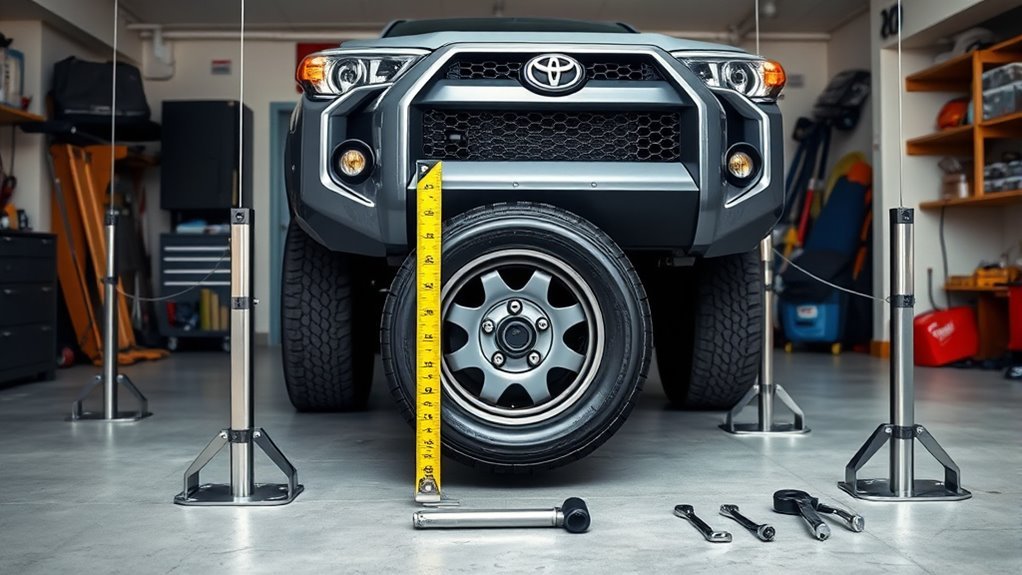
A simple string box gives you a repeatable reference for measuring toe without a shop rack. It does not replace a professional caster/camber reading, but it can help you center the steering wheel, confirm front toe, and check whether changes are moving in the right direction.
- Assemble the frame. Mount tubing, straight bars, or string supports on jack stands at wheel-center height.
- Set the string parallel. Run a tight string along each side of the truck and position it so the strings are parallel to the vehicle centerline.
- Square-check the setup. Compare diagonal measurements and left/right distances from fixed chassis or hub points. Do not use flexible body panels as your main reference.
- Measure at tire center height. Measure from the string to the front and rear edges of each front tire at the same height.
- Record every reading. Write down left front, right front, total toe, steering wheel position, and any change you make.
Toe plates are faster but less useful for checking the truck against the centerline. A string box takes longer, yet it gives a better picture of whether the front tires are square with the vehicle.
[Products Worth Considering]

This DIY toe alignment tool kit helps home mechanics quickly check and adjust front-end toe after suspension, steering, or tire service. Stainless steel toe plates and dual tape measures provide a simple, reliable reference for reducing uneven tire wear and improving straight-line tracking without needing a full alignment machine.

This wheel alignment tool makes it easy to check and adjust toe-in and toe-out at home for better handling, stability, and more even tire wear. Designed for one-person use, it includes tape-measure slots for simple setup and accurate measurements without extra help. Its stainless steel construction and broad vehicle compatibility make it a practical addition to any DIY garage.

This 2-piece suspension tool set combines a compact strut spreader with a high-leverage lower control arm prying tool to help speed up safe suspension service. Designed for many FWD, import, and domestic vehicles, it supports strut, hub, ball joint, and control arm work while helping reduce the risk of damage to surrounding components. Heavy-duty steel construction makes it a dependable choice for mechanics and serious DIY suspension repair.
Measure Front Toe and Adjust Tie Rods
Start with the truck on level ground, suspension settled, steering wheel centered, and your string box or toe plates squared. Measure the distance from the reference line to the front and rear edges of each front tire. If the front edge measurement differs from the rear edge measurement, the tire has toe-in or toe-out.
If front toe is out of range, loosen the tie-rod jam nuts. Make small, equal changes side to side so the steering wheel stays centered. Because thread direction and measurement method can vary, do not rely only on a generic “turn inward” or “turn outward” rule. Turn a small amount, roll or settle the truck, then remeasure.
- Confirm the steering wheel is centered and held steady.
- Loosen both tie-rod jam nuts.
- Adjust both sides in small equal increments.
- Roll the truck forward and backward or bounce the suspension to settle it.
- Remeasure left and right toe.
- Tighten the jam nuts to the correct service-manual torque.
- Recheck the steering wheel during a slow, controlled test drive.
The final toe setting should match the correct specification for your model year and setup. If you cannot center the steering wheel while keeping toe in range, stop and look for unequal tie-rod length, worn steering parts, bent components, or thrust-angle problems.
[Products Worth Considering]

This universal wheel alignment tool helps you perform precise toe alignment at home with professional-grade accuracy and easy DIY operation. Its no-caliper-removal design simplifies setup, while the heavy-duty stainless steel construction and compact detachable form make it durable, stable, and easy to store. It is suitable for a wide range of vehicles, including cars, trucks, SUVs, ATVs, and UTVs.

Armor All Extreme Wheel and Tire Cleaner is a powerful spray designed to cut through stubborn dirt, grease, tar, and brake dust on wheels and tires. It is safe for use on factory and aftermarket finishes, including alloy, steel, chrome, and plastic wheel trims, while its fast-acting formula works in just seconds. The deep-cleansing action helps reach hard-to-clean areas and leaves wheels looking clean and shiny.

This master ball joint removal kit gives you the tools needed to remove and install ball joints, tie rod ends, Pitman arms, and other front-end components. It is designed for broad compatibility with many GM, Chevrolet, Ford, and Dodge vehicles, including a range of light trucks, vans, and SUVs. Built from forged steel and stored in a molded ABS case, it offers durable performance and organized portability for garage or shop use.
Set Front Camber and Caster With Lower-Control-Arm Cams
On many Toyota 4Runners, front camber and caster are adjusted at the lower-control-arm cam bolts. The front and rear cams move the lower control arm in different ways, changing camber and caster together. That is why one change often affects another reading.
The usual sequence is to inspect ride height and parts first, set caster and camber with the lower-control-arm cams, then recheck toe last. Toe changes after camber/caster adjustments, so do not finalize toe before the front cams are set.
- For stock-height trucks: Aim for the factory preferred range from Toyota service information or the alignment rack.
- For lifted trucks: Many owners prefer as much positive caster as can be achieved while keeping left/right readings balanced, ball-joint angles safe, and tire clearance acceptable.
- For trucks with seized cams: Do not force the bolts. Seized cam bolts, bent tabs, or rusted sleeves must be repaired before a reliable alignment is possible.
If your front camber or caster cannot be brought into range, the cause may be worn bushings, bent parts, a lift that exceeded stock adjustment range, or aftermarket parts that need a different setup.
[Products Worth Considering]
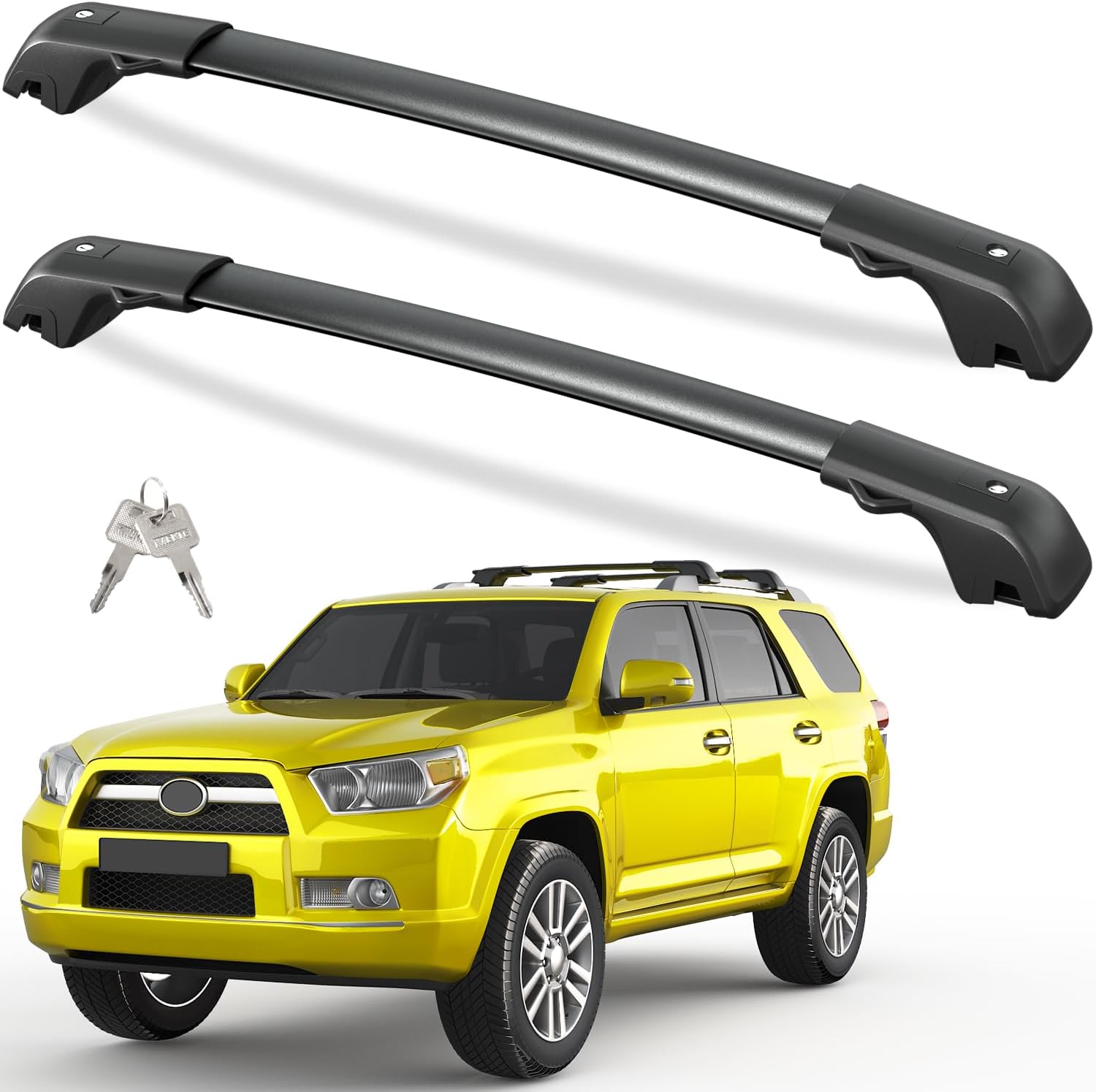
Designed specifically for Toyota 4Runner models with side roof rails, these lockable cross bars provide a secure and practical way to carry luggage, ladders, and other cargo. The aluminum construction, anti-theft metal lock, and tie-down loops add durability and confidence, while the low-profile design helps reduce wind noise during travel. Easy to install and backed by a 12-month warranty, they offer a dependable upgrade over standard crossbars.

This all-in-one front end service kit is designed to help remove stubborn ball joints, tie rod ends, and pitman arms on a wide range of vehicles. Built from hardened alloy and organized in a portable ABS case, it offers reliable performance for both professional mechanics and DIY repairs.

This dial type tire tread depth gauge helps you quickly check tread wear on motorcycles, cars, trucks, and buses with easy-to-read 1/32-inch increments. Its colorful zone markings make it simple to assess tire condition for safer driving in different weather, while the durable zinc cast body and legible dial provide dependable everyday use.
Check Rear Thrust Angle and Axle Position: No Rear Eccentric Bolts
The rear alignment check on a 4Runner is different from many cars and crossovers. Common 2010–2024 4Runners use a solid rear axle with a four-link coil rear suspension, so rear toe and camber are not normally adjusted with rear eccentric bolts. The important rear reading is thrust angle: whether the rear axle points straight with the vehicle centerline.
If a printout shows rear toe, camber, or thrust angle out of range on a solid-rear-axle 4Runner, do not simply look for an adjustment bolt. Inspect for the real cause:
- Uneven ride height: Sagging springs, spacer issues, or uneven load can shift axle position.
- Worn rear links or bushings: Loose control arms or a worn panhard/lateral rod can let the axle sit crooked.
- Bent axle housing or frame damage: Impact damage can show up as abnormal rear readings.
- Lift-related axle shift: Rear lift changes panhard/lateral-rod angle, which can move the axle side to side.
- Incorrectly installed adjustable links: Aftermarket rear links can create thrust-angle issues if lengths are mismatched.
For a lifted solid-rear-axle 4Runner, axle-centering parts such as an adjustable panhard bar may help with side-to-side axle position, but they do not turn the rear axle into a normal rear camber/toe adjustment. If rear readings are far out, have a qualified shop inspect the axle, frame, links, bushings, and mounts.
Measure Caster and Read Its Limits: Why UCAs Matter
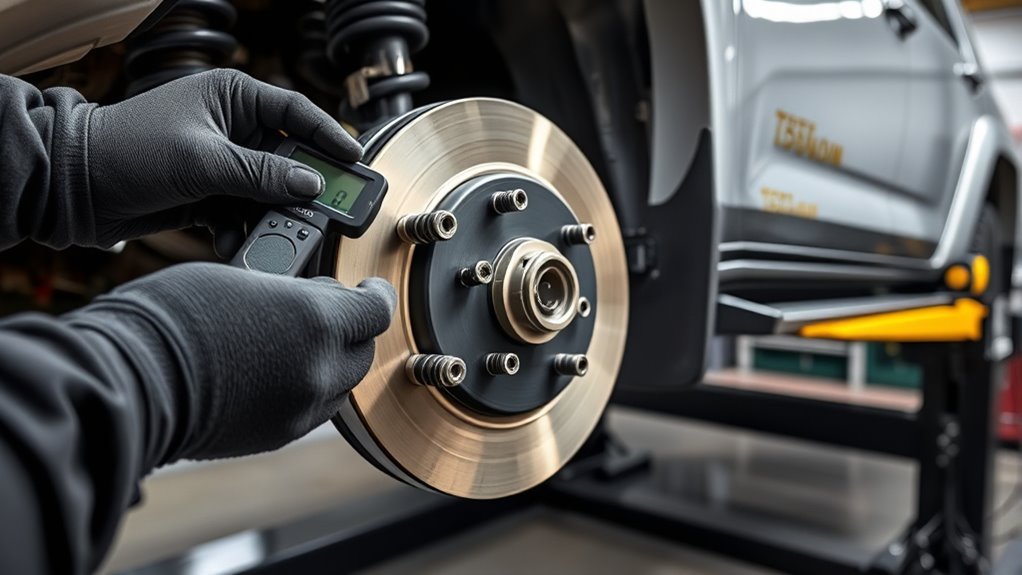
Caster is the angle of the steering axis when viewed from the side. More positive caster generally improves straight-line stability and steering return-to-center. Too little caster can make a lifted 4Runner wander, feel twitchy, or require constant correction on the highway.
Stock upper control arms often limit how much caster you can achieve after a lift. Aftermarket UCAs can add clearance and improve alignment range, but they are not a magic fix. The ball joint or uniball angle, wheel offset, tire size, and front bumper/body-mount clearance all still matter.
When measuring caster, focus on three things:
- Total caster: Is it within a safe, usable range for your year and setup?
- Side-to-side split: Are left and right close enough to prevent pull?
- Clearance: Do tires clear body mounts, fender liners, mud flaps, UCAs, sway bars, and cab/body areas at full lock?
Do not chase extreme caster just because other owners posted a number online. Your ideal setting depends on lift height, tire diameter, wheel offset, load, and how the truck is driven.
Interpret Readings After a Lift: Offsets, Tire Size, and Rubbing
After a lift, alignment readings need to be interpreted with tire clearance in mind. A more negative wheel offset pushes the tire outward, changes scrub radius, and can increase rubbing at the body mount, fender liner, bumper cover, or mud flap. A larger tire, such as a 285/70R17 or 285/75R17, can add height and width that the stock setup was not designed around.
Wheel Offset Effects
Positive offset moves the wheel inward. Negative offset moves it outward. Moving the tire outward can improve stance and UCA clearance, but it can also swing the tire into the body mount or fender edge during steering. Moving the tire inward can reduce body-mount contact but may create UCA or sway-bar contact.
- Measure the tire’s closest points to the UCA, sway bar, fender liner, bumper, and body mount.
- Check at full left lock, full right lock, and slight reverse movement.
- Recheck after alignment, because caster changes move the tire forward or backward in the wheel opening.
Tire Size Clearance
Measure projected tire edge versus body and suspension at ride height. Then check clearance through steering travel and suspension compression. Taller tires reduce vertical clearance, and wider tires increase the chance of contact at the body mount or fender liner.
If rubbing appears, do not start cutting immediately. First confirm caster, camber, toe, wheel offset, bump-stop condition, and liner position. Many minor rubs can be improved with alignment, liner trimming, mud-flap removal, or bumper-cover adjustment. More serious body-mount contact may require fabrication.
Note: Toyota’s 2025 4Runner uses a newer TNGA-F platform with double-wishbone front suspension and multi-link coil rear suspension. The same alignment principles apply, but exact specs and service procedures must come from the correct 2025+ service data.
Fixes: Alignment Tweaks, Aftermarket UCAs, and Body-Mount Options
When you are correcting post-lift alignment issues, prioritize safe alignment range before cosmetic stance. Caster, camber, toe, wheel offset, tire size, and clearance all interact. Change one thing at a time and remeasure.
Aftermarket Upper Control Arms
Aftermarket upper control arms can help a lifted 4Runner regain caster, improve ball-joint or uniball angle, and increase clearance to the tire. They are most useful when the stock UCAs cannot reach a stable caster range after a lift.
Look for UCAs that match your lift height, wheel offset, tire size, and maintenance preferences. Some use sealed ball joints, some use uniballs, and some require more frequent inspection and lubrication. After installation, torque all hardware to the manufacturer’s instructions, cycle steering through full travel, and schedule a professional alignment.
- More caster range: Helps restore steering stability and return-to-center.
- Better tire clearance: Can move the tire position enough to reduce rubbing, depending on wheel and tire setup.
- Stronger geometry for lifted use: Helps keep joint angles in a safer operating range.
Body Mount Chop Options
A body-mount chop can stop tire-to-body contact after a lift and larger tire upgrade, but it is a fabrication job, not a normal alignment adjustment. It involves trimming and reinforcing structural material near the front body mount. Poor work can weaken the area, expose bare metal to rust, or create tire-contact hazards.
| Option | Best use | Risk |
|---|---|---|
| No chop | Minor rubbing that can be solved with caster, liner work, or smaller tire/offset changes. | May still rub under compression or reverse steering. |
| Partial chop | Moderate body-mount contact with common 33-inch tire setups. | Needs clean cutting, welding, sealing, and corrosion protection. |
| Full chop/replate | Aggressive tire and wheel setups with confirmed hard contact. | Highest fabrication risk; should be done by a qualified shop. |
Alignment Caster Tweaks
If you have lifted a 4Runner, dialing in caster is one of the highest-impact alignment tweaks you can make. More positive caster can improve highway stability and return-to-center, but the best number is the highest safe, balanced value that still clears your tires and keeps joints within their operating range.
- Set ride height and load first.
- Adjust front lower-control-arm cams or aftermarket UCA settings as needed.
- Check caster, camber, and toe after each meaningful change.
- Verify tire clearance at full steering lock and during compression.
- Finish with a before-and-after printout.
What Alignment Values to Request
Do not ask a shop for “whatever is green” and stop there. Ask for the preferred factory range for your exact 4Runner, then discuss any custom targets needed for lift height, tire size, and vehicle use.
- Stock or near-stock 4Runner: Ask for factory preferred caster, camber, toe, and thrust angle using the correct year/trim data.
- Lifted 4Runner on larger tires: Ask the tech to maximize safe positive caster within spec or within the UCA manufacturer’s guidance, keep camber balanced, and set toe carefully to avoid feathering.
- Daily driver: Prioritize even tire wear, centered steering, and stable highway tracking.
- Trail-focused build: Balance tire clearance and steering stability, then inspect more often after hard off-road use.
Always request a printout showing before and after caster, camber, toe, total toe, steering axis inclination if available, and thrust angle. Keep those records with your tire rotation and suspension notes.
Troubleshooting After Alignment
| Symptom | Likely causes | What to check next |
|---|---|---|
| Steering wheel off-center | Unequal tie-rod adjustment, thrust angle issue, or road crown. | Recheck front toe, tie-rod lengths, and thrust angle. |
| Wanders on highway | Too little caster, worn steering parts, low tire pressure, or loose suspension. | Check caster numbers, tire pressure, tie rods, ball joints, and rack mounts. |
| Pulls to one side | Caster/camber split, tire conicity, brake drag, or uneven ride height. | Cross-rotate front tires, inspect brakes, compare left/right caster and camber. |
| Feathered tread | Toe out of range or loose steering parts. | Recheck total toe and inspect tie rods. |
| Rubbing after lift | Tire size, wheel offset, caster position, liner/body-mount contact. | Check full-lock clearance in drive and reverse, then adjust caster or trim only where confirmed. |
When to DIY vs. See a Pro: Shop Checklist and Values to Request
You can DIY a careful toe check if you have level space, repeatable measuring tools, and patience. You should see a professional alignment shop after a lift, UCA swap, lower-control-arm replacement, steering rack work, impact damage, uneven tire wear, or any setup that needs caster/camber changes.
Use this checklist before going to the shop:
- Bring your current tire size, wheel offset, lift height, and suspension part list.
- Tell the shop whether the truck is a daily driver, overland build, towing setup, or trail-focused rig.
- Ask for year/trim-specific factory specs, not generic SUV values.
- Ask the tech to note if any cam bolts are seized, tabs are bent, or bushings are worn.
- Request a before-and-after printout with caster, camber, toe, total toe, and thrust angle.
- Test drive at low speed first, then highway speed only after confirming the truck tracks straight and the steering wheel returns normally.
A basic alignment can be quick, but a modified 4Runner may need extra time for caster balancing, tire-clearance checks, seized cam bolts, or custom UCA settings. Paying more for a shop that understands lifted Toyotas can be cheaper than burning through a set of tires.
Frequently Asked Questions
How do you measure wheel alignment on a 4Runner?
You can measure front toe with a string box, toe plates, or a tape method on level ground. For accurate caster, camber, and thrust angle, use a camber/caster gauge or a professional alignment rack. Always set tire pressure, ride height, load, and steering wheel position before measuring.
Is $200 a lot for a 4Runner alignment?
Not automatically. A simple stock alignment may cost less in some areas, but lifted 4Runners, aftermarket UCAs, seized cam bolts, custom caster targets, and tire-clearance checks can justify a higher price. The more important question is whether the shop understands Toyota truck alignment and gives you a full printout.
How long does a 4Runner alignment take?
A straightforward shop alignment often takes 30–90 minutes. A lifted or rusty 4Runner can take longer if the technician has to free seized cam bolts, balance caster, inspect worn parts, or verify tire clearance at full steering lock.
Is 2 mm of toe misalignment significant?
It can be significant, depending on where and how it is measured. Toe has a large effect on tire wear, so a small toe error can cause feathering or wandering. Compare the reading with the exact Toyota spec for your year and trim instead of judging the number by itself.
Can I align the rear of a 4Runner?
On common 2010–2024 4Runners with a solid rear axle, rear toe and camber are not normally adjusted with eccentric bolts. A shop checks rear thrust angle and axle position. If the rear reading is wrong, inspect ride height, rear links, bushings, panhard/lateral rod position, axle housing, and frame condition.
Do lifted 4Runners need aftermarket UCAs?
Not every lifted 4Runner needs UCAs, but many do once lift height, tire size, and caster goals exceed the stock adjustment range. UCAs can help restore caster and clearance, but they still need proper installation and a professional alignment.
Conclusion
A solid 4Runner alignment is not just “set the toe and go.” Start with tire pressure, load, ride height, and worn-part inspection. Use strings or toe plates for a careful front toe check, but rely on accurate caster/camber readings and model-year-specific specs before finalizing the setup. For lifted rigs, focus on safe caster, balanced camber, careful toe, tire clearance, and rear thrust angle. If the numbers fall outside range or the steering feels odd, take your printout and modification list to a shop that knows Toyota truck suspension.
Sources
- NHTSA Tire Safety Ratings and Awareness — cold tire pressure, tire placard guidance, tread, alignment, and tire safety basics.
- Toyota USA Newsroom: 2024 Toyota 4Runner Rugged Capability — 2024 4Runner body-on-frame construction and solid rear axle/four-link coil rear suspension.
- Toyota USA Newsroom: 2025 Toyota 4Runner Refines Adventure Ready Heritage — 2025+ platform and suspension context.
- Toyota Technical Information System — official Toyota service, repair, and reference publications for exact year/trim procedures and specifications.
- Tire Rack: What Are the Different Alignment Settings? — caster, camber, toe, thrust angle, tire wear, and alignment printout guidance.
- AccuTune Off-Road: Tacoma & 4Runner Wheel Alignment — lifted Toyota truck caster, camber, tire fitment, and UCA considerations.



[…] can use Auto Start-Stop on a 2025–2026 Toyota 4Runner to reduce idling, but do not assume the feature by trim name alone. Toyota’s current 4Runner […]