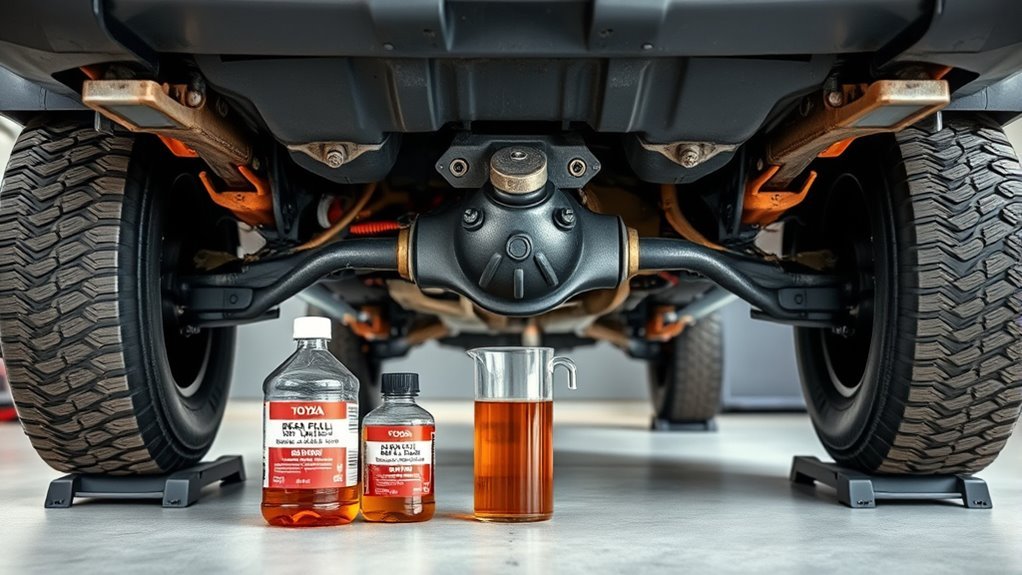
The 2014 Toyota 4Runner uses different drivetrain oil capacities depending on whether it is 2WD, part-time 4WD, or full-time 4WD. The big correction is this: the fifth-generation 2014 4Runner rear differential is not a 3.2-quart fill like many earlier fourth-generation references. For most 2014 models, plan on about 2.7 L of 75W-85 GL-5 differential gear oil, then set the final level at the fill opening.
Quick Answer
For a 2014 Toyota 4Runner, use Toyota Genuine Differential Gear Oil LT 75W-85 GL-5 or equivalent in the front and rear differentials. Rear capacity is about 2.7 L (2.85 qt); front is about 1.55 L part-time 4WD or 1.40 L full-time 4WD. Fill to 0-5 mm below the fill opening.
Key Takeaways
- The 2014 4Runner rear differential takes about 2.65-2.75 L, depending on whether it has a factory rear differential lock.
- Part-time 4WD models use a front differential with A.D.D. and take about 1.50-1.60 L up front.
- Full-time 4WD models, such as many Limited trims, use about 1.35-1.45 L in the front differential.
- Use Toyota 75W-85 GL-5 differential oil or a true equivalent; use Toyota Transfer Gear Oil LF SAE 75W or equivalent in the transfer case.
- Do not rely on capacity alone. The correct final level is 0-5 mm below the bottom of the fill plug opening.
At a Glance
| Time Required | 45-90 minutes for rear only; 2-3 hours for front, rear, and transfer case |
| Difficulty | Moderate DIY if the vehicle is safely supported and level |
| Tools Needed | Fluid pump, drain pan, torque wrench, sockets/hex tools that fit your plugs, new gaskets or crush washers, gloves, shop towels |
| Typical Fluid Amount to Buy | 3 L for rear; 2 L for front; 1 L part-time transfer case or 2 L full-time transfer case |
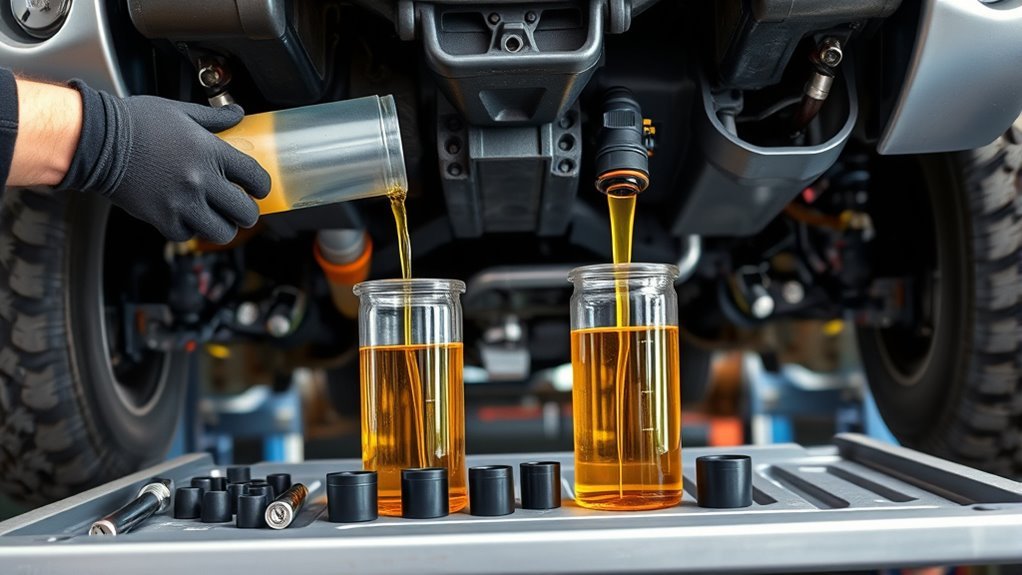
2014 4Runner Differential Fluid Capacities
Use this chart for U.S.-market 2014 Toyota 4Runner models. The numbers are service-fill estimates, not a substitute for the final fill-level check.
| Component | Drivetrain / Type | Approx. Capacity | Fluid |
|---|---|---|---|
| Rear differential | Without factory rear diff lock | 2.65-2.75 L / 2.80-2.91 US qt | Toyota Differential Gear Oil LT 75W-85 GL-5 or equivalent |
| Rear differential | With factory rear diff lock | 2.60-2.70 L / 2.75-2.85 US qt | Toyota Differential Gear Oil LT 75W-85 GL-5 or equivalent |
| Front differential | Part-time 4WD with A.D.D. | 1.50-1.60 L / 1.59-1.69 US qt | Toyota Differential Gear Oil LT 75W-85 GL-5 or equivalent |
| Front differential | Full-time 4WD standard front diff | 1.35-1.45 L / 1.43-1.53 US qt | Toyota Differential Gear Oil LT 75W-85 GL-5 or equivalent |
| Transfer case | Part-time 4WD | About 1.0 L / 1.1 US qt | Toyota Transfer Gear Oil LF SAE 75W or equivalent |
| Transfer case | Full-time 4WD | About 1.4 L / 1.5 US qt | Toyota Transfer Gear Oil LF SAE 75W or equivalent |
Note: A 2WD 2014 4Runner has a rear differential only. It does not have a front differential service fill or a transfer case service fill.
Confirm Your Drivetrain Before Buying Fluid
Before you open a bottle, confirm which 4Runner drivetrain you have. SR5 and Trail trims are commonly 2WD or part-time 4WD. Limited trims are commonly full-time 4WD. The easiest clues are the 4WD selector, the presence of a front driveshaft, and the trim/VIN build information.
| Clue | What to Check | Why It Matters |
|---|---|---|
| 2WD | No front driveshaft and no transfer case selector | Rear differential only |
| Part-time 4WD | Selector positions such as 2H, 4H, and 4L | Uses A.D.D. front differential capacity and smaller transfer-case fill |
| Full-time 4WD | Limited-style full-time 4WD/AWD system with center differential controls | Uses the full-time front differential and transfer-case capacities |
| Rear locker | Factory rear differential lock switch or build sheet | Slightly changes rear differential fill volume |
Recommended Gear Oil: 75W-85 GL-5 for Differentials
For the 2014 4Runner front and rear differentials, the correct factory-style specification is Toyota Genuine Differential Gear Oil LT 75W-85 GL-5 or equivalent. The GL-5 rating matters because hypoid differential gears need extreme-pressure protection. The 75W-85 viscosity matters because it is the viscosity Toyota specified for this generation.
Many owners use a high-quality synthetic 75W-90 GL-5 when 75W-85 is unavailable, but that is a substitute choice, not the first-line factory recommendation. If you want the safest spec match, use 75W-85 GL-5 from Toyota or a brand that clearly states compatibility with Toyota Differential Gear Oil LT 75W-85 GL-5.
Warning: Do not use a fluid just because it says “gear oil.” Match the required GL-5 rating for the differentials and use the correct SAE 75W transfer-case fluid for 2010-2024 4Runner transfer cases.
[Products Worth Considering]

CHAPIN’s low-profile oil drain pan is designed to slide under low-clearance vehicles and equipment, making fluid changes easier in tight spaces. The large splash-free target area helps reduce mess while the molded carry handles support easier lifting, pouring, and storage. Built for draining oil, coolant, and other automotive fluids, it offers a practical high-capacity solution for routine maintenance.

These genuine Toyota oil drain plug gaskets are designed to help maintain a reliable seal during oil changes, reducing the chance of leaks and supporting proper engine maintenance. With an OEM fit and trusted Toyota quality, they are a practical choice for routine service on compatible vehicles. The convenient quantity pack is ideal for keeping multiple maintenance intervals covered.
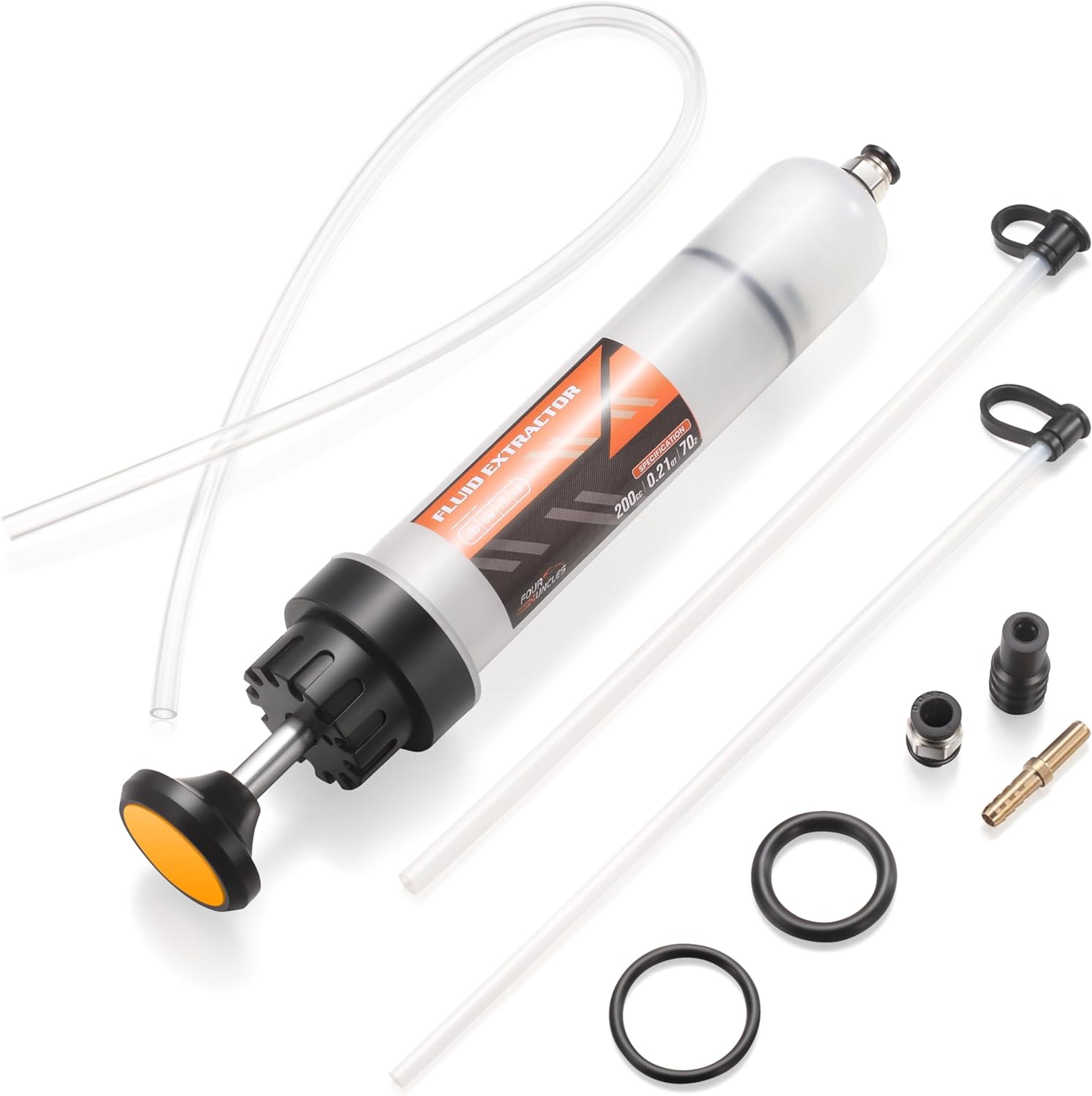
This fluid transfer syringe with flexible hose helps you reach tight service points for cleaner, more controlled automotive fluid changes. The transparent barrel and smooth plunger make it easier to monitor flow and reduce spills while working in engine bays, transmissions, differentials, and other confined areas. It is a versatile DIY garage essential for transferring compatible fluids in cars, motorcycles, ATVs, marine equipment, and more.
Transfer Case Fluid: Use SAE 75W, Not Differential Oil
The transfer case is separate from the differentials. On 2010-2024 4Runner 4WD models, Toyota specifies Toyota Transfer Gear Oil LF SAE 75W or equivalent. Do not assume the transfer case takes the same 75W-85 GL-5 oil as the differentials.
Part-time 4WD transfer cases take about 1.0 L. Full-time 4WD transfer cases take about 1.4 L. As with the differentials, fill volume gets you close, but the fill opening sets the final level.
[Products Worth Considering]

The Funnel King 32950 Oil Drain Pan is a compact fluid catch basin designed for clean, easy draining during routine maintenance. Its open shape and pour edge help transfer used oil, coolant, and other shop fluids with less mess, while the lightweight polypropylene construction stands up to common automotive chemicals. Sized to fit under many cars and small engines, it is a practical choice for garages, workshops, and DIY oil changes.

The Scepter AM07029 Oil Drain Pan makes oil changes cleaner and easier by helping contain spills and reducing mess in the garage or driveway. Its lidded opening, removable drain screen, and gasketed pour spout support convenient collection, transport, and disposal of fluids. Built from durable high-density polyethylene, it resists rust, dents, and corrosion for reliable use with engine oil, transmission fluid, hydraulic fluid, and antifreeze.

This flexible oil funnel is designed to make fluid changes cleaner and easier by guiding oil around obstacles like skid plates and crossmembers. Its shape-retaining core and silicone body can be molded for custom positioning, while the heat-resistant, leak-proof design helps prevent spills during draining and filter removal. Reusable and easy to clean, it works well for cars, trucks, motorcycles, and other hard-to-reach fluid fill or drain applications.
How to Verify Fill Level the Right Way
The correct fill level for the 2014 4Runner differential and transfer-case service is not “pour in the whole bottle and stop.” Toyota service procedure checks the oil level at the fill plug opening. The fluid should sit within 0-5 mm of the bottom of the filler plug hole.
Pro Tip: Fill slowly. When fluid starts to run out of the fill hole, pause and let it settle. Recheck after a few minutes before installing the plug.
- Park the vehicle on level ground.
- Remove the fill plug before removing the drain plug. This confirms you will be able to refill the unit.
- Drain the old oil completely and inspect the drain plug magnet.
- Install the drain plug with a new gasket or crush washer.
- Pump in the correct oil until the level is 0-5 mm below the fill opening, or until a small controlled drip appears.
- Wait briefly, recheck the level, then install the fill plug with a new gasket.
- Drive the vehicle, then inspect for seepage around the plugs and seals.
Step-by-Step Rear Differential Drain and Refill
The rear differential is the most common service point, even on 2WD models. Work on a level surface, wear gloves and eye protection, and use jack stands if the vehicle must be raised. The vehicle must remain level for an accurate fill-level check.
The fill plug comes out first. If the drain plug comes out first and the fill plug is seized, the differential is empty and you cannot safely drive it.
- Locate the rear differential plugs. Clean the area around the fill and drain plugs so grit does not enter the housing.
- Remove the fill plug first. If it will not loosen, stop and solve that problem before draining the oil.
- Place a drain pan under the housing. Remove the drain plug and let the old gear oil drain completely.
- Inspect the old oil. A light metallic paste on the magnet can be normal. Large chips, flakes, or glitter-heavy oil call for deeper diagnosis.
- Install the drain plug. Use a new gasket or crush washer. The rear differential drain and fill plug torque is commonly listed at 49 N·m / 36 ft-lb.
- Refill with 75W-85 GL-5. Pump oil in slowly until the level is within 0-5 mm of the fill opening.
- Install the fill plug. Use a new gasket, torque it properly, clean the housing, and check for leaks after a short drive.
[Products Worth Considering]

This brake bleeder bottle is designed to make fluid bleeding easier for one-person use with a built-in check valve and magnetic mount. The flexible hose fits most bleeder valves and helps reduce the chance of air entering the system during service. With a practical fluid capacity and universal fit, it is a handy tool for brake maintenance and repair.
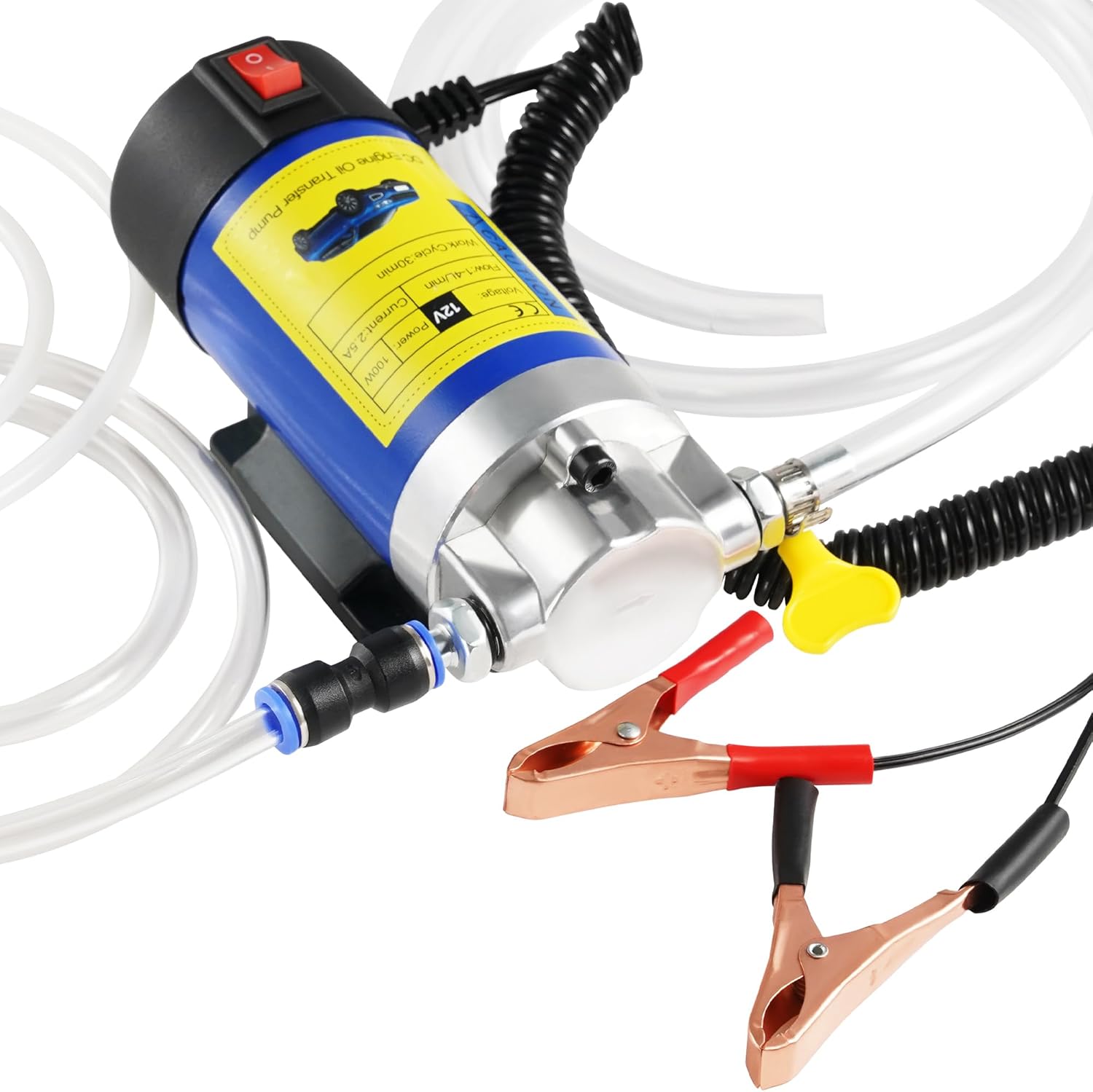
This electric oil extractor pump makes DIY oil changes cleaner and easier by removing old fluid through the dipstick tube, eliminating the need to crawl under the vehicle or deal with messy drain plugs. It is designed for synthetic oil changes and fluid maintenance across cars, motorcycles, lawn mowers, boats, and Jet Skis, while its pure copper motor delivers stable suction and dependable performance. Built for efficient topside oil changes, it supports multiple fluid types and offers continuous operation for longer service tasks.

The LEXIVON 3/8-Inch Drive Click Torque Wrench is built for accurate, reliable fastening across a wide range of automotive and mechanical tasks. It arrives pre-calibrated for dependable use, with a clear dual-range scale for easy reading and a reversible ratchet head for added convenience. The hardened steel construction and corrosion-resistant finish help deliver long-lasting performance and comfort in everyday use.
Front Differential and Transfer Case Service Notes
For 4WD models, service the front differential and transfer case with the same level-check discipline used on the rear differential. The front differential and transfer case have less room around them, so a hand pump with a flexible hose makes the job much easier.
Front Differential Service
The front differential uses 75W-85 GL-5 gear oil. Part-time 4WD models with A.D.D. usually take about 1.50-1.60 L, while full-time 4WD models take about 1.35-1.45 L. The front differential filler plug torque is commonly listed at 39 N·m / 29 ft-lb, and the drain plug torque at 65 N·m / 48 ft-lb.
Transfer Case Service
The transfer case uses Toyota Transfer Gear Oil LF SAE 75W or equivalent. Add oil slowly and wait a few minutes for the level to stabilize. The transfer-case filler plug torque is commonly listed at 37 N·m / 27 ft-lb. Verify the drain-plug torque in the service information for your exact transfer case before tightening.
Top Fill Mistakes and How to Avoid Them
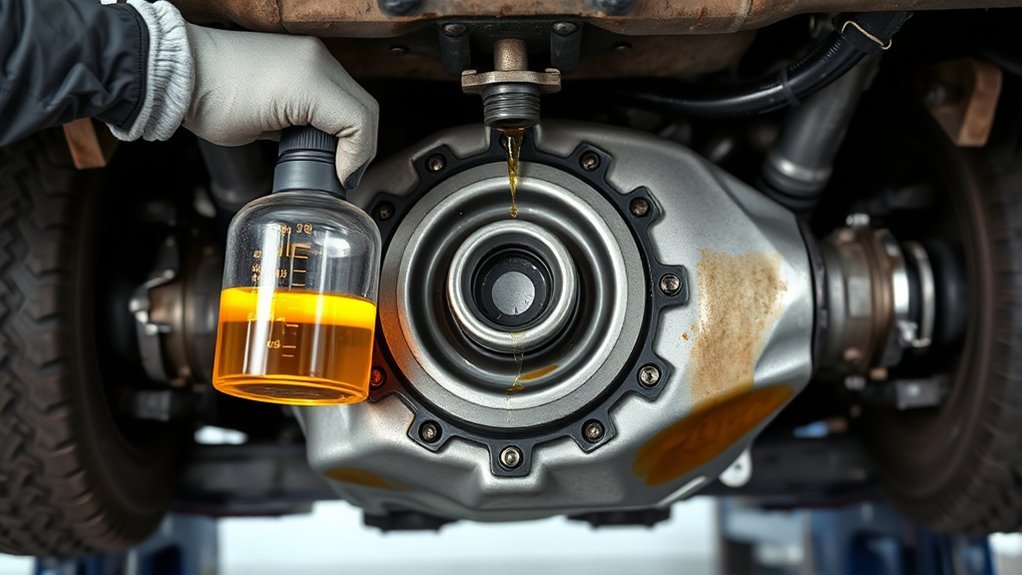
Mistake 1: Using Older 4Runner Capacities
A common error is applying fourth-generation 4Runner numbers to a 2014 fifth-generation model. Some earlier 4Runner rear differentials are near 3.0 L or more, but a 2014 rear differential is closer to 2.7 L. That is why the fill opening matters more than a number from a generic chart.
Mistake 2: Overfilling
More gear oil is not better. Overfilling can increase internal pressure, push oil out through the breather, or create leaks at seals and plug areas. Stop when the oil is at the correct level, not when a guessed capacity has been forced into the housing.
Mistake 3: Underfilling
Underfilled differential oil can starve gears and bearings. Symptoms may include whining, humming, heat buildup, or accelerated wear. If the fill hole does not show oil near the bottom lip after service, add fluid and check for leaks.
Mistake 4: Reusing Damaged Gaskets
Old gaskets and crush washers are a cheap place to fail. Replace them during service, clean the plug seats, and torque the plugs evenly. A slow seep can become a low-fluid problem over time.
Service Intervals, Inspection Checklist, and When to Change Sooner
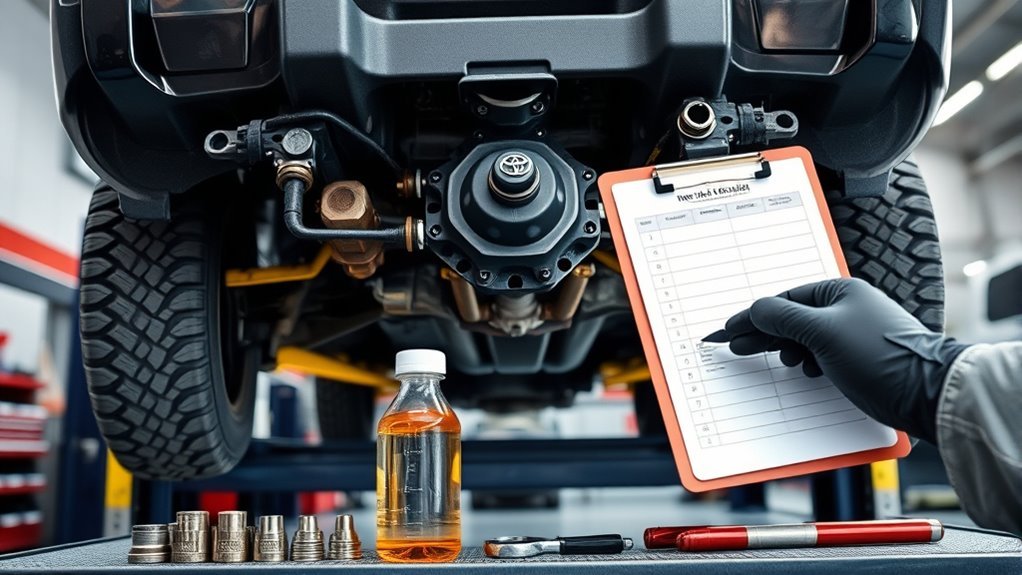
Toyota’s 2014 maintenance guide calls for drivetrain fluid inspection at scheduled service points and lists replacement of front differential oil, rear differential oil, and transfer-case oil under special operating conditions such as towing, heavy loading, or using a car-top carrier. It also lists transfer-case oil replacement for vehicles driven primarily on dirt or dusty roads.
For normal street use, many owners replace differential oil as preventive maintenance around 50,000-60,000 miles, but the official maintenance logic is condition- and usage-based. If you tow, run trails, drive through water, carry heavy loads, or use 4WD often, change it sooner.
- Inspect fluid level and plug areas at every major service.
- Replace fluid immediately if it is milky, burned-smelling, gritty, or contaminated with water.
- Shorten the interval after water crossings, deep mud, repeated towing, or heavy off-road use.
- Record date, mileage, fluid brand, viscosity, and any debris found on the drain plug magnet.
Troubleshooting Whine, Leaks, and Driveline Noise After a Fluid Change
If a whine, leak, or vibration appears after service, start with the basics before blaming the new oil. Most post-service problems come from low level, incorrect fluid, reused gaskets, loose plugs, or a pre-existing wear issue that became noticeable after maintenance.
| Symptom | Likely Cause | What to Do |
|---|---|---|
| Gear whine after service | Low level, wrong viscosity/spec, or existing bearing/gear wear | Recheck level on level ground; confirm 75W-85 GL-5 in differentials |
| Oil seep at plug | Old gasket, dirt on seat, or incorrect torque | Replace gasket, clean mating surface, torque correctly |
| Oil pushed from vent | Overfill or clogged breather | Set level correctly and inspect breather |
| Metal chunks on magnet | Internal gear or bearing damage | Stop guessing and have the differential inspected |
Frequently Asked Questions
What kind of differential fluid does a 2016 Toyota 4Runner take?
A 2016 Toyota 4Runner uses Toyota Differential Gear Oil LT 75W-85 GL-5 or equivalent in the front and rear differentials. The transfer case uses Toyota Transfer Gear Oil LF SAE 75W or equivalent, not the same oil as the differentials.
How much fluid does a 2005 Toyota 4Runner rear differential take?
A 2005 Toyota 4Runner is a fourth-generation model, so its rear differential capacity is different from a 2014. Depending on engine, drivetrain, and differential type, it is commonly around 2.7-3.0 L. Always confirm the exact spec for your VIN and fill to the bottom of the fill opening.
How much fluid does a 2008 4Runner front differential hold?
A 2008 4Runner front differential is generally around 1.5 L, but exact capacity depends on configuration. It is a fourth-generation model, so do not use 2014 fifth-generation capacity tables without confirming your specific drivetrain.
Can I use 75W-90 GL-5 instead of 75W-85 GL-5?
Many owners use high-quality synthetic 75W-90 GL-5 as a substitute, especially when towing or when 75W-85 is hard to find. However, the factory-style recommendation for 2010-2024 4Runner differentials is 75W-85 GL-5, so use 75W-85 if you want the closest match to Toyota’s specification.
Does a 2014 4Runner need limited-slip additive?
Most 2014 4Runner models do not need a separate limited-slip friction modifier for the differentials. Use the specified 75W-85 GL-5 gear oil unless your exact differential has been modified or the oil manufacturer specifically requires an additive for your application.
Conclusion
For a 2014 Toyota 4Runner, the safe service plan is simple: identify the drivetrain, use 75W-85 GL-5 in the differentials, use SAE 75W transfer gear oil in the transfer case, and finish by setting the level at the fill opening. The rear differential is about 2.7 L, not the 3.2 qt figure often copied from older 4Runner references. Get the spec right, use new gaskets, torque the plugs properly, and your 4Runner’s drivetrain stays quieter, cleaner, and better protected.
Sources
- Toyota Owners: 2014 4Runner Manuals and Warranties — official owner-document access for the 2014 Toyota 4Runner.
- 2014 Toyota 4Runner Warranty & Maintenance Guide — maintenance schedule, special operating conditions, and service-record guidance.
- Toyota Technical Information System — official Toyota service-publication source for repair procedures and fluid specifications.
- American Petroleum Institute Publication 1560 — API gear lubricant service designations, including GL-5.
- SAE J306 Automotive Driveline Lubricant Viscosity Classification — SAE gear-oil viscosity classification reference.