Last updated: August 22, 2026
A Hyundai Sonata engine knocking noise needs quick triage before you keep driving. Shut the engine off and arrange a tow if the sound is deep, metallic, or getting louder with RPM, especially when the oil-pressure light, a flashing check-engine light, reduced power, smoke, overheating, or a fuel smell appears. Many Sonatas built on Hyundai’s Theta II engine family are covered by the Knock Sensor Detection System (KSDS) recall program, which can flag this exact failure as code P1326 and place the car in a speed-limited Engine Protection Mode. A lighter ping or rattle may come from fuel quality, an intake or sensor fault, a loose heat shield, or a worn mount, but you still need to identify the source before approving repairs.
Quick Answer
A Hyundai Sonata engine knock is most urgent when it is deep, metallic, rhythmic, and faster as RPM rises. If the oil-pressure light is on, the check-engine light is flashing, the car has reduced power, or code P1326 is stored, stop driving and arrange a tow. On vehicles with the KSDS software update, P1326 triggers Engine Protection Mode, which limits engine speed to roughly 1,800–2,000 RPM and top speed to about 60–65 mph so you can safely reach a dealer. Check the oil level only when it is safe, save all scan codes without clearing them, record the sound, and verify recalls, campaign status, or lifetime-warranty coverage by VIN before approving major engine work.
Key Takeaways
- A light ping under acceleration can point to fuel quality, carbon buildup, a lean air-fuel condition, ignition-control problems, or a knock-sensor circuit issue.
- A deep metallic knock that follows engine RPM can indicate connecting rod or main bearing wear and should not be ignored.
- If the oil-pressure light is on, the check-engine light is flashing, the car loses power, or the knock is loud, stop driving and arrange a tow — in rare cases this failure has been linked to engine fires, not just stalling.
- Hyundai recalls, service campaigns, software updates, and warranty extensions can be VIN-specific — some Theta II-engine Sonatas qualify for a lifetime warranty on the engine short-block assembly under a 2022 class-action settlement — so check Hyundai’s campaign tool and the NHTSA recall lookup before paying for major engine work.
At a Glance
| Time Required | 10–30 minutes for basic checks; longer for shop diagnosis |
| Difficulty | Beginner for oil and visual checks; professional for internal engine diagnosis |
| Tools Needed | Owner’s manual, dipstick, flashlight, phone recording, OBD-II scanner, gloves, paper towel |
| Cost | Basic checks may cost nothing; professional diagnosis and internal engine repairs vary widely. Check VIN-specific coverage first. |
Warning: Do not keep driving a Sonata with a loud metallic knock, oil-pressure warning light, flashing check-engine light, burning smell, fuel smell, smoke, overheating, or sudden loss of power. On affected Theta II-engine vehicles, Hyundai and NHTSA have linked this failure mode to a small number of engine fires in addition to stalling. Pull over safely, shut the engine off, and tow it to a qualified shop or Hyundai dealer.
How Can You Tell Engine Knock From Drivetrain Noise or a Loose Part?
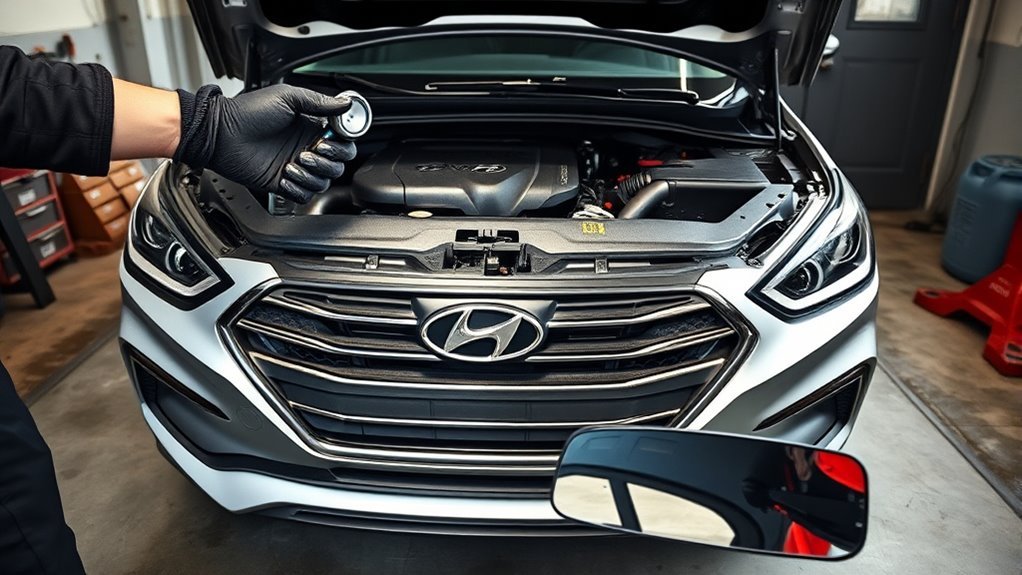
Start by separating true engine knock from other noises. A sound that changes with engine RPM while the car is parked usually comes from the engine or accessories. A sound that changes mainly with road speed, steering angle, gear selection, or bumps may come from the drivetrain, suspension, tires, exhaust, or a loose shield.
| Noise pattern | Likely area | What to do next |
|---|---|---|
| Light pinging or rattling under acceleration | Combustion knock/detonation, fuel quality, carbon buildup, sensor issue | Use the fuel grade required in your owner’s manual, scan for codes, and check for intake leaks or air-metering sensor faults. |
| Deep metallic knock that gets faster with RPM | Possible rod bearing, main bearing, or internal engine wear — the pattern Hyundai’s KSDS software is designed to detect on Theta II engines | Stop driving, check oil level, document the sound, and seek professional diagnosis. |
| Rattle only at certain RPMs or on rough roads | Heat shield, bracket, exhaust hanger, plastic cover, mount | Inspect shields, brackets, underbody panels, and engine/transmission mounts. |
| Clicking or clunking while turning | CV axle, wheel bearing, suspension joint | Check axle boots, wheel play, and suspension components before blaming the engine. |
| Ticking at cold start that fades quickly | Valve-train noise, oil drain-back, injector noise, exhaust leak | Verify oil level/viscosity and have persistent ticking inspected. |
Use simple noise isolation only when the car has no stop-driving warning signs. Park safely, open the hood, and listen at idle without placing hands near belts, fans, or hot parts. Raise RPM gently while parked. During a short road test, note whether the sound appears during acceleration, steady cruising, coasting, braking, turning, or shifting. Record the sound and state the RPM, speed, gear, engine temperature, and warning lights in the clip.
Note: Do not crawl under a running car, do not touch hot exhaust parts, and do not rev the engine hard to “prove” the knock. A failing bearing can worsen quickly.
What Should You Check First When a Hyundai Sonata Engine Knocks?
Start with the checks below to rule out common visible causes of a Sonata knocking noise. These steps cannot confirm internal bearing damage, but they can identify low oil, a loose shield, a failed mount, or an intake problem before parts are replaced.
[Products Worth Considering]

This cabin and engine air filter kit is designed for compatible Hyundai Sonata gas models from 2015 to 2019 with a 2.4L engine. It helps improve airflow, capture dust and impurities, and support cleaner cabin air and efficient engine performance. The kit is engineered for long service life and simple installation, making routine maintenance easier.

This activated carbon cabin air filter is designed as a replacement for select Hyundai Sonata gas models and Kia Cadenza vehicles, helping improve in-cabin air quality. It is engineered to capture odors, VOCs, and common pollutants for a fresher driving environment, while matching multiple OE and reference numbers for convenient fitment confirmation.

This car document holder keeps registration, insurance cards, and other essential paperwork neatly organized and easy to access when needed. Its clear inner sleeves help you quickly identify documents, while the hidden magnetic closure keeps everything secure and protected in a compact, glove-box-friendly design.
1. Check oil level and oil condition
Park on level ground and follow your Sonata owner’s manual for the exact oil-check procedure, including any warm-up or waiting time. If the oil is below the safe range, do not keep driving while the engine is knocking. Low oil can reduce lubrication and oil pressure. In a recall notice for certain 2011–2012 Sonatas, Hyundai described a worn connecting rod bearing as producing a metallic, cyclic knock that increases with engine RPM.
Also look at the oil’s condition. Thick sludge, a burnt smell, glitter-like metal particles, or oil that is far overdue for service are red flags. Use only the oil viscosity and specification listed for your exact model year and engine in the Hyundai owner’s manual and warranty resources.
2. Inspect engine and transmission mounts
Bad mounts can transmit vibration and create a thump that feels like engine knock. Look for cracked rubber, collapsed mounts, loose bolts, or a heavy clunk when shifting from Park to Drive or Reverse. Mount noise is usually worse during load changes, not just with RPM.
3. Tap heat shields, brackets, and exhaust hangers
Loose or corroded heat shields can rattle under acceleration and mimic a knock. With the engine cool, gently tap heat shields, exhaust brackets, plastic undercovers, and nearby metal shields. If a shield buzzes by hand, it may be the noise source.
4. Check the air filter and intake path
A severely clogged air filter, an intake leak, damaged ducting, or an air-metering sensor fault can affect the air-fuel mixture and contribute to pinging. Replace a dirty air filter with the correct part and make sure the intake box, clamps, and ducting are sealed. Do not spray or replace a sensor without confirming which sensor your engine uses and testing the circuit.
5. Confirm the right fuel
Do not assume premium fuel is required or that it will fix every knock. Use the minimum octane and fuel requirements in the owner’s manual for your exact Sonata engine. If a light ping started immediately after a questionable fill-up, use fresh fuel from a reputable station that meets the required octane. Premium fuel is not a repair for low oil pressure, bearing wear, a loose shield, or a sensor fault.
Pro Tip: Write down the oil level, mileage, fuel brand, octane, outside temperature, and whether the engine was cold or hot. Those details help a mechanic separate normal injector tick from detonation, mount noise, and bearing knock.
What Should You Do If the Quick Checks Do Not Find the Knock?
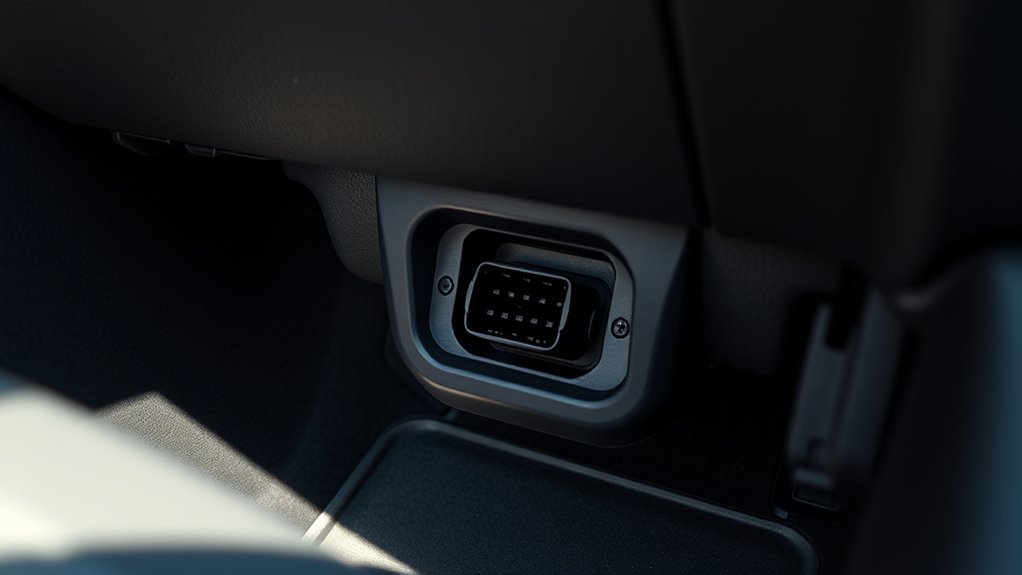
If the quick checks do not identify the cause, plug in an OBD-II scanner and read stored, pending, and permanent codes. Do not clear codes until you have written them down or saved the scan report — clearing codes can erase evidence a dealer or shop needs, and on P1326 specifically, the code needs to stay active for the dealer to run the required Bearing Clearance Test.
[Products Worth Considering]

This filter combo is designed for Hyundai Sonata gas models from 2015 to 2019, including non-hybrid 2.4L vehicles, and replaces both the engine and cabin air filters in one convenient set. It helps improve engine airflow while also refreshing the cabin environment with activated carbon odor control and high-efficiency particle filtration for cleaner, quieter driving.

The ANCEL AD410 PRO combines engine diagnostics and 12V battery testing in one easy-to-use tool, helping you read and clear check engine codes while checking battery health, cranking, and charging performance. It also provides live data, freeze frame details, and I/M readiness checks to help you diagnose issues faster and prepare for emissions testing. With plug-and-play operation, a clear screen, and broad vehicle compatibility, it is a practical solution for home mechanics and everyday drivers.

This plug-and-play OBD2 scanner helps drivers quickly read and clear engine error codes while providing live data, freeze frame information, I/M readiness, and MIL status for more confident troubleshooting. It adds a built-in voltage test and clear status indicators to support electrical checks and faster diagnostics, making it a practical choice for home users, car enthusiasts, and repair professionals. Compatible with most OBDII vehicles since 1996 and designed with an easy-to-use interface, it offers broad coverage and simple operation in one compact tool.
Codes that matter on a knocking Sonata
- P1326: On affected Hyundai vehicles equipped with the Knock Sensor Detection System (KSDS), this code indicates that the system detected an abnormal vibration pattern typically associated with worn connecting-rod bearings on the Theta II engine family. It puts the car into Engine Protection Mode, which limits engine speed to roughly 1,800–2,000 RPM and top speed to about 60–65 mph so you can drive safely to a dealer — it does not, by itself, prove that the knock sensor or engine has failed. A Hyundai dealer will typically run a Bearing Clearance Test (BCT) before deciding whether the engine needs replacement. Save the code, do not clear it, and have Hyundai campaign, software-update, and engine-inspection eligibility checked by VIN. `[VERIFY: current Bearing Clearance Test procedure and outcome timelines can vary by dealer and model year — confirm with your servicing dealer]`
- P0325, P0326, P0330, or related knock-sensor codes: These may indicate a knock-sensor circuit, wiring, connector, signal-range, or engine-noise issue. Test the circuit before replacing the sensor.
- Misfire codes such as P0300–P0304: Misfires can sound like knocking or cause rough running that feels like a mechanical problem.
- Fuel-trim or lean codes: Vacuum leaks, intake problems, dirty sensors, or fuel delivery problems can cause pinging under load.
- Oil-pressure, oil-control, or cam/crank timing codes: These need prompt diagnosis because lubrication and valve-timing faults can damage the engine.
After you save the codes, reproduce the sound only if it is safe. Use light throttle, avoid high RPM, and stop if the noise gets louder. A shop may use a mechanic’s stethoscope, chassis ears, oil-pressure testing, borescope inspection, bearing-clearance checks, and Hyundai service procedures to confirm the source.
Warning: If your Sonata has code P1326, reduced-power mode, a flashing check-engine light, or a deep knock that rises with RPM, do not keep driving to “see if it clears.” On affected vehicles, Hyundai’s KSDS is designed to monitor unusual vibration patterns associated with abnormal connecting rod bearing wear, and continued driving in this state risks complete engine seizure.
Common Causes of Hyundai Sonata Engine Knocking Noise and How to Fix Them
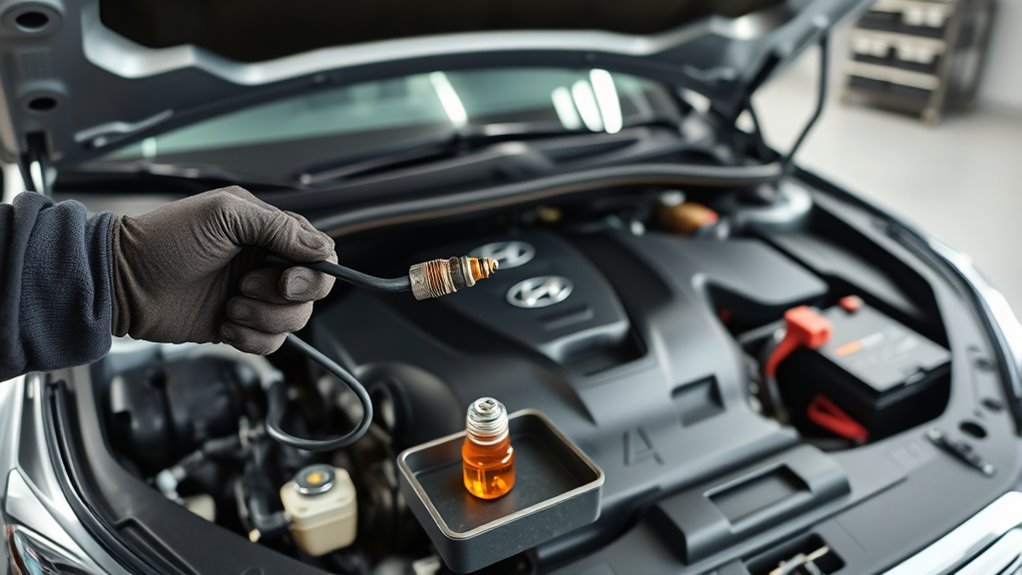
A persistent knock is a symptom, not a diagnosis. The right fix depends on the sound pattern, warning lights, oil condition, vehicle history, model year, engine, and scan results.
[Products Worth Considering]
These custom-fit all-weather floor mats are designed for compatible Hyundai Sonata and Kia K5 models to help protect your vehicle's interior from mud, slush, dirt, and spills. Made from odorless, durable rubber with a deep hexagon pattern, they offer reliable anti-slip coverage and are easy to remove and clean with water or a damp towel. The set is built for long-lasting use in every season and helps keep your car looking clean while supporting resale value.

The Briggs & Stratton 492932S Genuine Oil Filter is an OEM replacement designed to help keep small engine oil cleaner during routine service. Its short 2-1/4-inch profile fits many compatible lawn mower and outdoor power equipment engines, helping ensure proper fit and reliable filtration. Ideal for seasonal maintenance, it supports cleaner lubrication and helps protect critical engine components.

These custom-fit TPE floor mats are designed for Hyundai Sonata and Kia Optima models, delivering precise coverage with high-edge protection to help trap spills, dirt, and everyday messes. Built for all-weather durability, they offer anti-slip stability, odorless construction, and easy cleanup while helping preserve your vehicle's original carpet.
Low oil level, wrong oil, or low oil pressure
Sound: Ticking, tapping, or deeper knocking that may worsen as RPM rises.
Fix: Stop driving if the oil-pressure light is on or the knock is loud. Verify level, correct the oil only with the proper specification, and have oil pressure tested if the noise remains. If metal is found in the oil or filter, internal engine damage is possible.
Fuel detonation or “pinging” under load
Sound: Light metallic pinging or rattling during acceleration, climbing hills, or hot weather.
Fix: Use the fuel grade listed in the owner’s manual, check for lean or misfire codes, inspect the intake system, and diagnose the knock-sensor circuit and engine controls. Carbon deposits may contribute to hot spots or abnormal combustion on some engines, but cleaning should follow a confirmed diagnosis rather than guesswork.
Connecting rod or main bearing wear (Theta II engine defect)
Sound: Deep metallic knock that is rhythmic and increases in frequency with engine RPM.
Fix: Stop driving and arrange a tow. A shop or Hyundai dealer should inspect oil condition, oil pressure, bearing noise, campaign eligibility, and service history. This is the failure mode behind Hyundai’s Theta II engine recalls: manufacturing debris left in the engine during production can restrict oil flow to the connecting-rod bearings, and Hyundai recall notices describe the resulting wear as a metallic, cyclic knock that can progress to bearing failure, engine stall, or — in a smaller number of documented cases — a fire. Many affected vehicles qualify for a lifetime warranty on the engine short-block assembly under a 2022 class-action settlement; see the recall section below.
Faulty knock sensor, wiring, or KSDS-related issue
Sound: May include pinging, reduced power, or a check-engine light without a clear external rattle.
Fix: Diagnose the sensor circuit and connectors before replacing parts — do not replace the knock sensor as a first step, since on an affected Theta II-engine Sonata it is usually just the messenger reporting a bearing problem, not the fault itself. On certain Hyundai vehicles, the Knock Sensor Detection System software update is designed to detect abnormal engine bearing noise before severe damage occurs. Check whether your Sonata is eligible and whether the update has been completed. For background on how this issue shows up across other Theta II-engine Hyundai models, see our Hyundai Sonata Turbo engine guide.
Loose heat shield, exhaust part, or accessory bracket
Sound: Buzzing or rattling at a narrow RPM range, often worse when the engine is cold or under light load.
Fix: Tighten, replace, or secure the loose shield, bracket, hanger, or cover. Do not remove heat shields permanently; they protect nearby parts from exhaust heat.
Engine mount, CV axle, wheel bearing, or suspension noise
Sound: Clunking during gear changes, acceleration/deceleration, turning, or bumps.
Fix: Inspect mounts, axle boots, wheel bearing play, control arms, ball joints, and sway-bar links. These repairs are usually separate from internal engine knock.
Is Your Hyundai Sonata Engine Knock Covered by a Recall or Campaign?
Some Sonata engine-knock complaints are tied to Hyundai’s Theta II engine recalls. The Knock Sensor Detection System (KSDS) software rolled out under two separate service campaigns: Campaign 953 covers model-year 2011–2018 Sonata vehicles with U.S.-built engines, and Campaign 966 covers 2011–2019 Sonata Hybrid and 2016–2019 Sonata Plug-In Hybrid models. `[VERIFY: Hyundai has stated it continues evaluating the software update for additional model years, so confirm current scope by VIN rather than relying on these ranges alone]`. A separate 2022 class-action settlement extended engine warranty coverage — including, for many qualifying vehicles, a lifetime warranty on the engine short-block assembly — and compensated some owners for past repairs. None of this guarantees that a specific repair is covered; coverage still depends on the VIN, engine, completed campaigns, diagnosis, and applicable warranty terms.
Use these steps before approving a major repair:
- Find your 17-character VIN on the windshield, driver door jamb, registration, or insurance card.
- Check Hyundai’s official Safety Recalls and Service Campaigns lookup.
- Check the NHTSA recall lookup for open safety recalls. Remember that NHTSA’s VIN result may not show completed recalls or non-safety service campaigns.
- Review Hyundai’s KSDS software-update eligibility list, which includes many Sonata and Sonata Hybrid model years.
- Ask the dealer to print the VIN inquiry, open campaigns, completed campaigns, warranty status, diagnostic codes, and test results — and ask specifically whether the vehicle qualifies for lifetime engine short-block coverage under the class-action settlement.
NHTSA recall warning: For certain 2011–2012 Sonatas, Hyundai stated that a worn connecting rod bearing can create a metallic, cyclic knock that increases with RPM and may progress to bearing failure and an engine stall. Around 470,000 Sonatas from those model years were recalled for this issue in September 2015.
If you’re buying a used Sonata rather than diagnosing a knock in one you already own, check its recall and campaign history by VIN before you buy — see our Hyundai Sonata generations guide for a fuller used-Sonata inspection checklist.
When Should You Stop Driving and See a Mechanic or Hyundai Dealer?
Because intermittent knocks under acceleration can turn into expensive engine damage, document each occurrence before service: date, mileage, engine temperature, fuel used, RPM, speed, load, dashboard warnings, and whether the noise happens at idle, acceleration, cruise, coast, braking, or turning.
Ask the shop or dealer for written findings that include:
- All stored, pending, and permanent diagnostic trouble codes.
- Freeze-frame data for major codes, especially P1326 or knock-sensor codes.
- Oil level, oil condition, oil-pressure test results if performed, and whether metal debris was found.
- Results of bearing-noise inspection, road test, stethoscope/chassis-ear testing, Bearing Clearance Test, or other Hyundai campaign procedure.
- The diagnosed cause, not just a parts guess.
- Parts, labor, warranty/campaign coverage decision, and post-repair test results.
If a dealer says the sound is “normal,” ask for the technical reason in writing and compare it with your recording. If the diagnosis is unclear or the repair is expensive, get a second opinion from another Hyundai dealer or a qualified independent shop.
Frequently Asked Questions
How do you fix Hyundai Sonata engine knock?
Start with diagnosis, not parts replacement. Check oil level and condition, scan for codes, record the sound, inspect mounts and heat shields, verify the correct fuel, and check Hyundai recalls or campaigns by VIN. Light pinging may be fuel or sensor related, while deep metallic rod knock usually needs professional engine inspection.
Is it worth fixing engine knock?
Yes, it is worth diagnosing immediately because some causes are inexpensive, such as a loose shield, bad mount, poor fuel, or low oil. However, if the knock is caused by internal bearing damage, repair costs can be high. Check VIN-specific warranty, recall, and campaign coverage before paying out of pocket — many Theta II-engine Sonatas qualify for free or heavily discounted repair.
Can I drive my Sonata with a knocking engine?
Do not drive if the knock is loud, deep, metallic, getting worse, or paired with an oil-pressure warning, flashing check-engine light, overheating, reduced power, smoke, or fuel smell. For a mild rattle with no warning lights, drive only as needed for safe diagnosis and avoid hard acceleration.
What does code P1326 mean on a Hyundai Sonata?
On affected Hyundai vehicles equipped with KSDS, P1326 means the system detected an abnormal vibration pattern typically linked to Theta II connecting-rod bearing wear. The code does not prove that the knock sensor or engine has failed, but it is a serious warning that puts the car into Engine Protection Mode. Save the code, avoid hard driving, and have a Hyundai dealer or qualified shop check campaign eligibility and run the Bearing Clearance Test.
What is Engine Protection Mode on a Hyundai Sonata?
Engine Protection Mode is what happens when a Sonata with the KSDS software update detects the vibration pattern of a worn connecting-rod bearing. The malfunction light blinks, an audible chime sounds, and the engine’s speed is limited to roughly 1,800–2,000 RPM with top speed capped around 60–65 mph. It’s designed to let you drive safely to a dealer, not to be driven long-term — have the vehicle inspected as soon as possible.
Will premium gas stop a Sonata engine knock?
Premium gas is not a general fix for Sonata engine knock. Use the octane required by your owner’s manual. Fresh fuel that meets the required octane may help if poor or contaminated fuel caused light pinging, but it will not repair low oil pressure, bearing wear, a loose heat shield, a bad mount, or a sensor fault.
Does every Hyundai Sonata with engine knock qualify for a free engine replacement?
No. A knocking sound alone does not guarantee a free engine replacement. Eligibility depends on the VIN, engine, recall or campaign status, completed software updates, diagnostic results, maintenance history, mileage, and the warranty terms that apply to the vehicle. Ask the dealer for the VIN inquiry and coverage decision in writing.
Is the Hyundai Sonata engine knock recall covered by a lifetime warranty?
For many qualifying Theta II-engine Sonatas, a 2022 class-action settlement extended coverage to a lifetime warranty on the engine short-block assembly (engine block, crankshaft and bearings, connecting rods and bearings, and pistons), which can transfer to later owners. Eligibility depends on your specific VIN, model year, and repair history, so confirm coverage with a Hyundai dealer rather than assuming it applies. `[VERIFY: settlement terms and eligibility criteria by exact VIN/model year]`
Conclusion
A Hyundai Sonata knocking noise may come from a loose shield or mount, but a deep metallic knock that follows RPM can signal serious internal wear tied to Hyundai’s well-documented Theta II engine defect. Check the oil safely, separate engine-speed noise from road-speed noise, save every scan code without clearing it, and inspect visible parts. Stop driving when the knock is loud or paired with an oil-pressure warning, flashing check-engine light, reduced power, smoke, overheating, fuel smell, or code P1326.
Before paying for major engine work, check your VIN through Hyundai and NHTSA, ask whether KSDS, Campaign 953/966, or the class-action lifetime warranty applies, and save all codes, recordings, invoices, and written findings. Quick checks can save money; clear documentation can protect your engine and your repair rights.
Sources
- Hyundai Safety Recalls and Service Campaigns — VIN-specific recall and campaign lookup for Hyundai vehicles.
- Hyundai Engine Recalls — Hyundai information on engine recalls, knocking symptoms, reduced power, and warning lights.
- Hyundai Knock Sensor Detection System Software Update — official explanation of KSDS engine monitoring technology.
- Hyundai Vehicles Eligible for a Software Update — Hyundai list of model years eligible for KSDS updates, including Sonata models.
- NHTSA Recall Notice RCONL-15V568 — connecting rod bearing knock description and stall-risk warning.
- NHTSA Recall Lookup — official U.S. government tool for checking vehicle safety recalls by VIN.
- Hyundai Engine Recall FAQ — official explanation of Engine Protection Mode, RPM/speed limiting, and fire-risk disclosure.