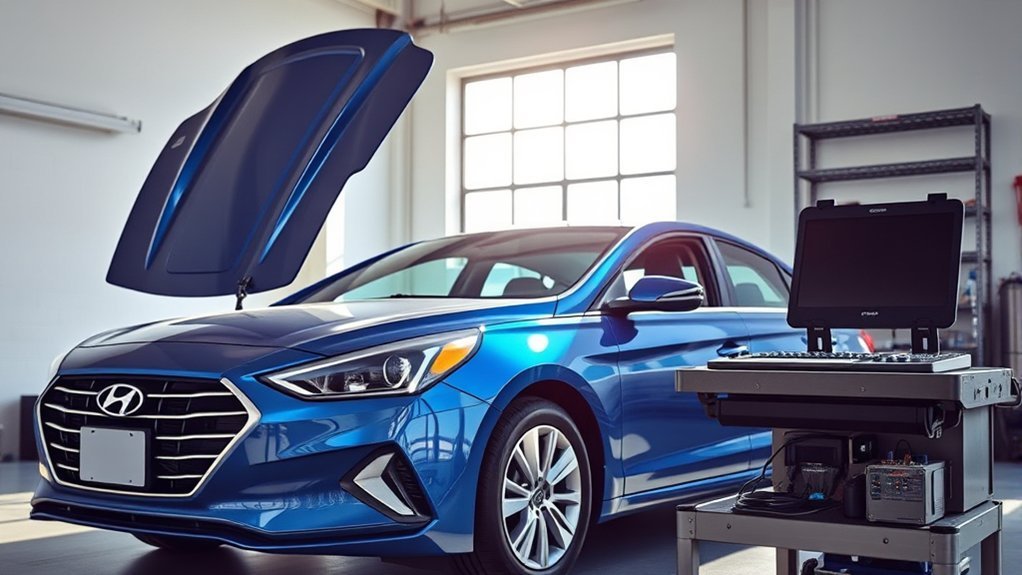
Getting a Hyundai Sonata ready for an emissions inspection is usually about one thing: making sure the OBD-II readiness monitors have completed their self-tests after a battery disconnect, code clear, computer reset, or emissions repair. A drive cycle can help those monitors run, but the only reliable way to know your Sonata is ready is to check monitor status with an OBD-II scanner before you go to the inspection station.
Quick Answer
To get a Hyundai Sonata ready for an emissions inspection, fix any active trouble codes first, keep the fuel tank around one-quarter to three-quarters full, start from a true cold soak, drive through mixed city and steady highway conditions, then confirm all required monitors show “Ready” with an OBD-II scanner.
Key Takeaways
- A battery change, ECU reset, or cleared code can reset emissions readiness monitors.
- Do not clear codes right before an inspection; that usually resets monitor progress.
- Use an OBD-II scanner to confirm readiness instead of guessing by mileage.
- State rules vary, so one “Not Ready” monitor may pass in some places and fail in others.
At a Glance
| Time Required | One to several trips; often 30–90 minutes of mixed driving, but stubborn monitors can take longer |
| Difficulty | Easy to moderate |
| Tools Needed | OBD-II scanner that shows readiness monitors, fuel in the tank, safe driving route |
| Cost | Usually $0 if you already have a scanner; many parts stores can scan readiness for free |
Why Completing the Drive Cycle Is Essential
A drive cycle is a pattern of driving that gives your Sonata’s onboard computer the right conditions to test emissions-related systems. These tests are called readiness monitors. If the monitors have not completed, the inspection computer may see the vehicle as “not ready,” even when the Check Engine light is off.
This commonly happens after:
- A dead or disconnected battery
- A recently cleared Check Engine light
- ECU or PCM reset
- Emissions repairs, such as oxygen sensor, catalytic converter, EVAP, or gas-cap repairs
- Long periods of short-trip driving that never meet the monitor conditions
Warning: Do not perform a drive cycle in unsafe traffic, bad weather, or on roads where you cannot legally maintain steady speed. If the Sonata has drivability problems, overheating, brake issues, tire problems, or an active flashing Check Engine light, repair it before attempting a readiness drive.
Understanding OBD-II and Its Role in Emissions Testing
OBD-II is the vehicle’s onboard diagnostic system. It monitors engine and emissions systems, stores diagnostic trouble codes when faults are detected, and turns on the malfunction indicator lamp, commonly called the Check Engine light, when a fault can affect emissions. The California Bureau of Automotive Repair’s OBD test reference explains that readiness monitors are self-tests used to verify emissions-control functionality.
Key OBD-II Functions
| Function | What It Means | Why It Matters for Inspection |
|---|---|---|
| Readiness monitors | Self-tests for emissions systems | Incomplete monitors can delay or fail inspection |
| Diagnostic trouble codes | Stored fault information | Active or pending codes can point to the repair needed |
| Check Engine light | Warning that the computer detected an emissions-related problem | A lit MIL commonly causes an emissions test failure |
| Live data | Sensor readings such as coolant temperature, fuel level, and oxygen sensor data | Helps confirm whether the drive cycle conditions are being met |
Emissions Monitoring Importance
Emissions testing is not just a tailpipe check in many areas. For OBD-II vehicles, the inspection computer often checks whether the Sonata’s onboard system communicates, whether the Check Engine light is commanded on, whether diagnostic trouble codes are present, and whether the required readiness monitors have completed.
State rules are not identical. For example, California has detailed OBD readiness standards and has adopted newer readiness-monitor regulations with gradual implementation. Texas ended most non-commercial safety inspections on January 1, 2025, but the Texas Department of Public Safety still requires annual emissions inspections for vehicles in emissions counties. The Texas Commission on Environmental Quality lists the current program areas and notes that Bexar County begins enhanced emissions inspections on November 1, 2026.
Readiness Monitors Explained
Some readiness monitors run continuously while you drive. Others need specific conditions such as a cold start, warmed-up engine, steady speed, fuel level in range, and deceleration. A scanner may show each monitor as Ready, Not Ready, Complete, Incomplete, or N/A.
| Scanner Status | Meaning | What to Do |
|---|---|---|
| Ready / Complete | The self-test has run | Good; check the remaining monitors |
| Not Ready / Incomplete | The self-test has not finished | Drive under the right conditions, then rescan |
| N/A / Unsupported | That monitor does not apply to the vehicle | Usually normal; do not try to “set” unsupported monitors |
| Pending code | A fault may be developing | Diagnose before inspection if related to emissions |
Common Issues Leading to Inspection Failures
For a Hyundai Sonata, the most common readiness-related inspection problems are not always major repairs. Many failures come from timing, recent resets, or incomplete driving conditions.
- Recent battery disconnect or code clear: This resets monitor progress and forces the vehicle to rerun emissions self-tests.
- Check Engine light on: Do not ignore it. Read the code, repair the cause, and then complete the drive cycle.
- EVAP monitor not ready: A nearly empty or completely full tank can keep the EVAP test from running on many vehicles.
- Oxygen sensor or oxygen sensor heater monitor not ready: Short trips may not give the exhaust and sensors enough operating time.
- Clearing codes too late: Clearing codes shortly before inspection may turn off the light temporarily but usually resets readiness.
- Unsafe or inconsistent driving pattern: Repeated short trips, heavy traffic, and immediate shutdowns may not complete non-continuous monitors.
Warning: Clearing the Check Engine light is not the same as fixing the problem. It can erase readiness progress and may leave permanent diagnostic trouble codes that still affect inspection in some states.
How to Use an OBD-II Scanner Effectively
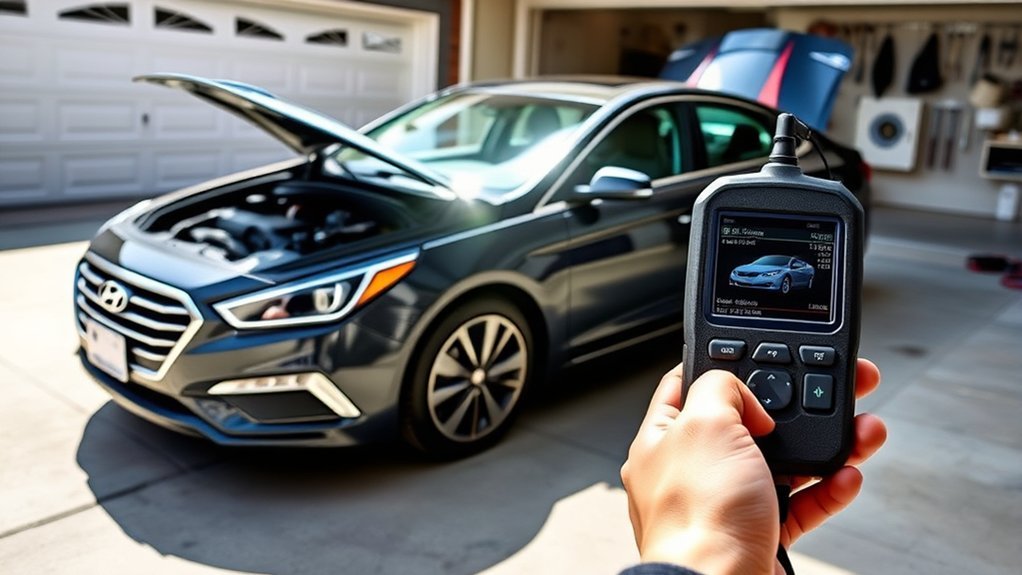
An OBD-II scanner is the fastest way to avoid guessing. Plug it into the diagnostic port under the dashboard, turn the ignition on as instructed by the scanner, and open the readiness or I/M monitor menu.
[Products Worth Considering]

The BLCKTEC 440 Bluetooth OBD2 scanner helps drivers and DIY mechanics quickly read and clear trouble codes, monitor live data, and check emissions readiness with confidence. Its color display, graphing capabilities, and battery and charging system testing make it a versatile diagnostic tool for OBD-compliant vehicles. Designed for plug-and-play convenience, it runs directly from your vehicle and includes support for report sharing and ongoing updates.

The FOXWELL NT301 is a plug-and-play OBD2 code reader designed to help drivers and home mechanics diagnose check engine light issues with ease. It reads fault codes, clears emissions-related warnings, displays live sensor data in graph form, and shows I/M readiness so you can quickly check vehicle status before an emissions test. With broad compatibility across many OBD2 vehicles and a clear color screen, it offers a practical, user-friendly way to monitor and troubleshoot engine performance.

FOXWELL NT201 is an easy-to-use OBD2 scanner designed to help drivers quickly read and clear check engine codes, view live engine data, and check emissions readiness. Its color screen, one-key I/M readiness test, and broad compatibility with most gasoline vehicles since 1996 make it a practical tool for everyday diagnostics and maintenance. With plug-and-play operation and lifetime free updates, it offers a simple way to understand vehicle issues without expensive shop visits.
Scanner Checklist Before Inspection
- Confirm the Check Engine light is off with the engine running.
- Check for current, pending, and permanent diagnostic trouble codes.
- Open the I/M readiness screen and write down which monitors are not ready.
- Confirm unsupported monitors show N/A instead of chasing a monitor your Sonata does not use.
- After a readiness drive, scan again before going to the inspection station.
Pro Tip: A basic code reader may show trouble codes but not detailed readiness status. For emissions prep, use a scanner or app that clearly lists each I/M monitor.
Driving Patterns for Successful Cycle Completion
The exact factory drive cycle can vary by Sonata model year, engine, calibration, and emissions equipment. The routine below is a safe, practical readiness routine for many gasoline OBD-II vehicles, but the scanner decides whether your Sonata is actually ready.
Before You Start the Drive Cycle
- Make sure the car is safe to drive.
- Repair active emissions-related codes first.
- Keep the fuel tank around one-quarter to three-quarters full.
- Let the car sit long enough for a true cold start, ideally overnight.
- Choose a route that allows both stop-and-go driving and steady cruising.
- Do not use the route if traffic or weather makes steady driving unsafe.
Safe Sonata Readiness Drive Routine
- Cold start: Start the engine after the car has sat for several hours. Let it idle normally for a few minutes with accessories off when practical.
- Gentle city driving: Drive 10–15 minutes with normal stops, light acceleration, and steady operation. Avoid aggressive throttle.
- Steady cruise: When legal and safe, drive at a steady moderate highway speed for 10–20 minutes. Cruise control can help if conditions allow.
- Controlled deceleration: When safe, include a few gradual decelerations without hard braking. Do not coast in neutral.
- Cool-down and rescan: Park, let the car sit briefly, then scan the readiness monitors again.
- Repeat if needed: Some monitors may need more than one trip. Repeat only if there are no active faults and the car is operating normally.
Note: Mileage alone does not prove readiness. Some cars set monitors within one trip; others need several days of normal driving because the right temperature, speed, load, and fuel-level conditions must occur.
Tips for Ensuring Your Sonata’s Monitor Readiness
[Products Worth Considering]

The ANCEL AD410 PRO combines engine diagnostics and 12V battery testing in one easy-to-use tool, helping you read and clear check engine codes while checking battery health, cranking, and charging performance. It also provides live data, freeze frame details, and I/M readiness checks to help you diagnose issues faster and prepare for emissions testing. With plug-and-play operation, a clear screen, and broad vehicle compatibility, it is a practical solution for home mechanics and everyday drivers.

This enhanced OBD2 scanner helps drivers quickly diagnose check engine light issues, read and clear trouble codes, and check emissions readiness before a smog test. It also adds EVAP and O2 sensor testing, live data, freeze frame capture, and a one-click battery health check in a simple plug-and-play tool with a bright color screen.

This replacement gas cap is designed for a wide range of Toyota and Lexus models, offering a direct-fit solution for restoring a proper seal at the fuel tank. It helps address check engine light issues related to the fuel cap while providing easy installation and dependable performance. Built from durable materials and rigorously tested before shipping, it is a practical replacement for worn or damaged fuel caps.
Monitor Status Check
Check readiness before and after your drive cycle. If only one monitor remains incomplete, identify which one. EVAP, catalyst, oxygen sensor, and oxygen sensor heater monitors often need different driving conditions.
| Monitor | Common Reason It Stays Not Ready | Helpful Next Step |
|---|---|---|
| EVAP | Fuel level too low or too high; short trips; possible gas-cap or EVAP leak | Keep fuel near mid-tank, verify gas cap, drive after cold soak |
| Catalyst | Engine not fully warmed; not enough steady cruise | Include a safe steady-speed drive after warm-up |
| Oxygen Sensor | Short trips or unresolved sensor/fuel-trim issue | Scan live data and repair codes before repeating the cycle |
| Oxygen Sensor Heater / HTR | Cold-start conditions not met or heater circuit fault | Start from cold; diagnose heater-related codes if it will not set |
| Misfire / Fuel / Comprehensive | Usually continuous monitors; not-ready status may indicate scanner interpretation or a fault | Check for codes and confirm with a better scanner if unclear |
Driving Cycle Completion
A completed drive cycle is not complete because you drove a certain number of miles. It is complete when the scanner shows the required monitors are ready. If the same monitor remains incomplete after several normal trips, stop repeating random drives and diagnose the reason that monitor is not running.
Fuel Level Maintenance
Fuel level matters most for the EVAP monitor. A safe general target is about one-quarter to three-quarters of a tank, with around half a tank being ideal for many vehicles. Avoid topping off after the pump clicks, because overfilling can affect EVAP system behavior.
What to Do If Your Sonata Fails?
If your Sonata fails emissions inspection, do not clear codes and immediately retest. Start with the inspection report. It should tell you whether the failure was caused by the Check Engine light, diagnostic trouble codes, communication failure, permanent codes, or monitors not ready.
- Read the inspection report: Identify the exact failure reason.
- Scan the vehicle: Check current, pending, and permanent codes, plus readiness status.
- Repair faults first: If codes are present, fix the cause before trying another drive cycle.
- Check simple EVAP issues: Confirm the fuel cap is correct, tight, and in good condition.
- Complete a readiness routine: Use mixed driving only after repairs are complete.
- Rescan before retesting: Return to the station only when the required monitors are ready or your local rules allow the remaining incomplete monitor.
- Ask about waivers or extensions: Some states offer repair waivers or time extensions when specific requirements are met.
[Products Worth Considering]

This replacement gas cap is designed to restore a tight fuel-tank seal, helping reduce vapor leaks, prevent check engine light issues, and maintain proper fuel system performance. Built in OE-style form for a wide range of Toyota and Lexus vehicles, it offers a direct DIY fix with durable materials for reliable, long-lasting use.

The ANCEL AD410 helps drivers quickly read and clear engine-related fault codes, view live data, and understand why the check engine light is on before heading to a repair shop. With built-in code definitions, readiness checks, and support for common OBD2 functions, it makes basic diagnostics straightforward for beginners and DIY users. Powered directly from the vehicle and easy to use with no app required, it offers practical value for everyday vehicle troubleshooting.

This OEM replacement fuel tank gas cap is designed for a wide range of Toyota, Lexus, and Scion vehicles, helping restore a proper seal for reliable everyday driving. It helps reduce fuel vapor leakage, may prevent check engine light issues caused by a faulty cap, and offers durable construction for long-lasting performance. Installation is simple with a direct-fit design that twists into place quickly.
Why Fuel Levels Matter for Emissions Tests
The EVAP system checks whether fuel vapors are being contained and controlled. Many vehicles will not run the EVAP self-test when the tank is too empty or too full. That is why keeping the Sonata near mid-tank is one of the simplest ways to help readiness monitors complete.
A scanner is more reliable than mileage. Your Sonata is ready for inspection when the required monitors show ready, not simply because you drove 50, 100, or 200 miles.
Can You Pass With One Monitor Not Ready?
Maybe. It depends on your state, model year, fuel type, and which monitor is incomplete. Some inspection programs have historically allowed limited monitor exceptions, while others require all applicable monitors to be set. California’s OBD reference, for example, has detailed readiness standards, and newer readiness-monitor rules are being phased in through the state’s Smog Check program. Always follow the rule used by your inspection station or state agency.
In Texas, emissions inspections are still required for vehicles registered in emissions counties even though most non-commercial safety inspections ended in 2025. Texas emissions program areas currently include Houston-Galveston-Brazoria, Dallas-Fort Worth, Austin, and El Paso areas, with Bexar County beginning enhanced emissions inspections on November 1, 2026.
What to Expect From Your Dealer During Inspections
If you take your Sonata to a Hyundai dealer or qualified repair shop, be specific. “It will not pass emissions” is less helpful than “the EVAP monitor will not set” or “the oxygen sensor heater monitor is still incomplete after a battery replacement.”
Inspection Process Overview
A good shop should check the OBD-II system, read all codes, confirm monitor status, review freeze-frame or live data when needed, and look for known service information related to your model year and engine. If the car recently had a battery replacement, tell the technician before diagnosis begins.
Dealer Communication Strategies
| Question to Ask | Why It Helps |
|---|---|
| Which monitor is not ready? | Prevents random driving and focuses the diagnosis |
| Are there pending or permanent codes? | A hidden fault may keep the monitor from completing |
| Was the battery or ECU recently reset? | Explains why monitors may have been cleared |
| Do you have Hyundai service information for this exact engine? | Factory procedures may be more precise than generic drive cycles |
| Can you show me the readiness screen after the repair? | Confirms the vehicle is ready before retesting |
Troubleshooting Emission Issues
If the same monitor refuses to set after several complete warm-up trips, the vehicle may have an issue that has not matured into a Check Engine light yet. Common examples include a weak oxygen sensor heater, small EVAP leak, incorrect fuel cap, thermostat problem, exhaust leak, or fuel-trim issue. A professional scan tool can view live data and mode information that a basic code reader may miss.
Community Advice and Shared Experiences
Drivers often waste time by repeating random highway miles without checking which monitor is incomplete. The smarter approach is to scan first, drive with a purpose, and scan again. These habits save time:
| Practical Advice | Why It Works | What to Avoid |
|---|---|---|
| Scan before driving | Shows which monitors need attention | Guessing based on mileage |
| Keep fuel near mid-tank | Helps EVAP conditions | Testing with a full or nearly empty tank |
| Use mixed driving | Gives different monitors the conditions they need | Only short trips or only idling |
| Fix codes first | Monitors may not complete when faults are present | Clearing the light without repair |
| Save repair paperwork | Useful for retests, waivers, or shop follow-up | Arriving at inspection without documentation |
Frequently Asked Questions
How do I get my Hyundai Sonata monitor ready for emissions?
Fix any active emissions codes first, keep the fuel level around one-quarter to three-quarters full, start from a cold soak, drive through mixed city and steady highway conditions, then confirm readiness with an OBD-II scanner.
How many miles do I need to drive after replacing the battery?
There is no guaranteed mileage. Some Sonatas may set monitors after one or two mixed trips, while others need several days of normal driving. Use a scanner to verify readiness instead of relying on miles alone.
Can I pass emissions with the EVAP monitor not ready?
It depends on your state and model year. Some programs may allow limited incomplete monitors, while others may not. Ask your local inspection station or state emissions agency which monitors are required for your Sonata.
Will clearing the Check Engine light help me pass?
Usually no. Clearing codes resets readiness monitors, and the inspection computer may see the vehicle as not ready. Repair the cause of the code, complete the readiness drive, and scan the monitors before retesting.
Why is my oxygen sensor heater monitor not ready?
The oxygen sensor heater monitor often needs a true cold start and normal warm-up. If it still will not set after repeated cold-start trips, scan for pending heater-circuit codes and have the sensor circuit diagnosed.
Conclusion
Preparing your Sonata for an emissions inspection is easier when you stop guessing and let the scanner guide you. Repair active faults first, avoid clearing codes right before the test, use a cold start with mixed driving, keep the fuel level in a reasonable range, and confirm the required readiness monitors are complete before visiting the inspection station. That approach gives you the best chance of passing without unnecessary repeat trips.
Sources
- California Bureau of Automotive Repair — On-Board Diagnostic Test Reference — OBD readiness monitor standards, MIL standards, and inspection guidance
- California Bureau of Automotive Repair — New OBD Readiness Monitor Regulations Explained — OBD-II readiness role and 2025 regulatory update
- U.S. EPA — Vehicle Emissions Inspection and Maintenance Policy and Technical Guidance — federal I/M and OBD readiness resources
- Texas Department of Public Safety — Inspection Items for the Annual Inspection — 2025 Texas inspection-rule update
- Texas Commission on Environmental Quality — Vehicle Emissions Inspections in Texas — Texas emissions counties and program overview
- Hyundai Owner’s Manual Portal — official Hyundai owner information by model