
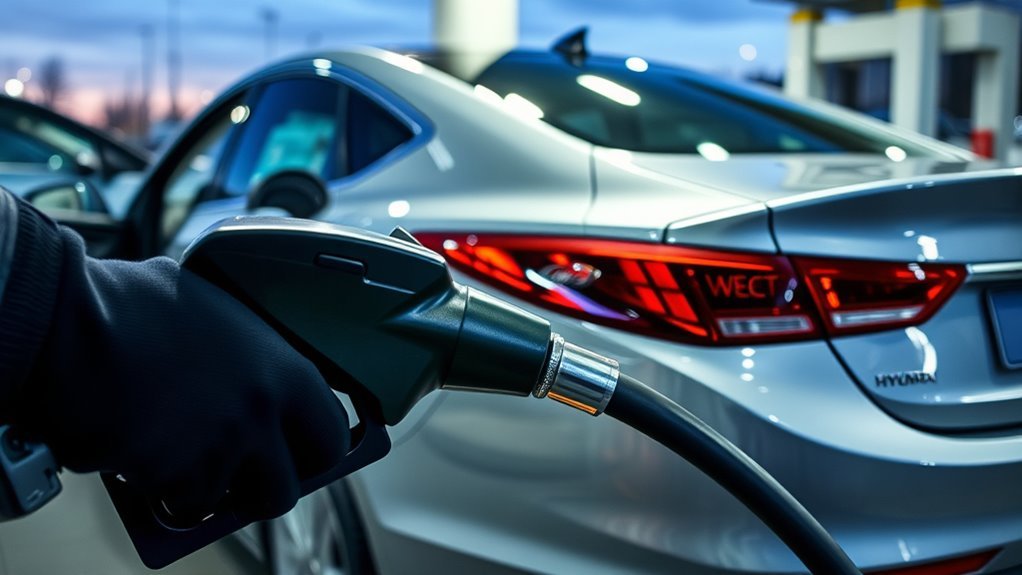
You can estimate a Hyundai Sonata’s driving range once you know two numbers: the fuel tank capacity and the MPG your trim actually gets. Most 2015–2019 gas-only Sonatas use a larger tank than newer gas models, while current Sonata Hybrid models use a smaller 13.2-gallon tank but make up for it with higher fuel economy. Use the chart below as a planning guide, then confirm your exact car by VIN, owner’s manual, or Hyundai dealer before buying parts or planning a long trip.
Quick Answer
A Hyundai Sonata fuel tank is usually about 18.5 gallons on 2015–2019 gas models, about 15.9 gallons on many 2020–2026 gas models, and 13.2 gallons on current Sonata Hybrid models. Older hybrid and plug-in hybrid trims vary, so check the VIN or owner’s manual for exact capacity.
Key Takeaways
- For quick planning, treat 2015–2019 gas Sonatas as roughly 18.5 gallons and many 2020–2026 gas Sonatas as roughly 15.9 gallons.
- Current Sonata Hybrid models are commonly listed at 13.2 gallons, but their higher MPG can still give them the longest range.
- Do not rely on a generic chart for fuel tank replacement. Match the tank by VIN, trim, engine, emissions equipment, pump, sender, and mounting points.
- Certain 2020–2023 Sonata 1.6T vehicles have a fuel tank-related NHTSA recall, so check your VIN if you notice fuel odor, a rear popping sound, a check-engine light, or a no-start condition.
Quick Reference: Hyundai Sonata Fuel Tank Size by Year
The Sonata’s fuel tank capacity depends on model year, trim, engine, and whether the car is gas-only, hybrid, or plug-in hybrid. For most shoppers and owners, the biggest split is simple: 2015–2019 gas models generally carry the larger tank, newer gas models are usually smaller, and current hybrids use a 13.2-gallon tank with much better MPG.
Note: Published specs can vary by market and trim. Before ordering a replacement tank or planning fuel stops in remote areas, verify your exact Sonata with the owner’s manual, VIN lookup, or a Hyundai parts department.
Hyundai Sonata Fuel Tank Size Chart 2015–2026
Use this chart as a practical guide for U.S.-market Sonata models. The numbers below are rounded to the commonly listed gallon capacity for each generation and powertrain group. If your car is a hybrid, plug-in hybrid, fleet model, imported model, or repaired vehicle, verify the exact tank before making a parts decision.
| Model Year | Gas / Non-Hybrid | Hybrid / Plug-In Hybrid | What to Know |
|---|---|---|---|
| 2015 | About 18.5 gal | Older hybrid capacity varies by carryover model | Gas models use the larger LF-generation tank; verify hybrid separately. |
| 2016–2019 | About 18.5 gal | Often about 15.9 gal for hybrid; plug-in hybrid varies | Do not assume these older hybrids use the same 13.2-gallon tank as current hybrids. |
| 2020–2023 | Commonly about 15.9 gal | About 13.2 gal | Check recall status on 1.6T models before diagnosing fuel odor or tank issues. |
| 2024–2026 | Commonly about 15.9 gal | About 13.2 gal | Hybrid range can be higher than gas models because MPG is much stronger. |
Why the Same Year Can Have More Than One Capacity
A Sonata’s tank size can change with the generation, engine, hybrid hardware, emissions equipment, and market. That is why a table is useful for planning, but it should not be used as the final answer when you are buying a tank, fuel pump, sending unit, straps, heat shield, or EVAP part.
Trim and Powertrain Differences
Gas-only models usually have the simplest lookup. Hybrid and plug-in hybrid models need more care because battery packaging and emissions equipment can affect the tank, routing, and service parts. N Line, turbo, AWD, fleet, and market-specific models may also have part-number differences even when the gallon rating looks similar.
Why Sonata Tank Size Changed After 2019 and What It Means for Range
The 2020 model year brought the newer Sonata generation, and many gas models moved from the older larger-tank layout to a commonly listed tank around 15.9 gallons. That does not automatically mean the newer car has poor range. Better engine efficiency, gearing, aerodynamics, and hybrid options can offset the smaller fuel volume.
Tank size tells you how much fuel the car can carry. Range depends on tank size multiplied by real MPG.
| Example Setup | Tank | Example MPG | Estimated Range |
|---|---|---|---|
| Older gas Sonata | 18.5 gal | 28–32 mpg | About 518–592 miles |
| Newer gas Sonata | 15.9 gal | 30–36 mpg | About 477–572 miles |
| Current Sonata Hybrid | 13.2 gal | 47–51 mpg combined | About 620–673 miles |
How Sonata Hybrid Tank Sizes Differ From Gas Models
Current Hyundai Sonata Hybrid models use a smaller fuel tank than many gas-only models. The reason is practical: hybrid systems need space for electric-drive hardware and related packaging. The smaller tank is not a drawback by itself because hybrid MPG is much higher.
For example, Hyundai’s current hybrid lineup is commonly listed with a 13.2-gallon tank. The 2026 Sonata Hybrid Blue is rated at 47 mpg city, 56 mpg highway, and 51 mpg combined, while the Limited Hybrid is rated at 44 mpg city, 51 mpg highway, and 47 mpg combined. That means the smaller tank can still produce a long estimated range when driving conditions are favorable.
Real-World Range Estimates at Common MPG Levels

To estimate range, multiply gallons by MPG. A 15.9-gallon Sonata at 32 mpg gives about 509 miles before the tank is completely empty. A 13.2-gallon Sonata Hybrid at 51 mpg gives about 673 miles. In real life, you should leave a reserve and refuel before the low-fuel warning becomes stressful.
Pro Tip: For road trips, use 85–90% of the calculated range as your planning number. Weather, hills, speed, tires, passengers, and cargo can reduce real-world MPG.
| Tank Size | 25 MPG | 32 MPG | 40 MPG | 51 MPG |
|---|---|---|---|---|
| 13.2 gal | 330 mi | 422 mi | 528 mi | 673 mi |
| 15.9 gal | 398 mi | 509 mi | 636 mi | 811 mi |
| 18.5 gal | 463 mi | 592 mi | 740 mi | 944 mi |
How to Verify Your Sonata’s Exact Tank Capacity
The safest way to confirm your Sonata’s exact fuel tank capacity is to use the vehicle’s own information, not a generic chart. This matters most when you are replacing the tank or comparing hybrid and plug-in hybrid models.
- Check the owner’s manual. Look for the specifications or capacities section.
- Use the VIN. The VIN is visible at the lower driver-side windshield and on the driver’s door jamb label.
- Check official fuel economy data. Use FuelEconomy.gov’s Find a Car tool to compare MPG estimates by year and trim.
- Call a Hyundai dealer parts department. Give them the VIN and ask for the tank capacity and correct fuel tank part number.
- Check for open recalls. Use NHTSA’s VIN recall lookup before diagnosing fuel odor, tank deformation, or EVAP issues.
[Products Worth Considering]

HAFIDI floor mats are custom-fit for select Kia Optima and Hyundai Sonata Hybrid models, using 3D laser scanning for precise coverage of the front and rear rows. Built from durable TPE with raised edges and anti-slip backing, they help contain dirt, water, snow, and spills while staying secure and easy to clean.

This genuine Toyota fuel tank cap assembly is designed for a direct fit and dependable replacement on compatible vehicles. As an OEM factory original part, it helps maintain proper fuel system sealing and supports reliable everyday driving. Built to Toyota quality standards, it offers trusted fitment and long-lasting performance.

This MotoRad fuel tank cap is designed as a direct replacement for a wide range of Toyota, Honda, Mazda, Subaru, Nissan, Chevy, and more applications. It helps restore a secure seal at the fuel neck, supporting proper fuel system performance and dependable everyday driving. Use fitment verification to confirm compatibility with your specific vehicle before purchase.
Fuel Tank Replacement: OEM vs Aftermarket vs Used
Replacing a Sonata fuel tank is not just a matter of matching gallons. The tank must fit the body, straps, shields, filler neck, fuel pump, sender, vapor lines, rollover valve, and EVAP system. A tank that looks close can still trigger leaks, bad gauge readings, check-engine lights, or emissions readiness failures.
Warning: Fuel tank work involves flammable vapors, pressurized lines, electrical connectors, and emissions equipment. If you are not trained to depressurize and service a fuel system safely, have a qualified technician do the job.
- OEM tank: Best fit and lowest compatibility risk, especially for EVAP and sender accuracy.
- Aftermarket tank: Often cheaper, but confirm warranty, emissions compatibility, and exact fitment by VIN.
- Used salvage tank: Lowest cost, but inspect for deformation, rust, punctures, contamination, broken fittings, and missing shields.
- Custom or enlarged tank: Avoid for road use unless it is certified, legal, and installed by a qualified specialist.
[Products Worth Considering]

This genuine Toyota fuel tank cap assembly is designed for vehicle-specific fitment and reliable performance. As an OEM part, it delivers Toyota quality assurance and backed manufacturer warranty support, making it a dependable replacement choice for maintaining proper fuel system sealing and function.

This replacement gas cap is designed to fit a wide range of Toyota and Lexus vehicles, offering a simple direct-fit solution for restoring proper fuel tank sealing. Built from durable materials and tested for reliable performance, it helps address issues caused by cracked or failing caps while making installation quick and easy. It is a practical replacement part for maintaining fuel system integrity and everyday driving confidence.

This replacement gas cap is designed to restore a tight fuel-tank seal, helping reduce vapor leaks, prevent check engine light issues, and maintain proper fuel system performance. Built in OE-style form for a wide range of Toyota and Lexus vehicles, it offers a direct DIY fix with durable materials for reliable, long-lasting use.
Replacement Costs: Parts, Labor, and Common Risks
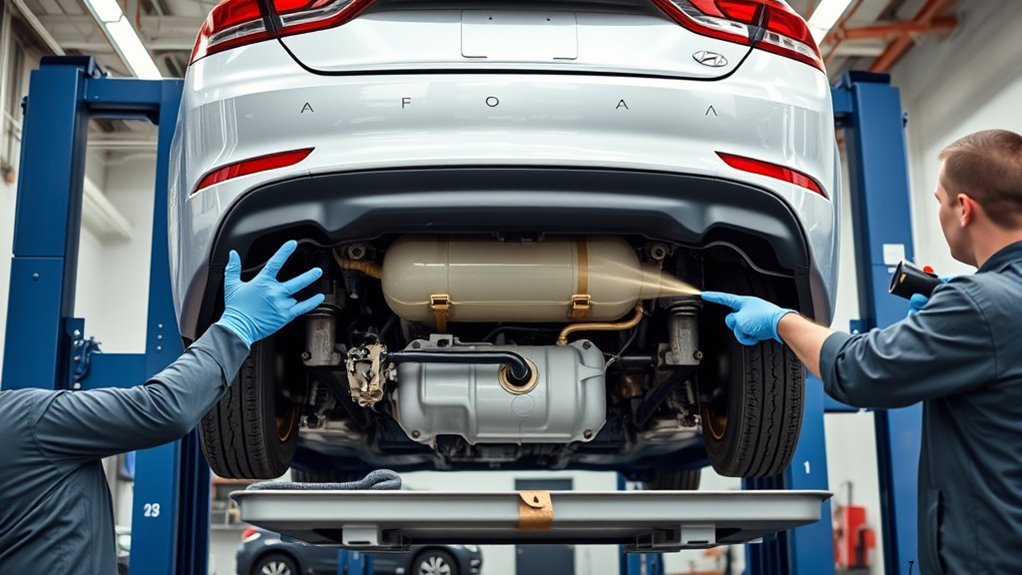
A Hyundai Sonata fuel tank replacement can range from a few hundred dollars to more than $1,000 depending on part type, labor rate, rust, access, and whether related parts are damaged. The fuel pump, sender, filler neck, EVAP lines, heat shields, straps, seals, and vapor valves can add cost if they cannot be reused safely.
[Products Worth Considering]

This replacement gas cap is designed for a wide range of Toyota and Lexus vehicles, offering a direct-fit solution for worn, cracked, or failing fuel caps. Built from durable materials and tested for reliability, it helps restore a secure seal and supports dependable everyday driving. It is a practical replacement part for owners looking for an easy installation and broad vehicle compatibility.

This replacement gas cap is designed to fit a wide range of Toyota and Lexus models, helping restore a secure seal for the fuel tank. It is built as a direct replacement for easy installation and reliable everyday use, with compatibility verified by part number to help ensure the right fit. Backed by warranty support and customer service, it is a practical solution for replacing a worn, cracked, or failing fuel cap.

This activated carbon cabin air filter is designed as a replacement for select Hyundai Sonata gas models and Kia Cadenza vehicles, helping improve in-cabin air quality. It is engineered to capture odors, VOCs, and common pollutants for a fresher driving environment, while matching multiple OE and reference numbers for convenient fitment confirmation.
Parts Price Breakdown
Typical parts pricing depends on source and availability:
- OEM tank: Usually the most expensive, but it offers the best fit and lowest emissions-system risk.
- Aftermarket tank: Usually less expensive, but quality and fitment vary.
- Used tank: Cheapest up front, but only worth considering if it is clean, undamaged, and exactly compatible.
Labor and Risks
Labor cost depends on shop rate, corrosion, tank access, and how much fuel must be drained. Common risks include fuel leaks, damaged vapor lines, inaccurate fuel gauge readings, EVAP trouble codes, and poor fit around heat shields or exhaust components.
Legal, Emissions, and Recall Rules for Sonata Fuel Tanks
Fuel tank modifications can affect crash safety, evaporative emissions, onboard diagnostics, and inspection readiness. Keep the fuel system stock or use verified-compatible parts unless a certified specialist confirms the change is legal for your state and vehicle.
There is also a current safety issue to know about: NHTSA Recall 25V796 covers certain 2020–2023 Hyundai Sonata vehicles with 1.6-liter turbocharged engines. The recall report says a worn purge control system check valve can allow compressed air into the fuel tank, causing the tank to deform and possibly leak fuel. Warning signs can include a popping sound from the rear of the vehicle, a check-engine light, fuel odor, or a no-start condition.
Warning: If your 2020–2023 Sonata 1.6T smells like fuel, makes a popping noise near the rear, shows a check-engine light, or will not start, check your VIN at NHTSA.gov/recalls and contact a Hyundai dealer before continuing to drive normally.
- Do not bypass EVAP lines, valves, sensors, or venting components.
- Do not install a tank with different fittings unless it is confirmed compatible by VIN.
- Keep repair invoices and part numbers for inspection, warranty, or recall documentation.
- Use NHTSA recall lookup before paying for fuel tank repairs on an affected vehicle.
Practical Tips to Maximize Range Without Changing the Tank
You do not need a larger tank to go farther between fill-ups. Better driving habits, correct tire pressure, smart cargo loading, and regular maintenance can improve usable range without changing the fuel system.
Optimize Driving Habits
Smooth driving helps the Sonata use less fuel. Accelerate gradually, look ahead so you can brake less, keep highway speeds reasonable, and use cruise control on steady open roads. Avoid long idling, hard launches, and repeated short trips when possible.
- Accelerate smoothly instead of flooring the pedal.
- Coast early when traffic slows ahead.
- Use cruise control where road and traffic conditions are steady.
- Limit unnecessary idling while parked.
Maintain Proper Tire Pressure
Underinflated tires increase rolling resistance, reduce MPG, and can hurt handling. Check tire pressure at least monthly and before long trips. Use the cold tire pressure listed on the driver-door placard, not the maximum pressure printed on the tire sidewall.
Reduce Unnecessary Weight
Extra weight makes the engine work harder. Remove tools, boxes, sports gear, roof racks, and seasonal items you do not need. Keep the car clean, but do not drive with the tank nearly empty just to save weight because low fuel can leave less margin for delays, weather, and station closures.
Frequently Asked Questions
What does fuel tank capacity mean?
Fuel tank capacity is the amount of fuel the tank is designed to hold. It helps estimate driving range, but it is not the same as usable range because you should refuel before the tank is completely empty.
How big is the gas tank on a Hyundai Sonata?
Many 2015–2019 gas Hyundai Sonata models are about 18.5 gallons, while many 2020–2026 gas models are about 15.9 gallons. Current Sonata Hybrid models are commonly listed at 13.2 gallons.
Do Hyundai Sonata hybrids have smaller fuel tanks?
Current Sonata Hybrid models use a smaller 13.2-gallon tank than many gas models, but they can still travel farther per fill-up because their MPG is much higher. Older hybrid and plug-in hybrid years should be verified separately.
How do I tell my exact Sonata fuel tank capacity?
Check the owner’s manual, use the VIN, compare official fuel economy listings, or call a Hyundai dealer parts department. For replacement parts, ask for the exact tank part number by VIN.
Can I install a larger fuel tank in a Hyundai Sonata?
For normal road use, you should avoid installing a larger or custom tank unless it is certified, emissions-compliant, and professionally installed. A noncompatible tank can create leaks, EVAP codes, failed inspections, and safety risks.
What should I do if my Sonata smells like fuel?
Stop treating it as a normal MPG issue. Park safely, avoid ignition sources, check for open recalls by VIN, and contact a Hyundai dealer or qualified repair shop. Fuel odor can indicate a leak or emissions-system fault.
Conclusion
The Hyundai Sonata fuel tank size depends on year and powertrain. As a simple guide, many 2015–2019 gas models are about 18.5 gallons, many 2020–2026 gas models are about 15.9 gallons, and current hybrids are about 13.2 gallons. For range planning, multiply tank size by real MPG and leave a reserve. For repairs, verify by VIN before buying parts, and check NHTSA recalls if you own a 2020–2023 Sonata 1.6T or notice fuel-system warning signs.
Sources
- Hyundai USA Sonata — current Sonata model and trim reference.
- Hyundai USA Sonata Hybrid — current Sonata Hybrid model reference.
- FuelEconomy.gov Find a Car — official MPG lookup by year, make, model, and trim.
- NHTSA Recall Lookup — VIN-based recall checks.
- NHTSA Part 573 Safety Recall Report 25V796 — 2020–2023 Hyundai Sonata 1.6T fuel tank recall details.
- FuelEconomy.gov Driving More Efficiently — driving habits that affect MPG and range.


[…] Eco Mode for commuting, steady cruising, and times when better fuel economy matters most. Use Sport Mode when you want the transmission to stay ready for acceleration, such as […]