
Last updated: September 16, 2026
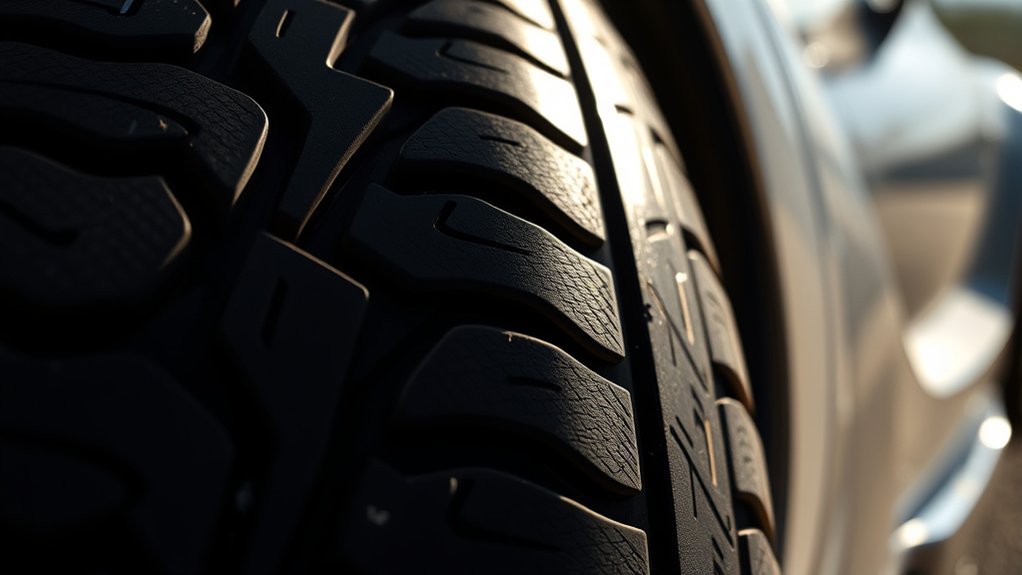
Toyota Supra tire wear patterns usually point to pressure, alignment, wheel balance, suspension condition, or driving use. Center wear often indicates excessive inflation, both-shoulder wear often points to low pressure, one-edge wear suggests camber, toe, or suspension geometry, and cupping or scalloping can point to balance, damping, wheel, or suspension problems. Reading the pattern early can protect your Supra’s grip, braking, steering feel, and tire life.
Quick Answer
Toyota Supra tire wear patterns usually come from pressure problems, alignment issues, worn suspension parts, wheel balance, or aggressive driving. Center wear often points to overinflation, both-edge wear to underinflation, one-edge wear to camber or toe issues, feathering to toe alignment, and cupping to worn damping or suspension parts, balance problems, or bent components. Fix the cause before installing another set of tires.
Key Takeaways
- Use your Supra’s driver-door tire label or owner’s manual for the correct cold tire pressure, not the maximum pressure printed on the tire sidewall.
- Toyota’s current Supra guidance says to check tire pressure at least twice a month and before a long trip.
- NHTSA says tires should be replaced by 2/32 inch of tread; Toyota also warns that summer tires below 3 mm have increased hydroplaning risk.
- Uneven inner or outer shoulder wear often means alignment, camber, toe, or suspension problems.
- Toyota advises replacing Supra tires at least every six years regardless of remaining tread.
- Different front and rear tire sizes or directional tires can limit rotation options, so check the Toyota manual before rotating.
- If your Supra pulls, vibrates, or wears tires quickly after lowering, get a professional alignment and suspension check.
At a Glance
| Time Required | 10 to 20 minutes for a basic driveway inspection |
| Difficulty | Easy for inspection, professional service recommended for alignment or suspension repairs |
| Tools Needed | Tire pressure gauge, tread depth gauge or penny, flashlight, gloves, and a flat parking spot |
| Cost | Free to inspect if you already own a gauge; alignment, balancing, tires, and suspension repairs vary by shop and vehicle condition |
Recognizing the Signs of Tire Wear Patterns
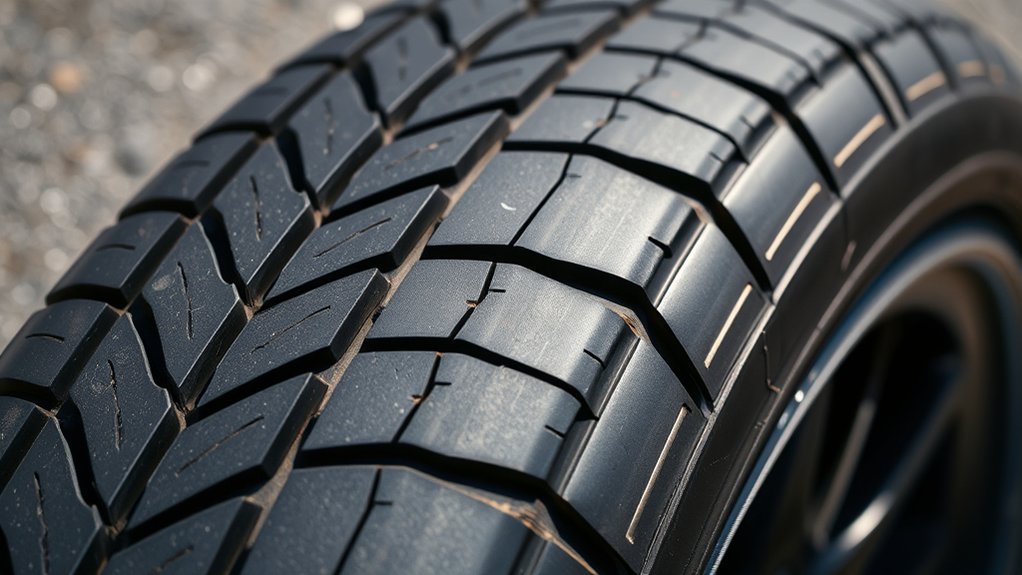
Start with a slow visual inspection. Park on level ground, turn the steering wheel so you can see the front tire shoulders, and compare the inside edge, center tread, and outside edge on each tire. Look for patchy wear, one-sided wear, flat spots, cracks, bulges, exposed cords, or a tread surface that feels rough in one direction.
A tire problem can also show up while driving. If your Supra pulls to one side, shakes through the steering wheel, feels nervous over grooves, or gets louder as speed rises, inspect the tires, pressures, wheels, alignment, and suspension. These symptoms can have more than one cause, so the wear pattern is a starting point rather than a complete diagnosis.
Warning: Do not keep driving on a tire with exposed cords, a sidewall bulge, deep cracking, severe vibration, or tread at 2/32 inch or lower. Toyota also warns that summer tires below 3 mm of tread have increased hydroplaning risk. Have unsafe or suspicious tire damage inspected before continuing normal driving.
How to Check Your Supra Tires at Home
- Check pressure when cold. Use the pressure listed on your driver-door tire label or in the Toyota owner’s manual. Do not use the maximum pressure printed on the tire sidewall. Toyota’s current Supra guidance says to check pressure at least twice a month and before a long trip. For more pressure-specific troubleshooting, see this Toyota Supra tire pressure guide.
- Measure tread depth. Use a tread depth gauge across the inner edge, center, and outer edge. According to NHTSA tire guidance, tires should be replaced when tread reaches 2/32 inch. For summer tires, Toyota warns of increased hydroplaning risk below 3 mm.
- Feel the tread by hand. A saw-tooth or feathered feel can point to toe alignment. A repeating wavy or scalloped surface can point to wheel balance, damping, wheel, or suspension problems.
- Compare left and right tires. If one side wears faster, check alignment, suspension condition, and recent impact history. A smoothly worn shoulder can point toward camber or suspension geometry; a saw-tooth pattern makes toe especially important to check.
- Check after impacts. If you hit a pothole, curb, or road debris, inspect the tire and wheel right away. A bent wheel, tire damage, or shifted alignment can start uneven wear quickly.
What Causes Uneven Tire Wear on a Toyota Supra?
Uneven tire wear on your Toyota Supra usually comes from one of five areas: tire pressure, wheel alignment, suspension condition, wheel balance, or driving style. The current Toyota GR Supra uses a performance-focused chassis with 19-inch forged wheels and Michelin Pilot Super Sport tires, plus Adaptive Variable Suspension and an electronically controlled rear differential. That performance focus makes careful pressure, alignment, and inner-shoulder inspection especially worthwhile.
| Wear Pattern | Likely Cause | What to Do Next |
|---|---|---|
| Center tread wears faster | Pressure above the correct vehicle setting or other load/use factors | Verify cold pressure against the door label or owner’s manual. |
| Both outer edges wear faster | Underinflation, heavy load, or repeated hard cornering | Correct pressure, inspect tire condition, and avoid driving on a soft tire. |
| Inside edge wears faster | Negative camber, toe error, lowered ride height, or worn/damaged suspension | Book a four-wheel alignment and inspect relevant suspension and wheel components. |
| Outside edge wears faster | Camber or toe issue, aggressive cornering, or low pressure | Check pressure first, then alignment and suspension if wear remains one-sided. |
| Feathered or saw-tooth tread | Toe alignment problem or another alignment error | Get a four-wheel alignment and inspect wheel balance if vibration is also present. |
| Cupping or scalloped dips | Worn damping or suspension parts, imbalance, bent wheel, or loose component | Inspect the tire, wheel, balance, and suspension before replacing tires. |
| One localized flat spot | Wheel lock during severe braking, prolonged storage, tire damage, or another localized problem | Inspect tread depth and tire condition; have persistent vibration or permanent flat spotting checked professionally. |
Why Regular Tire Maintenance Is Crucial
Regular tire maintenance protects your Supra’s steering feel, braking grip, ride quality, and tire budget. NHTSA says poor tire maintenance can contribute to tire failure and recommends regular pressure, tread, balance, and alignment checks. Toyota’s current Supra guidance is more specific about pressure frequency: check and correct it at least twice a month and before long trips.
Why it matters: Your tires are the only contact points between the Supra and the road. A pressure, alignment, balance, or suspension problem can quickly become a grip, braking, tire-life, and safety problem.
Importance of Tire Pressure
Tire pressure affects how the tread carries load against the road. Low pressure makes the shoulders carry more load and increases flex and heat. Excessive pressure can shift more load toward the center of the tread. Always diagnose the pattern by first returning the tire to the vehicle’s correct cold-pressure specification rather than changing pressure simply to compensate for existing wear.
For a Supra, Toyota’s current guidance says to check and correct tire pressure at least twice a month and before an extended trip. Check pressure cold and use the driver-side tire label, owner’s manual, or the vehicle’s intended pressure display for the mounted tire configuration. If front and rear specifications differ, set each end to its own listed value.
Note: A TPMS light is not a replacement for manual pressure checks. NHTSA notes that TPMS may not warn until a tire is already significantly underinflated.
Alignment Adjustments Matter
Wheel alignment controls how the tires point and lean against the road. Toe problems commonly create feathered or saw-tooth wear, while camber or suspension geometry can wear one shoulder faster than the rest of the tread. A Supra that has been lowered, hit a pothole, or fitted with coilovers should be aligned after the change or impact rather than waiting for visible tire damage.
For street use, ask for an alignment that matches Toyota’s applicable specifications unless you have a clear performance reason for a custom setup. If your Supra is used for track days, autocross, or aggressive mountain driving, work with a performance alignment shop that can balance tire life, grip, and road manners. If the steering wheel sits off-center while the car travels straight, this Supra steering and alignment guide explains why the cabin steering-wheel adjustment itself is not the cause of tire wear.
Regular Inspections Prevent Issues
Small tire problems are easier and cheaper to diagnose before they destroy a replacement set. Build these habits into your routine:
- Check tire pressure at least twice a month and before long trips.
- Measure tread depth across the inner, center, and outer tread blocks.
- Inspect the inner shoulders, not just the visible outer face.
- Inspect for nails, cuts, cracks, bubbles, exposed cords, and abnormal pressure loss.
- Check the DOT manufacturing date and factor tire age into replacement decisions.
- Balance tires when you install new tires or feel speed-related vibration.
- Get an alignment if the car pulls, the steering wheel is off-center, or wear appears on one edge.
- Check your owner’s manual before rotating tires, especially if your Supra has different front and rear sizes or directional tires.
How Driving Habits Contribute to Tire Wear

Your driving habits can speed up wear even when the car is mechanically healthy. Rapid acceleration, repeated high-load braking, sharp turn-in, and sustained high-speed cornering can increase tire temperature and shoulder loading. That is expected with spirited driving, but it means tread depth and inner-shoulder wear deserve more frequent inspection.
| Driving Habit | Effect on Tire Wear |
|---|---|
| Severe braking or wheel lock | Can create localized flat spotting; repeated hard braking also increases front-tire heat and load. |
| Rapid acceleration | Can speed up rear tire wear on a rear-wheel-drive Supra. |
| Sharp turns | Can wear outer shoulders faster and increase tire temperature. |
| Potholes and curb hits | Can damage tires or wheels and knock alignment out of specification. |
| Smooth inputs | Help reduce unnecessary tread scrub and heat buildup. |
Pro Tip: If you enjoy spirited driving, inspect the inner shoulders as well as the visible tread face. A performance tire can still look usable from the outside while the inner portion is significantly more worn.
How to Align and Adjust Suspension to Minimize Tire Wear
To reduce tire wear, keep the suspension healthy and the alignment within the correct range for how you drive. Alignment is not just a steering-wheel centering service. It evaluates toe, camber, caster, and the direction the wheels travel relative to the vehicle.
[Products Worth Considering]

This dial type tire tread depth gauge helps you quickly check tread wear on motorcycles, cars, trucks, and buses with easy-to-read 1/32-inch increments. Its colorful zone markings make it simple to assess tire condition for safer driving in different weather, while the durable zinc cast body and legible dial provide dependable everyday use.

This color coded tire tread depth gauge helps you quickly check tire wear and monitor when replacement is needed. Calibrated in easy-to-read 32nds with clear red, yellow, and green ranges, it offers fast visual results for cars, trucks, motorcycles, and other passenger vehicles. The pocket clip makes it simple to keep on hand for routine maintenance and safety checks.

This smart tire tread depth gauge provides quick, accurate readings from 0 to 1 inch in 1/32-inch increments, helping drivers assess tire wear with confidence. Its color-coded display makes it easy to see tread condition at a glance, while the pocket clip adds convenient portability for garages, glove boxes, and on-the-go inspections. Designed for use on trucks, motorcycles, automobiles, and other passenger vehicles, it is a simple tool for safer tire maintenance.
Proper Alignment Techniques
- Check toe carefully. Toe errors can scrub tread quickly and commonly create feathering or a saw-tooth feel.
- Watch camber after lowering. Ride-height changes can alter suspension geometry and increase one-sided wear if the resulting alignment is not suitable.
- Use a four-wheel alignment. Rear alignment affects the direction the car tracks as well as rear-tire wear.
- Ask for a printout. Keep the before-and-after measurements so recurring changes are easier to identify.
- Recheck after impacts. A pothole, curb strike, or track incident can change alignment or damage a wheel or suspension part.
Suspension Adjustment Tips
Suspension parts must hold the tire consistently against the road. If shocks, bushings, control arms, wheel bearings, joints, or related components are worn or damaged, a fresh alignment may not remain stable. Cupping, clunking, vibration, wandering, or recurring one-sided wear can justify a suspension and wheel inspection.
If your Supra has coilovers, lowering springs, aftermarket wheels, or track-focused tires, do not copy random alignment numbers from a forum. Use a shop that understands performance cars and can set the car for your actual use. Wheel width, offset, and tire size can also affect clearance and setup, so confirm fitment before changing the chassis; this Toyota Supra wheel-offset guide covers those fitment considerations in more detail.
Solutions for Specific Tire Wear Issues
Once you identify the pattern, fix the cause before installing new tires. Otherwise, the replacement set can develop the same wear.
- One-side wear: Check alignment, camber, toe, and suspension condition.
- Center wear: Verify cold pressure against the door label or owner’s manual; do not lower pressure below the specified value merely to compensate for existing wear.
- Both-edge wear: Verify cold pressure and load, then inspect the tire for heat or structural damage if it has been driven underinflated.
- Cupping wear: Inspect damping and suspension parts, wheel balance, the tire itself, and the wheel for damage.
- Feather edging: Book a four-wheel alignment and pay particular attention to toe.
- Flat spotting: Inspect the localized worn area and investigate wheel lock, storage, tire damage, or another vibration source.
- Rapid rear wear: Review driving use, tire compound, alignment, rear pressure, and whether the wear is even across the tread.
- Vibration with uneven wear: Balance and inspect the wheel/tire assembly and check for wheel or suspension damage before assuming alignment alone is responsible.
For normal street use, inspect the tires regularly and before long trips. NHTSA says rotation can help reduce irregular wear when it is permitted by the vehicle and tire configuration. If your Supra uses different front and rear tire sizes or directional tires, normal front-to-rear or cross rotation may not be possible. Check the Toyota manual and the markings on the installed tires before rotating. For broader service planning, see these Supra maintenance items that help prevent costly repairs.
[Products Worth Considering]

This LUMITECO tire tread depth gauge set makes it easy to monitor tire wear and maintain safer driving performance. The color-coded scale provides quick, easy-to-read measurements, while the compact pocket-size design and included clip make it convenient to keep in your vehicle or toolbox. Suitable for cars, trucks, motorcycles, and more, it offers a simple reusable way to check tread depth whenever needed.

This smart color coded tire tread depth gauge makes it easy to check tread wear at a glance with clear red, yellow, and green ranges. Calibrated from 0 to 1 inch in 1/32 inch increments, it helps you quickly assess tire condition for safer driving and timely replacements. The pocket clip design makes it convenient to carry and use on trucks, motorcycles, cars, and other passenger vehicles.

This DIY toe alignment tool kit helps home mechanics quickly check and adjust front-end toe after suspension, steering, or tire service. Stainless steel toe plates and dual tape measures provide a simple, reliable reference for reducing uneven tire wear and improving straight-line tracking without needing a full alignment machine.
When to Replace Your Supra Tires
Use three checkpoints for Supra tire replacement: tread condition, wet-weather margin, and age. NHTSA says tires should be replaced when tread reaches 2/32 inch, and the treadwear bars mark that minimum. Toyota’s current Supra manual is more conservative for wet-weather use, warning that summer tires below 3 mm of tread have increased hydroplaning risk. Toyota also advises replacing tires at least every six years regardless of remaining tread.
Replace or professionally inspect a tire sooner if you find a sidewall bubble, exposed cords, deep cuts, severe cracking, repeated pressure loss, a permanent flat spot, or vibration that remains after proper balancing. If one edge has already worn through while the rest of the tread still looks healthy, fix the alignment, wheel, or suspension cause before installing the replacement tire.
You can find the tire manufacturing date in its DOT marking on the sidewall. Tire age does not replace regular visual inspection; a younger tire can still require immediate replacement if it is damaged or worn beyond a safe limit.
[Products Worth Considering]

This digital tire tread depth gauge helps you check tire wear quickly and accurately with fractional inch, decimal inch, and millimeter readouts. Its large LCD screen, zero reset function, and automatic shutoff make it easy to use for cars, motorcycles, SUVs, trucks, and pickups. Designed for clear readings and dependable measurement, it is a practical tool for routine tire safety checks.

This wheel alignment tool makes it easy to check and adjust toe-in and toe-out at home for better handling, stability, and more even tire wear. Designed for one-person use, it includes tape-measure slots for simple setup and accurate measurements without extra help. Its stainless steel construction and broad vehicle compatibility make it a practical addition to any DIY garage.

The JACO ElitePro Digital Tire Pressure Gauge delivers shop-grade accuracy with a clear digital readout, making it easy to maintain proper tire pressure for safer driving and better performance. Built with rugged brass and steel components, a protective guard, and a flexible air hose, it is designed for reliable use across cars, trucks, motorcycles, bikes, RVs, and trailers. The lock-on display, built-in bleeder valve, and bright backlit screen add convenience in any lighting condition.
Frequently Asked Questions
How do you read Toyota Supra tire wear patterns?
Look at where and how the tread is wearing. Center wear often points to excessive pressure, while wear on both shoulders often points to low pressure. One-sided wear suggests alignment, camber, toe, or suspension geometry. Feathered or saw-tooth tread makes toe especially important to check, while cupped or scalloped wear can point to balance, damping, wheel, or suspension problems.
What tire pressure should I use on a Toyota Supra?
Use the cold tire pressure listed on your driver-door tire label, owner’s manual, or the vehicle’s intended tire-pressure information for your exact wheel-and-tire configuration. Do not use the maximum pressure printed on the tire sidewall as the normal setting.
How often should I check Toyota Supra tire pressure?
Toyota’s current Supra guidance says to check and correct tire pressure at least twice a month and before a long trip. Check the tires cold and correct each axle to the applicable vehicle specification.
Can I rotate Toyota Supra tires?
It depends on the installed wheel-and-tire configuration. Different front and rear sizes or directional tires can prevent normal front-to-rear or cross rotation. Check the Toyota owner’s manual and the markings on your installed tires before rotating them.
Why are my Supra tires wearing on the inside edge?
Inside-edge wear can come from negative camber, toe misalignment, worn or damaged suspension parts, or ride-height changes after lowering. If the tread also feels feathered or saw-toothed, toe deserves particular attention. A four-wheel alignment and suspension inspection are appropriate next steps.
What does cupping on Supra tires mean?
Cupping looks like repeating dips or scallops around the tread. It can be associated with worn damping or suspension parts, poor wheel balance, a damaged wheel or tire, or loose components. Diagnose the mechanical cause before installing replacement tires.
When should Toyota Supra tires be replaced?
Replace tires by 2/32 inch of remaining tread or sooner for unsafe damage. Toyota also warns that summer tires below 3 mm have increased hydroplaning risk and advises replacing tires at least every six years regardless of remaining tread. Bulges, exposed cords, deep cuts, severe cracking, or persistent pressure loss can require earlier replacement.
Conclusion
Toyota Supra tire wear patterns can reveal pressure, alignment, balance, suspension, or driving-use problems before they become more expensive. Check pressure at least twice a month, measure the inner, center, and outer tread, inspect the hidden inner shoulders, and watch for feathering, cupping, flat spots, cracks, cords, or bulges. Correct pressure first. If wear remains one-sided, feathered, cupped, or accompanied by pulling or vibration, have the wheel/tire assembly, alignment, and suspension checked before installing another set of tires.
Sources
- Toyota 2026 GR Supra — current GR Supra wheel, tire, suspension, and differential context.
- Toyota Manuals and Warranties — Supra tire-pressure frequency, tread, tire-age, pressure, and wheel/tire guidance.
- NHTSA TireWise — tire pressure, tread depth, TPMS, balancing, alignment, and tire-safety guidance.
- FuelEconomy.gov Tire Inflation Guidance — tire inflation and fuel-economy information.



[…] Uneven tire wear or wandering handling: CV axle issues can overlap with suspension or alignment problems, so inspect related components too. […]
[…] Look for punctures, cuts, bulges, or uneven wear […]
[…] bushings can cause clunking over bumps, squeaking, steering wander, vibration, poor alignment, and uneven tire wear. A noise or crack is only a clue, not a complete diagnosis. If the vehicle pulls sharply, the wheel […]
[…] tires can reduce ride comfort, shrink the tire’s contact patch, speed up center tread wear, and make the tire more vulnerable to impact damage from potholes or road debris. Use the cold PSI […]
[…] pressure recommended by the vehicle manufacturer. Tire pressure affects braking, steering response, tread wear, fuel economy, ride comfort, and heat buildup inside the […]
[…] the exact tire, size, load, and track use. Adjust from measured hot pressure, tread temperature, tire wear, and handling balance. Use this repeatable […]
[…] differential when maximum low-speed off-road traction matters more than quiet street manners, tire wear, and smooth turning behavior. For a vehicle that spends substantial time both on-road and off-road, […]
[…] dampers change shock damping, not spring rate, alignment, tire grip, or ride […]
[…] The practical advantage is therefore better described as balanced engineering potential, not automatic perfect handling. A correctly maintained Supra can use its chassis balance to deliver predictable steering and traction, while poor tires or an unsuitable suspension setup can overwhelm that advantage. Uneven wear can also change available grip, so inspect the patterns discussed in this Supra tire wear guide. […]