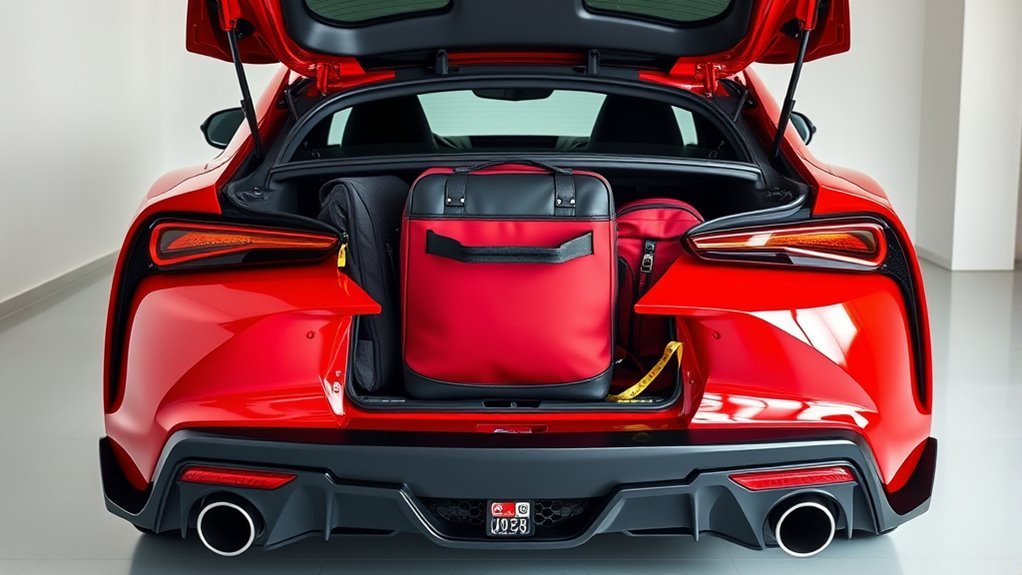
You’ve got a useful but shape-sensitive cargo area in the Toyota GR Supra: Toyota lists the 2026 GR Supra 3.0 at 10.2 cubic feet of cargo space, but the hatch opening, sloped glass, and narrow/deep floor matter more than the number on paper. The winning setup is simple: use soft-sided bags, load heavy items low and forward, secure loose gear, and save the passenger footwell or seat only for overflow that can be safely restrained.
Quick Answer
The Supra trunk fits soft duffels, backpacks, grocery totes, small coolers, compact strollers, and careful two-person weekend luggage. It is less friendly to large hard suitcases, long golf bags, and bulky boxes. Pack soft bags first, use the deepest corners, and secure anything loose before driving.
Key Takeaways
- Toyota lists the GR Supra cargo area at 10.2 cu ft, but the trunk’s practical limit is the hatch opening and irregular shape.
- Soft duffels, packing cubes, backpacks, and collapsible totes use the space better than rigid rollers.
- Load heavy items low and as far forward as practical, matching Toyota’s cargo-area guidance for secure loading.
- A Toyota cargo tote or collapsible organizer is useful for groceries and small loose items, but it will not make bulky luggage fit.
- Avoid permanent trunk modifications, loose cabin cargo, and roof storage unless the rack, load, and local laws are verified.
At a Glance
| Time Required | 5–15 minutes to test-fit and pack for a trip |
| Difficulty | Easy, but it rewards planning |
| Tools Needed | Tape measure, soft bags, packing cubes, cargo tote or straps |
| Cost | $0 if you already own soft luggage; about $25–$80 for common organizers or a cargo tote |
Quick Verdict: What Fits in the Supra Trunk
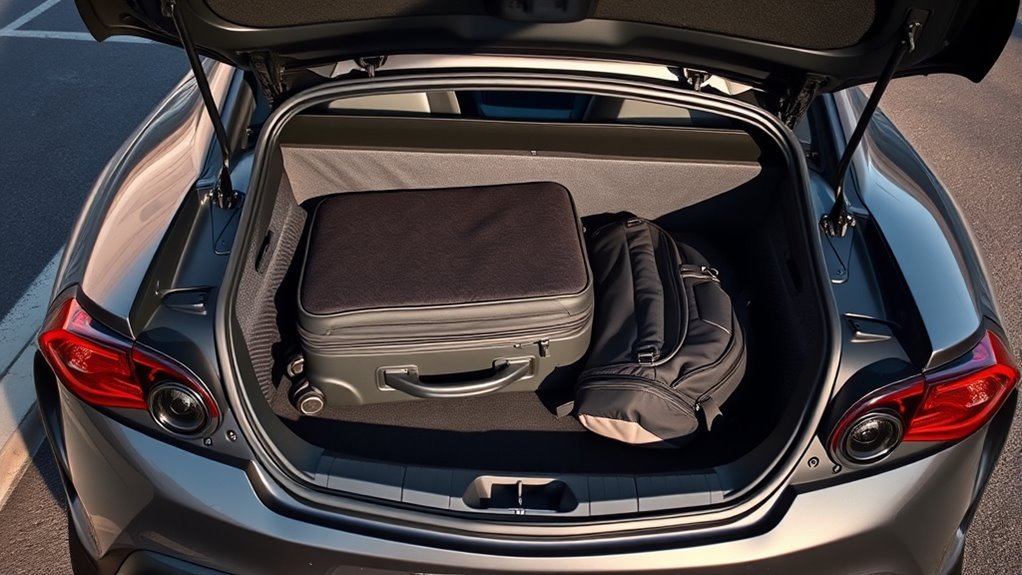
The Supra trunk is best for compact, flexible loads: one or two soft duffels, backpacks, packing cubes, grocery bags, a compact cooler, a camera bag, or a small folded stroller. It can work for a weekend trip, but it is not shaped like a sedan trunk, so a large hard-shell suitcase may waste space even if its listed volume seems reasonable.
The Supra’s cargo rating is 10.2 cu ft, but usable space depends on geometry: soft bags beat square boxes because they bend into the narrow, deep corners.
Think of the cargo area as a deep hatch space rather than a wide box. The lower floor accepts dense items well, while the upper area is limited by the sloping glass and hatch clearance. Before a long drive, test the hatch closure gently instead of forcing it; the final inch of clearance is where rigid luggage usually fails.
Measure Before You Pack
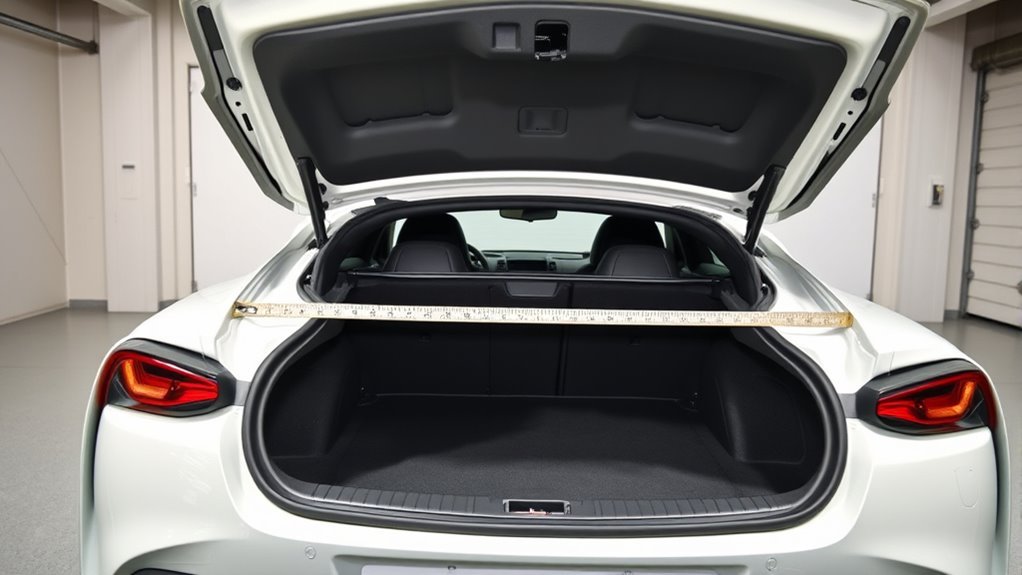
Factory cargo volume gives you the big picture, but your luggage dimensions decide whether the hatch closes. Measure the length, width, height, and diagonal length of the actual cargo opening on your car, then compare those numbers with your bags before the night of the trip.
- Check the hatch opening first: the item has to pass through the opening before the trunk volume matters.
- Measure height near the glass: tall boxes and upright rollers can contact the sloped hatch area.
- Use the diagonal: golf bags, tripods, folding chairs, and longer gear may fit only at an angle.
- Test with the softest bag first: a duffel can compress around trim curves that a hard case cannot.
Note: Cargo volume varies by measurement method and trim-market reporting. For U.S. shoppers, use Toyota’s published 10.2 cu ft figure as the reference, then rely on your own measurements for real-world packing.
Best Luggage for the Supra: Soft vs. Hard-Sided Bags
Because the Supra cargo area is compact and irregular, you’ll get more usable capacity from soft-sided luggage than from rigid shells. A medium duffel, a soft weekender, and packing cubes can flex into corners, flatten under the hatch line, and stack around smaller items. Hard-sided rollers are better for airports, but in the Supra they often leave dead space along the sides and corners.
- Best choice: medium soft duffels, backpacks, gym bags, packing cubes, compression cubes, and collapsible grocery totes.
- Use with caution: small carry-on rollers, camera cases, tool cases, and coolers; test them before the trip.
- Usually frustrating: oversized checked suitcases, square storage bins, tall boxes, and wide hard-shell luggage.
If you’re packing for two, give each person one soft bag instead of trying to fit two rigid carry-ons. Roll clothing, use cubes for small items, and keep toiletries in a flat pouch that can slide into the side pockets of your layout.
Pro Tip: Pack by shape, not by person. Put both people’s shoes in one low bag, both toiletry kits in one small pouch, and clothes in separate soft cubes. The trunk packs tighter when similar shapes are grouped together.
[Products Worth Considering]
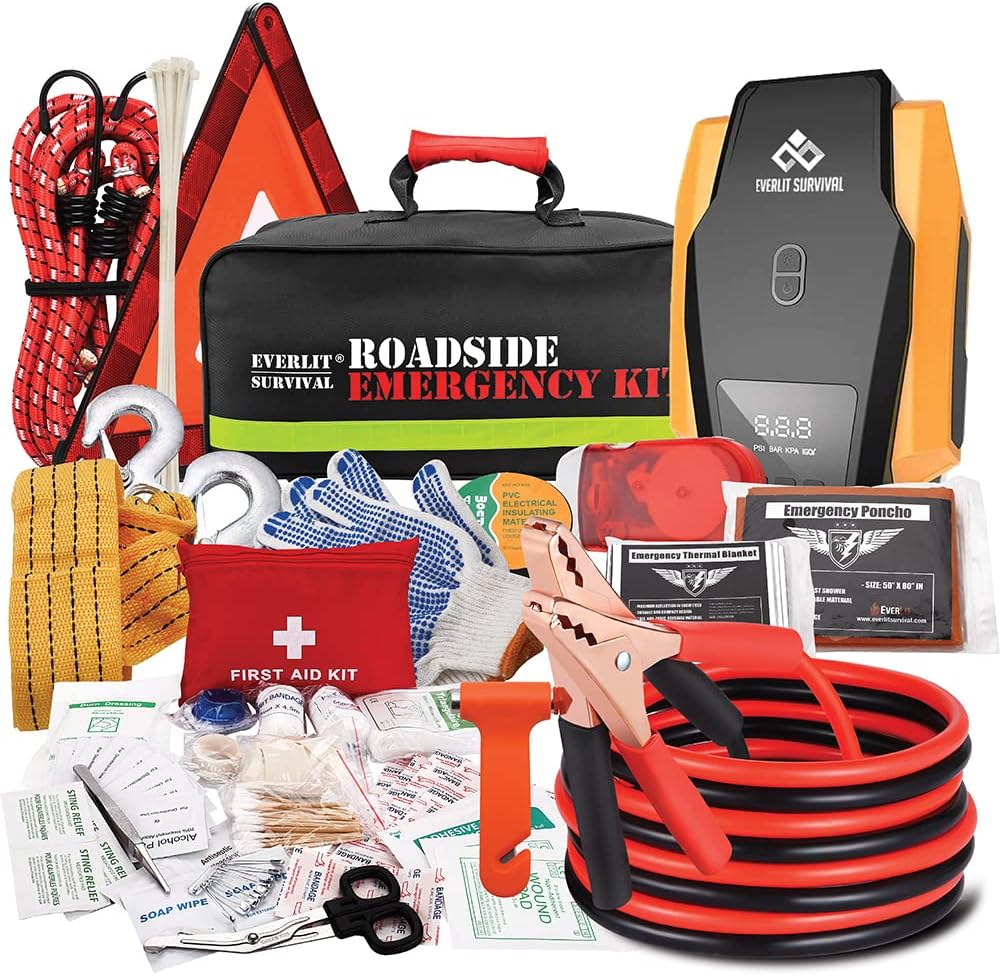
This roadside emergency kit packs essential tools to help drivers handle unexpected breakdowns and stay prepared on the road. It includes a digital tire inflator, jumper cables, first aid supplies, and other safety accessories to support quick, practical roadside response. Designed for everyday drivers and road trips alike, it offers peace of mind for emergencies day or night.

This custom-designed cargo net helps keep the rear trunk of a 2026 Toyota RAV4 neat, secure, and organized. Its stretchable elastic mesh construction helps prevent groceries, tools, and sports gear from sliding around, while the built-in bottom pocket and smart clips add extra storage control. A top pull tab makes installation and removal quick and easy for everyday convenience.

Keep your vehicle tidy with this collapsible trunk organizer designed to create extra storage and reduce clutter. It features multiple pockets, a bottle holder, and adjustable straps that secure it to headrests for quick installation and a stable fit. Made for most cars, SUVs, vans, and trucks, it folds flat when not in use and helps keep everyday essentials easy to find.
Supra Trunk Packing Layouts: Solo, Two-Person, Weekend
The best Supra trunk layout depends on the trip type. Load the heaviest items first, keep crushable items on top, and avoid leaving loose gear where it can slide during braking or spirited cornering. Toyota’s owner guidance for the cargo area says to cover sharp edges, place heavy cargo as low and far forward as possible, and secure cargo properly.
[Products Worth Considering]

This custom-fit cargo net is designed for the 2026 Toyota RAV4 to help keep your trunk organized and secure during everyday driving. It helps hold groceries, tools, and smaller items in place while reducing rolling and shifting, and the heavy-duty carabiners support reliable installation. The net also offers convenient storage and easy access for SUVs and other compatible vehicles.

This collapsible trunk organizer helps keep your vehicle neat with multiple compartments, mesh pockets, and removable dividers for flexible storage. Made from waterproof, stain-resistant Oxford fabric with reinforced handles and a non-slip bottom, it is designed to stay secure while handling groceries, tools, sports gear, and travel essentials. When not in use, it folds flat for convenient storage in your trunk or home.

Be ready for roadside emergencies with this comprehensive car safety kit designed to help you handle common breakdown situations quickly and confidently. It includes a portable air compressor for fast tire inflation, jumper cables for dead batteries, and a self-contained emergency set with essential tools and first aid supplies. Built for all-weather preparedness, this kit helps keep drivers, passengers, and families safer on the road.
Solo Road Trip Layout
For a solo trip, place one medium soft duffel flat on the trunk floor. Use the remaining side space for shoes, a small tool roll, a camera pouch, or a folded jacket. If you carry a cooler, choose a compact soft cooler instead of a tall hard cooler, then wedge it where it cannot tip.
- One medium duffel on the floor
- One backpack or tech bag toward the rear opening for easy access
- Small pouches and shoes tucked into side gaps
- Emergency kit or tire inflator kept reachable, not buried
Two-Person Weekend Layout
For a two-person weekend, use two soft weekenders or one soft duffel plus one backpack. Place the flatter bag first, then nest the second bag diagonally or vertically depending on hatch clearance. Keep jackets, hats, and small items loose enough to fill voids but not so loose that they slide around.
- Two soft weekend bags instead of two hard rollers
- Packing cubes to separate outfits without adding suitcase bulk
- Flat toiletry pouches along the sides
- Passenger cabin space only for items that can be safely contained
Grocery and Daily Use Layout
For groceries, a structured tote is more useful than open bags. Put heavy bottles, cans, and jars low. Keep crushable items such as bread, chips, and produce on top or in a separate soft bag. If the route includes hard braking or curvy roads, use a tote, cargo net, or divider so the load does not migrate across the trunk.
Bulky Gear Layout
For bulky items such as folding chairs, a compact stroller, golf gear, or a tripod, test the diagonal first. Long items should be angled into the deepest available line, with soft bags used to pad and stabilize the sides. If the item must go in the passenger area, secure it so it cannot slide into the driver’s footwell or interfere with controls.
Warning: Do not place loose items near the pedals, on the dash, or unsecured on the passenger seat. NHTSA warns that unsecured loads can create serious road hazards, and loose cabin cargo can also become dangerous during a sudden stop.
Best Organizers: Is the Toyota Cargo Tote Worth It?
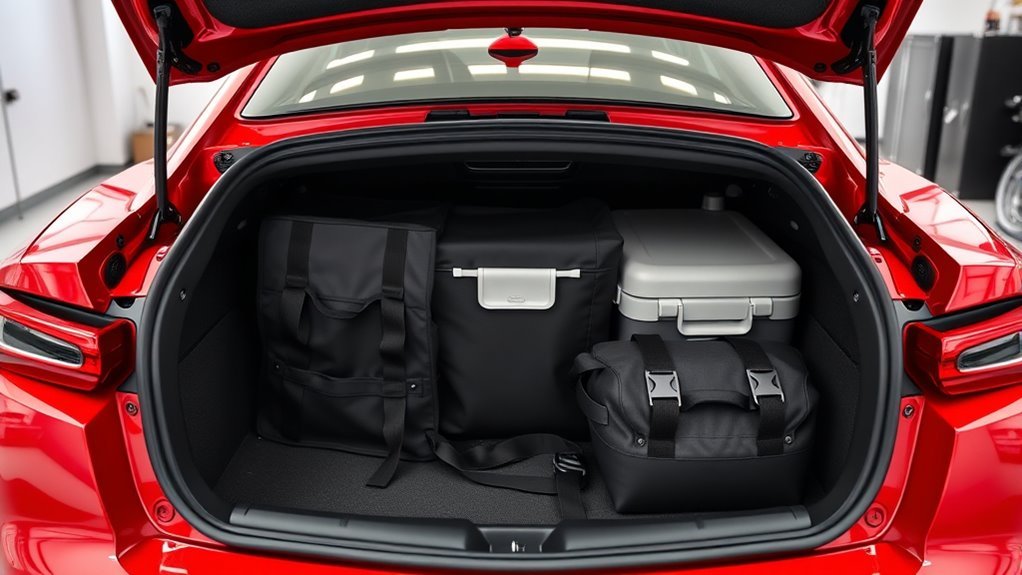
A trunk organizer is worth it in the Supra if your problem is small items shifting, not if your problem is oversized luggage. The genuine Toyota cargo tote sold under part number PT427-00120 is designed to organize groceries, tools, and essentials, and Toyota describes it as a cargo-area organizer for keeping items tidy. Dealer sites, including Jim Ellis Toyota’s parts portal, may sell the same genuine Toyota accessory through their own storefronts.
[Products Worth Considering]

This car emergency roadside assistance kit helps drivers handle unexpected breakdowns and roadside incidents with confidence. It includes jumper cables and a tire inflator to support quick, practical solutions in emergencies, while the compact bag keeps everything organized in the trunk. Ideal for new drivers, families, road trips, and seasonal travel, it is a thoughtful and useful safety essential for any vehicle.

This large-capacity car trunk organizer helps keep groceries, tools, and everyday essentials neatly in place while driving. It installs in seconds with strong straps and secure buckles, and its collapsible design makes it easy to use across many vehicle types. Waterproof construction, reinforced stitching, and multiple pockets provide durable storage and improved organization for SUVs, trucks, minivans, and more.
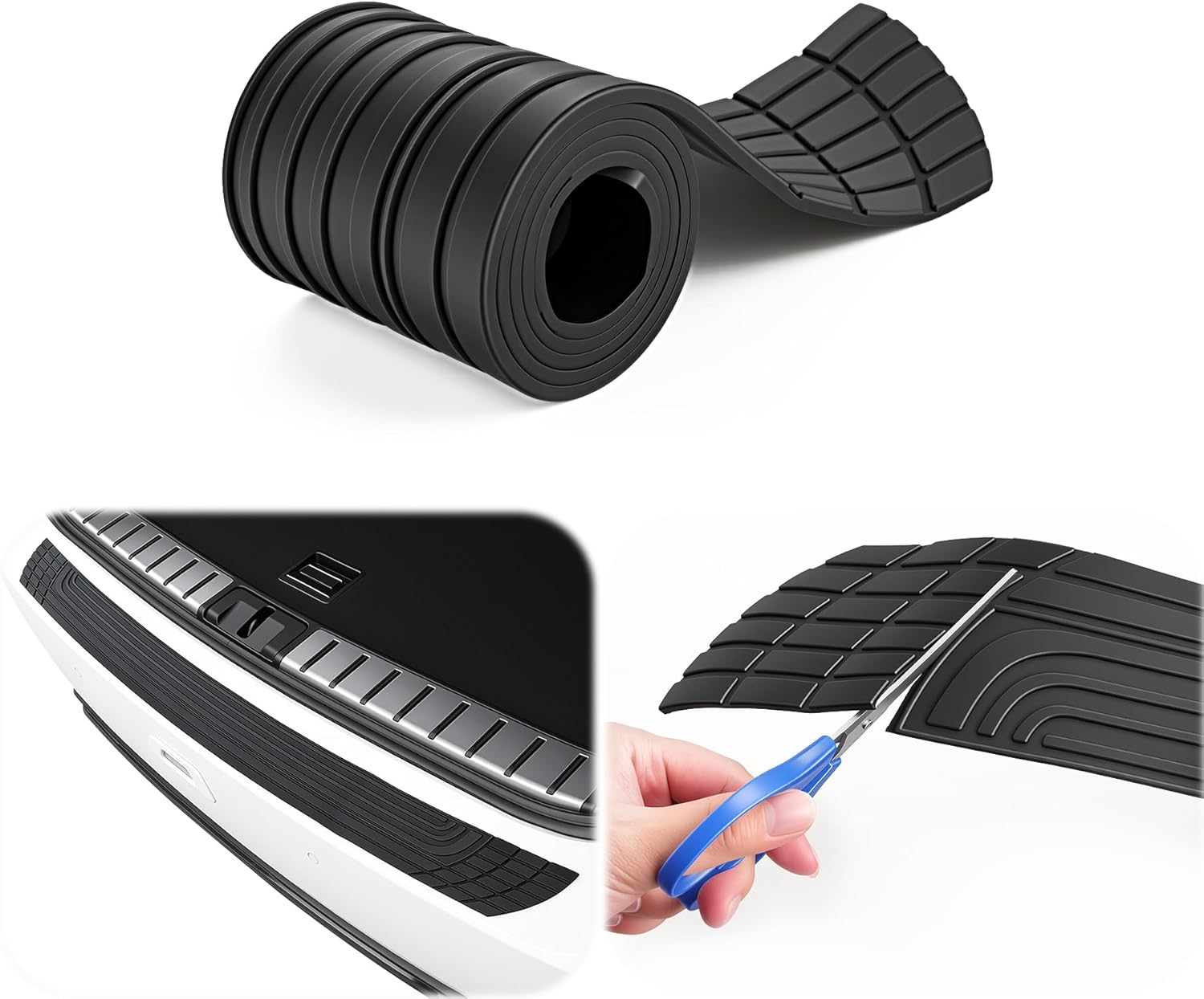
Protect your vehicle’s rear bumper from scratches, scuffs, and everyday loading damage with this universal bumper protector. Its flexible rubber design helps absorb impact and features an anti-slip groove pattern for added security when placing cargo in the trunk. Easy to install without drilling or welding, it is a practical exterior accessory for most cars and SUVs.
Toyota Cargo Tote
The Toyota cargo tote makes the most sense for daily use: groceries, cleaning supplies, detailing towels, charging cables, small tools, and road-trip snacks. It is not a magic volume expander, but it does make the space more repeatable because you can lift one organized unit in and out instead of chasing loose bags around the hatch.
- Best for: groceries, small tools, detailing supplies, snacks, and loose daily items.
- Main benefit: less shifting during braking and cornering.
- Main drawback: it uses a little space when open, so fold or remove it for luggage-heavy trips.
Alternative Organizers
Collapsible totes, soft-sided bins, cargo nets, and padded dividers can work just as well depending on what you carry. In the Supra, the best organizer is usually the one that folds flat when you do not need it.
| Organizer Type | Best Use | Pros | Cons |
|---|---|---|---|
| Collapsible tote | Groceries and daily carry | Flexible, stows flat | Less structure when partly loaded |
| Rigid bin | Tools or detailing supplies | Strong containment | Bulky when unused |
| Cargo net | Light loose items | Low-profile | Not ideal for heavy objects |
| Packing cubes | Weekend luggage | Great shape control | Need a bag around them |
Loading Tips: Groceries, Golf Bags, and Bulky Items
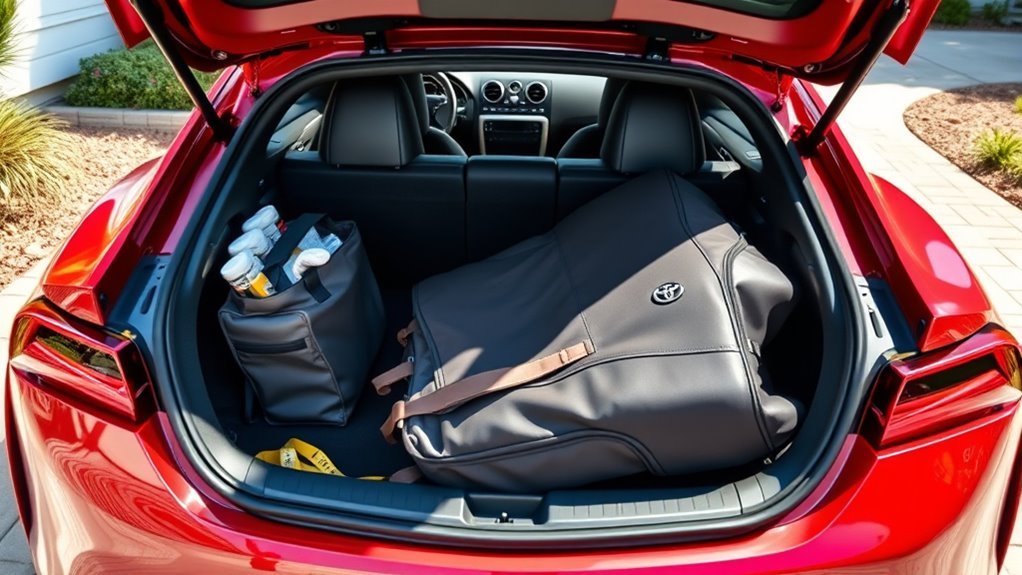
One rule to remember: the Supra rewards geometric packing. Plan the first two items before you lift anything in. Put the dense pieces low, use the diagonal for long items, and fill the leftover corners with soft goods.
- Groceries: use a tote for small bags, place heavy bottles low, and keep crushable items on top.
- Golf bags: remove the driver and longer clubs if needed, angle the bag diagonally, and use soft bags to stabilize it.
- Coolers: choose a soft cooler or a compact hard cooler; tall coolers fight the hatch angle.
- Strollers: measure the folded dimensions first, remove cupholders or trays, and load wheels-first if that gives you a cleaner angle.
- Camera or laptop gear: keep it padded and restrained, not loose against hard cargo.
Pro Tip: Take one photo of your best packed layout before unpacking at the hotel. The return trip is faster when you can copy the same bag order and angles.
Safe Loading and Weight Distribution
Safe packing is not only about closing the hatch. The load should stay put if you brake hard, swerve, or hit a rough patch of road. Toyota’s cargo-area guidance says the maximum load is the combined weight of occupants and cargo, so every pound of luggage reduces the remaining payload available for people and gear.
- Keep weight low: shoes, tools, bottled drinks, and dense bags go on the floor first.
- Keep weight forward: place heavier cargo closer to the cargo partition when practical.
- Cover sharp edges: wrap hard corners so they do not damage trim or other bags.
- Secure loose items: use a tote, net, straps, or wedged soft bags to prevent sliding.
- Keep safety gear accessible: do not bury first-aid supplies, emergency tools, or charging cables under the entire load.
For anything carried outside the vehicle, follow NHTSA’s advice to tie cargo down with rope, netting, or straps, avoid excessive loads, and double-check the load before driving. For a sports car like the Supra, the safest answer is usually to pack lighter rather than add exterior cargo.
What to Avoid: Mods and Mistakes That Reduce Trunk Space
Because the Supra’s cargo area is compact and close to the passenger compartment, avoid changes that reduce clearance, add unnecessary weight, or create loose hard objects. Reversible accessories are fine when installed properly; permanent cutting, drilling, or bulky custom panels should be treated with caution.
- Do not force the hatch closed: if the glass or trim contacts a bag, repack instead of pushing harder.
- Avoid oversized hard cases: they waste corner space and often block hatch closure.
- Skip heavy trunk builds: large speaker boxes, thick false floors, and rigid storage systems reduce usable cargo volume.
- Do not block access to emergency items: keep the cargo floor, tools, and safety gear reachable.
- Be careful with roof storage: use only a compatible rack system, follow the rack maker’s limits, and check state load-securement rules.
Note: Toyota says warranty coverage is not dependent on using a particular brand of replacement part, but non-genuine parts and damage or failures caused by them are not covered by Toyota warranty. Keep trunk accessories non-invasive and document anything you install.
Frequently Asked Questions
Can you fit a stroller in the Supra trunk?
Yes, but it needs to be a compact folding stroller. Measure the stroller after it is folded, including wheels and handles, then test the hatch opening and closing angle. Umbrella strollers and compact travel strollers are the most realistic options; full-size stroller systems may need the passenger area or a different vehicle.
Can a golf bag fit in a Toyota Supra?
A golf bag may fit if it is angled diagonally and the longest clubs are removed first. A soft carry bag is easier than a large cart bag. If you carry two golf bags, expect to remove longer clubs, use the passenger area for some pieces, or test the layout carefully before the trip.
Is roof storage legal or safe for this car?
Roof storage can be legal when the load is properly secured and complies with state rules, but it is not automatically safe for every car or every rack. Use only a rack system confirmed to fit your Supra, stay within the rack and vehicle limits, secure the load, and recheck straps during the drive.
How does Supra trunk space compare with other sports cars?
Toyota lists the 2026 GR Supra 3.0 at 10.2 cu ft. On Toyota’s own comparison pages, that is more than the 2026 Nissan Z Sport’s listed 6.9 cu ft and slightly more than the 2026 BMW Z4 sDrive30i’s listed 9.9 cu ft. The Supra is competitive on volume, but its hatch shape still favors soft luggage.
Will repeated heavy loads damage the trunk floor?
They can if weight is concentrated in one small area or if sharp objects dig into the cargo floor. Spread heavy loads with a cargo mat, place dense items low and forward, avoid exceeding vehicle load limits, and do not use the trunk as long-term storage for tools or weights.
Can I install a trunk organizer under warranty?
Yes, a non-invasive trunk organizer is normally fine. Warranty problems are more likely when an accessory is drilled, wired, overloaded, or installed in a way that causes damage. Toyota states that non-genuine parts or failures caused by them are not covered by Toyota warranty, and the FTC says companies may deny coverage for damage caused by third-party parts or service.
Conclusion
You can fit more in the Supra trunk than the car’s size suggests, but only if you pack deliberately. Treat the 10.2 cu ft rating as a starting point, then build your layout around soft bags, diagonal loading, low heavy items, and secured organizers. For solo trips, one medium duffel plus a backpack is easy. For two people, two soft weekend bags beat two hard rollers. For groceries and small gear, a Toyota cargo tote or foldable organizer keeps the space clean and predictable.
The main things to avoid are oversized hard cases, loose cabin cargo, forced hatch closure, and permanent trunk modifications that steal clearance. Pack light, measure awkward items first, and the Supra stays what it should be: a sports car that can still handle a smart weekend load.
Sources
- Toyota GR Supra vs. Nissan Z comparison — supports the 2026 GR Supra 10.2 cu ft cargo-space figure and Nissan Z comparison.
- Toyota GR Supra vs. BMW Z4 comparison — supports the 2026 BMW Z4 cargo-space comparison.
- Toyota 2026 Supra Owner’s Manual: Cargo area — supports cargo loading, maximum load, and securing guidance.
- Toyota Cargo Tote PT427-00120 — supports the cargo tote description and use case.
- Toyota warranty support: non-genuine parts — supports warranty wording for accessories and non-genuine parts.
- NHTSA: Secure Your Load — supports load-securement safety guidance.