
A low humming, roaring, or grinding sound from your Hyundai Sonata can point to a worn wheel bearing, but tire wear, brake drag, suspension looseness, or CV axle noise can sound similar. The safest way to diagnose it is to compare how the noise changes with speed, gentle steering load, tire rotation, and a lifted-wheel inspection before buying parts.
Quick Answer
To diagnose wheel bearing noise in a Hyundai Sonata, listen for a hum, growl, or grinding sound that rises with road speed, not engine RPM. Then use gentle left-right steering input, inspect tire wear, rotate tires, and check the wheel for play or roughness while safely supported.
Key Takeaways
- A bad wheel bearing usually makes a speed-related hum, roar, growl, or grinding noise that does not follow engine RPM.
- Noise that changes during gentle left or right turns can help identify which side is loaded, but it is not a perfect diagnosis by itself.
- Cupped tires, brake problems, loose suspension parts, and CV axle issues can mimic wheel bearing noise.
- Always verify replacement hub or bearing part numbers by VIN, trim, drivetrain, brake package, and model year before ordering.
- Do not keep driving if the wheel feels loose, the noise becomes grinding, the ABS light appears with hub noise, or the car pulls or vibrates heavily.
At a Glance
| Time Required | 20–45 minutes for basic diagnosis; longer if lifting the car and removing wheels |
| Difficulty | Beginner for listening tests; intermediate for lifted inspections and replacement |
| Tools Needed | Tire pressure gauge, flashlight, floor jack, jack stands, lug wrench, torque wrench, mechanic’s stethoscope or chassis ear if available |
| Typical Cost | Professional replacement commonly ranges from a few hundred dollars per wheel and varies by model year, hub design, labor rate, and location |
Recognizing Symptoms of Wheel Bearing Issues
Wheel bearing noise usually starts as a low hum, drone, growl, or dull roar. It often becomes easier to hear around city-to-highway speeds and usually gets louder as vehicle speed increases. The key clue is that the sound follows road speed, not engine RPM, gear changes, or the air conditioning fan.
You may also feel vibration through the floor, seat, or steering wheel. In more advanced cases, the sound may turn into grinding, the wheel may feel loose, or the ABS or traction control warning light may appear if the hub assembly includes a wheel speed sensor.
Warning: Stop driving and have the Sonata inspected if the wheel feels loose, the noise becomes harsh grinding, the vehicle pulls suddenly, you smell hot brakes, or you feel severe vibration. A failed bearing or hub can affect steering, braking, and wheel stability.
Do not rely on sound alone. Cupped or scalloped tires can create a similar droning noise, especially if the tread has uneven high and low spots. Brake pads, brake shields, a sticking caliper, loose suspension parts, and CV axle joints can also be mistaken for a failing wheel bearing.
Diagnosing the Source of Wheel Bearing Noise
Use a step-by-step diagnosis before replacing parts. A wheel bearing is safety-related, and guessing can leave you with the same noise after an expensive repair.
Step 1: Road-Test the Noise Safely
- Choose a quiet, smooth road: Avoid heavy traffic, rough pavement, and sharp turns.
- Listen at different speeds: Note whether the noise grows with vehicle speed and stays present even when engine RPM changes.
- Coast briefly when safe: If the noise stays while coasting, it is more likely related to the wheels, tires, hubs, or drivetrain than the engine.
- Apply light brake pressure: A noise that changes mainly when braking may point to brake pads, rotors, dust shields, or caliper issues instead of a bearing.
Step 2: Use Gentle Left and Right Load Tests
On a safe road, make gentle lane-position changes or broad left-right steering inputs. Do not swerve aggressively. A damaged bearing often changes volume when the vehicle’s weight shifts.
| What You Notice | What It May Suggest |
|---|---|
| Noise gets louder during a gentle left turn | The right-side bearing may be loaded and may be the suspect side. |
| Noise gets louder during a gentle right turn | The left-side bearing may be loaded and may be the suspect side. |
| Noise gets quieter during a right turn | The right side may be unloading, but compare with other tests before deciding. |
| Noise does not change with steering load | The issue may still be a bearing, but tire noise, brakes, or drivetrain noise become more likely. |
Note: Turning tests are clues, not proof. Some failing bearings do not get louder in the expected direction, and tire noise can also change when the vehicle loads one side.
Step 3: Check the Tires Before Blaming the Bearing
Inspect each tire with a flashlight. Look for cupping, feathering, uneven shoulder wear, bulges, embedded debris, or tread separation. Run your hand lightly over the tread surface; scalloped tread often feels like repeating dips or waves.
Check tire pressure and compare it with the tire information label on the vehicle. The National Highway Traffic Safety Administration recommends regular tire pressure checks, tread checks, and tire rotation as part of tire safety. If the sound changes location or character after rotating the tires, the noise may be tire-related rather than a wheel bearing.
Pro Tip: If the Sonata recently had new tires, an alignment issue, a pothole hit, or suspension work, inspect tire wear and wheel balance before replacing a hub assembly.
Troubleshooting Wheel Bearing Issues
Once the road test points toward a wheel-end problem, inspect the vehicle safely. Park on level ground, set the parking brake, chock the wheels that stay on the ground, and use proper lift points from the Hyundai Owner’s Manual. Never work under a vehicle supported only by a jack.
[Products Worth Considering]

This POWOXI solar battery maintainer helps keep 12V batteries charged and protected with intelligent charging and built-in safety features. Its durable tempered glass construction, scratch-resistant frame, and easy installation make it a practical solution for cars, motorcycles, boats, tractors, ATVs, and other battery-powered equipment. An LED indicator helps show charging status at a glance, while the waterproof design supports low-maintenance use.

This smart color coded tire tread depth gauge makes it easy to check tread wear at a glance with clear red, yellow, and green ranges. Calibrated from 0 to 1 inch in 1/32 inch increments, it helps you quickly assess tire condition for safer driving and timely replacements. The pocket clip design makes it convenient to carry and use on trucks, motorcycles, cars, and other passenger vehicles.

This heavy-duty car ramp set provides a stable, reliable lift for routine maintenance like oil changes, tire rotations, brake work, and undercarriage inspections. Built from high-impact poly with a non-skid tread and rubber feet, it helps keep vehicles secure while offering a lightweight, corrosion-resistant alternative to steel ramps. The wide, gradual design supports a broad range of vehicles, from compact cars to trucks, SUVs, and vans.
Lifted-Wheel Checks
- Check for looseness at 12 and 6 o’clock: Grasp the tire at the top and bottom and rock it in and out. Clunking or movement may indicate bearing, ball joint, or suspension play.
- Check for looseness at 9 and 3 o’clock: Rock the tire side to side. Movement here can also involve tie rods, steering parts, or hub play.
- Spin the wheel by hand: Listen for roughness, scraping, growling, or a gritty feel. Compare both sides of the vehicle.
- Inspect brakes and shields: A bent dust shield or dragging brake pad can sound like bearing noise.
- Compare heat carefully: After a short drive, a failing bearing or dragging brake may run hotter than the opposite side. Use caution and avoid touching hot brake parts.
Modern Sonata hub assemblies may include an integrated ABS wheel speed sensor. If a hum appears along with an ABS or traction control light, scan for diagnostic trouble codes before replacing parts. The code may identify a wheel speed sensor circuit, but it does not always prove the bearing itself is bad.
What Can Mimic Wheel Bearing Noise?
- Cupped tires: Repeating tread dips can create a roar or helicopter-like drone.
- Brake drag: A sticking caliper, loose pad, worn rotor, or bent backing plate can scrape or grind.
- CV axle issues: Clicking during tight turns often points toward an outer CV joint, while vibration under acceleration may point to an inner joint.
- Loose suspension or steering parts: Ball joints, tie rods, strut mounts, and control arm bushings can create clunks or vibration.
- Wheel balance or bent wheel: Vibration that changes at certain speeds may be balance-related rather than bearing-related.
A wheel bearing diagnosis is strongest when several clues agree: speed-related noise, load-sensitive sound changes, roughness or play during inspection, and tire/brake problems ruled out.
What to Expect When Replacing Wheel Bearings?
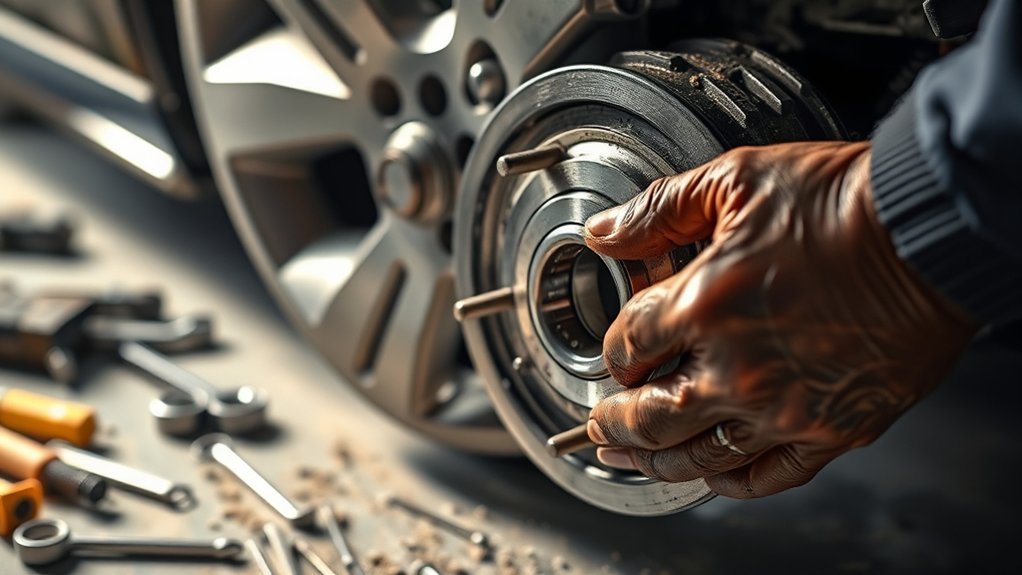
After confirming a wheel bearing issue, plan the repair carefully. Depending on the Sonata model year and wheel position, the repair may involve a complete hub and bearing assembly or a press-in bearing. Hub assemblies are usually more DIY-friendly, while press-in bearings often require a hydraulic press and special adapters.
- Verify the exact part: Use your VIN, model year, trim, engine, drivetrain, brake package, and wheel position. Hyundai part numbers can vary by front or rear location and by equipment package.
- Use the right tools: A torque wrench is essential. Incorrect torque on axle nuts, hub bolts, or lug nuts can damage the new bearing or create safety issues.
- Inspect related parts: Check the axle nut, hub bolts, ABS sensor wiring, brake rotor, pads, caliper bracket, dust shield, and tires while everything is apart.
- Clean mounting surfaces: Rust or debris behind the hub can cause runout, brake pulsation, or premature bearing failure.
- Test drive after repair: Drive at the same speeds where the noise appeared and confirm the sound is gone. Recheck for warning lights and abnormal heat.
Warning: Do not reuse single-use fasteners if Hyundai service information specifies replacement. Always follow the factory procedure and torque values for your exact Sonata, because specifications vary by year and hub design.
Ensuring Correct Part Compatibility for Your Hyundai Sonata
Verifying correct part compatibility protects your Sonata’s handling, braking, ABS operation, and long-term bearing life. Start with your Vehicle Identification Number (VIN) when sourcing parts. OEM listings such as Hyundai OEM Parts Online allow VIN-based parts lookup, which helps reduce fitment mistakes.
Do not assume every Sonata uses the same wheel bearing or hub. Front and rear assemblies may differ, hybrid and non-hybrid models may differ, and some rear hubs may vary by brake or driver-assistance equipment. If an online catalog, parts store, and forum disagree, trust VIN-based Hyundai parts data or contact a Hyundai dealer parts department.
| Before Ordering | Why It Matters |
|---|---|
| VIN | Confirms exact production details and equipment. |
| Front or rear position | The hub or bearing design may differ by axle. |
| ABS sensor compatibility | Wrong sensor design can trigger warning lights or stability-control issues. |
| Wheel speed sensor wiring | Connector shape and routing must match the original part. |
| Torque specifications | Improper torque can shorten bearing life or create unsafe looseness. |
[Products Worth Considering]

COMPATIBILITY - 512553 Wheel Hub assembly: ①Compatible with Hyundai: 2015-2019 Sonata (Rear; All Models), 2016-2021 Tucson (Rear; FWD), 2020-2022 Veloster N (Rear; All...
How Much Does Hyundai Sonata Wheel Bearing Replacement Cost?
Cost depends on the model year, whether the repair is a hub assembly or press-in bearing, the wheel position, parts quality, labor rates, rust, and whether related parts are needed. As a general guide, RepairPal’s Hyundai Sonata wheel bearing estimate lists an average range of about $275 to $517 for wheel bearing replacement, while hub assembly replacement estimates can be higher on some model years and configurations.
Dealer repairs may cost more than independent shops, but a dealer parts counter can be useful for confirming the correct OEM number. DIY replacement can save labor, but only makes sense if you have safe lifting equipment, the correct tools, and access to factory torque specifications.
[Products Worth Considering]
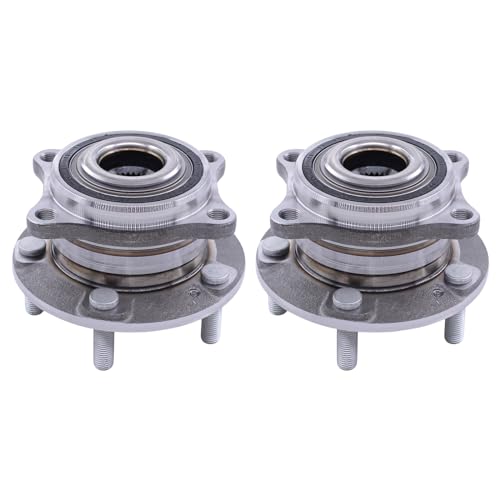
For Hyundai Nexo 2019-2020 For Hyundai Sonata 2015-2019 For Hyundai Tucson 2016-2020 For Hyundai Veloster N 2020 For Kia Cadenza 2017-2019
Frequently Asked Questions
How do I diagnose which Hyundai Sonata wheel bearing is making noise?
Start with a safe road test. A bearing noise usually rises with road speed. If the noise gets louder during a gentle left turn, the right-side bearing may be loaded; if it gets louder during a gentle right turn, the left-side bearing may be loaded. Confirm with tire inspection, tire rotation, lifted-wheel play checks, and brake inspection before replacing parts.
How much does it cost to replace a wheel bearing on a Hyundai Sonata?
The price varies by year, wheel position, parts type, and labor rate. Current repair-estimate data commonly places Hyundai Sonata wheel bearing replacement in the few-hundred-dollar range per wheel, with some hub assembly repairs costing more. Get a VIN-specific estimate before approving the repair.
What can be mistaken for wheel bearing noise?
Cupped tires, uneven tread wear, brake pad or rotor noise, a bent dust shield, loose suspension parts, wheel balance problems, and CV axle issues can all sound like a bad wheel bearing. That is why tire rotation, tread inspection, brake inspection, and lifted-wheel checks are important.
Can I drive my Sonata with a noisy wheel bearing?
A mild hum may allow a short, cautious drive to a repair shop, but continued driving is risky if the noise is grinding, the wheel has play, the vehicle vibrates heavily, or an ABS warning appears. A failing bearing can affect wheel stability and braking performance.
Should I replace both wheel bearings at the same time?
Not always. Replace the confirmed faulty bearing or hub first unless both sides show noise, play, roughness, heat, or similar mileage-related wear. Some owners replace pairs for convenience, but diagnosis should guide the decision.
Conclusion
Diagnosing wheel bearing noise in a Hyundai Sonata comes down to patterns: speed-related sound, load changes during gentle turns, tire condition, lifted-wheel checks, and brake inspection. The original clue may be a hum around 35 mph, but the correct repair depends on confirming the source instead of guessing. Verify parts by VIN, follow Hyundai service information, and address severe noise or looseness immediately to keep your Sonata safe and quiet.
Sources
- Hyundai Owner’s Manual — factory owner information for safe lifting, tire care, warnings, and vehicle-specific maintenance guidance.
- Hyundai OEM Parts Online — VIN-based OEM Hyundai parts lookup and wheel hub/bearing fitment verification.
- NHTSA TireWise — tire pressure, tread, rotation, and tire-safety guidance.
- NSK Bearing Troubleshooting — bearing noise, vibration, and damage-diagnosis reference.
- RepairPal Hyundai Sonata Wheel Bearing Replacement Cost — current cost-estimate range for Hyundai Sonata wheel bearing replacement.


[…] found an aerodynamic path. If it changes more with pavement, inspect tire wear, tire pressure, wheel bearing noise, and suspension-related sounds before you chase door […]