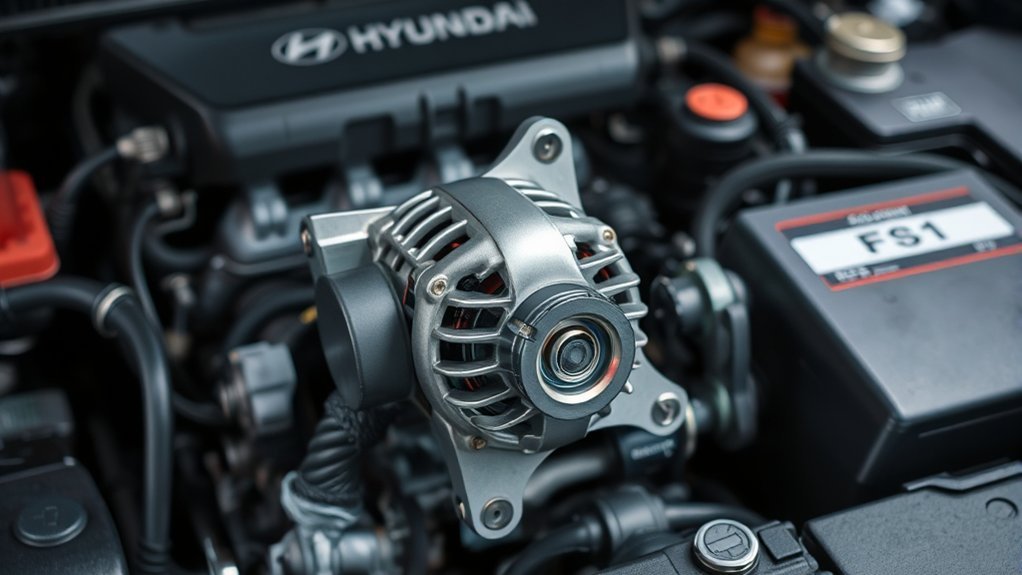
Alternator trouble in a Hyundai Sonata usually shows up as a battery warning light, dim or flickering lights, slow cranking, stalling, burning smells, or electrical accessories acting strangely. The quickest first check is a charging-voltage test at the battery with the engine running, followed by a close look at the battery terminals, drive belt, fuses, grounds, and wiring.
Quick Answer
To diagnose Hyundai Sonata alternator problems, test battery voltage with the engine off, then test charging voltage with the engine running. A typical healthy charging system reads about 14.0 to 14.5 volts at the battery while running. Low, unstable, or very high voltage points to a charging-system fault that needs further inspection.
Key Takeaways
- A battery-shaped warning light usually means a charging-system problem, not always a bad battery.
- With the engine running, most Sonatas should show charging voltage above resting battery voltage, commonly around 14.0 to 14.5 volts.
- Loose terminals, corrosion, a slipping belt, blown fuses, or damaged wiring can mimic a failed alternator.
- Do not ignore burning smells, stalling, multiple warning lights, or voltage spikes above about 15 volts.
- Sonata Hybrid models may use a DC-DC converter instead of a traditional alternator, so high-voltage diagnosis should be left to trained technicians.
At a Glance
| Time Required | 10–20 minutes for basic testing |
| Difficulty | Beginner to intermediate |
| Tools Needed | Digital multimeter, gloves, eye protection, flashlight, terminal brush or battery cleaner |
| Cost | Usually free if you own a multimeter; professional replacement cost varies by year, engine, labor rate, and parts choice |
Understanding Your Vehicle’s Electrical System
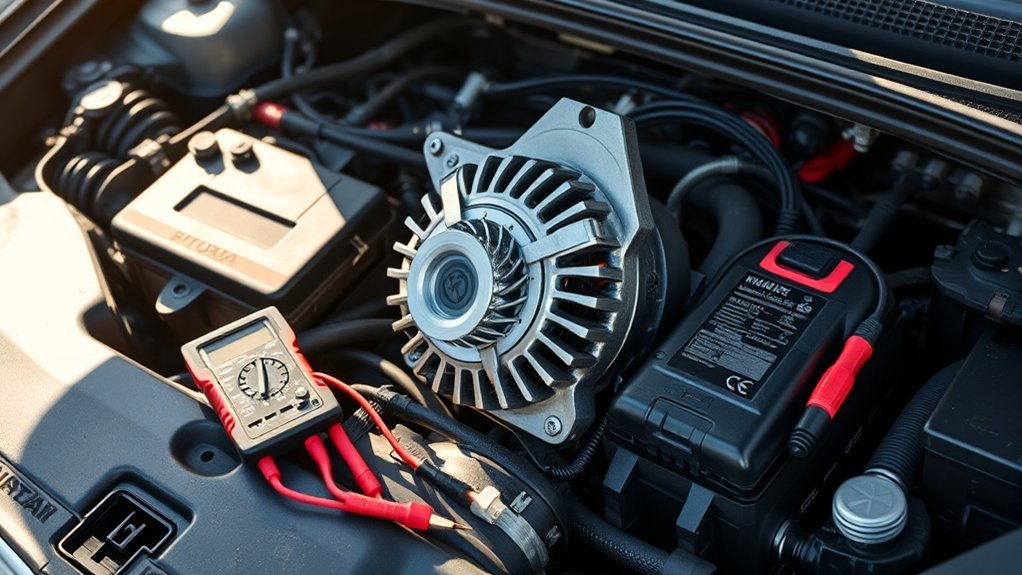
Your Sonata’s electrical system depends on three main pieces: the battery, the alternator, and the voltage regulator. The battery starts the engine and supports electronics when the engine is off. Once the engine is running, the alternator supplies power and recharges the battery. The voltage regulator controls charging output so the battery is not undercharged or overcharged.
According to AutoZone’s charging-system testing guide, many vehicles show about 14.0 to 14.5 volts at the battery with the engine running and accessories off. Your exact reading can vary slightly by model year, engine, temperature, battery condition, and electrical load, but it should be clearly higher than resting battery voltage.
Note: Always check the owner’s manual for your exact Sonata year and trim. Hyundai provides official manuals and warranty resources through MyHyundai Manuals & Warranties.
What Are the Common Signs of Alternator Failure?
Alternator failure often looks like a battery problem at first. A weak battery can cause slow starts, but a weak alternator can leave a good battery undercharged again and again. Watch for these symptoms, especially when more than one happens at the same time.
Symptoms of Alternator Failure
- Battery warning light: A battery-shaped dashboard light while driving usually means the charging system is not working correctly.
- Dim or flickering lights: Headlights, interior lights, or dashboard lights may dim, pulse, or brighten unexpectedly.
- Slow cranking or no-start condition: The engine may crank slowly because the battery has not been recharged properly.
- Electrical accessories acting up: Power windows, radio, blower motor, infotainment screen, or dashboard gauges may work slowly or erratically.
- Burning smell: A burning-rubber smell may come from a slipping belt, while an electrical odor can point to overheated wiring or internal alternator trouble.
- Whining, grinding, or growling noise: A worn alternator bearing or pulley can make noise that changes with engine speed.
- Stalling or rough running: Low system voltage can disrupt ignition, fuel delivery, sensors, and control modules.
Diagnosing Electrical Issues
Start with the simple checks before blaming the alternator. Inspect the battery terminals, battery cables, alternator belt, fuses, fusible links, and visible wiring. Corrosion, looseness, a weak ground, or a slipping belt can reduce charging voltage even if the alternator itself is still good.
Warning: If the battery light comes on while driving and you also notice power steering warnings, brake warnings, dim lights, smoke, or a burning smell, reduce electrical load, move to a safe place, and have the vehicle inspected. The car may be running only on remaining battery power.
How to Diagnose and Resolve Stalling Issues in Your Hyundai Sonata
Stalling can have many causes, including fuel, ignition, sensor, air-intake, engine-management, and charging-system faults. The alternator becomes a stronger suspect when stalling happens with dim lights, warning lights, slow electrical accessories, or a recently drained battery.
[Products Worth Considering]

The NOCO GENIUS5 is an all-in-one battery charging and maintenance solution for 6V and 12V lead-acid and lithium batteries. It features temperature compensation, dead-battery recovery, desulfation, and safe long-term maintenance to help extend battery life and performance. Compact and versatile, it works with a wide range of vehicles and comes with mounting accessories and a warranty.

This automatic 12V charger and maintainer delivers a full charge before switching to float mode to help keep powersports batteries ready for storage and regular use. Its four-step charging program is designed for lead-acid, flooded, AGM, and gel cell batteries, helping prevent overcharging while supporting longer battery life. Compact and easy to use, it includes both ring terminal and alligator clip connections plus smart safety features for dependable charging.

The KONNWEI KW208 is a versatile 12V battery tester designed to quickly analyze battery health, cranking performance, and charging system status for cars, trucks, boats, motorcycles, and more. It supports multiple battery types and provides clear guidance on whether a battery should be recharged or replaced, helping you diagnose issues before they become failures. With plug-and-play use, high accuracy, and multilingual support, it offers a convenient way to test batteries in-vehicle or out-of-vehicle.
Common Stalling Causes
A failing alternator may not supply enough steady voltage to keep the engine-management system working correctly. That can cause rough idle, hesitation, sluggish acceleration, or sudden shutdown. Still, do not overlook these related causes:
- Weak or discharged battery: A bad battery can stress the charging system and create misleading symptoms.
- Loose or corroded battery cables: Poor connections can interrupt power during vibration or acceleration.
- Slipping serpentine belt: If the belt slips, the alternator may not spin fast enough to charge properly.
- Blown charging-system fuse or fusible link: The alternator may be fine but unable to send current to the battery.
- Bad ground connection: Weak grounds can cause unstable voltage, random warning lights, and intermittent stalling.
Testing the Electrical System
Use a digital multimeter set to DC volts. Keep loose clothing, jewelry, long hair, and tools away from belts, pulleys, and fans while the engine is running.
- Check resting battery voltage. With the engine off for several minutes, touch the red lead to the positive battery terminal and the black lead to the negative terminal. A healthy fully charged 12-volt battery is commonly near 12.6 volts.
- Start the engine. Measure voltage at the battery again. The reading should rise above the resting battery voltage.
- Check charging voltage at idle. A typical healthy system often reads about 14.0 to 14.5 volts with accessories off.
- Add electrical load. Turn on headlights, rear defroster, and the blower motor. Voltage should stay reasonably stable and not collapse toward resting battery voltage.
- Raise engine speed slightly. At about 1,500–2,000 RPM, voltage should remain controlled. Large swings, drops, or spikes suggest a charging fault.
| Reading at Battery | Likely Condition | What to Do Next |
|---|---|---|
| About 12.4–12.7 V, engine off | Battery has usable charge | Continue with running test |
| About 14.0–14.5 V, engine running | Charging output looks normal | Check for intermittent issues if symptoms remain |
| Near 12 V, engine running | Alternator may not be charging | Inspect belt, fuses, wiring, grounds, and alternator |
| Below 13 V under load | Weak charging or heavy voltage drop | Test cables, connections, and alternator output |
| Above about 15 V | Possible overcharging | Stop testing and seek professional diagnosis |
How to Test Your Alternator Output Effectively
Testing alternator output is one of the best ways to separate a battery problem from a charging problem. The test below works for most gas-engine Hyundai Sonata models with a conventional alternator.
- Park safely. Set the parking brake, place the car in Park, and open the hood.
- Inspect first. Look for a loose belt, damaged wiring, corrosion, leaking battery, or a missing alternator pulley nut.
- Measure battery voltage with the engine off. Write the number down.
- Start the engine and measure again. The voltage should climb above the engine-off reading.
- Turn on accessories. Use headlights, blower, and rear defroster to add load.
- Watch for stability. A healthy system should not drop sharply, flicker, or spike.
- Compare symptoms with readings. Low voltage, unstable voltage, or high voltage means the charging system needs deeper testing.
Pro Tip: If your voltage looks normal at idle but the symptoms happen while driving, ask a shop to perform a load test and voltage-drop test. Some alternators fail only when hot or under heavier electrical demand.
[Products Worth Considering]

The TOPDON BT100 helps you quickly check the health and charge status of 12V lead-acid batteries with clear analytical results, including state of health, state of charge, voltage, and cranking performance. It supports a wide range of battery types and vehicles, making it a practical tool for diagnosing starting and charging issues at home or in the shop. Compact and easy to use, it provides fast, reliable testing without needing to charge the device first.

This automotive circuit tester checks low-voltage DC systems from 3-65V, making it useful for diagnosing headlights, taillights, fuses, sockets, and other vehicle wiring issues. The digital backlit display provides clear voltage readings with fine accuracy, while the bidirectional polarity indicator helps you test from either ground or positive. Built with a durable probe, insulated tip, and extra-long spring wire, it is designed for dependable everyday use in automotive and household electrical work.

Fitment: New Alternator Compatible with 2010-2013 Kia Forte, 2006-2010 Optima 2.4L, 2007-2010 Rondo 2.4L; 2006-2010 Hyundai Sonata 2.4L
How to Inspect and Maintain Battery Connections
Battery connections are easy to overlook, but they are one of the most common causes of no-start and charging complaints. A corroded or loose terminal can make a good alternator look bad.
- Check for corrosion. White, blue, or green buildup around the terminals can restrict current flow.
- Confirm tightness. Terminals should not rotate by hand on the battery posts.
- Inspect cable condition. Replace cables with cracked insulation, frayed strands, swelling, or heavy corrosion under the insulation.
- Clean carefully. Use battery cleaner or a baking soda and water mixture, then rinse lightly and dry the area. Avoid letting cleaning solution enter the battery cells.
- Protect the terminals. After cleaning and tightening, use a proper terminal protectant to slow future corrosion.
If you disconnect the battery, check your owner’s manual first. Some vehicles may need window, steering angle, infotainment, or idle relearn steps after power is removed.
What Should You Do If You Think Your Alternator Is Failing?
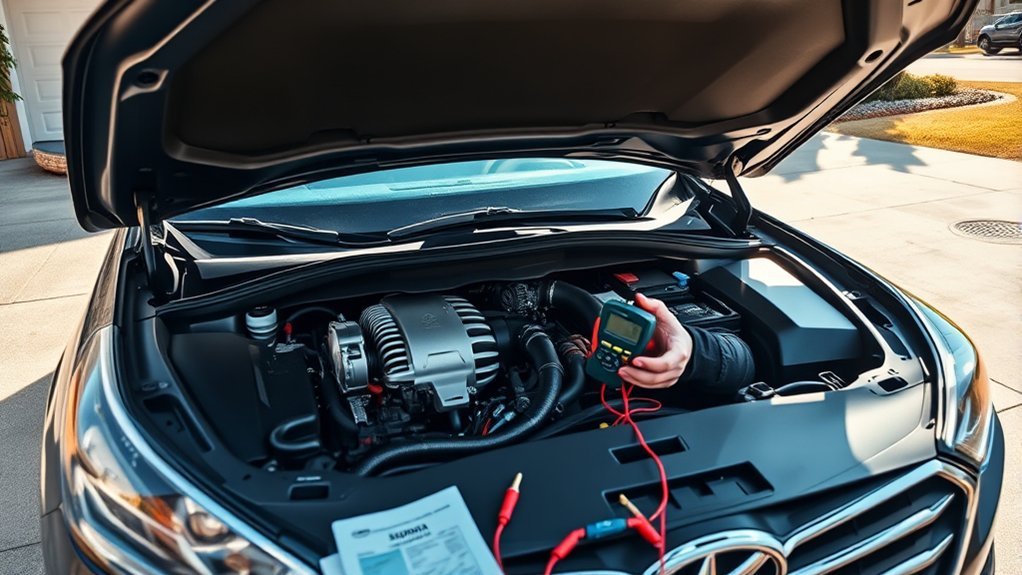
If you suspect alternator failure, do not keep jump-starting the car and hoping the problem goes away. A jump-start may get the engine running, but it will not fix an alternator that cannot recharge the battery.
- Reduce electrical load. Turn off heated seats, defrosters, extra lights, and nonessential accessories.
- Test voltage. Use the multimeter steps above to check charging output at the battery.
- Inspect visible parts. Look at the belt, terminals, connectors, and wiring before replacing parts.
- Scan for codes. Charging-system problems may set voltage-related diagnostic trouble codes such as P0560, P0561, or P0562.
- Get a second test if needed. Auto parts stores such as AutoZone offer alternator testing, and a repair shop can perform a more complete charging-system diagnosis.
[Products Worth Considering]

Accurately Test Full Features: Accurately measures AC/DC voltage, DC current, resistance, continuity test, diode and batteries.

【Alternator Fitment】- Automotive new alternator replacement for Hyundai for Sonata 2.4L 2010,for Hyundai for Sonata 2.4L 2011,for Hyundai for Sonata 2.4L 2012,for Hyundai for Sonata 2.4L 2013,for Kia for Optima 2.4L 2011,for Kia for Optima 2.4L 2012,for Kia for Optima 2.4L 2013
Special Note for Hyundai Sonata Hybrid Models
If you drive a Sonata Hybrid, do not assume it has the same alternator setup as a gas-only Sonata. Hybrid vehicles often maintain the 12-volt system through a DC-DC converter tied to the hybrid system rather than a belt-driven alternator. Symptoms can look similar, but the diagnosis and safety risks are different.
Warning: Do not probe orange high-voltage cables, hybrid battery components, inverter components, or DC-DC converter wiring. Hybrid-system diagnosis should be handled by a qualified technician with the correct safety equipment.
When to Seek Professional Help for Electrical Issues
Basic voltage testing is safe for many DIYers, but some symptoms call for a professional diagnosis right away. Contact a qualified mechanic or Hyundai dealer if you notice any of the following:
- Battery light stays on while driving. The vehicle may be losing charging power.
- Multiple warning lights appear together. Low or unstable voltage can trigger unrelated-looking warnings.
- Burning smell, smoke, or hot wiring. Stop driving and have the car inspected.
- Voltage is above about 15 volts. Overcharging can damage the battery and electronic modules.
- The vehicle stalls repeatedly. Stalling in traffic is a safety risk.
- You drive a Sonata Hybrid. High-voltage systems require special training.
- Your vehicle may have an open recall or service campaign. Check your VIN through NHTSA’s recall lookup or Hyundai’s recall and service campaign lookup.
Frequently Asked Questions
How much does it cost to fix an alternator on a Hyundai Sonata?
The cost depends on the model year, engine, labor rate, parts brand, and whether related parts such as the belt, tensioner, battery, or cables also need repair. RepairPal’s 2026 estimate lists Hyundai Sonata alternator replacement at about $696 to $1,074 before taxes, fees, location differences, and related repairs.
Can AutoZone diagnose an alternator problem?
Yes. AutoZone says it offers free alternator testing at many stores and can test the alternator in the vehicle or on a bench if the alternator has already been removed. A shop diagnosis is still better when the problem is intermittent, wiring-related, or tied to a hybrid system.
What voltage should a Hyundai Sonata alternator produce?
Many healthy charging systems read around 14.0 to 14.5 volts at the battery with the engine running and accessories off. Readings near resting battery voltage, unstable voltage, or voltage above about 15 volts need further diagnosis.
Can a bad alternator cause a Hyundai Sonata to stall?
Yes, it can. If the alternator cannot supply steady voltage, the battery may drain while driving and the engine-control, ignition, fuel, or sensor systems may lose reliable power. However, stalling has many possible causes, so test the charging system before replacing parts.
Is it safe to drive with the battery light on?
It is not something to ignore. If the charging system has failed, the car may run only until the battery is depleted. Turn off nonessential accessories, avoid long driving, and head to a safe location or repair facility.
Conclusion
Keeping your Hyundai Sonata’s alternator and charging system in good shape starts with simple checks: watch the battery warning light, test voltage with a multimeter, inspect the terminals, and look for belt or wiring problems. If voltage is low, unstable, or too high, do not guess. A proper charging-system test can prevent repeat dead batteries, unexpected stalling, and unnecessary parts replacement.
Sources
- Hyundai Manuals & Warranties — official owner’s manual and warranty reference for model-specific guidance.
- AutoZone: How to Test the Alternator and Charging System — charging-system components, common symptoms, and multimeter voltage guidance.
- AutoZone: Testing Your Alternator at AutoZone — alternator testing service details and common alternator symptoms.
- RepairPal: Hyundai Sonata Alternator Replacement Cost — current cost estimate range and related replacement information.
- NHTSA Recalls Lookup — official VIN-based safety recall search.
- Hyundai Safety Recalls and Service Campaigns — Hyundai’s official recall and campaign lookup.