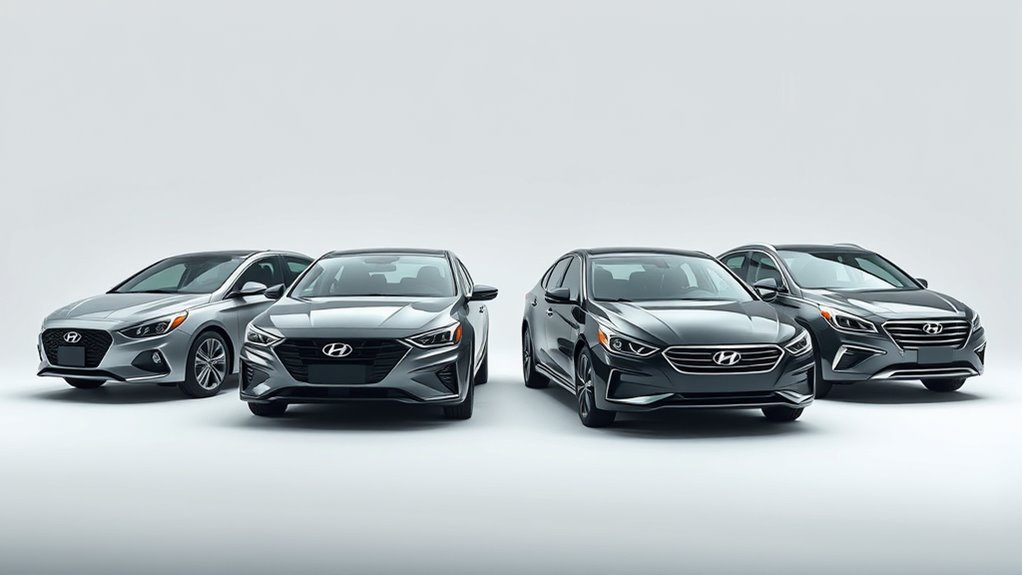
You’ll find every Hyundai Sonata year traced from its 1985 roots through major redesigns, so you can spot strengths and weak spots fast. Favor 2015–2019 for top reliability and efficiency, consider 2011–2014 for longevity, and pick 2020–2024 for modern tech and a 2.5L engine with AWD now optional. Avoid 2006–2010 for iffy reliability. You’ll get model-by-model notes on engines, trims, common faults, and the best buys if you want more detail.
Quick Timeline & Sonata Buy/Avoid Snapshot
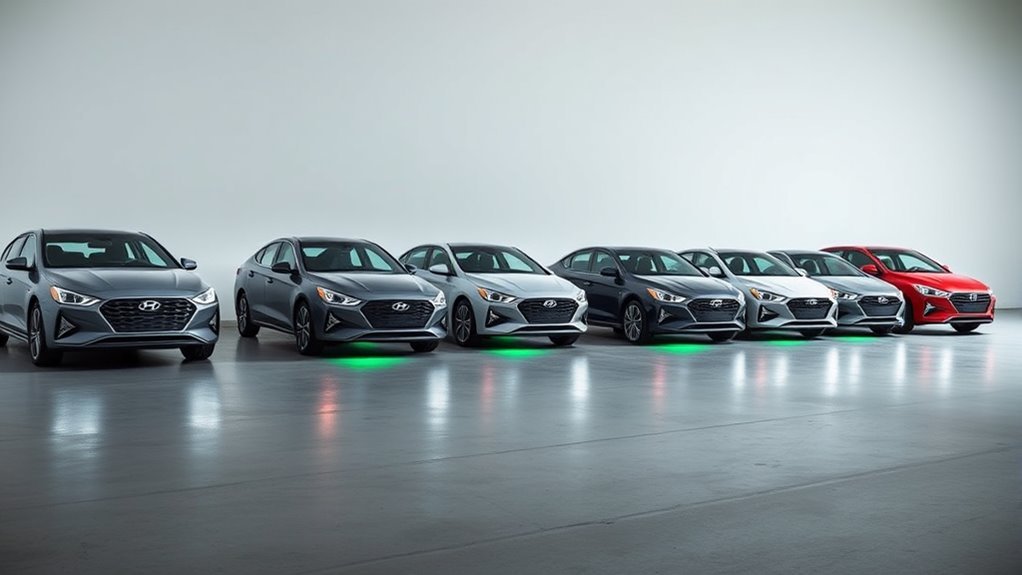
Across eight generations since 1985, the Sonata has steadily improved in performance and safety, so you can compare model years by what matters most: reliability, tech, and drivability. You’ll use Sonata comparisons to spot clear buy/avoid signals: favor 2015–2019 for its strong 8.8 reliability rating and consider 2011–2014 for its 8.65 longevity. The 2020–2024 generation adds contemporary tech, a 2.5L 191‑hp base engine with up to 34 mpg, and the 2024 facelift introduces all‑wheel drive, widening your options. Avoid early‑2000s cars, especially 2006–2010, which show lower reliability trends around 7.96 and weaker safety features. This snapshot lets you choose freedom through informed, practical selection.
[Products Worth Considering]

This activated carbon cabin air filter is designed as a replacement for select Hyundai Sonata gas models and Kia Cadenza vehicles, helping improve in-cabin air quality. It is engineered to capture odors, VOCs, and common pollutants for a fresher driving environment, while matching multiple OE and reference numbers for convenient fitment confirmation.
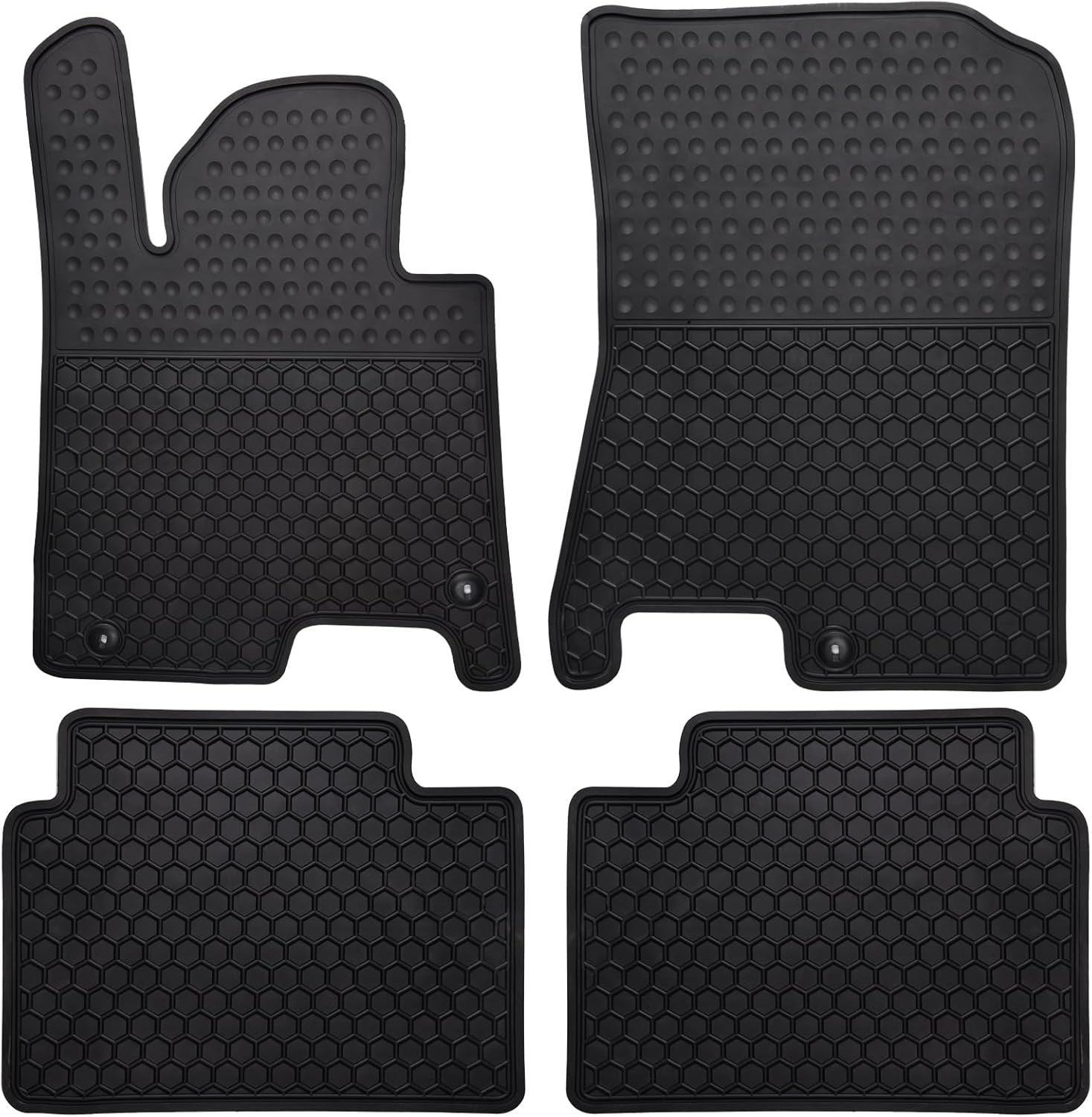
These custom-fit all-weather floor mats are designed for compatible Hyundai Sonata and Kia K5 models to help protect your vehicle's interior from mud, slush, dirt, and spills. Made from odorless, durable rubber with a deep hexagon pattern, they offer reliable anti-slip coverage and are easy to remove and clean with water or a damp towel. The set is built for long-lasting use in every season and helps keep your car looking clean while supporting resale value.

These custom-fit TPE floor mats are designed for Hyundai Sonata and Kia Optima models, delivering precise coverage with high-edge protection to help trap spills, dirt, and everyday messes. Built for all-weather durability, they offer anti-slip stability, odorless construction, and easy cleanup while helping preserve your vehicle's original carpet.
1985–1994 : Early Roots and North America Arrival (Y2)
You’ll see how the second-generation Sonata reshaped Hyundai’s design language from the first, shifting to a cleaner, more modern profile that prioritized interior space and front-wheel-drive packaging. Its 1989 U.S. debut — with 2.0L four- and Mitsubishi-sourced 3.0L V6 options — positioned Hyundai as a budget-minded alternative to Honda and Toyota. Comparing sales and incremental refinements through 1994 shows how those early choices set the platform for later Sonata improvements.
Early Design Evolution
The Sonata’s early evolution set the tone for Hyundai’s push into global markets: introduced in 1985 as a limited-market executive sedan, it was rethought for broader appeal with the 1988–1993 Y2 generation that marked Hyundai’s North American debut. You’ll see how design influences and deliberate aesthetic changes freed Hyundai from its conservative roots, shifting toward a modern, competitive mid-size.
- Giugiaro’s ItalDesign reshaped proportions, giving the Y2 a cleaner, more confident silhouette.
- Front-wheel drive layout and engine choices (Mitsubishi four-cylinder and V6) prioritized practicality over prestige.
- Value-focused features—cruise control, power seats—matched Japanese rivals while undercutting prices.
- Early sales success validated a liberated design direction that set the stage for future growth.
U.S. Market Entry
When Hyundai brought the Sonata to the U.S. in 1989 as its second-generation Y2 model, it aimed squarely at cost-conscious buyers who wanted mid-size practicality without luxury prices. You’ll see the Y2 as a deliberate market strategy pivot: after the Stellar’s failed luxury bid, Hyundai went pragmatic. By offering Mitsubishi-sourced four-cylinder and V6 engines, front-wheel drive, and budget pricing, the Sonata matched American expectations for efficiency and everyday use. In 1989 it sold 34,146 units, proving its consumer appeal and earning a foothold against established midsize rivals. By 1994 the Sonata’s reputation for reliability and value had grown, freeing you to choose sensible transportation and setting Hyundai up for broader North American expansion.
1995–2005 – Y3 & EF: Engines, Packaging, and What Changed
You’ll notice the Y3 and EF generations shifted Hyundai’s approach to engines and packaging from basic practicality toward broader appeal. The Y3 prioritised rear legroom with a longer wheelbase and a 3.0L V6 that pushed 0–60 mph to 9.3 seconds, while the EF added a 2.4L option, European-inspired styling, and a stronger warranty that changed buyer perception. Compare those moves and you’ll see how Hyundai balanced comfort, performance choices, and brand credibility.
Engine Evolution
Although Hyundai still leaned on Mitsubishi for V6 hardware in the mid-’90s, the Y3 (1995–1998) moved Sonata buyers toward better performance and packaging with a 2.0L inline-four, a Mitsubishi-sourced 3.0L V6, and a longer wheelbase that improved rear legroom and ride comfort. You’ll notice clear engine upgrades from Y3 to EF as Hyundai introduced in-house 2.4L I4 and 2.5L V6 mills. That shift changed performance comparisons, reliability factors, fuel efficiency, and market trends.
- Y3: Mitsubishi 3.0L V6 and 2.0L I4 — tunable, basic maintenance tips, common aftermarket modifications.
- EF: Hyundai 2.4L/2.5L — better tech, improved mpg, 170-hp V6 hits 0–60 in 9.5s.
- Warranty boosts consumer confidence.
- You get clearer longevity and service expectations.
Packaging & Changes
Because Hyundai stretched the Sonata’s wheelbase and rethought interior space, you get noticeably more rear legroom and a smoother ride in the Y3 compared with earlier models. That packaging shift paired with a 2.0L I4 and an optional 3.0L V6 (0–60 mph in 9.3 seconds) shows Hyundai balancing comfort and performance. By the EF era, design improvements moved toward European-inspired styling and tighter packaging cues that feel more composed. You also gain the brand’s first V6 in the Sonata and a persuasive 10-year/100,000-mile powertrain warranty that reflects listening to consumer feedback. Sales topping 100,000 in a year prove those changes liberated buyers from value compromises, offering a midsize sedan that’s practical, confident, and intentionally refined.
2006–2014 – NF & YF: U.S. Production, Powertrains, Reliability Notes
When Hyundai began U.S. production with the NF (2006–2010), it paired a refined V6 that pushed 235 hp and a 0–60 mph of about 7.0 seconds with a bold 10-year/100,000-mile powertrain warranty that bolstered buyer confidence; you felt that security. You’ll compare NF features to YF enhancements and see clear progression in design updates and interior upgrades. Reliability ratings rose from 7.96 (NF) to 8.65 (YF), reflecting improved engineering and market performance. Consider these points:
Hyundai’s NF V6 and bold warranty set the stage; YF’s cleaner engines, upscale cabin, and higher reliability sealed the progress
- Powertrain comparisons: NF’s V6 vs YF’s direct-injection fours (198–200 hp), fuel economy gains to 35 mpg highway.
- Consumer confidence: warranty and reliability ratings drove sales.
- Design updates: YF’s upscale interior and tech.
- Market performance: competitiveness in midsize segment.
2015–2019 – LF: Refinement, Hybrid/PHEV, Common Issues
Shifting into a more polished era, the 2015–2019 Sonata LF sharpened Hyundai’s focus on comfort, tech, and efficiency by adding upscale touches like a panoramic sunroof and advanced infotainment while expanding powertrain choices to include efficient hybrid and PHEV variants. You’ll notice tangible refinement features—quieter cabin, smoother ride, and upgraded materials—that elevate daily driving and free you from mundane commutes. Choose the hybrid or PHEV for hybrid advantages: impressive fuel economy (around 39 mpg combined on the hybrid) and lower running costs. Performance options range from a 185 hp 2.4L to a 245 hp 2.0T, striking a balance between efficiency and punch. Be aware of common malfunctions—automatic transmission and electrical complaints show up in owner reports. High safety ratings (IIHS Top Safety Pick+) reinforce confidence.
[Products Worth Considering]

This cabin and engine air filter kit is designed for compatible Hyundai Sonata gas models from 2015 to 2019 with a 2.4L engine. It helps improve airflow, capture dust and impurities, and support cleaner cabin air and efficient engine performance. The kit is engineered for long service life and simple installation, making routine maintenance easier.

This filter combo is designed for Hyundai Sonata gas models from 2015 to 2019, including non-hybrid 2.4L vehicles, and replaces both the engine and cabin air filters in one convenient set. It helps improve engine airflow while also refreshing the cabin environment with activated carbon odor control and high-efficiency particle filtration for cleaner, quieter driving.

This Toyota navigation SD card provides updated North America maps and points of interest for compatible factory navigation systems. It is preloaded with recent road and location data to help drivers find destinations, services, and routes more easily across the U.S. and Canada. Designed for select Toyota models, it offers a simple plug-and-play replacement for the original navigation card.
2020–2023 – DN8 Launch: Platform, Engines, and Tech Highlights
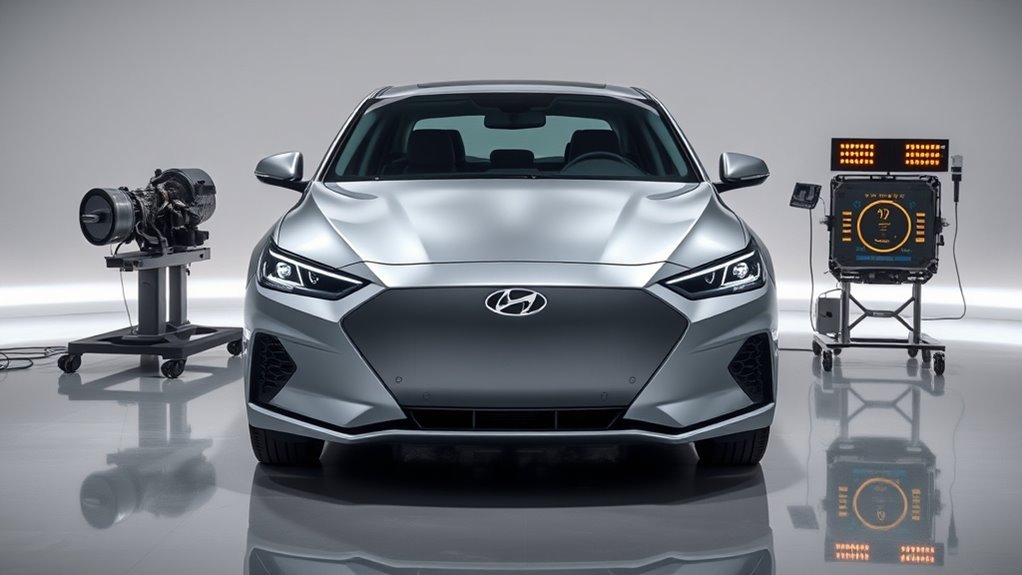
Although it kept Sonata’s family sedan roots, the DN8 introduced in 2020 pushed the model into a more modern, tech-forward territory with sharper styling and a new platform that improved ride and interior space. You’ll notice design innovations that make the DN8 feel liberated from conservative midsize norms. Choose among engines for distinct personalities: a 2.5L 191 hp base, a 1.6L turbo 180 hp, or a 2.5L turbo 290 hp, so engine comparisons are clear-cut. Tech advancements center on the dual 12.3-inch display pairing infotainment with instrumentation. Safety features like Smart Cruise Control and Safe Exit Warning lift the car toward semi-autonomous behavior.
- Platform: improved space and ride
- Styling: sharper, bold details
- Powertrains: defined performance tiers
- Cabin: tech-forward, driver-focused
2024–Now – DN8 Facelift: AWD, Styling, Safety & Infotainment
While keeping the DN8’s tech-forward cabin, the 2024 facelift sharpens Sonata’s presence with a full-length LED light strip and — for the first time — available AWD on the base 2.5L, giving you better traction without forcing a performance model. You get LED innovation that reads bold and practical, AWD benefits that add confidence in poor grip, and interior tech that centers dual 12.3-inch displays for clear control. Safety upgrades like Smart Cruise Control and Safe Exit Warning protect occupants and let you drive freer.
| Feature | Effect |
|---|---|
| Full-length LED | Visibility + styling |
| AWD on 2.5L | Traction + composure |
| Dual 12.3″ displays | Infotainment clarity |
The facelift frees you to choose safety and style together.
Sonata Buying Guide : Best Years, Years to Avoid, and Inspection Checklist
Now that you know what the 2024 facelift adds in styling, AWD and tech, it’s time to pick the right year when shopping used. You’ll want freedom from nagging repairs and modern safety, so compare generations and choose with purpose.
- Best years: 2020–2024 (especially 2021) for Sonata features comparison — advanced tech, safety, reliability.
- Great value: 2015–2019 for fuel efficiency and solid reliability (2.4L, ~33 mpg).
- Years to avoid: 2006–2010 — lower reliability, outdated tech, potential safety issues.
- Inspection checklist: prioritize maintenance history, recall checks, verify upgraded safety features, and perform a thorough Used Sonata inspection for mileage and service records.
Choose confidently; pick liberation over compromise.
Frequently Asked Questions
What Are the Sonata’s Factory Paint Codes and Color Availability by Year?
You can find Sonata factory color options and paint code variations by year via Hyundai build sheets, dealer records, or VIN decoder services; compare years to see discontinued hues, new palettes, and regional-exclusive finishes for liberated, informed choices.
How Much Does Hyundai Sonata Extended Warranty Cost and What Does It Cover?
You’re worried it’s pricey, but Hyundai’s extended warranty options start around $500–$2,500 depending on term and mileage; coverage details include powertrain, roadside, and optional bumper-to-bumper plans, so you’ll choose freedom and reassurance.
What Aftermarket Performance Upgrades Are Compatible With Each Sonata Generation?
You can fit turbocharger upgrades, suspension enhancements, brake system improvements, and ECU tuning options across generations; you’ll compare bolt‑on compatibility, forced‑induction readiness, platform suspension mounts, and brake upgrades to liberate performance choices confidently.
Where Can I Find Original Service Manuals and Wiring Diagrams for Older Sonatas?
Like finding a vintage map, you’ll check OEM dealers and libraries for service manual sources, compare Haynes/ManualsLib and HyundaiTechInfo, and use forums, eBay and archived dealer wiring diagram resources to reclaim control.
What Are the Dealer Trade-In Values Versus Private Sale Prices for Sonatas?
You’ll generally get lower dealer trade-in differences but faster, simpler sales; private sale comparisons show higher prices but more effort and risk. Weigh convenience versus maximum return, and choose the route that frees your time.
Conclusion
By now you’ve seen how the Sonata evolved from a sensible commuter to a tech-packed midsizer. Pick a 2011–2014 NF/YF for proven reliability, or a 2020–2023 DN8 if you want modern safety and style; avoid early ’90s imports for rust and 2015–2019 LFs if torque-steer and infotainment quirks bother you. Imagine 1.6 million Sonatas sold worldwide in a single year—that’s a lot of spare parts and buyer options, so shop smart and inspect fluids, frame, electronics, tires, and service history.
[Products Worth Considering]
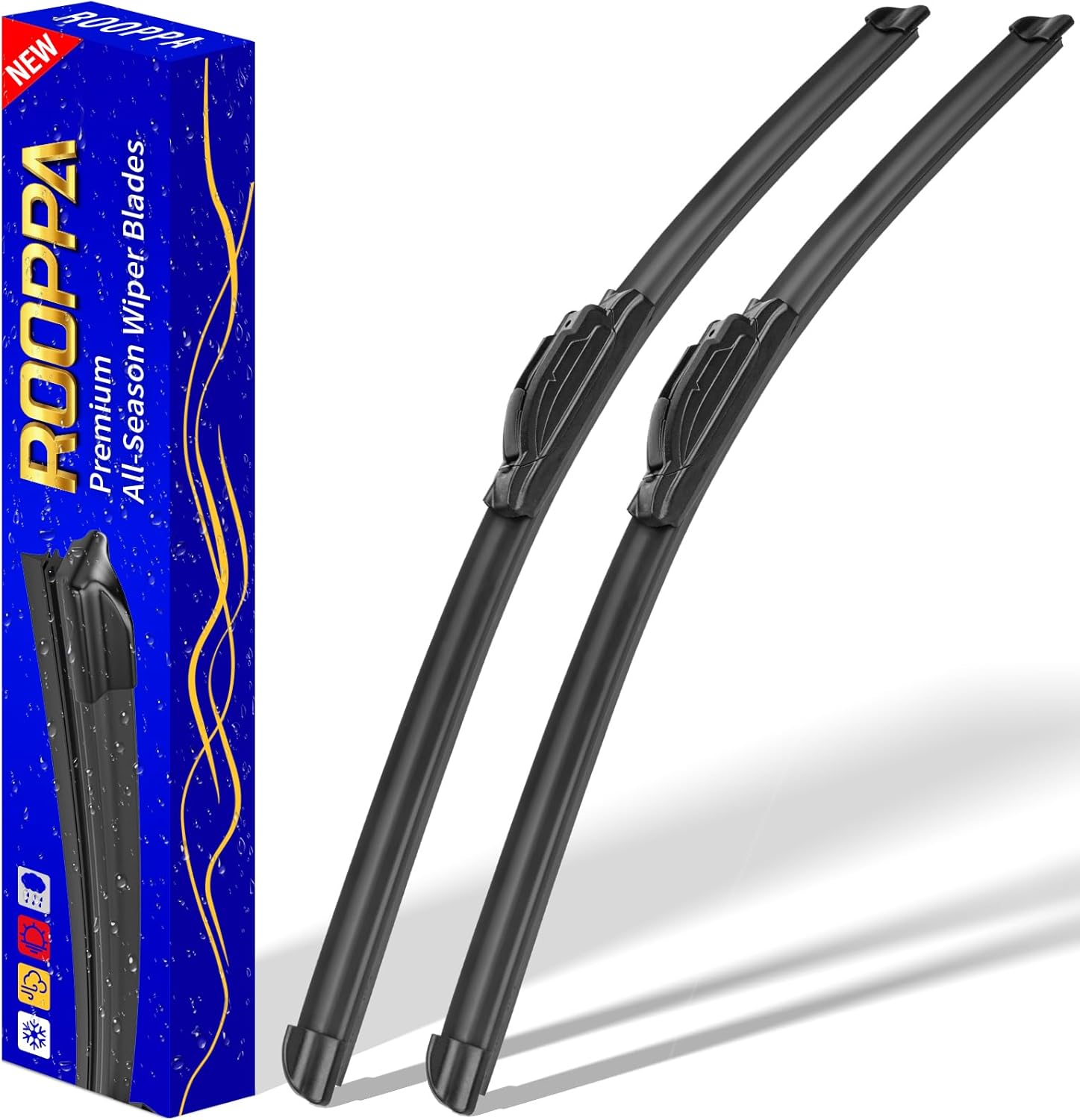
These front windshield wiper blades are designed as a direct replacement for compatible Hyundai models, helping restore clear visibility in rain and road grime. The hard-molded frame and stronger spring support smooth, reliable wiping performance, while the easy plug-and-play installation makes replacement simple. Included as a two-piece set, they are built for dependable everyday use with a one-year warranty for added confidence.

HAFIDI floor mats are custom-fit for select Kia Optima and Hyundai Sonata Hybrid models, using 3D laser scanning for precise coverage of the front and rear rows. Built from durable TPE with raised edges and anti-slip backing, they help contain dirt, water, snow, and spills while staying secure and easy to clean.

This A-Premium engine air filter is designed to help maintain clean airflow for compatible Lexus and Toyota vehicles, supporting better engine performance and efficiency. It uses fine filtration media to capture debris while minimizing airflow restriction, making it a practical replacement for routine maintenance. With fitment for multiple popular models and a convenient boxed single-pack design, it offers a straightforward solution for keeping your engine protected.