
If you’re experiencing interior rattles in your Toyota Supra, common culprits could be loose glove box latches or rear panel clips. To diagnose, press various dashboard areas and collaborate with passengers to pinpoint noises. Quick fixes include tightening screws, applying foam padding, or using tape for temporary relief. If rattles persist or complicate your driving comfort, it might be time to contemplate professional help. Want to explore how to maintain a rattle-free Supra?
Common Rattle Sources in Your Toyota Supra

When you’re cruising in your Toyota Supra, unexpected rattles can be more than just annoying—they can signal underlying issues. The glove box is a common culprit, where loose latches can create persistent noise. You might notice the rear panel rattling at higher speeds, often due to insufficiently secured panel clips. The dashboard mounts can also contribute to unwanted sounds, particularly when the targa top is off, leading to squeaks and groans. Check the driver’s door for loose components and the sun visors, which sometimes stick to the headlining. Seasonal changes can exacerbate rattles, as colder weather causes material contraction. Finally, confirm boot rubbers and heat shields are properly positioned, as debris accumulation can intensify these sounds.
How to Diagnose Rattles in Your Interior?
How can you effectively pinpoint the source of those pesky rattles in your Toyota Supra? Start using these rattle identification techniques to gain clarity:
- Apply pressure to various dashboard areas while listening for sound changes.
- Collaborate with passengers to identify noises during different driving conditions.
- Check common rattle sources like the glove box and door panels.
- Inspect for loose metal clips on the door skin and tighten any screws or fasteners.
- Document rattles and their locations for streamlined troubleshooting.
Using these strategies, you can tackle those annoying rattles head-on. Remember, collaboration with your passengers is key to isolating the noise effectively, leading you closer to a serene driving experience.
Quick DIY Fixes for Common Rattle Areas
Once you’ve identified the sources of rattles in your Toyota Supra, it’s time to tackle those issues with some straightforward DIY fixes. Start by applying thin foam padding or felt tape where rattles occur, particularly in the glove box and along the dashboard padding. This creates a buffer that minimizes vibrations. Next, tighten any loose screws or clips in your interior, especially around door panels and the dashboard, as many rattles stem from unsecured components. Don’t forget to use silicone lubricant on hatch stops and rubber seals to cut down on squeaks. Regularly check and tighten metal clips on door skins, as loose clips can lead to persistent rattling during your drives. Enjoy a quieter cabin!
Best Materials for Reducing Rattles and Vibration
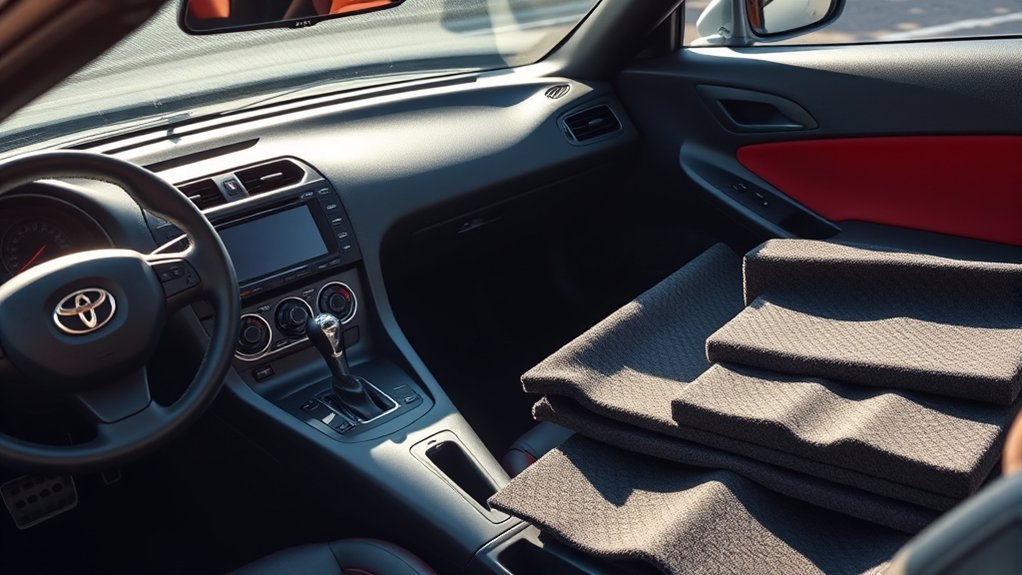
To effectively reduce rattles and vibrations in your Toyota Supra, choosing the right materials is crucial. The effectiveness of these materials can transform your driving experience, making it quieter and more enjoyable. Here are some top choices:
- Foam Padding: Absorbs vibrations in rattling areas.
- Sound Deadening Materials: Products like Dynamat minimize noise considerably.
- Felt or Rubber Strips: Create buffers between contact points for effective vibration dampening.
- Tape Solutions: Use gaffer or duct tape for quick temporary fixes.
- Temporary Fixes with Paper: Folded paper can serve as a low-cost rattle buffer.
When installing, verify proper placement and coverage for maximum material effectiveness. Addressing rattles with these materials will enhance your Supra’s comfort on the road.
Seasonal Influences on Rattles: What to Expect
As temperatures drop, you might notice that rattles in your Toyota Supra become more pronounced, revealing how seasonal changes can profoundly impact vehicle noise. Cold weather causes materials to contract, increasing gaps and vibrations, especially in tightly fitted components. This makes winter maintenance essential, as regular inspections can help address wear in rubber components and fasteners.
| Temperature Effect | Rattle Intensity |
|---|---|
| Cold (Below 32°F) | High |
| Moderate (32°F-60°F) | Moderate |
| Warm (Above 60°F) | Low |
Many owners report fewer issues during warmer months, so understanding these seasonal influences helps you anticipate and mitigate rattles effectively. Stay proactive to keep your driving experience smooth and enjoyable!
When to Seek Professional Help for Rattles?
If you’ve tried fixing those pesky rattles without success, it might be time to call in a pro. Complex issues, especially in areas like the dashboard, can be tricky to tackle on your own. Plus, if your Supra is still under warranty, you’ll want to make sure any repairs are covered.
Persistent Rattles After Fixes
When persistent rattles plague your Toyota Supra, it often signals that DIY fixes aren’t enough to tackle the underlying issues. If you’ve tried common remedies but the rattle frequency remains high, it’s time to evaluate professional help. Here are some signs to look out for:
- Rattles persist despite multiple DIY attempts
- Increased wear on components over time
- Compromised driving comfort and vehicle integrity
- Difficulty pinpointing the source of the noise
- Rattles occurring under specific conditions
Consulting a professional can provide access to hard-to-reach areas, ensuring a thorough diagnosis. Documenting where and when rattles occur will help specialists resolve the issue efficiently, restoring your driving experience to its intended comfort.
Complex Interior Disassembly Needed
Persistent rattles can lead you to contemplate deeper issues within your Toyota Supra’s interior. If you’ve tried surface inspections without success, it might be time for a more thorough approach, including dashboard removal and trim piece inspection. Users often find that complex disassembly reveals hidden problems contributing to those annoying sounds. If the rattling persists despite your DIY efforts, seeking professional help can save you time and prevent damage to interior components. Professionals have the specialized tools and expertise necessary for proper reassembly, ensuring everything fits snugly. Plus, documenting the disassembly process is vital; incorrect reassembly could lead to even more rattles. If you’re not comfortable with intricate repairs, don’t hesitate to reach out for assistance.
Warranty Coverage Considerations
While you might feel tempted to tackle every rattle in your Toyota Supra on your own, understanding warranty coverage is crucial before diving into extensive repairs.
- Document all rattles and repairs attempted.
- Consult a dealer before the warranty expires.
- Warranty typically covers defects in materials and workmanship.
- Be cautious with aftermarket modifications; they may affect coverage.
- Keep records to support warranty claims.
If you’ve tried DIY fixes like tightening screws or adding padding without success, it’s wise to seek professional help. Proper documentation is essential; it strengthens your warranty claims, ensuring you get the support you need. Always be aware of your warranty terms to avoid any surprises down the road.
How to Maintain a Rattle-Free Supra

To maintain a rattle-free Toyota Supra, it’s essential to regularly inspect and tighten screws and bolts throughout the interior. Focus on areas like the dashboard, glove box, and door panels, as loose components can cause annoying rattles. Implement soundproofing techniques by applying materials like Dynamat in high-vibration spots to considerably reduce noise. Additionally, use thin foam padding or felt tape between contact points to create a buffer against rattling. Keep your glove box organized and free of loose items, as they can shift and contribute to noise. Don’t forget to monitor seasonal changes; cold weather can exacerbate rattles, so check rubber seals and components more frequently during those months. Your Supra will thank you!
Frequently Asked Questions
Why Is My Car Making a Rattling Noise on the Inside?
Your car’s making rattling noises due to loose components or inadequate sound insulation. Check for any unsecured parts inside, and consider adding sound-dampening materials to enhance your driving experience and reduce interior noise.
What Are the Common Problems With Supras?
Common problems with Supras include engine performance issues and suspension problems. You might experience reduced power or handling inconsistencies, so it’s essential to stay vigilant and address any signs of trouble promptly for ideal driving enjoyment.
How to Stop Interior Rattling?
Isn’t it frustrating to hear those annoying rattles? To stop them, focus on interior maintenance. Use soundproofing techniques like foam padding and tighten loose screws. Your ride deserves a peaceful, rattle-free experience!
Conclusion
In the world of car ownership, “a stitch in time saves nine.” Addressing rattles in your Toyota Supra early can save you from bigger issues down the road. By knowing the common sources and employing the right materials, you can enjoy a quieter ride. Remember, if DIY fixes don’t cut it, don’t hesitate to seek professional help. Regular maintenance not only keeps your Supra rattle-free but also enhances its longevity and performance. Enjoy the drive!