Last updated: September 14, 2026
Hyundai Sonata undercarriage cleaning is mainly a thorough rinse, not a deep scrub. Flush the underbody and wheel openings with lukewarm or cold water about once a month as a baseline, after off-road or muddy driving, and at the end of winter. If heavy road salt, slush, or coastal residue builds up sooner, rinse it away rather than letting it remain trapped against metal components.
Verification note: This guide was reviewed against Hyundai Sonata owner-manual guidance and U.S. EPA vehicle-washing guidance. It does not claim hands-on testing.
Quick Answer
Rinse your Sonata’s undercarriage and wheel openings with lukewarm or cold water about once a month, after off-road or muddy driving, and thoroughly at the end of winter. Remove road salt and packed dirt instead of merely wetting them, keep drain holes clear, and test the brakes gently at low speed after washing.
Key Takeaways
- Road salt, dirt, mud, moisture, ocean air, and dust-control chemicals can contribute to corrosion underneath a vehicle.
- Hyundai’s Sonata owner guidance uses once a month, after off-road driving, and the end of winter as key underbody-cleaning points.
- Do a complete rinse. Merely soaking accumulated mud or salty grime without removing it can leave moisture and contaminants trapped against the vehicle.
- You can perform a basic rinse at home without crawling underneath the Sonata; a commercial wash is useful when you want dedicated underbody equipment and controlled wastewater handling.
- Do not seal the vehicle bottom or apply corrosion-control coating around the exhaust system as a blanket DIY fix; Hyundai warns that improper coating in this area can create a fire risk.
At a Glance
| Time Required | Varies with buildup and equipment; rinse until visible salt, mud, and loose debris are flushed away |
| Difficulty | Easy for a ground-level rinse; inspection or lifting requires additional safety precautions |
| Tools Needed | Garden hose with spray nozzle or suitable undercarriage attachment; eye protection recommended |
| Cost | No fixed cost; home rinsing uses your existing water/equipment, while commercial wash pricing varies by location and package |
How Can Rinsing Your Sonata Undercarriage Prevent Damage?
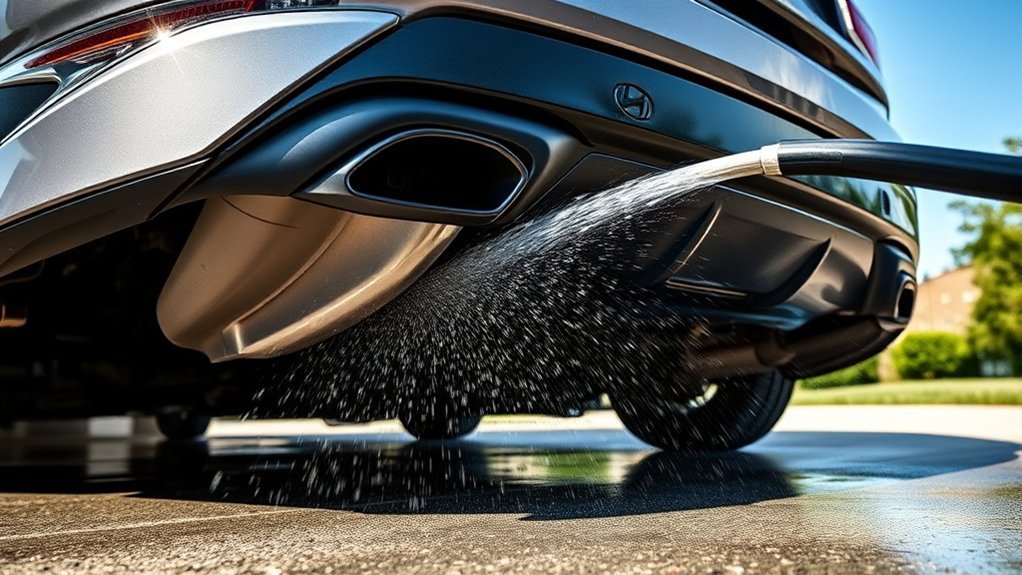
Rinsing your Sonata’s undercarriage removes substances that can hold moisture against metal or contribute to corrosion. Hyundai lists road salt, dirt, moisture, dust-control chemicals, ocean air, and similar environmental exposure among the conditions that deserve extra corrosion-prevention attention.
The Hyundai Sonata owner’s manual tells owners to pay particular attention to the underside of the vehicle and to remove accumulated mud and corrosive material thoroughly. This matters around areas such as wheel openings, the floor pan, frame members, fuel lines, exhaust components, fasteners, and other exposed hardware.
Cleaning is preventative maintenance rather than a repair for rust that already exists. If corrosion has already caused deep scaling, perforation, a leaking line, or a structurally weakened part, rinsing will not restore the damaged metal. Those problems require inspection and repair.
Pro Tip: Concentrate on flushing contamination out of wheel wells, seams, recessed areas, and places where mud or salt can collect. The goal is to remove the deposit, not simply make it wet.
How to Rinse Your Sonata Undercarriage Safely
A basic underbody rinse can be done without crawling beneath the vehicle. Work on a level surface with the vehicle parked and cooled sufficiently to avoid contact with very hot exhaust components.
- Remove loose buildup first. If heavy mud is packed around the wheel openings or lower body, loosen and flush it away instead of merely soaking it.
- Use lukewarm or cold water. Direct water across the underside from several angles so salt and road grime are carried away.
- Flush the wheel openings and hidden collection areas. Spend extra time around the wheel wells, rocker-panel area, lower seams, and other locations where dirt tends to remain.
- Keep drain holes open. Check the lower edges of the doors and rocker areas for drain openings blocked by dirt. Do not force tools into components you cannot identify.
- Let the vehicle drain, then check the brakes. When you begin driving, test braking gently at low speed. If water has affected braking performance, lightly apply the brakes while maintaining a slow forward speed until normal braking returns.
Warning: Never crawl under a Sonata supported only by a jack. If the vehicle must be raised for inspection, use appropriate lifting points and properly rated support equipment or have a professional perform the work. Also avoid directing aggressive high-pressure water at electrical connectors, sensors, cameras, rubber boots, or into the engine compartment.
Hyundai’s exterior-care guidance cautions that insufficient distance or excessive pressure from a pressure washer can damage components or allow water intrusion. Keep the nozzle away from sensors, cameras, rubber boots, and connectors, and do not direct high-pressure water into the engine compartment. For routine salt and dirt removal, a garden hose or a properly used undercarriage attachment is usually sufficient.
What Damages Your Sonata’s Undercarriage?
Corrosion develops when exposed metal, moisture, oxygen, and corrosive contaminants remain together. Road salt is a major concern in winter climates, while mud can be troublesome because it holds moisture against surfaces even after the outer layer looks dry. Coastal salt, industrial pollution, road debris, and chemicals used for dust control can also increase exposure.
Stone impacts and abrasion can damage protective finishes and expose metal. Dirt can also obstruct drain openings, allowing water to remain where it should normally escape.
That is why regular cleaning works best as part of a larger corrosion-prevention routine: wash away contaminants, keep drains open, inspect damaged finishes, and repair developing corrosion before it spreads.
Hyundai’s corrosion guidance emphasizes that simply wetting accumulated mud or road grime without actually removing it can do more harm than good.
When Professional Cleaning Makes More Sense Than DIY
You do not need a professional service for every routine underbody rinse. A careful home rinse can remove ordinary salt, mud, and dirt. Professional or commercial washing becomes more useful when the underside has substantial buildup, you lack suitable drainage or equipment, or you want dedicated underbody sprayers.
| Situation | Best Choice | Why |
|---|---|---|
| Light salt, dust, or mud with safe drainage available | DIY rinse | A hose or undercarriage attachment can flush broad areas without lifting the car |
| Heavy buildup, no suitable wash area, or limited equipment | Commercial wash with underbody rinse | Dedicated sprayers and managed wastewater handling improve convenience |
| Severe rust, active leaks, loose parts, or impact damage | Repair facility | Cleaning cannot diagnose or repair structural, brake, fuel, or exhaust damage |
A properly managed commercial facility can also have an environmental advantage. The U.S. Environmental Protection Agency notes that commercial car washes commonly recycle water or route wash water for treatment, while uncontrolled driveway runoff can carry detergents, metals, hydrocarbons, and other pollutants toward storm drains.
[Products Worth Considering]

Meguiar's Gold Class Car Wash combines cleaning and conditioning in one easy step for a smooth, high-gloss finish. Its advanced, biodegradable formula creates rich suds that lift away dirt and road grime while helping preserve existing wax protection. Versatile for bucket washing or foam cannon use, it leaves paint looking radiant, renewed, and ready for a professional-level detail.

EcoNour’s foldable windshield sun shade helps keep your vehicle cooler by reflecting heat and blocking harmful UV rays. Its multi-layer construction and reinforced design protect your dashboard, seats, and electronics while fitting most sedans, SUVs, and pickup trucks. It opens quickly, folds down compactly, and stores easily for everyday driving or travel.
Environmental Impact Considerations
Vehicle wash water can contain road salt, oil and grease residue, dirt, metals, detergents, and other contaminants. The EPA’s vehicle-washing stormwater guidance recommends practices that keep polluted wash water out of storm drains and local waterways.
If you wash at home, follow local wastewater rules, use water sparingly, avoid unnecessary chemicals, and prevent contaminated runoff from entering a storm drain. When choosing a commercial wash, look for facilities that capture, treat, or reclaim wash water.
Efficiency and Effectiveness
Dedicated underbody sprayers can reach broad areas underneath a vehicle without requiring you to crawl beneath it. They are particularly convenient after salted winter roads or muddy trips.
That does not mean every automated wash is equally effective. Confirm that the wash package actually includes an undercarriage rinse and remember that a tunnel wash is not a substitute for mechanical inspection when you already see severe rust, leaking fluid, loose components, or physical damage.
Safety and Convenience Benefits
Commercial equipment removes the temptation to lie underneath the car or improvise an unsafe lifting setup. This alone can make a professional wash the better choice for drivers without suitable tools or a safe washing area.
If you need to inspect suspension components, lines, shields, or structural areas closely, use a qualified repair facility rather than treating an automatic wash as an inspection service.
Eco-Friendly Products for Your Car and the Planet
For basic underbody salt removal, water often does most of the work. If you use a cleaner, choose one intended for automotive surfaces and follow its dilution, application, and disposal instructions.
The EPA’s vehicle-washing guidance recommends limiting detergent use and, when detergent is needed, using biodegradable, phosphate-free, water-based products. “Biodegradable” does not mean wash water belongs in a storm drain; local wastewater rules still apply.
For an undercarriage rinse, avoid adding chemicals unless they are actually needed for the contamination you are removing. Plain water reduces product runoff, and the main maintenance goal remains the same: flush salt, mud, and loose grime completely from the underside and wheel openings.
[Products Worth Considering]

NON-TOXIC: Plant-based ingredients used that are effective for carwash but safer for you and environment. No harsh chemicals used. Now enjoy carwash with your kids and family.

POWERFUL BIODEGRADABLE FORMULA – Gear Hugger Car Wash Soap is specially formulated as an eco-friendly solution, crafted with biodegradable ingredients like natural saponins and eucalyptus essential oil. This car cleaner creates a uniform foam that lifts away dirt, grease, oil, and wax without harming your car’s surfaces, making it a safe option for both the environment and car enthusiasts who prioritize green products. Perfect for those looking to care for their cars responsibly.
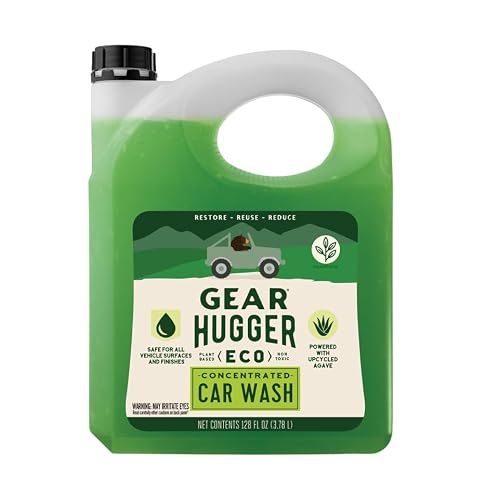
POWERFUL BIODEGRADABLE FORMULA – Gear Hugger Car Wash Soap is specially formulated as an eco-friendly solution, crafted with biodegradable ingredients like natural saponins and eucalyptus essential oil. This car cleaner creates a uniform foam that lifts away dirt, grease, oil, and wax without harming your car’s surfaces, making it a safe option for both the environment and car enthusiasts who prioritize green products. Perfect for those looking to care for their cars responsibly.
How Often Should You Clean Your Sonata?
Your schedule should reflect exposure rather than an arbitrary weekly routine. Hyundai’s Sonata guidance provides a useful baseline: thoroughly flush the underbody and wheel openings once a month, after off-road driving, and at the end of winter. Drivers exposed to unusually heavy salt, mud, or coastal spray should rinse sooner when visible contamination accumulates.
Consumer Reports’ February 2026 winter-washing guidance independently recommends monthly washing during snow season, or more often when a vehicle is visibly coated in salt, and specifically calls for cleaning the undercarriage.
| Driving Conditions | Recommended Approach | What to Focus On |
|---|---|---|
| Normal paved-road use | About once a month as a general Hyundai baseline | Dirt buildup, wheel openings, drain holes |
| Winter roads treated with salt | At least follow the monthly baseline; rinse sooner after substantial salt/slush buildup | Salt deposits and hidden collection areas |
| Coastal exposure | Use the monthly baseline and clean sooner when salty residue accumulates | Exposed metal, seams, wheel wells, fasteners |
| Off-road or muddy driving | Rinse after the trip | Packed mud and debris |
| End of winter | Perform a thorough underbody and wheel-opening rinse | Residual winter salt and grime |
For related seasonal upkeep, see how to prepare a Hyundai Sonata for winter driving. For broader ownership planning, see the Sonata long-term maintenance strategy guide.
Essential Inspections During Sonata Undercarriage Cleaning
A clean undercarriage makes developing problems easier to see. You do not need to dismantle anything. Look from safe viewing angles for abnormal corrosion, wet areas, damaged covers, hanging components, or evidence that something has struck the underside.
Note: Surface discoloration on an exhaust component is not automatically a structural failure. Deep flaking rust, perforation, cracked mounting points, leaking lines, or components that are becoming loose deserve professional inspection.
Visual Rust Inspection
Look at accessible seams, brackets, fasteners, suspension mounting areas, metal lines, and exposed structural surfaces. Pay particular attention to spots where protective coating has been scraped away or where road debris tends to strike.
Light surface oxidation and severe corrosion are not the same. If metal is deeply scaled, swollen around a seam, perforated, or losing material, have it inspected rather than covering it with a cosmetic coating.
Leak Detection Strategies
Cleaning also gives you an opportunity to notice fresh wet areas. Do not rely on fluid color alone because coolant and other automotive fluids come in different colors and formulations.
| Possible Fluid | Possible Clues | Areas to Inspect Safely |
|---|---|---|
| Brake fluid | Fresh oily-looking wetness, falling reservoir level, brake warning, or changing pedal feel | Visible brake lines, hoses, fittings, and areas near wheels |
| Fuel | Strong fuel odor or persistent fresh wetness near the fuel system | Fuel tank and visible lines, without touching or disturbing them |
| Coolant | Colored watery residue, characteristic sweet odor, or dropping coolant level; color varies by coolant type | Visible lower hoses, pipes, radiator area, and splash-shield edges |
| Engine or transmission fluid | Oily residue that repeatedly returns after cleaning | Under-engine or transmission areas visible without crawling beneath the vehicle |
Warning: A strong fuel smell, active fuel leak, significant brake-fluid loss, brake warning light, or abnormal brake-pedal feel should not be treated as a cleaning problem. Stop using the vehicle when necessary for safety and arrange qualified inspection.
Loose Parts Identification
Look for hanging splash shields, bent brackets, damaged exhaust hangers, loose heat shields, missing fasteners, or components that appear to move abnormally. Road impacts can loosen plastic covers and metal shields even when corrosion is not severe.
Do not remove a heat shield because it rattles. Heat shields protect surrounding parts from exhaust temperatures and should be repaired or secured correctly.
Finding an Eco-Friendly Car Wash
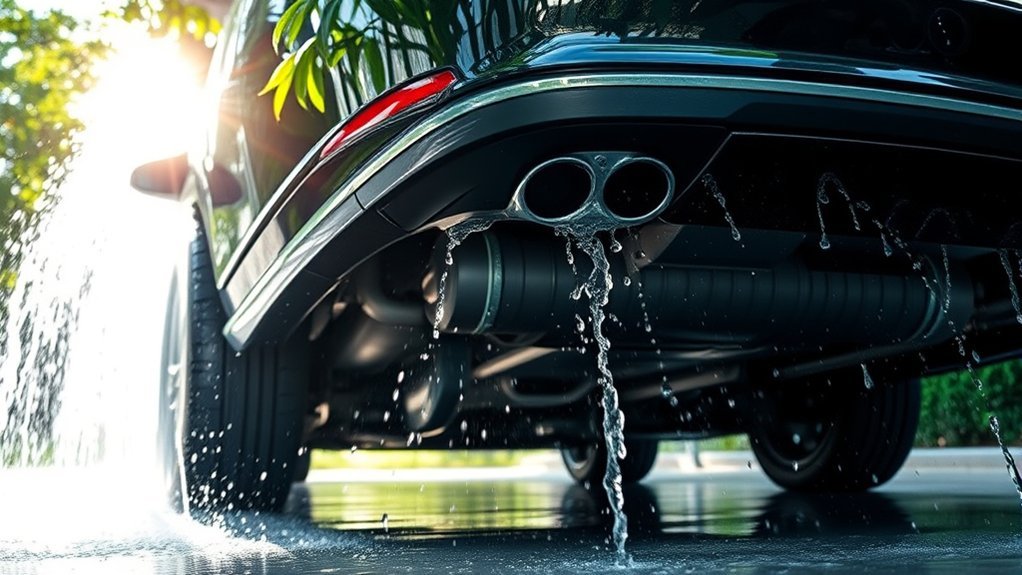
When comparing commercial car washes, look beyond the word “eco-friendly.” Ask how the facility handles wastewater and whether the package you are buying includes an undercarriage rinse.
- Confirm the package: Make sure an undercarriage or underbody rinse is actually included.
- Ask about wastewater: Prefer facilities that capture, treat, or reclaim wash water rather than sending it toward storm drains.
- Check the chemistry: If detergents are used, look for transparent information about biodegradable or phosphate-free products.
- Match the service to the problem: A wash removes contamination; it does not replace inspection for rust, leaks, or physical damage.
Useful signs include water-reclamation equipment, discharge to an approved sanitary-treatment system, clearly stated wastewater controls, biodegradable or phosphate-conscious cleaning chemistry, and transparent information about water use.
The EPA explains that uncontrolled vehicle-wash runoff can carry detergent, metals, hydrocarbons, salts, and other contaminants into local waterways. A commercial facility that captures or treats wash water therefore has a practical environmental advantage over washing on pavement where runoff flows directly into a storm drain.
How BLISS Car Wash Simplifies Undercarriage Maintenance
BLISS Car Wash is one example of a commercial operator that publishes details about water reclamation. According to BLISS’s water-conservation information, its reclamation systems recover about 70% of the water used in the wash process.
BLISS also states that it uses biodegradable cleaning and protective products associated with Blue Coral Beyond Green. Ecolab introduced the Blue Coral Beyond Green program as a sustainability initiative focused on water reduction, waste reduction, energy savings, and personal safety.
These are company-specific claims, not characteristics of every commercial wash. They also do not prove that a particular wash package includes an undercarriage rinse, so confirm the current service menu at the location you plan to use.
Whether you use BLISS, another commercial wash, or a home rinse, the maintenance goal is the same: remove corrosive material thoroughly, keep drainage paths open, and inspect any developing rust or damage before it becomes more serious.
[Products Worth Considering]

Multi-Purpose Undercarriage Pressure Washer Attachment: This undercarriage pressure washer attachment is used for quick, easy and even cleaning of surfaces. Power washer surface cleaner is ideal for removing loose debris (sand, leaves, light soil) from sidewalks, driveways, decks, etc. Under car pressure washer attachment tailored for effectively eliminating road grime and oil from underneath cars, trucks, SUVs, commercial-size vehicles, and trailers

✔️ DESTROY MUD, SALT & GRIME: Don't let the trail come home with you. Our high-performance chassis flush powerfully breaks down and neutralizes corrosive road salt, thick mud, and stubborn grime to stop rust before it can start. Perfect for all 4WDs, ATVs, UTVs, and trailers exposed to harsh off-road or coastal conditions.

Powerful Cleaning Capability: This undercarriage pressure washer attachment delivers a robust cleaning performance with a 16-inch wide cleaning path. The 4000 PSI rating ensures effective removal of dirt, grime, and road salt from the underside of vehicles, leaving your car spotless and protected
Frequently Asked Questions
Does washing the undercarriage prevent rust?
It helps reduce corrosion risk by removing road salt, mud, dirt, and other contaminants that can retain moisture against metal. Washing cannot reverse corrosion that has already damaged the metal, so existing severe rust should be inspected and repaired.
Can you rubberize the underneath of a Sonata to prevent rust?
Do not blanket-coat or seal the underside as a DIY rust fix. Hyundai warns that sealing the vehicle bottom or applying corrosion-control coating inappropriately around the exhaust system can create a fire risk under certain conditions. If additional corrosion protection is being considered, follow the owner’s manual and use a qualified shop familiar with the vehicle.
How do you keep a Sonata undercarriage from rusting?
Remove corrosive buildup regularly, thoroughly rinse the wheel openings and underside, keep lower-body drain holes clear, repair damaged finishes, avoid leaving the vehicle wet in a poorly ventilated space, and have developing corrosion inspected before it becomes severe.
Does undercoating actually prevent rust?
Properly selected corrosion-protection treatments can help protect specific metal surfaces, but an aftermarket coating is not automatically appropriate for every part of a Sonata. Applying coating over existing rust or around hot exhaust components can create problems. Follow Hyundai guidance and have any additional coating applied only where appropriate.
How often should I wash the Sonata undercarriage in winter?
Hyundai’s general underbody guidance calls for a thorough rinse about once a month and at the end of winter. If heavy salt or slush is visibly accumulating between those cleanings, rinsing sooner is sensible because the goal is to prevent corrosive material from remaining on the vehicle.
Is it safe to pressure-wash the Sonata undercarriage?
Pressure can help remove packed grime, but excessive pressure or holding the nozzle too close can damage boots, connectors, sensors, trim, or other components. Keep appropriate distance, avoid the engine compartment and sensitive electrical areas, and use the pressure-washer manufacturer’s instructions together with Hyundai’s vehicle-care guidance.
Do automatic car washes clean the Sonata undercarriage well enough?
They can be useful for broad salt and grime removal only when the package includes an undercarriage rinse. Heavy packed mud, visible rust, leaks, or loose parts still need targeted cleaning or inspection because an automatic wash cannot confirm that hidden problem areas are sound.
Conclusion
For routine Hyundai Sonata undercarriage cleaning, use Hyundai’s once-monthly, after-off-road-driving, and end-of-winter guidance as the baseline, then clean sooner when unusually heavy salt, mud, or coastal residue accumulates.
The quality of the rinse matters more than simply getting the underside wet. Flush deposits away, keep drains clear, inspect for abnormal corrosion or leaks, and check brake operation after washing. If you find severe rust, leaking fuel or brake fluid, loose structural components, or exhaust-system damage, stop treating the issue as a cleaning task and arrange professional inspection.
Sources
- Hyundai Sonata DN8 2025 U.S. Owner’s Manual — model-specific maintenance, appearance-care, corrosion-prevention, and exhaust-system guidance.
- Consumer Reports — How Often Should You Wash Road Salt Off Your Car? — February 2026 winter-washing guidance and undercarriage-cleaning recommendation.
- U.S. Environmental Protection Agency — Vehicle Maintenance and Washing — vehicle-wash runoff, stormwater pollution, detergent choices, and commercial wastewater-management practices.
- Ecolab — Blue Coral Beyond Green Program — background on the sustainability program referenced by BLISS.
- BLISS Car Wash — Water Conservation — BLISS’s published information about its water-reclamation system and approximately 70% reclaimed-water claim.