Toyota Supra preventative maintenance works best as a three-part routine: follow the factory schedule for your exact car, perform simple checks between scheduled services, and act early when warning messages or symptoms appear. This guide focuses on the 2020–2026 MkV GR Supra sold in the U.S. For the full mileage-by-mileage service chart, see our Toyota Supra maintenance schedule guide. Toyota’s Warranty & Maintenance Guide and Owner’s Manual for your exact model year remain the final authority.
Last reviewed: September 16, 2026 — checked against Toyota’s GR Supra maintenance documentation, Toyota’s current 2026 Supra manual portal, and current Toyota/NHTSA recall information.
Quick Answer
For a U.S.-market MkV GR Supra, use the maintenance guide for your exact model year rather than a generic Toyota interval. Toyota currently provides a dedicated 2026 Supra Warranty & Maintenance Guide. In Toyota’s verified 2024 U.S. schedule, normal service is due every 10,000 miles, 12 months, or when the maintenance reminder appears, whichever comes first. Between services, monitor tires, warning messages, visible leaks, braking behavior, oil level, washer fluid and starting behavior rather than waiting for the next mileage milestone when something changes.
Key Takeaways
- Follow the maintenance schedule for your exact Supra model year; Toyota currently provides a dedicated 2026 Supra Warranty & Maintenance Guide.
- In Toyota’s 2024 U.S. GR Supra guide, normal scheduled maintenance is due every 10,000 miles, 12 months, or when the maintenance reminder appears, whichever comes first.
- The same guide calls for the first brake-fluid replacement at 36 months and every 24 months afterward, while the engine air filter and spark plugs are replaced at 40,000 miles.
- Do not automatically replace sealed transmission or differential fluid every 30,000 miles; Toyota’s U.S. maintenance schedule calls for leakage inspections and service based on the applicable guide and inspection results.
- Use the tire-pressure specification for your exact wheel-and-tire setup, respond to abnormal symptoms before the next scheduled service, and check your VIN for open recalls or service campaigns.
At a Glance
| Time Required | Varies. Basic owner checks are brief; scheduled shop time depends on the maintenance item. |
| Difficulty | Easy for tire, fluid-level and visual checks; moderate to professional for most fluid replacement, brake and drivetrain work. |
| Tools Needed | Accurate tire-pressure gauge, flashlight, clean cloth and the correct model-year Owner’s Manual; specialized service requires proper shop equipment. |
| Cost | Routine inspections cost little or nothing; parts and labor vary by model year, location, service item and whether dealer or independent service is used. |
Why Preventative Maintenance Matters for Your Supra
Regular maintenance protects more than the engine. It helps preserve braking performance, steering response, tire condition, cooling-system health and the value of a documented service history. Toyota’s GR Supra maintenance guide also emphasizes keeping maintenance records so you can show that required work was performed.
The most important point is to use the schedule written for the car rather than a generic Toyota interval. Toyota’s 2024 U.S. GR Supra Warranty & Maintenance Guide specifies scheduled maintenance every 10,000 miles, 12 months, or when the maintenance reminder appears, whichever comes first. Toyota also provides current 2026 Supra manuals and warranty information. Owners should confirm the requirements for their exact model year before ordering parts or authorizing service.
Note: This article uses Toyota’s U.S. MkV maintenance documentation as its baseline. Cars from earlier Supra generations or other countries can have different engines, fluids and service schedules.
What Is the Factory GR Supra Service Baseline?
Toyota’s 2024 U.S. maintenance log provides a verified example of the MkV factory pattern. The table below summarizes the main scheduled items. Toyota now lists a dedicated 2026 Supra Warranty & Maintenance Guide as well, so compare this baseline with the guide for your exact model year before servicing the car. For a fuller interval-by-interval treatment, use the Toyota Supra maintenance schedule guide.
| Mileage / Time | Key Factory Items |
| 10,000 miles / 12 months | Replace engine oil and oil filter; inspect and adjust fluid levels; inspect wiper blades; visually inspect brake pads and discs. |
| 20,000 miles / 24 months | Repeat oil and brake checks; inspect engine air filter and radiator/condenser/intercooler; replace cabin air filter. |
| 30,000 miles / 36 months | Replace engine oil and filter; perform routine inspections; replace brake fluid for the first time. |
| 40,000 miles / 48 months | Replace oil/filter, cabin air filter, engine air filter and spark plugs; perform road test; inspect coolant, brake lines, steering linkage and boots, tires, underbody and other listed systems. |
| After 40,000 miles | The schedule repeats in a similar pattern. In the cited guide, spark plugs and major inspection items recur at later 40,000-mile milestones, while brake fluid is replaced every 24 months after its initial 36-month replacement. |
Pro Tip: Keep invoices and a simple service log with the date, mileage, work completed and parts or fluids used. It makes the next service easier to plan and provides useful documentation when selling the car.
What Should You Check Between GR Supra Services?
The factory schedule sets the minimum planning points, but you should not wait for the next mileage milestone when the car gives you evidence that something has changed. Use these checks between scheduled visits and before long trips.
| Check | What to Look For | Act Sooner When |
| Engine oil | Check the vehicle’s oil-level information as described in the Owner’s Manual and watch for oil-related messages. | An oil-level or oil-pressure warning appears, or visible leakage is found. |
| Tires | Check cold pressure, tread, sidewalls and wear pattern using the specification for the exact wheel-and-tire setup. | Pressure keeps dropping, a bulge/cut appears, or wear becomes uneven. |
| Fluids and leaks | Look for fresh puddles, wet components and falling fluid levels. | A level falls repeatedly, coolant temperature rises, or the leak is unidentified. |
| Brakes | Notice pedal feel, warning messages, new noise, vibration or pulling while braking. | The pedal sinks or feels soft, grinding develops, or braking performance changes sharply. |
| Visibility items | Inspect wiper condition and keep washer fluid adequately filled for the climate. | Wipers streak, split or fail to clear the glass properly. |
| Starting and electrical behavior | Watch for slow cranking, repeated no-starts or new electrical warnings. | Starting behavior changes repeatedly or your VIN is included in an open starter-related recall. |
This checklist does not create new replacement intervals. It helps identify conditions that deserve inspection before the next scheduled service.
[Products Worth Considering]

This brake bleeder bottle helps simplify brake fluid replacement by draining old fluid while reducing air in the line. Its rubber connector fits most bleed screws, and the included hose and chain help keep the bottle securely in place during use. Built from durable, corrosion-resistant plastic, it is suitable for a wide range of vehicles including cars, motorcycles, ATVs, dirt bikes, and scooters.

Castrol EDGE 0W-20 advanced full synthetic motor oil is engineered for drivers seeking strong wear protection, excellent viscosity control, and thermal stability. It delivers superior performance in critical engine areas, including fuel economy, high-temperature protection, sludge control, and wear defense. Designed for extended oil-change intervals, it helps keep modern engines running smoothly under demanding conditions.

This A-Premium cartridge engine oil filter is designed for a wide range of Toyota and Lexus vehicles, helping support cleaner oil flow and dependable engine protection. With high filtration efficiency and included O-rings, it offers a practical replacement solution for routine maintenance. Built for extended service intervals, it is suitable for conventional or synthetic oil applications.
What Engine Maintenance Does a GR Supra Need?
The turbocharged engine benefits from correct oil, timely filter changes and regular checks for warning messages or leaks. For the 2024 U.S. GR Supra, Toyota states that the vehicle is certified with Toyota Genuine Motor Oil SN 0W-20 C5 and calls for oil and filter replacement every 12 months, 10,000 miles, or when the oil-maintenance reminder appears, whichever comes first. Specifications can change, so verify the oil standard and viscosity in the Owner’s Manual for your exact car before buying oil.
Do not ignore the maintenance reminder simply because the vehicle has low mileage. Toyota specifically says to service by time, mileage or reminder, whichever arrives first.
Engine maintenance also includes the air filter and spark plugs. In Toyota’s 2024 schedule, the engine air filter is inspected at 20,000 miles and replaced at 40,000 miles, with earlier attention appropriate when inspection shows contamination. Spark plugs are scheduled for replacement at 40,000 miles and again at later 40,000-mile milestones in the cited schedule.
Warning: If an oil-pressure warning, overheating warning, persistent misfire, smoke, severe knocking or rapidly falling fluid level appears, stop treating the problem as routine maintenance. Reduce risk by stopping the vehicle when safe and arranging diagnosis before continued driving.
Which Fluids Should You Monitor on a GR Supra?
Fluid maintenance is important, but the correct approach is not to assign every fluid an arbitrary 30,000-mile replacement interval. Toyota’s U.S. MkV schedule combines scheduled replacement for some fluids with inspection-based service for others.
Essential Fluid Types
- Engine oil: Use the specification listed for your exact model year and replace the oil and filter according to Toyota’s scheduled interval or maintenance reminder.
- Brake fluid: Toyota’s 2024 guide calls for the initial replacement at 36 months and every 24 months thereafter.
- Engine coolant: Inspect coolant level and composition and inspect hoses and connections for leaks or deterioration. Use only the coolant specification approved for your exact model year.
- Transmission and differential: Toyota’s U.S. maintenance schedule describes these as sealed components and calls for inspection for leakage. Do not assume they require automatic 30,000-mile fluid replacement.
- Washer fluid: Keep the reservoir adequately filled with a product appropriate for the climate.
Recommended Change Intervals
For the cited U.S. MkV schedule, engine oil and filter replacement is a recurring 10,000-mile/12-month service, while brake fluid has a time-based schedule. Transmission, differential and coolant service should follow the exact model-year guide, vehicle condition and qualified inspection rather than a universal replacement number.
Recommendations from other countries, older Supra generations and aftermarket schedules can differ from the U.S. factory documentation. Confirm the source and market before applying a fluid interval to your car.
Signs of Fluid Issues
- Fresh puddles or wet components: Identify the fluid and source promptly rather than repeatedly topping it up.
- Warning messages: Oil, coolant, brake or drivetrain warnings require attention even when the next scheduled service is months away.
- Overheating: Rising temperature or a coolant warning can indicate low coolant, leakage or another cooling-system fault.
- Changing brake-pedal feel: A soft, sinking or unusually firm pedal should be professionally inspected.
- Drivetrain noise or shifting changes: New whining, clunking or abnormal shifting deserves diagnosis instead of an automatic fluid change.
How Do You Keep the Supra Suspension in Good Condition?
The Supra’s handling depends on healthy suspension and steering components, so changes in ride quality should not be ignored. Toyota’s comprehensive maintenance inspections include items such as steering linkage and boots, tires, underbody components and other visible components.
Regular Inspection Schedule
Use the factory maintenance schedule as the baseline and add an inspection whenever symptoms appear. During routine checks or professional service, look for:
- Damaged dust boots or visibly leaking dampers.
- Cracked, loose or deteriorated bushings and joints.
- Uneven tire wear that may point to alignment or suspension problems.
- New knocking, clunking or creaking noises.
- A steering wheel that no longer tracks straight on a level road.
- Changes in ride height, stability or steering response.
Addressing Wear Promptly
A torn boot does not automatically mean the entire suspension unit has failed, but it can expose components to dirt and moisture. Likewise, uneven tire wear can have several causes, including alignment, tire pressure and worn suspension parts. Diagnose the cause before replacing components.
Owners who use the Supra for track events or repeated hard driving should inspect tires, brakes, wheels, steering and suspension more frequently because heat and high loads can accelerate wear. Use the maintenance and inspection guidance for your exact model year and operating conditions rather than applying a universal track-service interval.
What Signs Mean Your Supra Brakes Need Attention?
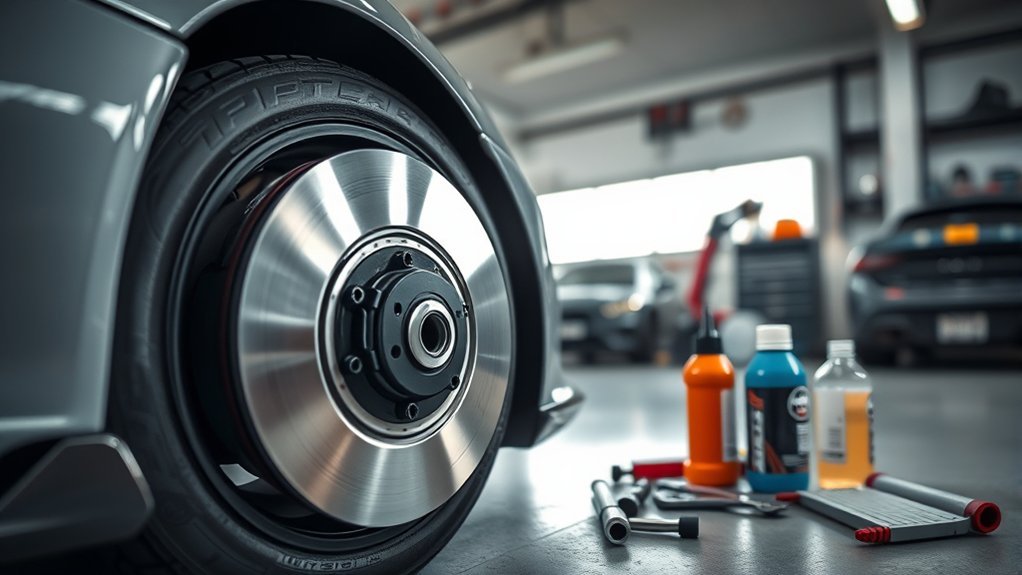
Toyota’s GR Supra schedule calls for visual inspection of the brake pads and discs at regular maintenance visits. The factory guide also says to replace brake pads when the brake warning indicates replacement is required. For more system-specific detail, see the Toyota Supra brake-system guide.
Watch for these signs between scheduled services:
- Brake warning message or light: Have the system checked promptly.
- Grinding: Stop postponing service; metal-to-metal contact can damage rotors and reduce braking performance.
- New squealing: It can have several causes, but persistent noise deserves inspection.
- Soft or sinking pedal: This can indicate a hydraulic problem and needs immediate attention.
- Steering-wheel vibration while braking: Inspection is needed to determine whether brakes, wheels, tires or suspension are involved.
- Vehicle pulling under braking: Have the braking and suspension systems inspected rather than assuming the cause.
For the cited U.S. GR Supra schedule, brake fluid is first replaced at 36 months and then every 24 months afterward.
[Products Worth Considering]

This replacement filter set is designed for a range of Toyota hybrid vehicles, including popular models like RAV4 Hybrid, Camry Hybrid, Highlander Hybrid, Sienna, Venza, and more. It combines cabin and engine filtration to help support cleaner airflow, reduce dust and odors, and protect your HVAC and engine systems. Built for easy installation and extended service life, it offers a convenient maintenance upgrade for compatible hybrid and gas-only Corolla models.

This Toyota replaceable air filter element is designed to help keep your engine intake clean by effectively removing contaminants. Built for reliable fit and routine maintenance, it supports cleaner airflow and helps protect engine performance over time. It is a practical replacement part for drivers looking to maintain proper filtration in compatible Toyota vehicles.

NGK Iridium IX spark plugs are designed to deliver a stable spark, reliable ignition, and long-lasting performance for compatible Toyota Camry 2.5L engines. The fine-wire iridium center electrode helps improve durability and efficient combustion, making these plugs a smart replacement choice for maintaining smooth engine operation. Sold in a convenient four-pack, they are built for consistent performance and dependable fitment.
How Should You Maintain GR Supra Tires?
Tire care has a major effect on grip, braking, ride quality and steering feel. Do not rely on a single generic pressure such as 32–35 psi for every Supra. Use the cold tire-pressure specification for your exact wheel-and-tire configuration, normally shown on the vehicle information label and available through the applicable manual or vehicle display.
Check tire pressure when the tires are cold and inspect the tread and sidewalls regularly. Look for cuts, bulges, embedded objects, cracking and uneven wear. Recheck pressure before long trips and after significant seasonal temperature changes.
Do not automatically apply a 5,000-mile front-to-rear rotation rule. GR Supra wheel and tire configurations can use different front and rear sizes, and some tires are directional. Follow the rotation instructions for your exact configuration. If rotation is not permitted, regular pressure, alignment, balance and tread-depth checks become even more important.
Note: A tire-pressure warning should be investigated rather than simply cleared. Correct the pressure or tire problem first, then follow the vehicle’s procedure for resetting or updating the tire-pressure system if required.
How Do You Maintain the GR Supra 12-Volt Battery?
The MkV GR Supra uses a conventional 12-volt starter battery, so an electric-vehicle-style “keep it between 40% and 80%” rule does not apply. Battery condition depends on age, temperature, driving pattern, storage duration and the vehicle’s electrical demands. For a more focused treatment, see the Toyota Supra battery maintenance guide.
Maintaining a healthy 12-volt battery helps prevent slow cranking, electrical warnings and unexpected no-start situations.
- Inspect accessible battery connections for looseness or corrosion during routine service.
- If cranking becomes slow or electrical behavior changes, have battery condition and charging-system performance tested.
- During extended storage, use a compatible quality battery maintainer according to its instructions and the vehicle manual.
- Do not replace the battery solely because it reaches an arbitrary age; testing gives a better picture of its actual condition.
- When replacing the battery, use the correct battery type and follow vehicle-specific replacement procedures or have a qualified technician perform the work.
[Products Worth Considering]

This vehicle-specific cabin and engine air filter combo is designed for Toyota RAV4 2.5L L4 models from 2013 through 2018, excluding hybrids. It helps improve cabin air quality by capturing pollutants while supporting engine airflow for smoother performance. With a direct replacement fit and simple home installation, it offers an easy way to maintain your vehicle.

This 12-pack oil filter and drain plug washer set is designed for a wide range of Toyota and Scion vehicles, helping support clean oil flow and dependable engine performance. It replaces several common OE part numbers and offers an easy-fit solution for routine maintenance. Built with corrosion-resistant materials and efficient filtration, it helps keep engine contaminants out and supports longer service life.

This EPAuto engine air filter is designed as an OEM replacement for select Toyota Camry and Venza models with 4-cylinder gas engines. It helps protect the engine by filtering dust, dirt, and debris from incoming air while supporting efficient performance and improved fuel mileage. Built for a precise fit, it is a practical replacement choice for routine maintenance.
Which Supra Problems Should Not Wait for Scheduled Service?
Scheduled maintenance does not mean you should wait until the next service interval when something is clearly wrong. Arrange prompt diagnosis for:
- Oil-pressure, overheating, brake or drivetrain warning messages.
- Visible fluid leakage or rapidly falling fluid levels.
- Grinding brakes, a sinking brake pedal or sharply reduced braking performance.
- Severe tire damage, bulges, exposed cords or repeated pressure loss.
- Sudden steering changes, strong vibration or suspension knocking.
- Smoke, burning smells or unusual heat from the engine compartment.
- Repeated starting problems or abnormal starter behavior.
VIN-based recall checking should be part of Supra ownership because a model year alone does not tell you whether a specific car is affected. On September 26, 2025, Toyota announced a starter-related safety recall involving certain 2020–2022 Supra vehicles, with approximately 1,500 U.S. vehicles involved. On January 30, 2026, Toyota announced a separate recall involving certain 2021–2023 Supra vehicles, with approximately 800 U.S. vehicles involved. NHTSA identifies the 2026 starter action as campaign 26V056. Toyota says affected vehicles receive an improved starter at no cost.
Because recall applicability depends on the VIN, use the Toyota recall lookup or NHTSA recall lookup for your specific car.
Warning: If your VIN is involved in an open safety recall, follow Toyota’s recall instructions. Recall repairs should not be treated as optional routine maintenance.
Frequently Asked Questions
How often should a Toyota GR Supra be serviced?
Toyota’s 2024 U.S. GR Supra guide schedules maintenance every 10,000 miles, 12 months, or when the maintenance reminder appears, whichever comes first. Toyota currently provides a dedicated 2026 Supra Warranty & Maintenance Guide as well, so use the guide for your exact model year as the final authority.
What maintenance is due at 40,000 miles on a GR Supra?
In Toyota’s 2024 U.S. schedule, the 40,000-mile/48-month service includes engine oil and filter, cabin air filter, engine air filter and spark-plug replacement plus a road test and listed inspections of brakes, coolant, steering, tires, underbody and other systems. Confirm the checklist in the guide for your exact model year.
How often should you change the oil in a Toyota GR Supra?
Toyota’s 2024 U.S. GR Supra guide calls for engine oil and filter replacement every 10,000 miles, 12 months, or when the oil-maintenance reminder appears, whichever comes first. Check the guide for your exact model year because specifications and requirements can change.
When should GR Supra brake fluid be replaced?
Toyota’s 2024 U.S. GR Supra maintenance guide calls for the initial brake-fluid replacement at 36 months and replacement every 24 months afterward. Use the schedule for your exact model year when planning service.
Should GR Supra transmission and differential fluid be changed every 30,000 miles?
Not as a blanket U.S. factory rule. Toyota’s cited MkV maintenance guide instructs technicians to inspect sealed transmissions and differentials for signs of leakage and have suspected leakage inspected. Follow the maintenance documentation for your exact model year, market and usage rather than automatically applying a generic 30,000-mile fluid interval.
How do I check whether my Toyota Supra has an open recall?
Use Toyota’s official Safety Recall & Service Campaign lookup or NHTSA’s recall lookup and enter the vehicle’s VIN. Do not rely only on model year because recall applicability is VIN-specific.
Conclusion
A dependable GR Supra preventative-maintenance routine combines the factory schedule with between-service checks. For recent U.S.-market MkV models, pay attention to the maintenance reminder, engine oil and filter, brakes, filters, spark plugs, coolant condition, tires, steering, suspension, battery health and visible fluid leaks.
Do not wait for an arbitrary mileage number when the car shows a warning, leak, tire problem, brake change, overheating condition or starting issue. Use Toyota’s model-year documentation, keep service records and check the VIN for recalls. That approach gives your Supra the maintenance it actually needs without replacing parts or fluids on unsupported generic intervals.
Sources
- Toyota 2026 Supra Manuals and Warranties — current model-year Owner’s Manual and Warranty & Maintenance Guide access.
- Toyota 2024 GR Supra Warranty & Maintenance Guide — scheduled maintenance intervals, oil service, brake fluid, spark plugs, filters, inspections and sealed-drivetrain guidance.
- Toyota Maintenance Plans — current ToyotaCare and maintenance-plan information.
- Toyota Safety Recall & Service Campaign Lookup — VIN-based recall and campaign information.
- National Highway Traffic Safety Administration Recalls — U.S. VIN and vehicle recall lookup.
- Toyota September 2025 Supra Starter Recall — official information about the recall involving certain 2020–2022 Supra vehicles.
- Toyota January 2026 Supra Starter Recall — official information about the recall involving certain 2021–2023 Supra vehicles.
- NHTSA Campaign 26V056 — federal recall acknowledgement covering the 2021–2023 Toyota Supra starter assembly.