
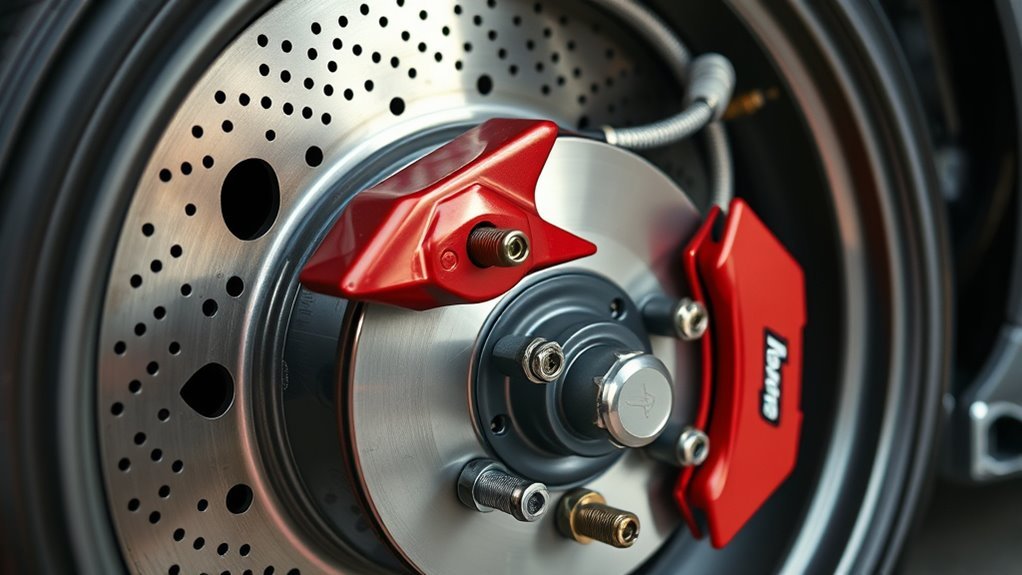
The Toyota GR Supra brake system varies by model year, trim, and market. On many standard 3.0 models, Toyota lists 348 x 36 mm front rotors with four-piston fixed calipers and 345 x 24 mm rear rotors with single-piston floating calipers. U.S.-spec 2024 2.0 models use smaller 330 x 24 mm front rotors with single-piston calipers, while the 2026 U.S. MkV Final Edition moves to 14.7-inch (about 374 mm) front rotors. Check the VIN and brake package before ordering parts.
This guide explains the MkV/A90/A91 hydraulic four-wheel disc system, model-specific specs, brake bias, rear electronic parking brake precautions, maintenance checks, and big-brake-kit planning. It focuses on system behavior and upgrade decisions rather than replacing a VIN-based parts catalog.
Last updated: July 22, 2026 — verified U.S. 2.0, standard 3.0, and 2026 Final Edition brake-package differences against Toyota sources.
Quick Answer
The MkV Toyota GR Supra uses hydraulic four-wheel disc brakes, but there is no single brake package for every car. A common standard-3.0 baseline is 348 x 36 mm front rotors with four-piston fixed calipers and 345 x 24 mm rear rotors with single-piston floating calipers. U.S. 2.0 models and 2026 Final Edition models can differ, so verify the VIN, market, caliper type, rotor size, and rear electronic parking brake compatibility before buying parts.
Key Takeaways
- Many standard GR Supra 3.0 brake packages use 348 x 36 mm front rotors, four-piston fixed front calipers, and 345 x 24 mm rear rotors.
- The U.S.-spec 2024 GR Supra 2.0 uses 330 x 24 mm front rotors and single-piston front calipers, so 3.0 front parts are not a safe assumption.
- The 2026 U.S. MkV Final Edition uses larger 14.7-inch front rotors; Toyota’s global A90 Final Edition is a different market package with 395 mm front discs.
- The modern GR Supra uses front and rear disc brakes plus an electronic parking brake, so rear service must follow the correct vehicle-specific procedure.
- A big brake kit must be checked for wheel clearance, piston area, rotor offset, brake bias, ABS/EBD behavior, brake-line routing, and rear EPB retention.
Toyota GR Supra Brake Specs by Model and Market
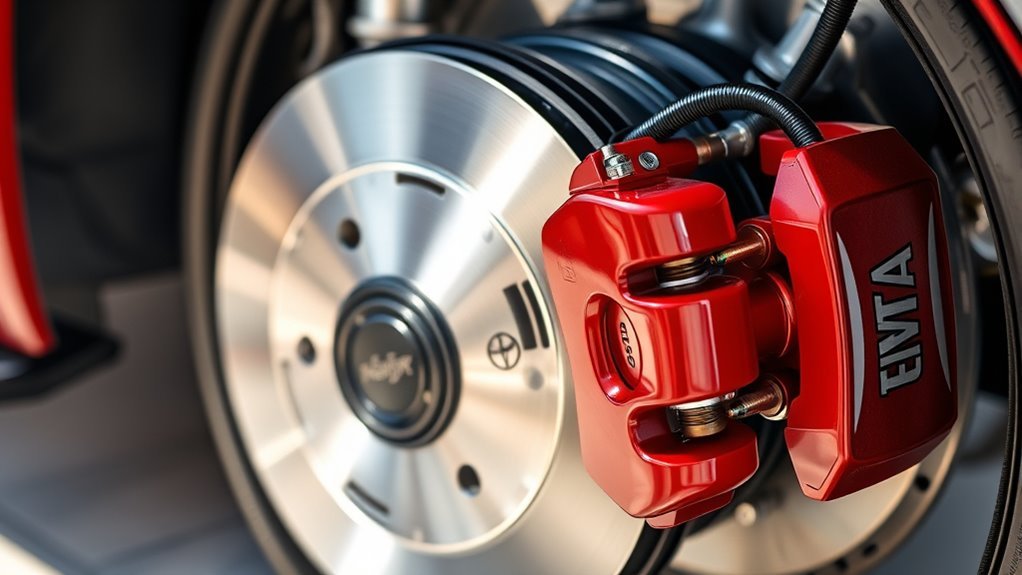
Every MkV/A90/A91 GR Supra uses hydraulic disc brakes at all four wheels, but rotor and caliper specifications are not universal. Toyota documents show meaningful differences by market, model year, engine, and special edition. Use the table as an identification guide, not as a substitute for a VIN-based parts lookup.
| Model / market | Front brakes | Rear brakes | Fitment note |
|---|---|---|---|
| 2022 Toyota UK technical sheet, 2.0 and 3.0 | 348 x 36 mm ventilated discs; four-piston fixed calipers | 345 x 24 mm ventilated discs; single-piston floating calipers | The cited UK sheet groups both engines under these values; do not apply them automatically to U.S. cars. |
| 2024 U.S. GR Supra 2.0 | 330 x 24 mm rotors; single-piston calipers | [VERIFY: confirm rear rotor size and caliper package by VIN] | Toyota’s U.S. release confirms the smaller front package but does not provide the complete rear dimensions. |
| Standard GR Supra 3.0 baseline | 348 x 36 mm rotors; four-piston fixed Brembo calipers on many U.S. 3.0 trims | 345 x 24 mm rotors; single-piston floating calipers in the cited Toyota specifications | Confirm base, Premium, A91, transmission, model year, market, and painted-caliper package. |
| 2026 U.S. MkV Final Edition | 14.7-inch rotors, about 374 mm; larger Brembo front package | 13.6-inch rotors, about 345 mm, in published U.S. specifications | Do not order standard 348 mm front parts for this package. |
| Global/Japan A90 Final Edition | 395 mm drilled floating discs with 19-inch Brembo four-piston calipers | 345 mm drilled floating discs with a floating caliper | This limited global package is not the same brake specification as the U.S. MkV Final Edition. |
The service brakes, ABS, stability control, electronic brake-force distribution, tire grip, pad compound, rotor condition, and wheel fitment work as one system. A part can bolt on yet still be wrong for the car’s hydraulic balance, electronics, or heat load.
Note: This article covers the modern GR Supra MkV/A90/A91 platform. Older Supra generations use different brake layouts, rotor sizes, parking-brake hardware, and part numbers. For generation-by-generation dimensions, see the Supra rotor-size guide.
OEM Supra Rotor, Caliper, and Fluid Specs
For many standard 3.0 cars, the practical OEM baseline is 348 x 36 mm front rotors, 345 x 24 mm rear rotors, four-piston fixed front calipers, and single-piston floating rear calipers. That baseline does not cover every 2.0 or Final Edition. Toyota owner-manual technical data specifies DOT 4 Low Viscosity brake fluid.
| Component | Common standard-3.0 baseline | What to verify before buying |
|---|---|---|
| Front rotor | 348 x 36 mm ventilated disc | Model year, market, engine, trim, left/right orientation, hat offset, minimum wheel template, and Final Edition status |
| Rear rotor | 345 x 24 mm ventilated disc in the cited Toyota specification | Rear disc diameter and thickness, rotor hat, trim, transmission, caliper carrier, and electronic parking brake compatibility |
| Front caliper | Four-piston fixed caliper; Brembo front brakes on many 3.0 trims | Caliper casting, piston area, pad backing-plate shape, wear-sensor arrangement, hose connection, and wheel clearance |
| Rear caliper | Single-piston floating caliper | Caliper and carrier part numbers, EPB actuator/service procedure, hose routing, and rear-kit compatibility |
| Brake fluid | DOT 4 Low Viscosity brake fluid in Toyota owner-manual technical data | Use the exact fluid specification required by the owner’s manual and repair information for the vehicle |
How Do You Identify the Correct Brake Package?
- Start with the VIN and market: Record the full VIN, model year, engine, transmission, trim, and country of sale.
- Inspect the hardware: Note the front piston count, caliper color and casting, rotor diameter and thickness, rear caliper carrier, and any visible part numbers.
- Match OEM data: Use a Toyota dealer or VIN-capable OEM catalog to confirm pad, rotor, sensor, carrier, and caliper part numbers.
- Check the replacement drawing: Compare rotor dimensions, offset, pad backing plate, tabs, sensor location, and hardware before installation.
- Confirm system compatibility: For upgrades, require a wheel-clearance template, brake-bias information, hose-routing instructions, and an explicit EPB solution.
Rotor diameter alone does not prove pad or caliper fit. For backing-plate and sensor checks, use the GR Supra brake-pad fitment guide.
Warning: Brakes are safety-critical. Use the factory repair information, correct torque values, proper jack stands, and the correct EPB procedure for the VIN. If you are opening the hydraulic system, replacing calipers, or unsure about bleeding and electronic initialization, have a qualified technician do the work.
How the Hydraulic Brake System Works
When you press the brake pedal, force is transferred through the master cylinder into pressurized brake fluid. That fluid pressure pushes the caliper pistons outward, clamping the brake pads against the rotors. Friction between the pads and rotors converts vehicle motion into heat, slowing the wheels and the car.
- Pedal input: The driver presses the brake pedal.
- Hydraulic pressure: The master cylinder sends pressure through the brake lines.
- Caliper clamp: Caliper pistons press pads against the rotors.
- Heat management: The rotors and pads absorb and shed heat.
- Electronic support: ABS, stability control, and brake-force distribution help manage wheel slip and vehicle balance.
A firm, consistent pedal usually points to a healthy hydraulic system. A sinking pedal, spongy pedal, fluid leak, warning light, grinding noise, or strong pull under braking should be inspected immediately.
Brake Bias: What Sets It and Why It Matters
Brake bias is the front-to-rear distribution of braking torque. The factory system is calibrated around rotor effective radius, caliper piston area, pad friction, tire grip, vehicle weight transfer, ABS, and electronic brake-force distribution. Changing one axle can alter when each tire reaches its grip limit.
Piston count alone does not define brake torque or balance. A kit with more pistons can still have similar total piston area, while a larger rotor increases leverage even when the caliper is unchanged. Compare total piston area, effective pad radius, pad coefficient, and rotor diameter—not the caliper’s appearance—before approving an upgrade.
A brake upgrade should make the car easier to slow repeatedly, not harder to control. Heat capacity, pad choice, tire grip, and balance matter more than caliper size alone.
[Products Worth Considering]

This universal brake bleeding kit lets you flush brake, clutch, and other hydraulic systems by yourself with fast, efficient vacuum-assisted operation. Built with a durable aluminum alloy pump, silicone tubing, and secure fittings, it helps maintain a tight seal for cleaner, easier service. The included blow-molded case keeps every part organized for convenient storage and transport between jobs.

This brake bleeder bottle is designed to make fluid bleeding easier for one-person use with a built-in check valve and magnetic mount. The flexible hose fits most bleeder valves and helps reduce the chance of air entering the system during service. With a practical fluid capacity and universal fit, it is a handy tool for brake maintenance and repair.

This Yuirote universal car motor diagnostic tool helps drivers quickly detect engine fault codes and identify system issues for routine inspections and maintenance. It also supports electronic parking brake reset and emergency release functions, making it useful for handling EPB-related problems without a repair shop visit. Its compact, ergonomic design and broad vehicle compatibility make it a practical choice for car owners and DIY repair enthusiasts.
Inspecting and Maintaining Supra Brakes
At a Glance
| Time Required | 15–30 minutes for a visual inspection; longer for pad, rotor, fluid, or caliper service |
| Difficulty | Beginner for visual checks; intermediate to advanced for service work |
| Tools Needed | Flashlight, tire-pressure gauge, jack and stands, torque wrench, pad gauge, dial indicator for runout checks, scan tool/service information for EPB work |
| Cost | Visual checks are low-cost; pads, rotors, fluid, and BBKs vary widely by brand and use case |
| Check | What to look for | Action |
|---|---|---|
| Brake fluid | Low level, dark fluid, contamination, warning light, soft pedal | Use the specified DOT 4 Low Viscosity fluid and bleed only with the correct service procedure |
| Pads | Thin friction material, uneven wear, cracks, glazing, noise | Replace pads on both wheels of the axle, confirm the wear-sensor setup, and match the compound to street or track use |
| Rotors | Scoring, heat checks, lip wear, vibration, runout | Measure thickness and runout, compare them with VIN-specific service limits, and replace matched axle pairs when required |
| Calipers and lines | Leaks, torn boots, sticking piston, swollen hose, uneven pad wear | Repair before driving hard; bleed the system after hydraulic parts are opened |
| Parking brake | EPB warning, poor holding, dragging rear brake, rear service difficulty | Use the VIN-specific Toyota repair procedure or required diagnostic function; do not force the rear piston back |
Pro Tip: If the car sees track use, record inner and outer pad thickness at each wheel before and after every event. A simple corner-by-corner log can reveal accelerated wear, a sticking slider or piston, and whether the pad compound is operating beyond its useful temperature range. Confirm the correct pad shape and sensor setup in the GR Supra brake-pad fitment guide.
[Products Worth Considering]

PowerStop Z17 Evolution Ceramic Brake Pad Set is an OE replacement solution built for dependable everyday braking and consistent value. Designed with chamfered, slotted surfaces and rubberized shims, it helps deliver quiet stopping performance with reduced brake dust and cleaner wheels. The kit includes stainless steel installation hardware for an easy bolt-on install and comes backed by a limited warranty.

TOVASTY rear brake pads are designed for a wide range of Toyota and Lexus models, delivering dependable braking performance with a carbon ceramic formula. They help reduce brake dust, promote quieter operation, and support consistent stopping power with improved heat resistance for everyday driving confidence.

This brake bleeder hose kit helps remove old brake fluid and air from motorcycle brake and clutch systems quickly and efficiently. Its one-way check valve prevents air from being drawn back into the system, while the easy-to-connect clips make bleeding simple for routine maintenance. Built for reliable use, it is a practical tool for keeping motorcycle braking performance responsive.
Upgrading Brakes: BBKs, Rotor Size, and Compatibility
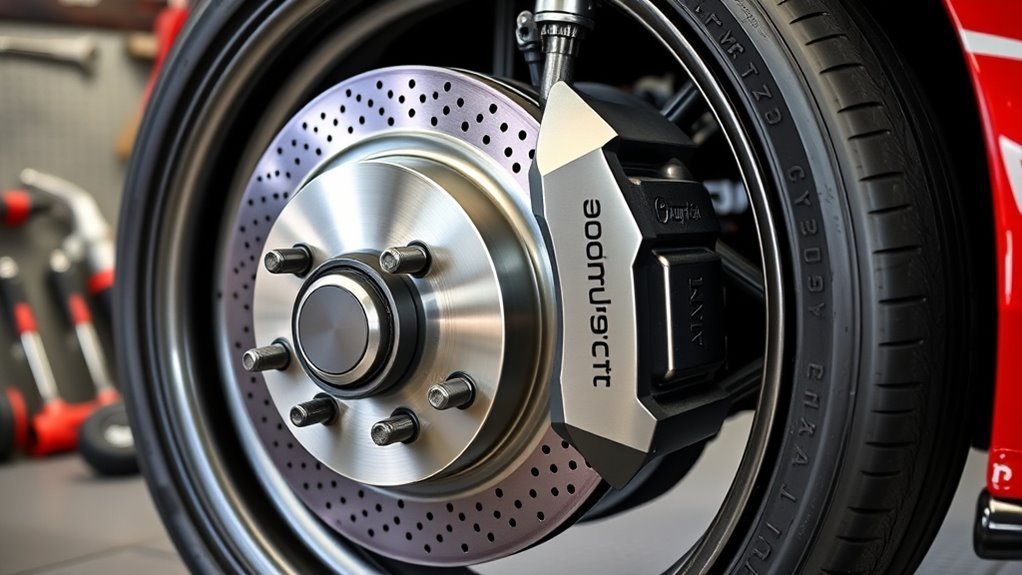
A big brake kit can add heat capacity, expand pad choices, and make repeated hard stops more consistent. It is not automatically a shorter-stopping-distance upgrade on the street. Tire grip, pad temperature range, ABS behavior, brake balance, and road surface can determine the result before caliper size does.
[Products Worth Considering]
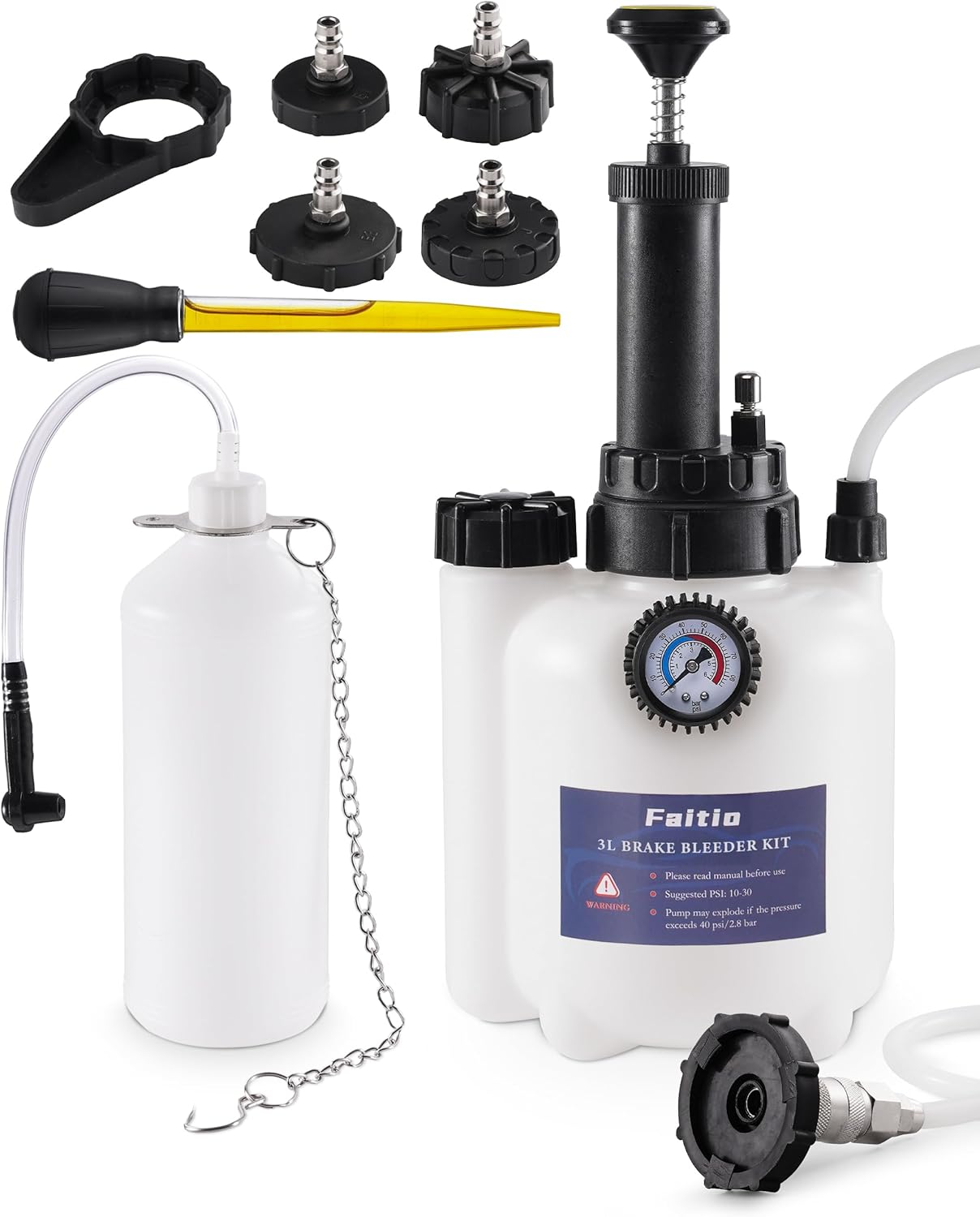
This one-man brake bleeding kit helps flush old brake fluid and remove trapped air for firmer, more responsive braking without the hassle of a second person. Its improved sealing and translucent catch bottle help prevent leaks while making fluid level checks easy during use. With multiple adapter sizes for many vehicle makes, it is a practical tool for clean, efficient brake system maintenance.

These ceramic front brake pads are designed for smooth, quiet braking and dependable stopping power across a range of compatible Toyota and Lexus vehicles. The chamfered, multi-layer construction helps reduce noise and brake dust while supporting stable performance in demanding driving conditions. Built for consistent braking response, they offer confident pedal feel and long-lasting reliability.
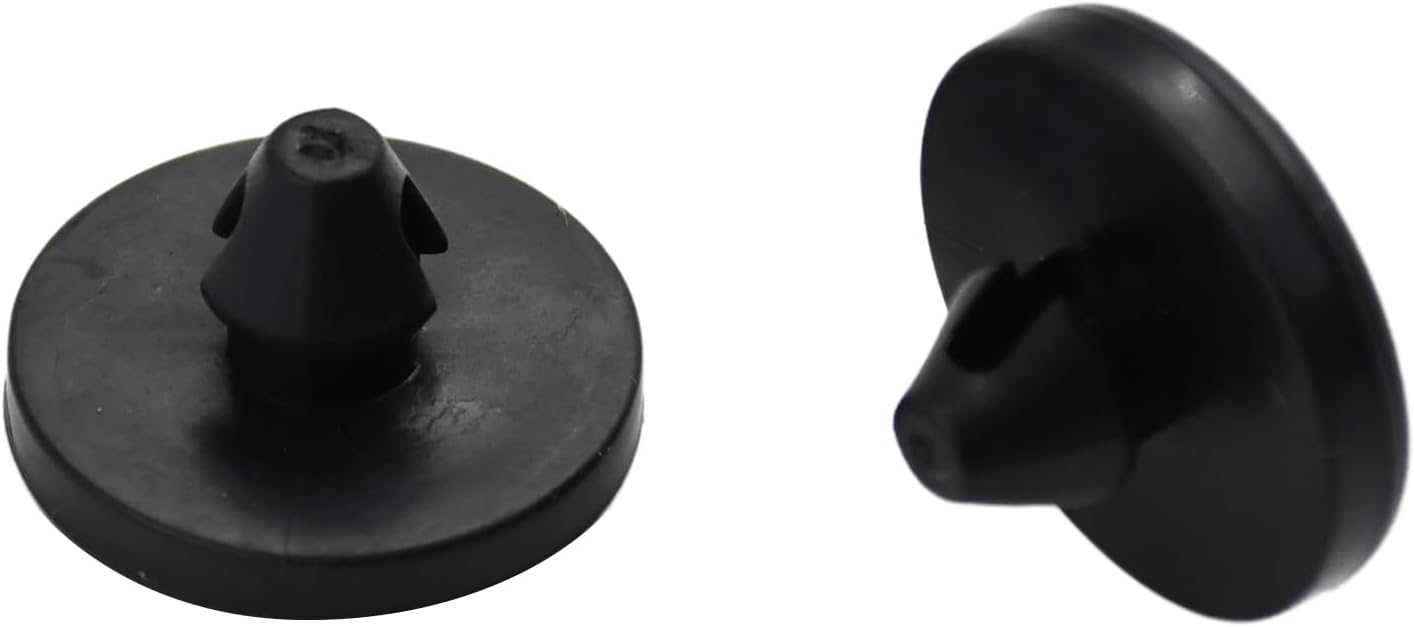
This brake switch stopper set helps restore proper brake pedal and brake light switch operation on a wide range of Toyota, Lexus, and Scion vehicles. Designed as a direct replacement part, it supports reliable pedal contact and can help fix worn or missing stoppers that affect brake light function. The package includes two stoppers for convenient replacement or spare use.
Which Supra Brake Upgrade Do You Need?
| Driver goal or symptom | Start here | When a BBK makes sense |
|---|---|---|
| Better street pedal feel and initial bite | Inspect the system, use fresh specified fluid, choose a compatible performance-street pad, and bed it as directed | Only when the stock package lacks the desired pad support, thermal capacity, or serviceability |
| Fade during repeated track laps | Track-capable pads, high-temperature compatible DOT 4 fluid, measured pad/rotor wear, and cooling review | When temperature, wear, or session consistency remains unacceptable with a properly maintained stock system |
| Shorter emergency stop on the street | Tires, pad condition, ABS faults, alignment, and road surface | Not by default; a BBK mainly adds repeatability and heat capacity unless the stock system cannot reach tire lock or ABS intervention |
| Lower operating cost for frequent track use | Compare replacement ring, pad, hardware, and rebuild costs—not only the kit price | When larger consumables, common pad shapes, or replaceable rings reduce long-term cost enough to justify the conversion |
How Do You Check BBK Fitment and Wheel Clearance?
Before buying a BBK, measure more than rotor diameter. You need radial clearance inside the wheel barrel, spoke clearance, hub fitment, rotor offset, brake-line routing, and caliper bridge clearance. A kit that fits one 19-inch wheel may contact another 19-inch wheel because barrel and spoke profiles differ.
| Item checked | Purpose |
|---|---|
| Full-size manufacturer template | Confirms the exact caliper and rotor envelope against the actual wheel before purchase |
| Wheel barrel clearance | Prevents the caliper or bridge from contacting the inside of the wheel |
| Spoke clearance | Prevents the caliper face from contacting the spokes without relying on an unapproved spacer |
| Rotor offset and hub fit | Keeps the rotor centered in the caliper and seated correctly on a clean hub |
| Brake-line length and routing | Avoids stretching, kinking, twisting, or rubbing at full steering lock and full suspension travel |
| Piston area and bias documentation | Shows whether the kit was engineered around the factory master cylinder, rear brakes, ABS, and stability control |
| Rear EPB support | Preserves parking-brake function and avoids an incomplete street conversion |
Print any clearance template at 100% scale, verify its reference dimension with a ruler, and test it against every wheel set you plan to use. Do not assume wheel diameter alone proves fit.
Rotor Diameter and Brake Bias
Larger rotors increase effective leverage and thermal mass, so they change the braking torque and heat capacity available at that axle. Caliper piston area affects hydraulic displacement and clamping force, while pad friction changes torque again. A front-only BBK should come with engineering data showing that it works with the OEM rear brakes, master cylinder, ABS, and stability-control system.
For track use, choose a package that controls temperature and wear through a full session rather than chasing the largest rotor. On the street, a pad that works from cold, remains predictable in rain, and matches the rotor can be safer and easier to live with than a race pad that needs heat.
Master Cylinder, Lines, and Fluid
Changing total caliper piston area can change pedal travel and pedal effort. That does not mean every BBK needs a larger master cylinder, but it does mean the kit must be engineered around the factory hydraulic system. Braided replacement lines may reduce hose expansion, but they must be approved for the intended use, routed without strain, and secured away from the tire, wheel, and suspension.
Follow the owner’s manual for brake fluid. Toyota owner-manual technical data specifies DOT 4 Low Viscosity fluid. For track use, choose a compatible fluid with suitable temperature performance and shorten the service interval based on actual use. Do not mix unknown fluids, and do not use silicone DOT 5 in a system specified for DOT 4.
Street, Track, Pad Compounds, and Brake Fade
Street pads usually prioritize quiet operation, low dust, cold bite, and rotor life. Track pads prioritize heat tolerance and repeated high-speed stops, but they can be noisy, dusty, abrasive, and weak when cold. Match the compound to actual use, confirm rotor compatibility, and follow the pad or rotor manufacturer’s bedding procedure.
- Daily driving: Use a street or performance-street pad with good cold bite.
- Mountain roads: Consider a higher-temperature street pad and fresh DOT 4 fluid.
- Track days: Use track-capable pads, high-temperature fluid, and post-session inspections.
- Mixed use: Be realistic; one pad rarely does everything perfectly.
Rear Electronic Parking Brake Specifics
The modern GR Supra uses an electronic parking brake operated by a switch. Toyota’s published brake specifications describe rear disc brakes with a floating caliper, so do not assume the car uses a separate drum-shoe parking brake or a generic mechanical handbrake procedure.
Do You Need EPB Service Mode for Rear Brake Work?
Toyota owner documents confirm the electronic parking brake, but the owner’s manual is not a universal rear-caliper service guide. Before replacing rear pads, rotors, or calipers, use the VIN-specific Toyota repair procedure or a capable diagnostic tool where required. Generic switch or pedal sequences found for other Toyota models may not apply to the GR Supra.
Do not force the rear piston back with a generic clamp unless the repair information explicitly permits it. Keep the EPB switch untouched while a caliper is removed. If the piston extends, fluid leaks, or an EPB warning appears after service, stop and diagnose the system before driving.
How Must a Rear BBK Retain the Parking Brake?
A rear BBK for a street-driven Supra should state exactly how it retains the electronic parking brake, how the actuator is mounted, and whether warning-free operation is supported. Some kits are intended only for competition and may remove or compromise parking-brake function. Verify legality, inspection requirements, and fail-safe operation before converting a road car.
Common Failures, Maintenance, and Quick Fixes
Brake problems usually give warning signs before they become dangerous. Take grinding, fluid loss, warning lights, and pedal changes seriously. Quick fixes should only be used for simple checks; leaks, hydraulic faults, severe vibration, or EPB faults need proper diagnosis.
| Symptom | Likely causes | What to do |
|---|---|---|
| Grinding noise | Pads worn out, debris, rotor damage | Stop aggressive driving and inspect pads/rotors immediately |
| Steering wheel shake under braking | Rotor thickness variation, pad deposits, runout, worn suspension parts | Measure rotor condition and inspect front-end components |
| Soft or sinking pedal | Air in system, fluid leak, overheated fluid, master-cylinder issue | Do not ignore it; inspect for leaks and bleed/repair correctly |
| Car pulls under braking | Uneven pads, sticky caliper, tire issue, alignment issue | Inspect both brakes on the axle and check tires |
| EPB warning or rear brake drag | Incorrect rear service procedure, actuator issue, stuck caliper | Use diagnostic/service information before further driving |
Frequently Asked Questions
What is the difference between Supra 2.0 and 3.0 brakes?
It depends on model year and market. Toyota’s 2024 U.S. release lists 330 x 24 mm front rotors with single-piston calipers for the 2.0, versus 348 x 36 mm front rotors with four-piston calipers for the 3.0. Other markets and rear packages can differ, so verify the VIN and hardware.
Does the MkV GR Supra have rear drum brakes?
No. The modern MkV/A90/A91 GR Supra uses rear disc brakes. Toyota technical specifications list ventilated rear discs with a single-piston floating caliper for the cited standard package, and Toyota owner documents confirm an electronic parking brake.
How does the GR Supra brake system work step by step?
Pressing the pedal builds hydraulic pressure in the master cylinder. Brake fluid carries that pressure to the calipers, the pads clamp the rotors, and friction converts motion into heat. ABS, electronic brake-force distribution, Brake Assist, and stability control help manage wheel slip and vehicle balance.
What is the Toyota Pulse Braking System?
Pulse is not Toyota’s normal name for the GR Supra’s hydraulic brake-control system. Toyota uses terms such as ABS, Electronic Brake-force Distribution, Brake Assist, Vehicle Stability Control, and Traction Control. A pulsing third-brake-light accessory is separate from the service brakes.
Can I install a front-only big brake kit on a Supra?
Yes, when the kit is engineered for the factory rear brakes, master cylinder, ABS, and stability-control system. Require piston-area and bias documentation plus a wheel-clearance template. An unmatched kit can change front-to-rear balance and ABS intervention.
What brake fluid should I use in a GR Supra?
Use the exact fluid specification in the owner’s manual for the vehicle. Toyota’s GR Supra owner-manual technical data specifies DOT 4 Low Viscosity brake fluid. Track use may justify a compatible higher-temperature fluid and a shorter service interval, but compatibility comes first.
What size are the 2026 GR Supra Final Edition brakes?
The 2026 U.S. MkV Final Edition uses 14.7-inch front rotors, about 374 mm, and published U.S. specifications list 13.6-inch rear rotors, about 345 mm. Toyota’s global A90 Final Edition is different and uses 395 mm front discs, so confirm the market before ordering.
Do I need a scan tool to service the rear GR Supra brakes?
Use the VIN-specific Toyota repair procedure. Some work may require a capable diagnostic tool to retract, initialize, or diagnose the electronic parking brake. Do not assume that a generic Toyota switch sequence applies to the GR Supra, and do not force the rear piston back.
Conclusion
The MkV Toyota GR Supra uses a capable hydraulic four-wheel disc system, but the correct parts depend on model year, market, engine, trim, transmission, and special edition. Start with the VIN, identify the installed calipers and rotors, and confirm OEM part numbers before ordering. For street use, prioritize cold bite, predictable balance, tire grip, and reliable EPB operation. For track use, measure wear, control fluid and pad temperatures, and add thermal capacity only after the baseline system is healthy.
For part-selection details, cross-check the Supra rotor-size guide and the GR Supra brake-pad fitment guide. A VIN-based Toyota parts lookup remains the final authority.
Sources
- Toyota GR Supra Technical Specifications — cited 348 x 36 mm front and 345 x 24 mm rear dimensions, plus fixed-front and floating-rear caliper types.
- Toyota USA Newsroom: 2024 GR Supra — U.S. 2.0 versus 3.0 front rotor and caliper differences.
- 2026 Toyota GR Supra Brochure — U.S. model and brake-package context, including the MkV Final Edition.
- Toyota USA Newsroom: GR Supra MkV Final Edition — larger U.S. Final Edition Brembo front discs and model-year context.
- Toyota Global Newsroom: A90 Final Edition — global-market 395 mm front and 345 mm rear drilled-disc specifications.
- Toyota GR Supra Owner’s Manual — electronic parking brake operation, warning information, and vehicle-specific fluid data.
- 49 CFR § 571.116 Motor Vehicle Brake Fluids — U.S. brake-fluid standard context.


[…] layout, electronic parking-brake service, brake bias, and big-brake-kit planning, use the separate Supra brake-system guide; this page remains focused on rotor dimensions and […]
[…] broader hardware identification, see the Supra brake system guide and Supra rotor-size guide. This page stays focused on brake thermal management and […]