
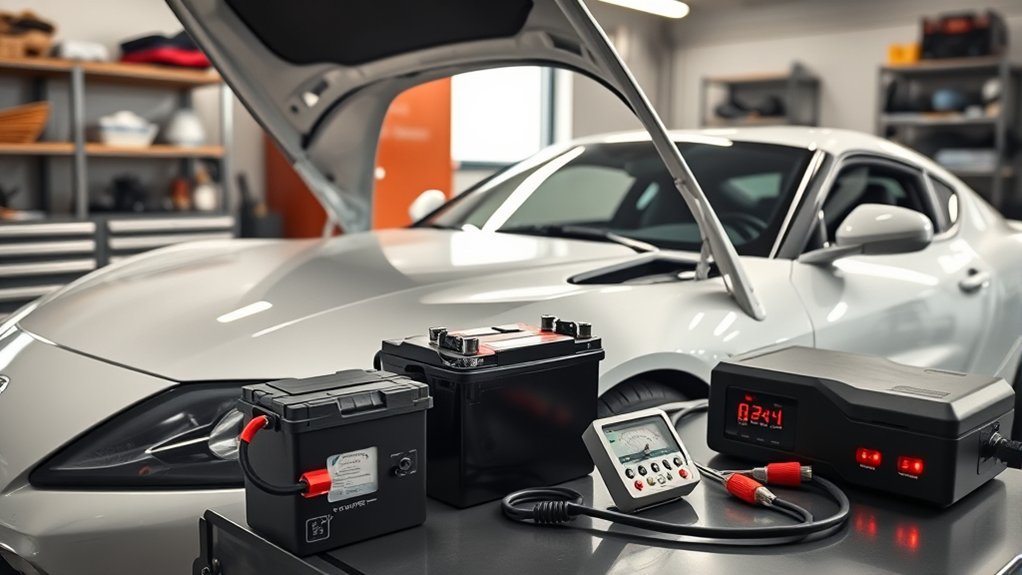
Keeping your Toyota Supra battery healthy comes down to three habits: drive it regularly, keep it charged during long parking periods, and test it before weak starts turn into a no-start problem. The MkV GR Supra uses a modern 12-volt battery system, so you should treat charging, replacement, and jump-starting as electronic-system jobs, not just simple battery chores.
Quick Answer
To maintain a Toyota Supra battery, drive the car often enough to keep the 12-volt battery charged, use an AGM-compatible smart maintainer during storage, keep terminals clean, test the battery once it is about three years old, and replace it with the correct battery type matched by VIN.
Key Takeaways
- Many MkV Toyota Supra models use an AGM-style 12-volt battery, which needs an AGM-compatible charger or maintainer.
- If your Supra sits for weeks, a smart battery maintainer is safer than relying on short idle sessions.
- A battery warning light can point to the battery, charging system, wiring, or control module, so get it diagnosed.
- Frequent jump-starts, slow cranking, corrosion, or low test results mean the battery should be inspected or replaced.
At a Glance
| Time Required | 5 minutes for a visual check, 15-30 minutes for cleaning or testing, and overnight or longer for maintainer charging |
| Difficulty | Easy for inspection and maintainer use; moderate for corrosion cleaning; professional help recommended for replacement |
| Tools Needed | AGM-compatible smart maintainer, safety glasses, gloves, battery terminal brush, baking soda and water, multimeter or battery tester |
| Cost | About $30-$150 for a maintainer or tester; battery replacement cost varies by battery type, labor, and programming needs |
Understanding Your Toyota Supra’s Battery Type
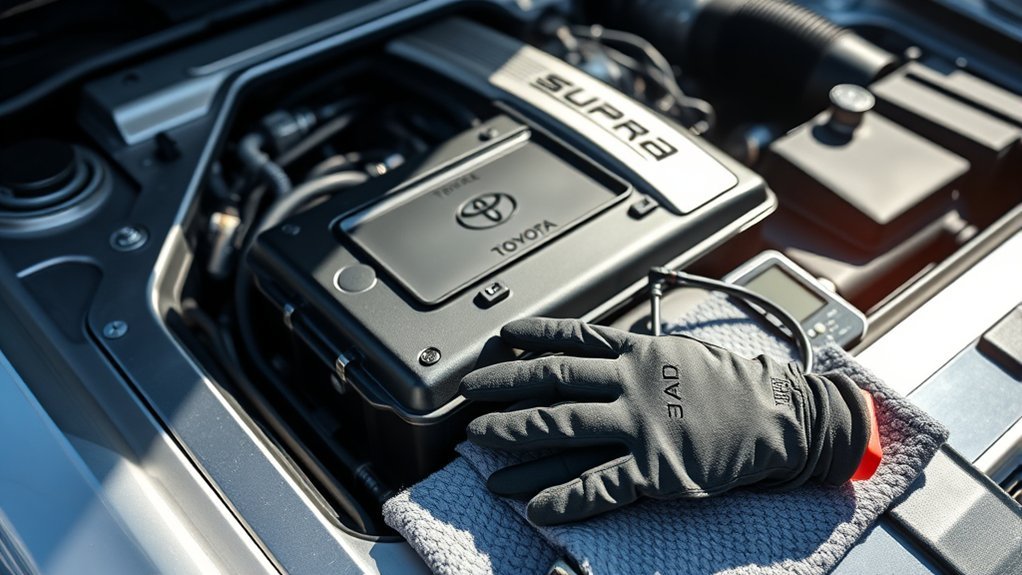
Before you charge or replace the battery, confirm what your specific Supra uses. Many MkV GR Supra models use a 12-volt AGM battery, which is a sealed form of lead-acid battery. AGM batteries are common in modern performance cars because they handle vibration well and support the vehicle’s electronics, but they still dislike deep discharge, poor charging, and long storage without maintenance.
Do not assume every charger or replacement battery is correct just because it says 12 volts. Use an AGM-compatible smart charger or maintainer, and confirm the battery size, rating, and replacement procedure through your Toyota Owner’s Manual and warranty resources. For current model context, Toyota lists the 2026 GR Supra with a 3.0L turbocharged inline-6 and manual or automatic transmission options.
Note: A Toyota dealer or qualified independent shop can match the correct battery by VIN. If the replacement requires registration or adaptation with a scan tool, do not skip that step.
[Products Worth Considering]

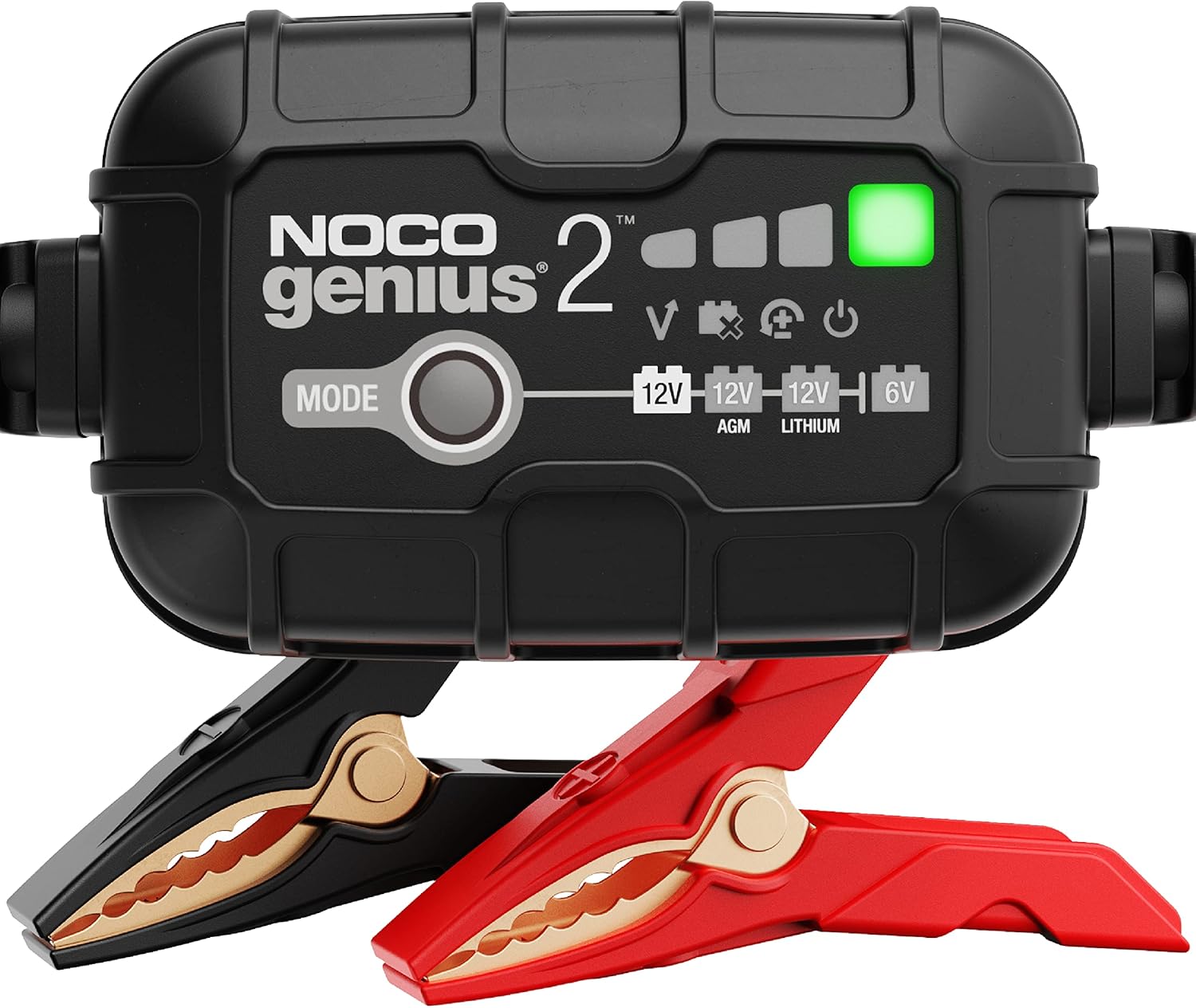
The NOCO GENIUS5 is an all-in-one battery charging and maintenance solution for 6V and 12V lead-acid and lithium batteries. It features temperature compensation, dead-battery recovery, desulfation, and safe long-term maintenance to help extend battery life and performance. Compact and versatile, it works with a wide range of vehicles and comes with mounting accessories and a warranty.

This smart automatic battery charger and maintainer helps keep automotive batteries charged and ready by delivering a full charge before switching to float mode for long-term maintenance. It supports 6V and 12V batteries with broad compatibility for lead-acid, AGM, gel, and lithium types, while built-in safety features like reverse polarity detection and spark-proof connection help ensure reliable use. Compact construction, included connection cables, and indicator lights make it a convenient choice for cars, SUVs, trucks, and storage maintenance.

The TOPDON BT100 helps you quickly check the health and charge status of 12V lead-acid batteries with clear analytical results, including state of health, state of charge, voltage, and cranking performance. It supports a wide range of battery types and vehicles, making it a practical tool for diagnosing starting and charging issues at home or in the shop. Compact and easy to use, it provides fast, reliable testing without needing to charge the device first.
Signs Your Toyota Supra Battery Needs Replacement
If your Toyota Supra battery is more than three years old, test it before the first cold morning, hot week, or long trip exposes a weak cell. A healthy battery should start the car quickly and hold charge after sitting. A weak battery may still start the car once, then fail after a short stop.
| Sign of Decline | What It Can Mean | Best Next Step |
|---|---|---|
| Slow crank or delayed start | Low charge, aging battery, or high resistance | Load test the battery and charging system |
| Battery is over three years old | Capacity may be declining even if it still starts | Test before extreme weather or storage |
| Frequent jump-starts | Battery may not hold charge, or there may be a parasitic drain | Do not keep jump-starting; diagnose the cause |
| Battery or charging warning light | Battery, alternator, wiring, sensor, or charging fault | Scan and test the charging system |
| White, blue, or green terminal buildup | Corrosion causing poor electrical contact | Clean safely, then retest |
Battery Age Considerations
A Supra battery can often last about 3-5 years, and sometimes longer when it is kept charged and protected from extreme heat or deep discharge. Age alone does not prove the battery is bad, but it is a good reason to test it. A battery that passes a proper load test can stay in service; a battery that fails should be replaced before it strands you.
Warning Light Indicators
A battery or charging-system warning light does not always mean the battery itself is the only problem. It can also point to a charging fault, loose connection, belt issue, wiring problem, or control-module concern. If the light stays on while driving, reduce electrical load when safe, avoid unnecessary stops, and schedule diagnosis as soon as possible.
Frequent Jump-Starts Needed
Repeated jump-starts are a warning sign, not a maintenance plan. If your Supra needs a jump more than once, test the battery, alternator output, and parasitic draw. Also check for accessories that stay awake after shutdown, such as a dash cam, OBD dongle, phone charger, radar detector, aftermarket alarm, or audio equipment.
How to Maintain Your Toyota Supra’s Battery Effectively
The easiest way to protect the battery is to prevent deep discharge. Regular driving helps, but the best plan depends on how often you use the car.
[Products Worth Considering]

The NOCO GENIUS1 is an all-in-one smart charger, maintainer, trickle charger, and desulfator designed to help restore and keep batteries ready for use. It supports 6V and 12V lead-acid and lithium batteries, uses temperature compensation for safer charging, and can recover deeply discharged batteries with advanced charging modes. Compact and easy to leave connected, it is built for cars, motorcycles, ATVs, boats, and other vehicles that need reliable battery care.

Battery Tender Plus is a smart 12V charger and maintainer designed to keep automotive, motorcycle, and powersports batteries in optimal condition. Its adaptive 4-step charging program helps extend battery life while the quick disconnect harness and included cables make setup simple and convenient. The two-color LED status indicator provides clear charging feedback for easy, worry-free maintenance.

The NOCO GENIUS10 is an all-in-one smart charger, maintainer, trickle charger, and desulfator designed to keep 6V and 12V batteries performing at their best. It supports lead-acid and lithium batteries, charges deeply discharged batteries, and uses temperature compensation for safer, more accurate charging in changing conditions. Compact and versatile, it is ideal for a wide range of vehicles and long-term battery maintenance.
Regular Driving Schedule
If your Supra is driven often, give it regular trips long enough for the charging system to recover from starting load and accessory use. Very short trips, repeated starts, and long parking periods can slowly pull the battery down. If the car sits most of the week, check voltage occasionally or connect a smart maintainer.
- Drive the car regularly instead of only starting it for a few minutes in the garage.
- Avoid letting the battery sit in a low-charge state.
- Turn off lights, climate accessories, and chargers before leaving the car parked.
- Test the battery before a road trip, track day, or seasonal storage.
Optimal Charging Practices
For long parking periods, use an AGM-compatible smart charger or maintainer. A maintainer is designed to bring the battery up safely and then hold it at a proper maintenance level. This is different from a basic trickle charger that may not manage voltage as precisely.
When charging, follow the vehicle manual and the charger instructions. If your Supra has designated under-hood charging or jump-start points, use those points when the manual instructs you to do so. Keep clamps secure, keep the charger away from heat and water, and do not close the hood on charger cables in a way that can pinch them.
Warning: Do not charge, jump-start, or clean a battery that is frozen, leaking, swollen, cracked, very hot, or giving off a strong sulfur smell. Wear eye protection and gloves, and get professional help if you are unsure.
How to Charge Your Battery Correctly
Charging your Toyota Supra battery correctly protects the battery and the car’s electronics. Use this safe process:
- Park in a well-ventilated area and turn the vehicle off.
- Confirm your charger supports AGM batteries and automatic maintenance mode.
- Read the charger instructions before connecting the clamps.
- Connect to the approved charging points listed in your owner’s manual.
- Set the charger to the correct battery mode, usually AGM for an AGM battery.
- Let the charger complete its cycle instead of stopping early after a few minutes.
- Disconnect in the order recommended by the charger and vehicle manual.
A battery maintainer is cheap insurance for a Supra that sits. It helps prevent the low-charge state that shortens battery life and causes surprise no-starts.
[Products Worth Considering]

The MOTOPOWER MP00205A is an automatic battery charger, maintainer, trickle charger, and desulfator designed for 12V lead-acid batteries, including flooded, AGM, gel, and sealed maintenance-free types. It uses pulse current technology to help reduce sulfation, optimize battery performance, and support long-term battery health without manual intervention. Built with energy-saving standby operation and multiple safety protections, it is a simple plug-in solution for reliable charging and maintenance.

The KONNWEI KW371 is a versatile 2-in-1 diagnostic tool that tests automotive batteries and 4/5-pin relays with fast, accurate results. It supports 6V, 12V, and 24V systems across multiple battery types, and also checks cranking and charging performance to help pinpoint battery, starter, or alternator issues. Built for mechanics and DIY users, it offers clear visual readouts, multiple language support, and convenient vehicle-powered operation with no batteries required.

The CRAFTSMAN CMXCESM258 is a versatile 4-in-1 battery charger and maintainer designed to charge, maintain, test, and restore a wide range of vehicle batteries. Its microprocessor-controlled operation, auto voltage detection, reverse hook-up protection, and multi-stage charging help support reliable starts and extend battery life for cars, motorcycles, ATVs, trucks, SUVs, and boats.
How to Identify and Prevent Battery Terminal Corrosion
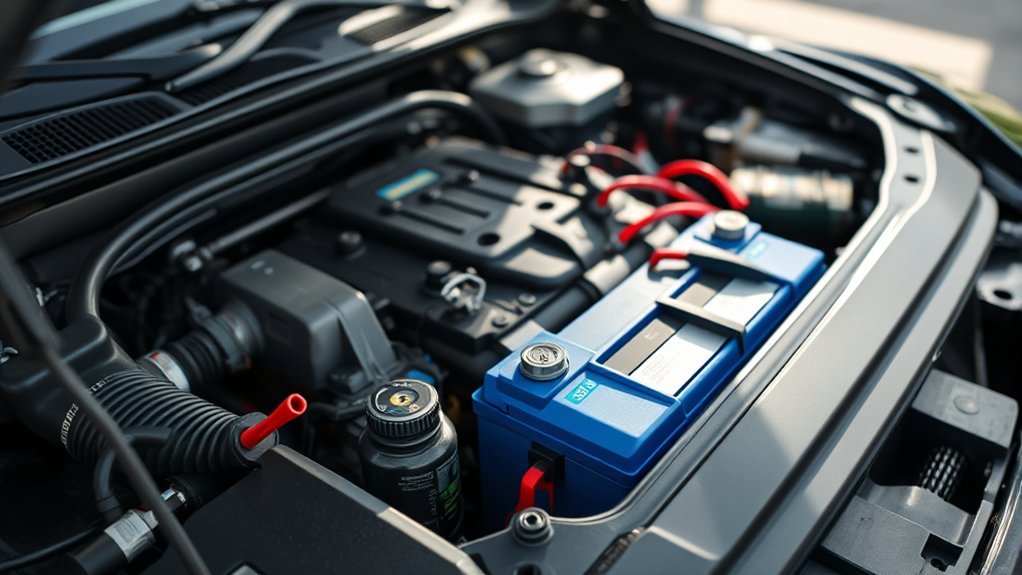
Battery terminal corrosion often appears as white, blue, or green powder around the posts or cable ends. Even a small amount can increase resistance and make starting less reliable. Corrosion can also point to a loose terminal, aging battery, overcharging, or acid vapor near the connection.
To clean light corrosion, wear gloves and eye protection. Make sure the car is off, disconnect the battery only if you know the correct procedure, and use a battery terminal brush with a baking soda and water solution. Dry the area fully before reconnecting anything. If the cable end is damaged, loose, or heavily corroded, replace or service it instead of forcing it tight.
Pro Tip: After cleaning, ask the shop to test both battery state of health and charging voltage. Cleaning terminals can fix a connection issue, but it does not restore a battery with weak internal capacity.
How to Keep Your Battery Healthy in Extreme Weather
Extreme temperatures are hard on a Supra battery. Cold weather makes starting harder because the engine needs more current and the battery delivers less power. Hot weather speeds up battery aging, especially if the car sits parked in direct sun for long periods.
- In winter: Keep the battery fully charged, use a maintainer during storage, and test an older battery before freezing weather.
- In summer: Park in shade or a garage when possible, keep terminals clean, and test the battery if starts become slower after heat waves.
- During long storage: Use a smart maintainer, avoid accessory drain, and inspect the battery area monthly.
- Before driving after storage: Check warning lights, starting speed, tire pressure, and fluid levels before a longer drive.
Storage Plan for Weekend or Seasonal Supra Owners
If your Supra is a weekend car, storage habits matter more than mileage. A battery can lose charge while parked because modules, alarms, and memory systems still draw small amounts of power. Add accessories, cold weather, or a battery that is already older, and the car may not start after a few weeks.
- Charge the battery fully before storage.
- Connect an AGM-compatible smart maintainer if the car will sit for more than a couple of weeks.
- Remove or unplug nonessential accessories such as OBD devices, dash cams, or phone chargers.
- Keep the car in a dry, sheltered area when possible.
- Check the charger indicator and battery area occasionally.
What to Do If Your Battery Shows Signs of Failure?
If your Toyota Supra shows slow cranking, repeated low-voltage warnings, frequent jump-start needs, or corrosion that keeps returning, do not guess. Start with a full battery and charging-system test. A good test should check battery state of charge, cold cranking ability, charging voltage, and excessive key-off draw if the battery keeps going flat.
If the battery fails testing, replace it with the correct type and rating. Because the Supra has modern electronics, use a Toyota dealer or qualified shop if the replacement procedure requires registration, adaptation, or scan-tool reset. After replacement, keep the old battery out of household trash and recycle it through a dealer, auto parts store, or local battery recycling program. The U.S. EPA battery recycling guidance explains why used batteries should be handled properly.
Frequently Asked Questions
How long does a Toyota Supra battery last?
A Toyota Supra battery often lasts about 3-5 years, but storage, heat, cold, short trips, and charging habits can shorten or extend that range. Test it once it is around three years old, before long trips, and before seasonal storage.
How do I keep my Supra battery healthy?
Drive the car regularly, avoid repeated short trips only, use an AGM-compatible smart maintainer when the car sits, keep terminals clean, and test the battery before extreme weather. Do not let the battery stay deeply discharged.
Can I use a regular trickle charger on a Toyota Supra?
Use an automatic smart charger or maintainer that supports AGM batteries. A basic unregulated trickle charger can overcharge or undercharge if left connected too long, so it is not the best choice for long-term storage.
Why does my Supra battery keep dying?
Common causes include an aging battery, infrequent driving, short trips, an accessory that stays powered, corrosion, charging-system problems, or parasitic draw. If it happens more than once, test the battery and check for key-off electrical drain.
Should I replace the Supra battery myself?
Basic owners can inspect and maintain the battery, but replacement is best handled by a Toyota dealer or qualified shop if the car needs the battery matched, registered, or adapted with a scan tool. Always use the correct battery type and rating.
Conclusion
Your Toyota Supra battery will last longer when you keep it charged, clean, tested, and protected from long low-voltage periods. For normal use, regular driving and occasional inspection may be enough. For weekend use or storage, an AGM-compatible smart maintainer is the best habit you can build. If warning lights, slow starts, or repeated jump-starts appear, test the full charging system before replacing parts blindly.
Sources
- Toyota Manuals and Warranties — vehicle-specific owner manual and warranty reference.
- Toyota 2026 GR Supra — current GR Supra model and trim context.
- U.S. EPA Used Household Batteries — battery recycling and disposal guidance.


[…] Toyota Supra Active Sound Design is the cabin sound-enhancement system that makes the GR Supra’s engine note feel stronger from the driver’s seat. It does not add horsepower, change the turbo, or physically make the exhaust louder. Instead, it uses vehicle data, drive-mode logic, and the audio system to shape what you hear inside the cabin. […]
[…] assume one universal throttle body relearn sequence applies to every Camry year and engine. After a battery disconnect or throttle body cleaning, first confirm that the battery is charged, the intake hose […]
[…] a battery replacement or battery […]
[…] or a 240V Level 2 charger. The steps below cover home charging, public charging, scheduling, costs, battery care, and the important 2026 model-year […]
[…] battery voltage after the truck has been sitting. A fully charged 12-volt battery is usually near 12.6 volts at rest; if it is low, charge and retest before blaming the starter. […]
[…] hidden mechanical key in the Smart Key can unlock the driver’s door when the fob battery is […]
[…] avoidable warnings and help the Tacoma’s systems work as designed. Focus on tires, fluids, battery condition, brakes, sensor cleanliness, and scheduled service. `[VERIFY: confirm this link is the best […]
[…] limits that can prevent automatic engine stop. The system checks vehicle speed, temperature, battery state, climate demand, steering angle, hood status, transmission position, and other conditions before […]
[…] The 2026 MkV Final Edition goes further with revised suspension tuning, additional underbody bracing and upgraded front braking hardware. These are specific Final Edition changes, not features created simply by adding a GR badge. Before changing suspension, charging-system or electrical components, follow Toyota’s service information or use a qualified technician. For routine electrical care, see these Supra battery maintenance and charging tips. […]
[…] for your specific vehicle rather than using one maintenance task for every 5,000-mile visit. Regular maintenance also helps identify problems before they become larger repairs. Check your warranty terms before […]
[…] battery-specific ownership guidance, see the Toyota Supra battery maintenance guide. If the car will sit unused, the Toyota Supra long-term storage checklist covers additional […]
[…] Start with four matching winter tires, correct cold tire pressure, fresh winter washer fluid, a healthy battery, and a compact emergency kit. Toyota recommends winter tires for winter roads, while the […]