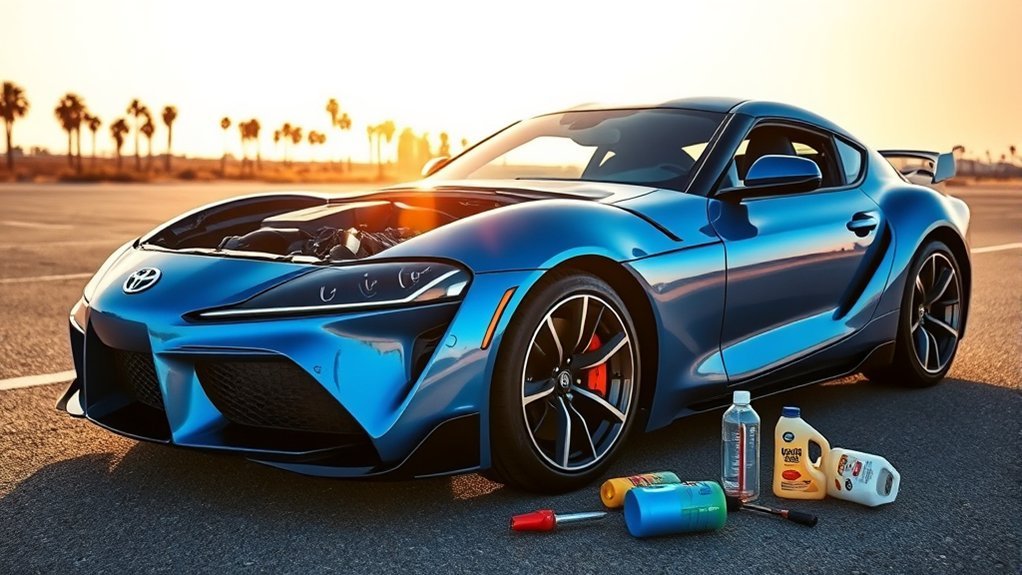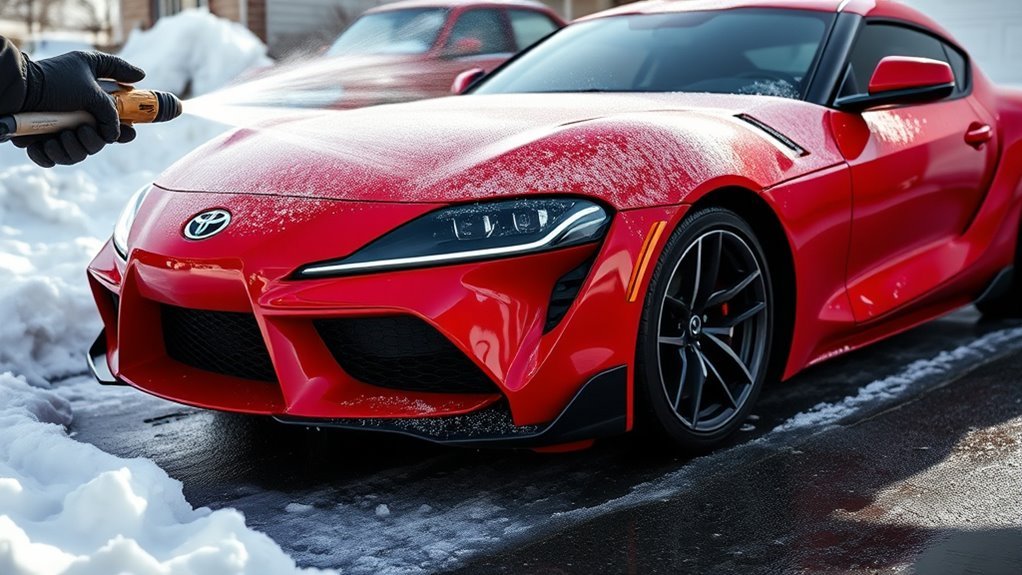
Winter grime is not just ugly on a Supra; salt, brine, slush, and sand can sit in wheel wells, panel seams, underbody areas, and door jambs. The safe way to wash a Supra in winter is to choose the warmest dry window, use gentle products, keep water under control, dry every seal and lock area, and protect glossy paint before the next salted drive.
Quick Answer
Wash your Supra in winter on a sunny, sheltered afternoon when surfaces are above freezing. Rinse salt from the wheel wells and underside, wash one section at a time with car-safe soap or a rinseless winter wash, then dry door jambs, seals, locks, lights, and brakes before temperatures drop.
Key Takeaways
- Above freezing is the safest wash window; below freezing, use a rinseless or waterless method and work panel by panel.
- Toyota says to wash the Supra frequently in winter because heavy soiling and road salt can damage the vehicle.
- Keep pressure washers under control: Toyota lists a maximum water temperature of 140°F/60°C and at least 12 in/30 cm from sensors, cameras, seals, and lights.
- Dry door seals, jambs, locks, fuel-door edges, mirrors, lights, and glass before the car sits in freezing air.
- Use wax or sealant only on suitable glossy finishes; do not wax, coat, or use abrasive compounds on matte-finish paint.
At a Glance
| Time Required | 30–60 minutes, depending on salt buildup |
| Difficulty | Easy, but drying must be thorough |
| Tools Needed | pH-neutral car soap, rinseless or waterless wash, microfiber towels, low-pressure hose or sprayer, drying towel, tire-pressure gauge, paint-safe sealant for glossy finishes |
| Cost | About $25–$75 if you already own basic wash gear |
Quick Safety Checklist & Pick the Best Weather Window
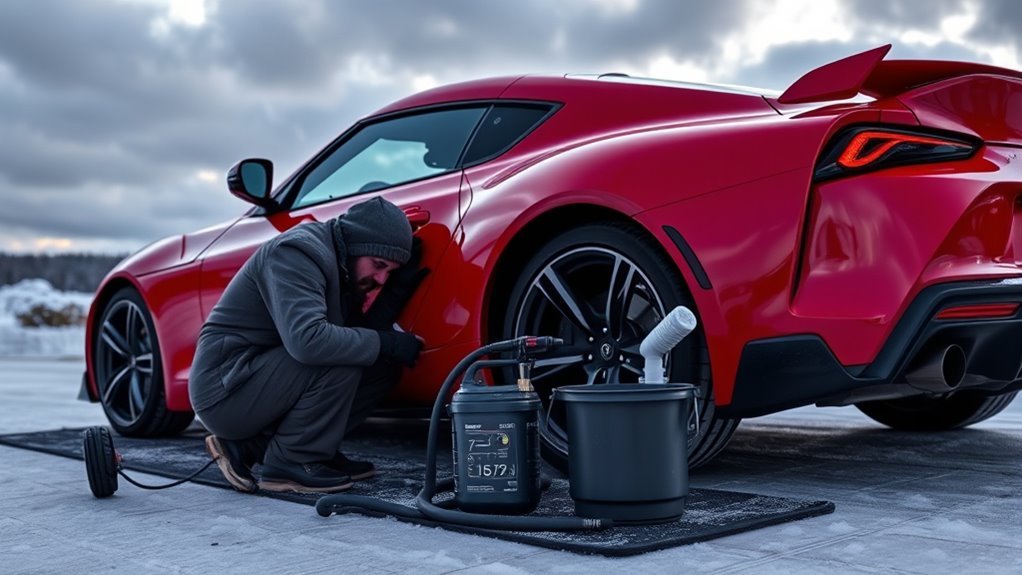
Pick a sunny, sheltered afternoon when the air temperature and vehicle surfaces are above freezing. A protected spot matters because wind speeds cooling and evaporation, which can make water freeze faster on trim, glass edges, and seals. Check the hourly forecast before you begin, and make sure you have enough daylight to wash, rinse, dry, and move the car before temperatures fall.
Start with the basics: park on a flat, non-icy surface; avoid shaded areas where runoff can freeze; keep towels ready before water touches the car; and check tire pressure while the tires are cold. The NHTSA TireWise guidance recommends using the vehicle’s tire placard pressure and checking tires when cold, which is especially useful in winter when pressure can change with temperature.
Warning: Do not wash on a driveway, street, or shop floor where runoff can freeze into a walking or driving hazard. Also avoid directing high pressure into the windshield cowl, sensors, cameras, seals, lights, door gaps, or fuel-filler area.
The Supra owner’s manual gives the winter priority clearly: wash frequently in winter because heavy soiling and road salt can damage the vehicle. Treat this wash as maintenance, not vanity. Salt left behind in wheel wells, door handles, radiator-grille areas, and the underside can keep working long after the snow melts.
Essential Winter-Wash Tools and Products for Your Supra
A reliable winter Supra wash kit should be simple: pH-neutral automotive soap, a rinseless or waterless winter-wash product, many clean microfiber towels, a soft wash mitt, a low-pressure sprayer or hose, a wheel-well rinse tool, a large drying towel, glass towels, and a glossy-paint sealant or wax if your finish is compatible.
- For mild winter days: use a traditional two-bucket wash or rinseless wash with warm water.
- For freezing days: use a waterless or hoseless wash so you do not flood gaps, seals, and locks.
- For heavy salt: rinse loose grit first, especially lower panels, wheel wells, rocker panels, and the rear bumper area.
- For glossy paint: finish with a durable wax, polymer sealant, or ceramic spray that is safe for your paint.
- For matte paint: skip waxes, coatings, abrasive compounds, and gloss-enhancing products unless Toyota or the product label specifically approves them for matte finishes.
Note: The Supra manual advises using water and suitable cleaning agents on rubber parts and warns against silicone-containing vehicle care products on rubber seals. Use a rubber-care product only if its label is compatible with automotive door and trunk seals.
[Products Worth Considering]

This car door threshold protection set helps shield door sills and entry areas from scratches, scuffs, and everyday wear. Made from soft, flexible, and durable material, it features an anti-slip groove design that helps keep items from sliding while adding reliable protection for most sedan and SUV models. Installation is simple and does not require drilling or welding, making it an easy upgrade for cleaner, better-protected door entry points.

This all-in-one car detailing kit brings together a wide range of cleaning tools for interior, exterior, wheel, and glass care. It includes brushes, polishing pads, a vacuum, a foam gun, a collapsible bucket, and other useful accessories to help tackle dust, dirt, stains, and hard-to-reach areas with ease. Designed for versatile vehicle cleaning, it also comes with a storage bag for convenient organization at home or on the go.

This all-in-one car detailing kit provides a complete set of cleaning tools for interior and exterior vehicle care, including brushes for dashboards, vents, wheels, tires, glass, and tight spaces. Designed for cars, trucks, SUVs, motorcycles, RVs, and more, it helps remove dust, grime, brake dust, and stubborn dirt while protecting delicate surfaces from scratches. The included storage box keeps everything organized for easy use at home or on the go.
Pre-Rinse Salt Without Damaging Sensors, Seals, or Lights
Before you touch the paint, remove loose grit. This is the step that protects the Supra’s clear coat from salt scratches. Use a gentle rinse, not a blasting attack. Work from top to bottom, then spend extra time on the lower doors, rocker panels, rear bumper, wheel wells, wheels, and underside.
If you use a pressure washer, keep it conservative. Toyota lists 140°F/60°C as the maximum water temperature and a minimum 12 in/30 cm distance from sensors, cameras, seals, and lights. That spacing matters on a modern Supra because high-pressure water can force its way into areas that were never meant to be pressure-washed at close range.
Pro Tip: Rinse the dirtiest lower panels first, then rinse again from the roof down. That second pass helps carry loosened salt and grit off the car instead of dragging it across the paint with your wash towel.
Warm-Water Bucket Wash for Mild Freezing Days
When the weather is cold but the car surface is still above freezing, use warm water, a pH-neutral automotive soap, and plenty of towels. Do not use hot water on freezing glass or frozen panels; sudden temperature changes are unnecessary and can make winter washing harder to control. Warm water is enough to help the soap work and keep your hands moving.
A hoseless wash can also work well in this window. For example, the manufacturer directions for AMMO FROTHe Hoseless Lift & Wash call for 2 oz of concentrate with 40 oz of warm water in the sprayer, then spraying one panel at a time and wiping with microfiber towels. Follow the label for any product you choose; the safe pattern is always the same: lubricate, wipe gently, rotate towels, and dry immediately.
| Step | Action | Why It Matters |
|---|---|---|
| 1 | Pre-rinse lower panels, wheel wells, and underside with low pressure. | Loose salt and grit should leave before towels touch the paint. |
| 2 | Wash one small section at a time from the cleaner upper panels down. | Small sections reduce freeze risk and prevent dirty towel reuse. |
| 3 | Use straight, light passes with a clean microfiber towel or mitt. | Low pressure lowers the chance of grinding grit into the clear coat. |
| 4 | Rinse or wipe residue immediately, then dry the section. | Water left behind can freeze in seams, handles, mirrors, and locks. |
| 5 | Save the dirtiest areas for last: lower doors, rear bumper, wheels, and exhaust-area trim. | This keeps the worst salt and brake dust away from cleaner panels. |
Waterless or Spray-On Winter Wash for Extreme Cold
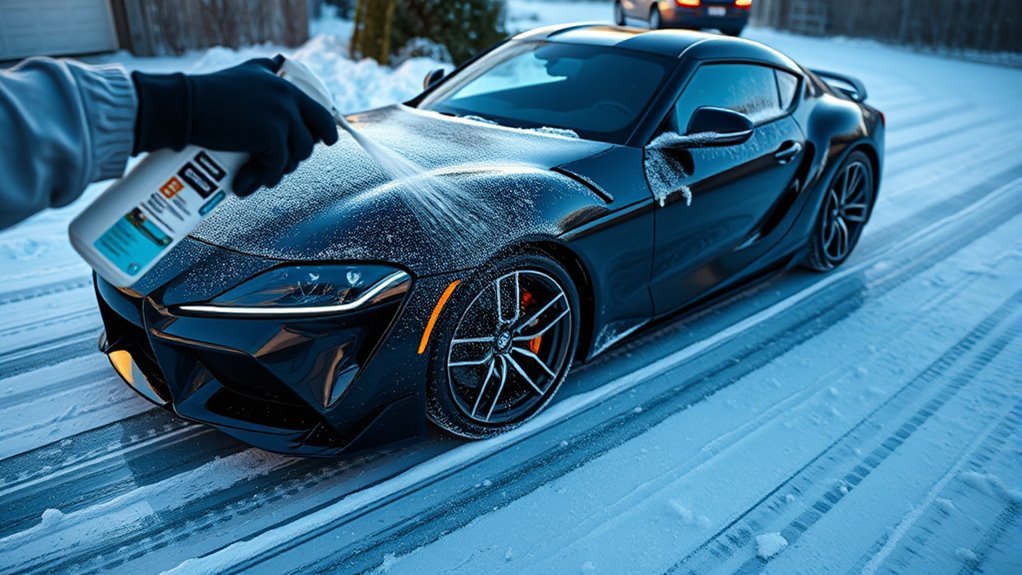
When temperatures are below freezing, switch from a hose-and-bucket routine to a waterless, rinseless, or spray-on winter wash. The goal is not to soak the car; the goal is to safely lift road film while keeping liquid volume low enough that you can wipe and dry it before it freezes.
Work during the warmest daylight window, ideally in a garage or sheltered bay that is above freezing. Spray one panel, let the product loosen grime according to the label, then wipe in straight lines with a clean microfiber towel. Flip or replace the towel as soon as it shows dirt. Follow with a second dry towel before moving to the next section.
Do not try a waterless wash on a Supra that is caked with gritty slush or heavy sand. In that case, use a professional wash bay with an underbody rinse when temperatures permit, or wait until the car can be safely pre-rinsed. Wiping heavy grit without a rinse is how a quick winter wash becomes a scratch session.
[Products Worth Considering]

AstroAI’s extra-long windshield cleaner kit makes interior and exterior glass cleaning easier with an extendable handle and 180° rotating head that reaches tight corners without strain. It includes reusable microfiber pads, a spray bottle, and a storage bag for streak-free, lint-free results at home or on the road. Designed for cars, SUVs, RVs, and household windows, it helps deliver clearer visibility with less effort.

This door handle cover protector is designed to fit select Toyota models, helping guard exterior handles against scratches, dings, and daily wear. Made from durable ABS material, it offers a sleek glossy black look that blends with the vehicle’s original styling while maintaining smart key functionality. Installation is quick and simple, making it an easy upgrade for added protection and a cleaner appearance.

These HOMEXCEL microfiber cleaning cloths deliver excellent absorbency and gentle, scratch-free cleaning for cars, homes, and glass surfaces. The soft, lint-free towels help remove dirt, water, and streaks quickly for a polished finish, and they are machine washable for repeated everyday use.
Automatic Car Wash Option When You Need Speed
A commercial car wash can be the best winter choice when you need an underbody rinse and do not have a warm, drain-safe place to work. Choose a touchless or soft-cloth wash with an undercarriage spray, strong drying, and an exit area that is not icy. Avoid washes with guide rails that may be too high or narrow for your wheel and tire setup.
The Supra manual advises giving preference to cloth vehicle washes or washes with soft brushes to avoid paint damage, folding in exterior mirrors, deactivating wipers and rain sensors if needed, and being careful with automatic-wash procedures. If you are unsure about your wheel width, lowered ride height, aftermarket aero, or front splitter clearance, skip the automatic wash and use a hand bay instead.
Warning: After any automatic wash in freezing weather, stop in a safe area and dry door edges, mirror bases, fuel-door edges, trunk seams, glass edges, and locks. A blower alone often misses the exact places that freeze shut later.
[Products Worth Considering]

This automotive electrical disconnect pliers set makes it easier to remove stubborn wire connectors, fuel injector plugs, ignition coil connectors, and other tight-fitting automotive terminals without damage. Built from high-carbon steel with comfortable anti-slip handles, the tools are designed for durability, control, and one-handed use in narrow spaces. The set includes multiple disconnect and separator tools plus hose clamp pliers to help with a wide range of vehicle repair tasks.

This 4-piece automotive electrical disconnect pliers set helps safely remove stubborn push-tab connectors from mass air flow sensors, fuel injectors, and ignition coils without damaging delicate tabs. It includes straight and 60-degree angled pliers, a hose clamp plier, and a dual-ended terminal pin remover to handle a wide range of under-hood wiring tasks. Organized in a rugged storage case, it is built for mechanics and DIYers who need reliable access to tight engine bay spaces.
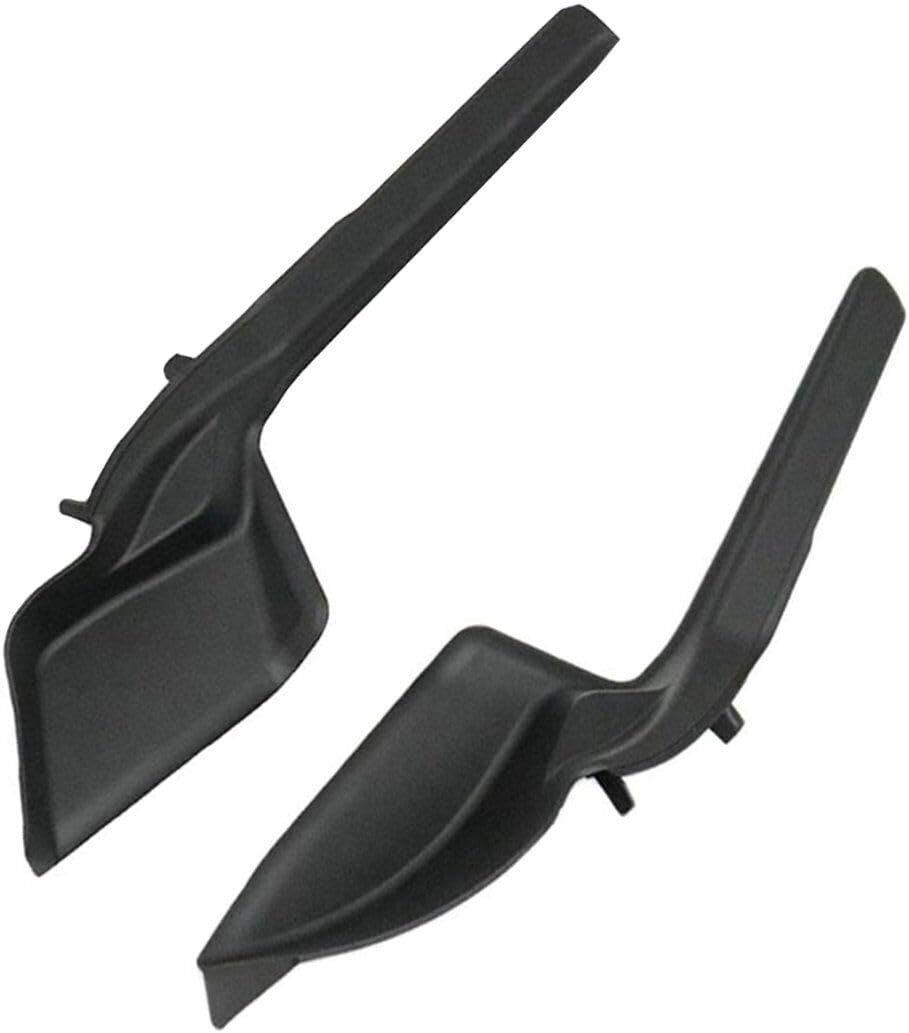
Upgrade the front-end look of your vehicle with this windshield wiper side cowl extension cover trim designed for select RAV4 models. It helps protect the wiper area from weather exposure while delivering a cleaner, more polished appearance. With a straightforward installation process and vehicle-specific fitment, it is a simple way to enhance both style and function.
Drying, De-Ice Door Seals, and Protect Paint After the Wash
Drying is the winter wash step that decides whether the Supra is ready for the next drive or frozen shut by evening. Work top to bottom with clean microfiber towels, then open the doors and trunk to dry the jambs, lower door lips, latch areas, weatherstripping edges, fuel door, mirror bases, lights, and lock housings.
If ice has already formed, use an automotive de-icing spray rather than forcing a handle, scraping trim, or yanking on a frozen seal. Toyota advises thawing ice with de-icing spray and avoiding ice scrapers on sensitive areas such as lights. Be patient; winter detailing rewards control, not force.
After washing, Toyota also recommends applying the brakes briefly to dry them because wet brakes can have reduced action and the heat helps dry brake discs and pads. Do this only in a safe area with good traction: roll slowly, brake gently, and confirm the pedal feel is normal before driving at speed.
Finish with protection that matches your paint. On glossy paint, a durable sealant, ceramic spray, or wax can help repel moisture and make the next salt rinse easier. On matte paint, do not wax or coat unless the product is specifically approved for matte finishes; Toyota warns that waxes or coatings can change matte surface texture or create irregularities.
Winter washing is not about making the Supra sparkle for five minutes. It is about removing salt from the places you do not admire in photos: wheel wells, rocker panels, door edges, brake hardware, and the underside.
How Often Should You Wash a Supra in Winter?
Use road conditions as your schedule. If you drive on salted roads, wash the Supra at least every two weeks when weather allows, and sooner after heavy slush, brine spray, or a long highway trip behind salt trucks. AAA also recommends regular winter washing, prioritizing the undercarriage, rinsing loose salt first, and applying wax before winter to help shield paint from salt and moisture.
Wash sooner if you see white salt crust on the lower doors, rear bumper, wheels, or windshield area. Road salt is not just cosmetic; chloride pollution is also an environmental issue, which is why agencies such as the Minnesota Pollution Control Agency track chloride impacts on water resources. At home, keep wash water out of storm drains whenever possible.
Where to Wash Without Sending Runoff Into Storm Drains
A winter wash pulls off salt, grit, oils, metals, detergent, and road film. The U.S. EPA vehicle washing best-practices guidance warns that outdoor car washing can send polluted, detergent-rich water into storm drains. The cleaner choice is a commercial wash that drains to a sanitary sewer or recycles water, especially when you need an underbody rinse.
If you wash at home, avoid letting runoff enter a storm drain, ditch, creek, or icy street. Use minimal water, choose a rinseless method when practical, wash over gravel or grass only where local rules allow, and never wash where the runoff will freeze into a public hazard.
Common Winter Wash Mistakes to Avoid
- Washing too late in the day: water hides in seams and freezes after sunset.
- Using dish soap: it can strip protection and is not designed for automotive finishes.
- Blasting seals and sensors: close-range pressure can push water where it does not belong.
- Dragging one dirty towel around the whole car: salt grit turns a towel into sandpaper.
- Forgetting the brakes: wet brakes need gentle drying before normal driving.
- Waxing matte paint: matte finishes need matte-safe care, not gloss-boosting wax.
- Skipping the underbody: the paint may look clean while salt remains under the car.
Frequently Asked Questions
Can you wash a car in freezing temperatures?
Yes, but a full hose wash is risky below freezing because water can freeze in seals, locks, mirrors, brakes, and panel gaps. For freezing weather, use a rinseless or waterless wash in small sections, work in a sheltered area, and dry every wet edge immediately.
How cold is too cold to take a Supra through a car wash?
There is no universal Toyota temperature cutoff for automatic car washes, but avoid them when water will freeze before the car is fully dried or when the exit area is icy. As a practical rule, choose above-freezing hours. If temperatures are far below freezing, use a heated wash bay or wait.
Should I rinse the undercarriage in winter?
Yes. The underside, wheel wells, rocker panels, and suspension areas catch the most road salt. Use low to moderate pressure and avoid close-range spraying into sensors, seals, electrical connectors, and delicate trim. A commercial wash with an underbody rinse is often the easiest option.
Can I use warm water to wash my Supra in winter?
Yes, warm water can help soap work in cold weather, but do not pour hot water onto frozen glass, frozen panels, or icy trim. Keep water warm rather than hot, wash small sections, and dry immediately so liquid does not freeze in seams or locks.
What should I do if the doors freeze after washing?
Do not yank the handle or pull hard on the weatherstripping. Use an automotive de-icing spray, warm the area gradually, and let the ice release before opening the door. Once open, dry the seals and jambs thoroughly so the problem does not repeat.
Conclusion
You’ve treated your Supra like a surgeon treats a patient: cautious, precise, and with the right instruments. A winter wash is winter’s handshake—gentle, deliberate, and finished before moisture can freeze in the wrong places. Salt removal is the treatment; careful drying is the bandage; paint protection is the long-term prescription. When you close the garage door, you’re not just sheltering a car—you’re preserving a promise of performance for the next clear road.
Sources
- Toyota GR Supra Owner’s Manual — winter washing, pressure-washer limits, vehicle-care warnings, matte-paint caution, brake drying, and rubber-care guidance.
- AAA Auto Club Group: Winter Road Salt Can Cause Hidden Vehicle Damage — regular winter washing, undercarriage cleaning, rinsing loose salt, and wax protection.
- NHTSA TireWise — checking tire pressure cold and using the vehicle’s tire placard pressure.
- U.S. EPA Vehicle Maintenance and Washing BMP — wash runoff, detergent, metals, hydrocarbons, and storm-drain concerns.
- Minnesota Pollution Control Agency: Chloride — chloride pollution context from salt use.
- AMMO FROTHe Hoseless Lift & Wash Directions — example hoseless wash dilution and panel-by-panel towel technique.