For a California smog check on your 1996‑or‑newer 4Runner, confirm VIN matches paperwork, verify the MIL lights with key on and goes out when running, and make sure the gas cap’s tight and undamaged. Resolve any DTCs and incomplete monitors before the appointment. Warm the engine, hold steady highway speeds (40–60 mph) with cruise control to set catalyst and O2 monitors, and inspect EVAP and O2 sensors plus OBD connectors for faults. Continue for detailed drive‑cycle and repair steps.
How OBD2 Readiness Affects Your 4Runner
How ready are your 4Runner’s OBD2 monitors? You’ll need monitor completion to pass California emissions testing; incomplete OBD2 sensors checks will often trigger a fail on post-1996 vehicles. You should clear Diagnostic Trouble Codes only after diagnosing—they’ll reappear if the root cause remains. Drive cycles that include steady speeds and cruise control activate catalyst, EVAP, and oxygen sensor checks so monitors can set. If the Malfunction Indicator Lamp stays lit during testing, the system fails immediately; you must resolve faults first. For 2010-and-newer models, any Permanent Diagnostic Trouble Codes cause automatic failure, so use diagnostic tools to read freeze-frame data and confirm repairs. Routine maintenance—secure fuel cap, replace faulty O2 sensors, repair leaks—raises your readiness probability. Use concise diagnostic scans and targeted test drives to liberate yourself from repeated smog attempts: confirm all monitors are complete, verify no active DTCs, and proceed to the smog station with confidence.
Run These Quick Pre-Test Checks : VIN, MIL, Gas Cap, Recent Repairs
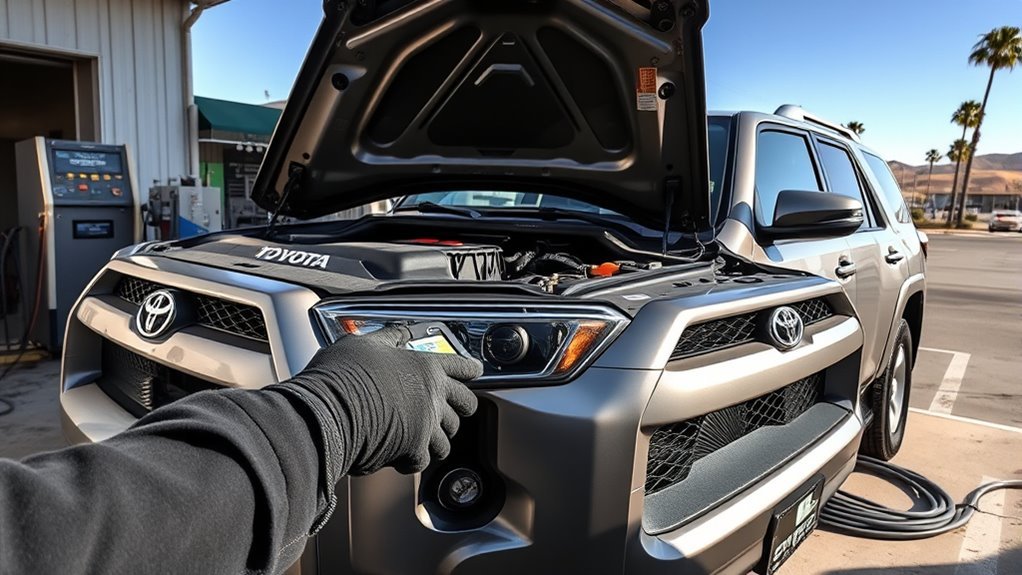
Before you head to the smog station, run four quick checks: confirm the VIN on the vehicle matches your registration and paperwork, verify the MIL illuminates KOEO and extinguishes KOER, guarantee the gas cap is tight and undamaged, and review any recent repairs for unresolved DTCs or incomplete monitors. Do VIN verification first — mismatches trigger instant rejection and waste time. Inspect MIL function: with key on engine off the lamp must light; with engine running it must go out. If it doesn’t, pull codes before the test. Check the gas cap for cracks, worn sealing material, and proper click-tight engagement; swap it if suspect. Audit recent maintenance and repairs: confirm technicians cleared codes only after fixes, and that all sensors and connectors were reinstalled. If any monitor status is incomplete or a DTC remains, address it or complete necessary drive time before the appointment. These checks free you from avoidable failure and reclaim control of the process.
Follow This Drive-Cycle to Ready 4Runner Catalyst & O2 Monitors
With VIN, MIL and gas-cap checks done and any recent repairs verified, you’ll need a targeted drive-cycle to set the catalyst and oxygen-sensor (O2) monitors to ready. Start with a fully warmed engine; the catalyst monitor requires ideal temperature to run valid diagnostics. Maintain steady highway speeds between 40–60 mph for at least 10 minutes—engage cruise control to guarantee consistent load and speed for reliable monitor activation. After a battery disconnect, plan 50–100 miles of mixed driving: combine the steady highway segment with city stop-and-go to let all OBD-II readiness monitors complete their sequences. Monitor activation depends on consistent conditions, so avoid abrupt throttle or long idles during the highway portion. If monitors remain incomplete after performing this drive cycle, suspect underlying mechanical issues—exhaust leaks or failing sensors—that block readiness. Use this procedure methodically to regain freedom from a failed pre-test and to present a fully ready 4Runner for California smog testing.
Fix These Common 4Runner OBD2 Failures (O2, EVAP, Communication)
If your 4Runner trips OBD-II faults, start by diagnosing the most common culprits: failing oxygen sensors, EVAP leaks (including loose or damaged gas caps and cracked purge/vapor hoses), and communication faults from corroded connectors or a failing ECM. Begin with O2 sensor maintenance: scan for P0130–P0167 codes, measure sensor voltage and response time, and replace sensors showing slow switching or out-of-range signals. Next perform an EVAP system inspection: pressure-test the system, inspect hoses and the gas cap seal, and smoke-test for hidden leaks that defeat pressure retention. For communication faults, visually and electrically inspect OBD port, ground straps, and harness connectors for corrosion or intermittent continuity; flex tests often reveal breaks. After repairs, clear codes and confirm readiness monitors complete via a drive cycle. You’ll regain control by methodically isolating failures, applying targeted repairs, and verifying monitors—liberation through precise diagnostics and disciplined maintenance.
When to Repair, Retest, or Use the Referee : PDTCs & Modified Software
Because permanent DTCs (PDTCs) indicate the ECU has locked a confirmed fault, you can’t clear them yourself to pass — the OBD-II system will only reset a PDTC after it verifies the underlying defect is repaired. Recognize PDTC significance: any permanent code on a 2010-or-newer 4Runner forces an automatic failure. You must diagnose and correct the root cause; temporary clearing or disconnecting won’t work.
Assess software compliance next. Non‑CARB-approved modified software triggers failure regardless of emissions values; CARB‑approved calibrations preserve compliance. For repair timing, prioritize correcting faults that created PDTCs and restoring OEM or CARB‑approved software immediately. After repair, complete drive cycles until monitors report ready; then use retest options at the smog station.
If disputes arise over modifications or repair completeness, escalate to the referee program for independent evaluation. You’re entitled to a fair adjudication that protects your right to mobility while maintaining emissions integrity.
Frequently Asked Questions
What Does OBDII Mean on Smog Check?
OBDII means your vehicle’s onboard diagnostics monitor emissions via OBDII sensors; during a smog check it reports diagnostic troublecodes, verifies readiness and MIL status, ensuring you meet emission standards so you can stay road-legal and free.
How Many Miles Do I Need to Drive to Reset OBD II?
Drive about 50–100 miles; think of your car as a marathoner warming up. You’ll activate OBD2 readiness by varied driving distance and patterns—mix highway and city speeds, steady cruise and throttle changes to complete diagnostics.
Conclusion
You’ve tuned your 4Runner like a stethoscope to its own heartbeat: check VIN and MIL, snug the gas cap, note recent repairs, then run the prescribed drive-cycle to wake the catalyst and O2 monitors. Diagnose O2, EVAP, and comms faults promptly; distinguish PDTCs from software tweaks. Repair when needed, retest when ready, and use the referee sparingly. Stay methodical and precise—smoke clears only after you’ve fixed the fire.