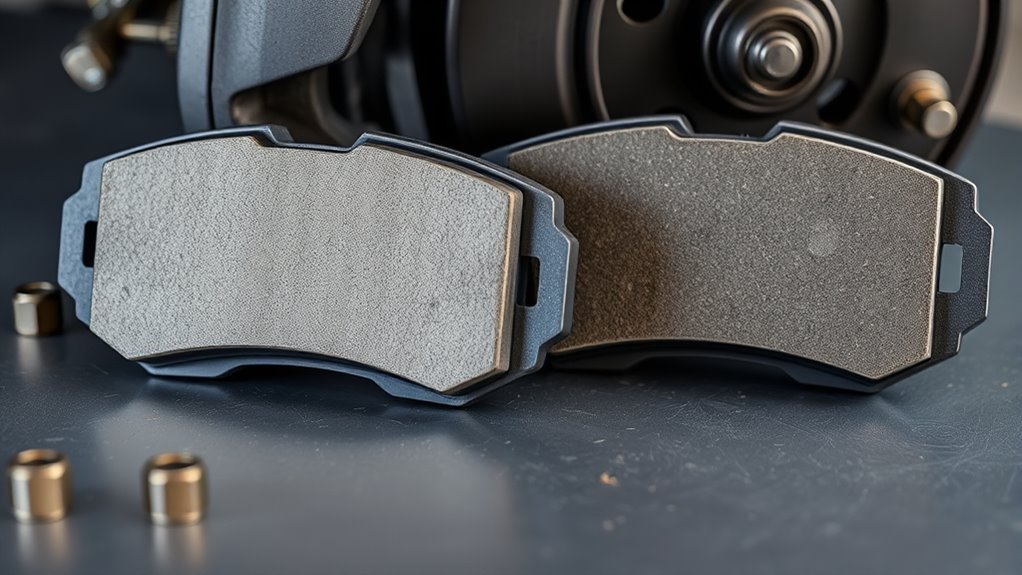
If you use your 4Runner for daily city driving you’ll want ceramic pads for quieter operation, lower dust, and longer life; they give consistent pedal feel and reduce wheel cleanup. If you tow, drive off‑road, or push the truck hard, pick semi‑metallics for stronger initial bite, better heat resistance, and durability under heavy loads, though they can be noisier and wear rotors more. Keep OEM fitment and inspection intervals in mind — more details follow.
Quick Answer: Which Pads Should a 4Runner Use?
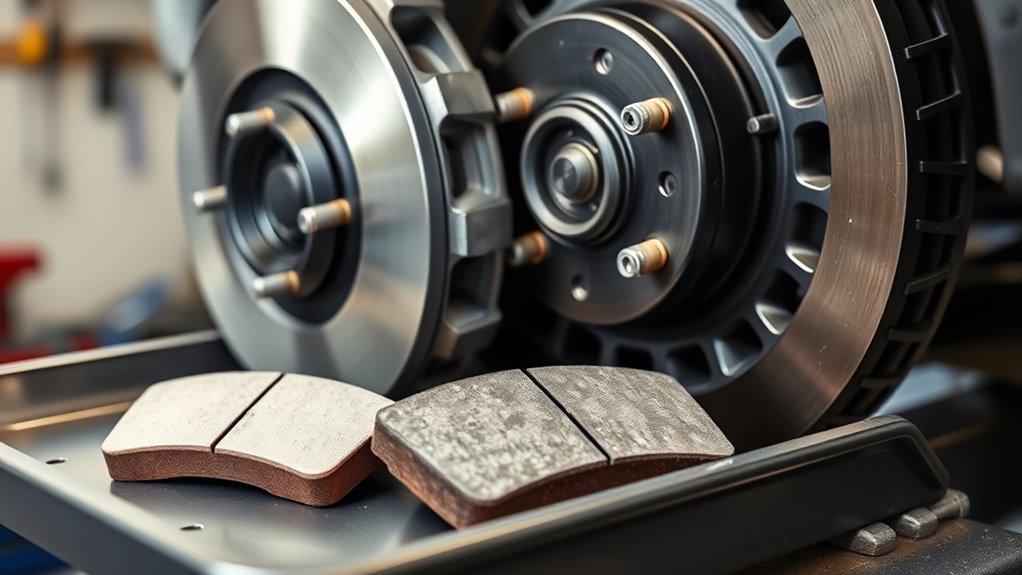
Which pads should you pick for a 4Runner depends on how you use the truck: if you drive mainly in town and want low noise and minimal dust, ceramic pads are your practical choice. You’ll get longer service life and cleaner wheels, and the higher upfront cost often pays back over time. If you tow heavy loads, tackle trails, or need stronger heat tolerance, semi-metallic pads deliver better stopping power and thermal resilience; they’re the right brake pad types for demanding duty. Consider durability trade-offs: ceramics wear rotors less but may not match the bite of semi-metallics under load. Factor in manufacturer recommendations first, then align performance factors with your mission—daily comfort versus heavy-duty capability. You’re aiming for freedom on roads and trails, so select pads that match usage patterns, maintenance tolerance, and budget. Replace and inspect according to specs to keep braking predictable and liberating.
Ceramic Pads on a 4Runner : Noise, Dust, Longevity
You’ll notice ceramic pads keep your 4Runner quiet during routine stops, cutting the typical squeal and chatter you get with some semi-metallic compounds. They shed very little brake dust, so wheels stay cleaner and you’ll spend less time washing them. Expect extended pad life—often 30,000–70,000 miles—under normal driving, though they’re not optimized for extreme heat or heavy towing.
Quiet Daily Driving
Although they’re often overlooked, ceramic brake pads offer clear advantages for quiet daily driving in a 4Runner: they cut brake noise, produce very little dust, and tend to last longer under normal use than semi-metallic pads. You’ll notice improved brake performance and enhanced driving comfort around town; ceramic compounds damp vibration that causes squeal, so you get a calmer cockpit and fewer wheel-cleaning sessions. They suit liberated drivers who want reliable, low-maintenance components that don’t demand constant attention.
- Quiet operation — reduces audible feedback, preserves focus.
- Low dust — keeps wheels cleaner, lowers cleaning frequency.
- Longer life in normal use — fewer swaps, lower upkeep.
Remember: ceramics trade some extreme-heat robustness for everyday serenity; choose based on typical use.
Low Dust Longevity
When you choose ceramic pads for your 4Runner, you get noticeably less brake dust and longer intervals between replacements, which translates to cleaner wheels and lower maintenance time. You’ll enjoy quieter stops and steady brake performance across normal temperatures, which frees you from constant upkeep. The higher upfront cost pays back through longevity and reduced wheel cleaning. In a material comparison versus semi-metallic pads, ceramics win on dust, noise, and predictable wear for daily use, while semi-metallic still suits heavier duty demands.
| Feature | Ceramic |
|---|---|
| Dust | Minimal |
| Noise | Low |
| Lifespan | Extended |
| Daily Use | Consistent |
| Cost | Higher upfront |
Semi‑Metallic Pads on a 4Runner : Heat, Stopping Power, Towing
Because semi‑metallic pads mix 30–70% metal with friction materials, they handle heat far better than ceramics and give your 4Runner the consistent stopping power needed for towing and off‑road work. You’ll get superior heat dissipation under repeated heavy braking, which limits fade during steep descents or long tow runs. In a straight performance comparison, semi‑metallics trade quiet and low dust for robust bite and thermal stability.
- Towing: higher friction coefficient helps control added mass, keeping stops predictable under load.
- Stopping power: quicker initial response and consistent pedal feel when temperatures climb.
- Durability/maintenance: expect more rotor wear, noise, and dust; inspect pads and rotors regularly and replace proactively.
You want freedom to push farther and carry more; semi‑metallics give you the mechanical confidence to do that. Implement routine checks and accept the maintenance tradeoffs to keep braking performance uncompromised.
Choose Pads by Driving Style: City, Off‑Road, Towing, Spirited
Pick brake pads based on how you drive: city commuters will appreciate ceramic pads for their quiet operation and low dust, while off‑roaders, haulers, and spirited drivers should lean toward semi‑metallics for superior heat resistance, bite, and fade control.
If you mostly navigate stop‑and‑go traffic, choose ceramics for comfort, low dust, and predictable modulation; they suit urban driving conditions and reduce wheel cleanup. For off‑road use, prioritize semi‑metallics—their higher friction coefficient and thermal capacity handle descents, mud, and repeated stops without glazing. When towing, select semi‑metallic compounds that resist fade under sustained load and preserve pedal feel; durability matters for heavy payloads. For spirited driving, semi‑metallics deliver quicker initial bite and better heat dissipation during aggressive braking.
Use brake pad comparisons to match compound traits to your dominant driving conditions. Inspect pads frequently, replace before wear limits are reached, and balance comfort versus performance so your 4Runner frees you to drive how you want, without compromise.
4Runner Pad Fitment: Ceramic vs Semi‑Metallic by Year and Trim
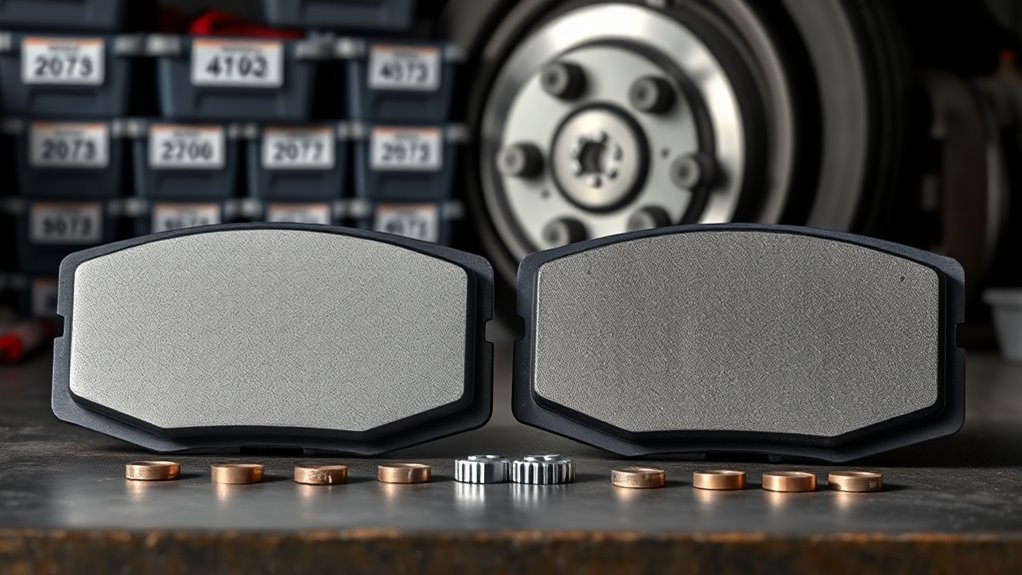
Check the 4Runner’s year and trim to confirm which factory pad material was specified, since OEM options change across model years and trims. You’ll choose ceramics for daily-driven 2010+ models for quieter operation and lower dust, or semi-metallics for off‑road and heavy‑duty trims that need higher friction and heat resistance. When fitting aftermarket options like Akebono Pro-Act, verify manufacturer specs and fitment charts to guarantee correct pad shape, backing plate, and compound for your specific year and trim.
Year And Trim Differences
When you fit replacement pads on a Toyota 4Runner, year and trim determine whether ceramic or semi‑metallic compounds are appropriate; understand fitment variations and trim specifications before buying. You’ll choose quieter ceramics for daily freedom or semi‑metallics for assertive stopping off‑road.
- 2010–2021: mix of ceramics for comfort and semi‑metallic for trail use; verify pad shape per year.
- Limited trim: factory bias toward quieter ceramic compounds; prioritize NVH reduction if you crave civilized driving.
- TRD Off‑Road/TRD Pro: favors semi‑metallics for durability and heat resistance under aggressive use.
Design updates from 2014 onward altered dimensions and compatibility. Always check the owner’s manual or a trusted parts catalog to affirm correct fitment for your specific year and trim.
Factory Pad Material Options
One clear rule applies: factory 4Runner pads vary by year and trim, so you’ll find ceramic compounds on many models from 2010 onward for quieter, low‑dust daily driving, while semi‑metallics show up on performance‑oriented trims (TRD Off‑Road/Pro) for greater heat tolerance and stopping power. You should check OEM options—Akebono or Duralast Gold often appear depending on model year—to confirm factory material and backing plate design. Use your owner’s manual to verify fitment and spec; that keeps braking performance predictable. When weighing material comparisons, consider pad longevity against operating temperature: ceramics favor longevity and low dust in commuter use, semi‑metallics prioritize thermal stability and bite under load. Choose by duty cycle, not preference.
Aftermarket Fitment Considerations
Because fitment varies by model year and trim, you should match aftermarket pad choices to your 4Runner’s exact VIN and brake hardware before buying. You’ll avoid fitment failures, reduced braking performance, and wasted money by confirming pad compatibility with your calipers and rotor size.
- Check VIN-specific listings from reputable aftermarket brands (e.g., R1 Concepts) to confirm year/trim fit and recommended material.
- Choose ceramic pads for liberated daily-driving: low dust and quiet operation, matched to your trim’s hardware.
- Pick semi-metallic pads when you tow or go off-road; they handle heat and loads better but need verified compatibility with your braking system.
Always follow manufacturer recommendations for your model year and trim to maintain safety and performance.
Maintenance & Installation: When to Replace or Switch Pads
If you see the pad material worn to about 3 mm (1/8 in) or notice persistent fade, noise, or reduced stopping power, replace the pads immediately and consider whether a different compound—ceramic or semi‑metallic—better suits your driving conditions. Perform regular brake pad inspection on a schedule and whenever you feel feedback or hear abnormal sounds. Check rotors for scoring, heat spots, or unequal wear; rotor damage accelerates new pad wear and undermines stopping consistency. If you switch from ceramic to semi‑metallic, expect a break‑in period and slightly different pedal feel and noise characteristics. Follow manufacturer torque specs and hardware procedures during installation to prevent uneven loading and premature wear. When choosing to switch, match pad choice to your driving: ceramic for low dust and comfort, semi‑metallic for heat tolerance and aggressive driving. Replace pads in pairs per axle and resurface or replace rotors if they exceed runout or thickness limits. Keep records of inspections and changes to reclaim control over vehicle safety.
Frequently Asked Questions
Do Ceramic Brake Pads Wear Out Rotors Faster?
No — you won’t typically wear rotors faster with ceramic pads; their ceramic durability promotes rotor longevity in daily driving, though under extreme, aggressive use any pad can increase rotor wear, so monitor braking demands and maintenance.
What Brake Pad Material Stops the Best?
Hit the ground running: you’ll choose semi-metallic for best stopping, since material comparison shows superior brake performance under heat and heavy use. You’ll get tougher fade resistance and cost-effective, performance-focused braking for liberation.
What Type of Brake Pads Don’t Leave Dust?
Ceramic pads don’t leave much dust; you’ll get superior noise reduction and decent brake pad longevity for everyday use. You’ll enjoy cleaner wheels, quieter stops, and more freedom from constant maintenance while driving confidently.
Conclusion
You’ve got choices: ceramic for quieter, cleaner daily driving; semi‑metallic for higher heat tolerance and better initial bite when towing or off‑roading. Industry data shows ceramic pads can produce up to 60% less dust than semi‑metallic compounds, cutting wheel cleanup and sensor wear. Match pad type to your primary use—city, trail, towing—and follow service intervals. Replace pads when thickness hits ~3mm or if you hear persistent squeal; always torque to spec.