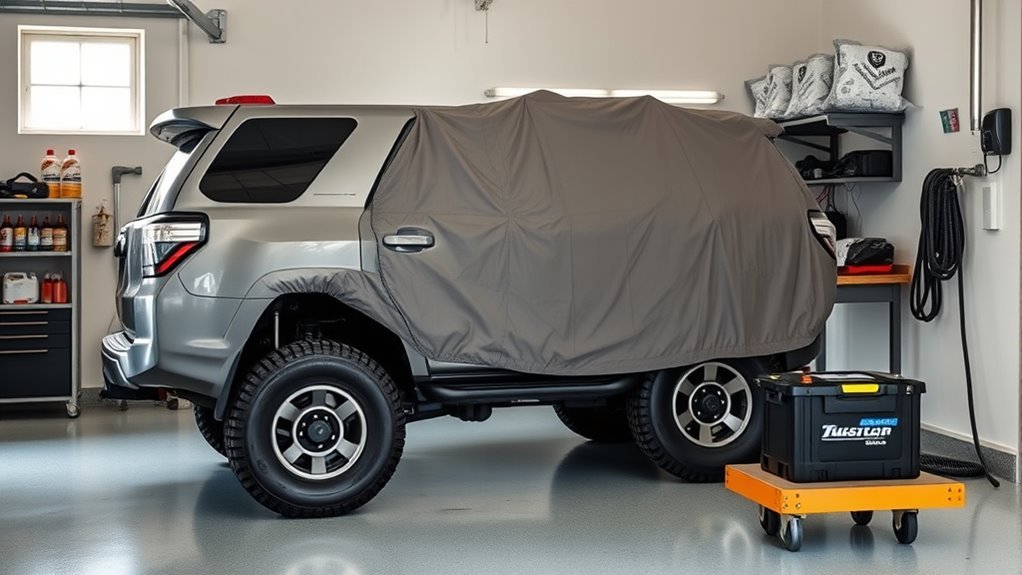
Last updated: September 14, 2026. To calculate your 4Runner’s usable payload, start with the Tire and Loading Information label on your vehicle—the line stating the maximum combined weight of occupants and cargo. Subtract the actual weight of passengers, cargo, post-delivery accessories, and any trailer tongue load carried by the SUV. Do not subtract fuel in the factory tank a second time when you are starting from the vehicle’s rated load capacity or curb weight; normal operating fluids are already included in curb weight. Then weigh the loaded 4Runner and confirm that total vehicle weight and each axle remain below the GVWR and GAWR on the certification label. Published GVWR-minus-curb-weight calculations are useful for comparison, but they do not replace the load limit printed on your vehicle.
Method note: This guide is based on Toyota vehicle documentation and U.S. vehicle-loading rules; it does not claim a hands-on test of a specific 4Runner.
Calculate Your 4Runner Payload in 3 Steps
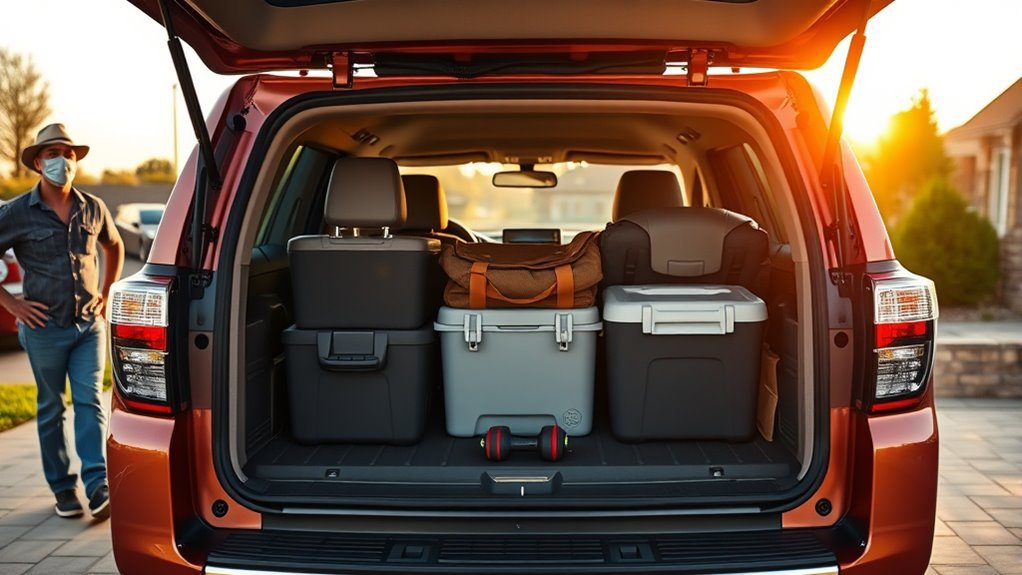
Step 1: Read your load label. Open the driver’s door and find the Tire and Loading Information label. Use the number in the statement telling you how much the combined weight of occupants and cargo may be. Toyota’s 2025 U.S. owner-manual specifications list 895 lb for vehicles without third seats and 1,160 lb for vehicles with third seats, but your own vehicle label and any supplemental load-capacity label should be your starting point.
Step 2: Subtract what the vehicle is carrying. Use the actual combined weight of the people riding in the 4Runner. Then subtract cargo, pets, aftermarket equipment added after the vehicle was labeled, and trailer tongue weight when towing. The 150-lb occupant figure used in vehicle regulations and specifications is a standardized assumption; it should not replace actual passenger weights when you know them.
Step 3: Verify the loaded vehicle on a scale. A certified vehicle scale can show front-axle, rear-axle, and total loaded weight. Compare the total with GVWR and each axle with its GAWR. If any rating is exceeded, remove or redistribute weight before driving.
Door-label calculation: Remaining load capacity = load-label limit − occupants − added equipment − cargo − trailer tongue load.
Scale calculation: Remaining GVWR margin = GVWR − current loaded scale weight. This scale margin is useful for checking gross vehicle weight, but it does not give permission to exceed the manufacturer’s occupant-and-cargo limit.
| Number | What It Tells You | How to Use It |
|---|---|---|
| Tire and Loading Information limit | Manufacturer-rated combined occupants and cargo for the vehicle | Use this as the starting load limit |
| GVWR minus published curb weight | A specification-based mathematical difference | Useful for comparison; do not use it to override your vehicle’s load label |
| GVWR minus actual scale weight | Current gross-weight headroom at the time of weighing | Use with front/rear axle weights to verify the loaded vehicle |
Worked 4Runner Payload Example
Suppose a 4Runner’s load label states 895 lb. This example uses 340 lb of occupants, 120 lb of equipment added after delivery, 150 lb of cargo, and 200 lb of trailer tongue weight. The calculation is 895 − 340 − 120 − 150 − 200 = 85 lb remaining. These numbers are an example only; use the actual weights for your vehicle and trip.
Find GVWR and Curb Weight: Door Sticker vs. Scales
Your 4Runner’s certification label provides GVWR and front/rear GAWR. Published curb weight comes from Toyota specifications and varies by drivetrain and trim. A scale gives you something different again: the vehicle’s actual weight in its current configuration.
Toyota’s published 2025 specifications show why one payload calculation cannot represent every 4Runner. The examples below use Toyota’s listed curb weight and GVWR; the mathematical difference is shown only to illustrate configuration differences.
| 2025 Configuration | Published Curb Weight | GVWR | GVWR − Curb Weight |
|---|---|---|---|
| 2WD SR5 | 4,455 lb | 6,005 lb | 1,550 lb |
| 4WD Limited | 4,970 lb | 6,395 lb | 1,425 lb |
| Hybrid TRD Pro | 5,455 lb | 6,505 lb | 1,050 lb |
| Hybrid Trailhunter | 5,500 lb | 6,505 lb | 1,005 lb |
These published numbers come from Toyota’s 2025 4Runner specifications. You can review Toyota’s model information at Toyota’s 2025 4Runner newsroom page. They explain why the often-repeated 1,425-lb figure is not a universal 2025 4Runner payload number.
A scale is especially useful after adding armor, racks, larger tires, recovery equipment, drawers, a spare carrier, or towing equipment. Weigh the 4Runner in the configuration you want to evaluate. If you are checking travel readiness, load it as it will actually travel. Record the front axle, rear axle, and total weight rather than looking only at the gross total.
For a deeper explanation of the certification label and axle ratings, see the 4Runner GVWR and GAWR door-sticker guide.
Subtract Passengers and Added Load—But Don’t Double-Count Fuel
Use the actual combined weight of the occupants rather than automatically assigning 150 lb to each person. Toyota uses 150 lb as a standardized occupant figure in vehicle specifications, while its load-calculation procedure reduces cargo capacity by the weight of the people actually riding in the vehicle.
Do not separately subtract gasoline already in the factory fuel tank when you are starting from Toyota curb weight or the vehicle’s rated load capacity. Toyota’s definition of curb weight includes the maximum capacity of fuel, oil, and coolant. NHTSA likewise explains that unloaded vehicle weight includes the operating fluids required by the vehicle. See NHTSA’s vehicle-loading interpretation for the federal loading framework.
Extra fuel carried in cans is different. Jerry cans, water containers, coolers, luggage, tools, and other items placed in or on the vehicle are additional load and must be counted.
Do not automatically add factory-installed equipment a second time when using the vehicle’s load placard. If equipment was added before delivery, also inspect the door-jamb area for a supplemental label showing a reduction in available carrying capacity. Accessories and modifications installed later must be included in your load calculation or captured by an actual scale measurement.
[Products Worth Considering]

This custom-fit cargo liner is designed to protect the trunk area of compatible Toyota RAV4 models from mud, dirt, snow, and spills. Made from non-toxic TPO material with deep grooves and raised lips, it helps keep luggage from scratching or dirtying the original carpet while offering a secure, easy-to-clean surface. It installs quickly without trimming and is shaped to match the cargo contours for a neat, precise fit.
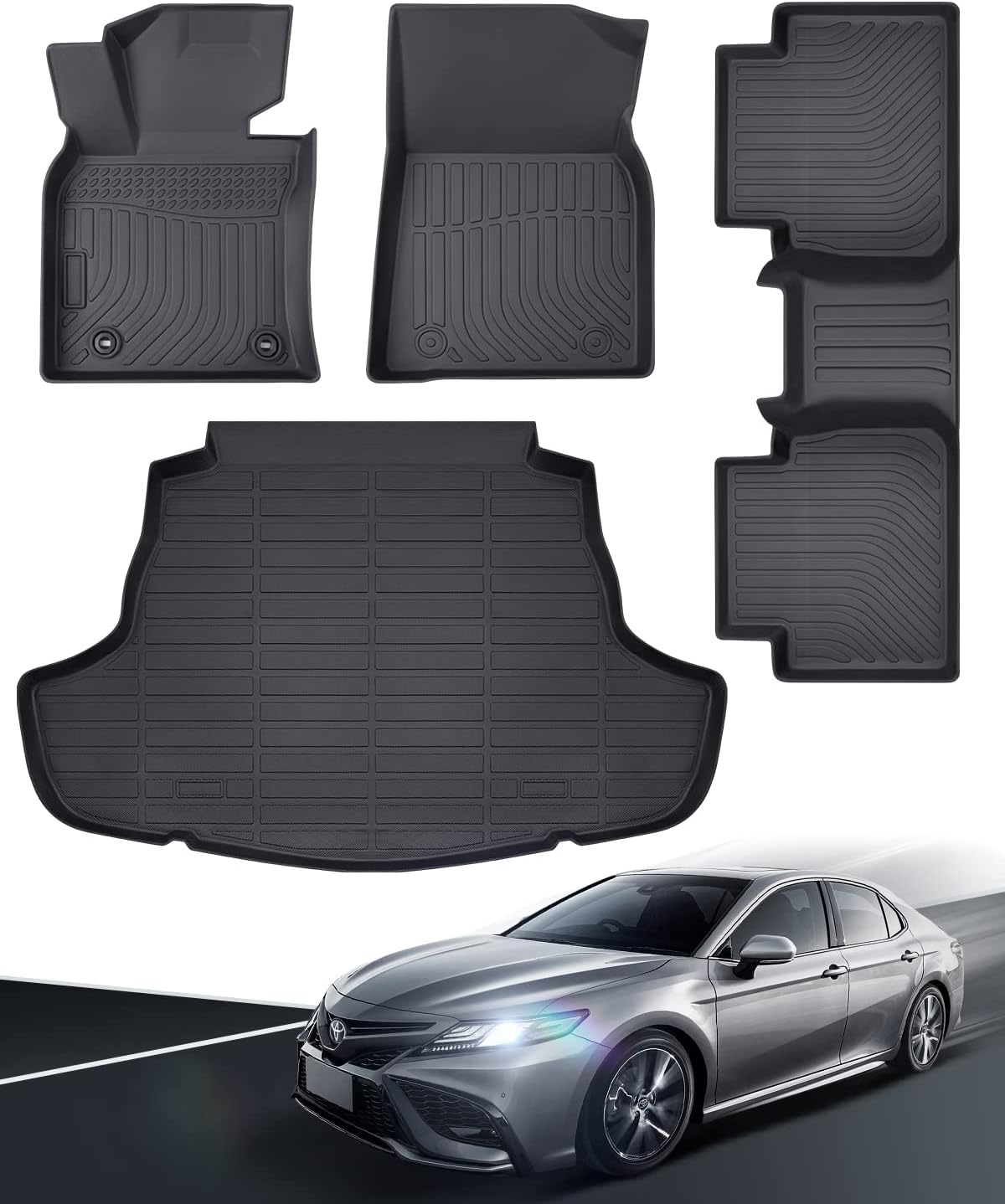
This custom floor mat and cargo liner set is designed to help protect the interior of Toyota Camry models from everyday messes like mud, spills, snow, and pet hair. Made for a precise fit on compatible 8th Gen FWD trims, it offers full coverage for both the cabin and trunk while remaining easy to remove, clean, and reinstall. The odorless TPE construction is built for all-weather durability and long-lasting comfort.

The NOCO Boost GB150 is a powerful 12V lithium jump starter designed to safely revive dead batteries in seconds, with enough peak power for large gas and diesel engines. Its UltraSafe technology helps prevent sparks and reverse polarity mistakes, while the built-in USB-C power bank and LED flashlight add dependable emergency utility for roadside repairs and everyday use.
Weigh Gear and Mods for 4Runner Payload
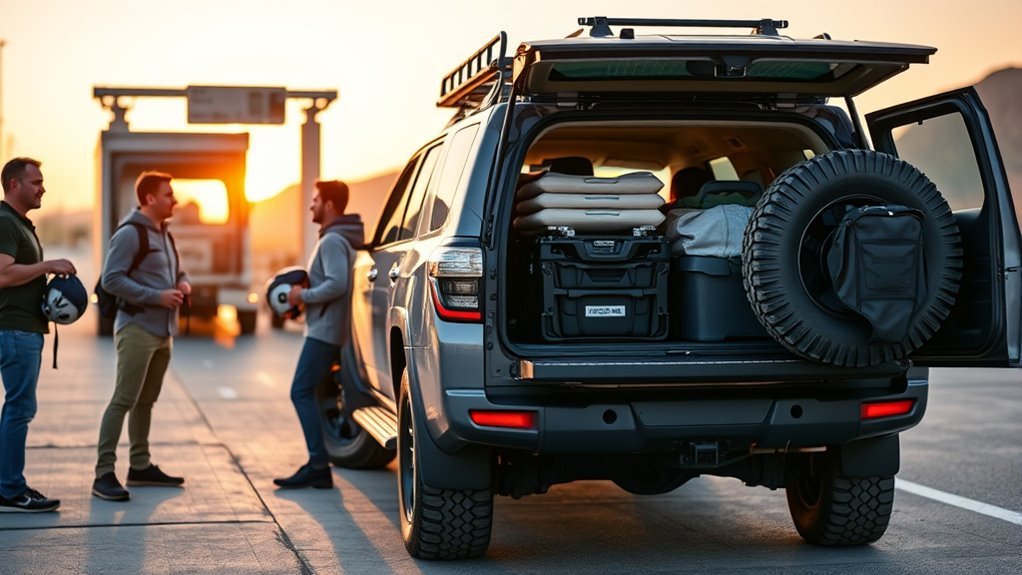
Aftermarket equipment can consume load capacity quickly, so use the actual weight of the parts installed on your 4Runner. Do not rely on generic estimates for a “steel bumper” or “winch” when product weights are available. Use the manufacturer’s published net or installed weight, weigh the component, or re-weigh the complete vehicle after installation.
Common additions that should be included in your weight budget include bumpers, winches, skid plates, rock sliders, roof racks, rooftop tents, larger wheel-and-tire combinations, spare-tire carriers, drawer systems, refrigerators, auxiliary batteries, recovery equipment, water, extra fuel, tools, and camping gear.
- Permanent modifications: record their actual added weight and keep a running total.
- Trip cargo: weigh or reasonably measure removable equipment before loading.
- Roof cargo: also obey the separate roof/rack load limit in the owner’s manual and rack documentation.
- After major changes: re-weigh the vehicle so you know the actual front, rear, and gross weights.
Where you place the weight also matters. Keep dense cargo low, secure it against movement, and avoid concentrating unnecessary mass at the extreme rear or high on the roof. After loading, verify that neither axle exceeds its GAWR.
[Products Worth Considering]

The Masoll M13 Tire Pressure Monitoring System helps monitor tire pressure for sedans, SUVs, pickup trucks, RVs, and travel trailers with four tires. It features automatic reference pressure calibration, alerting you when pressure changes fall outside the set range, while solar charging and auto wake-up support convenient everyday use. With precise pressure detection, an easy-to-read color LCD, and adaptive backlighting, it is designed to improve driving safety and help protect tire life.

Replacement for 2003 2004 2005 2006 2007 2008 2009 4Runner N210.

for 2003 2004 2005 2006 2007 2008 2009 Toyota 4runner SW4 N210. Replacement for 63491-35010, 63492-35010, 63493-35010, 63494-35010
Safe Loading, Suspension Upgrades, and What to Do If You’re Over
If your load calculation or scale ticket shows that the 4Runner exceeds its occupant-and-cargo limit, GVWR, GAWR, tire limits, or another applicable rating, the safest correction is to reduce or redistribute the load. Remove nonessential equipment, move cargo where appropriate, or use another vehicle or trailer configuration.
Heavier springs, helper airbags, or upgraded dampers may improve ride height or handling while carrying an otherwise permitted load, but they do not automatically increase Toyota’s rated payload, GVWR, or GAWR. Do not treat suspension work as permission to exceed the ratings on the vehicle.
If you are towing, include the load imposed by the trailer on the tow vehicle and verify rear-axle weight as well as total vehicle weight. For the towing-specific calculation, see how to calculate Toyota 4Runner tongue weight safely. You can also review the 4Runner hitch receiver size and class guide when checking hitch hardware.
- Over the load-label limit: remove occupants/cargo or other added load.
- Over GVWR: reduce total vehicle weight.
- Over rear or front GAWR: reduce or safely redistribute load and re-weigh.
- Over a tire, roof, hitch, or other component limit: follow the lower applicable rating.
Do not rely on one number alone. A sound loading check keeps the vehicle within the manufacturer’s occupant-and-cargo limit, GVWR, both axle ratings, tire limits, and towing/hitch limits that apply to the setup.
[Products Worth Considering]

UP TO 1,000 LBS. OF LOAD-LEVELING CAPACITY: Air Lift 1000 air springs provide added suspension support for towing and hauling, helping reduce the effects of extra weight and promote improved vehicle stability, braking, and steering control.

UP TO 1,000 LBS. OF LOAD-LEVELING CAPACITY: Air Lift 1000 air springs provide added suspension support for towing and hauling, helping reduce the effects of extra weight and promote improved vehicle stability, braking, and steering control.
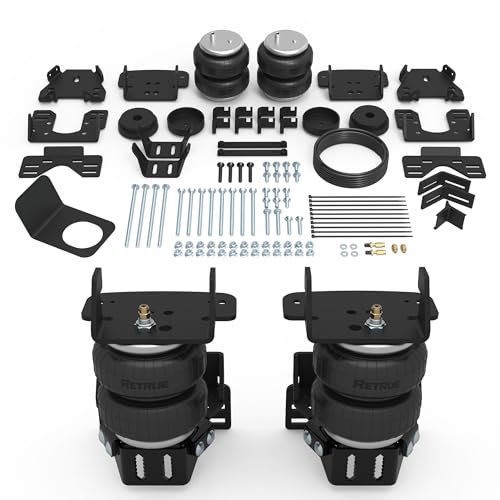
Vehicle Compatibility - RETRUE Air bags rear suspension kit for 2022-2026 F250 4WD 2WD;2017-2025 F250 4WD;2022-2026 F350 4WD 2WD;2017-2026 F350 4WD;2017-2026 F450 4WD 2WD, (2WD/4WD Fits both single and dual wheel applications. Will require spacers forlifted applications) perfect replacement for the Firestone Ride-Rite 2625 kit
Frequently Asked Questions
Do Passengers Count Towards Payload?
Yes. Occupants consume the 4Runner’s available load capacity. Use the actual combined weight of the people riding in the vehicle, then subtract that amount from the occupant-and-cargo limit shown on the Tire and Loading Information label.
What Is the Payload Capacity of a Toyota 4Runner?
There is no single payload figure that applies to every 4Runner configuration. Toyota’s 2025 U.S. owner-manual specifications list vehicle capacity weight of 895 lb for vehicles without third seats and 1,160 lb for vehicles with third seats. Published GVWR-minus-curb-weight calculations can produce different numbers, so confirm the Tire and Loading Information label on the specific vehicle you are loading.
How Do I Figure Out My Payload Capacity?
Read the combined occupant-and-cargo limit on your 4Runner’s Tire and Loading Information label. Subtract actual occupants, cargo, aftermarket equipment added after labeling, and trailer tongue load. Then weigh the loaded vehicle and verify that its total weight and front/rear axle weights remain below GVWR and GAWR.
Does Fuel in the Tank Count Against 4Runner Payload?
Do not subtract normal fuel in the factory tank a second time when working from Toyota curb weight or the vehicle’s rated load capacity because curb weight includes the maximum capacity of fuel and other required fluids. Extra fuel carried in portable cans is additional cargo and must be counted.
Does Trailer Tongue Weight Count Against 4Runner Payload?
Yes. The trailer’s tongue load is supported by the tow vehicle and contributes to its loaded weight, particularly at the rear axle. Include it when checking the 4Runner’s available load capacity, GVWR, and rear GAWR.
Can Suspension Upgrades Increase 4Runner Payload?
Not by themselves. Springs, airbags, and dampers can change ride height or handling, but installing them does not automatically raise the manufacturer-assigned GVWR, GAWR, or occupant-and-cargo rating. If your calculated or measured load exceeds a rating, reduce the load.
Is There a 4Runner Year to Avoid Because of Payload?
Do not choose or reject a 4Runner model year from a generic payload figure alone. Payload and load limits vary with generation, seating configuration, drivetrain, trim, and equipment. Check the Tire and Loading Information label and certification label on the specific vehicle you are considering.
Conclusion
To calculate your 4Runner’s usable load correctly, start with the occupant-and-cargo limit on the vehicle’s Tire and Loading Information label. Subtract actual occupants, cargo, post-delivery modifications, and trailer tongue load. Do not double-count normal fuel in the factory tank. For the final check, weigh the loaded 4Runner and confirm that total vehicle weight and both axle weights remain under their ratings. If any limit is exceeded, remove or redistribute weight rather than assuming suspension upgrades create additional rated capacity.