

Your Toyota 4Runner’s GVWR and GAWR tell you how much the complete vehicle and each axle are allowed to weigh when loaded. The safest numbers to use are the ratings printed on your specific 4Runner’s driver-side certification label, because limits vary by model year, trim, drivetrain, equipment, and generation.
Quick Answer
Find your 4Runner’s GVWR and front/rear GAWR on the certification label near the driver-side door opening. Never let the loaded vehicle exceed GVWR or either axle exceed its GAWR. Passengers, cargo, accessories, hitch equipment, and trailer tongue weight all use available carrying capacity.
Key Takeaways
- GVWR is the maximum permitted loaded vehicle weight; GAWR is the maximum permitted weight carried by each axle.
- Use the numbers on your own 4Runner instead of relying on a generic online GVWR figure.
- The Tire and Loading Information placard gives the vehicle-specific combined occupant-and-cargo limit and recommended cold tire pressures.
- Trailer tongue weight presses on the tow vehicle and therefore consumes available vehicle carrying capacity.
- A tow rating is not permission to ignore GVWR, GAWR, GCWR, hitch limits, tire limits, or payload.
At a Glance
| Time Required | About 10 minutes to check labels and calculate a basic load; longer if you use a vehicle scale. |
| Difficulty | Easy for label checks; moderate when verifying separate axle and trailer weights. |
| Tools Needed | Certification label, Tire and Loading Information placard, model-year owner’s manual, calculator, and ideally a certified or commercial vehicle scale. |
| Cost | Free for label/manual checks; public-scale fees vary by location. |
Your 4Runner GVWR and Why It Matters
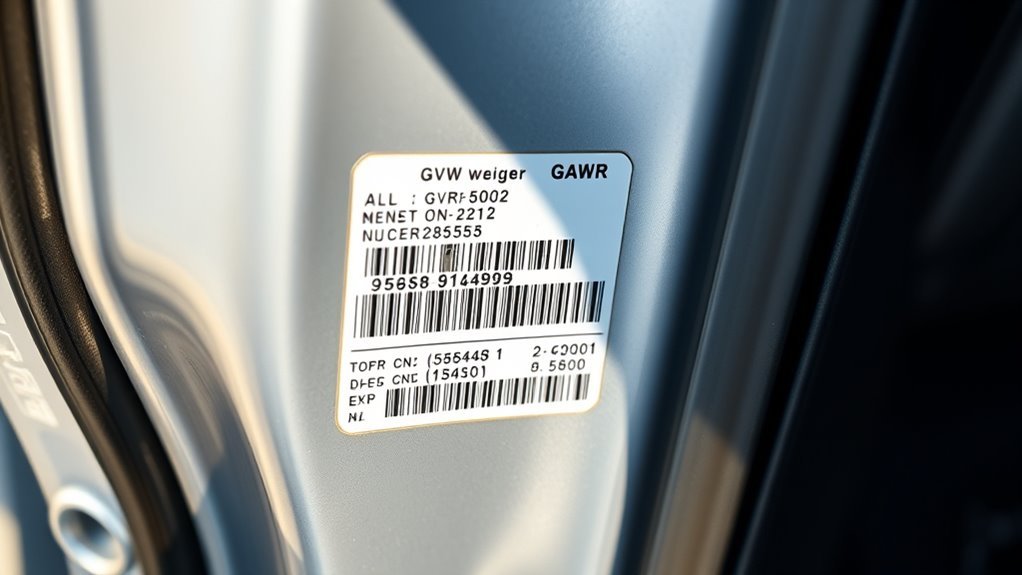
GVWR, or Gross Vehicle Weight Rating, is the maximum allowable weight of the loaded vehicle. That loaded weight includes the 4Runner itself plus people, luggage, cargo, installed accessories, hitch equipment, and any trailer tongue load transferred to the SUV.
Do not assume that every 4Runner has the same GVWR. For example, Toyota’s official 2024 specifications list a 6,100-pound GVWR for SR5, TRD Sport, SR5 Premium, and Limited models and 6,300 pounds for TRD Off-Road, TRD Off-Road Premium, and TRD Pro. The 4Runner was then redesigned for the 2025 model year, so those fifth-generation numbers should not be carried forward to newer vehicles.
For that reason, the certification label on your 4Runner should always override a generic chart or number you find online.
Warning: Do not treat GVWR, GAWR, tire load limits, hitch ratings, or towing limits as performance targets. They are maximum limits. Exceeding one limit can create a problem even when all the other numbers are still below their maximums.
Finding the 4Runner GVWR/GAWR Sticker
Open the driver’s door and inspect the pillar, door-latch post, and adjacent door-edge area. U.S. federal certification rules require the vehicle certification label to be permanently attached near the driver’s seating position. That label includes the vehicle’s GVWR and separate GAWR values for the front and rear axles.
Driver Door Jamb
The driver-side door opening is the first place to look. The certification label normally identifies the manufacturer, date of manufacture, VIN, GVWR, and front/rear GAWR. Read the exact pound or kilogram ratings rather than estimating them from trim-level information found elsewhere.
You may also see a separate Tire and Loading Information placard in the same general area. That placard serves a different purpose: it provides seating information, recommended cold tire pressures, original tire sizes, and a statement such as “The combined weight of occupants and cargo should never exceed” a specified value.
If the Label Is Missing or Unreadable
The glove box is not the normal location for the federal GVWR/GAWR certification label. If the driver-side label is damaged, painted over, or unreadable, check your model-year owner’s manual and contact a Toyota dealer with the VIN for vehicle-specific information rather than guessing from another 4Runner.
Note: The certification label and Tire and Loading Information placard are related but not interchangeable. Use the certification label for GVWR/GAWR and the loading placard for the vehicle-specific occupant-and-cargo limit and tire-pressure information.
GVWR, GVW, GAWR, GCWR, and TWR Explained
| Term | What It Means | Why It Matters |
|---|---|---|
| GVW | The vehicle’s actual weight at a given moment. | This is what a scale measures. |
| GVWR | Maximum allowable loaded vehicle weight. | Actual GVW must stay at or below it. |
| GAWR | Maximum allowable weight carried by one axle. | You must satisfy the front and rear limits separately. |
| GCWR | Maximum permitted combined weight of tow vehicle and trailer under the applicable manufacturer rating. | Important when towing. |
| TWR | Trailer Weight Rating, or the maximum allowable gross trailer weight for the applicable configuration. | This is not the same as GVWR or payload. |
| Tongue Weight | The downward load the trailer places on the hitch. | It becomes load carried by the tow vehicle. |
Decoding GVWR: What the Number Means for Load and Towing
GVWR is a maximum rating, while GVW is your 4Runner’s actual measured weight. If the loaded SUV weighs 5,900 pounds on a scale and its certification label shows a 6,300-pound GVWR, the mathematical difference is 400 pounds. That does not automatically mean you can place another 400 pounds anywhere in the vehicle, however, because either axle or a tire may reach its limit first.
You will often see payload estimated as GVWR minus curb weight. That is useful when comparing specifications, but real vehicles accumulate options and accessories. The Tire and Loading Information placard’s combined occupant-and-cargo limit is more useful for day-to-day loading, while an actual vehicle scale gives the best picture after modifications have been installed.
Common additions that consume carrying capacity include:
- Passengers and pets
- Camping equipment and luggage
- Steel bumpers and rock sliders
- Winches and skid plates
- Roof racks, rooftop tents, and roof cargo
- Drawer systems and refrigerators
- Larger spare tires or wheel/tire combinations
- Trailer hitch hardware
- Trailer tongue weight
Pro Tip: If your 4Runner has substantial aftermarket equipment, weigh it in normal travel condition—with the driver, usual passengers, fuel, permanent accessories, and hitch equipment already aboard. That gives you a more useful baseline than a brochure curb-weight number.
[Products Worth Considering]

The MaxxHaul 70115 roof rack cargo basket adds valuable storage space for road trips, camping, moving, and everyday hauling. Built from powder-coated steel with a raised rail design and mesh base, it helps keep luggage, gear, and bulky items secure while reducing wind resistance. It installs easily on most factory or aftermarket crossbars with included mounting hardware for a dependable rooftop cargo solution.
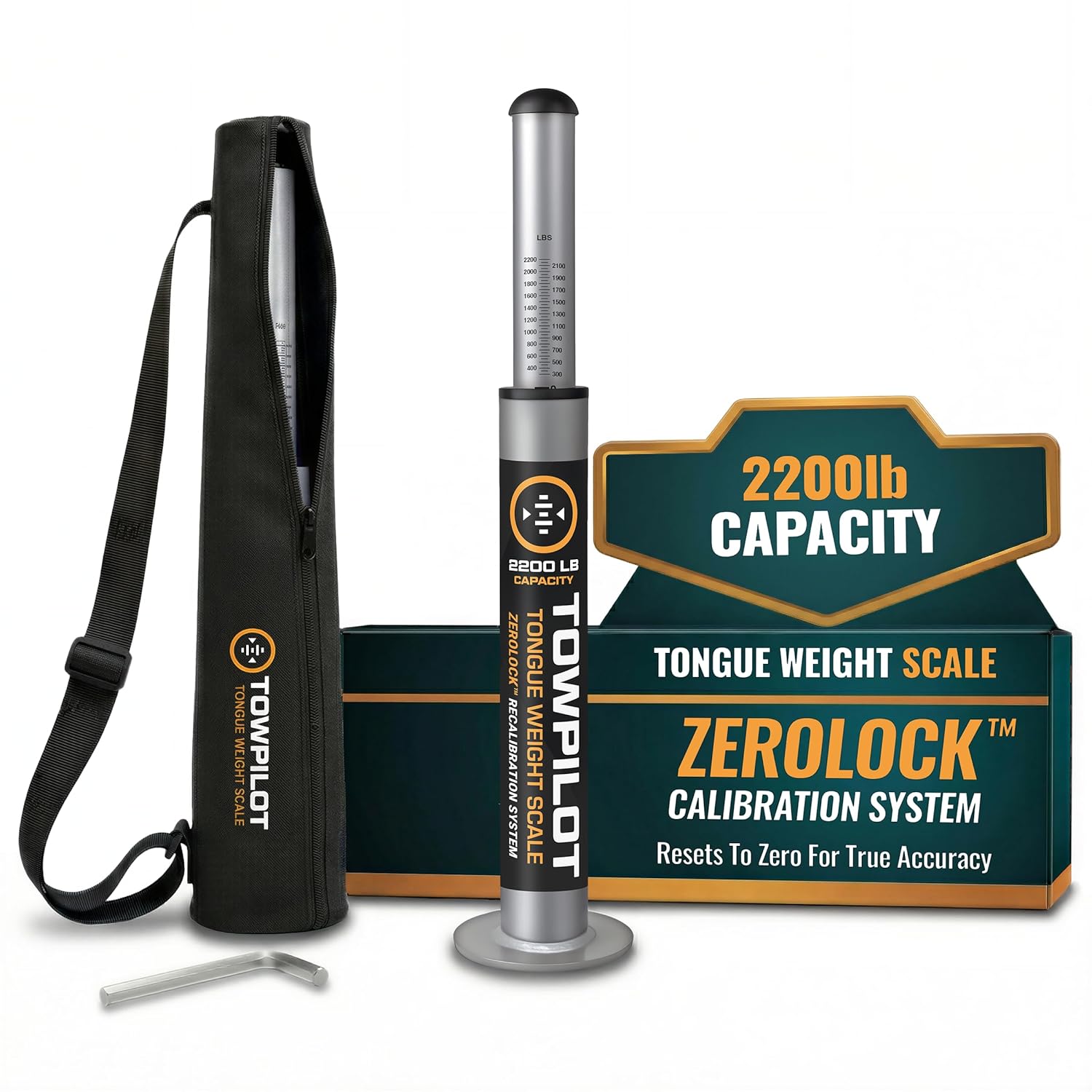
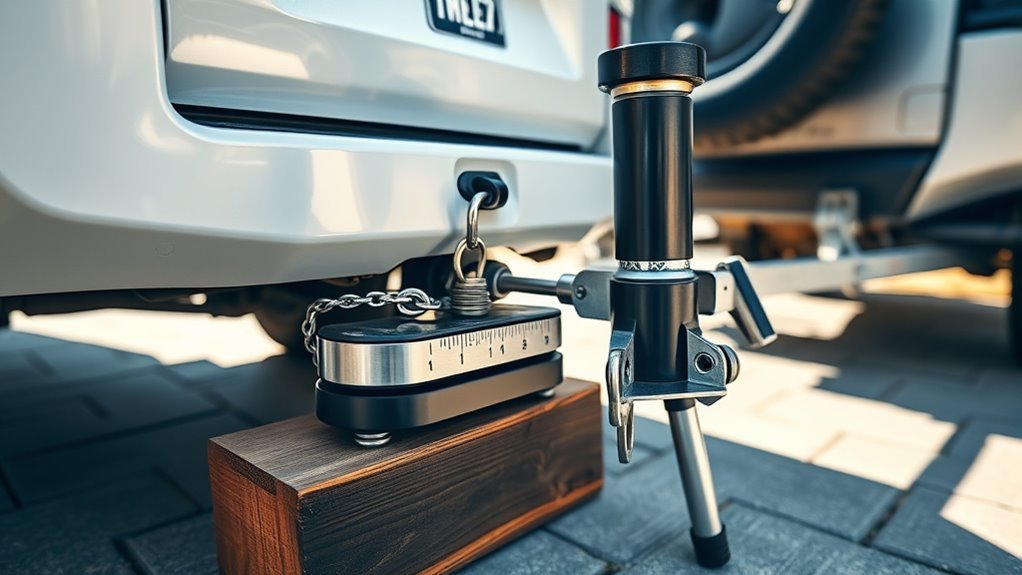
This trailer tongue weight scale helps you check hitch weight quickly and accurately before towing, reducing sway and improving overall safety. Built with durable steel and a spring mechanism, it works without batteries and includes a recalibration feature to maintain true-zero accuracy over time. It is designed for RVs, campers, and utility trailers, with a top plate that helps protect your coupler during use.
This pair of front axle shaft nuts is designed to secure CV joints and wheel bearings on compatible Toyota and Lexus front drive axles. Built from heat-treated carbon steel for durability and corrosion resistance, it helps maintain proper torque and reliable power transfer. It is a direct replacement for several factory part numbers and is recommended for paired replacement.
Front vs. Rear GAWR: Why Both Axle Limits Matter
Your 4Runner has a separate GAWR for the front axle and rear axle. Do not assume the rear rating is always higher or that a particular axle has extra capacity simply because of where the engine, passengers, or cargo normally sit. Read both values from the certification label.
Why GAWR Values Can Differ
Axle ratings reflect the complete vehicle design, including axle components, suspension, wheels, tires, brakes, and the manufacturer’s engineering limits. Because configurations vary, the safest practice is to treat the printed front and rear ratings as independent maximums rather than trying to infer them from the vehicle’s layout.
Also remember that adding heavier-duty springs, airbags, helper springs, shocks, or other suspension components does not automatically increase the factory GVWR or GAWR. Such parts may change ride height or suspension behavior, but the original vehicle ratings remain the numbers you should use unless an officially recognized rerating applies.
Weight Distribution Effects
Total vehicle weight can be below GVWR while one axle is already overloaded. A rear cargo drawer, spare tire carrier, hitch-mounted equipment, or trailer tongue weight can concentrate load on the rear. Heavy front accessories such as a bumper and winch add load toward the front.
That is why a complete weighing check should look at both total vehicle weight and individual axle weights.
4Runner Weight Ratings Change by Model Year and Trim
The 4Runner spans multiple generations, so a number from one model year should not be copied to another. Toyota’s 2024 brochure, for example, lists curb weights from 4,400 to 4,750 pounds and GVWR values of 6,100 or 6,300 pounds depending on trim.
The 2025 model introduced an all-new sixth-generation 4Runner with different powertrains, chassis specifications, and towing capability. Toyota currently advertises the 2026 4Runner with up to 6,000 pounds of towing capacity, while the previous-generation 2024 4Runner was rated for up to 5,000 pounds.
Those towing figures are maximum advertised ratings, not substitutes for your vehicle’s individual GVWR, GAWR, GCWR, payload, hitch, and trailer requirements.
How GVWR and GAWR Affect Payload, Tongue Weight, and Trailer Choice
When you connect a trailer, some trailer weight is transferred downward through the hitch. That tongue weight counts as load carried by the 4Runner, along with occupants, cargo, accessories, and hitch equipment.
That is why a trailer can be below its advertised maximum towing weight while the 4Runner itself is already too heavy. A family, camping gear, aftermarket equipment, and several hundred pounds of hitch/tongue load can consume available vehicle capacity quickly.
Older fifth-generation 4Runner owner documentation specifies conventional trailer tongue weight of approximately 9% to 11% of gross trailer weight. Because Toyota redesigned the 4Runner for 2025, owners of sixth-generation vehicles should use the tongue-weight requirement in their exact model-year owner’s manual rather than assuming an older percentage applies.
Before towing, confirm all applicable limits:
- Loaded 4Runner weight is at or below GVWR.
- Front axle weight is at or below front GAWR.
- Rear axle weight is at or below rear GAWR.
- Gross trailer weight is within the applicable TWR.
- Combined vehicle-and-trailer weight is within the applicable GCWR.
- Tongue weight is within Toyota’s specified range for that model year and trailer type.
- Hitch, receiver, ball mount, ball, tires, and trailer components have adequate ratings.
Tow rating is only one part of the calculation. Your 4Runner must remain within its vehicle, axle, tire, hitch, tongue-weight, and combination-weight limits at the same time.
[Products Worth Considering]

Built for towing, winching, and off-road recovery, this D-ring shackle set delivers dependable strength in a compact, easy-to-use design. The drop-forged steel construction and protective coated finish help provide reliable performance and resistance to rust in demanding outdoor conditions. Compatible with Jeeps, ATVs, UTVs, trucks, trailers, and SUVs, it is a practical recovery accessory for everyday trail and rescue use.

This adjustable tri-ball trailer hitch gives you flexible towing support with three hitch ball sizes and a 4.5-inch rise and drop for level hauling across different vehicles and trailers. Built for durability and convenience, it includes a tow hook, D-ring shackle, and a secure locking system for dependable towing, recovery, and off-road versatility.

Expand your vehicle's storage with this universal roof rack cargo basket, designed to carry gear securely on road trips, camping adventures, and everyday hauling. Built from powder-coated steel with rust-resistant treatment, it offers dependable durability in harsh weather while the wind deflector, side rails, and reflective accents help protect cargo and improve travel safety. Installation is simple with universal U-bolts, making it a practical fit for many vehicles with crossbars.
Common Loading Mistakes That Overload a 4Runner
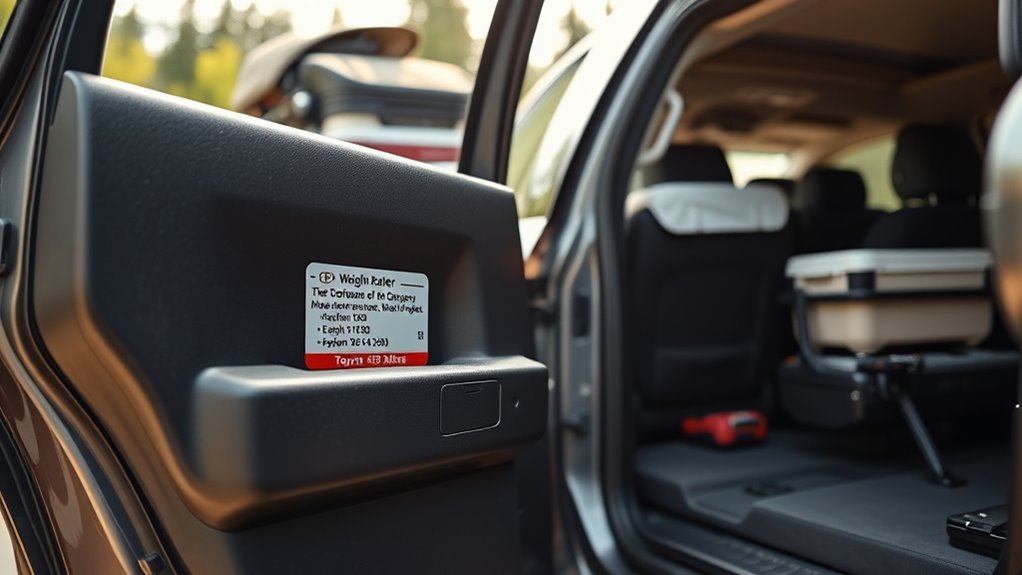
Many overload problems come from equipment that is easy to overlook. Permanent accessories still weigh something even when they are not thought of as “cargo,” and trailer tongue weight can push the rear axle toward its limit.
| Mistake | Why It Matters |
|---|---|
| Ignoring accessory weight | Bumpers, winches, racks, drawers, skid plates, and larger spare tires reduce remaining carrying capacity. |
| Using tow rating as the only limit | GVWR, GAWR, GCWR, tongue weight, hitch limits, and tire limits still apply. |
| Forgetting tongue weight | Tongue load is carried by the vehicle and can push the rear axle or total vehicle weight over its limit. |
| Checking only total vehicle weight | One axle can exceed GAWR even when the complete vehicle remains below GVWR. |
| Assuming suspension upgrades raise GVWR | Aftermarket suspension parts do not automatically change the manufacturer’s certified weight ratings. |
Weighing and Loading Checklist: Stay Within the Limits
Use this sequence when preparing a loaded 4Runner for a trip or towing:
- Read the certification label. Record GVWR, front GAWR, and rear GAWR.
- Read the Tire and Loading Information placard. Record the combined occupant-and-cargo limit and recommended cold tire pressures.
- Check the correct owner’s manual. If towing, locate TWR, GCWR, tongue-weight guidance, hitch requirements, trailer-brake requirements, and other model-year restrictions.
- Add passengers and permanent equipment. Account for people, luggage, recovery gear, bumpers, winches, racks, drawers, tools, and hitch equipment.
- Load heavy cargo securely. Keep loads low and stable where practical and avoid concentrating unnecessary weight at the extreme front, rear, or roof.
- Weigh the loaded vehicle. Use a scale that can provide total vehicle weight and, ideally, separate front and rear axle weights.
- Compare the measurements. Total actual vehicle weight must not exceed GVWR, and neither axle may exceed its GAWR.
- If towing, measure again with the trailer connected. Confirm that tongue load and the connected trailer do not push the 4Runner, either axle, or the vehicle-trailer combination beyond its applicable limits.
- Recheck after major changes. New passengers, a rooftop tent, bumper, winch, drawer system, larger spare, or different trailer can materially change the result.
If an axle is too heavy, simply being below GVWR does not solve the problem. Remove weight or redistribute it where appropriate, then weigh again. Do not shift cargo in a way that creates insecure loading or violates the trailer manufacturer’s loading instructions.
[Products Worth Considering]

This synthetic soft shackle set is designed for safer, easier off-road recovery with a simple loop-and-tighten setup that helps make vehicle pulls more straightforward. Built as a lightweight alternative to traditional metal shackles, it uses anti-scratch synthetic fiber to help protect your vehicle during recovery tasks. The two-pack format adds convenience for trail use, and Rhino USA backs the product with lifetime replacement support.

Rhino USA D Ring Shackles provide a dependable recovery connection for off-road and towing setups, with a high break strength designed for demanding use. They fit most aftermarket bumpers and universal shackle mounts, and the included rubber isolator kit helps reduce noise, vibration, and wear. Built from chromoly steel with an anti-rust powder-coated finish, these shackles are made for long-lasting performance in harsh conditions.
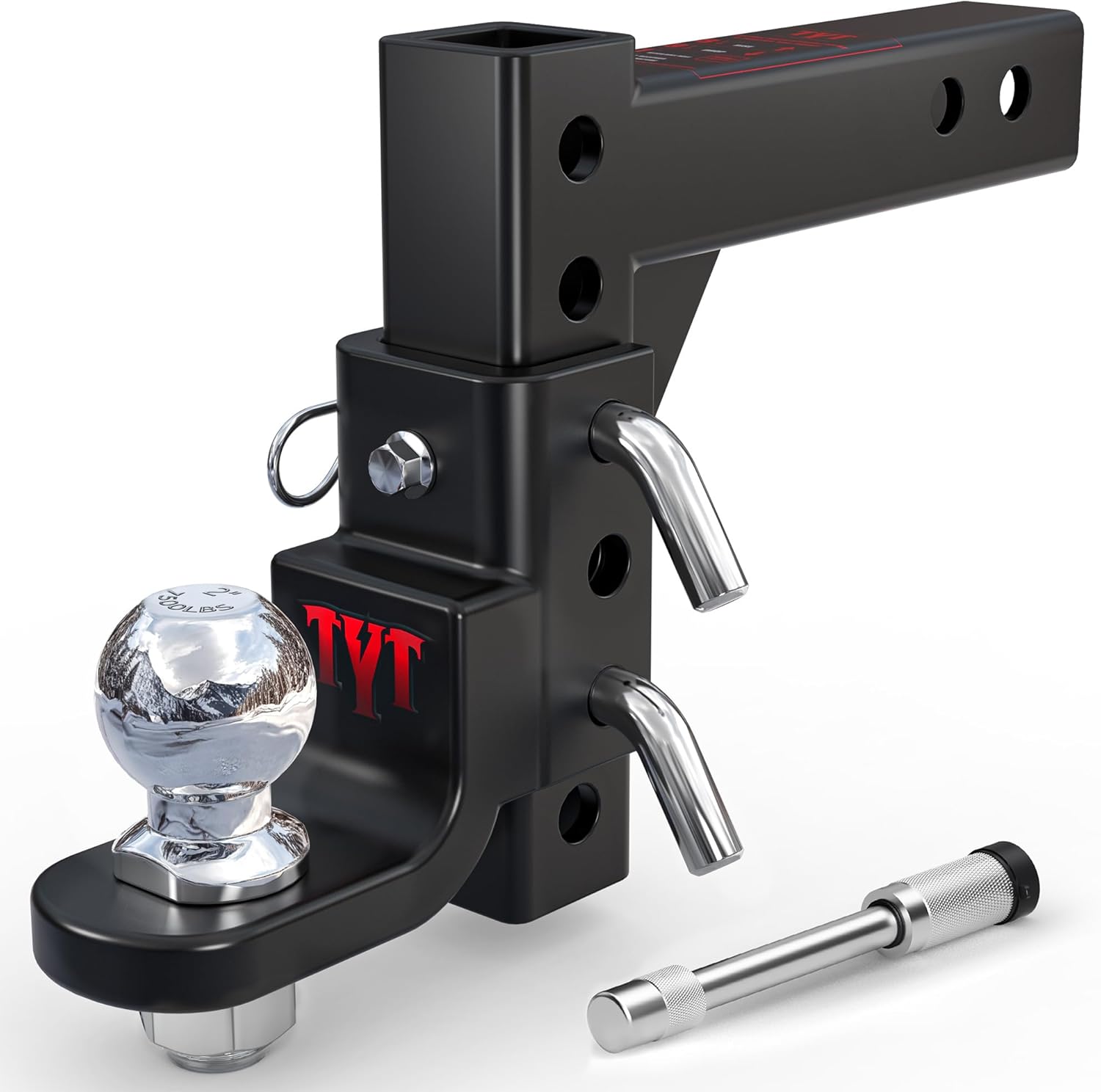
This adjustable trailer hitch ball mount is built for dependable towing with a standard 2-inch receiver and a high-capacity design suited for trucks, campers, boats, and utility trailers. Its adjustable rise and drop settings help you achieve a level tow, while the anti-rattle design supports a smoother, quieter ride. Complete with pins, clips, and a premium pin lock, it offers an easy installation and secure connection for everyday hauling needs.
Frequently Asked Questions
What does GVWR mean on a 4Runner door sticker?
GVWR is the maximum allowable loaded weight of the complete 4Runner. The actual vehicle weight includes the vehicle, occupants, cargo, installed equipment, hitch hardware, and trailer tongue load being carried by the SUV.
Can I determine 4Runner towing capacity from the door sticker?
Not completely. The certification label gives GVWR and GAWR, but you should use the applicable Toyota owner’s manual or specifications to find TWR, GCWR, tongue-weight guidance, and towing-equipment requirements. All of those limits must work together.
What is the difference between GVWR and GAWR?
GVWR limits the total loaded vehicle weight. GAWR limits the amount of that weight carried by each individual axle. You must stay within GVWR and both axle ratings at the same time.
Does trailer tongue weight count against 4Runner payload?
Yes. Tongue weight presses down on the tow vehicle through the hitch, so it becomes part of the load your 4Runner must carry along with passengers, cargo, accessories, and hitch equipment.
Do airbags or upgraded springs increase a 4Runner’s GVWR?
Not automatically. Suspension upgrades can change ride height, sag, or handling under load, but they do not by themselves change the manufacturer’s certified GVWR or GAWR. Continue using the ratings applicable to the vehicle unless an officially recognized rerating applies.
What is the best way to know how much my loaded 4Runner actually weighs?
Use a vehicle scale with the 4Runner loaded as it will travel. For the most useful check, obtain total weight plus separate front- and rear-axle weights, then compare them with GVWR and the corresponding GAWR values on the certification label.
Conclusion
Your 4Runner’s GVWR and GAWR are vehicle-specific limits, not numbers to estimate from another trim or model year. Start with the certification label, then use the Tire and Loading Information placard and the correct Toyota owner’s manual. When heavily loaded or towing, weigh the vehicle and check total weight plus each axle separately.
Remember that passengers, cargo, accessories, hitch equipment, and trailer tongue weight all add load. Staying below an advertised tow rating is not enough by itself—you must remain within the applicable GVWR, front and rear GAWR, GCWR, trailer rating, hitch rating, tire limits, and tongue-weight requirements at the same time.
Sources
- Electronic Code of Federal Regulations — 49 CFR §567.4 — federal certification-label location and GVWR/GAWR requirements.
- Toyota 2024 4Runner Brochure — official fifth-generation curb-weight, GVWR, and towing specifications.
- Toyota USA — All-New 2025 4Runner — confirms the sixth-generation redesign and updated platform/powertrains.
- Toyota USA — 2026 Toyota 4Runner — current 4Runner towing-capability information.
- Toyota Owners — Manuals and Warranties — model-year-specific vehicle load and trailer-towing instructions.

[…] For a deeper explanation of the certification label and axle ratings, see the 4Runner GVWR and GAWR door-sticker guide. […]