For your 4Runner, pick an AGM if you want higher cold‑cranking amps, better deep‑discharge recovery, maintenance‑free operation, and flexible mounting for off‑road or accessory‑heavy use; choose flooded to save up front if you rarely run accessories and can perform periodic water checks. AGM needs lower charge voltages and accepts low‑amp float charging, while flooded tolerates higher charge rates. Compare CCA, reserve capacity, warranty, and cost — keep going and you’ll get practical selection and maintenance steps.
Quick Recommendation: Best Battery for Most 4Runners
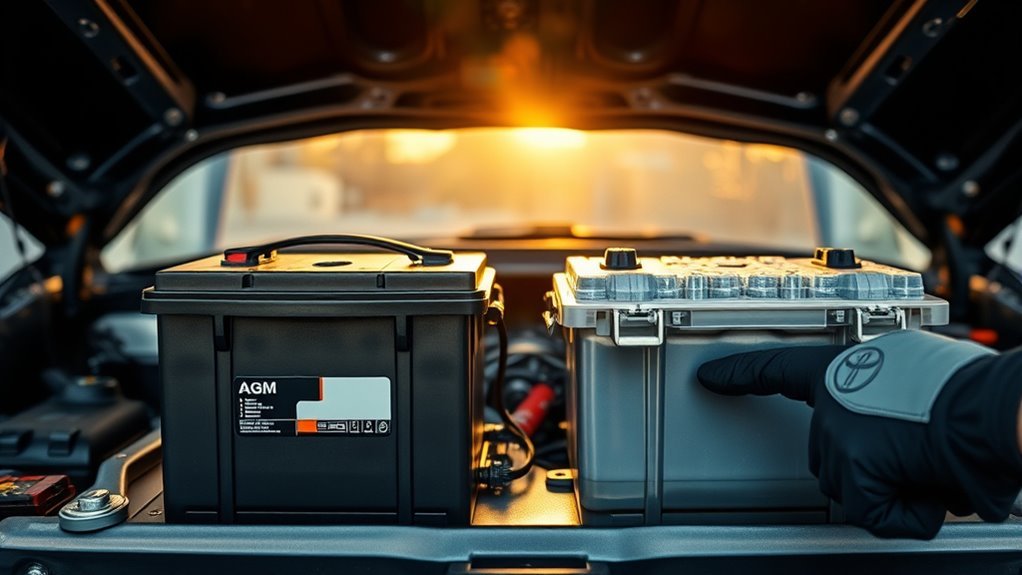
For most Toyota 4Runners, you’ll want an AGM (Absorbent Glass Mat) battery because it delivers higher cold cranking amps (CCA), better deep-discharge recovery, and maintenance-free operation—key advantages for off-road use, cold climates, and vehicles with many electrical accessories. You’ll prioritize AGM when you need reliable starts in low temperatures, frequent accessory draw, or compatibility with start-stop systems. Evaluate battery brands by published CCA, reserve capacity, and warranty; weigh lab specs against user reviews to confirm real-world durability. Choose a group size and terminal layout that match OEM fitment, and select an AGM rated for extreme-temperature performance if you operate in heat or cold. Installation is straightforward, but follow torque specs and reset any vehicle electronics per service manual. By choosing an AGM you reduce routine maintenance and vulnerability to deep discharge failure, freeing you to focus on exploration rather than roadside recovery. Make a pragmatic choice that aligns performance with your desire for autonomy.
[Products Worth Considering]

ANCEL BS200 is a permanently connected super capacitor jump starter that delivers fast starting assistance for vehicles with heavy cranking demands, including trucks, classics, and start/stop systems. Once installed, it stays ready without charging or maintenance and automatically helps every engine start while supporting battery health. A smart app adds real-time monitoring, alerts, and jump history so you can stay ahead of battery issues in any climate.

This fully automatic 5 amp, 12 volt battery charger and maintainer delivers a complete charge and then switches to float mode to keep batteries ready without overcharging. Designed for lead acid, AGM, gel, and lithium applications, it includes smart safety features like reverse polarity detection, spark-proof connection, and adaptive charging for dependable everyday use. With compact construction and long cord reach, it’s a convenient solution for keeping cars, SUVs, trucks, and other vehicles powered up.

This Nilight LED light bar set delivers bright spot and flood combo lighting for off-road driving, work sites, and rugged trails. Built with high-intensity LEDs, an aluminum housing for better heat dissipation, and IP67 waterproof protection, it is designed for reliable performance in demanding conditions. The included wiring harness kit and mounting brackets make installation straightforward and secure.
How to Tell If Your 4Runner Battery Is AGM or Flooded?
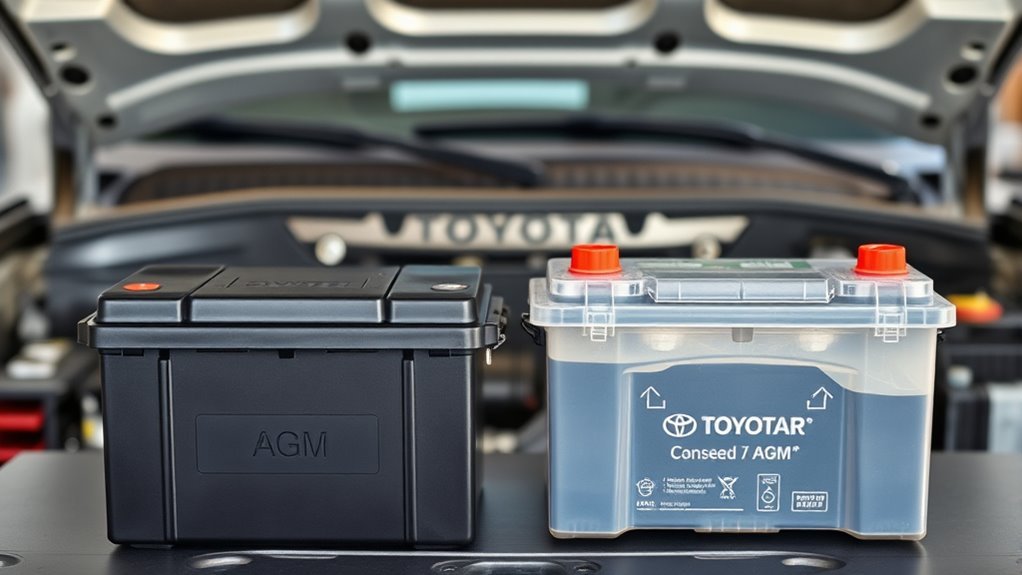
Start by visually inspecting the case and venting: sealed, heavy-duty cases with no vent caps usually indicate AGM, while bulkier cells with removable vent caps are flooded. Check labels and markings for “AGM,” “Absorbed Glass Mat,” “Flooded,” or “Lead-Acid” to confirm. Finally, note charging and maintenance behavior—maintenance-free, no-top-up batteries and different charging profiles point to AGM, whereas batteries that need periodic electrolyte checks are flooded.
Visual Inspection Clues
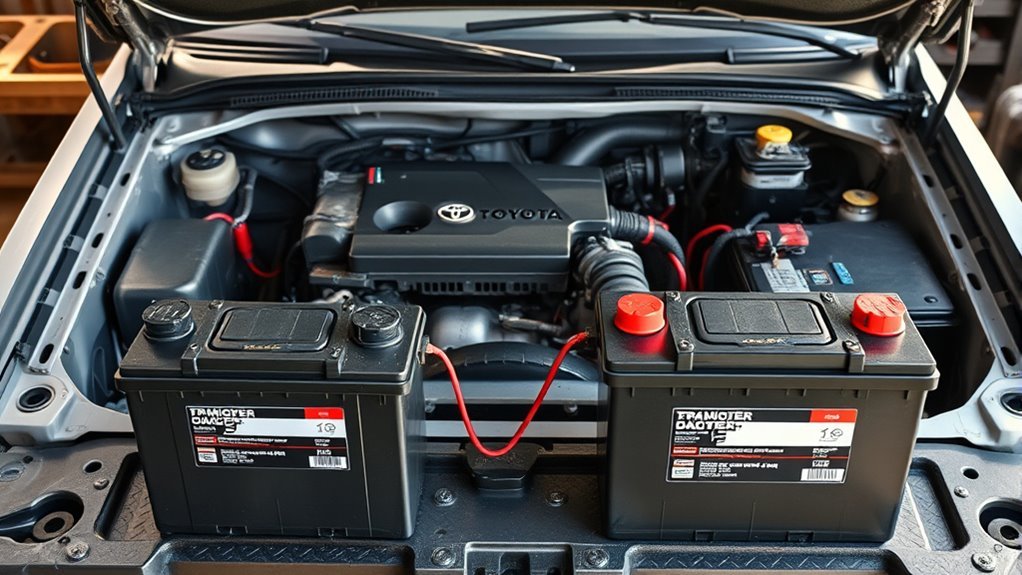
When you visually inspect your 4Runner’s battery, focus on vent caps, physical profile, labels, weight, and maintenance features to quickly distinguish AGM from flooded types; flooded batteries usually have removable vent caps and a taller, open-top appearance, while AGMs are sealed, more compact, often heavier, and explicitly labeled “AGM” or “Absorbed Glass Mat.” Use visual cues and battery dimensions to confirm at a glance. Inspect methodically:
- Top view — removable vent caps and exposed cell wells point to flooded construction.
- Side profile — taller, less dense housings usually indicate flooded; compact, reinforced cases indicate AGM.
- Weight test — lift with care; heavier feel implies AGM’s dense internals.
- Maintenance features — fill ports or corrosion-prone terminals suggest regular servicing, a flooded trait.
Label And Markings
Having checked the battery’s vent caps, profile, and weight, next inspect the label and markings to confirm AGM versus flooded construction. You’ll find label significance is primary: manufacturers print “AGM” or “Absorbed Glass Mat” for sealed units, and “Flooded” or “Wet” for serviceable cells. Note marking differences beyond nomenclature—service instructions, maintenance-free claims, and safety icons differ. AGM labels often state “sealed,” list low internal resistance specs, and omit electrolyte top-up warnings. Flooded battery labels include venting cautions and periodic maintenance notes. Use the owner’s manual to cross-check factory recommendations and reconcile any conflicting markings. Read labels methodically, record model numbers, and choose the battery that aligns with your 4Runner’s specified type for reliable, emancipated ownership.
Charging Behavior Indicators
Although labels and vent caps give quick clues, charging behavior provides definitive indicators you can measure with a charger or multimeter to distinguish AGM from flooded batteries. You’ll monitor charging voltage and response to charging modes to identify type and plan maintenance frequency. AGM will show lower bulk/absorption voltages, accept low-amperage maintenance charging, and resist thermal stress; flooded accepts higher charge voltage and higher amperage without immediate damage. Use these practical checks:
- Measure open-circuit and charging voltage: AGM typically requires slightly lower setpoints.
- Apply a low-amperage “maintenance” mode (<2 A): AGM holds charge without gassing.
- Apply a higher-amperage charge briefly: flooded tolerates higher current and may vent.
- Track maintenance frequency: flooded needs periodic electrolyte checks; AGM is maintenance-free.
Why Battery Choice Matters for 4Runner Use Cases
Because your 4Runner’s duty cycle ranges from daily commuting to sustained off-road excursions, selecting the correct battery type directly affects starting reliability, accessory power, and service intervals. You prioritize battery performance and off road reliability when you depend on winches, fridges, lighting, and cold starts. AGM batteries deliver higher cold cranking amps and tolerate deep discharge cycles, so they sustain accessory loads and reduce failure risk during extended sorties. Flooded batteries lower upfront cost but demand routine electrolyte checks and equalization that conflict with remote use and increase downtime. Modern 4Runner electrical systems — multiple accessories, sensors, and start-stop variants — amplify the penalty of marginal power delivery; choosing AGM minimizes voltage sag and extends service life under high load. For liberation-focused operators who value autonomy and reduced maintenance, AGM aligns with mission profiles requiring resilience and predictable performance. Match battery choice to your duty cycle: high-demand, remote use favors AGM; predictable, low-demand urban use may accept flooded units.
AGM Batteries: Pros, Cons, and Which 4Runner Trims They Suit
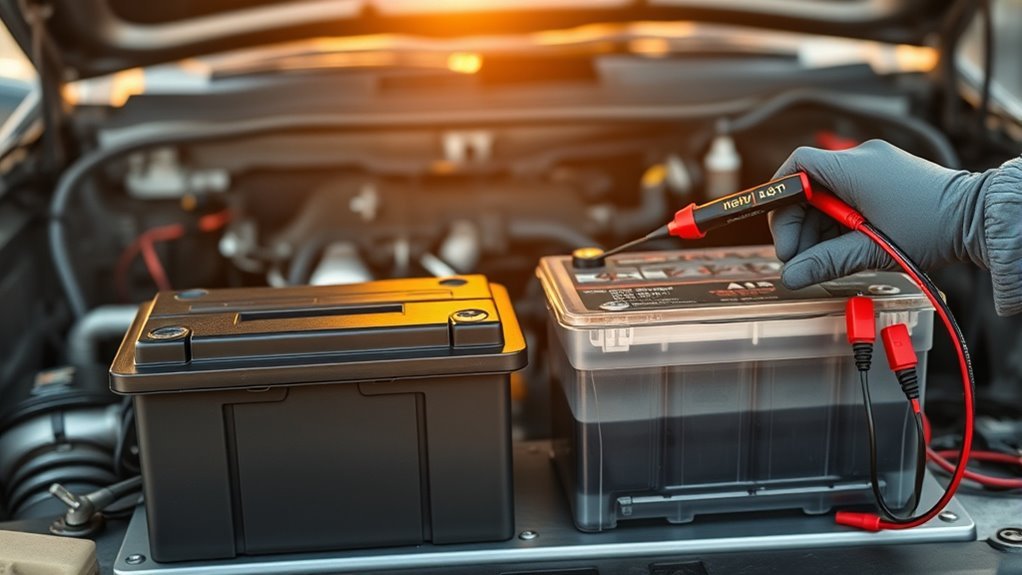
Reliability matters: AGM batteries deliver higher cold-cranking amps, better vibration resistance, and a sealed, maintenance-free design that matches the electrical loads and duty cycles of higher 4Runner trims like the TRD Pro and Limited. You’ll appreciate AGM advantages when you need dependable starts in cold climates, reduced service tasks, and robust support for accessory loads. The higher upfront cost is offset by extended service life and consistent battery performance under stress.
You’ll weigh AGM drawbacks like initial price and the limited ability to repair after deep discharge. For liberation-minded owners who want freedom from routine maintenance and reliable power for electronics, AGM applications are clear: fit TRD Pro, Limited, and other high-spec models where accessory draw and vibration are significant.
- Rugged trail use with winch, lights, electronics.
- Cold-start reliability in harsh climates.
- Maintenance-free daily driving freedom.
- Long-life service to reduce replacements.
Flooded Batteries: Pros, Cons, and When to Choose Them
When you need a cost-effective, time-tested power source for a 4Runner and don’t mind routine upkeep, flooded (wet) lead‑acid batteries are a practical choice: you get proven chemistry, lower upfront cost, and long service life potential. You’ll perform regular battery maintenance — topping electrolyte levels, checking terminals, and equalizing charges — to prevent corrosion and electrolyte evaporation. Flooded designs tolerate deep discharge cycles and are repairable in the field, which liberates you from proprietary replacement constraints. Downsides: they’re vulnerable to vibration and require secure mounting; flooding effects like spillage and gas evolution demand ventilation and careful handling. In harsh climates or off-road rigs with heavy movement, their susceptibility raises failure risk versus sealed AGMs. Choose flooded when budget, ease of rebuild, and backup reliability matter more than vibration resistance or sealed convenience. Follow a disciplined service schedule and safety procedure to maximize life and minimize environmental and performance risks.
Start-Stop, Accessories, and Cold-Start Performance
When you evaluate start-stop reliability, prioritize AGM construction because it sustains repeated restarts and supports auxiliary loads without voltage collapse. Check cold cranking power (CCA) ratings to guarantee reliable engine starts in low temperatures—higher CCA directly reduces starter strain. For 4Runners with heavy accessory use or cold climates, an AGM battery is the methodical choice for consistent start-stop and cold-start performance.
[Products Worth Considering]

This custom-fit cargo liner is designed for the Toyota 4Runner gas 5-seater, offering full trunk coverage without trimming. Made from durable TPE with raised edges and an anti-slip surface, it helps protect against spills, mud, snow, and everyday cargo movement while remaining easy to clean and built for all-weather use.

This compact vehicle power inverter converts DC power to AC, giving you reliable off-grid charging for laptops, small appliances, and everyday electronics while traveling. It includes dual AC outlets and USB ports for convenient multi-device charging, plus built-in safety protections and a cooling fan for dependable use on the road.

The ANCEL AD410 PRO combines engine diagnostics and 12V battery testing in one easy-to-use tool, helping you read and clear check engine codes while checking battery health, cranking, and charging performance. It also provides live data, freeze frame details, and I/M readiness checks to help you diagnose issues faster and prepare for emissions testing. With plug-and-play operation, a clear screen, and broad vehicle compatibility, it is a practical solution for home mechanics and everyday drivers.
Start-Stop Reliability
Because start-stop systems and heavy accessory loads demand fast, repeated engine restarts, you should choose a battery that delivers high cold cranking amps and cycle resilience. You want reliable start stop technology and predictable battery performance so accessories stay powered and the engine restarts without hesitation. AGM fits that mandate: higher CCA, superior vibration resistance, and maintenance-free construction reduce failure modes under repeated cycling.
- AGM sustains frequent micro-cycles from start-stop systems, prolonging usable life.
- Flooded cells exhibit accelerated degradation when subjected to repeated restarts and heavy accessory draw.
- AGM’s sealed design prevents electrolyte loss, ensuring consistent voltage under load.
- In cold conditions AGM provides faster, more reliable starts, preserving your mobility and autonomy.
Cold Cranking Power
Although cold temperatures and repeated start-stop cycles strain a battery, choosing an AGM gives you the highest cold cranking amps (CCA) and the most consistent voltage under heavy accessory loads, ensuring reliable engine starts and stable electrical supply. You’ll notice superior cold weather performance because AGM cells deliver strong, instantaneous starting current and sustain voltage during accessory draw. That consistency prevents sag that can stall electronics or impede restarts. Compared to flooded batteries, AGMs tolerate deeper discharge cycles and recover faster, which preserves battery longevity under repeated use and extreme temperatures. For liberated drivers who demand independence from roadside failure, AGM’s combination of CCA, discharge resilience, and steady voltage makes it the technical choice for start-stop systems, accessories, and cold-start reliability.
Charging & Maintenance for 4Runner Batteries (AGM vs Flooded)
If you want reliable charging and minimal upkeep for a 4Runner, choose AGM over flooded in most use cases because AGMs accept controlled charging profiles, tolerate deep discharges better, and resist vibration and temperature extremes. You’ll set specific charging settings for AGM: lower bulk voltage, controlled absorption, and a float limit to prevent overcharge. Flooded batteries accept standard alternator charging but demand strict maintenance frequency for electrolyte checks and topping. You’ll prefer AGM if you want less hands-on care and greater installation flexibility.
- Visualize a sealed AGM mounted in any orientation, vibration-immune, ready for rugged freedom.
- Picture a flooded battery upright in the engine bay, requiring periodic water, inspection, and a hydrometer.
- Imagine configuring your charger/alternator to AGM profiles to avoid sulfation and capacity loss.
- Envision a maintenance schedule: AGMs largely set-and-forget; floodeds need routine checks, water refill, and tighter monitoring.
Choose systems and routines that free you from constant upkeep while preserving reliable starts and accessory power.
Lifespan, Warranty, and Total Cost of Ownership Comparison
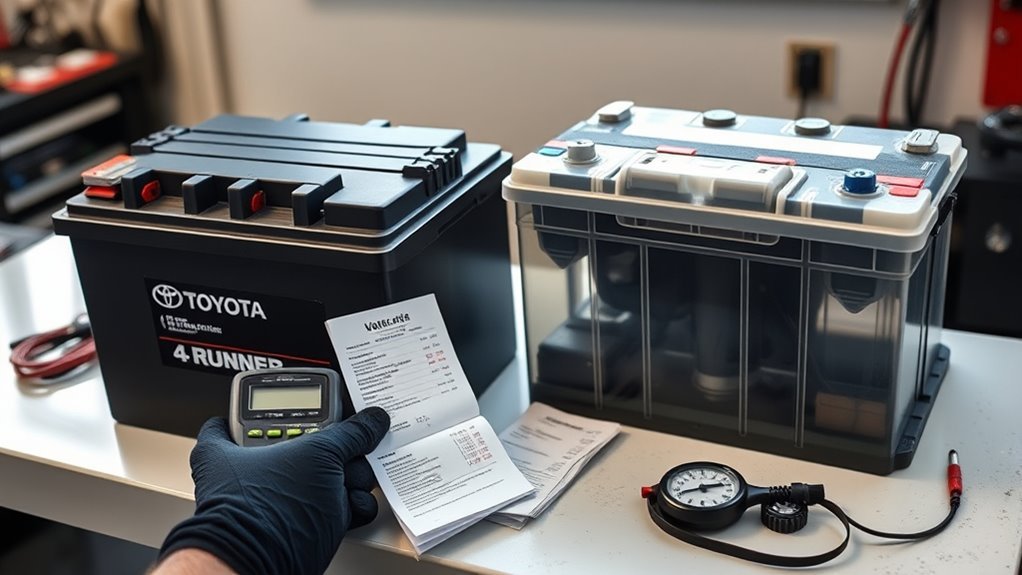
You’ll compare lifespan and cycle tolerance between AGM and flooded batteries to quantify replacement intervals and operational limits. Then you’ll assess warranty terms and upfront versus long‑term costs to determine total cost of ownership. Use those metrics to decide which battery aligns with your 4Runner’s electrical load and maintenance tolerance.
Lifespan And Cycles
When comparing lifespan and cycle durability, AGM batteries typically outlast flooded lead–acid types, often reaching 6–8+ years versus about 3–5 years for well-maintained flooded batteries. You’ll gain battery longevity and improved charge efficiency with AGM chemistry, translating to more reliable starts and longer service before replacement. Expect higher cycle tolerance—AGM up to 700+ cycles, flooded around 300–500—so you can depend on deeper discharge patterns without rapid degradation.
- Picture a 4Runner liberated from frequent replacements: AGM endures longer, fewer interventions.
- Imagine charge efficiency reducing alternator load and idle time.
- Visualize cycle counts as mileage—AGM covers more distance before wear.
- Envision maintenance-free operation versus periodic electrolyte checks for flooded types.
Make decisions that free you from routine constraints.
Warranty And Costs
Because long-term cost hinges on lifespan, warranty, and maintenance, you should weigh AGM and flooded batteries beyond their sticker price. AGM batteries deliver 3–7 years of service versus flooded’s 2–5 years; warranties tend to be 2–4 years for AGM and 1–3 years for flooded. Upfront cost analysis shows AGM at roughly $200–$300, flooded at $100–$200. Include maintenance labor and materials for flooded cells when you run your cost analysis—periodic topping and checks add recurring expense. For high-demand 4Runner setups with many accessories, AGM’s superior battery performance and reduced upkeep can lower total cost of ownership despite higher initial outlay. Use quantitative comparisons and warranty windows to decide which option frees you from frequent replacements.
Decision Checklist: Pick the Right Battery for Your 4Runner
A practical checklist helps you match battery characteristics to your 4Runner’s use: prioritize AGM if you run lots of accessories or need high cold-cranking amps, want maintenance-free operation, require flexible mounting, or expect extreme-climate and off-road durability; choose a traditional flooded battery only if upfront cost is the primary constraint and you can commit to regular maintenance and upright installation.
- Assess power requirements: quantify accessory draw, check performance metrics (CCA, reserve capacity) and pick battery technology that meets peak and deep-cycle loads.
- Weigh maintenance tips and lifecycle: AGMs are maintenance-free; flooded cells need regular checks and electrolyte topping—factor labor into cost analysis.
- Consider installation techniques and climate impact: AGMs allow varied mounting and resist temperature extremes; flooded batteries demand upright placement and suffer in harsh climates.
- Compare brands and user experiences: evaluate warranties, real-world longevity, and total cost of ownership to free yourself from recurring failures.
Installation, Safety, and Recycling Tips for 4Runner Battery Swaps
If you’re swapping your 4Runner’s battery, start by confirming the correct type (AGM or flooded) per the owner’s manual and your vehicle’s power demands, then follow strict safety and handling procedures: wear gloves and goggles, disconnect the negative terminal first, and avoid contact with acid. Choose AGM if you need flexible battery orientation; choose flooded only if you can keep it upright to prevent electrolyte spillage. Position the battery securely, verify battery orientation markings, and tighten clamps to manufacturer torque to prevent movement. Inspect and clean terminals; remove terminal corrosion and apply dielectric grease to reduce future buildup. Test connections with a voltmeter before restoring power. Contain and transport the old battery in a sealed, upright container to avoid leaks. Recycle used batteries at a certified center or retailer program to meet environmental and legal obligations. Follow these steps methodically to protect yourself, your 4Runner, and the environment while asserting control over maintenance.
Frequently Asked Questions
Is an AGM Battery Better Than Flooded?
Yes—you’ll usually choose AGM: performance comparison shows higher CCA, better deep-discharge resilience, and flexible installation; lifespan differences favor AGM with lower maintenance and total cost, empowering you to dependably free yourself from frequent service.
How Do I Tell if My Battery Is AGM or Flooded?
You check vent caps, weight, and labels: sealed no-vent and “AGM” indicate AGM, removable caps and electrolyte access indicate flooded. Use battery identification methods and battery maintenance tips to confirm and liberate your ownership knowledge.
Can I Replace My Flooded Battery With an AGM Battery?
Yes—you can swap a flooded battery for an AGM; it’ll feel like freeing your electrical system. Check battery compatibility, match CCA/reserve specs, consider installation considerations (mounting, charging profile) and consult the manual.
Conclusion
You’ll choose the battery that keeps your 4Runner’s heart beating true: AGM if you need rugged, vibration-resistant performance and low maintenance; flooded if you prioritize cost and easy on-vehicle service. Match chemistry to use-case, charging profile, and trim electrical load, then follow correct charging, mounting, and recycling procedures. Think like a technician—measure, verify, and document—so your decision isn’t a guess but a calibrated solution that carries you farther with fewer surprises.
[Products Worth Considering]

This battery terminal care kit helps clean corroded connections and protect them from future buildup, making routine maintenance simpler for cars, marine batteries, and RVs. It includes two dual-ended terminal cleaners plus color-coded anti-corrosion fiber washers for positive and negative terminals. The kit is compatible with top post and side terminal batteries and is designed for quick, practical cleaning and protection.

This battery terminal maintenance kit helps remove corrosion fast and adds ongoing protection for cleaner, more reliable electrical connections. The dual-ended brushes restore terminal contact surfaces while the color-coded anti-corrosion washers help prevent future buildup on cars, trucks, RVs, boats, and other 6V or 12V batteries.

This battery terminal cleaning and repair kit helps restore worn or damaged top-post battery connections for cars, RVs, boats, and other vehicles. It includes lead shims for improving fit, stainless steel brushes for removing corrosion and debris, and fiber washers to help reduce future buildup and maintain a reliable electrical connection.