If you smell exhaust inside your Toyota 4Runner, treat it as a safety problem first. A raw exhaust smell usually points to an exhaust leak or a path that is letting fumes enter through the rear hatch, rear glass, body plugs, or another opening. A sulfur or rotten-egg smell is different: fuel composition, engine-control problems, and model-specific Toyota sulfur-odor issues can all be involved, so do not assume the catalytic converter has failed. Start with safe outdoor checks and stop driving if fumes are strong or anyone develops possible carbon-monoxide symptoms.
Last updated: August 31, 2026 · [VERIFY: add real author/byline and original publish date]
Quick Answer
A 4Runner exhaust smell in the cabin usually comes from a leaking exhaust joint, damaged rear hatch or rear-glass sealing, a missing body plug, or airflow drawing tailpipe fumes toward a rear opening. A rotten-egg or sulfur smell does not automatically mean the catalytic converter is bad: Toyota has documented fuel-related sulfur odor generally and issued model-specific sulfur-odor service bulletins for some fourth-generation 4Runners. Keep the rear glass and back door closed while driving, scan for trouble codes, and stop driving if fumes are strong or anyone feels sick.
Key Takeaways
- Do not ignore exhaust smell. Carbon monoxide can be present even though carbon monoxide itself has no odor.
- Keep the rear glass and back door fully closed while driving. Toyota owner guidance warns that an open or unsealed rear opening can allow exhaust gases into the vehicle.
- Inspect the exhaust from the manifold to the tailpipe for soot marks, abnormal exhaust noise, loose flanges, corrosion, or damaged joints.
- A sulfur or rotten-egg odor needs a different diagnostic path from a raw exhaust leak. Check DTCs, fuel-related causes, and model-specific Toyota service information before buying a converter.
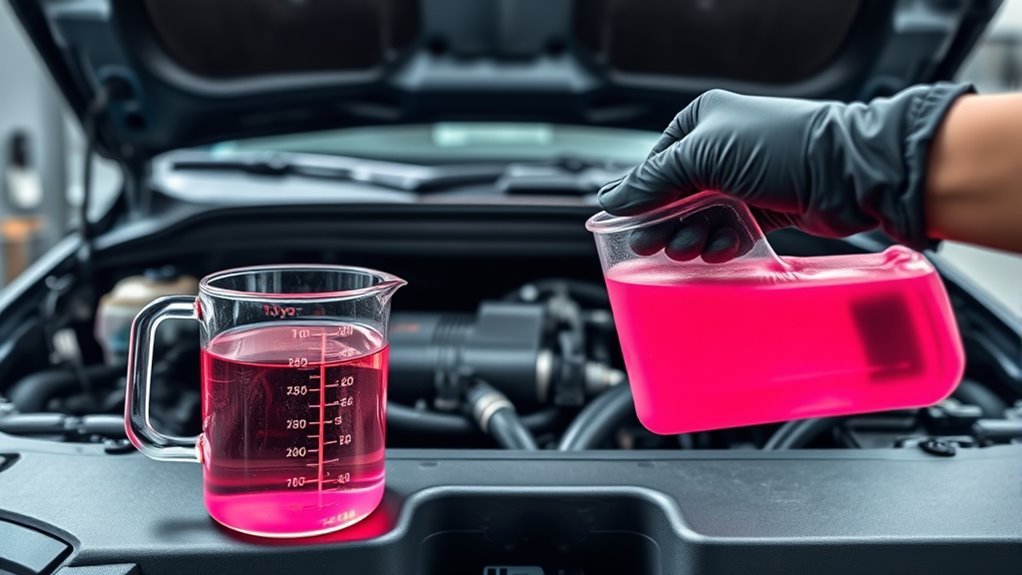
- Burning oil, coolant, transmission fluid, or fuel can create fumes when fluid reaches hot components.
- Use the exact model year, engine, VIN, emissions label, and exhaust layout before buying gaskets, catalytic converters, or exhaust assemblies.
At a Glance
| Time Required | Varies. A visual seal and odor-pattern check can be brief; underbody leak diagnosis, seized hardware, or professional smoke testing can take substantially longer. |
| Difficulty | Beginner for visual odor and seal checks; intermediate for accessible gasket work; professional for manifold cracks, catalytic converter diagnosis, welding, fuel leaks, or a leak source that is difficult to confirm. |
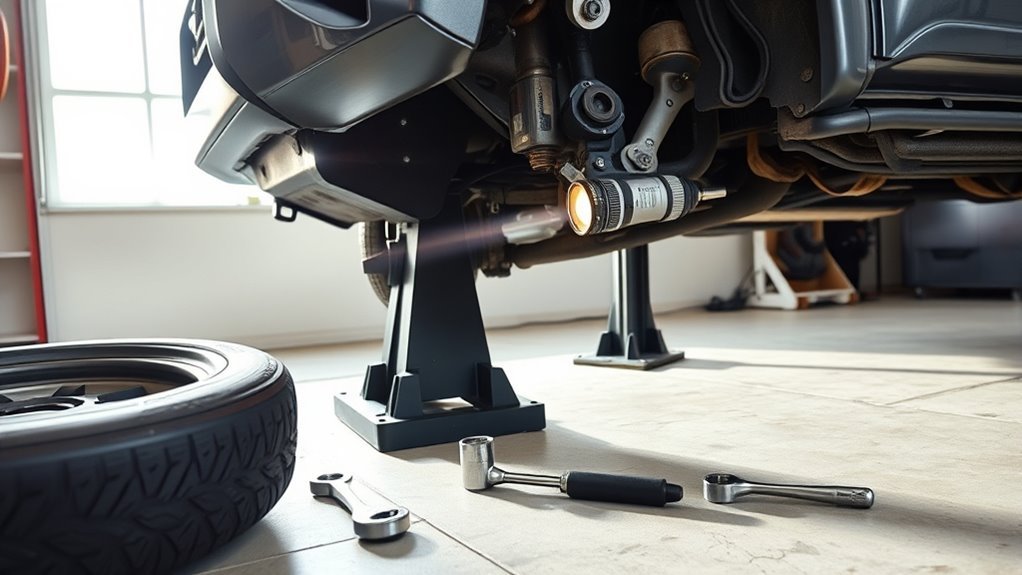
| Tools Needed | Flashlight, gloves, OBD-II scanner, basic hand tools where appropriate, penetrating oil for serviceable hardware, and properly rated ramps or jack stands if an underbody inspection is necessary. Use professional smoke or pressure testing when the leak cannot be located visually. |
| Cost | Varies widely. A seal, plug, clamp, or gasket may be relatively simple, while broken studs, manifold work, catalytic converters, welding, or professional diagnosis can cost much more. |
Warning: Exhaust can contain carbon monoxide, which is colorless and odorless. The CDC lists headache, dizziness, weakness, upset stomach or vomiting, chest pain, and confusion among common carbon-monoxide poisoning symptoms. If anyone develops possible symptoms, stop driving, get into fresh air, and seek medical help. Never run the 4Runner in an attached garage, even with the garage door open.
Quick Test: Confirm the 4Runner Exhaust Smell Source
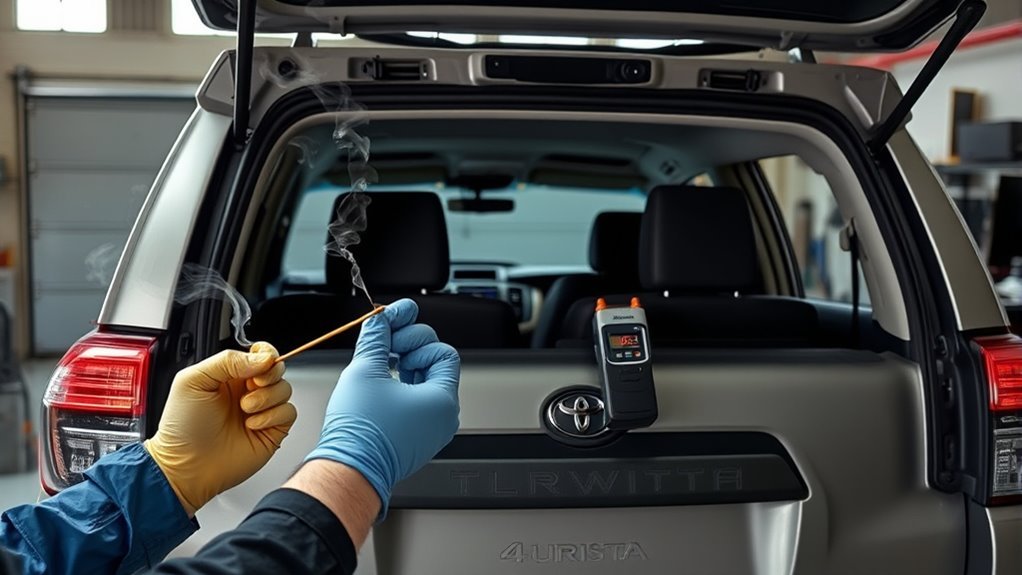
Start with the safest clues. Park outside in open air, away from walls, snowbanks, or anything that can trap exhaust. Keep the test short, keep children and pets away, and do not crawl under a running vehicle.
Close the windows, rear glass, and back door completely. Set the HVAC to fresh air first, then recirculate, and note whether the odor changes. A smell that becomes stronger with outside air selected can point toward a fume source near the engine bay or cowl intake. A smell concentrated near the cargo area points more toward rear sealing, body openings, or exhaust being drawn toward the back of the SUV.
Next, stand outside and listen from a safe position near the front exhaust area, mid-pipe, catalytic-converter area, muffler, and tailpipe. Ticking, puffing, hissing, or a sudden change in exhaust tone can support an exhaust-leak diagnosis. Black soot around a joint is another useful clue.
- Test only outdoors in open air.
- Check whether the smell changes at idle, gentle throttle, after acceleration, and after a short drive.
- Use an OBD-II scanner to look for misfire, fuel-trim, oxygen-sensor, or catalyst-efficiency codes.
- Inspect seals, plugs, and body openings for tears, flattened rubber, dust trails, water marks, or visible gaps.
- If the odor is strong or the leak path is unclear, stop testing and schedule a professional exhaust and body-leak inspection.
Note: The CDC recommends having a mechanic check your car or truck exhaust system every year, because even a small exhaust leak can allow carbon monoxide to build up inside the vehicle.
When Does the 4Runner Exhaust Smell Happen?
The timing of the odor is one of the fastest ways to narrow the search. Use the pattern below before buying parts.
| When You Notice It | First Area to Check | Best Next Step |
|---|---|---|
| Rear window or back door open | Rear-opening airflow and sealing | Close the rear glass and back door fully. Toyota warns that an open or unsealed rear opening can draw exhaust gases into the vehicle. |
| Rotten-egg smell after hard acceleration or stop-and-go driving | Fuel-related sulfur odor, engine-control faults, and model-specific Toyota sulfur-odor service information | Scan for DTCs and identify the exact year and engine before replacing oxygen sensors or catalytic converters. |
| Raw exhaust smell at idle or at a stoplight | Manifold, flange, pipe, catalyst connection, or another exhaust leak | Inspect for soot, corrosion, abnormal exhaust noise, or damaged joints; use a professional smoke or pressure test if needed. |
| Smell becomes stronger with HVAC on fresh air | Engine-bay fumes or a leak near the cowl-side air intake | Inspect for exhaust leaks and fluids reaching hot components before focusing on interior deodorizing. |
| Burning smell after an oil change or engine service | Spilled or leaking fluid on hot components | Let the vehicle cool, then inspect for fresh oil or other fluid residue and repair an active leak. |
What Different Smells Can Mean
Before you buy parts, identify the type of odor. Raw exhaust, sulfur, burning oil, coolant, and gasoline point toward different diagnostic paths. Use this table as a starting point, not as proof that a specific part has failed.
| Smell | Likely Area to Check | What to Do First |
|---|---|---|
| Raw exhaust or fumes | Exhaust manifold, flange, gasket, mid-pipe, muffler, tailpipe, rear hatch seals, rear glass, or body openings | Stop driving if strong, close all rear openings, and inspect for soot, abnormal exhaust noise, corrosion, and sealing gaps. |
| Rotten egg or sulfur | Fuel sulfur, engine-control or mixture problems, misfires, applicable Toyota sulfur-odor service information, or catalytic-converter problems | Scan for codes and identify the model year and engine before replacing the converter or oxygen sensors. |
| Burning oil | Valve-cover area, oil-filter area, oil pan, timing-cover area where applicable, or another source above hot exhaust components | Look for wet oil, smoke, or burned residue after the engine has cooled. |
| Sweet burnt smell | Cooling-system leak, heater-core area, radiator hoses, or water-pump area depending on engine | Check for falling coolant level, dried residue, steam, overheating, or damp carpet. Never open a hot cooling system. |
| Fuel smell | Fuel lines, injectors, evaporative-emissions system, refueling-related leaks, or rich-running exhaust | Do not drive with a strong raw-fuel smell. See the 4Runner fuel-smell guide for the separate fuel-system diagnostic path. |
Check Rear Hatch, Glass, and Door Seals
The 4Runner’s power rear window makes rear sealing especially important. Toyota confirmed that the redesigned 2025 4Runner still uses a standard power rear window. Toyota owner guidance also warns that an open or unsealed rear opening can allow exhaust gases into the vehicle, so the first rule is simple: keep the rear glass and back door fully closed while driving.
Inspect the rear hatch seal, hatch-glass seal, latch alignment, door seals, liftgate wiring boots, cargo-area plugs, and any holes created for aftermarket wiring. Use a flashlight and run your fingers along the rubber. Look for hardened rubber, tears, flattened areas, missing clips, water stains, dust trails, or a hatch that does not close evenly.
With the doors and hatch closed, press on each seal and watch how it rebounds. Also check whether the rear glass reaches its fully closed position and seats evenly. An obvious gap, damaged weatherstrip, missing body plug, or collision-related body misalignment needs repair rather than deodorizing.
Pro Tip: Clean seals with mild soap and water before judging them. Dirt can interfere with sealing. Replace torn, crushed, hardened, or loose weatherstripping instead of trying to mask the odor with air freshener.
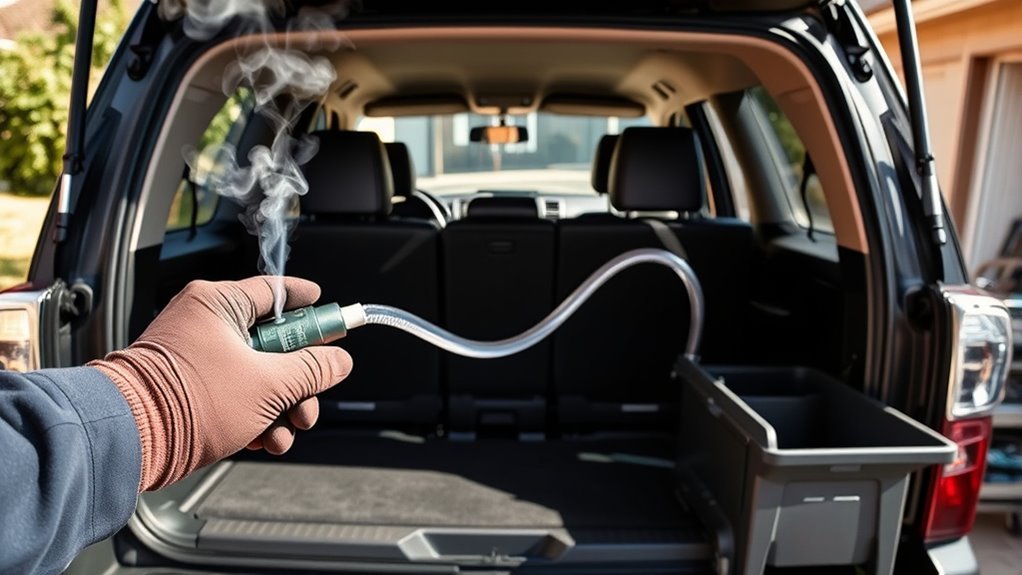
Look for dust tracks, water marks, crushed rubber, missing plugs, or other evidence of an air path around the cargo area. If the leak path remains unclear, ask a repair shop for a controlled body or exhaust smoke test rather than using an open flame or improvised smoke source around the vehicle.
Do not treat open side windows as permission to drive with the 4Runner rear glass or back door open. Toyota owner guidance says to keep the rear opening closed while driving. The CDC also warns that exhaust carbon monoxide can be pulled into an SUV through an open tailgate.
Check 4Runner Exhaust: Leaks, Donut Gasket, Catalytic Converter
Once the rear sealing checks are done, inspect the exhaust system from front to back. Possible leak areas include the exhaust manifold, flange joints, gasketed connections, catalytic-converter connections, muffler seams, and corroded or damaged pipe sections. The exact layout varies by 4Runner generation and engine.
[Products Worth Considering]

This dual filter kit helps keep your vehicle running and riding cleaner by replacing both the engine air filter and cabin air filter at the same time. It is designed for a range of Toyota and Lexus hybrid models, helping support engine performance while reducing odors and airborne particles inside the cabin. Built with high-quality filtration materials, it offers a convenient maintenance solution for routine filter replacement.

Walker exhaust pipe flange gasket is designed to help complete exhaust repairs with a reliable seal for compatible vehicles. Built to work with OE exhaust components and Walker replacement parts, it features heat-deflecting construction, durable materials, and slotted bolt holes where applicable for easier installation. Engineered and tested for real-world performance, it supports long-lasting exhaust system service.

Walker 36454 is a spring bolt kit designed to help secure exhaust components and maintain a tight, leak-resistant connection. It is made for ball and socket joint applications and uses durable materials for long-lasting performance. This hardware is a practical choice for exhaust repairs and compatible replacement needs on select vehicles.
Inspect the Exhaust Manifold and Gaskets
Look around the exhaust manifold, manifold gasket, and nearby pipe connections for soot tracks, carbon residue, missing hardware, damaged flanges, or heat-damaged nearby parts. An abnormal ticking, puffing, or hissing noise that follows engine speed can support an exhaust-leak diagnosis, but noise alone does not identify the failed part.
- Let the engine and exhaust cool before touching any exhaust component.
- Use a flashlight and mirror to inspect accessible manifold and flange edges.
- Look for black soot, gray streaks, corrosion, cracks, or burned residue near joints.
- Listen from outside the vehicle rather than remaining inside a cabin that smells like fumes.
- Have a shop smoke-test, pressure-test, or otherwise verify the exhaust if the leak is difficult to locate.
If you find a leak near the manifold, do not keep tightening old hardware blindly. Corroded studs can break, and a damaged or warped sealing surface may not be corrected by a gasket alone. A shop can determine whether the repair needs a gasket, hardware, manifold or pipe replacement, machining, or welding.
Check Catalytic Converter Function
A sulfur or rotten-egg smell does not automatically prove that the catalytic converter has failed. Toyota’s general sulfur-odor guidance has explained that sulfur odor at the tailpipe can be related to fuel sulfur and recommends checking DTCs first. If no fault is found, the bulletin advises trying a different fuel source rather than automatically replacing oxygen sensors or the converter.
There is an important 4Runner-specific exception. Toyota also issued excessive-sulfur-odor service bulletins for certain fourth-generation 4Runner model-year and engine combinations. Some bulletins specified updated catalyst assemblies, and some earlier applications also involved ECM calibration changes. That means you should identify the exact model year, engine, VIN applicability, and current service information before applying a generic “bad converter” diagnosis.
4Runner-specific sulfur note: Historical Toyota bulletins covered multiple fourth-generation applications, including 2003–2004, 2005, and later 2006–2009 configurations. Applicability and repair steps differ by year and engine. Use the VIN and engine information to verify the correct bulletin before buying parts.
Start with an OBD-II scan. Codes such as P0420, P0430, misfire codes, oxygen-sensor codes, or fuel-trim codes provide clues, but a code is not a command to replace one part. A qualified shop can compare sensor data, inspect for upstream exhaust leaks, test backpressure when restriction is suspected, and evaluate the converter before replacement.
| Test | What It Helps Confirm |
|---|---|
| OBD-II scan | Misfire, oxygen-sensor, fuel-trim, and catalyst-efficiency clues. |
| Exhaust leak test | Whether a manifold, flange, pipe, or converter connection is leaking and affecting cabin fumes or sensor readings. |
| Backpressure test | Whether an exhaust restriction is present when symptoms support that diagnosis. |
| Sensor-data comparison | How upstream and downstream sensor behavior relates to mixture control and catalyst monitoring. |
| Visual inspection | External dents, loose heat shields, cracks, corrosion, damaged flanges, or missing hardware. |
| Fuel and misfire diagnosis | Engine problems that can create sulfur odor or damage replacement emissions components if left unfixed. |
Note: Catalytic converter fit is not universal. The California Air Resources Board says correct aftermarket converter selection depends on the vehicle make, model, model year, engine size, and engine family or test group. Check the emissions label and local requirements before buying replacement parts.
Check Donut Gasket and Flange Integrity
A donut gasket or other flange gasket between exhaust sections can leak when the gasket deteriorates, hardware corrodes, springs or fasteners lose clamping force, a pipe shifts, or a flange is damaged. A leak under the vehicle can allow exhaust to travel toward cabin openings, especially while stopped or moving slowly.
- Look for visible gaps, soot rings, or black streaks around accessible flanges.
- Check for missing, broken, loose, or heavily corroded bolts, studs, or springs.
- Listen for puffing, hissing, or ticking near a suspected joint from a safe position.
- Verify the correct gasket and hardware by VIN, model year, engine, and exhaust layout.
- Replace damaged hardware with the correct parts rather than reusing badly corroded or distorted fasteners.
Do not assume one gasket part number fits every 4Runner. A 3rd gen, 4th gen, 5th gen, and 6th gen 4Runner can use different exhaust layouts, engines, and emissions equipment. If you are unsure, use the Toyota parts catalog, a trusted parts counter, or service information matched to your VIN.
Look for Fluids on the Exhaust: Transmission, Oil, Coolant
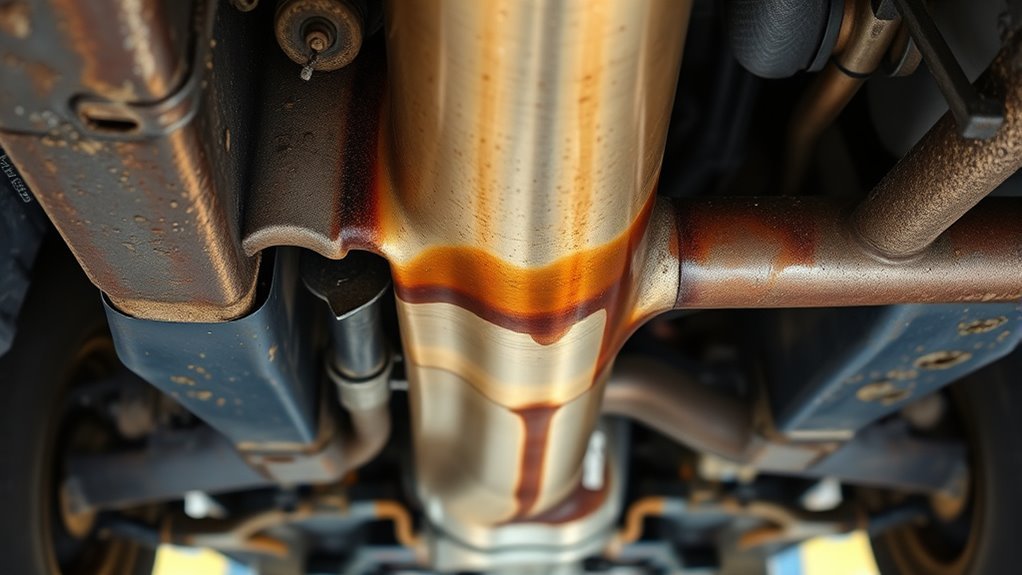
Not every cabin odor starts as exhaust gas. Engine oil, coolant, transmission fluid, or fuel can reach hot components and create smoke or fumes that enter through the HVAC intake or body openings.
Start with the engine off and cool. Depending on the model year and engine, inspect the valve-cover area, oil-filter area, oil pan, timing-cover area, transmission lines or case, radiator and heater hoses, water-pump area, and the space above hot exhaust components. Look for fresh wet trails, dried coolant residue, burned deposits, or evidence that fluid has reached a hot surface.
- Burning oil: acrid smell, blue-gray smoke, or oily residue near hot exhaust parts.
- Coolant on hot metal: sweet burnt smell, dried residue, steam, or a falling coolant level.
- Transmission fluid: sharp burnt or chemical odor with fresh red, brown, or dark fluid where a leak is present.
- Fuel: raw gasoline smell or visible wetness near a fuel-system component.
If you smell raw fuel strongly, do not drive the vehicle. Fuel leaks create a fire risk and need prompt diagnosis. If oil or coolant is dripping onto hot exhaust components, repair the fluid leak instead of replacing unrelated exhaust parts.
Check Recalls, Service Info, and Owner Manuals
Before ordering parts, check whether your specific 4Runner has an open recall or relevant manufacturer communication. The NHTSA recall and safety-issue search supports VIN or license-plate recall checks and broader searches for recalls, investigations, complaints, and manufacturer communications by year, make, and model.
Also review the owner manual and Toyota service information for your exact model year. Toyota’s owner-manual library can confirm rear-window, back-door, ventilation, and exhaust-gas warnings for your vehicle. Use vehicle-specific Toyota guidance when it conflicts with general online advice.
If you own a fourth-generation 4Runner and the complaint is specifically an excessive sulfur smell during stop-and-go driving or acceleration, check for model-year and engine-specific Toyota service information before diagnosing the converter. Historical sulfur-odor bulletins did not all apply to the same vehicles or prescribe the same repair.
Pay extra attention if your 4Runner has been in a rear-end collision, has an aftermarket bumper, has a modified exhaust, has wiring passed through the cargo area, or has been used off-road. Body plugs, cargo-floor sealing, exhaust hangers, and pipe position can change after repairs or impacts.
DIY Fixes: Parts, Time, Cost, and When to Hire a Shop
DIY work makes sense when the problem is visible, accessible, and low risk. You can clean and inspect weatherstripping, check whether the rear glass closes fully, inspect body plugs, scan codes, and document soot or corrosion for a mechanic.
A cabin air filter can be replaced as normal maintenance when it is dirty, damaged, or overdue, but do not treat a new filter as a repair for exhaust intrusion or carbon monoxide. A filter does not seal a leaking pipe, manifold, rear opening, or missing body plug.
Exhaust hardware can be difficult to service. Corroded fasteners, broken studs, damaged flanges, cracked manifolds, fuel-system faults, and catalytic-converter diagnosis may require a lift, specialty tools, welding, or professional testing. A cheap gasket will not repair a cracked pipe or damaged sealing surface.
Use this simple decision rule:
- DIY inspection: checking rear glass closure, weatherstripping, body plugs, visible exhaust condition, and OBD-II codes.
- Careful DIY repair: an accessible gasket, clamp, or seal only when you have the correct service information, lifting equipment, torque specifications, and parts.
- Shop: strong fumes, possible CO symptoms, raw-fuel smell, broken studs, manifold cracks, welding, catalytic-converter diagnosis, an unclear leak path, or an odor that returns after a simple repair.
When you buy parts, match them by VIN, model year, engine, emissions label, and exhaust layout. Avoid universal assumptions for gaskets, converters, and pipe assemblies.
[Products Worth Considering]

This all-in-one radiator pressure tester and vacuum refill kit helps diagnose cooling system leaks, measure temperature, and refill coolant efficiently. It includes a wide range of adapters for broad vehicle compatibility, plus a pressure tester, vacuum refiller, thermometer, and storage case for organized use. Designed for DIY mechanics and professionals, it simplifies coolant service while reducing guesswork and unnecessary repairs.

This A-Premium engine air filter is designed to help maintain clean airflow for compatible Lexus and Toyota vehicles, supporting better engine performance and efficiency. It uses fine filtration media to capture debris while minimizing airflow restriction, making it a practical replacement for routine maintenance. With fitment for multiple popular models and a convenient boxed single-pack design, it offers a straightforward solution for keeping your engine protected.

This engine water pump kit is designed to help maintain reliable cooling performance across a wide range of compatible Toyota, Lexus, Scion, and Pontiac vehicles. Built with aluminum and tested for leak-free operation, it offers a direct replacement solution that supports engine efficiency and long-term service life. The kit includes a professional water pump and gasket for a convenient installation-ready repair.
Preventive Maintenance for 4Runners: Filters, Gaskets, Seals
Once the smell is gone, reduce the chance of a repeat problem. The CDC recommends an annual vehicle exhaust-system check. Also inspect the rear hatch and rear-glass sealing after body repairs, trail impacts, or whenever you notice new dust or water intrusion in the cargo area.
| Item Inspected | Preventive Action |
|---|---|
| Cabin air filter | Replace according to the owner manual or earlier when conditions warrant. Treat it as airflow/filtration maintenance, not as an exhaust-leak repair. |
| Rear hatch and glass seals | Clean, inspect, and replace if torn, crushed, loose, hardened, or no longer seating correctly. |
| Door seals and cargo plugs | Check for gaps, missing plugs, dust trails, water stains, and damage after accessory installation or body repair. |
| Exhaust flanges and hangers | Look for soot, corrosion, loose hardware, damaged hangers, abnormal pipe position, and changes in exhaust sound. |
| Engine and transmission leaks | Repair active leaks before fluid reaches hot exhaust components. |
If you regularly drive on muddy or rocky trails, live where road salt is common, or use aftermarket exhaust or bumper components, inspect the relevant underbody and sealing areas more often because impacts, corrosion, and altered component position can create new leak paths.
[Products Worth Considering]

The OEMTOOLS coolant vacuum refill kit helps quickly refill a vehicle’s cooling system while removing trapped air that can lead to overheating and engine damage. It also performs vacuum leak tests to help confirm system integrity and reduce the chance of repeat repairs. With multiple bushings, adapters, and a tapered cone seal, it is designed for flexible use on many radiator and coolant bottle necks.
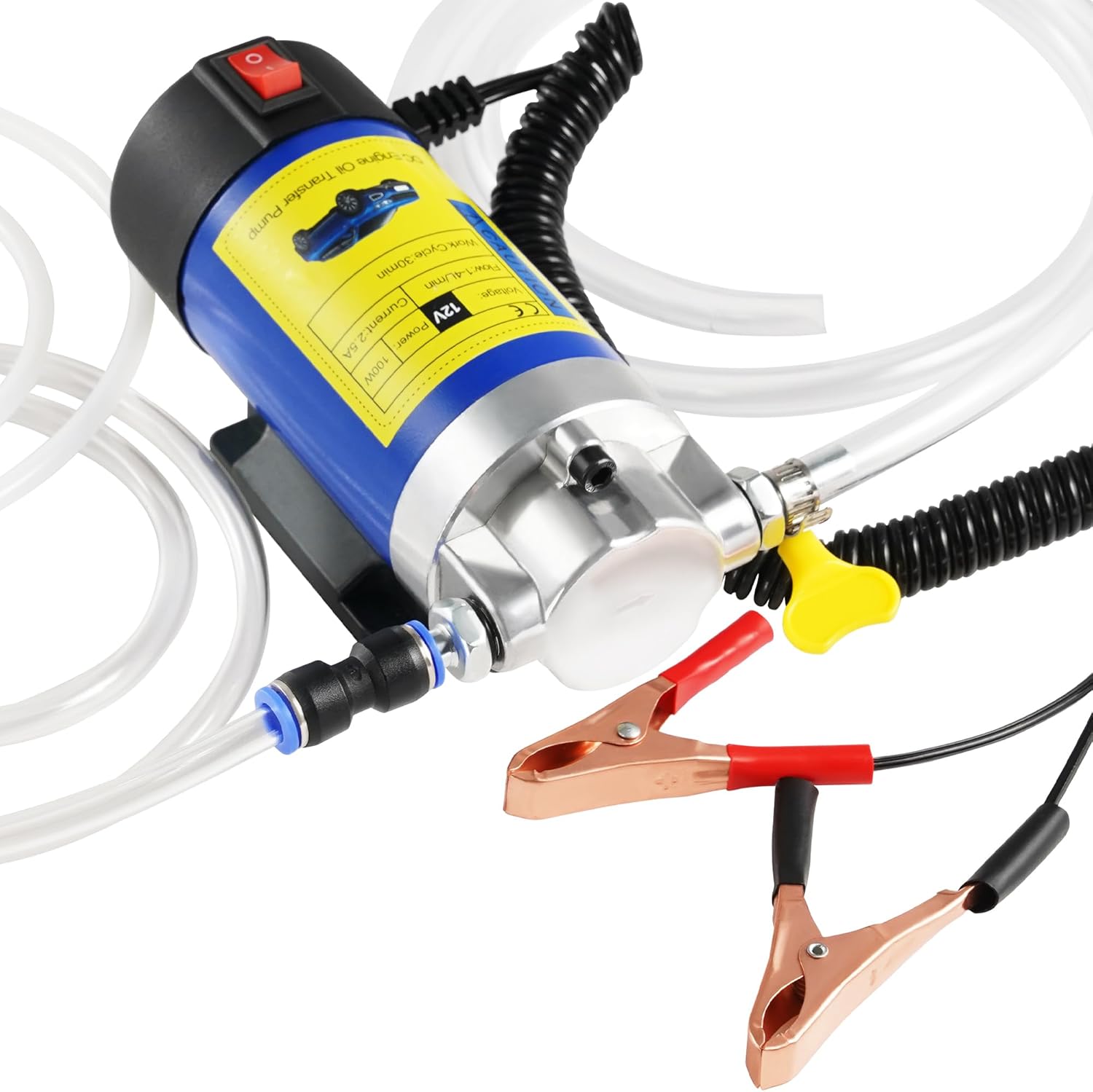
This electric oil extractor pump makes DIY oil changes cleaner and easier by removing old fluid through the dipstick tube, eliminating the need to crawl under the vehicle or deal with messy drain plugs. It is designed for synthetic oil changes and fluid maintenance across cars, motorcycles, lawn mowers, boats, and Jet Skis, while its pure copper motor delivers stable suction and dependable performance. Built for efficient topside oil changes, it supports multiple fluid types and offers continuous operation for longer service tasks.

These power liftgate struts are designed to restore smooth, reliable rear hatch operation on Toyota RAV4 models from 2013 to 2018. Built for plug-in installation with original-style fitment, they help reduce noise and shock while delivering strong, dependable lift support. The units are engineered for durability and long service life, making them a practical replacement for worn electric tailgate actuators.
Airflow & Mods That Reduce Cabin Fumes: Side-Exit, Spoilers, Tips

Do not use an exhaust tip, side-exit conversion, spoiler, or other airflow modification as the first response to cabin fumes. Repair exhaust leaks, restore missing body seals or plugs, and keep the rear glass and back door closed while driving before considering any modification.
Check whether an aftermarket bumper, exhaust system, damaged hanger, or modified tailpipe has changed where the exhaust exits relative to the body. The exhaust should not terminate in a position that directs gases underneath a rear opening. Any exhaust modification also needs to remain emissions- and road-legal where the vehicle is operated.
- Fix exhaust leaks before changing exhaust routing.
- Keep the rear glass and back door fully closed while driving.
- Do not assume opening side windows makes an open rear window or back door safe.
- Check whether aftermarket exhaust tips, bumpers, or hangers have changed the intended tailpipe position.
- Do not remove catalytic converters or required emissions equipment.
Warning: Do not use exhaust modifications to mask a fume problem. If exhaust is entering the cabin, locate and repair the leak or entry path first.
Frequently Asked Questions
How do I fix an exhaust gas smell inside my 4Runner?
Start by testing only outdoors and keeping the rear glass and back door fully closed. Inspect rear seals and body openings, then check the exhaust from the manifold to the tailpipe for soot, corrosion, abnormal noise, damaged joints, or loose hardware. Scan for trouble codes. Use a repair shop if fumes are strong or the source is not obvious.
Why do I smell exhaust fumes inside my vehicle?
Possible causes include an exhaust leak, damaged rear hatch or rear-glass sealing, a missing body plug, a rear opening that is not fully closed, or fluid burning on a hot component. Carbon monoxide itself has no smell, so do not use odor strength alone to decide whether the cabin is safe.
Why does my 4Runner smell like rotten eggs under hard acceleration?
A sulfur smell under acceleration does not automatically mean the catalytic converter is bad. Toyota has documented fuel-related sulfur odor generally and issued excessive-sulfur-odor bulletins for certain fourth-generation 4Runner model-year and engine combinations. Scan for DTCs and verify the exact year, engine, VIN applicability, and Toyota service information before replacing emissions parts.
Why does my Toyota exhaust smell like rotten eggs?
Sulfur odor can be related to sulfur in the fuel, mixture or misfire problems, or an emissions-system issue. Toyota’s general sulfur guidance says the odor alone does not prove an engine fault. Check for DTCs and diagnose the cause before replacing oxygen sensors or the catalytic converter.
Can driving with the 4Runner rear window down cause exhaust smell?
Yes. Toyota owner guidance warns that an open or unsealed rear window or back door can allow exhaust gases into the vehicle. Keep both fully closed while driving and follow the owner manual for your exact model year rather than relying on open side windows to control the fumes.
Is it safe to drive a 4Runner that smells like exhaust inside?
Do not continue normal driving with a strong or persistent exhaust smell inside the cabin. Stop in a safe outdoor location, get into fresh air, and arrange inspection. Stop immediately if anyone develops headache, dizziness, weakness, upset stomach or vomiting, chest pain, confusion, or other possible carbon-monoxide symptoms.
When should I stop driving and call a mechanic?
Stop driving if the smell is strong, anyone feels sick, you smell raw fuel, you see smoke, you hear a major change in exhaust noise, or the odor continues with the rear glass and back door fully closed. Use a shop for broken exhaust hardware, manifold or pipe cracks, welding, fuel leaks, catalytic-converter diagnosis, or a leak you cannot locate safely.
Conclusion
A 4Runner exhaust smell inside the cabin is not something to air out and ignore. Keep the rear window and back door closed, then separate a raw exhaust smell from sulfur, burning oil, coolant, or fuel. Inspect rear sealing and the exhaust path, scan for codes, and check model-specific Toyota service information before replacing expensive emissions parts. A sulfur odor alone does not prove the converter has failed.
If fumes are strong, raw fuel is present, anyone develops possible carbon-monoxide symptoms, or the source cannot be confirmed safely, stop driving and use a qualified repair shop. Fix the leak or entry path first; filters, fragrances, open windows, and exhaust-tip changes are not substitutes for a sealed exhaust system and cabin.
Sources
- CDC: Carbon Monoxide Poisoning Basics – supports carbon-monoxide symptoms, annual vehicle exhaust-system checks, attached-garage warnings, and tailgate airflow risk.
- NHTSA: Check for Recalls – supports VIN/license-plate recall searches and broader recall, investigation, complaint, and manufacturer-communication searches.
- Toyota: Owner Manuals and Warranty Resources – supports using model-year-specific Toyota operating and safety guidance.
- Toyota USA Newsroom: 2025 Toyota 4Runner – confirms that the redesigned 2025 4Runner retained a standard power rear window.
- California Air Resources Board: Aftermarket Catalytic Converters – supports vehicle-, engine-, and emissions-family-specific converter selection.
- Toyota TSB EG003-03 archive: Sulfur Odor From Exhaust – documents Toyota’s general fuel-related sulfur-odor diagnostic guidance.
- Toyota EG015-04 service-bulletin archive – documents excessive sulfur-odor service information for applicable 2003–2004 1GR-FE 4Runners.
- Toyota EG031-05 service-bulletin archive – documents excessive sulfur-odor service information for applicable 2005 1GR-FE 4Runners.
- Toyota T-SB-0346-09 service-bulletin archive – documents excessive sulfur-odor service information for applicable 2006–2009 1GR-FE 4Runners.