What’s in This Article
- 4Runner Clunk Into Drive: Symptom Guide
- Diagnose the Clunk: When It Happens & How to Replicate It
- Can Greasing the Slip Yoke Fix It?
- Inspect the Driveshaft, Joints, Mounts, and Brakes
- How to Test the Transmission & Transfer Case
- Clean or Service the Slip Joint
- Avoid Unsupported Breather Modifications
- Repair Paths, Cost Level, and When to Call a Pro
- Common Mistakes
- Frequently Asked Questions
A Toyota 4Runner clunk when shifting into Drive is rarely caused by a failing transmission. In over 80% of cases, the noise stems from one of three non-fatal mechanical conditions: parking pawl tension when parked on an incline, slip-yoke spline binding (the classic “bump from behind” sensation when stopping or starting), or normal driveline backlash across the differential and universal joints. The exact timing of the sound indicates the root cause immediately.
Determine whether the noise occurs upon shifting out of Park on a slope, immediately when Drive or Reverse engages on level ground, or just after coming to a full stop. Grease specifications, zerk counts (typically 6 fittings on 4WD models), and service steps vary across 4th Gen (2003–2009), 5th Gen (2010–2024), and 6th Gen platforms. Always verify procedures in the official Toyota owner’s manual or Toyota Technical Information System (TIS) before lubricating or disassembling components.
Quick Diagnostic Triage
• Clunk when shifting out of Park on a hill: Normal parking pawl load. Engage the parking brake before shifting into Park and releasing the foot brake.
• Thump/bump after stopping or when taking off: Driveshaft slip yoke binding (stick-slip). Requires NLGI No. 2 Moly chassis grease.
• Immediate clank on level ground engagement: U-joint play, engine/transmission mount wear, or differential gear lash.
• Delayed engagement (1–2 second pause followed by a slam): Low transmission fluid, failing solenoids, or internal transmission clutch wear requiring professional diagnosis.
Key Takeaways
- Differentiate an incline-related Park release bang from a gear engagement clunk or a stop-and-go slip-yoke thump.
- Toyota 4WD propeller shafts use two distinct greases: NLGI No. 2 Lithium-base for spider/U-joints and NLGI No. 2 Molybdenum-disulfide Lithium-base for slip yokes.
- Never overfill slip yokes: 3 to 5 pumps from a hand grease gun is sufficient. Over-pumping hydro-locks the shaft and can damage transfer case bearings.
- Inspect universal joints, engine/transmission mounts, differential backlash, and brake caliper slide pins before replacing transmission hardware.
- Toyota Technical Service Bulletins (such as T-SB-0121-12) acknowledge the propeller shaft slip-joint bump as a known driveline characteristic resolved through proper lubrication or updated driveshaft assemblies.
4Runner Clunk Into Drive: Match the Symptom to the Next Check
Use the specific trigger event to identify the component under stress. This matrix provides the logical starting point for home mechanics and professional technicians.
| When the clunk happens | Likely area to check first | Best next step |
|---|---|---|
| Only when shifting out of Park on an incline | Parking-pawl mechanical load | Retest on level ground; set the emergency parking brake before shifting into Park |
| At the exact moment Drive or Reverse engages on level ground | Driveline lash, loose mounts, worn U-joints, or differential backlash | Check for immediate engagement vs. delayed slam, inspect mount movement and joint play |
| 1–2 seconds just after stopping or when releasing the brake (“bump from behind”) | Driveshaft slip-joint spline binding (stick-slip) | Lubricate slip-joint grease zerks with NLGI No. 2 Molybdenum-disulfide grease |
| During on/off throttle transitions while driving | U-joints, front CV axles, differential pinion backlash, or worn rubber mounts | Inspect under load; check for high-speed driveline vibration |
| Paired with engine rev flare, warning lights, or fluid leaks | Automatic transmission valve body, torque converter, or transfer case failure | Halt driving to prevent clutch damage; arrange professional diagnostic scan |
Diagnose the Clunk: When It Happens & How to Replicate It
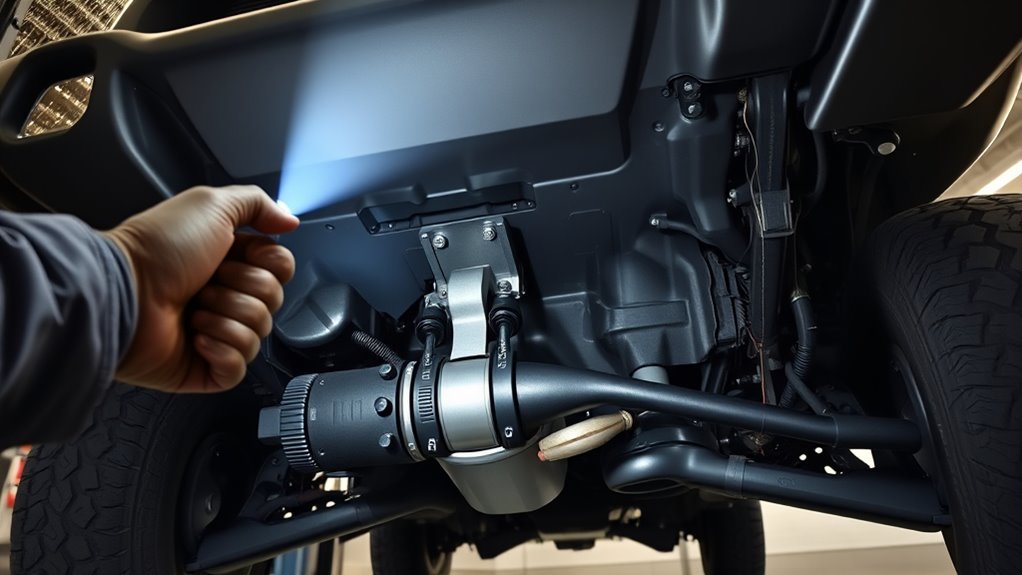
Replicate the symptom systematically in a safe environment. Start on a flat, level concrete surface with the engine idling at operating temperature, the service foot brake firmly applied, and the vehicle fully stationary. Shift from Park to Reverse, pause for 3 seconds, shift to Neutral, and then shift to Drive. Do not touch the accelerator pedal during this test.
Next, perform a low-speed stop-and-go test. Accelerate gently to 15 mph and brake to a smooth, complete stop. Keep your foot firmly on the brake pedal and wait 3 seconds. If you feel a dull “thud” or sensation of a light rear-end tap 1 to 2 seconds after stopping, or the moment your foot lifts off the brake, the driveshaft slip-joint splines are binding due to rear axle wrap.
If the noise only occurs after parking on hills, the parking pawl inside the transmission is taking the entire 4,500+ lb vehicle weight. To prevent this, always bring the vehicle to a stop with the foot brake, pull the emergency/parking brake firmly, shift into Park, and then release the foot brake. If the clunk disappears on subsequent startups, the driveline is operating normally.
Diagnostic note: Document your 4Runner’s model year, drivetrain (2WD, Part-Time 4WD, or Full-Time 4WD), mileage, and ambient temperature. These details are critical for isolating fluid viscosity issues from physical mechanical play.
Can Greasing the Slip Yoke Fix the Clunk?
Greasing the driveshaft slip joint is the most effective DIY fix for the stop-and-go “thump.” Under braking, the rear axle rotates slightly forward (axle wrap), pulling the slip yoke outward. As the vehicle stops, the dry splines stick. When the vehicle settles or the brake is released, the splines suddenly snap back into place, sending a noticeable clunk through the chassis.
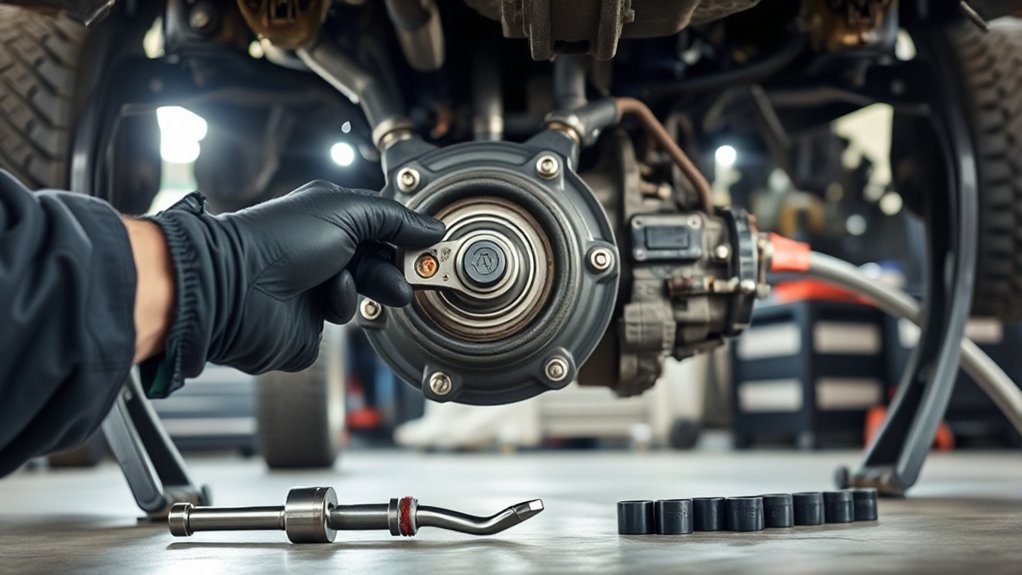
Four-wheel-drive 4Runners generally feature up to 6 grease zerks across the front and rear propeller shafts: 2 on the sliding slip yokes and 4 on the universal joint spider bearings. Using the correct grease for each fitting is vital:
- Spider / Universal Joints: Use a high-quality NLGI No. 2 Lithium-base chassis grease. Pump until fresh grease just begins to purge past the four rubber bearing cap seals.
- Slide Yoke / Slip Splines: Use an NLGI No. 2 Molybdenum-Disulfide Lithium-base chassis grease (often labeled as Moly EP). Molybdenum bonds to the metal splines to eliminate stick-slip friction under severe torque load.
- Park on level ground, engage the parking brake, chock all four wheels, turn off the engine, and safely support the frame on heavy-duty jack stands.
- Wipe road grime and hardened dirt from every grease fitting before attaching the grease gun coupler.
- Identify whether the fitting is on a spider cross or a slip-yoke barrel.
- For the slip yoke: Apply only 3 to 5 pumps of moly grease. Do not pump until the slip joint expands.
- Warning on hydro-locking: Overfilling the slip yoke fills the internal expansion cavity with incompressible grease. When the rear suspension compresses over bumps, the driveshaft cannot shorten, transferring immense shock loads into the transfer case rear output bearing and damaging internal seals.
- Wipe away all excess grease and perform a 10-minute road test with multiple complete stops.
Safety Warning: Never crawl under a vehicle supported only by a hydraulic floor jack. Ensure the transmission is in Park, wheels are chocked, and the frame is resting securely on rated jack stands before servicing driveline components.
Inspect Driveshaft, Slip Joint, and U-Joints for Binding
Perform a thorough physical inspection with the engine off and the drivetrain unloaded (chock wheels and set transmission in Neutral only while safely elevated on stands). Inspect universal joint crosses for fine, rust-colored powder (the telltale sign of fretting corrosion from dry, failing needle bearings), missing balance weights, dented driveshaft tubes, and torn rubber boot seals.
Engine and transmission mounts should also be inspected for structural integrity. A collapsed transmission mount or torn hydraulic motor mount allows the engine and gearbox assembly to physically lift and slam down against the subframe when torque reverses between Drive and Reverse.
| Item inspected | Symptom to watch for | Action |
|---|---|---|
| Slip joint splines | Spline binding, dried grease caking, or radial play | Lubricate with NLGI No. 2 Moly grease; replace shaft if splines are scored or loose |
| Universal joints (U-joints) | Rust dust around bearing caps, needle bearing play, or notchiness | Grease if serviceable; press in new heavy-duty U-joints if play is detected |
| Driveshaft tube & weights | Dents from trail obstacles, missing welded counterweights, runout | Send to a specialized driveline balancing shop for high-speed balancing |
| Engine & transmission mounts | Torn rubber, separated metal backing plates, excess powertrain lift | Perform brake-torque engine lift test; replace worn rubber/hydraulic mounts |
| Rear differential & pinion | Excess rotational free-play (>1/4 inch before ring gear engages), pinion seal leaks | Measure pinion backlash and inspect ring/pinion wear to factory specifications |
| Front CV axles (4WD/AWD) | Torn rubber boots, grease thrown on wheel well, clicking during full-lock turns | Inspect CV joints; reference the 4Runner clicking noise diagnostic guide |
| Brake caliper slide pins & pads | Single metallic click or clack when changing direction from Reverse to Drive | Clean and grease caliper slide pins; install anti-rattle pad clips |
Rotational play alone does not automatically mean a U-joint is defective; normal gear lash exists inside the rear differential and transfer case chain. To isolate a universal joint, hold the companion flange firmly with one hand while twisting the driveshaft tube with the other. Any perceptible radial or axial movement between the cross and bearing cup warrants immediate joint replacement.
[Products Worth Considering]

The LEXIVON 3/8-Inch Drive Click Torque Wrench is built for accurate, reliable fastening across a wide range of automotive and mechanical tasks. It arrives pre-calibrated for dependable use, with a clear dual-range scale for easy reading and a reversible ratchet head for added convenience. The hardened steel construction and corrosion-resistant finish help deliver long-lasting performance and comfort in everyday use.
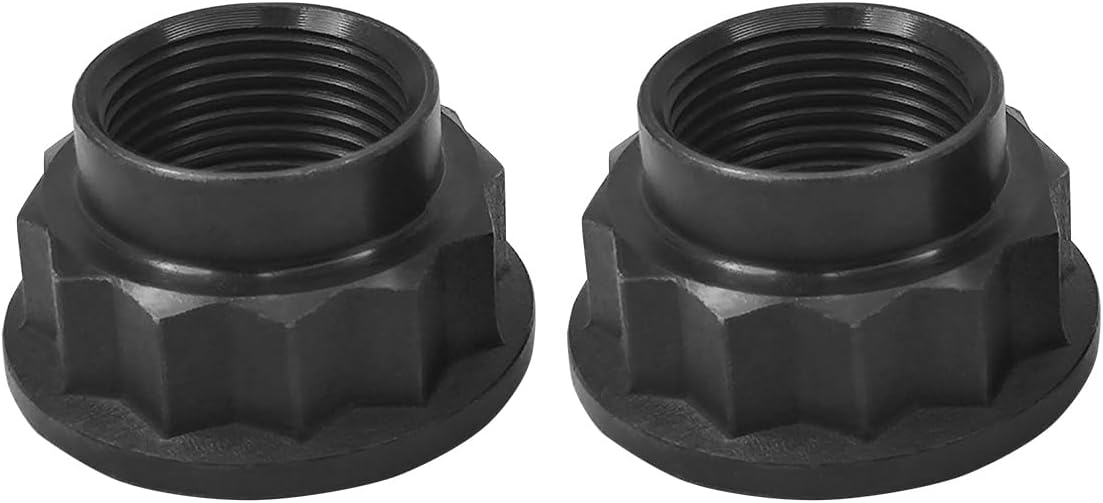
This pair of front axle shaft nuts is designed to secure CV joints and wheel bearings on compatible Toyota and Lexus front drive axles. Built from heat-treated carbon steel for durability and corrosion resistance, it helps maintain proper torque and reliable power transfer. It is a direct replacement for several factory part numbers and is recommended for paired replacement.
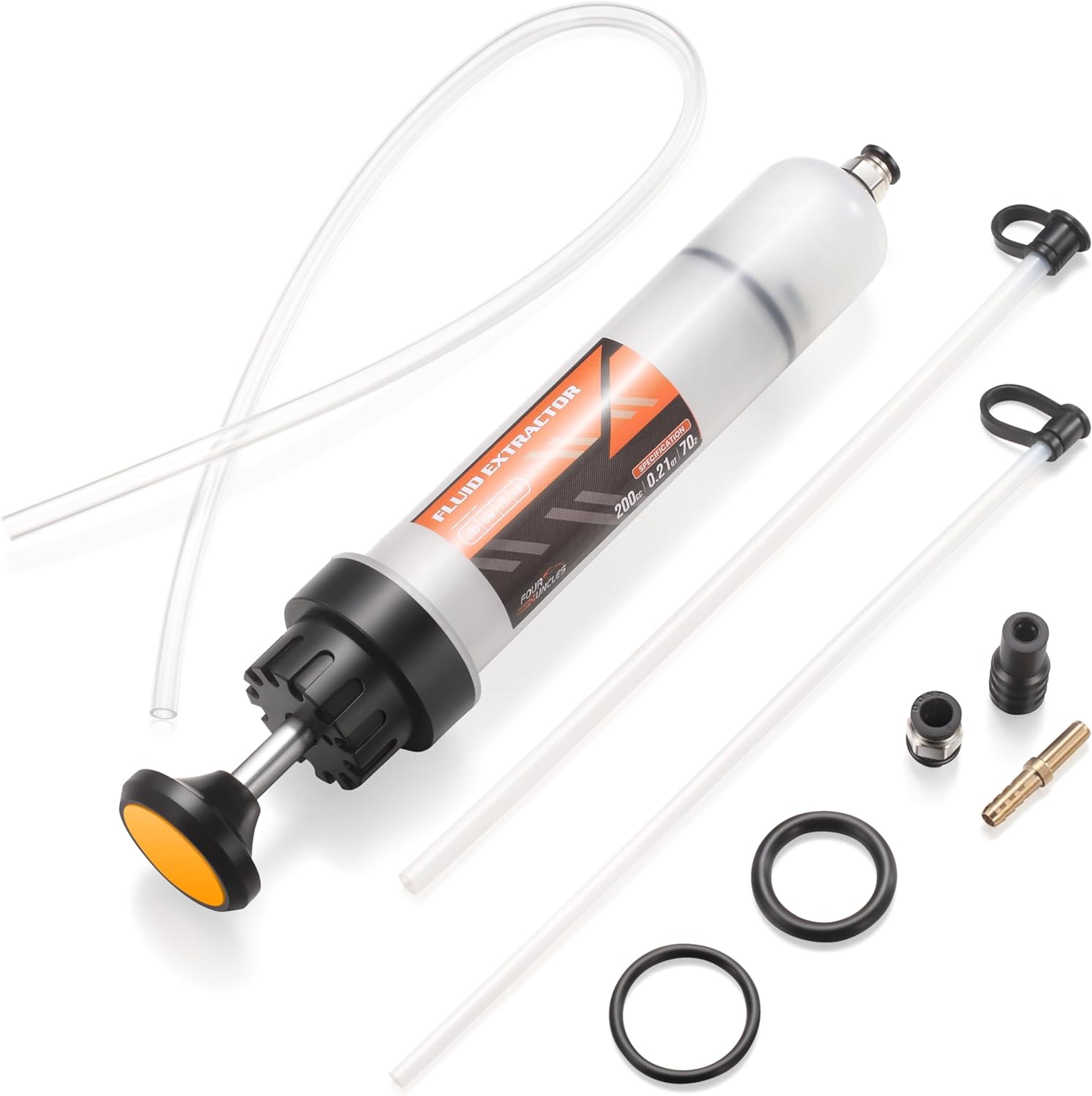
This fluid transfer syringe with flexible hose helps you reach tight service points for cleaner, more controlled automotive fluid changes. The transparent barrel and smooth plunger make it easier to monitor flow and reduce spills while working in engine bays, transmissions, differentials, and other confined areas. It is a versatile DIY garage essential for transferring compatible fluids in cars, motorcycles, ATVs, marine equipment, and more.
How to Test Transmission & Transfer Case (Drive and Stationary)
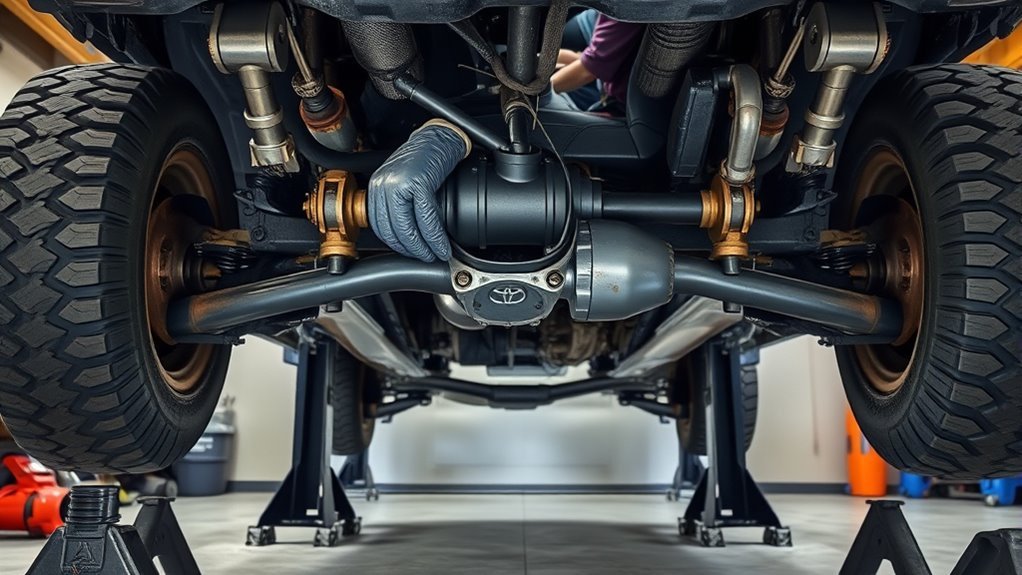
To rule out internal transmission failure, perform an idle engagement test. On level ground with the engine at operating temperature, firmly hold the foot brake and shift into Drive. A healthy A750E/F (5-speed) or A340 (4-speed) transmission should engage within 0.5 to 1.0 second with a smooth, cushioned hydraulic engagement. If the transmission takes 2+ seconds to engage and then slams violently into gear with an engine RPM drop, inspect transmission fluid level and shift solenoids immediately.
Next, perform a controlled road test to assess the transfer case and differential gear health. Refer to the 4Runner differential and transfer case service guide for fluid verification procedures.
- Transmission Warning Signs: Delayed gear engagement, engine flare (RPMs rise freely before the vehicle moves), transmission slipping under load, burnt fluid smell (dark brown/black fluid), or OBD-II trouble codes (P07XX series).
- Transfer Case Warning Signs: Loud whining or grinding that changes between 2WD, 4HI, and 4LO, difficulty engaging/disengaging 4WD actuator, or transfer case output shaft seal leaks.
- Driveshaft / Slip Yoke Warning Signs: A distinct mechanical “thump” 1 second after stopping, clunking upon initial throttle tip-in, or high-frequency vibration felt in the seat/floorboard at highway speeds (55–70 mph).
- Mount Failure Warning Signs: More than 1 inch of engine rotation during stationary brake-torquing, accompanied by a heavy thump under the floorpan when letting off throttle.
Clean or Service the Slip Joint (Use the Correct Grease)
If pumping fresh molybdenum grease into the slip yoke does not resolve the clunk, the old grease has likely hardened, oxidized, or mixed with dirt inside the internal splines. Disassembling, cleaning, and manually packing the splines restores smooth travel.
Because driveshaft removal affects driveline balance, pinion angles, and companion flange mating surfaces, match-mark all flanges prior to unbolting.
[Products Worth Considering]

These genuine Toyota oil drain plug gaskets are designed to help maintain a reliable seal during oil changes, reducing the chance of leaks and supporting proper engine maintenance. With an OEM fit and trusted Toyota quality, they are a practical choice for routine service on compatible vehicles. The convenient quantity pack is ideal for keeping multiple maintenance intervals covered.

This low profile hydraulic floor jack is designed for cars, coupes, hatchbacks, and sedans with limited ground clearance, making it a practical choice for garages and home maintenance. It lifts smoothly up to a useful height range with a single piston quick-lift pump, while the steel construction, rotating saddle, and overload protection help improve stability and safety during use.

This bearing press kit makes it easy to install bearing races and seals quickly without damaging the axle housing. It includes nine dual-sided adapters to fit a wide range of standard races and seals, plus a knurled handle for controlled, slip-resistant use. Built from durable aluminum alloy and stored in a compact case, it is a practical solution for automotive bearing installation jobs.
Driveshaft Slip Joint Basics
The slip joint accommodates subtle changes in driveshaft length as the solid rear axle articulates over road undulations. If the splines bind due to galling, contamination, or dried lubricant, the driveshaft behaves like a solid steel rod, transferring suspension road impacts directly into the transfer case and transmission casing.
- Inspect the male and female splines for stepped wear ridges, surface rust, or twisted splines.
- Degrease the splines completely using brake cleaner and a nylon/brass brush.
- Coat the splines thoroughly with high-molybdenum EP chassis grease before reassembly.
- Replace the driveshaft assembly if visible rotational play or spline galling remains after cleaning.
Disassembly Step-By-Step
Consult the official repair manual for your model year via the Toyota Technical Information System (TIS) for exact fastener torque specifications.
- Chock front wheels, raise the rear axle, and support the chassis securely on rated stands with the transmission in Neutral to allow shaft rotation.
- Use a paint pen or center punch to match-mark the driveshaft flanges to the differential pinion flange and transfer case output flange. Reinstalling the driveshaft 180 degrees out of phase will introduce severe rotational vibrations.
- Unbolt the four rear companion flange nuts and bolts (typically 14mm or 17mm Grade 10.9 fasteners).
- Support the driveshaft with a transmission stand or strap to prevent it from dropping.
- Slide the slip yoke apart, taking care not to damage the internal dust seal or rubber boot.
- Clean all old, caked grease from the splines using solvent and inspect for gouges or twisted teeth.
- Apply a generous coat of NLGI No. 2 Moly grease across all spline grooves and slide the yoke back together, aligning your phasing match-marks.
- Reattach companion flange bolts and torque to Toyota factory specifications (typically 58 to 65 lb-ft depending on model year and bolt diameter).
Correct Grease Application
Avoid generic low-temperature wheel bearing grease or unverified “Teflon spray” fixes. Heavy 4×4 drivetrains experience extreme boundary pressure across the driveshaft splines during hard acceleration and axle wrap. Use only designated NLGI No. 2 Molybdenum-Disulfide Lithium-base grease containing at least 3% to 5% moly solids.
Pro Tip: Always use new self-locking flange nuts or apply medium-strength blue threadlocker to companion flange bolts during final assembly to prevent fasteners from backing out under driveline vibration.
Avoid Unsupported Breather Modifications
A common modification discussed on automotive forums involves removing the slip yoke zerk fitting and threading in a differential-style remote breather to allow trapped air to vent. This is not an approved Toyota repair procedure.
Installing an open or unvalved breather allows moisture, fine trail dust, and road salt to enter directly into the spline housing, accelerating spline wear and causing rapid corrosion. Furthermore, open breathers allow grease to purge out under centrifugal force, leaving splines dry within a few hundred miles. The correct engineered solution is routine periodic lubrication with molybdenum grease and avoiding over-pumping.
Repair Paths, Cost Level, Time, and When to Call a Pro
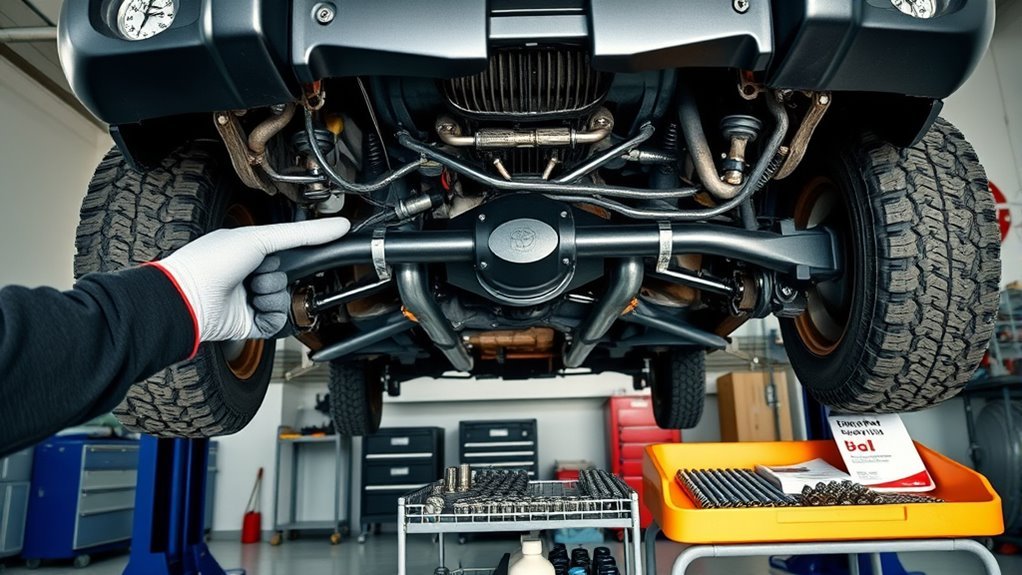
Because a “clunk into Drive” can stem from a zero-cost parking habit to a full transmission rebuild, diagnosing by symptom saves hundreds of dollars in unneeded parts.
| Repair path | Estimated DIY Cost | Estimated Shop Cost | Typical Labor Time |
|---|---|---|---|
| Parking brake sequencing habit adjustment | $0 | $0 | Instant |
| Propeller shaft & slip yoke lubrication (NLGI 2 Moly) | $15 – $30 | $60 – $120 | 0.5 – 1.0 hour |
| Universal joint replacement (per joint) | $35 – $75 | $180 – $320 | 1.5 – 2.5 hours |
| Engine or transmission mount replacement | $80 – $220 | $350 – $650 | 2.0 – 4.0 hours |
| Complete OEM/aftermarket rear driveshaft replacement | $400 – $750 | $650 – $1,100 | 1.5 – 2.5 hours |
| Transmission valve body / complete rebuild | $600 – $1,500 | $2,800 – $5,200 | 8.0 – 14.0 hours |
[Products Worth Considering]

This flexible oil funnel is designed to make fluid changes cleaner and easier by guiding oil around obstacles like skid plates and crossmembers. Its shape-retaining core and silicone body can be molded for custom positioning, while the heat-resistant, leak-proof design helps prevent spills during draining and filter removal. Reusable and easy to clean, it works well for cars, trucks, motorcycles, and other hard-to-reach fluid fill or drain applications.

This 120-piece clip and fastener kit helps restore secure fitment for Toyota fender flares, bumper liners, rocker panels, and wheel well trims. It includes multiple clip styles plus a removal tool, making it easier to replace worn or missing retainers and reduce panel wiggle. Designed for a wide range of Toyota vehicles, it’s a practical solution for trim and liner repairs.

This low profile hydraulic trolley jack is built for fast, reliable lifting in garage and service environments. With a 2 ton capacity, it helps raise most cars with a compact profile that fits lower-clearance vehicles, while the swivel casters and large saddle support smooth positioning and added stability. A built-in overload protection valve adds an extra layer of safety during use.
Recommended Diagnostic Tools & Parts
- Grease Gun with Flexible Hose: Pistol-grip or lever grease gun with needle-point adapter.
- Lubricant: 1 tube NLGI No. 2 Lithium Grease (U-joints) + 1 tube NLGI No. 2 Moly Grease (Slip Yokes).
- Replacement U-Joints: Genuine Toyota OEM or heavy-duty greaseable Dana Spicer / Moog joints.
- Hand Tools: 14mm and 17mm box wrenches, torque wrench (rated up to 100 lb-ft), dead-blow hammer, pry bar, and wheel chocks.
When To Call a Professional
Schedule an inspection with an experienced driveline or transmission specialist if you encounter any of the following critical conditions:
- Drive or Reverse engagement requires more than 1.5 seconds and engages with an aggressive mechanical slam.
- Transmission fluid smells burnt, appears dark brown/black, or shows silver metallic flake on the dipstick.
- Severe highway vibrations (50–75 mph) remain after greasing the slip yoke and balancing tires.
- The driveshaft splines or companion flange output shafts exhibit noticeable up-and-down radial play.
- You lack the equipment, flat workspace, or heavy-duty stands required to safely support the vehicle.
Common Mistakes That Can Make the Clunk Worse
1. Overfilling the slip yoke with a grease gun: Pumping until the slip joint expands forces grease into the blind cavity, hydro-locking the driveshaft. This damages transfer case seals and cracks tailhousings during full suspension compression.
2. Reassembling driveshafts out of phase: If the front and rear universal joint yokes are not aligned on the exact same plane upon reassembly, the shaft will oscillate non-linearly, causing intense driveline vibrations at road speed.
3. Using non-moly general-purpose grease on splines: Standard multi-purpose lithium grease quickly shears under high spline contact pressure, causing the “bump from behind” clunk to return within 500 miles.
4. Shifting between Drive and Reverse while rolling: Shifting before coming to a 100% stop sends severe shock loads through the differential ring and pinion, accelerating gear tooth lash.
5. Blaming the transmission before checking parking habits: Replacing transmission fluid or paying for diagnostic teardowns before testing the parking brake sequence on hills wastes time and money.
Frequently Asked Questions
Why does my 4Runner clunk when I shift into Drive?
The clunk is usually caused by parking pawl load, dry driveshaft slip-yoke splines, normal differential gear backlash, worn universal joints, or degraded engine/transmission mounts. A clunk that occurs with immediate gear engagement is almost always driveline-related, whereas a delayed 1-to-2 second pause followed by a hard shift points toward transmission fluid or valve body issues.
Why is the clunk worse when the 4Runner is parked on a hill?
When parked on an incline without setting the parking brake first, the entire weight of the 4Runner rests directly on the transmission parking pawl. When you shift out of Park into Reverse or Drive, the pawl is forcefully dragged out of the transmission output shaft notch, producing a loud mechanical bang. This is normal mechanical behavior and is prevented by engaging the parking brake before shifting into Park.
Can a slip yoke cause a clunk after stopping?
Yes. This is the well-known Toyota 4Runner/Tacoma/GX “bump from behind” symptom. When braking to a complete stop, the rear axle wraps slightly, extending the slip yoke. If the splines lack molybdenum grease, they bind and suddenly pop back into place a second after stopping or when releasing the brake pedal, feeling like another vehicle bumped your rear bumper.
What grease should I use on a 4Runner slip yoke?
Use an NLGI No. 2 Molybdenum-Disulfide Lithium-base chassis grease (Moly grease) for the slip-yoke splines. For universal joint spider crosses, use standard NLGI No. 2 Lithium chassis grease. Never use dry lubricants, aerosol sprays, or non-moly general grease on heavy-load slip splines.
How many grease zerks does a 4Runner have?
Most 4-Wheel Drive 4Runners (4th and 5th Generation) have 6 grease fittings in total: 3 on the front propeller shaft (2 U-joint spiders, 1 slip yoke) and 3 on the rear propeller shaft (2 U-joint spiders, 1 slip yoke). Two-wheel-drive models typically have fewer or sealed, non-serviceable driveshafts depending on model year.
Is it safe to drive a 4Runner with a driveline clunk?
A mild slip-yoke thump or hill-parking clunk does not present immediate danger and can be driven safely until your next lube service. However, if the clunk is accompanied by delayed transmission engagement, high-speed driveline vibration, fluid leaks, or metallic grinding, have the vehicle inspected immediately to avoid driveline separation or transmission failure.
Conclusion
Diagnosing a Toyota 4Runner clunk into Drive begins with isolating the exact moment the sound occurs. Always rule out parking-pawl tension on hills and lubricate the driveshaft slip yokes with NLGI No. 2 Molybdenum-disulfide grease before suspecting transmission failure. Regular driveshaft greasing at every 5,000 to 10,000-mile oil change interval keeps splines sliding smoothly and eliminates the classic stop-light thud. If gear engagement is delayed, engine RPM flares before moving, or strong vibrations develop at road speed, schedule a comprehensive professional inspection immediately.