By Editorial Team · Last updated: August 20, 2026
What’s in This Article
- How to Check Coolant Safely With the Engine Cold
- Before You Begin: Tools, Coolant, and Safety
- How to Read the Cold-Level Marks on the 4Runner Reservoir
- How to Top Off Coolant on a 4Runner
- How to Choose the Right 4Runner Coolant
- How to Inspect for Coolant Leaks and Head Gasket Warning Signs
- When to Flush or Replace 4Runner Coolant
- Troubleshooting Low Coolant or a Missing Cap
- Frequently Asked Questions
- Conclusion
Check your 4Runner coolant only after the engine has cooled completely. Read the translucent reservoir from the side and compare the fluid line with the tank’s lower and upper cold-level marks. Depending on the model year, those marks may be labeled F/L (Full/Low), LOW/FULL, or MIN/MAX. If the cold level is below the lower mark, add only the coolant specification listed in the exact model-year owner’s manual, stopping at the upper mark. Do not open a hot radiator or pressure cap. Most 4Runners have two coolant-related caps: a non-pressurized reservoir cap that is generally safe to open when the engine is cold, and a separate pressurized radiator or expansion-tank cap that should only be opened when fully cold and only if the owner’s manual calls for it during that specific service. Toyota’s manuals portal lets you select the vehicle before checking the coolant type and service guidance.
Quick Answer
With the engine fully cold, read the coolant reservoir from the side. The level should sit between the lower and upper cold marks, which may be labeled F/L, LOW/FULL, or MIN/MAX. If it is below the lower mark, add the exact coolant specified for your model year and stop at the upper mark. Never open a hot radiator or pressure cap.
Key Takeaways
- Check the reservoir only after the engine and cooling system have cooled completely.
- Use the lower and upper cold-level marks shown on your exact reservoir.
- Match the coolant specification and dilution in the exact model-year owner’s manual.
- Do not remove a radiator or pressure cap for a routine reservoir check.
- Investigate repeated level loss instead of repeatedly topping off the tank.
- Keep coolant away from children and pets, clean spills promptly, and contact poison control after a suspected ingestion or significant exposure.
| Cold Reservoir Reading | What to Do |
|---|---|
| Between the lower and upper marks | No top-off is normally needed. Recheck during routine maintenance. |
| Below the lower mark | Inspect for leaks, then add the specified coolant to the upper mark while cold. |
| Reservoir empty, warning active, steam, or high temperature | Shut the engine off and arrange diagnosis or towing. Do not open a hot pressure cap. |
How to Check Coolant Safely With the Engine Cold
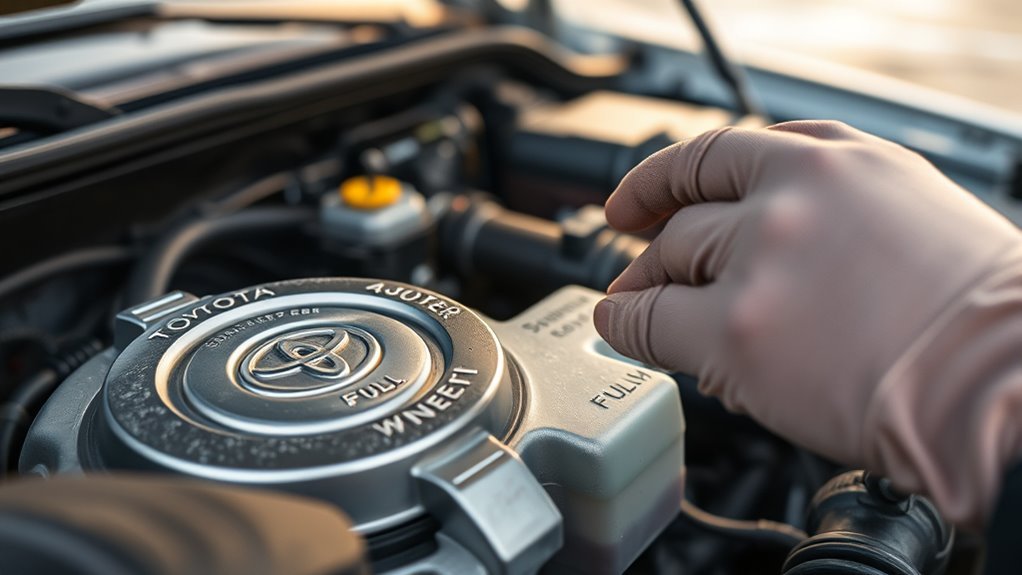
Let the engine cool completely before you inspect the cooling system. Hot coolant and steam can cause severe burns. Park on level ground, open the hood, and locate the translucent coolant reservoir. Its position and label can vary by model year, so use the under-hood diagram or owner’s manual if it is not obvious.
Read the fluid line from the side of the tank at eye level. A normal cold reading sits between the reservoir’s lower and upper marks. For a routine level check, leave the radiator or pressure cap closed, even after the engine cools.
Warning: Never open a hot radiator or pressure cap. Opening a hot pressurized cooling system can spray scalding coolant and steam.
If the reservoir is empty, the temperature warning has appeared, or you see steam, do not treat the problem as a simple top-off. Let the vehicle cool, inspect for visible leaks, and follow the exact owner’s-manual procedure or arrange professional diagnosis. Look for damp areas, dried coolant residue, damaged hoses, or oily contamination.
Before You Begin: Tools, Coolant, and Safety
Estimated time: 10 to 15 minutes for a basic level check and top-off. Plan more time if you find leaks, stains, or a level that keeps dropping.
Gather your tools before you start. You need the right coolant, a funnel, a clean rag, gloves, safety glasses, and a drip tray. Keep pets and children away from spilled coolant.
- Use coolant that matches your owner’s manual.
- Use a clean funnel so dirt does not enter the tank.
- Wipe spills right away and rinse painted surfaces with water.
- Store coolant in a sealed container away from people and pets.
Poison safety: Antifreeze and engine coolant can be poisonous if swallowed. After suspected ingestion or a significant exposure in the U.S., call 911 for severe symptoms or Poison Help at 1-800-222-1222. Do not make someone vomit unless poison control or a health care provider tells you to. See MedlinePlus antifreeze-poisoning guidance.
[Products Worth Considering]

This all-in-one radiator pressure tester and vacuum refill kit helps diagnose cooling system leaks, measure temperature, and refill coolant efficiently. It includes a wide range of adapters for broad vehicle compatibility, plus a pressure tester, vacuum refiller, thermometer, and storage case for organized use. Designed for DIY mechanics and professionals, it simplifies coolant service while reducing guesswork and unnecessary repairs.

This radiator burping funnel kit helps simplify coolant refilling, bleeding, flushing, and spill-free maintenance across a wide range of vehicles. Its translucent body with clear scale supports controlled filling, while multiple adaptors, caps, and extension pieces improve compatibility and access in tight engine bays. The built-in shut-off valve and rubber-gasket design help reduce spills and make cooling system service cleaner and more convenient.

This spill-proof radiator coolant filling funnel kit helps you refill cooling systems cleanly while reducing trapped air pockets that can affect heater and engine performance. It includes a 5-inch extension bar and 45-degree elbow for easier access under shrouds or at awkward angles. Color-matched caps for dedicated adapters make setup simpler and more organized.
How to Read the Cold-Level Marks on the 4Runner Reservoir
Locate the translucent coolant reservoir, then line up your eyes with the fluid line on the side of the tank. Read the level on flat ground after the engine has cooled. Use the exact molded labels on your reservoir, because model years may use F/L, LOW/FULL, MIN/MAX, or similar lower-and-upper markings.
If the level sits below the lower cold mark, inspect for leaks before adding the specified coolant. If the tank is empty or the level dropped suddenly, avoid a long drive. A loose cap, damaged hose, cracked reservoir, radiator leak, water-pump leak, or internal engine fault may be responsible.
Where Are the LOW/FULL or MIN/MAX Marks?
The molded marks sit on the side of the translucent coolant reservoir. Their wording and location can vary, so look for the lower and upper cold indicators instead of assuming every tank says MIN and MAX. Check with the engine fully cold, and use a flashlight if dirt or age hides the markings.
- Park on level ground and wait until the cooling system is cold.
- Identify the exact lower and upper marks on the reservoir.
- Inspect the tank for cracks, stains, residue, or oily contamination.
- Confirm the coolant specification in the exact model-year owner’s manual.
How to Read Coolant Levels Cold
With the engine cold, sight across the reservoir and find the coolant line. A normal cold reading sits between the lower and upper molded marks. The level can rise after the engine warms because the fluid expands.
Check the fluid condition at the same time. Coolant should not look muddy, rusty, oily, or full of debris. Color alone cannot confirm compatibility because products and model-year requirements differ. Photograph or record the cold level if you are monitoring possible loss.
| Item | Action |
|---|---|
| Level | Read between the lower and upper cold marks |
| Condition | Check for oil, dirt, or discoloration |
When to Top Off
Top off the coolant when the fully cold level sits below the reservoir’s lower mark. Add only the model-year-specified coolant, and stop at the upper cold mark. Filling above that mark leaves too little expansion space and may push excess fluid out as the system heats.
- Read the level only after the engine and cooling system are cold.
- Match the specification and premix or dilution instructions in the owner’s manual.
- Stop at the reservoir’s upper cold mark.
- Investigate contamination, an empty tank, or repeated level loss.
How to Top Off Coolant on a 4Runner
Use a clean, controlled process when you add coolant. The goal is to restore the cold reservoir level without introducing dirt or the wrong fluid. Stop if the tank is empty, the engine has overheated, or you find an active leak.
- Park on level ground, set the parking brake, and switch the engine off.
- Wait until the engine, hoses, and cooling system have cooled completely.
- Find the translucent reservoir and identify its lower and upper cold marks.
- Inspect the reservoir, cap, hoses, radiator area, and water-pump area for wetness or dried residue.
- Confirm the coolant specification and whether it is premixed or requires dilution.
- Remove only the non-pressurized reservoir cap used for topping off, following the owner’s manual. Leave any radiator or pressure cap closed.
- Add the specified coolant through a clean funnel until the level reaches the upper cold mark.
- Reinstall the reservoir cap, clean any spill, and keep people and pets away from the area.
- Recheck the cold level after the next drive-and-cool cycle.
If the level falls again, do not keep adding coolant without diagnosis. Arrange a cooling-system pressure test or other appropriate inspection.
[Products Worth Considering]

This coolant electric water pump is designed as a replacement for select Toyota vehicles, helping maintain proper engine cooling performance and reliable temperature control. Built to OE specifications, it offers fitment support for compatible Avalon, Camry, and RAV4 models with 2.5L L4 engines. It also includes cross-reference part numbers for easier matching and comes with after-sales support for covered defects.

This 16-piece hose clamp pliers set provides a complete solution for removing and installing a wide range of automotive hose clamps. It is designed to reach tight engine spaces and handle spring, flat band, and ring-type clamps on radiator, coolant, fuel, and vacuum hoses. Built from durable heat-treated steel and organized in a carrying case, it helps simplify repairs for cars, trucks, motorcycles, and DIY maintenance.

This versatile automotive funnel kit makes oil and coolant filling cleaner, safer, and more efficient across a wide range of vehicles. With multiple color-coded adapters, secure sealing, and hands-free locking support, it helps prevent leaks, spills, and mismatched fittings during maintenance. The organized magnetic storage and durable heat-resistant construction make it a practical choice for both DIY repairs and professional service work.
How to Choose the Right 4Runner Coolant
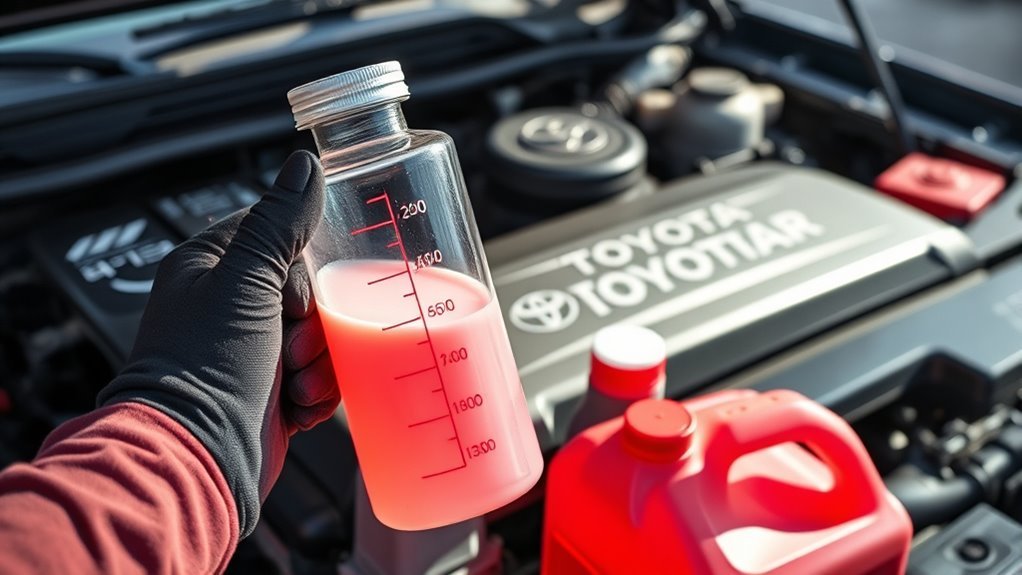
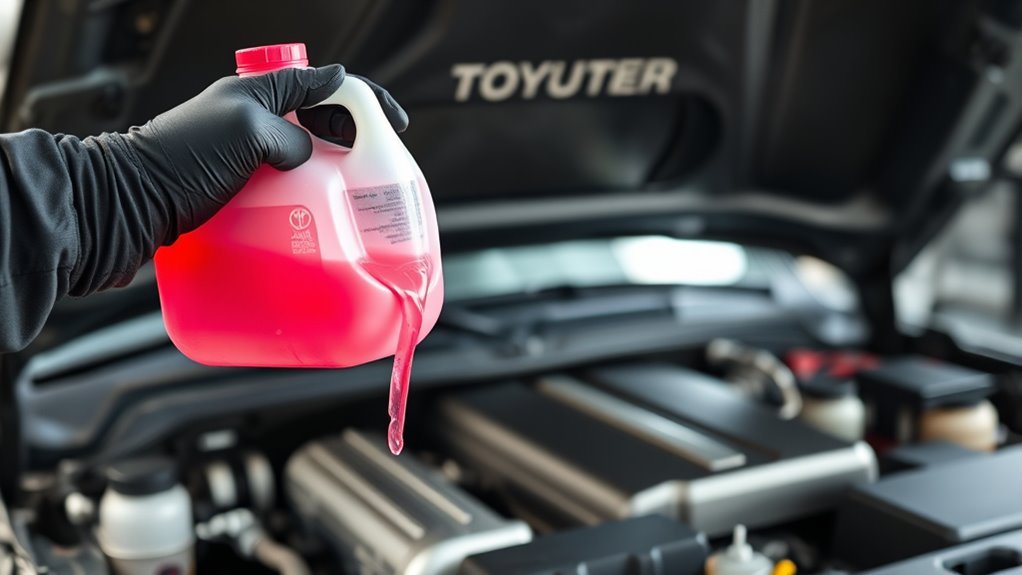
Check the exact model-year owner’s manual before you buy coolant. Toyota documentation may specify Toyota Long Life Coolant (LLC), Toyota Super Long Life Coolant (SLLC), or an equivalent that meets stated requirements. Match the written specification and premix or dilution instructions, not the bottle color alone.
Toyota’s Super Long Life Coolant is sold either premixed or as concentrate requiring dilution with distilled water, commonly around a 50/50 ratio in the U.S. market. Never dilute a coolant that’s already sold premixed.
Do not mix coolant formulas unless the vehicle manual or coolant manufacturer confirms compatibility. If the wrong fluid was added, avoid assuming a flush is always or never required. Have the mixture identified and follow Toyota or qualified-service guidance for correction.
[Products Worth Considering]

This engine water pump kit is designed to help maintain reliable cooling performance across a wide range of compatible Toyota, Lexus, Scion, and Pontiac vehicles. Built with aluminum and tested for leak-free operation, it offers a direct replacement solution that supports engine efficiency and long-term service life. The kit includes a professional water pump and gasket for a convenient installation-ready repair.

AISIN OE matched engine coolant thermostat delivers consistent temperature control for reliable cooling system performance. Built with high-quality materials and designed for perfect OE form, fit, and function, it helps maintain efficient engine operation across a wide range of compatible Lexus, Scion, and Toyota vehicles. The correct OE specified operating temperature supports dependable cooling, while note that a gasket is not included.

The OEMTOOLS coolant vacuum refill kit helps quickly refill a vehicle’s cooling system while removing trapped air that can lead to overheating and engine damage. It also performs vacuum leak tests to help confirm system integrity and reduce the chance of repeat repairs. With multiple bushings, adapters, and a tapered cone seal, it is designed for flexible use on many radiator and coolant bottle necks.
Toyota LLC vs. SLLC
Toyota Long Life Coolant (LLC) and Toyota Super Long Life Coolant (SLLC) are not interchangeable labels. The exact owner’s manual gives the required coolant standard, concentration, and service schedule for the model year and market. Use that document before relying on color or a generic parts-store chart.
- Verify compatibility against the exact Toyota specification.
- Follow the manual’s premix or dilution instructions.
- Confirm the correction method before changing or mixing formulas.
- Record the product and date whenever coolant is added or replaced.
Coolant Mixing Rules
Avoid mixing unmatched coolant types. If you add the wrong product, keep the container or photograph its label and contact a Toyota service source or qualified technician. The correct remedy depends on the amount added, the existing coolant, and confirmed compatibility.
| Action | Result |
|---|---|
| Use the specified coolant | Maintains the intended cooling-system protection |
| Mix without approval | Compatibility and protection become uncertain |
| Verify manual guidance | Safer compatibility choice |
Note: Coolant color can vary by brand, so match the Toyota specification instead of relying on color alone. If your manual calls for a premixed coolant, do not dilute it further.
How to Inspect for Coolant Leaks and Head Gasket Warning Signs
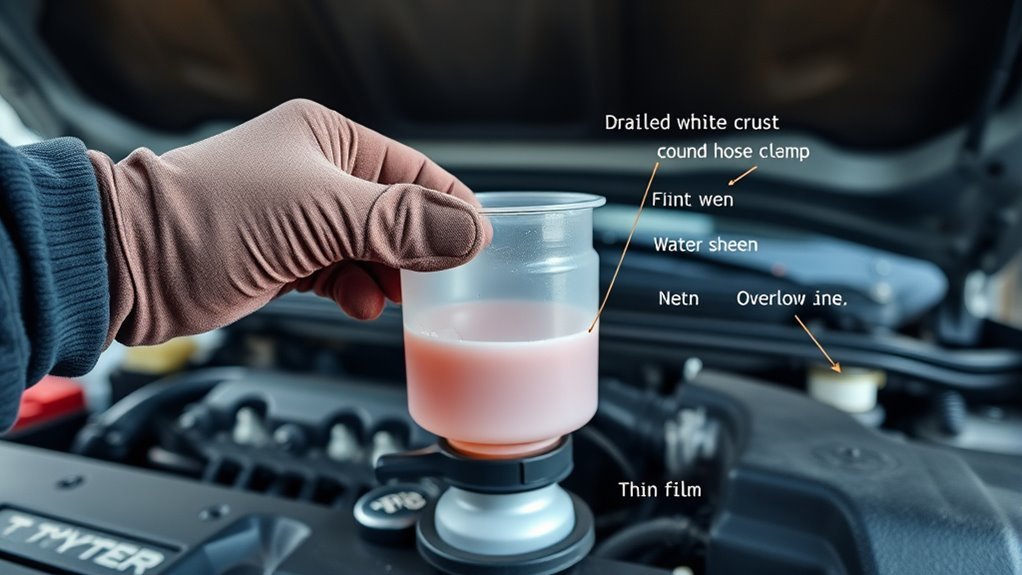
A coolant leak can reduce the system’s ability to control engine temperature. Inspect the water-pump area, hoses, radiator, reservoir, and caps whenever the cold level drops. Look for wet spots, coolant pooling, dried residue, damaged plastic, or a sweet odor after driving.
An oily sheen, sludge, repeated overheating, steady bubbles in the reservoir, milky engine oil, or persistent white exhaust after the engine is warm can justify professional testing. None of those signs proves a head-gasket failure by itself.
- Check the water-pump area and under the vehicle for fresh drips.
- Inspect hose connections and clamps for wetness, swelling, cracks, or soft spots.
- Look for dried residue around the reservoir, filler neck, radiator, and caps.
- Compare the level only between fully cold checks.
Document the date, mileage, coolant level, and any stains you see. Clear notes help you spot patterns before a small leak turns into a large repair. Do not keep driving if the temperature gauge climbs, steam appears, or the warning light returns after a top-off.
When to Flush or Replace 4Runner Coolant
Follow the coolant replacement schedule in the owner’s manual or Toyota maintenance guide for the exact model year, engine, market, and coolant specification. Do not apply one mileage or time interval to every 4Runner.
As a general reference point, many current-generation 4Runners on Toyota Super Long Life Coolant call for a first replacement around 100,000 miles or 10 years, then roughly every 50,000 miles or 5 years after that. Older 4Runners built before the switch to long-life coolant often used a shorter interval, closer to every 30,000 miles or two years. Towing, extreme heat, or heavy stop-and-go driving can justify servicing earlier than the standard interval.
Between scheduled services, use three checks to decide whether the system needs earlier attention:
- Inspect for cloudiness, rust, oil, debris, or unexplained color change. Appearance can reveal contamination, but it cannot confirm the remaining service life by itself.
- Test freeze and boil protection with equipment compatible with the coolant, or ask a qualified shop to test it.
- Track the reservoir level only under the same fully cold conditions.
If the coolant is contaminated, protection tests fail, or the level keeps dropping, arrange diagnosis and replacement with the manufacturer-specified fluid. Record the date, mileage, test result, and product used.
Troubleshooting Low Coolant or a Missing Cap
First identify which cap is missing. A reservoir cap and a pressurized radiator or expansion-tank cap do different jobs. Do not drive with a missing pressure cap, and do not substitute a cap unless it is cataloged for the exact model year and engine with the correct pressure specification.
If the reservoir looks low after a drive, wait until the system is fully cold before reading it again. Add specified coolant only if the cold level is below the lower mark. Inspect for dried residue at the filler neck, wet hose connections, damage around the reservoir, or damp areas under the vehicle.
- Identify whether the missing part is a reservoir cap or a pressure cap.
- Install the exact replacement before driving if the pressure cap is missing.
- Top off only to the upper cold mark with the specified coolant.
- Inspect hoses, clamps, radiator, reservoir, and water-pump area.
- Schedule pressure testing if the cold level keeps dropping.
If you see repeated loss, don’t ignore it. Ask a qualified mechanic to run pressure and combustion-gas tests so you can find the leak source.
Frequently Asked Questions
How do you check the coolant level on a 4Runner?
Park on level ground and let the engine cool completely. Read the translucent reservoir from the side. The fluid should sit between its lower and upper cold marks, which may be labeled F/L, LOW/FULL, or MIN/MAX. If it is below the lower mark, inspect for leaks and add the exact coolant specified in the model-year owner’s manual.
What should you do if a coolant or temperature warning appears?
Warning wording varies by model year. Pull over safely, switch the engine off, and do not open a hot pressure cap. If the gauge is high, steam is visible, or the reservoir is empty, arrange towing or diagnosis instead of continuing to drive.
Can you add water instead of coolant in an emergency?
The specified coolant is the safest choice. Plain water provides no correct freeze, boil, or corrosion protection and may be unsafe in freezing conditions. Use water only as a temporary emergency measure after the engine is fully cold and when the owner’s manual or roadside professional supports it, then correct the mixture promptly.
What happens if you overfill the coolant reservoir?
Coolant expands as the engine warms. Filling above the upper cold mark can push excess fluid from the overflow and make leak diagnosis harder. Remove excess only when the system is cold and according to the owner’s-manual procedure.
Why does my 4Runner keep losing coolant?
Possible causes include a loose or incorrect cap, cracked reservoir, leaking hose, radiator leak, water-pump leak, heater-core leak, or internal engine problem. Compare fully cold readings and schedule pressure or combustion-gas testing if the level keeps falling.
What coolant does a Toyota 4Runner use?
Use the exact specification in the owner’s manual for the model year, engine, and market. The manual may list Toyota Long Life Coolant, Toyota Super Long Life Coolant, or an approved equivalent. Match the written specification and concentration, not color alone.
Can I drive with low coolant in my 4Runner?
Do not drive if the temperature warning is active, the gauge is high, steam appears, or the reservoir is empty. If the fully cold level is only slightly below the lower mark and no overheating or active leak is present, top off with the specified coolant before driving and recheck it after the next cool-down.
How often should I flush or replace 4Runner coolant?
It depends on the model year, engine, and coolant type, so the owner’s manual is the final word. As a general reference, many current-generation 4Runners on Toyota Super Long Life Coolant call for a first replacement around 100,000 miles or 10 years, then roughly every 50,000 miles or 5 years after that; older 4Runners on conventional coolant often use a shorter interval, closer to every 30,000 miles or two years. Towing, extreme heat, and heavy stop-and-go driving can justify earlier service.
Does the 4Runner have a separate radiator cap and reservoir cap?
Most 4Runners have two coolant-related caps: a non-pressurized reservoir cap that’s generally safe to open when the engine is cold, and a separate pressurized radiator or expansion-tank cap. Only open the pressurized cap when the system is fully cold and the owner’s manual instructs it for that specific service, since it seals a system that can still hold pressure and spray hot coolant if opened incorrectly.
Safety Disclaimer: This article gives general vehicle-maintenance information and cannot replace the procedure for your exact model year. Hot coolant can cause severe burns, and antifreeze can poison people or pets. For suspected ingestion or significant exposure in the U.S., call 911 for severe symptoms or Poison Help at 1-800-222-1222. Arrange qualified service if the reservoir is empty, the engine overheats, or coolant keeps disappearing.
Conclusion
Check 4Runner coolant only after the engine has cooled completely. Read the exact lower and upper marks on the reservoir, use the model-year-specified coolant, and leave hot pressure caps closed. If the reservoir is empty, the temperature warning appears, or the cold level keeps falling, stop treating it as a routine top-off and arrange diagnosis. Record the cold level now, then compare it after the next complete drive-and-cool cycle.
Related 4Runner Maintenance
References
- Toyota Owner’s Manuals and Warranty Guides — Toyota
- Toyota Maintenance Schedule — Toyota
- Antifreeze Poisoning — MedlinePlus, U.S. National Library of Medicine