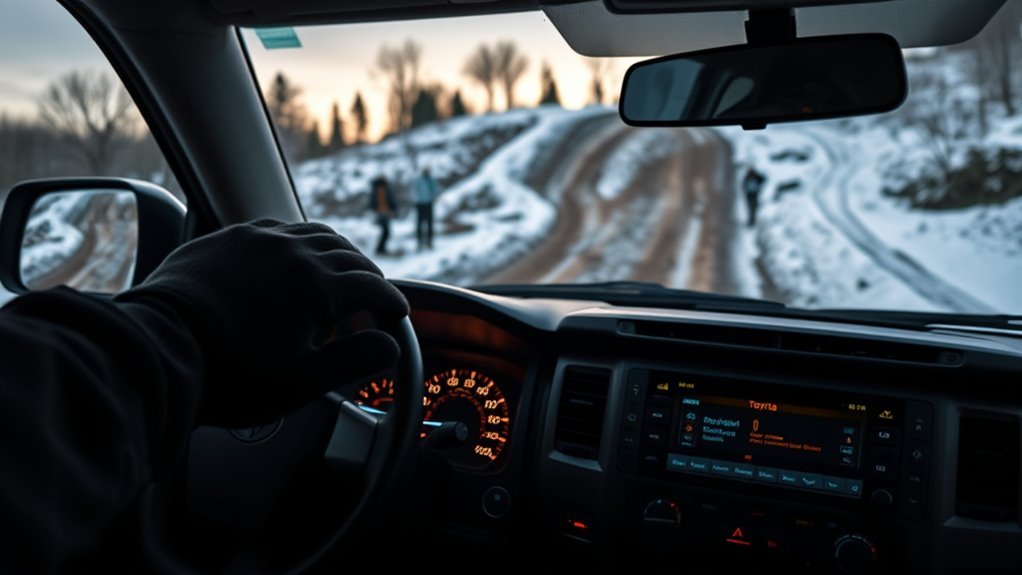
Lock the center differential only if your Toyota 4Runner is equipped with a lockable center differential and the surface is loose, slippery, uneven, or steep enough to let the tires slip. Keep it unlocked on dry pavement. On U.S.-market 2010–2024 models, Toyota identifies the Limited 4WD as the full-time 4WD trim with a locking center differential. For 2025–2026, the feature applies to Platinum and Limited models specifically equipped with full-time 4WD. Many other current 4Runners use part-time 4WD and may have a rear differential lock instead. This guide explains which system you have, when to lock it, and how to avoid binding and driveline windup.
Last updated: July 23, 2026 — revised to distinguish model years, trims, center locks, rear locks, and current Toyota guidance.
Key Takeaways
- First confirm that your 4Runner has a lockable center differential; not every year and trim does.
- Keep full-time 4WD unlocked on dry pavement and during normal paved-road driving.
- Lock the center differential for deep snow, mud, sand, loose gravel, ruts, rocks, or steep low-traction sections.
- Use low range when the obstacle requires slow speed, engine braking, and controlled wheel torque.
- Unlock when traction becomes consistent, and treat a persistent flashing indicator as a fault that needs diagnosis.
At a Glance
| Surface or Situation | Center Diff Setting | Why |
|---|---|---|
| Dry pavement or a paved parking lot | Unlocked | Allows the front and rear axles to rotate at different average speeds in turns. |
| Rain or normally wet pavement | Usually unlocked | The full-time system and stability controls can manage changing grip without driveline binding. |
| Light or packed snow on a paved road | Start unlocked | Use smooth inputs and appropriate tires; lock only when the manual permits it and traction between axles is repeatedly lost. |
| Deep snow, mud, sand, loose gravel, ruts, or rocks | Locked | Helps keep drive going to both the front and rear axles when one end loses grip. |
| Steep or slow technical terrain | Locked, with low range if needed | Low range adds control and torque multiplication at low speed. |
| Back on firm, high-grip ground | Unlock promptly | Reduces tire scrub, steering resistance, and drivetrain stress. |
Quick Answer: When to Lock the Center Diff on Your 4Runner
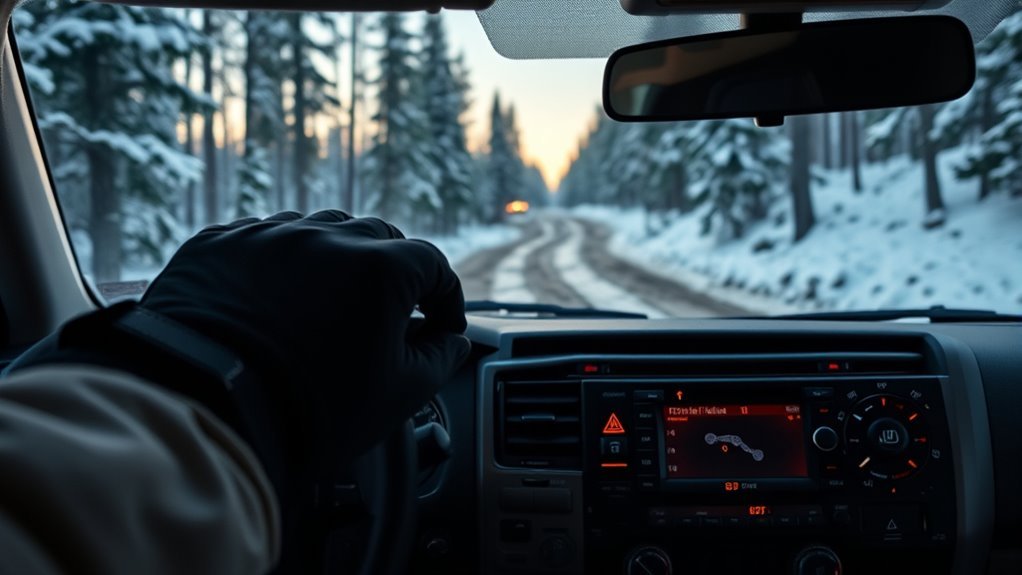
Lock the center differential when a properly equipped 4Runner is on a surface that allows tire slip and one axle may lose traction. Good examples include deep snow, mud, sand, loose gravel, ruts, rocks, and steep off-road climbs. The lock mechanically couples the front and rear driveline outputs, so a loss of grip at one axle is less likely to stop forward motion.
Leave the center differential unlocked on dry, hard pavement, normal paved turns, and most routine road driving. An unlocked full-time 4WD system lets the front and rear axles rotate at the different average speeds required during a turn. A locked system cannot absorb that difference on high-grip ground, which can cause tire scrub, heavy steering, hopping, and driveline windup.
Do not treat the center diff lock as a substitute for suitable tires or safe speed. It can improve forward traction, but it does not create more braking grip or cornering grip on ice. For slow technical obstacles, combine the center lock with low range only when your exact owner’s manual permits it.
Warning: If the truck binds, hops, scrubs its tires, or pushes wide in a turn, straighten the wheels, stop safely, and select the unlocked setting as your owner’s manual directs. Do not keep forcing tight turns on high-grip pavement.
Does Your 4Runner Have a Center Differential Lock?
Check the model year, trim, drivetrain, and selector labels before following any center-lock procedure. Toyota’s description of the 2024 4Runner identifies the Limited 4WD as the model with a Torsen limited-slip center differential and locking feature. Toyota’s 2026 4Runner information identifies full-time 4WD with a locking center differential on Platinum and on Limited models equipped with that drivetrain.
| 4Runner Version | Typical System | What This Means |
|---|---|---|
| 2010–2024 Limited 4WD | Full-time 4WD with a lockable Torsen center differential | This article applies; the selector commonly uses H4F, H4L, and L4L. |
| 2025–2026 Platinum and Limited models equipped with full-time 4WD | Full-time 4WD with an electronic locking center differential | This article applies, but use the exact procedure and limits in the current manual. |
| Other current 4WD trims | Often part-time 4WD; some trims have a locking rear differential | Do not assume a rear-lock button or a 2H/4H/4L selector is a center-diff control. |
| Earlier 4Runners | Varies by model year, engine, trim, and market | Use the exact owner’s manual and the labels on your vehicle before selecting a mode. |
A center differential lock couples the front and rear driveline outputs. A rear differential lock couples the left and right rear axle shafts. They solve different traction problems and are not interchangeable. See the site’s part-time vs full-time 4WD guide for the underlying system differences.
Checklist: Unlocked Full-Time 4WD vs Locked 4WD: Decide in 30 Seconds
Start with the surface and the symptom. Dry, firm, high-grip roads call for normal unlocked full-time 4WD. Loose, slippery, steep, or uneven ground may call for the center differential lock when one axle is likely to lose grip.
Use the center lock to manage front-to-rear traction loss, not merely because the road is wet. Tires, speed, and stability control still determine most of your braking and cornering grip.
Use this quick checklist:
- Confirm the equipment: Make sure the control is for the center differential, not the rear locker or a part-time 4WD selector.
- Check the surface: Stay unlocked on dry pavement. Consider the lock on mud, sand, deep snow, loose gravel, rocks, or ruts.
- Watch for axle-to-axle slip: Stay unlocked if the truck is moving predictably. Lock before a section where one end of the vehicle may lose grip.
- Check the grade and speed: Use locked high range for a low-traction section that does not need low gearing. Use locked low range for slow, steep, or technical terrain.
- Return to normal: Unlock before dry pavement, tight paved turns, or any surface where the tires cannot slip.
The safest default is unlocked full-time 4WD. Add the center lock only when the terrain creates a real front-to-rear traction problem.
[Products Worth Considering]

The VIOFO A229 Plus delivers sharp 2K front and rear recording with dual Sony STARVIS 2 sensors for improved night clarity, reduced noise, and better motion handling. HDR support helps preserve license plate detail and balanced exposure in challenging light, while voice control, quad-mode GPS, and fast 5GHz Wi-Fi make daily use simple. With multiple parking modes and a user-friendly interface, it is built to protect your vehicle on the road and while parked.

This metal replacement center console latch is designed to restore secure closing performance for a wide range of Toyota and Scion vehicles. Built as an upgraded metal part, it helps solve broken latch issues and provides a more durable alternative to the original component. It is compatible with many popular models and includes the needed screws and screwdriver for installation.

These X-BULL recovery traction tracks help drivers get unstuck from sand, snow, mud, or ice with a stable U-shaped elastic design and a wavy ramp that makes tire entry easier. Built from reinforced nylon, they are flexible, impact-resistant, and designed to perform in extreme temperatures while providing reliable emergency traction for a wide range of vehicles.
How to Engage and Disengage the Center Diff Lock Step by Step
There is no single engagement procedure for every 4Runner. Some earlier models use a separate center-diff lock button. Many full-time 4WD 4Runners use a three-position selector marked H4F, H4L, and L4L. Follow the speed limits, transmission position, and indicator instructions in the owner’s manual for your exact year and trim.
[Products Worth Considering]

The REDTIGER F9 dash cam captures road trips and daily driving in sharp front 4K and rear 1080P video, helping provide clear evidence in the event of an incident. Built with 5.8GHz WiFi, GPS tracking, wide-angle coverage, loop recording, G-sensor protection, and parking mode, it offers reliable all-around monitoring and easy smartphone access through the app.

This dual dash cam captures crisp 4K footage up front and 1080P video at the rear, helping preserve clear evidence of road signs, license plates, and lane markings. Built-in 5GHz Wi-Fi and app control make it easy to view, download, and share recordings from your phone, while night vision, loop recording, G-sensor protection, and parking mode add all-day driving security. A pre-installed 64GB card is included for immediate use, and the compact design keeps your windshield clear and unobstructed.

The ROVE R2-4K DUAL dash cam captures sharp dual-channel footage from both the front and rear of your vehicle, helping provide clear evidence on the road. Its Sony STARVIS 2 sensor, wide-angle lenses, built-in GPS, and fast dual-band WiFi deliver excellent image quality, easy smartphone access, and reliable driving data. A free microSD card, parking mode options, and included installation accessories make it a practical all-in-one setup for everyday driving and added security.
What H4F, H4L, and L4L Mean
- H4F: High-range full-time 4WD with the center differential unlocked. Use it for normal driving, including dry pavement.
- H4L: High-range 4WD with the center differential locked. Use it on loose or slippery surfaces when low gearing is not required.
- L4L: Low-range 4WD with the center differential locked. Use it for slow rocks, steep grades, deep mud or snow, difficult sand, and controlled descents.
Engage the appropriate locked mode this way:
- Read the control labels: Confirm that your vehicle has a center-diff lock and identify its normal unlocked mode.
- Reduce speed and straighten the wheels: Approach the loose or slippery section smoothly. Do not command the lock while the vehicle is making a tight turn or the wheels are spinning freely.
- Select locked high or locked low: Use the exact switch, button, or selector procedure in the owner’s manual. Low-range shifts commonly require a complete stop and Neutral.
- Wait for confirmation: Do not enter the obstacle until the indicator shows that the requested mode has fully engaged.
- Drive smoothly: Use steady throttle, gentle steering, and enough momentum to avoid digging in.
Disengage it this way:
- Select the normal unlocked full-time mode as soon as the surface becomes firm and consistent.
- Keep the wheels nearly straight and roll slowly if the indicator flashes while the mechanism releases.
- Do not force tight paved turns to “make it unlock.”
- If the light keeps flashing after the manual’s release procedure, or the truck remains bound, stop driving on high-grip pavement and have the system inspected.
| Step | Action | Verify |
|---|---|---|
| 1 | Confirm the system and normal mode | Center-lock control identified |
| 2 | Slow down and select H4L or L4L as applicable | Correct range requested |
| 3 | Wait before entering the obstacle | Indicator is steady, not flashing |
Use the center lock for traction, then return to the unlocked mode for smooth turning and normal road use. For low-range system differences, see Crawl Control vs 4LO.
How Driveline Windup, Understeer, and Damage Feel: And How to Avoid Them
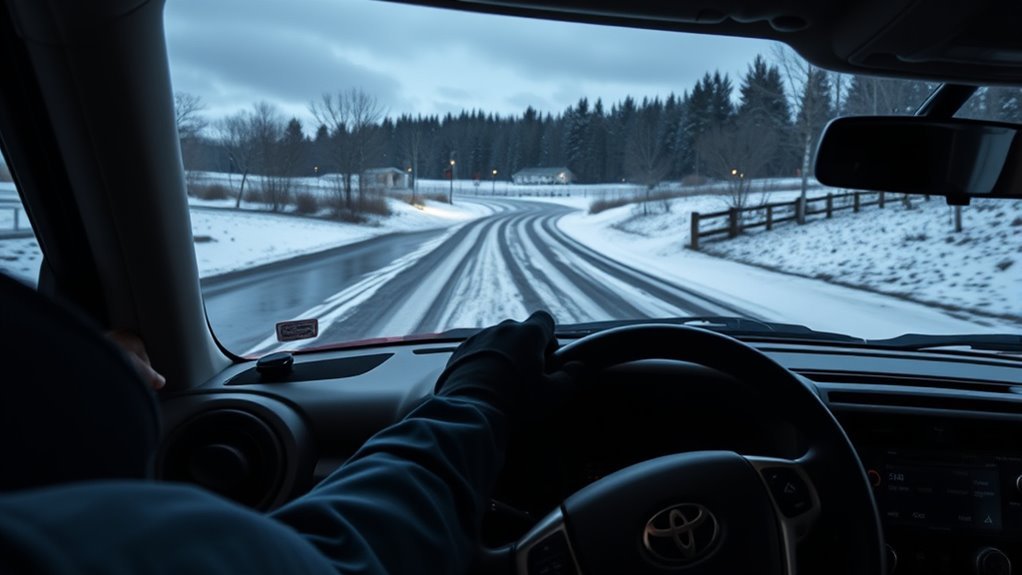
When the center differential is locked on a hard, high-traction surface, the front and rear driveline outputs cannot rotate at the different average speeds required in a turn. The stored torsional load is called driveline windup. You may feel tight steering, tire scrub, hopping, juddering, a heavy push through the wheel, or resistance when the vehicle tries to turn.
The steering symptom is often described as understeer: the 4Runner resists the requested turn and pushes wider than expected. Straighten the wheels, stop in a safe place, select the unlocked mode, and follow the manual’s release steps. If the selector indicates unlocked but the truck still binds, do not continue making tight turns on pavement.
Prevent windup by unlocking before dry pavement, concrete, plowed roads with strong grip, and tight paved parking maneuvers. Loose ground can let the tires slip enough to release the speed difference; high-grip pavement transfers that stress into the tires, driveshafts, transfer case, joints, and mounts.
Real Scenarios: Modes, Speeds, and Timing for Snow, Mud, and Rocks
Use the center diff lock before a low-traction obstacle, not after the truck has buried its tires. Early engagement can reduce unnecessary wheelspin, but the correct choice still depends on the surface, speed, tires, and exact 4WD system.
- Deep or unplowed snow: Lock before a drift, a slow icy climb, or a section where one axle repeatedly loses grip. Use low range only when you need slow control.
- Light or packed snow on pavement: Start in unlocked full-time 4WD. Keep speed down and use smooth steering, braking, and throttle. Lock only if your manual permits it and the truck cannot maintain front-to-rear traction.
- Glare ice: A center lock may help the truck move, but it does not shorten braking distance or create cornering grip. Avoid abrupt inputs and do not assume locked 4WD makes highway speed safe.
- Rain or wet pavement: Leave the center differential unlocked during normal road driving. Wet pavement alone is not a reason to create a rigid front-to-rear connection.
- Mud: Lock before ruts or soft ground. Hold steady throttle and avoid spinning the tires at high speed.
- Loose gravel: Use the lock for steep climbs, washouts, diagonal ruts, or long loose grades where one axle unloads. Unlock when the road becomes firm.
- Rocks: Lock before the obstacle and use low range for slow control. Crawl over the line instead of bouncing the drivetrain.
- Sand: Lock when soft sand causes repeated front-to-rear traction loss. Keep smooth momentum and avoid sudden throttle changes.
Tires remain the truck’s only contact with the road. The NHTSA winter driving guidance emphasizes tire condition, pressure, reduced speed, and preparation; NHTSA also notes that winter tires outperform all-season tires in deep snow. Use the drivetrain mode as one part of the traction plan, not the whole plan.
[Products Worth Considering]

The 70mai A810 Lite delivers ultra-clear front and rear recording with 4K front and 1080P rear capture, helping preserve important driving details for incidents, insurance claims, and everyday commutes. It combines HDR night vision, 4G LTE remote access, Wi-Fi 6 app control, GPS tracking, and 24-hour parking protection in a compact design built for reliable all-day use.
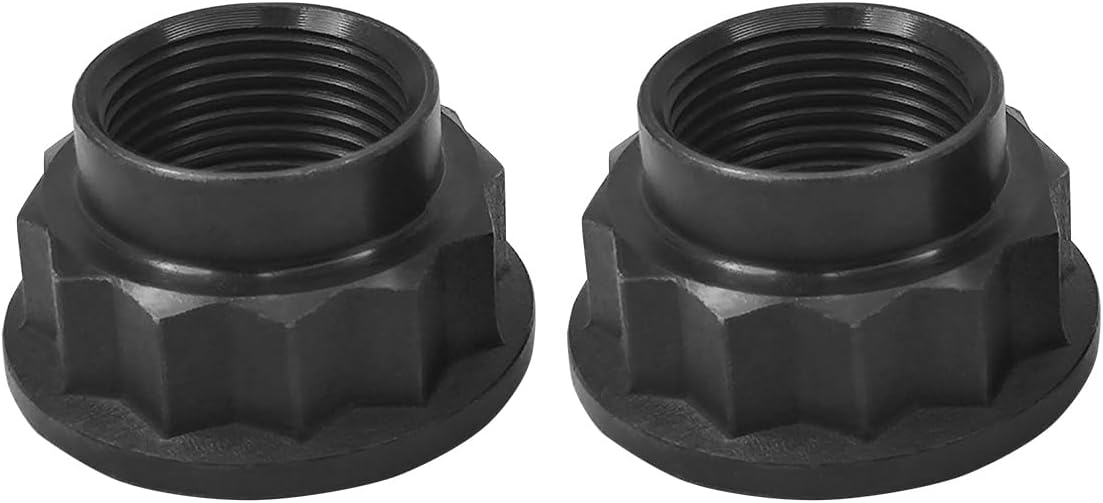
This pair of front axle shaft nuts is designed to secure CV joints and wheel bearings on compatible Toyota and Lexus front drive axles. Built from heat-treated carbon steel for durability and corrosion resistance, it helps maintain proper torque and reliable power transfer. It is a direct replacement for several factory part numbers and is recommended for paired replacement.

The Affver A4 dual dash cam captures your drive in detailed 4K front and 2.5K rear resolution with wide-angle coverage for reliable incident recording. Built-in 5G WiFi 6, GPS tracking, loop recording, G-sensor protection, and super night vision make it a dependable choice for daily commutes, rideshare driving, and parking security. A 3.59-inch IPS screen, included memory card, and easy installation add convenience right out of the box.
Common Mistakes to Avoid With the Center Diff Lock
The biggest mistake is assuming every 4Runner has the same system. A rear differential lock button, a part-time 4WD selector, and a full-time center differential lock do different jobs. Confirm the model year and trim before following any engagement steps.
Another mistake is locking simply because the road is wet or lightly snowy. Start with unlocked full-time 4WD on paved roads, then add the lock only for a real front-to-rear traction problem. The center lock helps the truck move; it does not improve braking or cancel the laws of traction.
Do not wait until the truck is deeply stuck if the upcoming terrain clearly calls for the lock. Engage before deep mud, a diagonal rut, or a loose climb. Then unlock before high-grip ground returns.
| System | What It Locks | Best Use |
|---|---|---|
| Center differential lock | Front driveline output to rear driveline output | When one axle may lose grip on loose, slippery, or uneven terrain |
| Rear differential lock | Left rear axle shaft to right rear axle shaft | When one rear wheel is spinning or lifted and the other has traction |
| Low range | Does not lock an axle by itself; changes transfer-case gearing | Slow climbs, descents, rocks, deep mud, extraction, and controlled crawling |
Don’t confuse the center differential lock with axle lockers. If the indicator behaves abnormally, use the site’s center diff lock light guide for symptom-based checks.
Frequently Asked Questions
Does Every 4Runner Have a Center Diff Lock?
No. Center-lock availability depends on model year, trim, drivetrain, and market. Toyota identifies the 2010–2024 Limited 4WD and current full-time 4WD Platinum or properly equipped Limited models as center-lock applications. Other trims may use part-time 4WD or a locking rear differential instead.
Is It Bad to Drive With the Center Diff Lock On?
It is harmful to keep the center diff locked on dry pavement or another high-grip surface because the front and rear driveline outputs need different average speeds during turns. Use the lock on surfaces that allow tire slip, then unlock when normal traction returns.
Should I Lock Center Diff in Snow?
Use the lock for deep or unplowed snow, a slow slippery climb, or repeated front-to-rear traction loss. Start with unlocked full-time 4WD on light or packed snow over pavement. The lock can help forward motion, but it does not improve braking or cornering grip.
Can You Turn With the Center Diff Locked?
You can turn on loose or slippery ground, but use smooth steering and avoid unnecessarily tight turns. Do not make tight turns on dry pavement. If the truck hops, scrubs its tires, or pushes wide, unlock the center differential.
Do You Need 4LO With the Center Diff Lock?
No. Locked high range can be appropriate for a loose or slippery section that does not require low gearing. Use 4LO or L4L for rocks, steep grades, deep mud or snow, difficult sand, extraction, or any section that needs slow control and stronger engine braking.
What Is the Difference Between a Center and Rear Diff Lock?
The center lock couples the front and rear driveline outputs. The rear lock couples the left and right rear axle shafts. A center lock helps when one axle loses grip; a rear lock helps when one rear wheel loses grip.
What If the Center Diff Lock Light Keeps Flashing?
A flashing light can mean the system is still engaging or disengaging. Keep the wheels nearly straight and follow the exact manual procedure. If it continues flashing, the requested mode does not confirm, or the truck remains bound, stop using the lock on high-grip surfaces and have the 4WD system inspected.
Can I Lock the Center Diff on Wet Pavement?
Do not lock it merely because pavement is wet. Use the normal unlocked full-time setting for routine rain driving. Consider a locked mode only when the surface is loose or slippery enough to allow tire slip and your owner’s manual permits that use.
Safety Disclaimer: This article gives general driving information only. 4Runner controls, shift limits, stability-system behavior, and lock availability vary by year, trim, drivetrain, and market. Follow the owner’s manual for your exact vehicle, and stop driving on high-grip pavement if the drivetrain binds or the indicator will not confirm the unlocked mode.
Conclusion
The rule is simple once you confirm the equipment: keep the 4Runner’s center differential unlocked for normal paved driving, and lock it only when loose, slippery, steep, or uneven terrain creates a real front-to-rear traction problem. Use locked high range when you need traction without low gearing, and use locked low range for slow technical work. Unlock before dry pavement, verify the indicator, and never mistake the center lock for a braking or cornering aid.
Sources
- Toyota: 2024 4Runner Rugged Capability — full-time 4WD and Torsen center-differential availability.
- Toyota: The 2026 4Runner — Engineered for Exploration — current part-time and full-time 4WD trim availability.
- Toyota Owners: 4Runner Manuals and Warranties — model-specific operating procedures and warnings.
- NHTSA: Winter Weather Driving Tips — tire, speed, and winter-road safety guidance.