
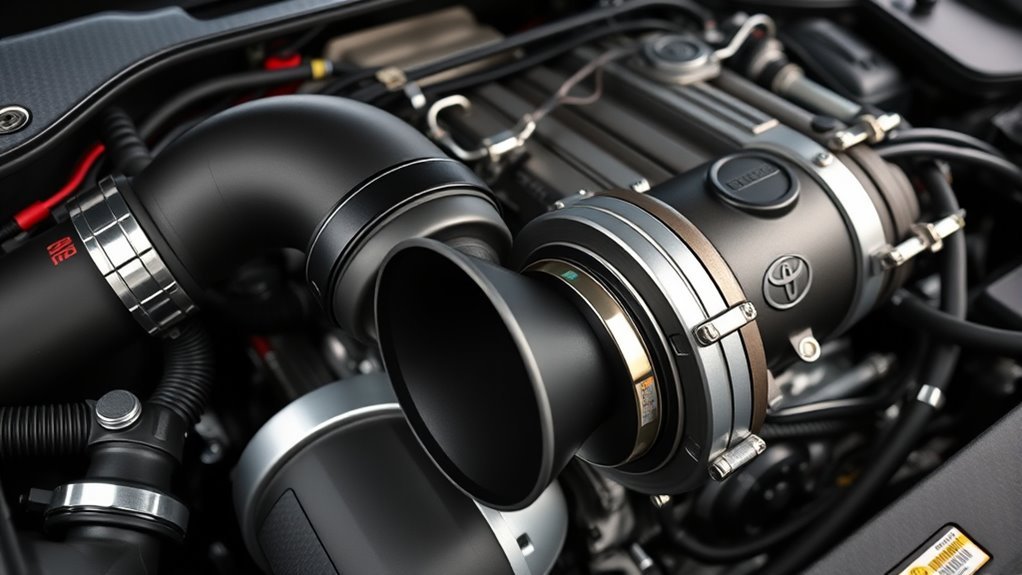
The Toyota Supra intake system on the MK5 GR Supra 3.0 (2020–2026) channels ambient air through an exterior inlet duct, airbox, and filtration medium, measures inlet temperature and pressure, and delivers laminar airflow to the BMW B58 twin-scroll turbocharger. The factory intake is engineered for strict particulate filtration, acoustic dampening, emissions compliance, and weather protection. Upgrading to an aftermarket intake primarily modifies induction sound, engine bay styling, and high-RPM flow restriction; however, on a stock ECU, power gains are minimal because the factory Bosch MG1 engine management targets preset engine torque rather than airflow volume. Eventuri’s documented 17–20 hp and 11–20 ft-lb gains were achieved on modified vehicles equipped with a high-flow downpipe and tuning calibration, not on a baseline stock car.
Last updated: July 31, 2026. This revision clarifies U.S. model-year scope, B58 ECU torque-target behavior, sensor architecture, emissions compliance, and installation procedures. Editorial attribution: AutoReviewNest Technical Editorial Team.
Quick Answer
For a stock, daily-driven MK5 Supra 3.0, the factory airbox provides optimal filtration, thermal insulation, and reliability. An aftermarket intake is recommended primarily if you want enhanced turbo spool and blow-off acoustics, upgraded engine bay aesthetics, or reduced inlet restriction on tuned setups producing elevated boost. When upgrading, prioritize fully sealed carbon or rotational-molded systems with dedicated cold-air feeds to avoid low-speed heat soak.
Key Takeaways
- Platform Focus: Covers U.S.-market 2020–2026 MK5 GR Supra 3.0 models powered by the 3.0L turbocharged inline-six B58 engine. (The 2.0L B48 and MK4 2JZ platforms utilize distinct intake geometries).
- ECU Management: The B58 Bosch MG1 DME operates on torque-targeting logic. Reducing intake restriction alone will not force more boost or significant power on a stock calibration.
- Thermal Management: Sealed airbox designs consistently outperform open-element filters during stop-and-go driving by shielding the intake charge from radiator and engine heat soak.
- Realistic Dyno Gains: Documented gains of 17–20 hp (such as Eventuri’s published data) require supporting modifications (tune, downpipe) that raise DME boost and airflow limits.
- Emissions & Compliance: Always verify CARB Executive Order (EO) status or EPA compliance documentation before installing on street-registered vehicles.
Choose by Goal
| Your Goal | Best Starting Point | What to Verify |
|---|---|---|
| Quiet daily reliability | Factory airbox with an OEM dry filter | Filter cleanliness, airbox latch integrity, and breather hose connection |
| More turbo spool & diverter sound | Resonator-delete intake tube with open or semi-sealed heat shield | Low-speed IAT rise in traffic, sensor fitment, and clamp tightness |
| Track durability & low IATs | Sealed composite/carbon airbox with dedicated ducting | IAT recovery delta, mounting bush security, and hood-closed thermal isolation |
| High-horsepower tuned build | High-flow intake paired with matched turbo inlet pipe and ECU calibration | Datalogged mass airflow, fuel trims, turbo inlet diameter match, and tune requirements |
Evidence standard: This technical overview relies on manufacturer-published engineering data, OEM service documentation, and platform engineering principles. Numeric horsepower figures cited for Eventuri represent manufacturer dyno tests on tuned platforms and are not presented as independent guarantees.
What the Supra Intake Does: Airflow, Filtration, and Temperature Control
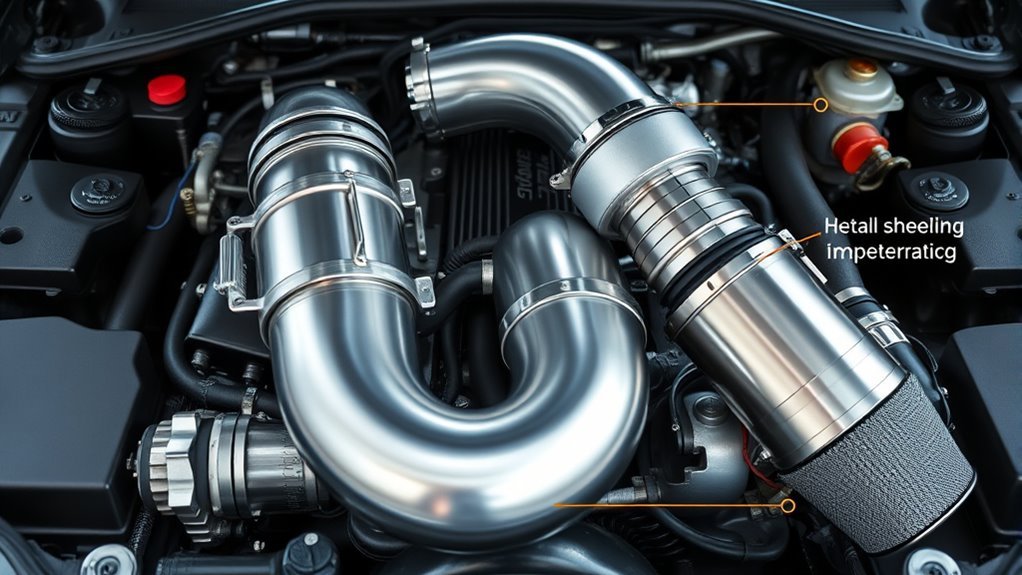
The MK5 Supra intake system routes ambient air through the front grille duct, into the airbox filter chamber, and through the turbocharger inlet pipe. The assembly must maintain an airtight seal, integrate the factory crankcase ventilation breather port, and house the intake air temperature/pressure sensor. According to official vehicle specifications on the Toyota GR Supra model page, the current U.S. vehicle utilizes a 3.0-liter twin-scroll turbocharged inline-six engine (B58).
Eventuri’s carbon intake system serves as an engineered example of a sealed aftermarket design. Their MK5 B58 product page outlines a dual-feed airbox design, reflective heat shielding, smooth internal transitions, a dry synthetic filter, and an integrated temperature sensor mount. These components function as a synchronized assembly designed to maximize flow volume while mitigating radiated heat from the exhaust side of the engine bay.
An intake upgrade cannot overcome improper ECU mapping, boost leaks, or cooling inefficiencies. On a factory vehicle, an intake primarily alters acoustic presence and transient throttle feel. On an upgraded vehicle running higher boost, reduced inlet restriction helps the turbocharger operate in a more efficient zone of its compressor map.
Stock vs Aftermarket Supra Intake: What Actually Changes?
The OEM Toyota/BMW intake balances acoustic dampening, strict emissions regulations, long-term filtration, water separation, and compact packaging. Aftermarket systems adjust these tradeoffs to prioritize sound volume, under-hood appearance, and lower restriction under heavy airflow demand.
| Intake Configuration | Primary Advantages | Key Tradeoffs |
|---|---|---|
| Factory OEM Airbox | Factory-engineered sealing, superior water deflection, quiet operation, and zero warranty or emissions concerns | Acoustically muffled; increased pressure drop at elevated boost levels (>22 psi) |
| Sealed Aftermarket (e.g., Carbon/Roto-mold) | Maintains low intake air temperatures; smooth inlet geometry; enhanced spool sound without heat soak | Higher cost; requires meticulous coupler alignment during installation |
| Open-Element Filter with Shield | Maximum induction acoustics and blow-off flutter; simple layout and lower entry price | Prone to heat soak during idle and staging; higher IAT recovery time at low vehicle speeds |
For daily street driving, evaluate intake upgrades based on datalogged thermal stability rather than peak sound alone. A sealed cold-air system remains the gold standard for consistent performance across varied ambient conditions.
[Products Worth Considering]
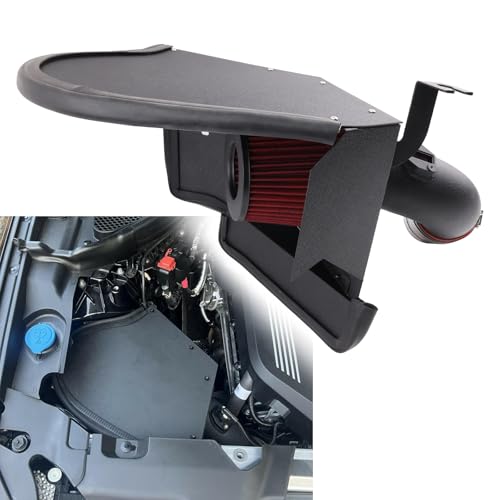
【Compatibility & Easy Installation】This cold air intake kit compatible with 2018-2021 BMW X3/X4 M40i B58 3.0T. Please confirm fitment before purchase. Includes detailed, step-by-step instructions & all necessary parts, installs in less than 60 minutes with basic tools. No cutting or drilling required

【Compatibility】This cold air intake kit compatible with the following BMW models with B58 3.0T engine: 2022-2024 M240i (G42); 2019-2024 M340i (G20/G21); 2021-2024 M440i (G22/G23). Not compatible with the 2025 and 2025+ B58 Gen3 models. Please confirm fitment before purchase

Premium Aluminum Construction: The f32 cold air intake crafted from high performance aluminum, strong and durable. The sleek black finish adds a touch of sophistication to your vehicle's engine compartment.
What’s Inside a Supra Intake: Airbox, Tube, Filter, Sensors, and Connections
The MK5 Supra intake is a complete calibrated circuit. Understanding its core components ensures proper diagnosis and installation.
Filter, Airbox, and Turbo Inlet Tube
The filter element captures particulate matter before it can erode the high-speed turbocharger compressor blades. The airbox directs ambient airflow into the filter chamber while preventing under-hood heat intrusion. From there, the intake tube routes clean air into the turbo inlet. The factory intake pipe includes internal acoustic baffles to silence turbo whine, which most aftermarket intake pipes replace with a smooth, continuous-diameter tube.
Filter media selection dictates maintenance protocol. Dry synthetic filters (such as those used by Eventuri) should never be treated with oil. For oiled cotton-gauze filters, clean and oil strictly according to manufacturer specifications; over-oiling can lead to oil mist coating the compressor housing and pooling in lower intercooler piping.
Carbon Fiber Construction: Form vs. Function
Carbon fiber offers high structural rigidity, low weight, and sleek engine bay aesthetics, but material choice alone does not automatically lower intake air temperatures. Real-world thermal reduction depends entirely on airbox sealing, duct alignment, internal volume, and heat shield insulation.
Eventuri integrates a secondary feed duct drawing air from the wheel-arch/headlight area, backed by reflective gold shielding and an internal splash baffle. These aerodynamic and thermal design elements drive real-world performance, whereas a cosmetic carbon weave without proper ducting provides no thermal advantage.
| Engineering Feature | Functional Purpose | Inspection Method |
|---|---|---|
| Hermetic Airbox Seal | Prevents hot radiator and engine bay air from being drawn into the turbo | Check rubber perimeter seals and duct engagement with the front radiator support |
| Dry Synthetic Filter Media | High dust-holding capacity without risk of oil migration to downstream components | Visual check for pleat collapse, debris accumulation, or moisture damage |
| Smooth Tapered Inlet Tube | Reduces boundary-layer turbulence and pressure drop leading into the turbo compressor | Inspect interior tube surface and silicone coupler step transitions |
| Secondary Feed & Splash Guard | Supplements airflow volume while preventing standing water ingestion | Verify clearance in wheel arch and confirm drain hole / baffle positioning |
Sensors, Breather Connections, and Platform Clarifications
A common misconception among owners familiar with older Toyota systems (such as MK4 Supra ACIS or TVIS variable runner manifolds) is that the intake contains variable flap actuators. The MK5 GR Supra B58 intake is strictly a turbocharger induction system without internal butterfly valves or runner switches.
Platform Note: Intake components for the 3.0L B58 inline-six are not interchangeable with the 2.0L B48 four-cylinder or MK4 2JZ engines. Always verify chassis-specific part numbers (A90/A91 3.0).
On the B58, the intake tube houses an intake air temperature/pressure sensor and a push-connect crankcase breather line. Upgraded intake tubes must feature precision CNC-machined or injection-molded sensor bosses. Installing the sensor with incorrect screws or damaging the rubber O-ring can trigger unmetered false pressure readings or boost-control faults.
Before You Buy a Supra Intake: Fitment, Goals, and Legal Checks
Before purchasing, confirm the vehicle’s build year, engine model, and intended use case. Mid-cycle updates on the B58 (such as the transition from 2-port to 6-port exhaust cylinder heads between 2020 and 2021) did not alter the main airbox mounting geometry, but aftermarket turbo inlet compatibility can vary between stock and upgraded turbochargers.
- Platform Confirmation: Verify fitment specifically for the 3.0L B58 engine rather than universal A90/A91 designations.
- Turbo Inlet Sizing: Confirm whether the intake tube is sized for the stock turbo inlet diameter or requires an enlarged aftermarket inlet flange.
- Factory Sensor Retention: Ensure the kit provides a dedicated mounting flange for the OEM intake temperature/pressure sensor.
- ECU Calibration Requirements: Verify whether the manufacturer guarantees operation without fueling error codes on a stock calibration.
- Emissions Certification: Check for a valid CARB Executive Order (EO) number if operating in California or CARB-compliant states.
- Reversibility: Retain all factory airbox components, brackets, and fasteners in case warranty diagnostics require returning the car to stock.
[Products Worth Considering]

【Compatibility & Easy Installation】This cold air intake kit compatible with 2019-2021 BMW G20 320i 330i B48 2.0T. Please confirm fitment before purchase. Includes detailed, step-by-step instructions & all necessary parts, installs in less than 60 minutes with basic tools. No cutting or drilling required

Engineered For Power – Aluminum construction maximizes airflow to boost horsepower (+8-12hp dyno-tested) & torque for BMW G20 B48 320i/330i

Fitment: For 2019+ M340i G20 G21; for 2022+ M240i G42; for 2021+ M440i G22 G23; Check Vehicle Make, Model, and Generation/Chassis Code; Model Year and Production Date before purchase.
Why Does Intake-Air Temperature Matter on the B58?
Intake Air Temperature (IAT) directly dictates air density. When the turbocharger compresses air, its temperature rises substantially based on the pressure ratio. The B58 uses an integrated water-to-air charge cooler built directly into the intake manifold. While this liquid charge-cooler is highly effective, supplying it with cooler inlet air reduces the thermal load on the cooling system, helping keep ignition timing advanced.
Heat Soak and Datalogging Realities
During extended idling or stop-and-go traffic, the engine compartment experiences severe heat soak. An open-element filter draws in hot under-hood air (often exceeding 130°F–150°F / 55°C–65°C), leading to elevated pre-compressor temperatures. Once moving, a properly sealed system with forward-facing ducts rapidly drops IATs back toward ambient.
- Always compare intake temperature deltas against ambient temperature (IAT minus Ambient).
- Evaluate heat recovery times after 3 minutes of idle followed by a steady 45 mph cruise.
- Keep the hood fully latched during datalogging; testing with an open hood does not reflect actual engine bay airflow dynamics.
Restriction, Compressor Efficiency, and ECU Behavior
Reducing inlet restriction lowers the pressure drop across the filter, allowing the compressor wheel to reach the target mass airflow with slightly less shaft work. However, because the Bosch MG1 ECU operates on load targets, the engine will not automatically deliver higher boost pressure on a factory tune. On custom-tuned vehicles targeting higher boost (20+ psi), reduced inlet restriction directly improves top-end efficiency and reduces turbo stress.
Cooling and Supporting Mods That Affect Intake Results
An intake system functions within an integrated powertrain thermal system. Supporting hardware and clean cooling circuits are vital for achieving reliable power gains.
Reliable airflow testing requires changing one component at a time, testing with the hood closed, and logging repeated pulls under matching thermal conditions.
Before adding performance hardware, confirm the auxiliary cooling circuits are operating correctly. Consult our guide on how to check Toyota Supra coolant levels for charge-cooler maintenance, and explore the Supra exhaust system layout guide to understand how downpipe modifications complement intake airflow.
- Check for boost and vacuum leaks before fine-tuning engine parameters.
- Regularly inspect the low-temperature radiator (heat exchanger) behind the front bumper for bent fins or road debris.
- Datalog ignition timing, intake manifold temperature, boost target vs. actual, and wastegate duty cycle.
How Does a Carbon-Fiber Intake Change Supra Airflow and Temperature?
A carbon-fiber intake modifies performance through optimized interior geometry, smooth transitions, and thermal shielding. The carbon construction itself serves primarily as a lightweight, rigid, and aesthetically pleasing enclosure.
When reviewing technical specifications, note that internal duct dimensions must match your turbo inlet pipe. In Eventuri’s technical literature, dimensions are referenced across various points of the taper (from 111 mm down to 109 mm). Always confirm specific coupler and flange sizing directly with the manufacturer prior to ordering matching inlet components.
Pro Tip: Acoustic volume is not a measurement of horsepower. Prioritize sealed ducting, filter surface area, and verified datalogs over loudness when selecting an intake for track or street performance.
How Much Power Can a Supra Intake Add?
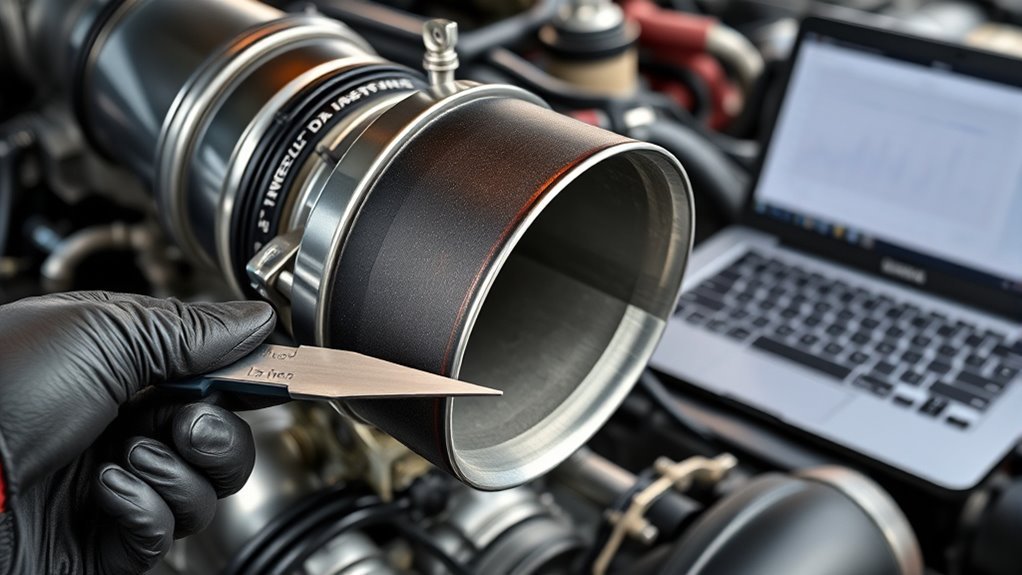
Manufacturer claims such as Eventuri’s listed 17–20 hp and 11–20 ft-lb gains were recorded on modified vehicles equipped with upgraded downpipes and ECU tuning calibrations. In these setups, elevated boost targets demand airflow levels that begin to exceed the flow capacity of the stock paper filter and airbox inlet.
On a 100% factory-stock MK5 Supra, expect power gains to be modest (typically 3–7 hp), with the primary noticeable changes being crisp throttle response and prominent turbo induction sounds. True dyno validation requires identical ambient temperatures, hood-closed conditions, matching dyno smoothing factors, and multiple consecutive runs to rule out heat soak variables.
How to Test Supra Intake Gains Without Biased Data
To accurately assess intake performance on your MK5 Supra, follow a controlled testing protocol:
- Standardize Test Conditions: Use the same fuel grade, ambient temperature window, tire pressures, gear (typically 5th gear for 1:1 ratio), and dyno cell airflow fan positioning.
- Log Critical OBD Channels: Record ambient temperature, pre-throttle IAT, manifold charge temperature, boost target, actual boost, ignition timing across all 6 cylinders, and short/long-term fuel trims.
- Measure Thermal Soak Recovery: Perform a 3-minute hot idle test followed by a 0–60 mph acceleration run to record how quickly IATs return to baseline.
- Inspect Mechanical Seals: Prior to testing, verify clamp torque, sensor O-ring seating, and breather line locking tabs.
- Evaluate Multi-Run Averages: Compare the median results of 3–5 consecutive pulls rather than cherry-picking single highest peak numbers.
Toyota Supra Intake Installation: Tools, Time, and Common Pitfalls
At a Glance
| Time Required | 45 to 90 minutes for standard DIY installation. |
| Difficulty Level | Intermediate DIY. Requires careful handling of plastic sensor clips, spring clips, and carbon surfaces. |
| Required Tools | 10mm socket/ratchet, Torx drivers (T20/T25), flat-head screwdriver or hose-clamp driver, pick tool for spring clips. |
| Hardware Rule | Always use kit-supplied sensor screws. Do not reuse factory coarse-thread plastic screws in threaded brass inserts. |
Work on a completely cool engine to avoid burning hands on coolant lines or the turbocharger housing. Protect finished carbon surfaces with microfiber towels during installation to avoid scratches.
MK5 B58 Intake Step-by-Step Installation Checkpoints
The following sequence synthesizes official installation guidelines (such as Eventuri’s technical documentation) for the B58 platform:
- Sensor Disconnection: Disconnect the wiring harness connector from the intake temperature/pressure sensor on the factory inlet tube.
- Airbox Removal: Loosen the factory hose clamp at the inlet tube, release the front intake duct clip, and pull the factory airbox vertically out of its rubber chassis grommets.
- Turbo Inlet Tube Removal: Carefully disconnect the crankcase breather line push-connector. Release the metal spring clip securing the inlet pipe to the turbocharger inlet and withdraw the pipe.
- Flange and O-Ring Transfer: Transfer the factory internal O-ring and metal retaining clip onto the new aftermarket turbo inlet adapter flange in the exact orientation specified.
- Sensor Installation: Transfer the sensor to the new intake tube using the supplied machine-thread screws. Do not reuse OEM plastic-thread screws.
- Assembly & Duct Alignment: Seat the lower airbox housing and secondary intake scoop into the factory chassis rubber mounts. Ensure the main airbox inlet fully engages the OEM front radiator duct.
- Coupler Tightening: Connect silicone couplers and secure hose clamps. Tighten until snug; do not over-torque clamps on carbon fiber tubes to prevent cracking.
- Reconnection & Final Inspection: Reconnect the breather hose locking collar and plug in the sensor harness. Verify at least 15mm clearance around engine braces, coolant lines, and hood liners.
- Post-Install Test: Start the vehicle and verify smooth idle. Scan for fault codes and re-torque clamps after one full engine heat cycle.
Installation Warning: Do not operate the vehicle if the intake tube contacts chassis braces or coolant hoses. Engine movement under load can wear through lines or damage carbon tubes.
Post-Install Diagnostic Matrix
| Observed Symptom | Probable Root Cause | Actionable Corrective Step |
|---|---|---|
| Rough Idle or Stumbling | Unmetered air leak, loose coupler, or disconnected crankcase breather line | Inspect all silicone couplers, clamp torques, and ensure the breather quick-connect is clicked in |
| Check Engine Light (CEL) | Intake sensor plug unseated, damaged O-ring, or manifold pressure plausibility fault | Scan OBD-II codes; inspect sensor connector pins and verify the sensor O-ring is undamaged |
| Rattling or Knocking Noise | Airbox loose in rubber chassis grommets or tube contacting strut bar/chassis | Check that lower mounting pins are fully engaged in factory rubber grommets; adjust tube rotation |
| High IATs / Heat Soak | Front air duct misaligned, open airbox gaps, or missing thermal heat shield | Realign airbox mouth with factory front ducting and ensure perimeter seals sit flush against the hood |
Supra Intake Maintenance: Filter, Seals, and Inspection Schedule
Aftermarket performance intake systems require routine maintenance to ensure filtration efficiency and prevent unmetered leaks.
- Every Oil Service (5,000–7,500 miles): Inspect filter pleats for road debris, verify silicone coupler clamp torque, and confirm the breather line remains securely clipped.
- Post-Track Day Inspection: Check mounting grommets for thermal degradation and inspect clearance around the turbocharger inlet.
- Severe Weather Check: After driving through heavy standing water, inspect the lower airbox and secondary ducting for water ingress.
- Filter Cleaning Protocol: For dry synthetic filters, blow out dust from the inside out using low-pressure compressed air (<30 psi). For washable dry filters, rinse with warm water and let air dry completely for 24 hours. Never apply filter oil to dry media.
Legal and Emissions: Toyota Supra Intake Compliance
Street legality of aftermarket intake systems in the United States is governed by state and federal emissions regulations. In California and states adhering to Section 177 of the Clean Air Act, aftermarket air induction systems modifying emissions equipment or sensor locations require a California Air Resources Board (CARB) Executive Order (EO) exemption. Verify EO coverage using the official CARB Aftermarket Parts Database.
At the federal level, the Environmental Protection Agency (EPA) enforces anti-tampering provisions under the Clean Air Act. The EPA Tampering Policy mandates that aftermarket components maintain a reasonable basis that emissions are not adversely affected. Additionally, EPA recognition of the SEMA Certified Emissions (SC-E) program provides an established testing protocol for manufacturer emissions compliance. Always confirm that the specific part number purchased includes valid documentation for your model year.
Can an Aftermarket Intake Void the Supra Factory Warranty?
Under the federal Magnuson-Moss Warranty Act, as outlined in FTC Warranty Guidance, a dealer or manufacturer cannot automatically void your entire vehicle warranty simply because an aftermarket part is installed. However, if an aftermarket intake causes direct mechanical failure—such as engine damage from ingesting water, dust bypass, or a lean condition—warranty claims for that specific repair can be legally denied. Retaining factory components allows for easy reversibility if dealership diagnostics are required.
Choose the Right Intake for Daily, Track, or Show Use
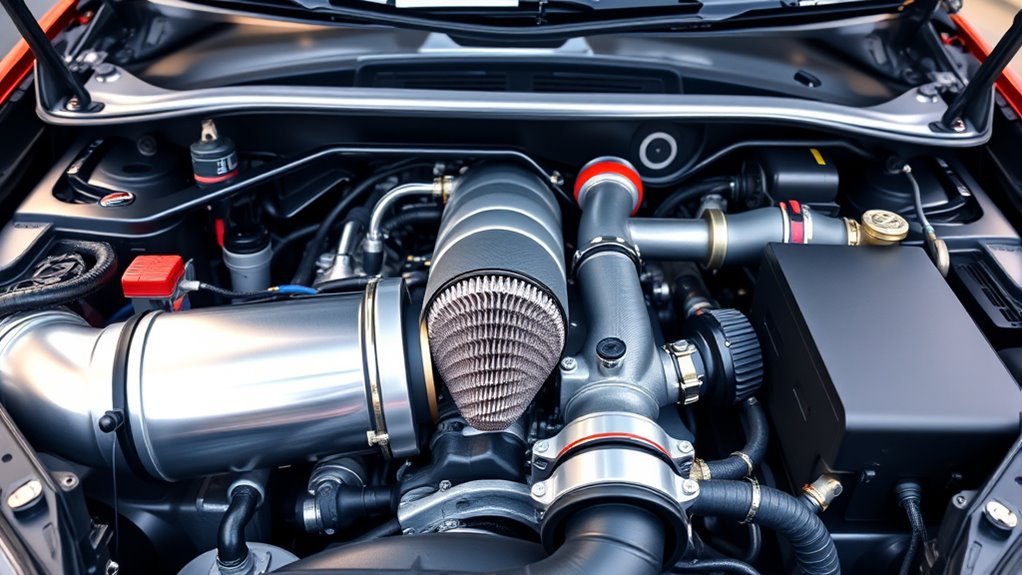
Select your intake hardware based on how your GR Supra is driven, your performance targets, and regional inspection requirements.
| Primary Use Case | Recommended Intake Architecture | Key Trait to Avoid |
|---|---|---|
| Daily Commuter / Street | Factory airbox with dry drop-in filter, or fully sealed CARB-compliant intake | Unshielded open filters prone to traffic heat soak and uncertified emissions status |
| Track Day / AutoX | Sealed carbon/composite airbox with dedicated forward ducts and heat reflective shielding | Thin unshielded aluminum intake pipes that conduct radiated engine bay heat |
| Acoustic & Engine Bay Aesthetics | High-gloss carbon fiber intake with smooth resonator-delete inlet tube | Low-grade composite kits with poor sensor flange tolerances or loose brackets |
| High-Boost Tuned Build | High-flow intake paired with an enlarged turbo inlet pipe and custom ECU tune | Retaining restrictive factory intake necking when pushing >500 wheel horsepower |
[Products Worth Considering]
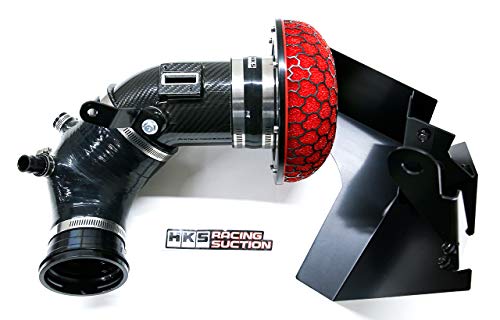
HKS Dry Carbon Racing Suction Kit with Pipe Compatible with 2020 Toyota Gr Supra 70028-AT001
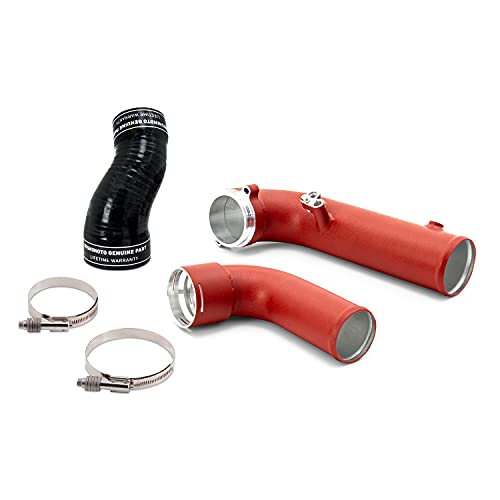
Direct Fit for 2020+ Toyota GR Supra w/B58 engine
Frequently Asked Questions
How does the MK5 Supra intake system work?
The MK5 Supra intake channels outside air through front ducting into a sealed airbox, filters particulate matter, monitors air temperature and pressure via an integrated sensor, and delivers laminar airflow through a smooth inlet tube to the turbocharger compressor.
Does the factory stock MK5 Supra intake restrict horsepower?
On a factory-calibrated 3.0L B58 engine, the stock airbox is not a significant power bottleneck. Because the Bosch ECU operates on torque-target programming, airflow gains only translate into substantial horsepower when paired with an ECU calibration and supporting exhaust hardware.
Do cold-air intakes add noticeable power to a Supra?
On stock cars, gains typically range from 3–7 hp, mostly in throttle response and induction sound. On tuned cars running higher boost, engineered systems like Eventuri document gains of 17–20 hp by eliminating inlet restriction at elevated mass airflow levels.
Is a sealed airbox better than an open filter on the B58?
Yes, for performance consistency. Sealed airboxes draw cold ambient air from exterior ducts and shield against engine bay heat soak, whereas open filters ingest hot under-hood air during idle and low-speed driving.
Will an aftermarket intake require a custom ECU tune?
Most engineered bolt-on intake kits retain factory sensor housing dimensions and do not require custom tuning. However, to extract the full power potential of increased airflow, an ECU calibration is recommended.
Why does a Check Engine Light appear after intake installation?
Common triggers include an unseated intake temperature sensor connector, an air leak at the silicone couplers, an unclipped crankcase breather line, or an improperly seated sensor O-ring.
Are aftermarket Supra intakes legal in California?
An aftermarket intake is legal for street use in California only if it has received a California Air Resources Board (CARB) Executive Order (EO) exemption matching the specific model year and engine.
Can an aftermarket intake void the Supra warranty?
An intake does not void the entire vehicle warranty under the Magnuson-Moss Warranty Act. A dealer can only deny warranty claims if the aftermarket part directly caused the specific mechanical failure.
How often should you clean or service a Supra intake filter?
Inspect the filter every 5,000 to 7,500 miles. Dry synthetic filters should be blown clean with compressed air or washed per manufacturer instructions, while oiled filters should be cleaned and lightly re-oiled every 15,000–20,000 miles.
Conclusion
The MK5 GR Supra intake system is a balanced thermal and airflow assembly. For a daily-driven stock Supra, the OEM airbox provides unmatched filtration and quiet reliability. Upgrading to a premium sealed carbon or rotational-molded aftermarket intake is an excellent modification for enthusiasts seeking heightened turbo acoustics, refined engine aesthetics, and optimized airflow on tuned setups. By selecting a system with proven ducting, maintaining strict filter service, and ensuring compliance with local emissions regulations, you can enhance your B58’s induction performance without compromising long-term reliability.
Sources
- Eventuri Toyota Supra MK5 B58 Intake — manufacturer specifications for sealed dual-feed airbox architecture, dry filter construction, thermal shielding, and dyno test procedures on tuned vehicles.
- Eventuri A90 Supra Intake Installation Instructions — manufacturer technical manual detailing sensor hardware, O-ring transfer, breather line routing, and clamp torque tolerances.
- Toyota 2026 GR Supra Official Model Page — official technical specifications for the U.S.-market 3.0-liter turbocharged inline-six powertrain.
- California Air Resources Board: Aftermarket, Performance, and Add-On Parts — official guidelines on Executive Order exemptions and emissions compliance.
- U.S. EPA Vehicle and Engine Tampering Policy — federal enforcement provisions regarding emissions control systems and reasonable basis criteria.
- Federal Trade Commission Warranty Guidance — consumer protection enforcement standards under the Magnuson-Moss Warranty Act.

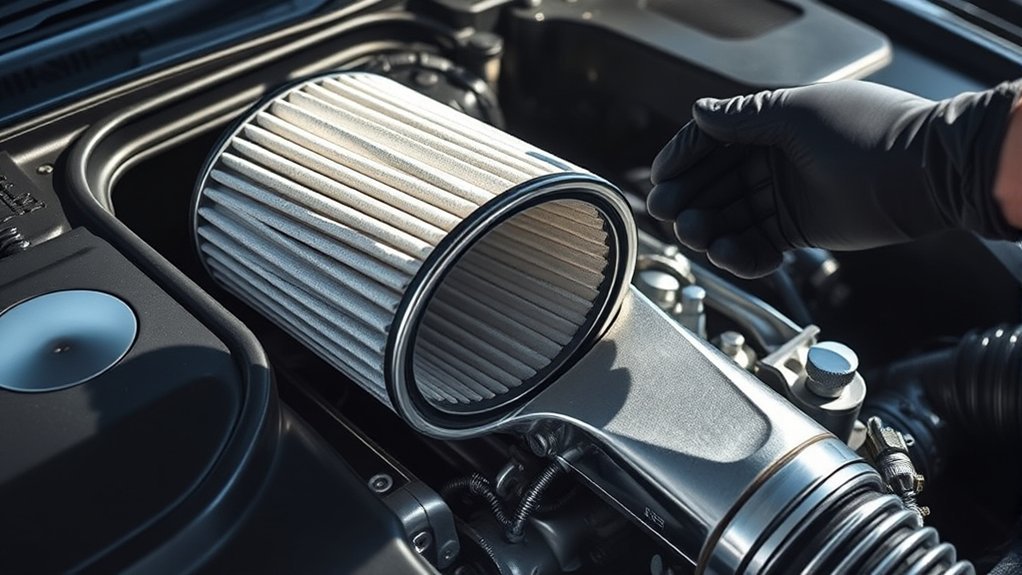
[…] related airflow and cooling context, see the Supra intake-system guide, the Supra oil-cooling guide, and the 2JZ-GTE engine […]