Last updated: August 31, 2026
Editorial basis: This is a research-based technical guide built from Toyota, BMW, MIT, Garrett, and documented aftermarket test data. It does not claim hands-on dyno testing by our team.
A Supra intercooler cools compressed turbo air before it enters the engine. Factory turbo A70 and A80 Supras use direct air-to-air charge cooling, while the 2020–2026 U.S. GR Supra 3.0 uses an indirect air-to-coolant charge-air cooler integrated into the intake system. In the B58 layout, coolant absorbs heat near the engine and carries it to a front low-temperature heat exchanger.
Both layouts increase charge-air density, improve knock margin, and help the engine maintain more consistent power as boost and heat rise. If your Supra loses power after repeated pulls, shows low boost, or develops a charge-cooling fault, first separate heat soak from an air leak or coolant-circuit problem before buying parts. This guide shows you how.
Quick Answer
A Supra intercooler removes heat added when the turbocharger compresses intake air. Cooler charge air is denser and less prone to knock. On a B58-powered GR Supra, the actual charge-air cooler is integrated into the intake system; the visible front heat exchanger cools the liquid circulating through that cooler.
Key Takeaways
- Turbochargers heat air as they compress it, and the intercooler removes part of that heat before combustion.
- Cooler charge air improves density and gives the ECU more margin to control ignition timing and boost.
- Traditional turbo Supras commonly use air-to-air cooling, while the B58 GR Supra uses an indirect coolant-based system.
- A larger cooler is not automatically better; thermal capacity, pressure drop, flow distribution, fitment, coolant circulation, and tuning all matter.
- Diagnose with codes, inspection, pressure testing, coolant checks, and repeatable data logs before replacing parts.
At a Glance
| Cooling Layout | Typical Supra Application | How Heat Leaves the Charge Air | Common Upgrade Focus |
|---|---|---|---|
| Direct air-to-air | Factory turbo A70/A80 models and many custom turbo builds | Compressed air passes through a core exposed to outside airflow | Core efficiency, end tanks, ducting, piping route, couplers, and pressure drop |
| Indirect air-to-coolant | 2020–2026 U.S. GR Supra 3.0 with the B58 engine | Coolant absorbs heat in the intake-side charge-air cooler and releases it through a front low-temperature heat exchanger | Charge-air cooler manifold, heat exchanger, coolant pump, hoses, circuit capacity, and bleeding |
Fitment note: Markets, engines, and modified cars can differ. Confirm the model year, engine code, VIN, and existing plumbing before ordering any intercooler or heat-exchanger part.
What Does a Supra Intercooler Do?
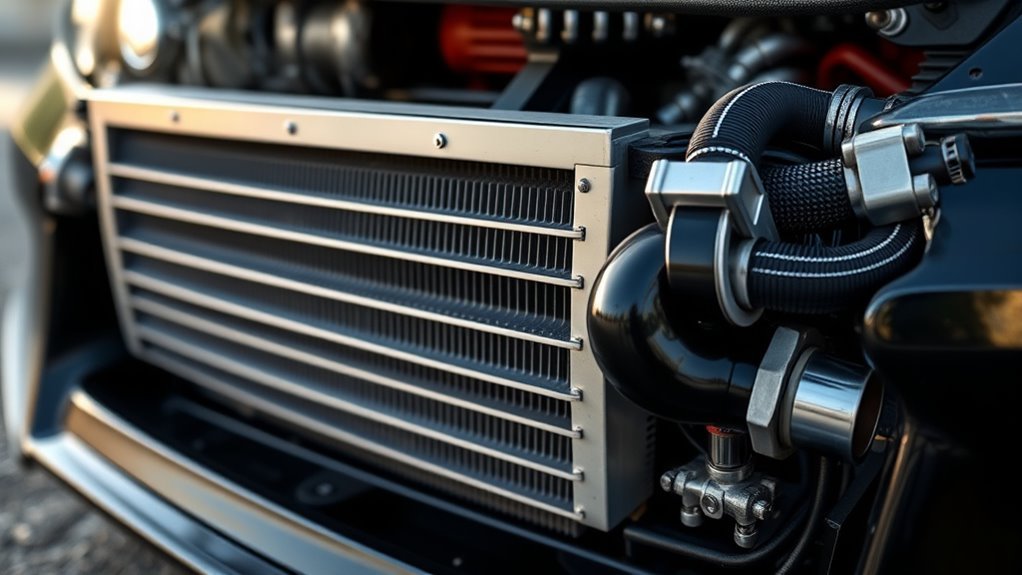
Think of the intercooler as the turbo system’s charge-air heat exchanger. A turbocharger compresses intake air so the engine can burn more oxygen and fuel, but compression also raises the air temperature. As charge temperature rises, density falls and the engine becomes more prone to knock.
The intercooler transfers heat out of the compressed air before it reaches the cylinders. Cooling raises the oxygen content per unit of volume and helps the engine maintain more stable combustion during repeated acceleration, track driving, hot weather, or higher-than-stock boost. MIT’s turbocharging material identifies increased charge density and knock suppression as two core benefits of intercooling.[9]
For the 2026 U.S. model year, the Toyota GR Supra uses a 3.0-liter twin-scroll single-turbo inline-six.[1] Its B58-family charge-air system uses indirect coolant-based cooling instead of relying on a conventional front-mounted air-to-air intercooler alone.[4][5]
Why Does a Turbo Supra Need an Intercooler?
A turbo Supra needs charge-air cooling because intake temperature affects air density, knock margin, boost control, and repeatability. Without adequate cooling, the turbo can send hotter, less dense air into the engine. The ECU may then reduce ignition timing or boost to protect the engine, causing power to fall as heat builds.
How Does Cooler Air Reduce Knock?
Engine knock occurs when part of the unburned mixture ahead of the normal flame front auto-ignites after the spark event. The resulting pressure waves can reduce performance and, when severe or repeated, damage engine parts.
Lower charge-air temperature reduces the mixture’s tendency to auto-ignite. This helps the ECU preserve safer ignition timing and boost control. An intercooler does not make an unsafe tune safe, but it gives the engine more thermal margin.
- Lowers charge-air temperature before combustion
- Helps reduce knock tendency under boost
- Supports more consistent ignition timing
- Reduces the need for heat-related timing or boost intervention
- Helps maintain repeatable power during back-to-back acceleration
Warning: Do not use an intercooler upgrade as a substitute for proper tuning, correct fuel octane, healthy engine hardware, or adequate fueling. Higher boost without a safe calibration can still damage a Supra engine.
How Does Cooling Increase Air Density?
Cooling compressed air increases its density. Denser air carries more oxygen in the same intake volume, allowing the engine to produce more torque when the ECU supplies the correct fuel and ignition timing.
The intercooler does not create power by itself. It reduces a thermal limitation. The greatest benefit usually appears when the original system is heat-soaked, undersized for the airflow level, or causing the ECU to reduce timing or boost because intake temperature is too high.
Why Does a Turbocharger Heat Intake Air?
A turbocharger uses exhaust energy to spin a turbine connected to a compressor wheel. The compressor forces more air into the intake tract and raises its pressure. That compression also raises temperature.
The outlet temperature depends on pressure ratio, compressor efficiency, ambient temperature, turbo speed, airflow demand, and engine load. A hard-working turbo on a hot day can produce much hotter charge air than the same setup under mild conditions.
Compression Heating
Compression heating is the main reason an intercooler is required. If the compressed air reaches the cylinders without enough cooling, the engine receives less oxygen per unit of volume and has less knock margin.
- Higher pressure generally produces more compression heat.
- Hotter charge air is less dense than cooler charge air at the same pressure.
- Lower density reduces the oxygen available in a given intake volume.
- High intake temperature can prompt the ECU to reduce timing or boost.
- Effective cooling restores density while keeping restriction under control.
Heat Soak Around the Turbo System
The intake air is heated mainly by compression, but the turbocharger also operates beside very hot exhaust components. Heat stored in the turbine housing, engine bay, charge pipes, intake manifold, and cooling hardware can raise temperatures during repeated boost events or after airflow slows.
| Turbo System Factor | Effect on Charge Air | Why It Matters |
|---|---|---|
| Higher boost or airflow | More compressor heat | Greater cooling demand |
| Hot ambient weather | Smaller temperature difference for heat rejection | Slower recovery and greater heat-soak risk |
| Repeated pulls or track use | Heat accumulates between acceleration events | Power may become less consistent |
| Restrictive core or piping | Pressure loss increases | The turbo may work harder to meet the boost target |
How Does the Intercooler Cool Charge Air?
An intercooler transfers heat out of compressed air before that air reaches the intake ports. A direct air-to-air system moves heat from the charge air through a metal core and into outside airflow. An indirect air-to-coolant system moves the heat into liquid coolant first, then rejects it through a separate radiator or heat exchanger.
Both systems must balance temperature reduction with airflow, pressure drop, packaging, system volume, durability, and response. Garrett notes that core construction, fin density, end-tank design, flow distribution, and pressure loss all affect intercooler performance.[7][8]
The best intercooler is not simply the largest one. It is the system that controls charge temperature for your power goal without creating excessive restriction, volume, heat soak, or fitment problems.
Air-to-Air vs. Air-to-Coolant: Which Does Your Supra Use?
Supra intercooler layout depends on the generation, engine, market, and modifications. Factory turbo A70 and A80 models use direct air-to-air charge cooling, while many modified older Supras use larger front-mounted cores. The B58-powered GR Supra uses an indirect coolant-based charge-air cooler integrated into the intake system.
| Intercooler Type | Best For | Strengths | Trade-Offs |
|---|---|---|---|
| Air-to-air | Traditional turbo layouts and many front-mount upgrades | Simple system, no separate coolant pump, effective airflow at speed | Needs a clear airflow path; long piping or poor core design can increase volume and pressure drop |
| Air-to-coolant | Compact engine bays and integrated intake-manifold layouts | Short charge path, compact packaging, strong transient cooling | Adds a pump, coolant, hoses, bleeding requirements, and dependence on front heat-exchanger capacity |
Is the Front Heat Exchanger the Intercooler on a GR Supra?
No. On a B58 GR Supra, the actual charge-air cooler is part of the intake-side assembly. Coolant flows through that cooler, absorbs heat from the compressed air, and carries the heat to the low-temperature heat exchanger at the front of the car. The front unit cools the liquid circuit; it does not have turbocharged intake air flowing through it like a traditional front-mount intercooler.[4][5]
Note: Product names can be confusing. Sellers may call the front low-temperature radiator an “intercooler,” “charge-cooler radiator,” or “heat exchanger.” Verify whether a part cools air directly or cools the liquid circuit before ordering it.
What Benefits Can a Supra Intercooler Provide?
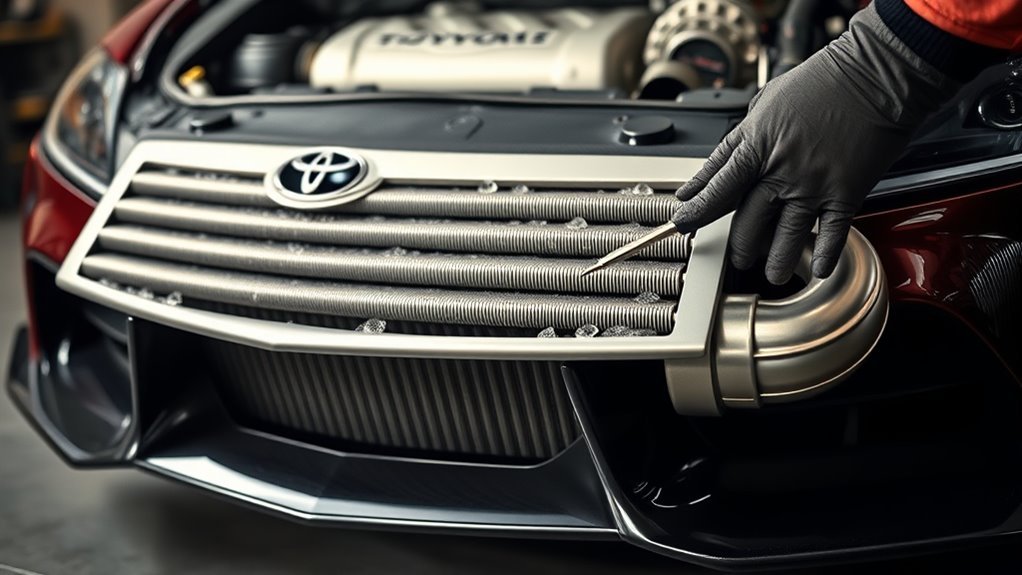
The main benefits are more consistent power, lower knock tendency, and better control of charge temperature. A higher-capacity system can help a tuned car maintain timing and boost during repeated acceleration when the stock hardware would otherwise become heat-soaked.
- More consistent horsepower: Cooler intake temperatures can reduce heat-related ECU intervention.
- Stronger repeat performance: An effective system limits temperature rise during back-to-back pulls or laps.
- Lower knock tendency: Cooler charge air gives the engine more combustion margin.
- Improved heat-soak recovery: A well-matched system sheds stored heat more quickly between acceleration events.
- Lower thermal load: Reducing charge temperature can decrease the heat burden during repeated boost, although it does not guarantee longer component life.
Fuel-economy gains are not guaranteed. During normal low-load driving, an intercooler upgrade may have little measurable effect on mpg. Its main value is maintaining safe and stable performance when the turbo system is working hard.
[Products Worth Considering]

Compatibility - Compatible with 1997 1998 1999 2000 2001 2002 Toyota Supra Jza80 2jz-Gte Turbo Vvti

Direct fit for the 2020+ Toyota GR Supra 3.0T

Enhanced Throttle Response & Reduced Turbo Lag: This turbo charge pipe upgrade improves airflow efficiency, delivering quicker acceleration and smoother power delivery
Where Is the Supra Intercooler Located?
Location depends on the system. A front-mounted air-to-air intercooler sits in the vehicle’s cooling airflow and connects to the turbo and intake through charge piping. This gives it direct access to outside air but can create a longer flow path.
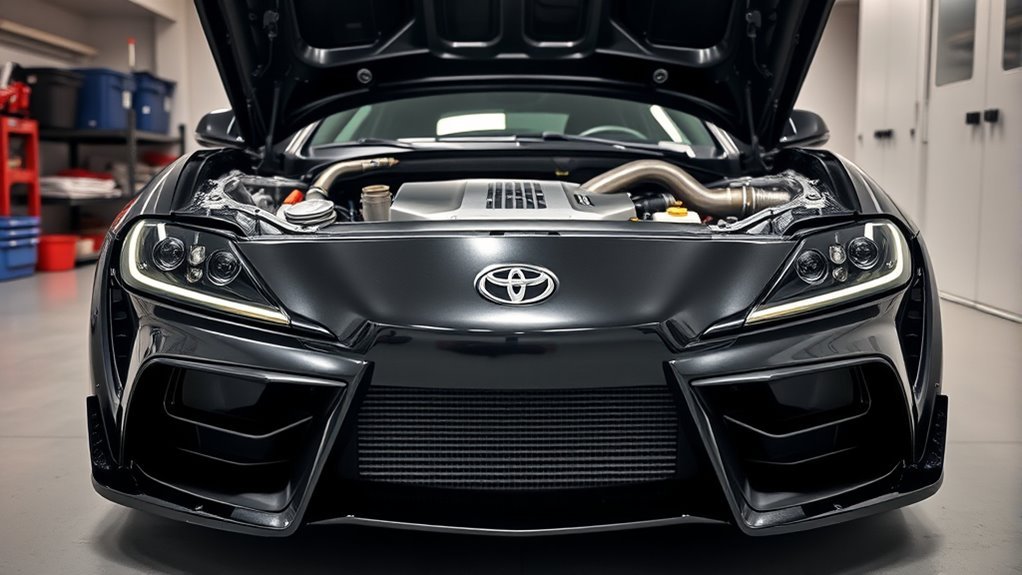
On the B58 GR Supra, the charge-air cooler is integrated into the intake-side assembly. A separate front heat exchanger, electric pump, hoses, reservoir, and coolant circuit move and reject the heat. Upgrade decisions can therefore involve the intake-manifold cooler, low-temperature heat exchanger, coolant flow, circuit capacity, or several components together.
For related airflow and cooling context, see the Supra intake-system guide, the Supra oil-cooling guide, and the 2JZ-GTE engine guide. For whole-car heat management during track sessions, use the Supra track-temperature guide; this page stays focused on charge-air cooling, intercooler diagnosis, and upgrade selection.
Where Is the Intercooler by Supra Generation?
| Supra Generation | Factory Turbo Charge-Cooling Layout | What You See at the Front of the Car |
|---|---|---|
| A70 turbo | Direct, air-cooled intercooler | Outside airflow passes through the intercooler core to cool the compressed intake air.[6] |
| A80 twin-turbo | Direct air-to-air intercooling | Toyota’s 1993 UK launch material describes front-bumper airflow feeding the turbo intercooler.[10] |
| A90/A91 GR Supra 3.0 | Indirect air-to-coolant charge-air cooler integrated into the intake system | The front low-temperature heat exchanger cools the liquid circuit; compressed intake air does not flow through that front unit.[4][5] |
Why Is a Bigger Intercooler Not Always Better?
A larger core or coolant system can absorb more heat, but only when the design maintains good flow and the vehicle can reject that stored heat. Excessive internal restriction can make the turbo work harder, while excess system volume can slow transient response.
Fitment also matters. A large front core or heat exchanger can block airflow to other cooling components if the ducting and stack are poorly designed. Choose a system that supports the car’s airflow and use case rather than selecting by physical size alone.
What Are the Signs of an Intercooler Problem?
An intercooler or charge-air cooling fault can appear as heat-related power loss, low boost, inconsistent acceleration, a coolant problem, or a fault code. The symptom pattern helps separate heat soak from an air leak or a coolant-circuit failure.
- Power falls after one or two pulls: This can indicate heat soak or weak coolant circulation.
- Boost actual stays below boost target: Inspect for loose clamps, damaged couplers, cracked pipes, leaking end tanks, or a bypass-control problem.
- Charge temperature rises faster than before: Compare logs recorded under similar ambient temperature, gear, speed, fuel, and warm-up conditions.
- Low-temperature coolant level drops: Check the correct charge-air circuit cold for leaks at the cooler, heat exchanger, pump, hoses, reservoir, and fittings.
- Oil residue appears at a connection: A light film can occur in turbo plumbing, but pooled oil or a wet leak path needs inspection.
- The check-engine light or limp mode appears: Scan for boost, pressure, temperature, mixture, pump, or coolant-circuit faults before replacing hardware.
Heat Soak vs. Boost Leak vs. Coolant-Circuit Fault
| Likely Condition | Typical Pattern | What to Check First |
|---|---|---|
| Heat soak | First pull feels normal; later pulls lose power as temperature climbs; performance improves after cooling | Repeatable IAT logs, ambient conditions, recovery time, airflow, heat-exchanger condition |
| Charge-air or boost leak | Low or unstable boost, hissing, mixture corrections, oily leak marks, or weak performance even when cold | Couplers, clamps, charge pipes, end tanks, seals, and a controlled pressure or smoke test |
| Coolant-circuit fault | Rapid temperature rise, poor recovery, low reservoir level, pump fault, trapped air, or no visible circulation where the service procedure permits checking it | Correct reservoir, cold level, leaks, pump command, electrical supply, hoses, and approved bleeding procedure |
What Should You Check Before Replacing Parts?
- Scan the vehicle: Record all current, pending, and history codes before clearing anything.
- Inspect the charge tract: Check clamps, couplers, pipes, sensor seals, end tanks, and intake-manifold connections.
- Pressure-test when appropriate: Use a controlled method and pressure limit suitable for the specific system.
- Check coolant only when cold: Identify the low-temperature charge-air circuit rather than assuming every reservoir serves the same system.
- Log repeatable data: Compare intake temperature, boost target, boost actual, ignition correction, and recovery under matched conditions.
- Verify circulation and bleeding: After a coolant-side repair, follow the model-specific filling and bleeding routine before driving under load.
Coolant Safety: Never open a coolant reservoir while the system is hot or pressurized. Use the correct coolant specification, identify the correct circuit, and follow the Toyota/BMW repair procedure for filling and bleeding. Trapped air can reduce circulation and cause overheating or functional faults. For coolant specification and service context, see the Supra coolant guide.
Pro Tip: Save a healthy baseline log before modifying the car. A later comparison is more useful than judging a single intake-temperature number without knowing the ambient temperature, load, speed, gear, and cooldown time.
What Does A90 Heat-Exchanger Testing Show?
Published product testing can show what a larger low-temperature heat exchanger may change, but the result must be read in context. In Mishimoto’s testing of its 2020+ GR Supra 3.0L heat exchanger, the company reported a 31% increase in core volume, 48% more external fin surface area, and a 5–7°F reduction in intake-air temperature versus the stock heat exchanger under its test conditions.[11]
That is useful evidence of direction, not a universal promise. Ambient temperature, vehicle speed, tune, turbo efficiency, coolant condition, airflow through the cooling stack, starting temperature, and test duration can all change the result. Compare before-and-after logs on your own car using the same route or dyno procedure rather than treating one vendor number as a guaranteed gain.
How Do You Choose a Supra Intercooler Upgrade?
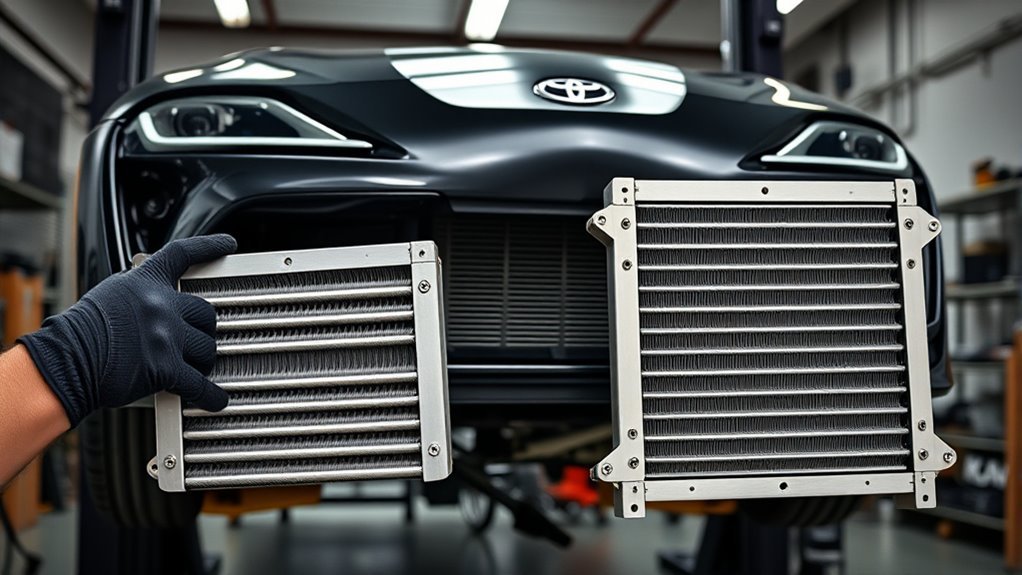
Start with the power goal, turbo airflow, fuel, calibration, and use case. A stock daily driver does not need the same charge-air system as a road-course car, a drag build, or a large-turbo Supra making repeated high-load runs.
Check complete-system fitment rather than core size alone. A part that creates poor hose routing, blocks radiator airflow, causes difficult bleeding, or adds excessive pressure loss can make the car less consistent even if its advertised capacity is high.
[Products Worth Considering]


Core Length: 24"(610mm), Core Height: 9"(230mm), Core Thickness: 3.5"(89mm).

【Premium Material】: Constructed from 304 stainless steel, these clamps are robust and resistant to corrosion, allowing for long-term durability. The material is sufficiently thick to withstand stress and pressure, meaning they won't easily deform or fail under typical operating conditions.
What Should You Verify Before Buying?
- Generation and engine: Confirm the VIN, model year, engine code, and whether the car uses air-to-air or indirect coolant-based cooling.
- Realistic power target: Match the system to expected airflow and sustained load, not only a peak horsepower claim.
- Pressure drop: Lower temperature is useful only when the turbo does not have to overcome excessive restriction.
- Flow distribution: Core and end-tank design should distribute air across the available cooling area instead of starving part of the core.
- Heat-soak recovery: Compare how quickly the system returns toward its pre-pull temperature.
- Coolant-system capacity: On an indirect system, evaluate the charge cooler, front heat exchanger, pump, hoses, reservoir, and bleeding method as one circuit.
- Airflow to other coolers: Confirm that the upgrade does not unnecessarily block the engine radiator, oil cooler, or air-conditioning condenser.
- Installation quality: Poor clamps, damaged seals, pinched hoses, bad welds, or trapped air can erase the benefit of expensive hardware.
- Calibration and legal status: Confirm tuning needs, warranty consequences, and road-use legality before installation.
How Can You Prove the Stock System Is Limiting the Car?
Use a controlled comparison rather than one isolated temperature reading. Record the same route or dyno procedure with the same gear, fuel, warm-up state, starting coolant condition, and similar ambient temperature. Do not perform repeated high-load testing on public roads or when the vehicle has an active fault.
- Record ambient temperature and charge-air temperature before the pull.
- Record charge-air temperature at the end of each pull.
- Compare boost target with boost actual.
- Review ignition corrections or timing intervention.
- Measure how long the system takes to recover between pulls.
- Repeat the process after maintenance or an upgrade using the same method.
An upgrade is easier to justify when temperature rises progressively, recovery is slow, boost control remains healthy, and the ECU consistently reduces performance as the system heats. Low boost or poor performance from the first pull points more strongly toward a leak, control fault, fuel problem, or mechanical issue.
What Should You Upgrade First on a B58 GR Supra?
- Fix faults before adding capacity: Repair leaks, confirm the correct low-temperature coolant level, verify pump operation, and bleed the circuit with the model-specific procedure.
- Use logs to identify heat rejection as the limit: If boost control is healthy but charge temperature rises on repeated pulls and recovers slowly, the front heat exchanger and airflow through it become logical areas to evaluate.
- Evaluate the intake-manifold charge cooler for higher airflow demands: On more heavily modified cars, compare manifold-core capacity, airflow, pressure drop, coolant distribution, fueling provisions, and calibration requirements rather than buying on advertised size alone.
- Retest with the same method: Use the same fuel, gear, warm-up state, ambient range, and cooldown procedure so the before-and-after comparison means something.
If your problem is broader than charge-air temperature—for example, oil, engine coolant, or transmission temperature on track—use the Supra track-temperature guide instead of solving every heat issue with an intercooler part.
Which Upgrade Priorities Match Your Use Case?
| Use Case | Priority | Best Upgrade Focus |
|---|---|---|
| Stock daily driver | Reliability and leak-free operation | Inspection, cleaning, correct coolant level, approved bleeding, and baseline logging |
| Tuned street car | Lower temperature during repeated acceleration | Higher-capacity cooler or heat exchanger selected with pressure drop and tune support in mind |
| Road-course car | Heat rejection and lap-to-lap recovery | Complete cooling package, ducting, airflow management, coolant capacity, and data monitoring |
| Big-turbo build | Flow capacity with acceptable pressure loss | Core or manifold sized for turbo airflow, plus charge piping, fueling, sensors, and calibration |
Frequently Asked Questions
What is the main function of a Supra intercooler?
The main function is to cool compressed turbo air before it enters the engine. Cooler charge air is denser, reduces knock tendency, and helps the Supra maintain more consistent power under boost.
Does the Toyota Supra have an intercooler?
Yes. Turbocharged Supras use charge-air cooling. Traditional turbo models commonly use direct air-to-air intercoolers. The B58-powered GR Supra uses an indirect coolant-based charge-air cooler integrated into the intake system. Its front low-temperature heat exchanger cools the circuit’s coolant; the actual charge-air cooler is near the engine.
Do you gain horsepower from an intercooler upgrade?
You may gain horsepower when the original system is limiting charge temperature and the ECU or tune can use the additional thermal margin. On a mostly stock car, the larger benefit may be maintaining power during repeated pulls rather than producing a large peak gain.
Is an air-to-air or air-to-water intercooler better for a Supra?
Neither layout is automatically better. Air-to-air systems are simple and effective with good front airflow. Air-to-coolant systems offer compact packaging and a short charge path but add a pump, coolant circuit, heat exchanger, and bleeding requirements. The better choice depends on the Supra generation, airflow target, packaging, and use case.
Can a bad intercooler damage a Supra engine?
A leaking, heat-soaked, or poorly circulating charge-air system can contribute to knock, power loss, mixture corrections, and excessive turbo workload. Scan for codes, inspect and pressure-test the charge tract, and verify the correct coolant circuit before driving hard or replacing parts.
Is the front heat exchanger the same as the intercooler on a GR Supra?
No. On the B58-powered GR Supra, the charge-air cooler is integrated into the intake-side assembly. The front low-temperature heat exchanger cools the liquid that circulates through that charge-air cooler; compressed intake air does not flow through the front heat exchanger.
What should I upgrade first if my GR Supra heat-soaks?
First confirm that the system is healthy: check for faults, leaks, correct coolant level, pump operation, airflow, and trapped air. If repeatable logs then show rising charge temperature and slow recovery while boost control remains healthy, evaluate the front heat exchanger before moving to a higher-capacity intake-manifold charge cooler or a larger cooling package.
Conclusion
A Supra intercooler cools compressed turbo air so the engine receives a denser charge with more knock margin. Traditional turbo Supras commonly use direct air-to-air cooling, while the B58 GR Supra uses an intake-side air-to-coolant cooler connected to a separate low-temperature circuit and front heat exchanger.
Match the complete cooling system to the car instead of selecting the largest advertised part. Consider the generation, engine, turbo airflow, tune, core or manifold design, pressure drop, coolant circulation, ducting, and how the car is driven.
Before buying parts, scan for faults, inspect the charge tract, confirm low-temperature coolant circulation, and collect repeatable intake-temperature and boost logs. Repairing a leak, restoring pump operation, or bleeding trapped air may solve the problem without an unnecessary upgrade. If the system is healthy but repeated logs still show heat soak and slow recovery, compare a front heat-exchanger upgrade with a higher-capacity charge cooler based on your power level and use case.
Sources
- Toyota 2026 GR Supra official model page — current U.S. engine and model context.
- Toyota 2026 GR Supra official specifications — current powertrain and trim specifications.
- Toyota USA Newsroom: 2026 GR Supra — 2026 model-year and MkV Final Edition context.
- BMW Group PressClub: BMW Z4 M40i powertrain — manufacturer description of B58-family indirect intercooling.
- do88 GR Supra A90 B58 charge-cooler manifold page — identifies the water-to-air charge cooler integrated with the intake manifold on the GR Supra A90 B58.
- Toyota Global: 1986 Supra introduction — official description of the turbocharged, air-cooled-intercooler A70 powertrain.
- Garrett Motion Turbo System Optimization — charge-air-cooler sizing, end-tank design, mounting, and flow considerations.
- Garrett Motion Performance Intercoolers — heat transfer, fin density, pressure drop, and thermal-stability principles.
- MIT OpenCourseWare: Internal Combustion Engines, Turbocharging Lecture — charge-density, output-power, and knock-suppression effects of intercooling.
- Toyota GB: 1993 fourth-generation Supra launch pack — describes front-bumper airflow directed to the turbo intercooler on the A80 Supra.
- Mishimoto: 2020+ GR Supra 3.0L performance heat exchanger — vendor test data for core size, fin surface area, and measured intake-air-temperature change.