Engine braking in a Toyota Supra is best used as a smooth control technique, not as a replacement for the brake pedal. Whether your GR Supra has the 6-speed manual transmission or the 8-speed automatic with paddle shifters, the goal is the same: select a lower gear early enough that the engine helps slow the car while the service brakes remain ready for precise stopping.
Quick Answer
Use engine braking in your Toyota Supra when descending hills, setting up for corners, or slowing gradually for traffic. Downshift smoothly, keep engine RPM within a safe range, and use the brake pedal as needed. Avoid abrupt downshifts, especially on wet, icy, gravel, or low-traction roads.
Key Takeaways
- Engine braking helps control speed by using drivetrain resistance after you lift off the throttle and select a lower gear.
- Toyota’s owner guidance notes that shifting down can increase the engine’s braking effect, especially when brake overheating is a concern.
- Use engine braking together with the brake pedal; engine braking alone may not slow the car quickly enough or clearly signal drivers behind you.
- Manual Supra drivers should downshift smoothly and rev-match when possible; automatic Supra drivers can use manual mode or paddle shifters when road speed allows.
- Never force a downshift that could over-rev the engine or unsettle the rear tires.
At a Glance
| Time Required | A few drives to learn smoothly; ongoing practice to master |
| Difficulty | Beginner to intermediate |
| Tools Needed | None; use your Supra’s manual gearbox or automatic manual mode/paddles |
| Cost | Free |
Understanding Engine Braking: Techniques for Your Supra
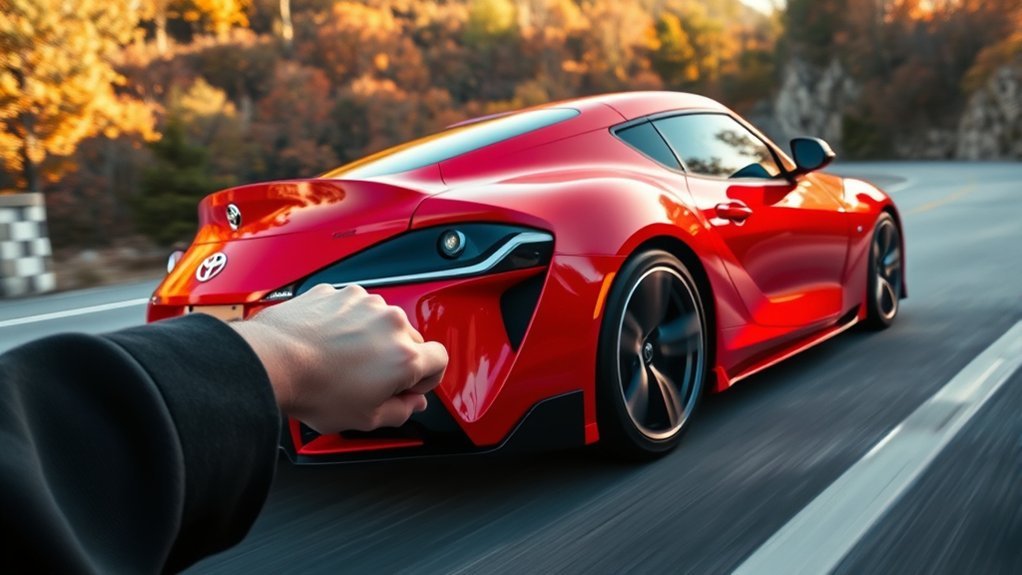
Engine braking happens when the wheels keep the engine spinning while your foot is off the accelerator. In a lower gear, the engine creates more resistance, so the car slows more strongly without relying only on the brake pads and rotors.
In the 2026 Toyota GR Supra, Toyota lists a 3.0L turbocharged inline-6 and either a 6-speed manual transmission or an 8-speed automatic transmission. That means engine braking can be used in two different ways:
- Manual transmission: Lift off the throttle, choose the next lower gear, rev-match if needed, and release the clutch smoothly.
- Automatic transmission: Use manual mode or the paddle shifters to request a lower gear. The transmission will generally allow shifts only when engine and road speeds are suitable.
Toyota’s owner guidance says the engine’s braking effect can be increased by shifting down, and it also warns that light, constant pressure on the brake pedal can lead to high brake temperatures, brake wear, and reduced brake performance. That is exactly where controlled engine braking is useful: it helps manage speed while keeping your friction brakes ready for firm stops.
Warning: Engine braking does not replace the brake pedal. Use your brakes whenever you need a shorter stop, need to warn traffic behind you with brake lights, or need to stabilize the car in an emergency.
[Products Worth Considering]

【APPLICABLE MODELS】: The rear and front emblems trim cover compatible with Toyota Supra GR A90 A91 MK5 2019-2026. The size of the original car is customized.

[OE Number of Engine Torque Strut Mount] 12361-35070. for Toyota Supra 3.0L 1989-1993

【APPLICABLE MODELS】: The front bumper tow hook cover replacement compatible with Toyota Supra GR A90 A91 MK5 2019-2026, the size of the original car is customized.
Benefits of Engine Braking for Performance
Used correctly, engine braking can make your Supra feel calmer and more balanced during deceleration. The benefit is not that it magically adds performance; it helps you manage weight transfer, brake temperature, and gear selection more deliberately.
Enhanced Control During Deceleration
When you downshift smoothly before a turn or downhill section, the Supra slows in a more progressive way. That can help reduce the sudden front-end dive that comes from stabbing the brakes late, and it keeps the car in a gear that is ready for the next throttle input.
This matters most during spirited street driving, mountain-road driving, and track-style practice where you want the car settled before turn-in. The key word is smoothly. A harsh downshift can jolt the drivetrain, upset the rear tires, or create unnecessary clutch wear in a manual Supra.
Fuel-Efficiency Benefits: Keep the Claim Realistic
Engine braking can help fuel use in some situations because many modern fuel-injected engines reduce or stop fuel delivery during certain in-gear deceleration conditions. However, the real-world MPG benefit depends on speed, gear, engine temperature, road grade, traffic, and how soon the engine needs fuel again to idle smoothly.
Think of fuel efficiency as a small bonus, not the main reason to engine brake. The main reasons are control, reduced brake heat on long descents, and better gear readiness.
Pro Tip: The cleanest engine braking usually starts before you need heavy braking. Lift early, select the right lower gear, then blend in the brake pedal as needed.
Ideal Conditions for Engine Braking: When to Use It?
Engine braking is most useful when you can plan the slowdown. It works best as a smooth, early technique instead of a last-second reaction.
| Condition | How Engine Braking Helps | What to Watch For |
|---|---|---|
| Approaching Stops | Allows smoother deceleration before final brake application | Use the brake pedal so traffic behind you sees your brake lights |
| Mountainous Terrain | Helps control speed downhill and reduces constant brake use | Do not let RPM climb too high; use brakes firmly and briefly when needed |
| Spirited Driving | Keeps the car in a responsive gear before corner exit | Avoid abrupt downshifts that unsettle the rear tires |
| Manual Downshifting | Improves control when paired with rev matching and smooth clutch release | Do not force a lower gear that could over-rev the engine |
| Wet, Icy, Gravel, or Sandy Roads | Use only gentle deceleration, if needed | Abrupt engine braking can reduce traction, especially in a rear-wheel-drive car |
Executing Engine Braking: Best Practices
The right technique depends on whether your Supra is manual or automatic, but the goal is always the same: match the lower gear to your road speed without shocking the drivetrain.
Proper Downshifting Techniques
In a manual Toyota Supra, start by lifting off the accelerator. Press the clutch, select the next lower gear, raise engine speed slightly if needed, and release the clutch smoothly. This is commonly called rev matching. It reduces the speed difference between the engine and transmission, which makes the downshift cleaner.
Do not skip several gears unless you are certain the lower gear will not push the engine beyond a safe RPM range. A forced downshift at too high a road speed can cause an over-rev, drivetrain shock, or loss of rear-tire grip.
Using Engine Braking With the Automatic Supra
If your Supra has the 8-speed automatic, you can request engine braking by moving into manual mode or using the paddle shifters. Request one lower gear at a time, then watch how the car responds. If the transmission refuses a downshift, respect it; the system is protecting the drivetrain from an unsuitable shift.
Automatic drivers should avoid repeatedly forcing low-gear requests just to create dramatic engine noise. Use the paddles for control, not for show.
Combining Brakes and Engine Braking
The best real-world technique is blended braking. Let the lower gear help slow the car, then use the brake pedal for the stopping force you actually need. This keeps the car predictable and gives following drivers a clear brake-light signal.
On a downhill road, choose a lower gear before the grade gets steep. Then apply the brakes in controlled moments rather than holding light pressure for a long time. The National Park Service mountain-driving guidance recommends using lower gears downhill and pulling over to let brakes cool if you smell them.
Top Engine Braking Mistakes to Avoid
Engine braking is simple, but the wrong habits can make it rough on the car or unsafe for the road conditions.
- Downshifting too aggressively: A sudden low-gear downshift can shock the drivetrain and reduce rear-tire grip.
- Ignoring RPM: Never choose a gear that would push the engine too close to or beyond redline.
- Riding the clutch: In a manual Supra, slipping the clutch for too long turns the clutch into a brake and adds heat and wear.
- Using engine braking as your only brake signal: Drivers behind you may not realize you are slowing if you never touch the brake pedal.
- Overusing it on slippery roads: Wet leaves, ice, standing water, gravel, and sand all reduce available traction.
- Coasting in neutral downhill: Neutral removes engine braking and can leave you relying too heavily on the service brakes.
Smooth engine braking should feel controlled and almost boring. If the car jerks, the tires chirp, or passengers lurch forward, the downshift was too abrupt.
Engine vs. Traditional Braking: When to Use Each?
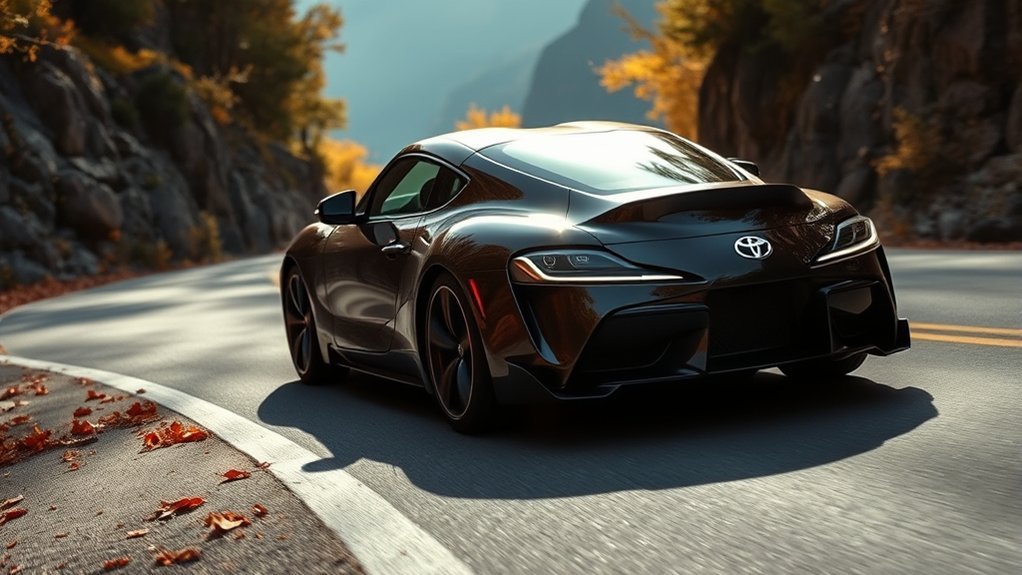
Use engine braking when you have time to slow gradually, such as before a downhill grade, a known stop, or a planned corner. Use traditional braking whenever you need a definite stop, a shorter stopping distance, or a brake-light signal for traffic behind you.
For everyday driving, the brake pedal should still do most of the stopping work. Modern brakes are designed for that. Engine braking is simply a helpful supplement that can reduce heat buildup during long descents and keep the Supra in a useful gear.
Note: If you smell hot brakes, feel brake fade, or notice a soft brake pedal after a long descent, pull over safely and let the brakes cool before continuing.
[Products Worth Considering]

【Custom-Fit Design】This toyota supra accessories 2024 gr supra screen protector specially designed for 2021 2022 2023 2024 2025 2026 GR Supra A90 A91 MK5 8.8-inch touchscreen infotainment display, precise fit complements the design of your 2024 supra screen

Officially Licensed Toyota Apparel for Women - Men; Toyota Motor T-Shirts; Toyota Trucks T-Shirts; Cars; Adventure; Racing; Off-Road; Gazoo Racing; Outdoor; Logo; Land Cruiser;

Compatible with 2020-up Toyota Supra A90; also compatible with 2019-up BMW G29 Z4
How Engine Braking Affects Your Supra’s Performance and Fuel Efficiency
For performance driving, engine braking helps most with rhythm. It lets you approach a corner in the correct gear, keeps the engine in a responsive RPM range, and reduces the chance that you will need a rushed downshift at corner exit.
For fuel efficiency, the benefit is situational. In-gear deceleration can reduce fuel delivery under the right conditions, but aggressive downshifting just to slow the car can waste momentum and make the ride less smooth. The most efficient approach is usually to look far ahead, lift early, maintain a safe following distance, and brake only as much as needed.
Engine Braking and Brake Life: Maintenance Tips
Engine braking can reduce brake heat on long downhill stretches, but it should not be used to hide brake problems. Your Supra still needs healthy pads, rotors, brake fluid, tires, and properly functioning brake lights.
- Inspect brake components regularly: If you hear grinding, feel vibration, or notice longer stops, schedule service instead of relying on engine braking.
- Use the right gear early: Select a lower gear before a long descent rather than waiting until the brakes are already hot.
- Blend techniques: Use engine braking for steady speed control and the brake pedal for precise stopping.
- Protect the clutch: Manual drivers should release the clutch smoothly and avoid using clutch slip as a braking method.
- Watch tire condition: Engine braking still works through the driven wheels, so worn or cold tires reduce how much deceleration the car can handle cleanly.
Community Insights: Experiences From Other Supra Owners
Supra owners often describe engine braking as one of the small techniques that makes the car feel more connected. Manual drivers tend to focus on clean rev-matched downshifts, while automatic drivers often use the paddles before a downhill grade or a series of bends.
The most useful shared advice is simple: do not chase dramatic engine noise. A well-executed downshift should make the car feel settled, not startled. If you are still learning, practice at normal road speeds with plenty of space around you before trying the technique on steep grades or tight corners.
Frequently Asked Questions
When should I use engine braking in a Toyota Supra?
Use it when slowing gradually, descending hills, preparing for a corner, or managing speed without riding the brakes. Always combine it with the brake pedal when you need a clear stop or need to alert traffic behind you.
Is engine braking bad for a Supra?
No, not when done smoothly and within the correct RPM range. It becomes harmful when you force a downshift, release the clutch abruptly, over-rev the engine, or use low gears aggressively on slippery surfaces.
Can I engine brake in an automatic Toyota Supra?
Yes. Use manual mode or the paddle shifters to request a lower gear. Downshift one gear at a time and let the transmission decide whether the shift is suitable for your current speed.
Should I use engine braking instead of the brake pedal?
No. Engine braking should supplement the brake pedal, not replace it. The brake pedal gives stronger stopping power, activates brake lights, and allows finer control in traffic or emergencies.
Does engine braking save fuel?
It can save a small amount of fuel during some in-gear deceleration conditions, but the MPG gain varies. Use engine braking mainly for control, smoother driving, and reduced brake heat on long descents.
Is engine braking safe on wet roads?
Only if it is gentle. Abrupt downshifts can reduce traction, especially in a rear-wheel-drive car like the Supra. In rain, ice, gravel, or sand, prioritize smooth pedal inputs and avoid aggressive low-gear deceleration.
Conclusion
Engine braking is one of the easiest ways to make your Toyota Supra feel smoother, more controlled, and more ready for the next corner or downhill section. Use it early, downshift one gear at a time, keep RPM in a safe range, and blend it with the brake pedal whenever real stopping power is needed. Done well, it is not hard on the car; it is simply good driving technique.
Sources
- Toyota GR Supra official model page — confirms current GR Supra engine and transmission information.
- Toyota 2026 Supra Owner’s Manual: Things to remember when driving — supports shifting down for additional engine braking and warnings about brake overheating.
- Toyota 2026 Supra Owner’s Manual: Driving — supports automatic/manual-mode shifting guidance and suitable-shift behavior.
- National Park Service: Mountain Driving — supports using lower gears downhill and stopping to cool brakes if they smell overheated.
- California DMV: Air Brakes — supports the general brake-safety concept that excessive brake heat can cause fade and reduced braking performance.