
[VERIFY: add the real author/byline] · Reviewed against Toyota and current ZF technical sources · Last updated: August 31, 2026
For a 2020–2026 Toyota Supra transmission fluid change interval, Toyota’s U.S. maintenance chart does not schedule routine transmission-fluid replacement through 150,000 miles. It lists “All Fluid Levels” at each 10,000-mile step and directs technicians to inspect sealed transmissions for leakage. For a verified ZF automatic covered by ZF’s current guidance, ZF recommends an oil change after 150,000 km, or about 93,000 miles, with shorter intervals potentially appropriate under high temperatures, high loads, or unknown prior use. Treat 93,000 miles as a ZF preventive benchmark, not a Toyota-required replacement interval. Toyota does not publish one blanket replacement mileage for the 2023–2026 manual transmission, and factory GR Supras do not use a CVT.
Quick Answer
Toyota’s 2026 U.S. maintenance chart does not list routine GR Supra transmission-fluid replacement through 150,000 miles. It calls for regular fluid-level inspections and leakage checks on sealed components. ZF’s current TE-ML 11 guidance recommends an oil change after 150,000 km, about 93,000 miles, for its applicable automatic transmissions, with shorter intervals potentially appropriate under high temperatures, high loads, or unknown prior use. The 93,000-mile figure is a ZF preventive benchmark, not a Toyota-required interval. Confirm the exact transmission before choosing fluid, parts, or a service procedure.
Key Takeaways
- Toyota’s 2026 chart lists inspections through 150,000 miles but does not include a routine transmission-fluid replacement row.
- ZF recommends an oil change after 150,000 km, about 93,000 miles, for its applicable automatic transmissions, with shorter intervals potentially appropriate for high heat, high load, or unknown history.
- The U.S. GR Supra received its 6-speed manual for 2023; Toyota does not publish a universal manual-fluid replacement mileage in the U.S. chart.
- Toyota’s U.S. public specifications identify an 8-speed automatic but do not make the family name alone sufficient for fluid or parts selection. Verify the exact transmission by VIN/service information before ordering.
- A sealed automatic requires approved fluid, a level vehicle, temperature monitoring, and a controlled fill procedure. It cannot be checked like a conventional dipstick-equipped transmission.
Source basis: This guide compares Toyota’s 2026 U.S. Warranty & Maintenance Guide with ZF’s current July 1, 2026 TE-ML 11 lubricant list, ZF’s LifeguardFluid technical information, and ZF’s current 8HP oil-change procedure. Toyota’s VIN-specific repair information remains the final authority for the exact fluid specification, capacity, replacement parts, plug torques, and model-specific service steps.
Editorial method: This is a document-based technical guide built from Toyota and ZF service information. It does not claim hands-on testing or servicing of every GR Supra transmission variant.
At a Glance
| Toyota Schedule | Inspections and sealed-component leak checks; no routine transmission-fluid replacement entry through 150,000 miles |
| ZF Automatic Benchmark | 150,000 km, about 93,000 miles, for applicable ZF automatics, with shorter intervals potentially appropriate for high temperatures, high loads, or unknown history |
| What 93,000 Miles Means | A ZF preventive benchmark after transmission applicability is verified; not a Toyota-required replacement mileage |
| Difficulty | Advanced for the sealed automatic; intermediate to advanced for a model-specific manual drain-and-fill |
| Required Equipment | Level lift or jack stands, drain pan, fluid pump, torque wrench, hand tools, protective equipment, and a scan tool that reads transmission temperature for the automatic |
Why Does Toyota Supra Transmission Fluid Maintenance Matter?
Transmission fluid lubricates internal parts, carries heat away from loaded components, supports hydraulic operation in an automatic, and helps the transmission engage gears smoothly. Low, contaminated, overheated, or incorrectly specified fluid can contribute to poor shifting and accelerated wear.
Toyota’s 2026 GR Supra Warranty & Maintenance Guide lists “All Fluid Levels” at every 10,000-mile step through 150,000 miles. Its footnote instructs technicians to inspect sealed transmissions, transfer cases, and differentials for leakage. The chart does not contain a routine transmission-fluid replacement entry.
ZF provides a separate preventive benchmark. Its current TE-ML 11 List of Lubricants recommends an oil change after 150,000 km for applicable ZF 5-, 6-, 8-, and 9-speed automatic transmissions. ZF says shorter intervals can make sense under high temperatures, high loads, or unknown prior vehicle use. The exact approved fluid still depends on the specific transmission product group and vehicle application.
Warning: Do not choose fluid from the words “8-speed” or “8HP” alone, and do not use an unverified universal substitute or aftermarket additive. Confirm the exact transmission and approved fluid first. ZF states that later-added oil additives change the lubricant unpredictably and are not permitted.
What Is the Toyota Supra Transmission Fluid Change Interval?
For the modern GR Supra, Toyota and ZF answer different parts of the question. Toyota’s U.S. chart defines Toyota’s scheduled maintenance: inspect fluid-related items and check sealed transmissions for leakage, with no routine replacement line through 150,000 miles. ZF’s current TE-ML 11 document provides a separate preventive oil-change benchmark of 150,000 km, about 93,000 miles, for applicable ZF automatic transmissions.
Do not use a generic 30,000–60,000-mile rule: Toyota’s 2026 U.S. Supra maintenance chart does not publish a routine transmission-fluid replacement interval in that range. Use the exact vehicle, transmission, Toyota service information, and applicable ZF guidance instead of a generic Toyota or manual-transmission rule.
| Supra Type | Published Guidance | Practical Decision |
|---|---|---|
| 2020–2022 GR Supra automatic | Toyota’s chart does not list routine transmission-fluid replacement through 150,000 miles. ZF recommends an oil change after 150,000 km for its applicable automatic transmissions. | Treat about 93,000 miles as a ZF preventive benchmark only after the exact transmission is verified. Consider earlier evaluation when high temperature, high load, or unknown history applies. |
| 2023–2026 GR Supra automatic | Toyota’s U.S. chart still uses inspection and sealed-component leakage checks rather than a routine replacement row through 150,000 miles. | Verify the exact transmission, follow Toyota inspections, and use applicable ZF guidance as a preventive benchmark rather than a Toyota warranty interval. |
| 2023–2026 GR Supra manual | Toyota’s U.S. chart does not publish a blanket manual-transmission-fluid replacement mileage. | Use VIN-specific Toyota service information. Base earlier service on leakage, fluid condition, difficult shifting, demanding use, or documented technician advice rather than an automatic-transmission interval. |
| Older A70 or A80 Supra | Transmission designs, fluids, checking methods, and schedules vary by year and gearbox. | Use the model-specific owner’s manual or repair manual rather than applying modern GR Supra guidance. |
| CVT | Not applicable to a factory GR Supra. | Do not use CVT fluid or CVT service intervals for a factory-equipped Supra transmission. |
What Does the 93,000-Mile ZF Benchmark Actually Mean?
The ZF figure is best treated as a preventive decision point, not as a universal Toyota deadline. If your Supra has a known service history, no leakage, no warning messages, and normal street use, continue Toyota’s scheduled inspections. As an applicable verified ZF automatic approaches or passes about 93,000 miles, preventive service becomes a reasonable discussion with a Toyota/ZF-experienced technician. If the transmission is leaking, slipping, entering limp mode, shifting abnormally, or storing transmission-related faults, diagnose the problem immediately rather than waiting for a mileage target.
The 93,000-mile figure is not a Toyota-required replacement mileage, not a universal manual-transmission interval, and not an instruction to perform a machine flush. It comes from ZF’s maintenance guidance for its applicable automatic transmissions.
Toyota’s 2026 GR Supra page lists a 6-speed manual or 8-speed automatic. Toyota described the manual as a new option for the 2023 model year, confirming that U.S. 2020–2022 GR Supras were automatic-only.
Warranty Note: Toyota says maintenance and repairs may be performed by you or another automotive service provider. Toyota will not deny a warranty claim solely because you used a provider other than a Toyota dealer, but damage caused by improper maintenance or repairs is not covered. Keep service records and use the specified fluid, parts, and procedure.
What Signs Mean Your Supra Transmission Needs Attention?
A fixed mileage is only one part of the decision. Leakage, changed shift behavior, warning messages, and an unknown service history can justify inspection before the ZF preventive benchmark. Active symptoms require diagnosis because fluid service cannot repair every mechanical, electrical, software, or hydraulic fault.
[Products Worth Considering]

These Amazon Basics steel jack auto stands provide dependable support for vehicle maintenance with a self-locking ratchet design for easy height adjustment. Built from durable steel with a rustproof coating, they meet recognized safety standards and are designed for sedans and urban SUVs. The pair offers a stable, easy-to-read solution for routine garage work and comes backed by a limited warranty.

This flexible oil funnel is designed to make fluid changes cleaner and easier by guiding oil around obstacles like skid plates and crossmembers. Its shape-retaining core and silicone body can be molded for custom positioning, while the heat-resistant, leak-proof design helps prevent spills during draining and filter removal. Reusable and easy to clean, it works well for cars, trucks, motorcycles, and other hard-to-reach fluid fill or drain applications.

These genuine Toyota oil drain plug gaskets are designed to help maintain a reliable seal during oil changes, reducing the chance of leaks and supporting proper engine maintenance. With an OEM fit and trusted Toyota quality, they are a practical choice for routine service on compatible vehicles. The convenient quantity pack is ideal for keeping multiple maintenance intervals covered.
Signs of Fluid Degradation, Leakage, or a Transmission Fault
- Rough or delayed engagement: Harsh shifts, hesitation, or clunks can result from fluid level, software, mounts, hydraulic control, clutch wear, or internal damage.
- Slipping or flare between gears: Engine speed rises without a matching increase in road speed.
- Burning odor: An overheated or contaminated lubricant may produce an abnormal burnt smell.
- Visible leakage: Oily residue around the transmission pan, fill or drain plugs, cooler connections, or underbody panels needs prompt inspection.
- Abnormal debris: Heavy metallic material or significant clutch debris found during service warrants diagnosis. A small amount of fine material must be judged against the manufacturer’s service criteria.
- Warning message or limp mode: Scan the vehicle for transmission-related codes before replacing fluid or clearing adaptations.
How Should Driving Conditions Change the Service Plan?
| Vehicle Situation | Best Next Step | Reason |
|---|---|---|
| Normal street use, known history, no symptoms | Follow Toyota’s inspections and use ZF’s 150,000 km benchmark as a preventive discussion point only after verifying that the ZF guidance applies to the exact transmission. | Toyota does not schedule routine replacement, while ZF supplies a separate preventive benchmark for applicable automatic transmissions. |
| High temperatures or repeated high-load use | Discuss an earlier inspection and service plan with a qualified technician. | ZF specifically identifies high temperatures and loads as reasons a shorter interval can make sense. |
| Unknown maintenance history | Inspect for leaks, scan for codes, evaluate shift behavior, and verify the exact transmission before authorizing service. | ZF identifies unknown prior vehicle use as another reason to consider a shorter interval. |
| Slipping, warnings, severe delay, or abnormal noise | Diagnose the fault before treating a fluid change as the repair. | Software, sensors, hydraulic controls, clutches, mounts, and internal damage can produce similar symptoms. |
If the car participates in high-performance driving events, repeated track use can create the high-temperature and high-load conditions that make fluid condition more important. Toyota’s warranty guide separately explains that damage caused by abuse or misuse during an HPDE or track event is not covered, and wear or damage from competitive motorsports is excluded.
How Should You Monitor Transmission Performance?
Notice whether a symptom appears only when the drivetrain is cold, only after it reaches operating temperature, or after high-load driving. Record warning messages and scan for stored transmission codes. A repeatable condition gives a technician more useful evidence than a general statement that the car “shifts differently.”
Toyota’s 2026 maintenance chart shows “All Fluid Levels” at each 10,000-mile step through 150,000 miles, and the chart footnote directs technicians to inspect sealed transmissions for leakage.
How Do Heat and Load Affect Transmission Fluid Life?
ZF identifies high operating temperatures, high loads, and unknown prior use as conditions that can justify changing transmission oil sooner than its 150,000 km recommendation. Repeated track sessions, extended high-speed operation, or power modifications can create additional heat or load, but the service decision should be based on the exact transmission, operating conditions, and vehicle history rather than the modification itself.
A shorter interval should still be based on the exact transmission, approved fluid, vehicle condition, and service history. Mileage alone cannot reveal leakage, incorrect prior fluid, adaptation problems, or internal wear.
How Do You Check Toyota Supra Transmission Fluid?
The correct method depends on the generation and transmission. Some older Supras use a dipstick or a conventional fill-level plug. A modern GR Supra automatic uses a sealed, temperature-controlled fill procedure rather than a simple under-hood dipstick check.
[Products Worth Considering]

This upgraded engine oil funnel kit makes oil changes cleaner and easier with a spill-proof design, flow control valve, and transparent body for precise filling. Built from durable polycarbonate and equipped with 12 adapters, two 45-degree elbows, and a debris filter, it fits a wide range of vehicles and works well in tight engine spaces. The secure, hands-free setup helps reduce mess while improving control during oil filling and fluid transfers.

The OBDMATE OM901 is a handheld car diagnostic scanner designed to read and clear fault codes across ABS, SRS, engine, and transmission systems. It also offers full OBD2 functions like live data, freeze frame, I/M readiness, VIN retrieval, O2 sensor testing, EVAP testing, and onboard monitoring, making it useful for quick troubleshooting and emissions checks. With a large screen, battery voltage monitoring, DLC pin testing, and a protective carrying case, it is a practical tool for DIY drivers and professionals alike.

This A-Premium windshield washer pump is designed to restore reliable windshield cleaning performance across a wide range of compatible vehicles. It supports numerous Toyota, Honda, Lexus, Mazda, Ford, Lincoln, and other models, making it a versatile replacement choice for maintaining clear visibility in all driving conditions. Built for straightforward fitment, it helps ensure consistent washer fluid delivery when you need it most.
Checking Fluid on a Modern GR Supra Automatic
ZF’s general 8HP service instructions require the vehicle to sit horizontally and a diagnostic device to display transmission-oil temperature. The general procedure sets the final oil level with the fluid between 30°C and 50°C for the transmissions covered by that procedure. Toyota’s VIN-specific service information should still control because transmission identification, plug locations, fluid specification, replacement parts, and torque values can vary.
- Inspect the transmission pan, plugs, cooler connections, and surrounding underbody for leakage.
- Place the vehicle level on suitable lifting equipment before opening a level or fill plug.
- Connect a scan tool capable of displaying transmission-oil temperature.
- Follow the specified engine-running and gear-cycling sequence before setting the final level.
- Do not estimate the level from the amount drained because retained fluid and replaced parts can change the refill quantity.
Checking Fluid on Older or Dipstick-Equipped Supras
If your older Supra has a transmission dipstick, follow its owner’s or repair manual for engine temperature, engine-running status, gear position, and fluid-level procedure. If it uses a fill plug, raise the car safely and keep it level. Do not apply the GR Supra’s ZF procedure to an older Toyota, Aisin, Getrag, or other transmission without model-specific confirmation.
Pro Tip: Confirm that the fill plug opens before removing the drain plug. A transmission that has been drained but cannot be refilled may leave the vehicle undrivable.
How Do You Change Toyota Supra Transmission Fluid?
Transmission service ranges from a conventional manual drain-and-fill to a temperature-controlled automatic pan, filter, and refill procedure. The overview below explains the general sequence, but the exact fluid, capacity, seals, fasteners, torque specifications, and adaptation requirements must come from Toyota service information for the VIN.
[Products Worth Considering]

This A-Premium cartridge engine oil filter is designed for a wide range of Toyota and Lexus vehicles, helping support cleaner oil flow and dependable engine protection. With high filtration efficiency and included O-rings, it offers a practical replacement solution for routine maintenance. Built for extended service intervals, it is suitable for conventional or synthetic oil applications.
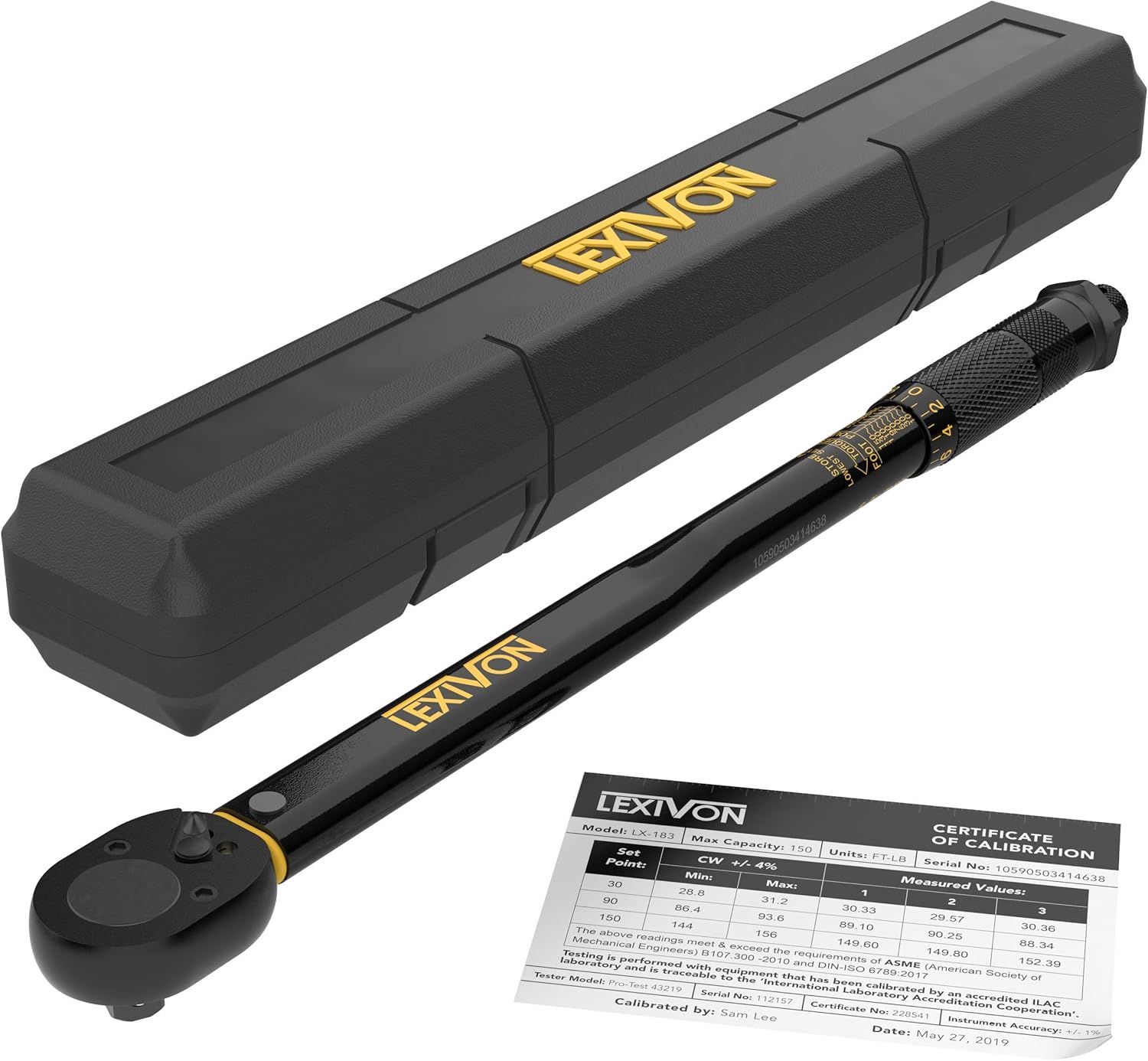
The LEXIVON 1/2-inch drive click torque wrench delivers accurate, dependable tightening for automotive and mechanical jobs with pre-calibrated precision. Its dual-range scale, reversible ratchet head, and ergonomic knurled handle make it easy to set, read, and use comfortably in a variety of applications. Built with hardened chrome vanadium steel and a corrosion-resistant finish, it is designed for lasting performance and reliability.

This coolant thermostat is a direct replacement designed for a wide range of Toyota, Lexus, and Scion vehicles. It helps maintain proper engine temperature, supports reliable cooling system performance, and installs easily without special tools or programming. Built to meet OEM standards, it offers durable, stable operation and dependable fitment for compatible models.
Before You Start
- Confirm the model year, engine, transmission, and market specification.
- Verify the exact transmission identification rather than ordering fluid or parts from the general “8HP” family name.
- Verify the approved fluid through Toyota service information and the applicable current ZF lubricant listing.
- Obtain the correct pan, filter, gasket, bolts, drain plug, fill plug, and sealing rings required by the specific procedure.
- Use a lift or rated jack stands that keep the vehicle level.
- Prepare a scan tool that reads transmission-oil temperature when servicing the automatic.
- Wear gloves and eye protection, and recycle used fluid through an approved collection facility.
Automatic Transmission Fluid Service Overview
- Verify the service procedure: Confirm the transmission, approved fluid, replacement parts, and torque information before opening a plug.
- Position the vehicle horizontally: ZF’s general 8HP procedure requires the vehicle to be level because a tilted car can produce an incorrect final fluid level.
- Open the fill plug first: Confirm the transmission can be refilled before draining it.
- Drain and inspect the fluid: Collect it in a clean container and note abnormal odor, heavy debris, or contamination.
- Replace the pan or filter when specified: Follow the model-specific procedure rather than assuming every 8HP uses identical parts.
- Refill with the prescribed fluid: Use a clean pump and the correct fill opening.
- Start the engine and monitor temperature: ZF’s general procedure requires transmission-oil temperature monitoring during level setting.
- Fill the torque converter under the applicable procedure: ZF’s general 8HP level-check sequence calls for maintaining about 2,000 rpm for 30 seconds, then returning the engine to idle before the gear-selection sequence. Follow Toyota’s VIN-specific instructions if they differ.
- Cycle the transmission: ZF’s general procedure calls for selecting P, R, and D, manually selecting D1 and D2, and holding each gear for about 10 seconds.
- Set the final level: ZF’s general procedure checks the level at 30°C–50°C, adds the prescribed fluid if needed, waits until only individual drops leave the filling hole, and then closes the fill plug. Follow the vehicle-specific procedure for your exact transmission.
- Inspect and road test: Check for leakage and verify normal operation without clearing relevant diagnostic evidence prematurely.
Manual Transmission Fluid Service Overview
- Confirm the exact manual gearbox and Toyota-specified fluid before buying parts.
- Raise the vehicle safely and keep it level.
- Open the fill plug before removing the drain plug.
- Drain the old lubricant into a clean container and inspect it for abnormal contamination.
- Install the required drain-plug seal and tighten the plug to the model-specific torque.
- Refill through the specified opening until the correct level is reached under the Toyota procedure.
- Install the fill plug with the required seal, clean the area, road test the car, and inspect for leakage.
Warning: Do not substitute a generic machine flush for the specified pan/filter, refill, temperature-monitoring, and level-setting procedure. Use the Toyota service method for the exact vehicle and applicable ZF information for the verified transmission.
What Happens If Transmission Fluid Problems Are Ignored?
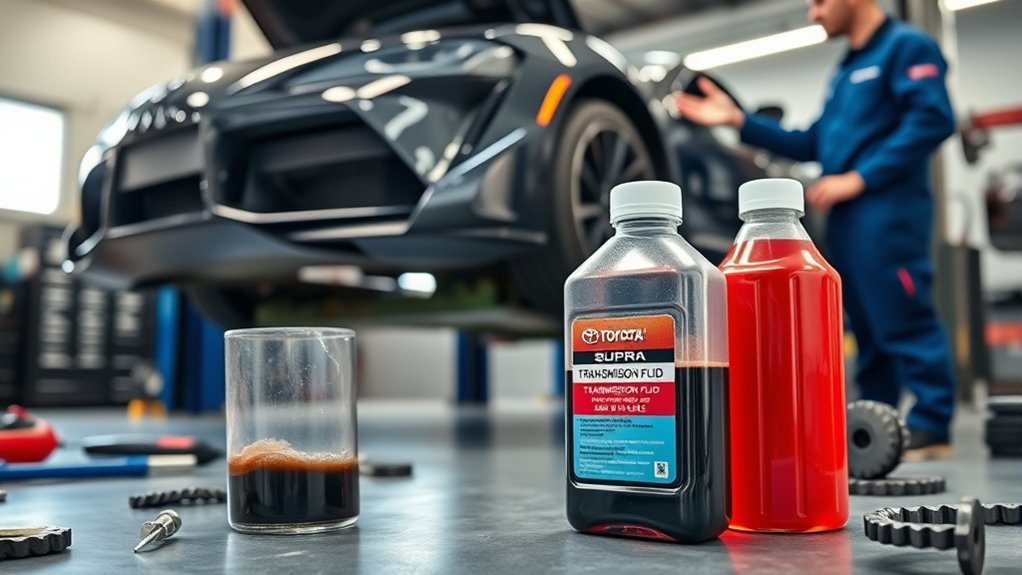
Low, incorrect, overheated, or heavily contaminated transmission fluid can reduce lubrication, change hydraulic behavior, increase operating temperature, and accelerate wear. Leakage is especially important on a sealed automatic because fluid level is not checked through a simple driver-accessible dipstick.
Old fluid is not the only cause of poor shifting. Software, adaptations, sensors, mounts, clutch wear, hydraulic controls, cooling faults, and mechanical damage can produce similar symptoms. Diagnose an active problem before assuming that new fluid will correct it.
A timely leak inspection or code scan can separate preventive maintenance from a developing repair. Continuing to drive through slipping, limp mode, severe delay, or an active warning can increase damage.
Common Toyota Supra Transmission Service Mistakes
- Treating an inspection as a replacement interval: Toyota’s “All Fluid Levels” row does not create a routine transmission-fluid replacement requirement.
- Turning ZF’s benchmark into a Toyota requirement: The roughly 93,000-mile figure comes from ZF’s preventive guidance for applicable transmissions, not Toyota’s scheduled replacement chart.
- Using a generic 30,000–60,000-mile rule: Generic service advice does not override the Supra-specific Toyota maintenance chart.
- Applying one interval to every Supra: Modern automatics, modern manuals, and older Supra gearboxes require different guidance.
- Using CVT advice: A factory GR Supra does not use a CVT.
- Choosing fluid from “8HP” alone: Verify the exact transmission and approved fluid because ZF lubricant assignments depend on the product group.
- Adding aftermarket additives: ZF does not permit later-added oil additives because their effects on the lubricant are unpredictable.
- Overfilling or underfilling: The sealed automatic requires a level vehicle and temperature-controlled procedure.
- Skipping required pan or filter parts: Follow the exact service kit and repair instructions for the transmission.
- Assuming fluid service will repair a fault: Scan, inspect, and diagnose slipping, warnings, or abnormal noise first.
Frequently Asked Questions
What is the service interval for GR Supra transmission fluid?
Toyota’s 2026 U.S. maintenance chart does not list routine transmission-fluid replacement through 150,000 miles. It lists fluid inspections and sealed-transmission leak checks. ZF’s current guidance recommends an oil change after 150,000 km, about 93,000 miles, for applicable ZF automatic transmissions, with shorter intervals potentially appropriate for high temperatures, high loads, or unknown service history. Treat the ZF figure as a preventive benchmark, not a Toyota-required interval.
Does ZF recommend changing so-called lifetime transmission fluid?
Yes. ZF describes applicable 5-, 6-, 8-, and 9-speed automatic transmissions as maintenance-free filled with specially developed ATF, but its current TE-ML 11 guidance also recommends an oil change after 150,000 km. ZF says a shorter interval can make sense under high temperatures, high loads, or unknown prior vehicle use.
Should you change GR Supra automatic fluid at 60,000 miles?
Toyota does not publish a routine 60,000-mile transmission-fluid replacement requirement for the 2026 GR Supra. ZF’s published preventive benchmark for its applicable automatic transmissions is 150,000 km, about 93,000 miles. Earlier service may be reasonable after qualified evaluation when the transmission experiences high temperatures or loads, the service history is unknown, or a leak or abnormal condition is found.
Does the Toyota Supra have a CVT?
No. The 2026 GR Supra was offered with either a 6-speed manual or an 8-speed automatic. Toyota introduced the manual option for the 2023 model year. CVT fluid and CVT service intervals do not apply to a factory GR Supra.
Can you check modern GR Supra transmission fluid with a dipstick?
The modern sealed automatic uses a temperature-controlled level-setting procedure rather than a simple under-hood dipstick check. ZF’s general 8HP procedure requires the vehicle to be horizontal and a diagnostic device to monitor transmission-oil temperature, with the general final-level procedure performed in a 30°C–50°C range. Use Toyota’s VIN-specific service information for the exact vehicle.
What transmission fluid should you use in a GR Supra?
Use the exact fluid approved for the vehicle’s verified transmission and confirmed through Toyota’s VIN-specific service information. Do not choose a fluid solely because the gearbox is described as an 8-speed automatic or part of an 8HP family. ZF’s current TE-ML 11 list assigns approved fluids by exact transmission product group, so transmission identification matters before you buy fluid or service parts.
Should a GR Supra transmission be flushed or drained and refilled?
Follow Toyota’s service procedure for the exact gearbox and the applicable ZF information for the verified transmission. ZF’s general 8HP service information describes controlled draining or pan work, approved-fluid refilling, transmission-temperature monitoring, gear cycling, final level adjustment, and leak inspection. Do not replace that specified procedure with a generic machine flush.
Conclusion
Toyota does not list a routine GR Supra transmission fluid change interval through 150,000 miles in its 2026 U.S. maintenance chart. It schedules fluid inspections and sealed-transmission leak checks instead. ZF’s current guidance recommends an oil change after 150,000 km, about 93,000 miles, for its applicable automatic transmissions and says shorter intervals can make sense under high temperatures, high loads, or unknown prior use.
Use the 93,000-mile figure as a ZF preventive benchmark rather than a Toyota-required deadline. Before choosing fluid or opening the transmission, verify the exact gearbox and use Toyota’s VIN-specific service information. Diagnose slipping, warnings, leakage, abnormal noise, or limp mode before assuming that fluid replacement alone will solve the problem.
Related maintenance: Compare the Toyota Supra oil change interval, the Supra differential fluid service interval, and the Toyota Supra 8-speed transmission guide when building a complete drivetrain service plan.
Sources
- 2026 Toyota GR Supra Warranty & Maintenance Guide: supports the maintenance chart, fluid inspections, sealed-component leakage checks, warranty language, and lack of a routine transmission-fluid replacement entry through 150,000 miles.
- ZF List of Lubricants TE-ML 11: current July 1, 2026 lubricant list supporting ZF’s 150,000 km maintenance recommendation, shorter intervals under high temperature/load or unknown prior use, product-group-specific fluid approvals, and the prohibition on later-added additives.
- ZF 8HP Oil Change Kit Service Information: supports the horizontal vehicle requirement, transmission-temperature monitoring, torque-converter filling step, gear-cycling sequence, final level adjustment, and leak inspection.
- ZF LifeguardFluid 8 Product Data Sheet: supporting technical information for applicable ZF 8HP applications and the historical 150,000 km recommendation.
- Toyota 2026 GR Supra official specifications: confirms the 6-speed manual and 8-speed automatic transmission choices.
- Toyota 2023 GR Supra manual-transmission announcement: confirms that the manual option arrived for the 2023 model year.


[…] Transmission service: Follow the correct fluid and inspection guidance rather than assuming launch control creates a universal shortened interval. See the related Supra transmission fluid service guide. […]
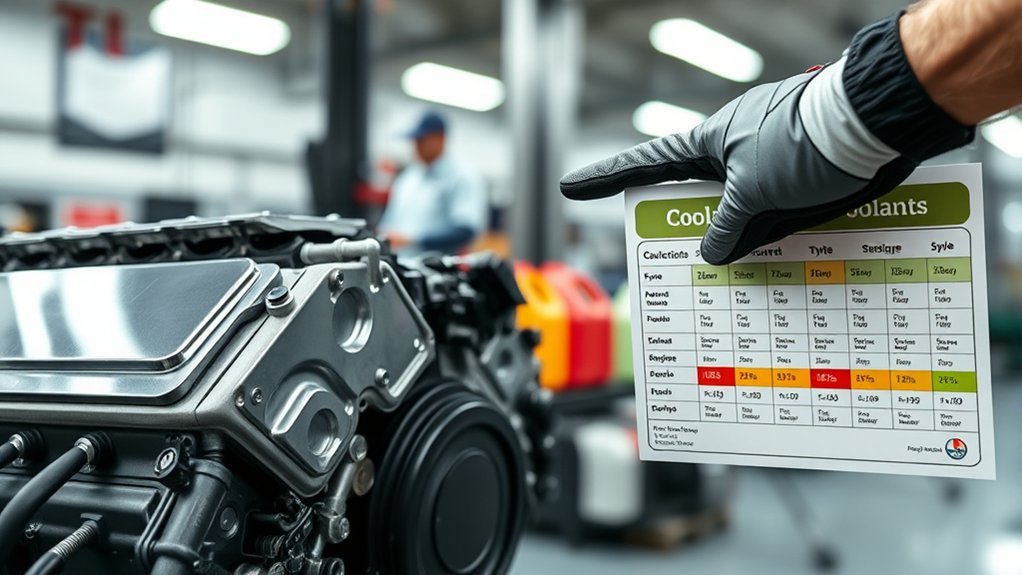
[…] For coolant replacement timing, follow the service data associated with the vehicle and the results of those inspections. Replace the coolant when its condition or freeze protection is unacceptable, when it has been diluted or contaminated, when incompatible coolant was added, or when cooling-system repairs require draining a circuit. Keep the work documented with the car’s other Supra fluid-service records. […]