
Reviewed for accuracy · Last updated: July 15, 2026
The Toyota GR Supra’s 8-speed automatic suits the car because it delivers quick, repeatable acceleration, smooth low-speed driving, and better official fuel economy than the manual in the comparable 2025 U.S. ratings. Toyota’s 2026 data lists 0–60 mph in 3.9 seconds with the automatic and 4.2 seconds with the manual. Toyota publicly calls the unit an 8-speed automatic, while the gearbox is commonly identified with ZF’s 8HP family; confirm the exact vehicle-specific transmission code before ordering parts or tuning.
Quick Answer
The Supra uses an 8-speed automatic because it combines fast computer-controlled shifts, consistent launches, relaxed highway gearing, and easy daily drivability. Toyota’s factory estimates favor the automatic for acceleration, while the manual offers more driver involvement. Treat “ZF 8HP” as the transmission-family description, not a substitute for checking the exact unit by VIN or identification tag.
Key Takeaways
- Toyota offered the 2026 GR Supra 3.0, 3.0 Premium, and MkV Final Edition with either an 8-speed automatic or a 6-speed intelligent Manual Transmission.
- ZF says the 8HP family uses four gearsets, five shift elements, three multidisk clutches, and two brakes in a compact layout.
- Toyota’s 2026 estimate is 3.9 seconds from 0–60 mph with the automatic and 4.2 seconds with the manual.
- Toyota’s public U.S. materials do not publish an internal ZF variant code, so verify the exact transmission before tuning or ordering hard parts.
- For tuned or track-driven cars, fluid condition, cooling, calibration, and torque management matter as much as the transmission hardware.
Is the ZF 8HP or 6-Speed Manual Better for the Supra?
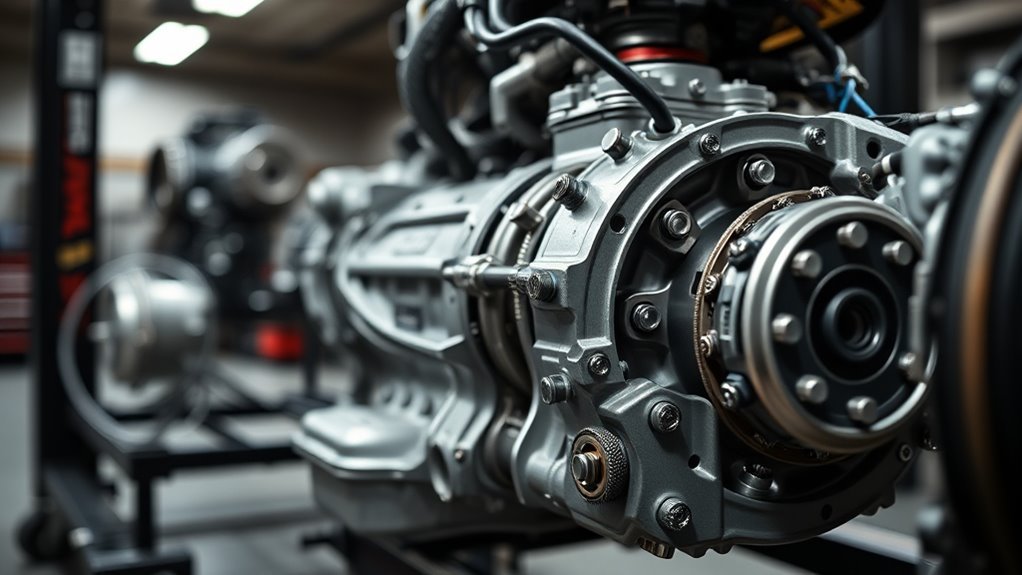
If your goal is the quickest, most repeatable factory Supra, the automatic makes the stronger case. Toyota’s 2026 GR Supra data lists a manufacturer-estimated 0–60 mph time of 3.9 seconds with the 8-speed automatic and 4.2 seconds with the manual. Fast computer-controlled shifts and less driver variation help explain that three-tenths advantage.
The manual answers a different question. It gives you direct clutch control, a mechanical shift lever, and more involvement. Toyota added the 6-speed intelligent Manual Transmission for 2023 with a large-diameter clutch, reinforced diaphragm spring, and rev-matching software. Toyota also changed the final-drive ratio from 3.15 in the automatic to 3.46 in the manual. Choose the manual when driver involvement matters more than launch consistency.
| Priority | Better choice | Why |
|---|---|---|
| Fastest launch and repeatability | 8-speed automatic | Launch control, quick shifts, and less driver variability. |
| Daily traffic and comfort | 8-speed automatic | Smooth low-speed behavior and no clutch work. |
| Driver involvement | 6-speed manual | More tactile control and a stronger enthusiast feel. |
| Track consistency | 8-speed automatic | Repeatable shifts reduce missed shifts and lap-to-lap variation. |
[Products Worth Considering]

6Qt Genuine 00289-ATFWS

For best performance, follow the manufacturer's recommendations in your vehicle owner’s manual.
Why Does the Toyota GR Supra Use an 8-Speed Automatic?
The 8-speed automatic fits the GR Supra’s performance brief and the turbocharged inline-six engine’s broad output. Toyota rates the 2026 3.0-liter Supra at 382 horsepower and 368 lb-ft of torque. The transmission gives the engine closely spaced performance gears, relaxed upper gears, and consistent electronic control without requiring clutch work from the driver.
The transmission also supports the Supra’s street-and-track character. In normal driving, it can shift smoothly and keep engine speed low. In Sport mode or during hard acceleration, its calibration can hold lower gears and downshift more aggressively. The result is an automatic that can feel calm in traffic and responsive when you ask for full performance.
Note: Toyota’s public consumer specs usually identify the unit as an 8-speed automatic rather than listing a ZF internal variant code. Before buying transmission parts, tuning software, clutches, converters, or swap hardware, verify the exact transmission by VIN, transmission tag, or a professional parts catalog.
What Is Confirmed, and What Needs Verification?
Separate vehicle-specific Toyota data from ZF’s family-level technical data. That distinction prevents a correct 8HP family fact from becoming an incorrect claim about one Supra transmission.
| Source level | What it confirms | How to use it |
|---|---|---|
| Toyota U.S. vehicle data | Transmission choices, engine output, 0–60 estimates, and model-year fuel economy | Use for Supra-specific performance and availability claims. |
| ZF 8HP family data | Four gearsets, five shift elements, three clutches, two brakes, and a 220–1,000 Nm family range | Use as architecture context, not as the rating of every variant. |
| Vehicle identification | Exact internal variant, part number, approved fluid, and compatible service parts | Verify by VIN, transmission tag, and current professional parts or service data. |
How Does the ZF 8HP Work?
Toyota’s public U.S. specifications identify the Supra unit as an 8-speed automatic rather than publishing an internal ZF code. The gearbox is commonly identified with ZF’s 8HP family. ZF describes that family as a modular rear- and all-wheel-drive automatic available in conventional and electrified configurations, with a 220–1,000 Nm family torque range. That range covers multiple variants and is not a torque limit for every Supra.
Why Is the 8HP Layout Compact?
ZF says the 8HP uses four gearsets and five shift elements: three multidisk clutches and two brakes. ZF also lists a total ratio spread of 7.0 for the current 8HP family. That compact arrangement supplies eight forward gears without requiring a large number of shift elements.
The broad spread lets lower gears support acceleration while upper gears reduce engine speed during cruising. The exact individual ratios can vary by version, so use vehicle-specific service data when a repair, calibration, or swap depends on a precise ratio.
How Do Clutch-to-Clutch Shifts Reduce Delay?
During a clutch-to-clutch shift, the controls coordinate one shift element releasing while another applies. That overlap reduces the interruption between gears. The transmission calibration then adjusts timing and pressure for load, throttle position, speed, and drive mode.
| Feature | What it means | Benefit in the Supra |
|---|---|---|
| Four gearsets | Compact planetary layout | Eight usable ratios without excessive size. |
| Five shift elements | Three multidisk clutches and two brakes | Efficient, controlled gear changes. |
| Electronic calibration | Shift timing changes with drive mode and load | Smooth commuting or aggressive performance behavior. |
How Does the ZF 8HP Change Supra Performance?
The 8-speed automatic changes the Supra in three practical ways: it makes acceleration more repeatable, varies shift behavior by driving mode, and improves official fuel economy versus the manual in comparable 2025 U.S. ratings.
Faster Launches And Acceleration
The automatic’s biggest advantage is consistency. Launching a manual perfectly depends on the driver, clutch release, surface grip, and engine speed. The automatic reduces those variables. It can manage torque delivery, select the right gear, and shift without the driver lifting off the throttle.
Toyota’s 2026 estimate favors the automatic by three-tenths of a second from 0–60 mph. That difference matters most when you value repeatable launches and consistent acceleration rather than the extra involvement of a clutch pedal.
Crisp, Quick Shift Behavior
In automatic mode, the transmission selects gears according to speed, load, throttle input, and drive mode. Paddle control lets you request shifts without operating a clutch pedal, although the transmission controller still manages the actual shift.
This calibration range is central to the Supra’s versatility. It can upshift early in traffic, then hold gears longer and respond more aggressively in Sport mode or under heavy throttle.
Improved Fuel Economy And Efficiency
In the 2025 EPA ratings, the 3.0-liter automatic is listed at 26 mpg combined, compared with 21 mpg combined for the manual. Toyota’s 2026 newsroom data lists the automatic at 22 city / 29 highway / 25 combined mpg. Use the rating for the exact model year because equipment and test results can change.
Real-world mileage also varies with trip length, tires, weather, tune, fuel, and driving style. The defensible conclusion is limited to the official comparison: the automatic earned the higher combined rating in the comparable 2025 U.S. data.
What ZF 8HP Variant Does the Supra Use?
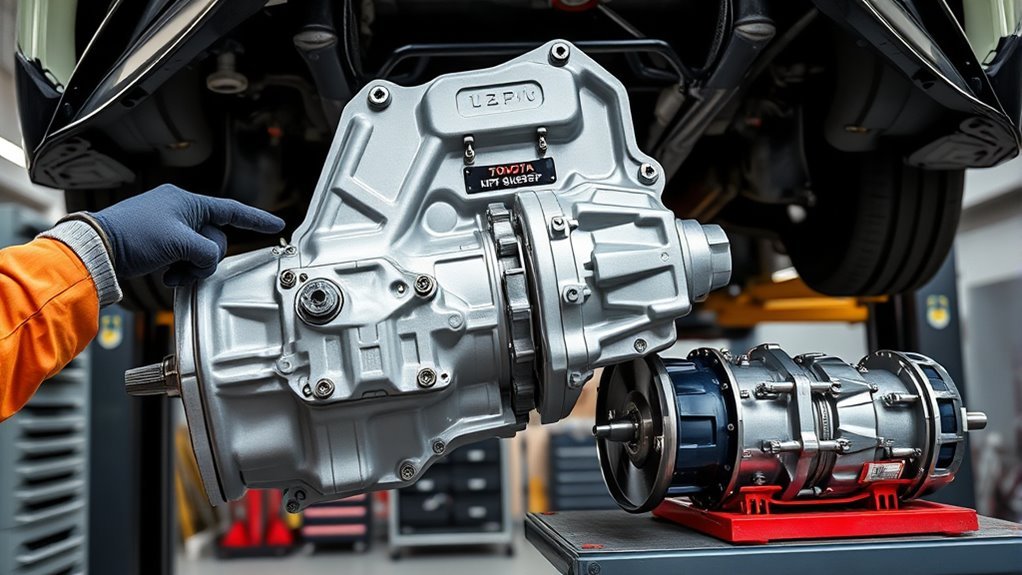
Toyota’s public U.S. consumer materials call the GR Supra unit an 8-speed automatic but do not publish an internal ZF variant code. ZF’s 8HP name describes a family with multiple versions and ratings. A family name is not a verified part number for your car.
Do not order parts from an assumed label such as 8HP70 or 8HP76. Model year, market, production data, and catalog conventions can affect identification. Confirm the transmission through the VIN, identification tag, and current Toyota, BMW, ZF, or professional parts data before buying vehicle-specific hardware.
Pro Tip: If you are planning a transmission tune, converter upgrade, replacement pan, fluid service, or swap parts order, ask the shop to confirm the unit by VIN and transmission identification tag. A family name like “8HP” is not specific enough for hard parts.
Torque Limits And Tuned Supras
ZF publishes a 220–1,000 Nm range for the broader 8HP family. That does not mean every 8HP is rated for 1,000 Nm or that a stock Supra calibration can safely accept that figure. Evaluate torque capacity as a vehicle-specific system, not as a number attached to the family name.
For a tuned Supra, consider all of these together:
- Engine torque target and how quickly torque rises.
- Transmission control calibration and clutch pressure strategy.
- Fluid temperature and cooler capacity.
- Converter behavior and lockup strategy.
- Tire grip, launch control use, and shock loads.
- Service history and current fluid condition.
Warning: High-torque tuning can shorten transmission life, create heat, and affect warranty coverage. Use a reputable Supra/B58 transmission tuner, monitor fluid temperature, and avoid treating a generic 8HP family rating as a safe limit for your exact car.
Common Supra ZF 8HP Mods, Tuning Options, and Swap Checklist
For a tuned Supra, the first priorities are usually control, condition, and heat management rather than hard parts. Diagnose existing faults, confirm the exact transmission, and log temperatures and shift behavior before deciding whether calibration, cooling, service, or internal work is justified.
Common Upgrades
- Transmission calibration: Adjusts shift timing, torque limits, clutch pressure, and drive-mode behavior.
- Cooling improvements: Helps keep fluid temperature stable during repeated pulls, track sessions, or hot-weather driving.
- Fluid and pan service: Restores fluid condition and replaces the integrated filter/pan where applicable.
- Converter or internal upgrades: Usually reserved for higher-power builds or specialized drag use.
- Data logging: Lets the tuner watch slip, shift behavior, torque reduction, and temperature instead of guessing.
Swap And Parts Checklist
If you are swapping an 8HP into another platform or replacing major Supra transmission parts, confirm these before spending money:
- Exact transmission ID and bellhousing pattern.
- Converter compatibility and bolt pattern.
- Shifter, paddles, wiring, and CAN integration.
- ECU/TCM control strategy.
- Driveshaft length and output flange.
- Cooling-line routing and cooler capacity.
- Fluid type and fill procedure.
- Professional coding or calibration support.
An 8HP swap is not a universal bolt-in solution. Mechanical fit, electronic integration, cooling, coding, and calibration all have to work together.
Maintenance, Fluid Tips, and Reliability Notes for Supra Owners
ZF Aftermarket offers transmission oils and oil-change kits for 8HP applications and says its LifeguardFluids are matched to the relevant transmissions. For a Supra, select fluid and service parts from the exact vehicle and transmission identification, not from the 8HP family name alone.
Do not apply a universal fluid-change interval to every Supra. Follow the maintenance and repair information for the exact model year, use the specified fluid, and complete the temperature-based level procedure correctly. Pan/filter design, fastener torque, and fluid temperature all affect the final level.
| Item to check | Why it matters |
|---|---|
| Fluid condition | Dark, burnt, or contaminated fluid can point to heat or clutch wear. |
| Fluid level | Incorrect level can cause delayed engagement, slip, or harsh shifting. |
| Leaks | Pan, cooler-line, or mechatronic-area leaks should be handled early. |
| Temperature | Track use and high-power tuning increase heat load. |
| Shift behavior | New flare, bang shifts, delay, or vibration should be diagnosed before more tuning. |
Common Symptoms To Investigate
- Delayed engagement when shifting into Drive or Reverse.
- Harsh 1–2 or 2–3 shifts that were not present before.
- Shift flare, slipping, or rpm rise between gears.
- Transmission temperature warnings.
- Fluid leaks under the car.
- Vibration or shudder during converter lockup.
- New fault codes after a tune or battery/coding work.
Do not keep adding power if the transmission is already showing these symptoms. Diagnose the issue first, then tune.
Should You Buy the Automatic or Manual Supra?
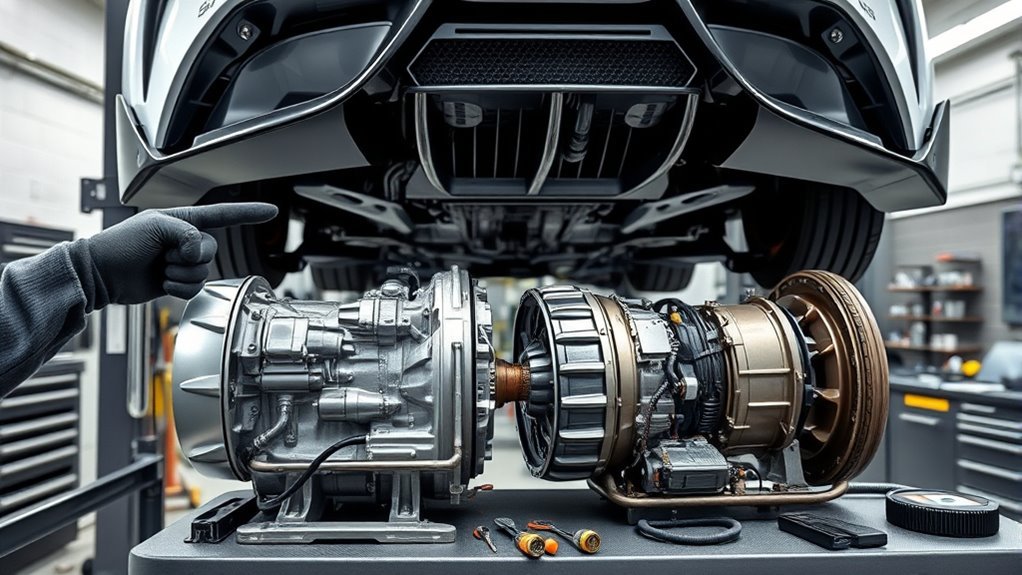
Buy the automatic Supra if you prioritize the quickest factory 0–60 estimate, easy commuting, paddle control, and repeatable performance. Buy the manual if clutch control and a more involved driving experience matter more than acceleration consistency.
Toyota announced the 2026 model year as the final MkV production run and said production was scheduled to end in Spring 2026. The 2026 3.0, 3.0 Premium, and MkV Final Edition were offered with either the 6-speed manual or the 8-speed automatic. Check current dealer inventory or the used market rather than assuming a new configuration is still available.
For a modified car, either choice can add cost. Automatic tuning changes shift and torque-management strategy, while higher-output manual builds may need clutch and driveline upgrades. Set the power goal first, then price the supporting work before choosing a transmission.
[Products Worth Considering]

Compatible with 2020-up Toyota MKV Supra GR A90/A91, also compatible with BMW 2020-up Z4 (fits both automatic or manual trans) One piece of the car's interior racing...
Frequently Asked Questions
How does the ZF 8-speed work?
ZF’s 8HP family uses four gearsets and five shift elements, including three multidisk clutches and two brakes. Electronic controls coordinate the shift elements and vary shift timing and pressure with load, speed, throttle input, and drive mode.
What ZF transmission does the Supra have?
Toyota’s public U.S. materials describe the GR Supra unit as an 8-speed automatic but do not publish an internal ZF variant code. The gearbox is commonly identified with the ZF 8HP family. Verify the exact unit by VIN, identification tag, and professional parts data before ordering vehicle-specific parts or tuning.
Is the automatic Supra faster than the manual?
Yes, in Toyota’s 2026 factory estimate. The GR Supra 3.0 automatic is listed at 3.9 seconds from 0–60 mph, while the manual is listed at 4.2 seconds. The manual adds driver involvement, but the automatic is quicker and more repeatable in the factory comparison.
How does the ZF 8HP shift so quickly?
It uses electronically controlled clutch-to-clutch shifting. The controls coordinate one shift element releasing while another applies, reducing the interruption between gears. Calibration changes the timing and pressure according to driving conditions.
Is the Supra’s 8-speed a dual-clutch transmission?
No. The ZF 8HP family is a conventional automatic that uses a hydrodynamic torque converter and multiple internal shift elements. It is not a dual-clutch transmission, even though its calibrated shifts can feel very quick.
Does a Supra ZF 8HP need transmission-fluid service?
Do not apply one universal interval to every Supra. Use the maintenance and repair information for the exact model year and transmission. The service must use the specified fluid and the correct temperature-based fill and level procedure.
What warning signs should you investigate in a tuned Supra?
Investigate harsh shifts, delayed engagement, slipping, overheating, shudder, leaks, or new fault codes. In a modified car, calibration errors, excessive heat, degraded fluid, and abrupt torque delivery can contribute to problems, so diagnose the cause before adding more power.
Conclusion
The automatic is the stronger choice when you value repeatable acceleration, easy daily driving, and the higher comparable official fuel-economy rating. The manual is the better fit when clutch control and driver involvement are the priority.
Before servicing or modifying an automatic Supra, verify the exact transmission by VIN and identification data. Then use the correct fluid, fill procedure, calibration, and heat-management plan for that car instead of relying on a generic 8HP torque claim.
Sources
- Toyota USA Newsroom: 2026 GR Supra MkV Final Edition: final-model-year grades, transmission choices, engine output, 0–60 estimates, fuel economy, and the announced production schedule.
- Toyota USA Newsroom: 2025 GR Supra: engine output, automatic/manual availability, 0–60 estimates, and Toyota fuel-economy data.
- Toyota USA Newsroom: 2023 Manual Transmission Announcement: clutch design, iMT software, and automatic/manual final-drive ratios.
- ZF: 8-Speed Automatic Transmission: 8HP family architecture, ratio spread, shift elements, torque converter, and family-level torque range.
- FuelEconomy.gov: 2025 Toyota GR Supra: EPA fuel-economy estimates for automatic and manual 3.0-liter variants.
- ZF Aftermarket: Oils and Oil Change Kits: LifeguardFluid and 8HP oil-change kit context.

[…] into third gear. The transmission manages gear changes as part of the acceleration run. See the Supra ZF eight-speed transmission guide for a broader explanation of its automatic and manual-shift […]